Archives For November 30, 1999

O, Death

ib2newseditor —  April 10, 2017

Rolled away stone.

Several years ago, my father died on the first of April, just a few days before Easter. And so each year now, April and Easter roll in and bring me an emotional mixture of grief yet hope, sadness yet joy. At this time of year, I acutely feel both the promise of life, and the inevitability of death.

When I returned home from my dad’s funeral, the church I was serving as interim pastor sensitively asked if I would be ready to preach as soon as Easter Sunday. I assured them I wanted to. I believed, deeply, in resurrection and eternal life, and I was eager to declare that boldly from the pulpit, both for the congregation and for myself. I wanted to publicly join the Apostle Paul in defiantly asking death where its victory and sting are, now that Jesus has conquered it.

But I was also still feeling immersed in the reality and pain of my dad’s death, and my sermon outline showed it. My first three points were simple, and somber. Death is definite. Death is designed. Death is difficult. I preached those first three points through the misty eyes of fresh grief.

If I could get through this sermon, maybe, just maybe I’d find hope.

Of course, I was working my way to a fourth point, and a hope-filled conclusion. Yes, death is definite, and designed, and difficult. But death is also defeated! I knew that to be the ultimate truth, the ultimate promise, the ultimate miracle. Yet during those painful days, it was as if I needed to admit those first three points as much as I needed the assurance of the fourth.

I needed to acknowledge, in fact to proclaim, the inescapability of death. Everyone needs to understand that everyone dies. I also needed to place the providential plan of death squarely at God’s feet. Because of our sin, it is God’s good and merciful design that everyone dies. And I needed, from my own deeply personal experience that year, to acknowledge how terribly painful death is, especially for those who lose someone they dearly love. If we do not have a sound theology of death, we will not have a sound theology of eternal life.

I learned that year that death is like a terrible, dark canvass, but a necessary one on which the story of resurrection and life can be brightly and beautifully painted. Without the reality and severity of death, the promise of resurrection and new life means very little. It is the depth, and finality, and “no exceptions” nature of our mortality that makes resurrected life so supremely valuable.

In other words, I had never valued Jesus’ resurrection more profoundly than when my dad died. The true victory and joy of Sunday is for those who have experienced the loss and despair of Friday.

So if you are entering April or Easter this year with a fresh experience of death, don’t be afraid to feel that pain deeply, with a holy grief. Only through death could Jesus remove the penalty of our sin. Only through death to our old selves can we be raised to a new and abundant life. And only through the death of our earthly bodies can we receive our new heavenly bodies.

As I learned eleven years ago in a profound new way, Easter is of necessity a matter of both life, and death. But because of Jesus’ resurrection, we can stare death right in the face and ask where its victory and sting are. Death is simply a role player in the Easter story, a story that ends with the greatest victory in all of history—victory in Jesus.

Nate Adams is executive director of the Illinois Baptist State Association. Respond at IllinoisBaptist@IBSA.org.

Praying at sunset

In the past year, I have recovered a lost word and a lost practice. With all that has happened in global events, national politics, and on a personal level, “praying” hasn’t seemed enough. I’m learning to beseech.

The word is not often used these days. Its popularity in print peaked in 1827, then began a steady decline until 2000. In 2001, the people who count these things noted a slight uptick in published usage that continues until today. And while they did not note a reason for increased beseeching, it seems right to point out that 2001 is the year marked by the September 11 terrorist attacks. If only for a short while, we Americans fell to our knees to plead with God on behalf of our nation. Praying became pleading, pleading became begging, begging became beseeching.

Shakespeare used the word so often that when literary scholars were trying to determine a link between his writing and Christopher Marlowe’s, they searched “beseech” as a marker of Shakespeare’s hand. (For Marlowe, they searched “glory droopeth.”)

Beseech is commonly used in the King James Version of the Bible. It means a variety of “asks” from simple plea to intense begging.

“O Lord, do save, we beseech You…”

Psalm 118:25

Paul urges, “I beseech you therefore, brethren, by the mercies of God, that ye present your bodies a living sacrifice, holy, acceptable unto God,” while Jonah pleads, “Therefore now, O LORD, take, I beseech thee, my life from me; for it is better for me to die than to live.”

But more recent translations have minimized its use. The New American Standard Bible, still touted as the most literal among English language translations, uses beseech 10 times to indicate something more than simple asking. In most instances, it’s life or death:

Faced with death, Hezekiah beseeches the Lord. Seeing the decline of his homeland, Nehemiah beseeches the Lord. A leper, suffering and shunned, beseeches Jesus for healing. Jesus tells his followers to beseech the Lord of the Harvest to send workers into His field. And a few times in the Psalms: “The cords of death encompassed me, And the terrors of Sheol came upon me…Then I called upon the name of the Lord: “O Lord, I beseech You, save my life!” (116:3-4).

Pray, plead, beg, beseech. To ask someone to do something in a serious or emotional way, Merriam-Webster says. The Cambridge English dictionary adds: Ask in such a way that shows you need it very much.

Like the needy people in California about to be put out on the street: “Hundreds beseech East Palo Alto council to end evictions,” the October 2016 headline read. Or from war-ravaged Aleppo: “‘Help us pull our country back from the brink of the abyss,’ Syrian Christians beseech.”

In California it worked; in Syria the few who remain are still beseeching.

And if we need another picture: there’s Jesus at Gethsemane. “My soul is overwhelmed with sorrow to the point of death,” he said to his closest disciples. And to his Father, “if You are willing, take this cup away from Me—nevertheless, not My will, but Yours, be done.” And “in anguish, He prayed more fervently, and His sweat became like drops of blood falling to the ground.”

The word beseech is not used here, but its meaning was never clearer. Faced with the impossible, he prayed more fervently, and so too should we.

Eric Reed is editor of Illinois Baptist media.

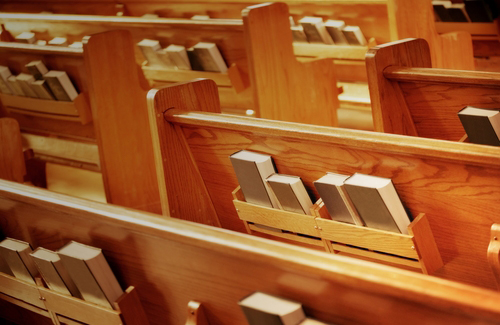
Church pews with hymnalsI’ve never really had a moment in my life—39 years—when I wasn’t going to church. My parents got engaged and married in the church. I was born into, raised in, and baptized in church.

My parents, first-generation Christians, were devout church-goers. We went every time the doors were open—and many times when they weren’t. My father, a plumber, volunteered thousands of man-hours helping build church buildings. My mother volunteered, worked as a secretary, and later served as a preschool teacher.

Since age five, I sat in services: Sunday mornings, Sunday evenings, and Wednesday night prayer meetings. I wasn’t allowed to draw. I was required to sit up straight—no fidgeting. And I wasn’t allowed to fall asleep.

Up through my teenage years, I thought of church as a bit boring. Sure, there were some life-changing, soul-stirring messages at summer camp or a special service. But for most of my life, including my years as a pastor, I did pretty much the same thing every week: singing familiar songs, reading Scripture, listening to a sermon.

Ironically, one axiom of my childhood evangelical faith was this: Church is more than the service or a building; it is the called-out people of God, living on mission every day. Church, I was told, will not get you to heaven. Only a personal relationship with God through Jesus Christ will do that.

Tantalizing ways to excite people, or timeless rituals that shape our hearts?

I still believe this, more strongly now than ever, but I also believe that in some ways church does—or did—save me. It didn’t save me in the ways you might expect: a spectacular Sunday service, a home run sermon, or a gripping worship set. God’s primary tool to transform my heart was not the conference speaker or the traveling revivalist or the worship concert. Those events were important, but now I realize that, more often, God changed my life using routine worship services in which I sang hymns I didn’t quite understand and heard messages I didn’t quite grasp.

During times of fear and anxiety, I drift back to the words of hope from Martin Luther’s epic hymn, “A Mighty Fortress Is Our God”:

And though this world, with
devils filled,
Should threaten to undo us,
We will not fear, for God hath willed
His truth to triumph through us.

When I feel insecure, I recall the lines of the Methodist hymn:
I stand amazed in the presence
Of Jesus the Nazarene,
And wonder how he could love me,
A sinner, condemned, unclean.

The hymns of the blind poet, Fanny Crosby. The majestic lines from Isaac Watts. The simple melodies of Bill Gaither. These are just a few of the hundreds of hymns that were cemented in my heart from week after week of “boring” church services. As a young child enduring the routines of our Baptist church, I didn’t realize what was happening to me.

In his book, “You Are What You Love,” James K. A. Smith talks about the way our hearts are formed:

“There is no formation without repetition. Virtue formation takes practice, and there is no practice that isn’t repetitive. We willingly embrace repetition as a good in all kinds of other sectors of our life— to hone our golf swing, our piano prowess, and our mathematical abilities, for example. If the sovereign Lord has created us as creatures of habit, why should we think repetition is inimical to our spiritual growth?”

This repetition built in my heart a deep reservoir of theology. And now, as a husband and father, and pastor, whenever I stand and sing these hymns, I can barely contain myself. Some choruses evoke memories: My father serves communion while “Jesus Keep Me Near the Cross” plays faintly in the background. Dad fights back tears as we sing “Jesus Paid It All.”

These rituals train our hearts. We sing to ourselves songs, hymns, and spiritual songs. We hear the gospel preached to us over and over. We lift the cup to our lips and the bread to our tongues remembering, again, our place at the King’s table. Through these practices, God takes our hearts and seals them for his courts above, to paraphrase another hymn writer, Robert Robinson.

Don’t get me wrong. We shouldn’t eschew creativity in the church. We are, after all, “new creation” people. But our creativity should not seek to tell a new story. It should be designed to communicate to our hearts that same, old, wonderful story of salvation.

When I think back on the simple routines that changed my life, I’m encouraged in my own pastoral role. I’m reminded afresh that the work of ministry is not so much about finding new, tantalizing ways to make people excited about Jesus, but about the timeless rituals that shape their hearts.

Daniel Darling is the vice president for communications for the SBC’s Ethics and Religious Liberty Commission. Previously, he served as a senior pastor in the Chicago suburbs. This column is excerpted from Baptist Press.

A new Bible

ib2newseditor —  March 20, 2017

Like most Americans, I’ve always respected founding father Thomas Jefferson. But I was surprised, and frankly disappointed, to learn recently that in the latter years of his life, Jefferson actually constructed his own version of the Bible. He did so by literally cutting and pasting, with razor and glue, numerous sections of the New Testament, intentionally omitting the miracles and any mentions of the supernatural, including the resurrection of Jesus.

To be fair, Jefferson apparently didn’t refer to his reconstruction as a Bible, but rather titled it “The Life and Morals of Jesus of Nazareth.” Yet over the years it has come to be commonly known as “The Jefferson Bible.”

In fact, from 1904 into the 1950’s, the Government Printing Office gave all new members of Congress a copy of the Jefferson Bible, and that practice was resumed by a private publisher in 1997. The American Humanist Association published its own edition of the Jefferson Bible in 2013, adding passages from the Quran, the Buddhist Sutras, the Book of Mormon, and other works, and distributing it to members of Congress as well as President Obama.

Bible readership

We as Southern Baptists should be truly grateful that, since 2004, our own LifeWay Christian Resources has stewarded its own original Bible translation from the original languages, the Holman Christian Standard Bible. And now, this month, LifeWay is introducing a revised and updated version, renamed simply the Christian Standard Bible (CSB).

Recently I was invited to LifeWay, along with other state executive directors, for an overview presentation of the new translation. In fact, it was there that the Jefferson Bible was used as an illustration of what can happen when God’s Word is not stewarded carefully, and faithfully. In the CSB, LifeWay has sought to balance the two most important aspects of Bible translation: accuracy and readability.

I came away from that presentation greatly encouraged, but also greatly challenged. You see, I also learned during this presentation that Bible ownership is not really the main problem today. 88% of American households own a Bible, and the average number of Bibles per household is 4.7. The real problem is that only 37% of Americans read the Bible once a week or more. With the CSB, LifeWay’s goal is not to sell more Bibles; it is to grow the number of people who read the Bible, and are spiritually transformed by it.

LifeWay has carefully studied the activities linked to true spiritual growth. And the number one activity contributing to spiritual growth is Bible reading (91%), followed by church attendance (87%), personal prayer life (85%), and being mentored by another mature believer (81%).

By providing a freshly updated translation, LifeWay is seeking to grow the number of people engaged in the activity that most often leads to spiritual growth—reading the Bible. In doing so, they have relentlessly preserved accuracy, calling on some of the world’s finest Bible scholars to serve on the translation committee. Yet they haven’t sacrificed readability. Rather, they have sought to carefully balance the two.

So I came home from LifeWay with a new Bible. I don’t really need one. I’m the son of a pastor and a school librarian, and I worked in Christian publishing for almost 20 years. I already have way more Bibles than the 4.7 average per household.

But this new Bible gives me a fresh incentive to delve more deeply and more frequently into God’s Word. It gives me a renewed appreciation for our friends at LifeWay who faithfully steward this translation. And it gives me a reason to give others a new copy of the Bible, and to pray that our reading of it will bring the true spiritual growth that God desires.

Nate Adams is executive director of the Illinois Baptist State Association. Respond at IllinoisBaptist@IBSA.org.

VBS Concept Metal Letterpress TypeIf you’ve ever planned a big event, you know how it feels when it’s over. All the work and energy and trial and error that went into planning and executing the project can be exhausting, and when it’s finally over, all that energy seems to fly out the window too.

But for church leaders, the end of an outreach event is only the beginning.

This is heavy on my heart as we enter Vacation Bible School season, and I’m reminded how crucial a church’s follow-up process is to their overall VBS strategy. That’s why I advise churches to recruit a follow-up director. His or her only job is to connect people from VBS or any other outreach with other people and opportunities at the church. Encourage the director to have their follow-up strategy before the first person ever walks in the door, including:

Effective registration. The follow-up director will likely work with other VBS leaders to accomplish this. The truth is, you can’t follow up with someone you can’t find. Make sure you have the full name and contact information for every person who attends your VBS. It’s important to know these things not only for follow-up, but in case you need to get in touch during VBS with someone related to the child.

Follow-up teams. Ask the director to recruit pairs or small groups of people who can make personal visits to families. The church I previously served sent our deacons two-by-two to follow up after VBS. We found in-person visits to be most effective, but some of our teams felt more comfortable making a call first to set up a time to visit.

Connection points. When our follow-up teams made their visits, they made it a point to take something that would forge a connection with the family. For example, one year the children decorated frames during VBS and we attached a calendar of church events for the deacons to deliver.

Above all, remember that a follow-up strategy doesn’t have to be complicated; it just needs to allow you to make significant contacts with people who otherwise may only encounter your church through one event. The goal of any VBS or outreach effort should be to connect unchurched people with the church for the purpose of expanding God’s kingdom. We can’t do that if we don’t follow up.

Jack Lucas is IBSA’s director of next generation ministry.

Protect your church

ib2newseditor —  February 27, 2017

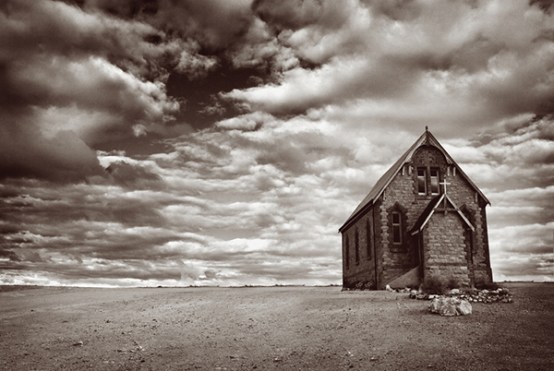
Abandoned Desert ChurchEach year, we Baptist state executive directors gather with leaders from the national Southern Baptist Convention. We discuss issues of common concern, and exchange both updates and ideas for future ministry and cooperation.

During our time together this year, a couple of the retiring executive directors were asked to speak briefly on “things I wish I had known before I started in this role.” Of course, some of the observations were humorous. But one serious observation resonated deeply with me, and with others.

This western state leader, a returning international missionary, said, “One thing that surprised me was how much time I needed to invest, and how important it is, to help existing churches navigate pastoral leadership changes.”

Congregations are especially vulnerable during leadership change.

He then referred to churches that had been “lost” to the Southern Baptist family, or that had closed entirely, when they had not done a careful or wise job selecting their next pastor. In some cases the property had been lost; in others the church had abandoned its Baptist convictions; and in still others churches had deteriorated quickly from a couple of hundred of members to just a handful.

I wish I could say these things don’t happen in Illinois—and they don’t happen frequently—but this fellow executive director’s comments brought to my mind even current examples of churches that are in peril here in Illinois. Most I would have never imagined to be vulnerable to losing their Baptist witness, or the church property for which previous generations have sacrificed. But all it takes is one unhealthy or wrongly motivated leader, invited in by one careless or compromising search and selection process.

What can churches do to protect themselves and their legacy? Two primary things come to mind.

First, whenever your church faces a pastoral leadership transition, invite experienced help from your local or state association. There are proven processes that can be employed, and predictable pitfalls that can be avoided, and you have access to experienced leaders who have been through multiple searches, with multiple churches. Of course, your autonomous church can choose which resources to use, and customize any process to your unique situation. But please take advantage of these free resources that are available to help you make a wise and Spirit-led selection.

Second, there are steps your church can take now, even if you are not facing a pastoral transition, to protect both the assets and the Baptist witness of your church. Your church governance documents, and especially the deed to your property itself, can help ensure that your church sustains its Baptist witness, even if it somehow becomes susceptible to an unhealthy leadership situation.

Once my fellow executive director shared his observation about the vulnerability of churches during leadership transitions, I was surprised how many examples started flowing between the rest of us. One executive director said that his state convention had lost 12 churches during the past year. Another told of messy lawsuits entangling a couple of churches in his state, because an unscrupulous leader was seeking to profit personally from the sale of a church property.

So while this isn’t a particularly uplifting topic to write about, I came back from these conversations committed to doing so. Please make sure your church protects both its Baptist doctrinal commitment and its property and assets from the sometimes unpredictable times and people who would take them in another direction. And please call on us at IBSA to help. As my friend reminded us, protecting the doctrinal integrity and lasting witness of our churches is one of the most important things we do.

Nate Adams is executive director of the Illinois Baptist State Association. Respond at IllinoisBaptist@IBSA.org.

The power of one

ib2newseditor —  February 13, 2017

red leaves church steeple

This is a time of year when we at IBSA do a lot of evaluating, not only of our staff’s efforts, but also of the overall health dynamics of churches. An outstanding 95% of IBSA churches completed annual church profile reports for 2016, and this gives us a wealth of information to study.

Like every year, some churches thrived last year and others struggled, so it’s possible to overgeneralize. But looking at the broad stroke data for 964 churches and missions (up seven from the previous year), it’s reasonable to say that some ministry areas such as leadership development and Sunday School participation were up, while others such as church planting and missions giving were down, at least compared to the previous year.

Of all the “down” areas, though, none concern me more than our churches’ overall baptism number, which dropped more than 11% in 2016, to 3,953. The number of churches reporting zero baptisms increased by over 10%, to 352, meaning that more than a third of IBSA churches did not baptize anyone last year.

Just one voice, one commitment, one resolution of faith can turn things around.

A few days ago, one pastor asked me how things were going, and the first burden I found spilling out of my heart was the decline in church baptisms. He nodded his head in empathy and agreement. “I know we were down in our church last year,” he acknowledged.

But what he said next truly encouraged me. “So we are really getting after that this year. We have set a baptism goal, and we have evangelism training planned. But we also have set goals as a church for the number of gospel presentations we will make, and the number of spiritual conversations we will seek to have, believing that those will then lead to gospel presentations.”

He went on to tell me how each leader and church member was being challenged to look for these opportunities, and that they were reporting them through Sunday school classes and other ways.

That same week, a young pastor wrote me an e-mail, thanking me for how two of our IBSA staff members had specifically helped and encouraged his small church. He admitted that in the past he had questioned how much his church’s Cooperative Program giving helped struggling churches, compared with church plants. Now, in his first senior pastorate, he had experienced firsthand the practical ministry support that state staff provide. Others in his association felt the same, he said, and were planning to join him in increasing their Cooperative Program giving this next year.

What struck me about both these conversations, and both these pastors, was the positive power of one voice, one commitment. One pastor looked at a lower baptism number and said, “We will not be satisfied with that. Here’s what we’re going to do.” Another pastor took a fresh look at the value of cooperative missions giving and said, “We can do more.”

So often it just takes just one voice, one commitment, one resolution of faith to turn things around. I think of Noah, and David, and Elijah, and Nehemiah, and other Old Testament heroes. I think of Peter’s boldness and Paul’s resilience in the New Testament. And of course I think of Jesus, not only on the cross, but also in eternity past, saying to the Father, “This shall not stand. I will do what it takes to make this right.”

Today, each of those pastors is using his own power of one to lead and inspire his church to a better place, regardless of the past, or what happened last year. In doing so, they reminded me how much can change when one person simply refuses to accept the status quo.

Nate Adams is executive director of the Illinois Baptist State Association. Respond at IllinoisBaptist@IBSA.org.

Growing leaders

ib2newseditor —  February 7, 2017

The church’s ministry potential depends on it
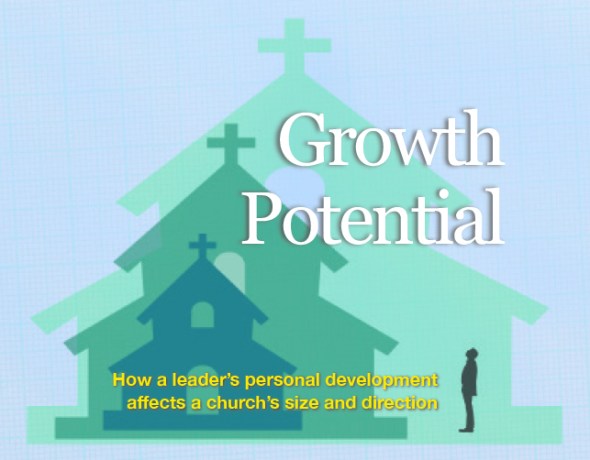
2-6-17-growth-potential

While serving as associate pastor of Pawleys Island Baptist Church in South Carolina, Mac Lake said he could feel the church’s ministry efforts crumbling down around him.

“At one point I had 88 people reporting to me,” said Lake, who is now senior director of church planting development for the North American Mission Board’s SEND network. He was this year’s keynote speaker at the Illinois Leadership Summit.

“Of course I was exhausted so I went on vacation and worked on a plan to start developing leaders. The best way to make ministry successful is to make your team successful. Shifting my mindset saved my life, saved my ministry, and probably saved my marriage.”

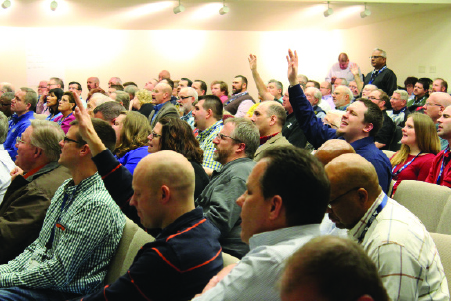
More than 230 pastors, staff, and leaders from churches across Illinois heard practical strategies as Lake spoke on the importance of leading self, leading others, leading leaders, and leading an organization during the two-day event held January 24-25.

“This opened my eyes to the difference being intentional in your leadership strategy will make,” said Garry Hostetler, pastor of First Baptist Church Bogota in Newton. “I enjoyed getting together with other pastors and leaders and getting real help that I can put into practice right away.”

“In my ministry, I discovered if we were going to grow a congregation, I had to grow as a leader. It is important for leaders to realize their leadership lid and to grow past it.”

“When we’re spiritually disciplined we’re often more vocationally effective,” Sarah Bond urged those attending one of 28 breakout sessions. The professor at SIU-Carbondale challenged church leaders to “become the change-maker God intends you to be.”

She—and the other trainers and equippers—found a ready audience.

“When I was pastoring it was alarming to discover that my leadership was one of the obstacles to the growth of the church,” said Mark Emerson, IBSA’s associate executive director of the Church Resources Team. Emerson’s pastoral experience helped him in planning the Summit. “In my ministry, I discovered if we were going to grow a congregation, I had to grow as a leader. It is important for leaders to realize their leadership lid and to grow past it.”

For attenders at the Summit, much of the experience was about discoveries about themselves.

“When we do this kind of leadership development, pastors begin to get excited about their own growth and the growth of leaders in their church,” Emerson said. “I believe every pastor believes leadership development is important, yet it tends to get lost amid the plethora of other ministry tasks.”

Doers vs. developers

2-6-17-mac-lake

Mac Lake

Lake opened the conference with a story about the small town where he grew up, and the small church where he grew as a leader. Handley, West Virginia, peaked at 633 residents in 1980.

“I don’t think we ever broke 70 (attenders) at Handley Baptist Church,” he said, calling his home church not small, but “normative.” It was the same size as most Southern Baptist churches. Yet, it was in this environment that Lake discovered he could be a leader. “That church taught me how to love like Jesus and how to live like Jesus…. The opportunity the normative-size church gave me to serve like Jesus and develop my leadership skills started there as a kid.”

Lake said leadership development is vital for all disciples of Christ no matter where they are in their Christian walk. He shared the story of his three “conversions” in his personal growth. Lake said:

(1) He went from “lost to found” when he was saved at 9 years old at that small church in West Virginia, then
(2) he went from “being a ministry doer to a ministry leader” when he was in seminary at 27, and finally
(3) a few years later as an associate pastor, he went from “leader to developer of leaders.”

“One of the biggest challenges for leaders who move to this level of leadership is continuing to act like a leader rather than a leader of leaders,” Lake said, offering a comparison between disciples and disciple-leaders. At first glance, discipleship training and leadership development might seem similar. While they go hand in hand, there are important distinctions. For example:

• Discipleship focuses on intimacy with God while leadership development focuses on influence with others.
• Discipleship is learning to live like Jesus while leadership development is learning to lead like Jesus.
• In discipleship, a person is learning to lead himself, while leadership development teaches how to lead others.
• Finally, discipleship works on the character of the person while leadership development works on his or her competency.

“While some people make the jump from disciple to leader in our churches, many aren’t prepared to do it,” Lake said. “Nobody taught them before they got thrown in. So you have all these people in the swimming pool of leadership and they are splashing and hollering—nearly drowning—because they don’t know how to swim. Their leadership, the church’s ministries, and even their personal relationship with God will grow to a whole new level once they are developing as leaders.”

“It’s like asking a lost person to reach someone for the Lord. They’ve never had that conversion so they don’t have the knowledge and realization they need.”

Without a consistent and intentional leadership development plan, many of the great “doers” of the church or ministry will struggle in leadership positions. “It’s like asking a lost person to reach someone for the Lord,” Lake said. “They’ve never had that conversion so they don’t have the knowledge and realization they need.”

Leaders often find themselves focusing more on the work than on the workers, and that has a limiting effect on the growth of ministry. “One of your primary responsibilities as a leader is stewarding the gifts and strengths of those in your charge,” Lake advised. Most churches structure for ministry function, rather than for leader development, he warned.
2-6-17-ils-attenders

A glimpse of the future
Developing the next generation of leaders presents many challenges in this culture of never-ending distractions and instant gratification, but Lake is optimistic about the future of the church.

“Millennials in general place an extremely high value on relationships and authentic faith-sharing,” he said. “A pastor willing to mentor this group must be vulnerable. They need to see we’re all co-learners because, in reality, we are. A 50-year-old pastor is no longer in the world he knew. He’s living in their world.”

He said all leaders must understand the dangers of social media and the challenge to stay focused and turn off distractions. At the same time, leaders must see how social networking can be beneficial for the work of God and utilize its potential for kingdom growth. “With technology and all that it entails, mentors have to embrace this world and ask for help navigating this new culture to stay relevant,” Lake said.

“With technology and all that it entails, mentors have to embrace this world and ask for help navigating this new culture to stay relevant.”

Though Lake has taught leadership to pastors and church planters across the country, this was one of the few statewide conferences he’s been invited to where the main purpose was to teach leaders how to lead with excellence.

“Illinois Baptists see the need to build a culture of leadership development,” Lake said. “Too many visions die because the leader never trained others to do what he did. The Great Commission is a vision big enough for others to give their lives to. We have to think in terms of ‘generations.’”

We used to tell leaders to “replace themselves” by training others to come after you. “Don’t replace yourself, reproduce yourself” with leaders to work alongside you, he concluded.

Lake said he prays that together leaders will create the culture in their churches that will produce the best harvest. “I applaud the Illinois Baptists for feeding their pastors and helping with the challenge of leadership issues,” he said. “This is important and these are things you don’t necessarily learn in seminary.”

– Reported by Kayla Rinker, Lisa Sergent, Meredith Flynn, and Eric Reed

The Reformation at 500

ib2newseditor —  January 30, 2017
70116rose-parade-jan-2

Rose Parade Jan. 2, 2017

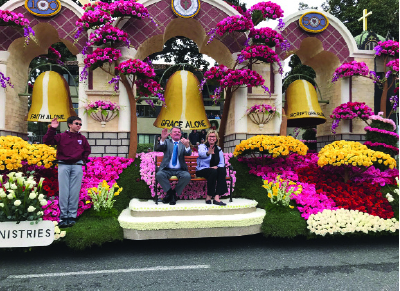
When the Protestant Reformation gets its own float in the Tournament of Roses Parade, something big must be happening. Not that we needed the Pasadena tableau to underscore the upcoming event, but we must admit it was surprising to hear NBC’s Al Roker announce the 500th anniversary of the Reformation as three flower-covered church bells tolling “A Mighty Fortress Is Our God” cruised by at 10 mph.

Would Martin Luther—ex-communicated, jailed, and persecuted for his pursuit of biblical faith—have been shocked to see his life’s work trussed in rose petals and paraded before cheering crowds?

I was.

There, following the surfing dogs, the Rose Queen, and the Salvation Army Band, was the Wittenberg Door, covered in black beans and poppy seeds, commemorating that All Hallow’s Eve in 1517 when the angry priest Luther nailed his complaints against the Catholic Church on the front door. Inscribed on the giant bells was “Faith Alone,” “Grace Alone,” and “Scripture Alone,” the three-sola distillation of Reformation theology.

Also at the front of the float was a man dressed as Jesus, waving to the crowd on one side of Colorado Boulevard and then the other. We can’t fault the sponsors, Lutheran Layman’s League, for their exuberance, for Luther himself redirected the attention of the faithful worldwide to the finished work of Christ as the only means of salvation. Not obeisance to saints or Mary, time served in purgatory, the purchase of “indulgences” for others or ourselves—only God’s grace through faith in Jesus Christ can save us. So commonplace today, this must have sounded radical to Luther’s first audiences. Yet, here we stand, benefactors of his brave actions, celebrating his Halloween escapade and all that resulted from it.

70116luther
But five centuries after the fact, this anniversary is an opportune time for Southern Baptists to ask a few serious questions:

How Reformed are we? What was started by Luther was picked up, refined, and defined by John Calvin and others. The line from Calvin (and other Reformers) to Southern Baptists isn’t as obvious as is the line from John Knox to the Presbyterians or Luther to the Lutherans, but the Reformers have certainly informed our Baptist theology.

Some Southern Baptists fully embrace Calvin’s doctrines of grace, the sovereignty of God, and election, considering themselves “five-point Calvinists.” Others, who defined their position as “traditional” Southern Baptist in the 2012 debate at the New Orleans convention, accept some of Calvin’s points, but rely more on the verses about God’s desire that all would be saved. Some would say they live in the tension between Calvinism and Arminianism, between the sovereignty of God in bringing people to salvation and the free will of man to accept or reject God’s offer.

This anniversary is a good opportunity for churches to study the principles of Reformed theology and ask, How Reformed are we?

What is the appeal of Reformed theology? For people who have grown up in an era of slushy theology and postmodern uncertainty, Reformed theology offers clear, clean delineation of belief. It’s faith with handles on it. That might explain the appeal to Christians who were described as “young, restless, and reformed” in Collin Hansen’s seminal work by that name in 2008. Hansen capsulized a phenomenon that had been in development for two decades by the time he wrote the book, and must be credited in large part, in SBC life, to Albert Mohler. From his position as president of Southern Seminary starting in 1993, Mohler has schooled a generation of young pastors, theologians, and now seminary presidents.

What is the long-term impact of rising Reformed theology on the SBC? Not everyone is enamored by the growth of Calvinism in Southern Baptist ranks. Some leaders have expressed concern about the possible impact on missions and evangelism.

Certainly our theological debate has been invigorated in recent decades. A denomination given to pragmatic, applicable theology through the Baby Boom years has more recently turned to serious consideration of the nature of the gospel. Can committed Calvinists, “traditional” Southern Baptists focused on evangelism, and the “somewhat Reformed” all coexist in the SBC tent, with a shared purpose that unites us, despite differences over finer points of theology? Or is another schism coming?

What will happen to evangelism? Our denomination’s baptism numbers continue to decline. Southwestern Seminary President Paige Patterson, a “traditionalist,” continues to express concern that rising Calvinism will naturally cool the fires of evangelism.

International Mission Board President David Platt might demonstrate a new kind of Reformed pastor, for whom evangelistic work by God’s people has high priority in God’s sovereignty. Will Platt’s zeal prove characteristic of the younger generation who are following his charge: “For the nations!” Or will the soul-winning Calvinist prove to be an anomaly?

Now, 500 years after Luther struck the first blows for Reformation, these are a few of the issues Southern Baptists must address—before the parade passes by.

– Eric Reed is editor of the Illinois Baptist.

Throwing out a lifeline

ib2newseditor —  January 26, 2017

Resource centers and clinics aid those facing difficult choices

70116infant-being-held

Snapshots from Tennessee and Illinois    
When a woman walks into the medical clinic operated by Agape House in northwest Tennessee, she won’t find evangelism tracts or Bibles in the waiting room. While she waits nervously to have an ultrasound to confirm her pregnancy, she won’t be judged regardless of her circumstances. And if she tells the clinic staff that she’s considering having an abortion, she will be given all the information she needs about her child, but won’t be pressured into a decision.

“If someone tries to talk a woman out of a decision to abort” before her heart is ready to accept it, “then someone else can easily talk her back into it after she leaves,” said Linda DeBoard, CEO of Agape House and a member of First Baptist Church in Martin, Tenn.

“When ladies come to our clinic, our mission is to empower them with the truth about life so that they can make the best choice for themselves. We know that’s a choice for life, but she has to come to that realization after she has been given all the truth.”

Agape House is one of thousands of pro-life organizations throughout the country on the front lines of elevating the sanctity of human life. Pregnancy resource centers and medical clinics such as the one operated by Agape House offer various services to support women and men faced with pregnancy decisions.

Some centers minister to those who need assistance throughout a pregnancy in the form of training classes, counseling, or material goods such as diapers. Others, like Agape House’s clinic, focus on reaching women who are at risk for abortion, offering medical services and informing them of their pregnancy options. Illinois Right to Life reports there are around 100 pregnancy resource centers in Illinois.

Angels’ Cove Maternity Center, an arm of Illinois Baptist Children’s Home and Family Services, offers expectant and new mothers a place to live, as well as life and parenting skills, individual and group therapy, and adoption services for those who choose that option.

Doug Devore, who retired this month after almost 44 years at BCHFS, said it’s a joy to see a mother hold her child after making the decision to choose life. “Whether she is 12 or 40, she may not be prepared for that child,” he said. “We have the responsibility to help get her prepared and to help her be the very best mother that she can be. That could be teaching her parenting skills, it might mean helping her get a job, helping her find housing. Whatever it’s gonna take for her to provide the best environment for that child.”

Care at every stage
Our culture has lied to women about abortion, telling them that it is a “quick fix” and that their lives will return to normal afterward, DeBoard said. Agape House is committed to providing truthful information about all pregnancy options—including parenting, adoption, and what abortion is and how the procedures work—and offering a safe space where women can process the information, she said.

DeBoard said that by offering their services this way, they have the opportunity to reach women who would never go to a church for help.

“A woman in our area who is wanting to have an abortion, and has already made the decision to have an abortion, is not going to church to tell you that she wants an abortion. She’s not,” DeBoard said. “She’s running from the church.”

A 2015 study from LifeWay Research supports that assertion. In a survey of women who have had abortions, 59% of respondents said they received or expected to receive a judgmental or condemning attitude from a local church as they considered their decision to abort, while 29% said they received or expected to receive a loving or caring response. And 54% of women would not recommend to someone close to them that they discuss their decision regarding an unplanned pregnancy with someone at a local church, while only 25% would recommend it.

Agape staff and volunteers may ask clients whether they have a faith that might influence their pregnancy decision. This often leads to opportunities to share the gospel or to encourage women in their relationship with Jesus. They also offer a Bible study program for women who have previously had abortions.

DeBoard reminds pastors that their pews may be filled with women who have abortions in their past. According to the Guttmacher Institute, a research organization with ties to Planned Parenthood, approximately 30% of women will have had an abortion by age 45. “What abortion is and does needs to be told and spoken and preached,” DeBoard said, but with sensitivity to the women who are hurting from their own abortion experiences.

“There’s no sin too great that God won’t forgive us and set us free and use our mistakes for his glory.”

Excerpted in part from an article in SBC LIFE, newsjournal of the Southern Baptist Convention. Used by permission.

For more information about services offered through Illinois Baptist Children’s Home and Family Services, go to BCHFS.com.