Archives For November 30, 1999

Meeting Of Bible Study Group

The month-long prayer emphasis “In All Things Pray” opens 2018 on the Southern Baptist Convention calendar, encouraging churches to pray corporately for 60 minutes at least weekly in January.

Standing on Acts 1:8 and 2 Chronicles 7:14, In All Things Pray encourages 10 minutes of Scripture reading, public leadership and worship; 20 minutes of vocalized prayer requests, and 30 minutes of guided prayer in each hour-long service, event organizers said.

“We are hopeful churches will use the 10-20-30 corporate prayer model in at least one of their weekly gatherings during January,” said Roger “Sing” Oldham, SBC Executive Committee vice president for convention communications and relations. “The 10-20-30 model is very interactive and is ideal for a midweek prayer service.”

Oldham represents the Executive Committee on PrayerLink, a national organization of prayer ministry leaders that helped the Executive Committee develop this year’s prayer focus.

“We think people will be refreshed by spending a complete hour in focused prayer,” Oldham said, “and encouraged at how quickly a one-hour time of prayer will pass, perhaps spurring them on in their personal times of prayer at home.”

Four categories of prayer concerns drawn from Acts 1:8 are offered among resources at InAllThingsPray.net for suggested use, all or in part.

Family and friends

Target this group by creating a prayer list of family members to pray for daily. Using the CrossRoads Prayer Evangelism ministry referenced at InAllThingsPray.net, encourage congregants to list five friends and track their prayer and outreach targeting the individuals. Ask church members to write on note cards the names of unchurched and lost family members, bring the cards to the altar and place them before the Lord.

Church and community:

Lead church members in praying specifically for evangelistic events on the first half of the church’s 2018 calendar, such as Vacation Bible School, revivals or special music programs. The church’s continued health, ministry teams and committees are among other suggested prayer concerns.

The United States and its peoples:

Read 1 Timothy 2:1–6 aloud during the morning worship service and encourage prayer for the nation. Mention the names of elected officials during the pastoral prayer. Ask the Lord to call from within your congregation members who will serve as pastors, missionaries and church planters. Pray for the different ethnicities living within the nation and for the racial reconciliation that is possible only through salvation in Jesus Christ.

The world and its people groups:

During the pastoral prayer, petition the Lord on behalf of those within the congregation who may be sensing a call to international ministry. Ask the Lord to give International Mission Board trustees and leaders divine wisdom and guidance in challenging Southern Baptists to be on mission with God. Ask for wisdom and mercy for international missionaries working in dangerous locations.

PrayerLink is composed of prayer coordinators from Southern Baptist entities and the Executive Committee, the Woman’s Missionary Union, state Baptist conventions, and Southern Baptist ethnic and language fellowships. PrayerLink collaborates with groups represented in its membership to foster a Great Commission prayer mindset among Southern Baptists and other Christ-followers, and to promote Great Commission prayer ministries for Southern Baptist churches.

Additional resources and promotional materials are available at InAllThingsPray.net.

This article first appeared at BPnews.net.

Building them up

ib2newseditor —  December 28, 2017
Graffiti2

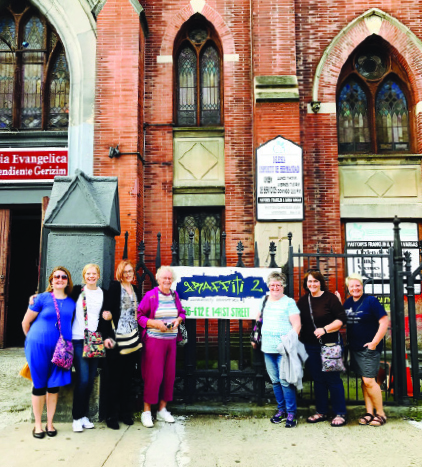
In September, a group of seven Illinois pastors’ wives navigated the New York subway every day to get to the Graffiti 2 headquarters in the Bronx, where they assisted with behind-the-scenes work needed to facilitate outreach programs for kids and adults. Photos by Andrea Hammond

Subway

Riding in the subway.

For Illinoisans who live outside the Chicago city limits—or don’t often visit—the hustle and bustle of New York City would likely bring on a good dose of culture shock.

For Terry Kenney, a pastor’s wife in Beardstown, her recent mission trip to the Big Apple brought back memories of her childhood in Chicago.

“New Yorkers do not think anything about walking” to get from place to place, said Kenney, whose husband, Brian, pastors First Southern Baptist Church in Beardstown. For the team of seven pastors’ wives from Illinois, navigating the city streets and the subway and taxis was a new, stretching experience. But a positive one.

“I never had a desire to go to New York,” Kenney said, “but now I’m going to take my husband back and let him see it.”

City reachers
The Illinois team was in the city to partner with Graffiti 2, a community ministry based in the South Bronx. Started a decade ago, Graffiti 2 is an offshoot of Graffiti Church, a Southern Baptist church planted in the early 1970s. The Graffiti ministries are grounded in a mission to meet the physical and spiritual needs of New Yorkers.

Toward that end, Graffiti 2 runs an after-school program for kids in the neighborhood, and also has started a jobs program that gives people the skills they need to learn and succeed in a career.

Standing in front of an intricate stained glass window in Graffiti’s new headquarters, the Illinois women watched one of Graffiti’s artisans at work at her sewing machine. The goods produced by Graffiti 2 artisans are sold through WorldCrafts, a fair-trade ministry of Woman’s Missionary Union.

Herself a seamstress, Kenney said it was nice to climb upstairs in the old church building and see where the artisans work, and hear about their needs. The Illinois team also helped Graffiti 2 with some administrative tasks resulting from their recent move to the building.

“We prayer-walked around their neighborhood in the South Bronx before meeting artisans and touring their new location,” said Andrea Hammond, a pastor’s wife from Grace Southern Baptist Church in Virden. “We experienced how they impact their community for Christ by finding out what their needs are, meeting them, then sharing Christ through those needs.”

Calling in common

stainglass

At the Graffiti 2 headquarters in the Bronx, artisans create fair-trade products and learn career skills.

Carmen Halsey came up with the idea for the New York mission trip as she was brainstorming ways to help pastors’ wives connect with one another. Inspired by the concept of “destination weddings,” Halsey, IBSA’s director of women’s missions and ministries, wanted to find a place that would let wives retreat to an attractive location, while also working together to fulfill a mission.

As they worked together on a large mailing project for Graffiti 2, Halsey said, the women had an opportunity to hear each other’s stories, and share their own. That was the special part, she said, watching the multi-generational group support each other and get to know one another.

“It’s a lonely job,” Terry Kenney said of being a pastors’ wife. There aren’t too many people you can confide in, she said, and the New York trip let the women open up to one another. That part of the trip was helpful for Ailee Taylor, who serves with her husband, Derrick, at NET Community Church, the congregation they planted in Staunton last year.

“I have not been a pastor’s wife for very long, and it is a group of women that I have not been around before,” she said. “In addition to learning and serving alongside the team at Graffiti 2, I was able to connect and grow alongside other women that share the role of pastors’ wives.”

The trip also had benefits that are transferable to her own ministry in Illinois.

“Even though New York is an urban environment, I learned things that apply to my rural environment,” Taylor said. “I also learned that we have a lot of things that we easily take for granted in Illinois.”

The mission trip was a renewing experience, she said, using decisive words for how she felt about returning to Illinois: “Filled, challenged, and fired up.”
For more information about upcoming missions opportunities for adults, students, and kids, go to IBSA.org/missions.

God and sinners reconciled

ib2newseditor —  December 25, 2017

Even now God is at work, drawing sinners to himself

Reconciled

Michelangelo lay on his back 17 years painting the ceiling of the Sistine Chapel, paint dripping on his face as if it were a drop cloth. The result was a masterpiece, and at its center this moment of reconciliation: God reaching down to Adam. In the Second Adam, we see God reaching down to man, not at his creation, but for his salvation.

“So it is written, The first man Adam became a living being; the last Adam became a life-giving spirit.”
– (1 Cor. 15:45)

Hark! the herald angels sing,
“Glory to the newborn King!”
Peace on earth, and mercy mild,
God and sinners reconciled

At Christmastime, the familiar refrain echoes in our churches, our stereos, even our shopping malls. It’s so familiar, in fact, that the magnitude of the concepts in Charles Wesley’s hymn may be easy to overlook. Even at Christmas.

God and sinners, reconciled. Listen up, the angels say. Lend an ear. This is big news.

Wesley’s original intent was to set his “Hymn for Christmas Day” to a slower, more solemn tune. He also wrote verses we don’t sing today, including one in particular that is steeped in imagery of dark and light, of sin and holiness, of the differences between us and Christ.

Wesley’s verses aren’t very Christmas-y, at least not in a tinsel and trees, lights and presents kind of way. But it’s easy to imagine it sung in a hushed stable, long after everyone should be asleep, when the import of what’s just happened is becoming ever more clear.

Come, desire of nations, come,
Fix in us thy humble home;
Rise, the woman’s conquering seed,
Bruise in us the serpent’s head.

Now display thy saving power,
Ruin’d nature now restore;
Now in mystic union join
Thine to ours, and ours to thine.

The “mystic union” Wesley describes is at work every time a sinner turns to Jesus. We’re reconciled to him in one sense of the word—a broken relationship is repaired—but there’s more.

Our purposes are also aligned with his. Our very nature is back in step with our Creator’s.

Hark indeed.

Once empty, now full
Matt Mevert and his wife, Andrea, grew up going to church. In fact, they went to the same church. They were married there and raising their family there, until recently, when something shifted.

“I started to realize that there was something missing, but I don’t even think I realized it before,” said Matt, who owns an auto shop in Steeleville.

The Meverts came to a place in their lives where they realized worshiping God and praying to him could be personal and dynamic—that they could have a relationship with him.

They were baptized Dec. 10 at Steeleville Baptist Church in front of their new church family and their three sons.

For while we were still helpless, at the right time, Christ died for the ungodly (Rom. 5:6, CSB).

“All around us, we are surrounded by people who have a God-sized hole in their hearts,” said Scott Foshie, the Meverts’ pastor. “We are all made to enjoy a relationship with him, but our sin has separated us and we are enslaved by it.”

But God proves his own love for us in that while we were still sinners, Christ died for us (Rom. 5:8).

For Matt and Andrea, a host of factors led to their decision to follow Christ. Their oldest son joined a Bible study and started asking questions about the Scriptures. They attended a summer revival and felt God moving them to make a new commitment to him. And they started studying the Bible.

“At that point, you can’t get enough of it,” Mevert said of the Bible. “You start studying and making opportunities to learn more all the time.”

How much more then, since we have now been declared righteous by his blood, will we be saved through him from wrath. For if, while we were enemies, we were reconciled to God through the death of his Son, then how much more, having been reconciled, will we be saved by his life (Rom. 5:9-10).

“In Matt’s case, while he grew up in church, he realized that even though he knew a lot about God, he didn’t know God personally,” Pastor Foshie said. “He was lacking the experience of being born again and experiencing the saving power of knowing Jesus.

“The Holy Spirit revealed Matt’s need to be born again, and he responded in simple faith.”

And not only that, but we also rejoice in God through our Lord Jesus Christ, through whom we have now received this reconciliation (Rom. 5:11).

“Without Jesus, our lives are empty and meaningless,” Foshie said. “Those of us who know him need to use the Christmas season (and every season) to offer the Good News that we can come to Christ and truly be reconciled to him.”

Mild he lays his glory by,

Born that man
no more may die.

Born to raise the sons of earth,

Born to give them second birth.

Hark!

Partners in reconciliation
In her work at Angels’ Cove Maternity Center, Carla Donoho sees people in need of reconciliation. With their families, and with God. But it often doesn’t come easily.

“Accepting the love of a Heavenly Father is foreign and difficult when many have no father in their lives or the ones they have do not represent love,” said Donoho, who directs Angels’ Cove, a ministry of Baptist Children’s Home and Family Services.

“For those who have come from difficult circumstances, either from their own doing or acts of someone toward them, seeing the love of God through his people is a miracle.”
Apostle Paul describes that miracle in 2 Corinthians, and gives a clear directive to those who have experienced Christ’s reconciliation.

Everything is from God, who has reconciled us to himself through Christ and has given us the ministry of reconciliation (2 Cor. 5:18).

“Nothing thrills me more than to see one of ‘ours’ come to know Jesus as the loving Savior who has given himself for them,” Donoho said. “Those who feel so unloved, rejected, and unwanted realize they are a child of the True King. This is true reconciliation.”

Scott Foshie heard the message of reconciliation at nine years old from his grandmother, Lois, when she was suffering from cancer. Even if she lost the battle, she told him, she knew she would be with Jesus because she had given her life to him, and he had forgiven her sin.

“When she told me that she hoped I had that kind of relationship with Jesus too, I began to think,” Foshie recounted. “That was when I realized that while I knew facts about God, I didn’t really know him. I needed to begin a personal relationship with Jesus.”

The ministry of reconciliation is at work whenever a Lois or a Carla Donoho or a Pastor Scott or a Matt Mevert shares the work of Christ in their own lives.

That is, in Christ, God was reconciling the world to himself, not counting their trespasses against them, and he has committed the message of reconciliation to us (2 Cor. 5:19).

At the manger, God extended reconciliation through his son, Jesus. On the cross, the offer of reconciliation is completed through Jesus’s death for the world’s sins. Charles Wesley married two holy days—Christmas and Easter—and the reconciliation seen in both with another of his hymns for Advent, “Come Thou Long Expected Jesus.”

Come, Thou long expected Jesus
Born to set Thy people free;
From our fears and sins release us,
Let us find our rest in Thee.

Israel’s strength and consolation,
Hope of all the earth Thou art;
Dear desire of every nation,
Joy of every longing heart.

-Meredith Flynn

Annual conference aims to engage students in helping persecuted people around the world

Awsom

The lights in the room dimmed. Suddenly, there were loud, wailing sirens and the sounds of hovering aircraft and explosions. Shouts could be heard from each corner of the room as the girls yelled out, eagerly looking to find the rest of their lost family members.

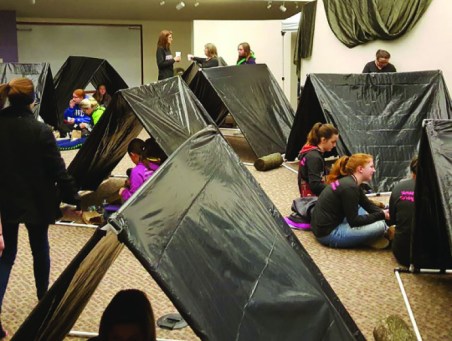
The IBSA Building was transformed into a refugee camp Nov. 5 for the annual AWSOM conference for young women (AWSOM stands for “Amazing Women Serving Our Maker”). Through an intensive, simulated overnight experience, this year’s AWSOM focused on helping the 222 students in attendance understand the plight of the refugee, and how they can help. Attenders also heard the stories of Christians who have lived with persecution (see boxes).

Alina Aisina – Central Asia

Aisina was born in a gospel-sensitive country in Central Asia to a Christian mother and an abusive, atheist father.
Aisina, her sister, and her mom eventually fled their city because their lives were threatened for what they believed. Aisina grew up with a lot of fear, she said, “Not knowing what tomorrow was going to bring and being afraid for my life.”
After receiving a shoebox from Operation Christmas Child, however, Aisina described the change in her life. While her physical life didn’t change, she said, her attitude did because she knew she wasn’t alone. She felt a loving Father looking after her by using strangers from another country to demonstrate Christ’s love for her through the shoebox.

After the simulated war broke out, the students, grouped in “families” of five, were instructed to find refuge in a neighboring country. They could only travel with limited items, however, and had to leave the rest of their belongings behind.

When the girls reached their temporary shelter, a setup of makeshift tents representing a refugee camp, they were given minimal supplies. Current and former missionaries dressed as border guards spoke only the language of the countries they served, to represent the foreign atmosphere to which refugees must adapt.

In the end, the family had to make the decision either to return home to their war-torn country, navigating elements such as land mines, or to apply for citizenship in the new country in hopes of building a new life.

The crisis is real
Prior to the simulation, International Mission Board missionary Christopher Mauger showed a brief aerial video clip documenting the plight of the Rohingya Muslims as they fled from Myanmar, formerly called Burma.

Mauger, who serves in Southeast Asia, described the situation as “desperate” and “unbelievable,” and as a crisis that “needs prayer.” “If they have to go down [to Bangladesh] for refuge, it’s really bad,” he said. “There’s nothing there.”

Mauger explained how “hundreds of thousands” of Rohingya Muslims have been exiting the country as a result of persecution from Myanmar’s government, which is Buddhist.

“For those who have a place to live, they are living in camps with plastic for roofing,” Mauger said. “They are crowded in small areas, food is scarce, and they don’t have any hygienic necessities.”

Mauger described how easy it is to get distracted with a situation like this by blaming the evil in this world. But by changing their perspective, he said, Christians can help. “We can tell these people about God,” he said, “by giving and supporting the Christian organizations that are helping in that area.”

Wendy – China

Wendy lives in China, where she partnered with Ronny and Beverly Carroll while they served as missionaries with the International Mission Board. The Carrollslive in Illinois, and Wendy visited Springfield to speak about the ministry she coordinates to help people long oppressed because of their beliefs.
During the Chinese Revolution in the 1960s, Wendy said, all forms of religion were repressed. While many Chinese Christians fled, others, including a man named Su, were imprisoned. After Su’s release 20 years later, Wendy’s ministry found him and helped him rediscover Christ. This was Su’s first encounter with a Christian in more than two decades.

Becki McNeely, a leader from Lakeland Baptist Church, said AWSOM “opened the students’ eyes to an increased awareness of the state of refugees.”

Several students echoed McNeely. One young woman described how it “must be hard to live in a persecuted country” after hearing the accounts of the speakers. Several more expressed their increased awareness of the refugee crises and were “saddened” at its reality.

Carmen Halsey, director of women’s ministry and missions, said IBSA is securing resources to inform churches about refugee issues. She added that she hoped the experience helped students to be able to “feel the psychological anguish caused by separation and flight” and to “see what forces people into refugee situations,” as well as adopting a more welcoming attitude towards refugees in their own country.

Go to vimeo.com/IBSA to view video from this year’s AWSOM conference.

-Andrew Woodrow

Not waiting to worship

ib2newseditor —  December 18, 2017

jail cell

A worship service I attended recently was like no other I’ve ever seen. And I have seen quite a few.

When I arrived with the pastor and three other leaders, 10 minutes before the service was scheduled to begin, no one else was there. Then, precisely on time, about 70 worshipers arrived.

The first 10 minutes or so were “fellowship time,” as each and every worshiper joyfully entered, hugging the neck or shaking the hand of the pastor and leaders, including me as their guest.

As they did so, many of them volunteered to serve or lead during the service. The pastor noted each of their offers, and told some of them they would have to wait until next time, because we only had two hours to worship.

The good news has arrived, and those who have received it are free to celebrate.

Those who did join us in leading the service shared special music, or recited passages of Scripture they had memorized, or gave brief testimonies of God’s grace and goodness in their lives. One especially memorable man apologized for taking so long to slowly walk to the front, assisted by his cane. He said he was 71 years old, but more alive today than when he was 18, because of the Lord’s work in his life. He then sang a moving and joyful spiritual that had all of us clapping and joining in.

The open prayer time was passionate. One man transparently thanked God for recent victory over a temptation in his life, while another prayed through tears, thanking God for a healing contact from his ex-wife, the first one in 34 years.

When the pastor gave me an opportunity to speak, I found myself citing a passage from my own devotional time that week, rather than a more carefully rehearsed message. As I spoke from my heart and sought to apply that passage to their lives, the worshipers gave me their eager attention, and encouraged me with their amens and other signs of agreement.

Perhaps the most remarkable thing to me about that worship service, however, was that I was told there is a “waiting list” to enter it that is about four times larger than the room can hold. You see, that unusual worship service was within the walls of one of our Illinois prisons on a Saturday night, and those worshipers were its residents. The leaders were from one of our Baptist churches that has led a ministry there for over 20 years.

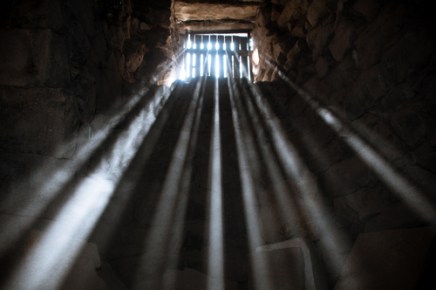
As Christmas now approaches, I am reminded that the good news of Jesus’ birth came first to a humble group of shepherds. They were in many ways “confined” themselves, in poverty, in low social status, with limited freedom or opportunity, and with little hope of a brighter future. Yet the Bible tells us they were also men who were “abiding” and “keeping watch.” When the good news about Jesus invaded their darkness one night, they eagerly received the news and ran to meet him.

That’s what I felt in prison that Saturday night. There was certainly a darkness, a sense of oppression as I walked through multiple security checkpoints. But inside, the good news had arrived, and those who had received it now enjoyed a freedom to worship and celebrate that is all too rare outside the prison walls.

As we encouraged those worshipers to share the good news about Jesus with others, as did the shepherds, their enthusiastic responses told me they already were. I guess that’s why there is a waiting list for the Saturday night worship service. And I guess it’s why we should all receive the good news humbly this Christmas, grateful that we do not have to wait to worship him.

Nate Adams is executive director of the Illinois Baptist State Association. Respond at IllinoisBaptist@IBSA.org.

Volunteers aid homeowners after year of historic storms

ILDR Feeding Unit

 Illinois Baptist Disaster Relief volunteers prepare a meal for Hurricane Harvey victims in Vidor, Texas. The Illinois volunteers prepared over 40,000 meals during their callout. Facebook photo

A difficult year for many people in the U.S. meant Illinois Baptist Disaster Relief (IBDR) volunteers were hard at work in 2017.

The most extensive callout was to Texas, where Hurricane Harvey left many homeowners displaced in August. Two childcare teams were the first Illinois units to deploy. They were stationed at the Dallas Convention Center, where they attended to children while their parents—refugees from flooding in Houston—stood in lines to meet with insurance companies and government agencies.

All other ILDR teams were sent to serve in the Vidor, Texas area. Two shower and laundry trailers from Franklin and Macoupin Associations were deployed. They provided 8,700 showers, and volunteers completed approximately 2,320 loads of laundry. Glenn and Sharon Carty spent three weeks in Vidor working with a laundry/shower trailer team. “You feel for the people and all they’re going through,” said Sharon. “But it’s the children who break your heart.”

IBDR: In 3 states and Puerto Rico

  • 14,401 man hours worked
  • 166 gospel presentations
  • 326 gospel tracts distributed
  • 161 Bibles given
  • 16 salvations recorded

Also in Texas, a 26-person mobile kitchen team based out of Living Faith Baptist Church in Sherman was staffed by volunteers from around the state and used to prepare over 40,000 meals.

As the callout continued, IBDR was asked by national Send Relief to take on a greater role. Dwayne Doyle, IBDR state coordinator, said, “IBDR incident command led the First Baptist Church, Vidor, Texas, joint ministry site between the new Send Relief program of the North American Mission Board and Southern Baptist Texas Convention Disaster Relief. During this time, our volunteers gave leadership to more than over 500 students from churches and universities across the nation.”

Illinois teams are continuing the work in Vidor, with more workers scheduled to return in January.

Earlier in the summer, heavy rains led to record flooding in Lake County, near the Illinois-Wisconsin border. Volunteers worked on nearly 150 homes, doing mold remediation in an effort to help homeowners get ready to rebuild. Their efforts have resulted in a church plant in Round Lake, as local Disaster Relief volunteers have followed-up with homeowners.

Disaster Relief volunteers also served in Illinois after early spring tornadoes in northern and southern parts of the state. Volunteer Don Kragness worked in the southern Illinois town of Vergennes. He summed up the motivation of many Disaster Relief volunteers when he told local television station WSIL, “We are here, basically, because we love Jesus and we want to serve him, and the best way we know how to serve him is to help people when they’re in need.”

Illinois has nearly 1,600 trained Disaster Relief volunteers. Their ministry is made possible through the generosity of churches and individual donors, and the volunteers themselves, who help provide equipment, supplies, and fuel for travel. To learn more about the callouts, training, and how to donate, visit IBSA.org/dr.

Pastor Curtis Gilbert

“If they (your church) keep putting a cape on you, and you keep letting them, then you need to be rebuked. Because you are nobody’s Superman.”
– Pastor Curtis Gilbert on how a pastor needs his people as much as they need him.

Ministry can be chaotic, said Belleville pastor Curtis Gilbert. In fact, it definitely will be. What pastors are called to is not a calling of ease or of superficial comfort, Gilbert told leaders at the 2017 IBSA Pastors’ Conference, but one that will call everything out of you.

The pastor of The Journey’s Metro East campus opened the conference with an encouragement to pastors to acknowledge the chaos, and to assess their lives and ministries in four key ways described by the apostle Paul in Titus 1:5-9. The Scripture passage was the foundation for the conference and its theme, “Time for a Check-Up.”

Gilbert urged pastors to evaluate their own love for Jesus, for the gospel, for their family, and for God’s people.

“Even the sheep that bite you are precious souls,” Gilbert said, adding that pastors can become arrogant and impatient when they stop viewing church members as God’s children, and when they forget that they themselves are every bit as much a sinner as their people. Don’t delegate all the shepherding to other people, Gilbert told pastors.

“Be with the sheep; it gives your preaching credibility,” he said, emphasizing that a pastor needs his people as much as they need him.

Joe Valenti spoke after Gilbert and smilingly accused him of stealing his message. “What he preached to you is what I’m going to preach,” said the student and missions pastor from Cuyahoga Valley Church in Broadview Heights, Ohio. “Namely, that if you would fall in love with the God of the gospel, if he would be your everything, then everything else comes out of that.”

Valenti, whose church is engaged in reaching unreached people groups with the gospel, quoted pastor and author John Piper, who has said, “You cannot commend what you do not cherish.” When pastors treasure the God of the gospel, Valenti said, relying on him for everything and never forgetting the first day they experienced his grace, “missions comes out.”

There are more than 11,000 people groups in the world, Valenti said, and more than 7,000 are still unreached with the gospel. That’s not a problem for the International Mission Board or for missionaries or for the Cooperative Program, he said. Rather, “We need to see the completion of the Great Commission as a personal problem.”

Pastor Brad Pittman

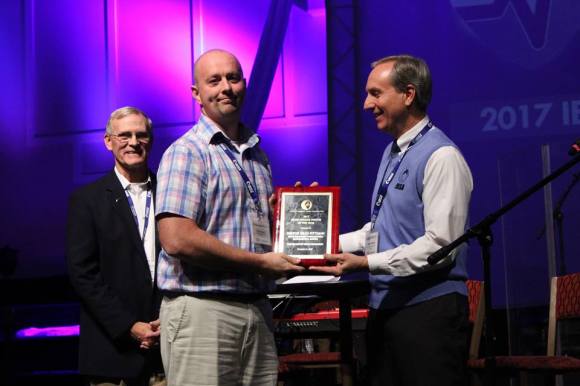
Brad Pittman (center), pastor of Grace Fellowship Church in Davis Junction, accepted this year’s IBSA Bivocational Pastor of the Year award this morning at the Pastors’ Conference in Decatur. 

In light of eternity
The mass shooting at First Baptist Church, Sutherland Springs, Texas, just two days before the conference began lent a heightened urgency to the meeting and the messages. Randy Johnson, pastor of Tabernacle Baptist Church in Decatur, preached on how to share the gospel as if it’s going to be your last opportunity, while Ed Stetzer, executive director of the Billy Graham Center at Wheaton College, told pastors the world they minister in is only getting darker.

The Christian worldview decreases a few percentage points every year, said Stetzer, former executive director of LifeWay Research and a long-time analyst of church and religion trends. And it’s probably going to get worse before it gets better, he added.

“I’m convinced that one of the reasons Southern Baptists are declining is that we have hidden our light under a bushel,” Stetzer said. But as aliens and strangers in the culture—as exiles—can we love people in the midst of cultural change, he asked. “If we can’t, we have a lot of explaining to do to Christians who have—for 2,000 years—done that.”

The 2018 IBSA Pastors’ Conference is Nov. 6-7 at First Baptist Church, Maryville. Officers are Bob Stilwell, president; Ben Towell, vice president; and Rayden Hollis, treasurer.

The vital few

ib2newseditor —  December 4, 2017

Pioneering Spirit logo

I don’t specifically remember the first time I heard about the “80/20 principle,” but I do recall finding it fascinating. Simply put, the principle states that, for many events, roughly 80% of the effects come from 20% of the causes, or that 80% of sales come from 20% of clients, or that 80% of the wealth is owned by 20% of the population, and so on.

When management consultant Joseph Juran began popularizing the 80/20 principle in 1941, he more formally named it the Pareto principle, after Italian economist Vilfredo Pareto, who published his own 80/20 observations in a paper at the University of Lausanne in 1896. Pareto showed that approximately 80% of the land in Italy was owned by 20% of the population, a principle that he first observed while noting that about 20% of the peapods in his garden contained 80% of the peas.

The 80/20 principle often resonates with pastors and church leaders, too. Not always, but many times, 80% of the work in a church seems to come from 20% of the volunteers, or 80% of the giving comes from 20% of the givers, or 20% of the congregation seems to require 80% of the pastor’s time.

We’re praying for at least 200 churches to make fresh commitments in four key areas.

Likewise in associational life, 80% of an association’s support can come from 20% of its churches. In fact, here in Illinois, 20% of IBSA churches currently provide about 80% of Cooperative Program giving. I suspect that further study would reveal many more 80/20 dynamics, both within and among churches.

The reality that the 80/20 principle underscores is that many, many things—from responsibility to productivity to generosity—are not evenly distributed within a group. Many groups have what Joseph Juran began referring to as “the vital few,” who carry the heaviest load in the group.

It’s the urgent need for more of those “vital few” churches here in Illinois that has led us to challenge IBSA churches to four “Pioneering Spirit” commitments during our state’s bicentennial next year. Between now and next November, we are praying for at least 200 churches who will register fresh commitments to church planting, evangelism, missions giving, and leadership development.

We call this going new places, engaging new people, making new sacrifices, and developing new leaders. Details, as well as registration information, can be found at the new pioneeringspirit.org website. Two hundred churches would not only match our state’s bicentennial, it would represent just over 20% of our churches.

These Pioneering Spirit challenges are simple, but they’re not easy. They challenge us to pray for, or partner with, or plant one of the 200 new churches that are needed in Illinois today. They challenge at least 200 churches to set a baptism goal that exceeds their previous 3-year average, and then focus intently on sharing the gospel. They challenge at least 200 churches to percentage missions giving through the Cooperative Program that increases each year toward 10%. And they challenge 200 churches to intentional processes that develop tomorrow’s pastors, church planters, and missionaries.

Apparently, at times, Joseph Juran referred to the 80/20- or Pareto-principle as “the vital few and the trivial many.” But later in life, he was said to prefer “the vital few and the useful many,” indicating a newfound appreciation for the necessity of the whole and not just the few.

I really appreciate that distinction, because I see value and uniqueness in every IBSA church, and understand there are many factors that influence what a church chooses or is able to do in a given area. Still, I think we have yet to see the impact we could have on our 200-year-old mission field, if at least 200 churches would step up and join the vital few.

Nate Adams is executive director of the Illinois Baptist State Association. Respond at IllinoisBaptist@IBSA.org.

What is Pioneering Spirit?

ib2newseditor —  November 28, 2017

Churches urged to take lessons from Illinois’ early settlers

You know the pioneer in the video you made, Stephen Stilley?” the woman said. “I’m his great niece. Seven greats.”

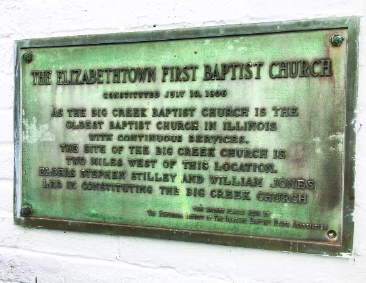
Stilley was a veteran of the War of 1812 who returned home to Illinois to continue the church planting work he started before joining the army at age 47. Stilley’s name is on a plaque outside First Baptist Church of Elizabethtown, founded in 1806. It’s IBSA’s oldest continually operating congregation, and one of four IBSA churches that predate Illinois’ statehood in 1818.

FBC Elizabethtown

“When I heard his name, my ears perked up,” said Sheila Jessen, assistant for the Baptist Foundation of Illinois. “My maiden name is Stilley.

“I went home and looked it up in our genealogy,” she continued. “My great-great-great-great-great-great grandfather John was Stephen Stilley’s brother. I’m the niece of a Baptist pioneer,” she said, her eyes welling up a little. “It’s beginning to make sense why I’m at IBSA.”

The descendant of one of the pioneering forebears was having a moment that could be common to all Illinois Baptists: realizing that we are descendants of hearty stock, both spiritual and literal, and in their pioneering DNA we find the fortitude to inhabit the land and build the Kingdom.

With the observation of Illinois’ 200th anniversary set to begin in 2018, IBSA offered a new call to spread the gospel across the state.

“What are we going to do to get off of the flat line we are on as Illinois Baptists?” Executive Director Nate Adams asked at the Annual Meeting. Adams outlined a four-fold plan to engage churches in new commitments to church planting, evangelism, missions-giving, and leader development. “We think these are at the very core of what it means to have a pioneering spirit.”

As with the pioneers in the early 19th century, the need of the 21st century is brave souls willing to do whatever it takes to stake new territory, taking the gospel where it has never been before. The goal is to have 200 or more churches committed to each of the four challenges.

Roles and role models
Throughout the meeting, the theme was interpreted with a series of interviews. First up, a couple who found in her family tree inspiration to go to a new place to plant a new church.

Bryan and Marci Coble moved their family from Texas, where he was in seminary, to Chicago. After briefly considering planting a church in Portland, Oregon, the Cobles felt led to explore Marci’s home state. Her grandmother sent them a clipping from the Illinois Baptist saying more churches are needed in Chicago.

But there was another influence. Marci, who grew up in Chatham, is the granddaughter of former IBSA executive director Maurice Swinford (1988-1993). “He was like a second father to me,” she said at the meeting in Decatur. “He encouraged me and invested in my life. He planted those seeds of leadership in my life.”

New places

Answering the call to church planting led the couple to the Irving Park neighborhood of Chicago, a diverse community of Anglo, Hispanic, African American, and Asian people on the city’s north side. The location explains why Bryan wore a Chicago Cubs cap for 30 days during their exploration process. Could this diehard Cards fan from Missouri minister successfully in the heart of Cubs territory? During that month, Bryan felt a growing love for the city and its lost people.

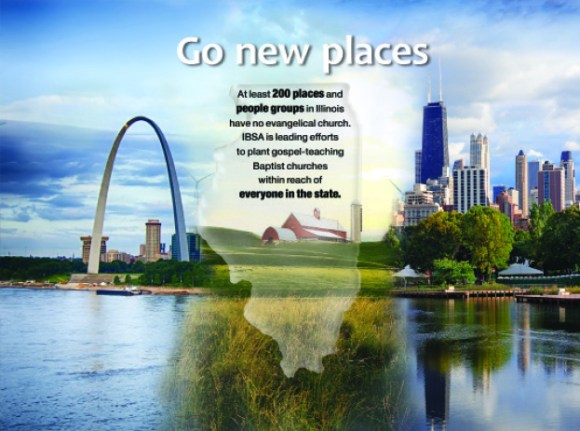
Across Illinois, there are more than 200 places and people groups in need of an evangelical church. There are many places similar to the Cobles’ neighborhood. Many are in highly populated urban areas. Many are in small towns and rural crossroads. In all of them, gospel-teaching Baptist churches are needed.

The church planting challenge is for churches to pray for new congregations, partner with a church planter to assist his work, or to lead in the planting of a new congregation.
Talking about Jesus

Pat Pajak shares Christ everywhere—even in the hospital where he had open-heart surgery. Pat told his story to show the pioneering need to engage people with the gospel. “We need to believe that God can do a marvelous thing in our church,” Pajak said. “There are lost people all around us.”

Pajak described two emphases that will be part of his work as IBSA’s Associate Executive Director for evangelism in 2018. One of them is part of a larger project led by the North American Mission Board: Gospel Conversations. Talking about Jesus is the simple calling of every believer, but many are shy to speak up. NAMB’s goal is to register one-million gospel conversations prior to the Southern Baptist Convention meeting in June. NAMB has created a website where church members can report their personal conversations with lost people. There are also short videos from people sharing their “conversation” experiences. (GCChallenge.com)

new people

Pajak announced an IBSA project to baptize 1,000 people on April 8, 2018. “One GRAND Sunday” follows Easter, with the intent that witness training and gospel conversations will lead to baptisms. “We have 8 million-plus people in the state of Illinois who don’t know Jesus,” Pajak said.

This is an evangelism challenge. “We’re praying that 200 of our IBSA churches will baptize 12 people next year,” or more than the church’s previous three-year average. The hope is that churches will turn the decline in baptisms by setting evangelism goals and equipping members to share their faith, and by engaging lost people through evangelistic events and mission trips.

The commitment is for IBSA churches to become “frequently baptizing churches.”

Walking the walk
Lindsey Yoder charmed the crowd with her account of walking from Arthur, Illinois to Nashville, Tennessee: 300 miles in 27 days. The teenager first learned about human trafficking at an AWSOM weekend for teen girls, led by Illinois Baptist Women. Then, a movie on the subject convinced Lindsey that she must do something to help free young women, girls, and boys caught in the sex trade worldwide. Even in Illinois people are forced into sexual subservience. The most common route for bringing them into the state is along I-55 from St. Louis to Chicago.

Lindsey’s story is one of sacrifice.

A 14-year-old girl from central Illinois doesn’t often take on such a massive and awful cause. But this one did, one step at a time.

“It felt like I wanted to quit a lot. I refused to quit. I don’t like to quit. Sometimes putting one foot in front of the other is a lot harder than it sounds,” Lindsey said. And yet, she kept walking. On the journey she raised enough money to sponsor two “rescues” in a South Asian country.

Such sacrifice is what it takes to save people enslaved by sin.

Lindsay’s mother, Regina, who handled logistics for the trip and followed her all the way, said the support of their church was crucial. The people of Arthur Southern Baptist Church encouraged the teen and contributed to her cause, and by their example showed how Southern Baptists everywhere give for missions.

The Cooperative Program is Southern Baptists’ best channel for supporting life-saving missions. With regular, systematic, percentage giving from its offerings, each church makes the sacrifice each week. The need calls us to greater sacrifice.

New sacrifices

Here’s how Nate Adams described this missions-giving challenge. “We’re asking churches to make missions-giving a higher priority in your budget. We’re asking would your church be willing to make CP a greater percentage of your budget—if the Lord would lead you to make new sacrifices to give through CP.”

The Pioneering Spirit commitment is for 200 or more churches to increase CP giving (for example, 1% per year) with a goal of reaching at least 10% of undesignated offerings.

Follow the leader
Roger Marshall said in his first 10 years as pastor of FBC Effingham, he conducted 150 funerals. Raising up new leaders was not an option, it was imperative. So he began to pray. “God really does identify new leaders,” he said. “It’s not just about finding new slots. It’s really about finding God’s person.”

New leaders

Roger was on the platform with his brother, David, who recently retired as associate pastor at Mt. Zion, and their father, Frank, a 63-year veteran of ministry who is 94.
“Be the kind of leader someone ought to follow,” David said. “That’s what my father was.”
The senior Marshall’s advice for leader development: help people identify their spiritual gifts and put them to use. And “don’t blame someone else for what you are…. Live your responsibility.”

This is a leadership challenge. IBSA’s Mark Emerson urged pastors to commit to leadership development for current members and potential young leaders. The goal is for 200 or more churches to have intentional development processes in place.

During the Annual Meeting, 53 IBSA churches made one or more of these commitments.
As Illinois itself turns 200, it’s clear the work of Baptist pioneers, begun by Stilley and others, is as much needed today as when the state was founded.

WATCH IT
See the video about four early Baptist pioneers in Illinois. Two current pastors tell the stories of the first church planters, starting with New Design near the Mississippi River in 1796.

Plus, watch the videos about the ministry of the Cobles (“Heart for the City”) and Pat Pajak (“Sharing Christ Everywhere”).

TAKE THE CHALLENGE
Read more about the four Pioneering Spirit challenges and how IBSA can help your church with training, goal-setting, and ministry partnership. Register your church’s commitment online.

Cabin churn side

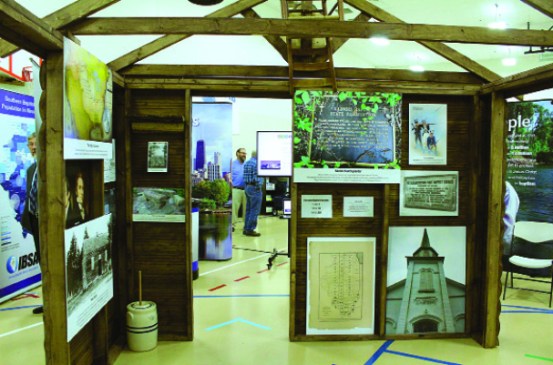
Step into 1818: Log cabin houses early Baptist history

The urgent need to get the gospel to more people was a driving theme of the 111th Annual Meeting of the Illinois Baptist State Association (IBSA). Churches were challenged to make four “Pioneering Spirit” commitments in the areas of church planting, evangelism, giving, and leadership development.

The Pioneering Spirit theme also coincides with 200th anniversary to be celebrated in 1818. In keeping with the state’s bicentennial, IBSA is asking 200 or more churches to make each of the four commitments.

Moving from our current “flatland” to new heights in those areas will require a steep uphill climb, IBSA leaders said, but it’s the only option.

“We can’t be satisfied with the status quo, because the status quo is decline,” said Kevin Carrothers during his president’s message. Preaching from the book of Numbers, Carrothers, director of missions for Salem South Baptist Association, said no one remembers the names of the nay-saying Israelites who didn’t want to go into the Promised Land. Instead, the real legacy of pioneering spirit was left by Joshua and Caleb, the two spies who trusted God to provide.

Kevin Carrothers

Kevin Carrothers

“They recognized the will of God was more important to obey than the whims and the desires of men, even if the majority won,” Carrothers said.

In the meeting’s final session Thursday morning, Pastor Sammy Simmons offered an annual sermon full of encouragement for those weary from a difficult season of life and ministry. Rely on the Lord, said the pastor of Immanuel Baptist Church in Benton, Ill. And keep taking bold steps for the sake of the gospel.

“The conditions are too rough, the lostness is too great for us to continue to do business as normal,” Simmons preached. “The cause of the gospel causes us to make bold sacrifices for King Jesus.

“I’m all in for this pioneering spirit. Oh, how much our church needs it. Oh, how much I need it. Oh, how much our state needs it.”

New challenges
During his report, IBSA Executive Director Nate Adams gave messengers a progress report on IBSA’s four key goals:

  • Develop leaders: So far in 2017 more than 500 pastors and leaders have participated in IBSA-sponsored leadership development events, Adams said. About half that number are engaged in more in-depth leadership cohorts.
  • Inspire cooperation: Adams reported that giving through the Cooperative Program and the Mission Illinois Offering is up slightly from last year, and through October, IBSA staff has had direct connection or consultation with 70% of all IBSA churches.
  • Stimulating church health and growth: So far in 2017, IBSA staff has trained over 5,800 participants from 527 churches. Children’s camp offerings have grown from three weeks to seven, Adams said, and IBSA has made major capital investments in both IBSA camps. The 75th anniversary of Lake Sallateeska Baptist Camp was celebrated with a special video presentation during the Thursday morning session.
  • Catalyzing evangelistic church planting and missions: It’s been a busy year for Disaster Relief, Adams said, with volunteers responding to in-state disasters and hurricanes elsewhere in the country. IBSA anticipates long-term involvement in the Houston area hard hit by Hurricane Harvey.

Fourteen new churches were planted in the state in 2017, Adams reported, and IBSA welcomed 17 new churches for affiliation during the Annual Meeting.

Adams also pointed to other measurements, including membership, Sunday school attendance, baptisms, missions volunteerism, and missions giving, that have remained relatively flat over the past several years. He ended his report by encouraging churches to embrace one or more of the four “Pioneering Spirit” commitments designed to challenge IBSA to courageously depart from the status quo.

Throughout the meeting, the “Pioneering Spirit” commitments were detailed through interviews with Illinois Baptists who exemplify faithful service in four key areas:

  1. Go new places is a church planting challenge, asking at least 200 churches to commit to pray for new congregations, partner with a church planter to assist his work, or to lead in the planting of a new congregation.
  2. Engage new people is an evangelism challenge, which IBSA Associate Executive Director Pat Pajak described at the meeting. “We’re praying that 200 of our IBSA churches will baptize 12 people next year,” or more than the church’s previous three-year average. The hope is that churches will turn the decline in baptisms by setting evangelism goals and equipping members to share their faith, and by engaging lost people through evangelistic events and mission trips.
  3. Make new sacrifices. “We’re asking churches to make missions-giving a higher priority in your budget,” said Adams. “We’re asking would your church be willing to make CP a greater percentage of your budget—if the Lord would lead you to make new sacrifices to give through CP.” The Pioneering Spirit commitment is for 200 or more churches to increase CP giving (for example, 1% per year) with a goal of reaching at least 10% of undesignated offerings.
  4. Develop new leaders. Mark Emerson, associate executive director of IBSA’s Church Resources Team,urged pastors to commit to leadership development for current members and potential young leaders. The goal is for 200 or more churches to have intentional development processes in place.

Other business
– Messengers approved the 2018 IBSA budget of $8.7 million, with projected Cooperative Program giving of $6.3 million. IBSA forwards 43.5% of Cooperative Program gifts on to national SBC causes, the eleventh-highest among 42 state conventions.

– Messengers approved a motion brought by the IBSA Board of Directors that all property currently held by IBSA for Baptist Children’s Home and Family Services be conveyed by deed to BCHFS in its entirety. This includes 17 tracts of property (744.9 acres) that were acquired for use and are used by BCHFS, but are currently titled to IBSA.

– IBSA’s ministry partners gave video reports throughout the business meeting, including Illinois Woman’s Missionary Union (WMU) and President Jill McNicol. God has advanced the work of WMU and given them new opportunities to reach new people, McNicol said, noting three places—Southeast Asia, the Bronx, and Cairo, Ill.—where Illinois women have served on mission in the past year.

“To the women of WMU, missions is not just a thing. It’s people. It’s lost people needing a savior. And it’s teaching Christians how to live on mission for God, to reach those lost people.”

Officers

NEW OFFICERS – Each of IBSA’s four officers were elected by
acclamation: (Left to right) Sharon Carty, assistant recording
secretary; Adron Robinson, president; Adam Cruse, vice|
president; and Robin Mayberry, recording secretary.

– IBSA’s four officers for 2018 were elected by acclamation: Adron Robinson, president, pastor of Hillcrest Baptist Church in Country Club Hills; Adam Cruse, vice president, pastor of Living Faith Baptist Church in Sherman; Robin Mayberry, recording secretary, member of Bluford Baptist Church; and Sharon Carty, assistant recording secretary, member of Emmanuel Baptist Church in Carlinville.

The next IBSA Annual Meeting is Nov. 7-8, 2018, at First Baptist Church, Maryville. Tom Hufty, pastor of FBC Maryville, will bring the annual sermon, and Michael Nave, pastor of Cornerstone Church in Marion, will serve as the alternate speaker.

Illinois Baptist Team Report