Archives For November 30, 1999

Kempton Turner

Former East St. Louis resident returns to plant a new church

Editor’s note: Kempton and Caryn Turner are two of the missionaries featured in the 2018 Annie Armstrong Easter Offering and Week of Prayer for North American Missions. The annual offering, collected in many IBSA churches this spring, supports missionaries appointed by the North American Mission Board.

East St. Louis | Kempton Turner grew up on the same streets where he now serves as a church planting missionary and pastor.

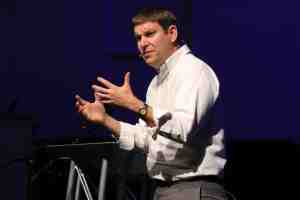
“Because I was raised here, I’ve got a real heart for the people,” says Turner (pictured above left, with youth director Zach Chike). He launched City of Joy Fellowship in East St. Louis in September 2016. “It’s a small city. It’s a dangerous, poor place, 85% fatherlessness. The houses, the buildings, and the roads show the desperate place that East St. Louis is in. The people know struggle.”

In East St. Louis, buildings sit abandoned. The public library, the McDonald’s Turner visited as a child, family-owned restaurants—all closed now. Though the decline in population started more than 100 years ago with an infamous race riot, recent years have seen the numbers dwindle from around 60,000 to 26,000.

“Jobs and police officers have left this city,” says Turner. “Downtown is kind of like a ghost town, but it’s ripe for the gospel. The Lord hasn’t forgotten this city.”

Faith on the rise
It is 6 a.m. and a group of men from City of Joy Fellowship are up before the sun, worshiping with an acoustic guitar. Says Turner, “As the psalmist looked around at the tragic condition of the people in his city, it appeared as though God was unaware, inactive, or asleep. So, he prays, ‘Arise, O Lord.’  “Likewise, we cry out in one way or another every Wednesday morning.”

The prayers ring out over a people facing poverty, gang violence, environmental contamination, and continued decline. Turner, his wife, Caryn, and their five children believe that change is possible. They are working side by side with other believers to show their neighbors that love is real and hope is alive.

Recognizing that teenagers here are in need of community and a safe place to gather, Turner and the team at City of Joy host a youth night on Tuesdays where they train young people how to serve others and hold down a job. The church also goes to the places where youth already gather during the week—schools and community centers—to establish consistency. Their desire is to show teens that they care and are invested in their well-being and future.

Turner names a long list of men and women who have moved to the area to help with the youth: Matt and Hannah, who moved their young family from Missouri; Staricia, who came from Indiana to work in the school system; Lydia, a nurse who has a heart for young people; Joel, a skilled basketball player and coach who uses the sport to connect with the youth; and Zach, who started a Bible study for the youth in his home that has already outgrown the space. The list goes on and on.

“These precious believers are a picture of Jesus, coming out of comfortable suburbs, moving into the heart of a 99.9% African-American city with danger, poverty, and fatherlessness,” Turner says. “They’re moving because Jesus is sending them as a reflection of his heart for this city, and God is blessing their efforts. It’s amazing.”

Building the future
Home renovation is another practical way City of Joy is connecting with their community. Hammers and nails, primer and paint—these are the tools that are allowing believers to build a relationship with people who live near the church.

“All we need is a way to start a conversation,” says Turner. He is training the members to intersect with nonbelievers, meet needs, and share their personal stories of redemption.
Dubbed R3, the outreach ministry is focused on community development, house restoration, business restoration, and employment. The goal is to work corner by corner and house by house throughout the city until each square foot has been covered in both repairs and improvements, as well as prayer.

In their business revitalization program, they work on providing local businesses with the resources to launch or relaunch. They also strive to connect young men and women from the youth program with job opportunities in these local businesses as a way to benefit the local economy and foster a sense of community.

As more people come to know Christ, City of Joy is celebrating more baptisms. And it all started with a very special one that healed a broken relationship from the past. Turner says, “The first baptism at the church was my birth mother who did not raise me. Praise the Lord!”

Indeed, the church is appropriately named. With prayers, planning, and consistent efforts, they are working toward bringing that same kind of joy into every home in East St. Louis. They want people to not only remember this place but to invest in it.

“Some of the neediest places in America are in the inner city,” Turner says. “We’re excited to join the momentum of what God is already doing in this city with so much potential. Acts 8:8—that’s our hope and prayer for East St. Louis: that the Lord will fill the city with joy.”

Turner explains that they are praying for the Lord of the Harvest to send more laborers. The vision for change is great—and so is the need for ministry partners.

“Psalm 127 says, ‘Unless the Lord builds the house, they labor in vain who build it,’” Turner noted. “And so, the Lord is the builder. The church is not about bricks and mortar and boards. He redeems his people and puts them in front of others in houses, on street corners, in Sunday school classes and in large- and small-group gatherings.

The Lord builds his people through the Word. And our vision is that the Word of God would so transform East St. Louis that multitudes of souls are saved and established in faith, families are restored, children can have a mom and dad in their house again, prevailing cultural brokenness—like drug addiction and gang violence—would be healed, and churches would be started near and far.

“Our house renovation ministry is just a small echo of the thunderclap of spiritual renovation that we see God doing,” Turner said, “one soul, one house, one block at a time in my hometown.”

– North American Mission Board

The official date for the annual Week of Prayer is the first Sunday in March through the second Sunday in March. Your church can choose this date or another time during the Easter season to participate. Learn more at www.AnnieArmstrong.com.

Fundamental change

ib2newseditor —  February 19, 2018

church pews hymnals

Church planting changed me. It was a fundamental change that has continued to influence not only the way I think and feel about church planting, but also the way I think and feel about churches in general.

Before planting, I saw the church as an organization that primarily served its members. It was the group of people that employed my dad, and later me as a youth minister. Our job was to lead worship services and classes, plan programs and activities, and nurture positive relationships. The church membership’s job was to participate, learn more about the Bible, and relate to one another with love and service. Sometimes new people visited and considered joining us.

During and after planting, I saw the church as those who seek and save the lost, and help nurture them into maturing believers who also seek and save the lost. As disciples, we worshiped and studied the Bible and enjoyed fellowship and served. But those weren’t the primary focus; they were things we did along the way as we pursued the mission of seeking and saving the lost.

How can we prioritize the lost and unchurched?

When we left our church plant in the hands of its first full-time pastor and moved to Georgia, we were fortunate enough to find a church that was still behaving like a church plant. Frankly, we had to visit several churches before finding it, and it was a half hour from our home. But it was worth it.

Though this church had its own building, full-time staff, and basic programs, it was clearly focused on engaging and serving its community, more than its members, and on being an inviting environment that expected guests every week. It created multiple entry points for the unchurched, and trained its members to engage them with relationship and with the gospel.

It doesn’t seem right to characterize my before-planting view of church as self-serving, because other church members and I often served each other selflessly. Sometimes we would even invite unsaved friends to what we were already doing, and sometimes we would go on mission trips to look for unsaved people. But we didn’t re-order our thinking and plans and resources toward the lost and unchurched. So, as a church, we were basically self-serving.

This fundamental change in my own life is on my mind and heart right now, because 2017 Annual Church Profile reports have just been totaled. They tell us that total baptisms reported by IBSA churches were lower by more than 11% for the second consecutive year. And about 40% of reporting IBSA churches did not record a baptism.
I love our IBSA churches, including the ones that didn’t see a baptism in 2017! I see so many positive ministries and sacrificial servants in every church I visit, and I recognize that churches are in different situations and settings, and have different strengths. If the gospel is proclaimed faithfully and the Lord Jesus is worshiped sincerely, and believers are maturing and serving, then there is much to celebrate.

At the same time, I would invite us all to simply ask whether a fundamental change is needed in our perspective. Many, many good things happen in a church where the members worship God and serve one another. But the best thing happens when the lost are saved and welcomed into the family of God. And that happened almost a thousand times less in our churches over the past two years.

For me, planting a church brought fundamental change to my heart and mind, that the church should seek and save the lost as its first priority. That’s now what I look for, and long for, in every church I enter. I believe it is the fundamental change that is needed in many churches, to reach the millions of lost people that live in our Illinois mission field.

Nate Adams is executive director of the Illinois Baptist State Association. Respond at IllinoisBaptist@IBSA.org.

Leaning into the challenge

ib2newseditor —  February 12, 2018

Amid decline, churches called to new commitments

Pioneering Spirit

Throughout 2018, Southern Baptist churches in Illinois are invited to accept challenges in four key areas: evangelism, church planting, missions giving, and leadership development.

The challenges, focused on the “pioneering spirit” needed to advance the gospel among more than 8 million lost people in Illinois, were laid out last November at the Annual Meeting of the Illinois Baptist State Association. Their urgency was reinforced by new data based on the 2017 Annual Church Profile reports completed by 95% of IBSA churches.

“The 2017 ACP data from IBSA churches tells us that, while some churches are thriving, many are struggling,” said IBSA Executive Director Nate Adams. “For example, about 40% of IBSA churches didn’t report a baptism in 2017. And the sum total of information from all churches shows flat or steadily declining dynamics in many key indicators, including baptisms, worship attendance, Bible study participation, and church planting.

“This doesn’t do justice to the many bright spots where effective ministry and growth is happening, but it does give an overall picture.”

In 2017, IBSA churches baptized 3,441 people, a 13% decrease from last year’s total of 3,953. Other measurements also were down, including professions of faith, church membership, and missions giving. Giving through the Southern Baptist Cooperative Program totaled $5,924,029 in 2017, compared to $6,032,407 the previous year.

A highlight of 2017 was growth in the area of missions participation, as 21,607 people engaged their Acts 1:8 mission fields through projects and partnerships.

“It was studying last year’s ACP numbers, and really the last several years’, that led us to the important theme for the 2017 IBSA Annual Meeting,” Adams said. “Advancing the gospel through Baptist churches in Illinois has, and always will, require a ‘Pioneering Spirit.’ That means continuously engaging new people, developing new leaders, making new sacrifices, and going new places with the gospel.

“Churches that are not intentionally and effectively reaching out into their communities with a pioneering, missionary spirit, face inevitable decline.”

The lower numbers in Illinois reflect national trends, according to the most recent data available. (National ACP data for the previous year is released in the summer, prior to the annual Southern Baptist Convention.) In 2016, baptisms in SBC churches decreased by 4.9% from the previous year, and worship attendance declined 6.8%.

“I would encourage any church that is struggling or simply desiring assistance to invite IBSA, its local association, or perhaps another like-minded church to come alongside and help,” Adams said. “Often another trusted leader’s perspective can make all the difference, along with the experience and resources that others can bring.

“For our part, IBSA is eager to bring training, consulting, and resources in any of these areas, and to any IBSA church. That’s why we’re here, and we really want to help.”

The power of ‘one’
A decline in baptisms over the past decade is behind this spring’s “One GRAND Sunday” emphasis, which calls IBSA churches to participate in baptizing at least 1,000 people on April 8, the Sunday after Easter.

Last year, 352 IBSA churches reported zero baptisms. The churches that did report baptisms had an average of 6.4 baptisms per church.

The ‘GRAND’ goal is lofty, IBSA’s Evangelism Director Pat Pajak has acknowledged, particularly amid the current downward trend. But he’s urging church members to focus on the “one” part of the challenge, and to pray for one person to come to Christ and be baptized. That idea was recently echoed by prayer leader Phil Miglioratti.

“And as my ‘one’ is added to your ‘one’…as their church’s ‘one’ is matched by that church’s ‘one’…as a Sunday class prays for ‘one’ and is joined by a fellowship group asking for ‘one’…a youth group in a southern association, a seniors’ class in the center of the state, a planting team up north, a children’s ministry along the eastern border, and a WMU along the western border, each claiming, petitioning, pleading for ‘one’…one plus one equals two. But in God’s mathematics, ‘one’ plus ‘one’ times prayer could equal ‘One GRAND Sunday!’

“Even the smallest church among us can ask in faith for ‘one,’” Miglioratti said.

Sign up for the “Pioneering Spirit” challenge at pioneeringspirit.org. Register for One GRAND Sunday at IBSA.org/Evangelism.

Summit gathers 1,000 church leaders for learning, encouragement, and reminder of shared mission

MLS main session

Springfield | Ministry in the Midwest has ups and downs, successes and struggles. The work of advancing the gospel in a diverse, large region requires creativity, perseverance, and a willingness to sacrifice personal preference.

With their common calling in mind, more than 1,000 leaders from 13 Midwest states gathered in Springfield Jan. 23-25 at the Midwest Leadership Summit, a meeting organized every three years by Southern Baptist state conventions in the region.

“We share the same love for our communities and vision to see people come to Christ,” said Tim Burgess, a pastor in Mt. Vernon, Mo., “and getting together is a great reminder that we are not working at this alone.”

The large-group sessions and more than 90 breakouts tackled specific ministries—college campuses, church planting, missions, women, youth, and Disaster Relief, to name a few. Underlying each session was the need to advance the gospel in a culture that’s moving farther away from biblical truth. In our culture of change, one thing has stayed the same, said Detroit’s Darryl Gaddy.

“You look around and notice that nothing stays the same,” said the urban church planting specialist in his keynote address to open the Summit. “Nothing is as it was ten, five, or even two years ago.

“But actually there is one thing that does stay the same. Sin. Oh, the consistency of brokenness. It never takes a vacation. But friends, we are the church. And we, like Peter who raised the lame man up in the name of Jesus Christ, are called to speak into the brokenness.”

Gaddy urged Midwest leaders to be “agents of change” in their communities, which will require obedience when it’s not convenient, becoming less so others can become more, and giving up their rights to someone else—Jesus.

“We have received information for our heads, inspiration for our hearts, and implementation for our hands,” Gaddy said. “Let’s not leave here the same way we came.”

God at work
Like the Midwest itself, leaders in Springfield for the Summit represented a wide variety of contexts, including places where new churches are making inroads into previously unreached communities. North American Mission Board President Kevin Ezell facilitated a discussion with four planters who took to the main stage to talk about strategy, cooperation, and the power of prayer.

“There is a quote that I always go to when I think about our church,” said David Choi, pastor of Church of the Beloved in Chicago. “When men work, they work. But when men pray, God works. The great church planter is the Lord. Recruit prayer warriors to lift up your ministry because that’s truly the secret sauce.”

In a few years, Choi’s church has grown from one—himself—to encompass hundreds meeting for worship every weekend. He credited God for the growth, and the prayers of people who live far from his city but have made it a point to lift up Church of the Beloved.

Ezell also introduced Paul Sabino, pastor of Candeo Church on the campus of the University of Northern Iowa in Cedar Falls. Sabino is part of The Salt Network, a family of next-generation churches working together to plant churches in major university cities.

“We are seeing the power of God on us and it’s like holding a Dixie cup; it’s overflowing and we can’t contain it,” Sabino said. “Jesus said he would make us fishers of men. The fish are on college campuses and they are hungry. They are crying out for the living God to impact their lives.”

The focus on church planting was encouraging for Christine Watkins, who came to the Summit as a member of Jachin Baptist Church, a 10-month-old church plant in Flint, Mich. Her husband, Derrick, is pastor of the church named for a word found in 1 Kings 7:21. Jachin means “the Lord will establish,” Watkins said.

“I think attending this summit and hearing all the great knowledge and stories of how God has blessed young church plants is part of how God is opening doors and giving direction in how he is going to establish our church.”

‘Pray bigger prayers’
Jeff Iorg, President of Gateway Seminary in Ontario, Ca., understands what it means to advance the gospel in difficult environments.

“Much of what you are experiencing now in the Midwest we experienced 30 years ago in California,” he said during the Summit’s final session. “It seems like an impossible task with formidable obstacles…Yet, I’m here to tell you the gospel is advancing on the West Coast, and healthy churches are growing with denominational influence and cooperation.”

Iorg said the reason for the gospel’s advancement, especially in a hostile cultural environment, can be found in John 14.

“Jesus said in verse 12, ‘I assure you: The one who believes in me will also do the works that I do. And he will do even greater works than these, because I am going to the Father.’

“‘And he will do even greater works than these’—that is quite a sober declaration of Scripture,” Iorg said. “Do you believe the word of God? Do you believe Jesus meant what he said?”

Iorg encouraged leaders to pray and ask God for what is worthy to be asked for in Jesus’ name and to surrender control to the Holy Spirit.

“Confess your powerlessness and ask the Holy Spirit for the filling, guiding, and directing,” he said. “So often, we start to rely on our own strategic plans. That’s not going to work. We must depend on the filling of the Holy Spirit to get the mission done.”

The last step to advancing the gospel in this cultural environment is to teach people to read, understand, and obey the Bible. Iorg said the only time he has seen people transformed is when they engage God’s Word.

“No games, no gimmicks,” Iorg said. “Pray bigger prayers in the name of Jesus. Work in the Holy Spirit’s power and trust him to do supernatural things in you. And find a way to teach people to internalize the Word of God. That’s it. Now let’s go home and do it.”

Kayla Rinker is a freelance writer living in Missouri.

Why Chicago?

ib2newseditor —  December 7, 2017

chicago-cloud-sculpture

We may not verbalize the “why” question with the persistence of a young child, but we still look for a reason or substantial meaning when called to some action.

Through more than a dozen years in church planting, I’ve heard the “why” question. When a family gave five acres for a new church property to a local association in eastern North Carolina, many in nearby churches asked why, even as their buildings were nowhere near filling their seating capacity.

When I planted a church in Buckeye, Ariz., the North Carolina churches I invited to partner with us often wondered why they should care about planting a church in a community 2,000 or more miles away.

For nearly four years now, I have had the privilege of living in Chicago. During that time, I have mentored, coached and challenged many church planters here. I’ve also invited churches in more than a dozen states to get engaged in supporting church plants here in Chicago with prayer, action and finances.

“Why Chicago?” some ask, jesting, “Why not Hawaii? That would be a great mission trip!”

Yet there are three key answers:

The first reason is biblical. In Luke’s account of the Great Commission in Acts 1:8, Jesus tells His disciples and us, “But you will receive power when the Holy Spirit has come on you, and you will be my witnesses in Jerusalem, in all Judea and Samaria, and to the end of the earth” (CSB).

No matter where you live, major metropolitan areas like Chicago are located between you and “the end of the earth.” And frankly, because of political views and sensationalized news, Chicago in particular is to many in southern Illinois and elsewhere what Samaria was to the Jews: a place and people we’ve been trained or conditioned to dislike or even hate. Yet, even if it is Samaria to Christians, it’s a place and people to which Jesus has sent us to bear witness of Him and His Good News.

The second reason is practical. Cities like Chicago have, from their earliest settlement, become a home for immigrant people groups — many that are identified as “unreached and unengaged” by the International Mission Board.

Because of technology and ease of global travel from America’s major cities, many immigrants maintain a reach to and influence in their homelands. So, effectively evangelizing and discipling people in a city like Chicago gives us a reach into many parts of the world, including most of the peoples in the 10/40 window, a region between the 10th and 40th parallels across Africa and Asia where most of the people who have never heard the Gospel live.

Reaching Chicago and other metropolitan areas with the Gospel could bring a significant advance toward the global evangelization that Jesus promised in Matthew 24:14.

The final answer to “Why Chicago?” is missiological. Chicago is sometimes called the “most segregated city in America.” And while that is changing in some of the neighborhoods of the city, people groups are usually heavily concentrated in certain areas. Poles are heavily concentrated in the northwest neighborhoods and nearby suburbs. Chinatown, as you might guess, is home to mostly Chinese people, many of them still speaking Mandarin or Cantonese. Pakistanis are clustered along Devon Avenue in the northern part of the city. Professional millennials make up two-thirds of the population in the West Loop. Wicker Park is the epicenter of the hipsters.

High concentrations of people groups in a specific place give us a missiological advantage in reaching them. Even if it is a cross-culturally gifted southern boy and his family living among south Asian immigrants, winning one or two to Jesus could result in dozens who live nearby coming to faith in Christ. Given their close proximity to each other, bringing them together to a form a new church can happen very naturally.

While it may not be unique, Chicago is rare in giving us three good reasons to seize the opportunities for the Gospel that lie within our reach.

Dennis Conner directs IBSA church planting efforts in northeast Illinois. Beginning Jan. 1, Conner will transition to planting a church in Chicago’s South Loop neighborhood. This article first appeared in the Illinois Baptist and has been republished by Baptist Press.

The vital few

ib2newseditor —  December 4, 2017

Pioneering Spirit logo

I don’t specifically remember the first time I heard about the “80/20 principle,” but I do recall finding it fascinating. Simply put, the principle states that, for many events, roughly 80% of the effects come from 20% of the causes, or that 80% of sales come from 20% of clients, or that 80% of the wealth is owned by 20% of the population, and so on.

When management consultant Joseph Juran began popularizing the 80/20 principle in 1941, he more formally named it the Pareto principle, after Italian economist Vilfredo Pareto, who published his own 80/20 observations in a paper at the University of Lausanne in 1896. Pareto showed that approximately 80% of the land in Italy was owned by 20% of the population, a principle that he first observed while noting that about 20% of the peapods in his garden contained 80% of the peas.

The 80/20 principle often resonates with pastors and church leaders, too. Not always, but many times, 80% of the work in a church seems to come from 20% of the volunteers, or 80% of the giving comes from 20% of the givers, or 20% of the congregation seems to require 80% of the pastor’s time.

We’re praying for at least 200 churches to make fresh commitments in four key areas.

Likewise in associational life, 80% of an association’s support can come from 20% of its churches. In fact, here in Illinois, 20% of IBSA churches currently provide about 80% of Cooperative Program giving. I suspect that further study would reveal many more 80/20 dynamics, both within and among churches.

The reality that the 80/20 principle underscores is that many, many things—from responsibility to productivity to generosity—are not evenly distributed within a group. Many groups have what Joseph Juran began referring to as “the vital few,” who carry the heaviest load in the group.

It’s the urgent need for more of those “vital few” churches here in Illinois that has led us to challenge IBSA churches to four “Pioneering Spirit” commitments during our state’s bicentennial next year. Between now and next November, we are praying for at least 200 churches who will register fresh commitments to church planting, evangelism, missions giving, and leadership development.

We call this going new places, engaging new people, making new sacrifices, and developing new leaders. Details, as well as registration information, can be found at the new pioneeringspirit.org website. Two hundred churches would not only match our state’s bicentennial, it would represent just over 20% of our churches.

These Pioneering Spirit challenges are simple, but they’re not easy. They challenge us to pray for, or partner with, or plant one of the 200 new churches that are needed in Illinois today. They challenge at least 200 churches to set a baptism goal that exceeds their previous 3-year average, and then focus intently on sharing the gospel. They challenge at least 200 churches to percentage missions giving through the Cooperative Program that increases each year toward 10%. And they challenge 200 churches to intentional processes that develop tomorrow’s pastors, church planters, and missionaries.

Apparently, at times, Joseph Juran referred to the 80/20- or Pareto-principle as “the vital few and the trivial many.” But later in life, he was said to prefer “the vital few and the useful many,” indicating a newfound appreciation for the necessity of the whole and not just the few.

I really appreciate that distinction, because I see value and uniqueness in every IBSA church, and understand there are many factors that influence what a church chooses or is able to do in a given area. Still, I think we have yet to see the impact we could have on our 200-year-old mission field, if at least 200 churches would step up and join the vital few.

Nate Adams is executive director of the Illinois Baptist State Association. Respond at IllinoisBaptist@IBSA.org.

Cabin churn side

Step into 1818: Log cabin houses early Baptist history

The urgent need to get the gospel to more people was a driving theme of the 111th Annual Meeting of the Illinois Baptist State Association (IBSA). Churches were challenged to make four “Pioneering Spirit” commitments in the areas of church planting, evangelism, giving, and leadership development.

The Pioneering Spirit theme also coincides with 200th anniversary to be celebrated in 1818. In keeping with the state’s bicentennial, IBSA is asking 200 or more churches to make each of the four commitments.

Moving from our current “flatland” to new heights in those areas will require a steep uphill climb, IBSA leaders said, but it’s the only option.

“We can’t be satisfied with the status quo, because the status quo is decline,” said Kevin Carrothers during his president’s message. Preaching from the book of Numbers, Carrothers, director of missions for Salem South Baptist Association, said no one remembers the names of the nay-saying Israelites who didn’t want to go into the Promised Land. Instead, the real legacy of pioneering spirit was left by Joshua and Caleb, the two spies who trusted God to provide.

Kevin Carrothers

Kevin Carrothers

“They recognized the will of God was more important to obey than the whims and the desires of men, even if the majority won,” Carrothers said.

In the meeting’s final session Thursday morning, Pastor Sammy Simmons offered an annual sermon full of encouragement for those weary from a difficult season of life and ministry. Rely on the Lord, said the pastor of Immanuel Baptist Church in Benton, Ill. And keep taking bold steps for the sake of the gospel.

“The conditions are too rough, the lostness is too great for us to continue to do business as normal,” Simmons preached. “The cause of the gospel causes us to make bold sacrifices for King Jesus.

“I’m all in for this pioneering spirit. Oh, how much our church needs it. Oh, how much I need it. Oh, how much our state needs it.”

New challenges
During his report, IBSA Executive Director Nate Adams gave messengers a progress report on IBSA’s four key goals:

  • Develop leaders: So far in 2017 more than 500 pastors and leaders have participated in IBSA-sponsored leadership development events, Adams said. About half that number are engaged in more in-depth leadership cohorts.
  • Inspire cooperation: Adams reported that giving through the Cooperative Program and the Mission Illinois Offering is up slightly from last year, and through October, IBSA staff has had direct connection or consultation with 70% of all IBSA churches.
  • Stimulating church health and growth: So far in 2017, IBSA staff has trained over 5,800 participants from 527 churches. Children’s camp offerings have grown from three weeks to seven, Adams said, and IBSA has made major capital investments in both IBSA camps. The 75th anniversary of Lake Sallateeska Baptist Camp was celebrated with a special video presentation during the Thursday morning session.
  • Catalyzing evangelistic church planting and missions: It’s been a busy year for Disaster Relief, Adams said, with volunteers responding to in-state disasters and hurricanes elsewhere in the country. IBSA anticipates long-term involvement in the Houston area hard hit by Hurricane Harvey.

Fourteen new churches were planted in the state in 2017, Adams reported, and IBSA welcomed 17 new churches for affiliation during the Annual Meeting.

Adams also pointed to other measurements, including membership, Sunday school attendance, baptisms, missions volunteerism, and missions giving, that have remained relatively flat over the past several years. He ended his report by encouraging churches to embrace one or more of the four “Pioneering Spirit” commitments designed to challenge IBSA to courageously depart from the status quo.

Throughout the meeting, the “Pioneering Spirit” commitments were detailed through interviews with Illinois Baptists who exemplify faithful service in four key areas:

  1. Go new places is a church planting challenge, asking at least 200 churches to commit to pray for new congregations, partner with a church planter to assist his work, or to lead in the planting of a new congregation.
  2. Engage new people is an evangelism challenge, which IBSA Associate Executive Director Pat Pajak described at the meeting. “We’re praying that 200 of our IBSA churches will baptize 12 people next year,” or more than the church’s previous three-year average. The hope is that churches will turn the decline in baptisms by setting evangelism goals and equipping members to share their faith, and by engaging lost people through evangelistic events and mission trips.
  3. Make new sacrifices. “We’re asking churches to make missions-giving a higher priority in your budget,” said Adams. “We’re asking would your church be willing to make CP a greater percentage of your budget—if the Lord would lead you to make new sacrifices to give through CP.” The Pioneering Spirit commitment is for 200 or more churches to increase CP giving (for example, 1% per year) with a goal of reaching at least 10% of undesignated offerings.
  4. Develop new leaders. Mark Emerson, associate executive director of IBSA’s Church Resources Team,urged pastors to commit to leadership development for current members and potential young leaders. The goal is for 200 or more churches to have intentional development processes in place.

Other business
– Messengers approved the 2018 IBSA budget of $8.7 million, with projected Cooperative Program giving of $6.3 million. IBSA forwards 43.5% of Cooperative Program gifts on to national SBC causes, the eleventh-highest among 42 state conventions.

– Messengers approved a motion brought by the IBSA Board of Directors that all property currently held by IBSA for Baptist Children’s Home and Family Services be conveyed by deed to BCHFS in its entirety. This includes 17 tracts of property (744.9 acres) that were acquired for use and are used by BCHFS, but are currently titled to IBSA.

– IBSA’s ministry partners gave video reports throughout the business meeting, including Illinois Woman’s Missionary Union (WMU) and President Jill McNicol. God has advanced the work of WMU and given them new opportunities to reach new people, McNicol said, noting three places—Southeast Asia, the Bronx, and Cairo, Ill.—where Illinois women have served on mission in the past year.

“To the women of WMU, missions is not just a thing. It’s people. It’s lost people needing a savior. And it’s teaching Christians how to live on mission for God, to reach those lost people.”

Officers

NEW OFFICERS – Each of IBSA’s four officers were elected by
acclamation: (Left to right) Sharon Carty, assistant recording
secretary; Adron Robinson, president; Adam Cruse, vice|
president; and Robin Mayberry, recording secretary.

– IBSA’s four officers for 2018 were elected by acclamation: Adron Robinson, president, pastor of Hillcrest Baptist Church in Country Club Hills; Adam Cruse, vice president, pastor of Living Faith Baptist Church in Sherman; Robin Mayberry, recording secretary, member of Bluford Baptist Church; and Sharon Carty, assistant recording secretary, member of Emmanuel Baptist Church in Carlinville.

The next IBSA Annual Meeting is Nov. 7-8, 2018, at First Baptist Church, Maryville. Tom Hufty, pastor of FBC Maryville, will bring the annual sermon, and Michael Nave, pastor of Cornerstone Church in Marion, will serve as the alternate speaker.

Illinois Baptist Team Report

IMG_4145 (1)

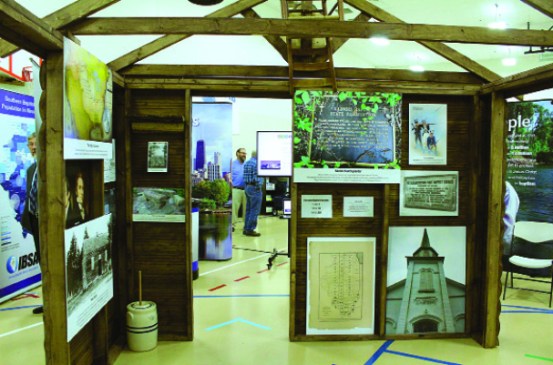
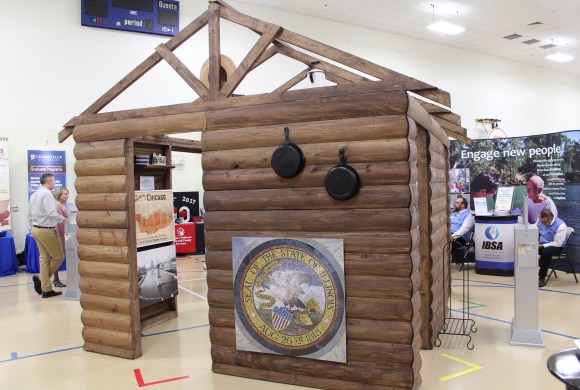
A log cabin stood in the exhibit hall at the 2017 IBSA Annual Meeting, surrounded by displays showing the current challenges of taking the gospel to people in Illinois.

Decatur, Ill. | Illinois Baptists were urged to remember their pioneering ancestors as they take the gospel to the more than 8 million people in the state who don’t know Christ.

One year before Illinois’ bicentennial celebration, the 2017 Annual Meeting of the Illinois Baptist State Association focused on “Pioneering Spirit” and asked churches to make four commitments: go new places, engage new people, make new sacrifices, and develop new leaders.

Kevin Carrothers web“We can’t be satisfied with the status quo, because the status quo is decline,” said IBSA President Kevin Carrothers (left) during his president’s message. The commitments are designed to help churches on the “uphill climb” to get the gospel to more people.

Preaching from the book of Numbers, Carrothers said no one remembers the names of the naysaying Israelites who didn’t want to go into the Promised Land. Instead, the real legacy of pioneering spirit was left by Joshua and Caleb, the two spies who trusted God to provide.

“They recognized the will of God was more important to obey than the whims and the desire of men, even if the majority won,” Carrothers said.

During a Wednesday evening worship service, church leaders put commitment cards on the altar—a symbol of their decision to take the gospel to new places, or to engage new people with the Good News, or to make new sacrifices of their resources, or to invest in new ways in the next generation of pastors, church planters, and missionaries.

The urgent need to get the gospel to more people was a driving theme of the meeting and Pastors’ Conference that preceded it, which started two days after a mass shooting at a Texas church. Southern Baptist Convention President Steve Gaines was slated to speak during both the Pastors’ Conference and Annual Meeting, but instead traveled to Sutherland Springs, Texas, to minister to the church that lost 26 people in the attack.

Tom Hufty webTom Hufty (right), pastor of First Baptist Church, Maryville, Ill., filled in for Gaines at the Annual Meeting, outlining the 8-year journey his church has been on since Pastor Fred Winters was shot and killed in his pulpit in March of 2009.
“These tragedies remind us there’s an urgency to share the gospel,” Hufty said. The pastor told meeting attenders he remembers exactly where he was and what he thought when he heard the news about Winters: What must it be like to have been in that building that day, and how difficult it would be to lead the church through the aftermath.

“Even in that shape,” Hufty said, speaking of churches that have endured tragedy, “the church is still the heartthrob of the bridegroom”–of Christ. Ministry isn’t rocket science, Hufty said. “It’s loving God. It’s loving people. It’s making disciples.”

Sammy Simmons webIn the meeting’s final session Thursday morning, Pastor Sammy Simmons (right) offered encouragement for those who are weary from a difficult season of life and ministry. Rely on the Lord, said the pastor of Immanuel Baptist Church in Benton. And keep taking bold steps for the sake of the gospel.
“The conditions are too rough, the lostness is too great, for us to continue to do business as normal,” Simmons preached. “The cause of the gospel causes us to make bold sacrifices for King Jesus.

“I’m all in for this pioneering spirit. Oh, how much our church needs it. Oh, how much I need it. Oh, how much our state needs it.”

Counting to 200

ib2newseditor —  November 6, 2017

illinois coat of arms

Illinois became a state on December 3, 1818. And so soon, those who pay attention to such things will begin the one-year countdown to our state’s bicentennial.

Because Illinois is our state mission field, the “Judea” in our churches’ Acts 1:8 missions responsibility, IBSA will be joining the bicentennial celebration with a countdown of our own. Launching at the 2017 IBSA Annual Meeting, and continuing through next year’s Annual Meeting, we are challenging IBSA churches to consider “counting to 200” in four very special ways.

First, we have identified 200 places or people groups in Illinois where a new church is desperately needed. We are inviting churches to adopt one or more of those 200 by praying, or partnering with resources or volunteers, or actually sponsoring the plant as the mother church.

Second, we are praying for at least 200 churches that will seek to become more frequently baptizing churches, by setting annual baptism goals and equipping their members to intentionally have gospel conversations and participate in evangelistic events and mission trips. We are praying for churches that will set their sights on baptizing at least once a month, or more than their previous three-year average.

Third, we are praying for at least 200 churches that will commit a percentage of their annual budgets to Cooperative Program missions, and then seek to increase that percentage annually toward 10% or more.

Potential for true mission advance is through churches that embrace pioneering spirit commitments.

And finally, we are praying for at least 200 churches that will commit to intentional leadership development processes—not only for the pastor and current leaders, but also for future pastors, planters, and missionaries.

Of course, some churches are fulfilling one or more of these challenges already. But for the overwhelming majority of IBSA churches, these challenges will be a major stretch. In fact, as our 2017 Annual Meeting theme suggests, moving beyond our status quo into these types of commitments will take a true “pioneering spirit.” It’s the kind of spirit that brought Baptist pioneers to Illinois more than 200 years ago.

That’s why we at IBSA are asking churches to register their “pioneering spirit” commitments, either now or in the coming months. Not only do we want to celebrate those commitments between the 2017 and 2018 IBSA Annual Meetings, but we also want to give those churches our focused, priority attention as an IBSA staff.

Certainly we will continue to be responsive to the requests and needs of all IBSA churches, and to provide services, resources, consultations, and events throughout the busy year. But we believe that the greatest potential for true mission advance in Illinois will be through churches that embrace these pioneering spirit commitments, and we want to come alongside them in special ways, and give them our priority assistance. We also want to network these churches together, so that they can benefit from one another’s experiences and ministry strategies.

The second verse of our Illinois state song begins, “Eighteen-eighteen saw your founding, Illinois, Illinois, and your progress is unbounding, Illinois, Illinois.” It goes on to remind us of the origin of that unbounding progress. “Pioneers once cleared the lands where great industries now stand. World renown you do command, Illinois, Illinois.”

When you see things like great industries and world renown, it’s usually because a few pioneers paved the way for them. And if we are to see great churches and world impact coming from Illinois Baptists, it will be because a few pioneers sacrificially pave the way. Will your church be one of those first 200 that brings a much-needed pioneering spirit to our state’s bicentennial, and to our mission of seeking and saving the lost here in Illinois?

Nate Adams is executive director of the Illinois Baptist State Association. Respond at IllinoisBaptist@IBSA.org. Read more at IBSA.org/pioneering.

The road ahead

ib2newseditor —  October 30, 2017

A tough but exciting journey awaits us

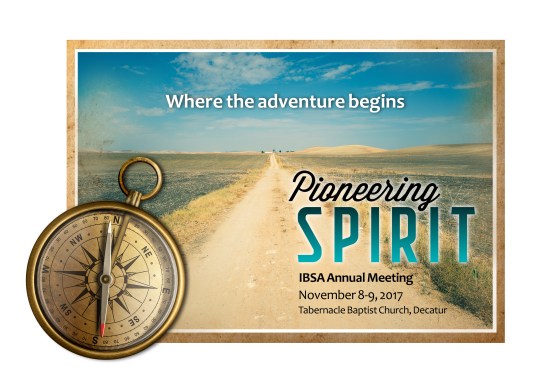
Postcard art w adventure inserted

If we were to drive west from Illinois, whether along Interstate 70 from St. Louis, 72 from Springfield, or 80 from Chicago, the experience would be largely the same. We would continue in a long, straight line for a very long time, rolling over a few hills and rivers in Missouri or Iowa before settling into the even longer, even straighter, seemingly eternal plains of Kansas or Nebraska and eastern Colorado. Then we would see the mountains.

Imagine what early pioneers must have thought when the amazing barrier of the Rocky Mountains first appeared on the horizon. No doubt many of them turned south or north for a while, hoping to find a way around. They knew the experience, equipment, and skills that had carried them across the slowly elevating plains would not take them over those mountains. They would need to find a pass, a way through. And even that journey would be like none they had faced before.

As we Southern Baptists in Illinois now approach our state’s bicentennial year, our journey is much the same. We have been on a long, flat path for years—in number of churches, in baptisms, in church plants, in giving, and in most measures of church involvement and growth. That’s not a criticism. It’s just a description of our recent journey.

Along the way, hardly noticeable until just recently, the altitude has gradually increased and the climb has grown steeper. So many cultural dynamics have grown counter to Christian faith, and perhaps especially to Baptist faith. We too can turn to the left or to the right for a while. But to truly advance from the plains of our status quo up into the mountains our mission now faces, I believe we must dig deep and find a new, pioneering spirit.

Go to new places
In Illinois Baptist mission life, going new places means taking the gospel to the counties and cities and communities where Baptist or even evangelical churches don’t yet exist or have a strong presence. It means church planting.

IBSA churches have numbered right around 1,000 for decades, even while planting around 20 new churches a year. With those one thousand churches baptizing between four and five new believers each, we reach about 4,000 to 5,000 people per year. Yet Illinois has 13 million people, and at least 8 million of them don’t claim to have a personal relationship with Jesus Christ. And most of them do not live near our existing churches. To leave the flatland of our status quo and reach the lost people of Illinois, we must increase and accelerate the number of new churches being started. We must place a gospel witness near them.

Pioneering Spirit Challenge #1: Will your church adopt at least one of the 200 places where a new church is needed? Your commitment can be to pray, or to partner with others to get that church started, or to be the primary planting church. Will you pray, partner, or plant?

Engage new people
Establishing healthy, new churches in the places where they are needed is one important commitment of a pioneering spirit. The first Baptists arrived in Illinois during a time when it was extremely difficult and even dangerous just to survive and eke out a living. Yet they considered it a priority to share the gospel and to start new Baptist churches. Four of those churches that were in existence when Illinois became a state in 1818 are still serving their communities today!

But being blessed—and burdened—with a pioneering spirit also leads churches, both new and established, to intentionally and consistently engage new people with the gospel message. With a sense of urgency, they will evangelize.

Sadly, it’s possible even for a well-intentioned church to lose its passion for evangelism, and become more of a church of settlers than a church of pioneers. They worship, and study, and fellowship, and even serve one another and the community. But very little energy goes into seeking and saving the lost.

Consider this: The almost 1,000 IBSA churches baptized about 4,000 people last year, four per church on average. But over 300 churches reported no baptisms at all. The remaining churches that reported baptisms averaged seven each. If non-baptizing churches simply reached the same number of people with the gospel that baptizing churches did, 7,000 people would come to know Christ next year. And just imagine what would happen if the churches already baptizing seven or more started baptizing monthly!

By intentionally shifting their focus toward evangelism, churches that have settled can become pioneering churches again.

Pioneering Spirit Challenge #2: Will your church commit to turning itself inside out into your community, training its members to intentionally have gospel conversations and evangelistic events, and asking God to increase the number of baptisms you see each year? Will you do whatever it takes to become a more frequently baptizing church?

Make new sacrifices
Going to new places and engaging new people is costly. It’s one reason so many stay where they are—and settle. Many early pioneers packed literally everything they owned into a wagon, and some sacrificed it all to get to their destination. A pioneering spirit sees the value of moving toward those new places and new people, and is willing to give sacrificially to make it happen.

Going to a new place of mission effectiveness here in Illinois will be costly too, especially if God inspires more churches and raises up more leaders, planters, and missionaries to go to new places and engage many new people. Fortunately, we as Illinois Baptists have a wonderful, reliable, tested vehicle in which to entrust our sacrifices. The Cooperative Program (some call it CP Missions) prioritizes missions in Illinois by investing 56.5% of its gifts here, while also sending 43.5% to be combined with others’ gifts and take the gospel throughout North America and the world.

Today the average IBSA church gives about 7% of its undesignated offerings to local and worldwide missions through the Cooperative Program. As with baptisms, that average is the result of some churches sacrificing far more, and some sacrificing far less. At one time, 10% was the accepted norm for Cooperative Program missions, and at one time IBSA churches averaged giving 11% rather than 7%. Simply stated, a return to that 10% standard could result in over $3 million more to missions next year.

Pioneering Spirit Challenge #3: Will your church commit to a new level of sacrificial missions giving through the Cooperative Program? Will you challenge your members to faithful tithing and life stewardship, so that generous giving transforms their own lives, as well as others’?

Develop new leaders
A pioneering spirit must be multi-generational. Very few destinations that require true, pioneering effort can be fully attained in one lifetime. Our parents’ generation brought us this far into our Baptist missionary journey in Illinois, and now we lead and will go a little farther before entrusting the journey to our children. That’s why a pioneering spirit must invest in the development of new leaders, even as it sacrifices and gives its all now.

It seems that churches used to have more systematic ways of developing new leaders. Sunday nights were invested in church leadership training programs. Wednesday nights were often invested in missions education programs that developed boys and girls, and young men and women, for tomorrow’s missionary and church leadership roles.

We should be grateful for churches that still develop tomorrow’s leaders in this way, while not necessarily wishing the same programs or methods on others. But today, more than ever, we must ask ourselves with a new seriousness, “How are we systematically and intentionally developing leaders for tomorrow’s churches?”

Pioneering Spirit Challenge #4: Will your church commit to the intentional developing of younger leaders who will be tomorrow’s pastors, and church planters, and missionaries? Will you join with other Baptist partners like IBSA who can help you develop these young leaders for tomorrow’s church?

Facing our mountains
Last summer I traveled to Loveland, Colorado, in part to scout out Long’s Peak, a 14,259-foot mountain that will hopefully, next year, be the thirty-first and most difficult “fourteener” I climb. As I headed west from the Interstate and flatlands of Loveland, I could not immediately see the pass up into the mountains. But soon I noticed that the road was following a stream, and then a mighty, rushing river. There was barely room for a road in some places, but the water had cut enough of a path through the rock that we could now follow it up to previously impossible heights. We eagerly forged ahead.

To leave the flat trends of our recent journey as Illinois Baptists may seem impossible at first. Our 200-year-old mission field is more lost now than ever. And developing new leaders while making new sacrifices to engage new people in new places with the gospel—well, that’s no easy path. But I believe the living water of God’s own Spirit has already made a way for us. If we are filled with his Pioneering Spirit and will follow him forward by faith, even into difficult places, I believe God has new heights planned for us here in Illinois.

Nate Adams is executive director of the Illinois Baptist State Association. The challenges outlined here will be presented in the Annual Meeting.