Archives For November 30, 1999

The Briefing

Trump meets with SBC’s Ezell, other relief leaders
President Donald Trump met with leaders of the three largest disaster relief organizations in the United States at the White House Sept. 1 to discuss relief efforts in south Texas in the wake of historic flooding and other damage left by Hurricane Harvey. Kevin Ezell, president of the North American Mission Board (NAMB), represented Southern Baptist Disaster Relief (SBDR) at the 25-minute private meeting in the Oval Office with the president and First Lady Melania Trump.

Nashville Statement signers stand for marriage
Signers of the Nashville Statement, a declaration affirming Biblical teaching on human sexuality, defended their position from other Christian and secular opponents this week. The Council on Biblical Manhood and Womanhood (CBMW) released the statement online Aug.29. The initial 150 evangelical leaders who signed it asserted the church needed clarity amid widespread confusion about a Biblical understanding of sex, sexuality, and morality.

Ministry sues over ‘hate group’ label
One Christian ministry has apparently had enough of the Southern Poverty Law Center’s disparaging “hate group” characterization. D. James Kennedy Ministries filed a lawsuit in an Alabama federal court alleging the Southern Poverty Law Center (SPLC) “trafficked in false and misleading descriptions” of the ministry and that other entities also named in the suit perpetuated the libel.

H.S. coach loses prayer case
A federal court has ruled that a Washington state high school football coach violated the U.S. Constitution by taking a knee at the 50-yard line and praying after games. Joe Kennedy lost his job as an assistant football coach at Bremerton High School in 2015 after the school district suspended him for his post-game prayers. Kennedy sued and accused the school of violating his free speech. The 9th Circuit Court of Appeals ruled that the district’s suspension was justified.

Most churched (& unchurched) cities in America
For six of the last seven years, the American Bible Society has named Chattanooga, Tenn., the nation’s most Bible-minded city. This year, it was the only American city where at least half the population was classified as Bible-minded. Almost 6 in 10 residents (59%) are regular churchgoers. Overall, almost 4 in 10 Americans (38%) are active churchgoers who have attended a service in the past seven days.

Sources: Baptist Press, World Magazine, Baptist Press, Fox News, Facts & Trends

Proposal2v.jpg

There was one point during the Southern Baptist Convention meeting in Phoenix when three thoughts of mine collided:

• How can this many people make a well-informed and well-reasoned decision?

• In the social media era, how can we make it possible for even more people to participate on a level that young adults have come to expect?

• And, then, how can we continue this very expensive system of having fewer and fewer people travel halfway or more across the country to attend?

The collision came late on Tuesday, when young messengers were pleading for the crowd in the hall to consider the weight of public opinion (read: Twitter) in their debate over alt-right racism. (“What will the people out there think of us?”) In my head, I could hear old people saying, “Who cares? This is not their decision, it’s ours—Southern Baptists—and in particular the ones who paid to travel to Phoenix to speak up and to vote.” (Maybe it was just me, speaking on behalf of old people.)

But to the young messengers pleading on behalf of the masses, it was important, because they are used to the hearing from the masses on every issue: like, heart, thumbs up, smiley face, colon/capital P tongue-sticking-out. (Yes, my emoticon reference is dated.)

Executive Committee President Frank Page told the messengers, proudly, that the Convention is an anomaly: “This is a deliberative body, the largest openly deliberative body that still exists,” Page said. “But know that the Executive Committee also deliberates carefully at multiple levels dealing with each of the issues before they’re ever presented to you, from small groups to medium-size [groups] to the large plenary sessions. Our Executive Committee members are not rubber-stampers. They ask questions, they deliberate, they discuss and sometimes disagree. So know that we hold your trust carefully and we count it to be precious.”

That’s an uneasy balance for Baptists whose theology makes us accustomed to voting on almost everything—even changing the light bulbs.

The first national Baptist body in the U.S. was the Triennial Convention, founded in Philadelphia in 1814. They met every three years. When Southern Baptists broke off in 1845, they chose to meet every year, and to include as many people as possible by sending messengers rather than electing representatives. (It is a small but important distinction.)

But technology and airline costs are pressing on our expectations: Remembering conventions with 15,000 and more regularly in attendance, we want more participants than the 5,000 who flew to Phoenix. And technology would make that possible. Yet, we do not want our denomination making knee-jerk statements at every cultural twist and turn. Theology doesn’t demand an annual meeting cycle or populist group-think.

I know these impulses seem to be in conflict: more participation, and more-reasoned debate. But watching the clock tick as debate on an unexpected resolution took time from discussion on the decline in baptisms and a renewed call to evangelism, it became clear that a relatively few people in a distant city can make reactionary decisions. Next time, the outcome might not be so positive.

(Editor’s Note: Modest Proposal 1 on merging the mission boards can be read here.)

-Eric Reed

Eclipse through glasses

As eclipse-watchers turned their eyes to the skies Monday, Aug. 21, much of the attention in Illinois was focused on the southern part of the state, where several communities laid in the eclipse’s “path of totality.” In Carbondale, just north of the point of longest duration for the total eclipse, churches worked together to share the gospel with thousands of people who traveled to the region for the event.

“As we see this amazing event today that God has made, let’s point people to see the Son who paid for our sin so that we can have eternal life!” Pastor Scott Foshie posted on Facebook. Foshie, pastor of Steeleville Baptist Church and an IBSA zone consultant in southern Illinois, helped facilitate an area-wide evangelistic effort to hand out 50,000 eclipse-themed gospel tracts.

The churches of Nine Mile Baptist Association, working in partnership with IBSA, had the tracts printed and mobilized volunteers to get them into the hands of eclipse-viewers in a multi-day outreach effort. The tract was designed to serve as a souvenir of the eclipse experience. “This is going to be the easiest thing you’ve ever passed out in your life,” Lakeland Baptist Church Pastor Phil Nelson said in a video promoting the outreach.

“They’re coming to see this eclipse, but God wants them to meet his son Jesus…I can’t think of an easier way to tell somebody about Jesus,” Foshie said. “All you’ve got to do is smile, walk up to them, and say, ‘Would you like to have this souvenir? God bless you.’ I mean, it’s that simple, and then we’ve planted a gospel seed.”

In addition to the tracts, pray-ers were stationed at four points in Carbondale—Lakeland, Murdale Baptist Church, FBC Elkville, and the Baptist Student Center at Southern Illinois University. The volunteers, standing next to six-foot crosses, prayed for cars as they entered the city. It was estimated around 90,000 people would be in Carbondale for the eclipse.

Many churches in the region partnered together for the outreach, Foshie said. “It was encouraging to see so many jump in and respond to our call to partner with us to share the gospel. This kind of partnership to reach the lost is what led Southern Baptists to join together in cooperation, and it is what keeps our ties strong.”

Foshie had heard of a young woman in Goreville who gave her life to Christ after receiving the tract, and reported volunteers had also handed them out to crowds that gathered in Carbondale, Pinckneyville, Chester, Ellis Grove, Steeleville, and other places in southern Illinois.

“It has been so encouraging to see so many churches and pastors pull together to plant gospel seeds in this way. I think God has used this ministry to bring us closer together. No doubt, he will continue to use this increased cooperation and closeness to reach the lost for Christ in more ways in the future.”

-Meredith Flynn

A place of safety

ib2newseditor —  August 3, 2017

Place of safety

Why security should be on every church’s radar

The shooting deaths of nine people at a Wednesday night prayer meeting at a Charleston, South Carolina, church raises two thoughts almost simultaneously: How could that happen? and, That could never happen here.

Until it does.

The tragic shooting death of Maryville pastor Fred Winters in 2011 is all the reminder people in Illinois need to understand that violent attacks do happen inside the church walls, even here. With that realization comes the challenge to be ready for the next time, perhaps in our own sanctuary.

The killings at Wedgwood may be the first such attack many people recall. Coming just five months after the 1999 Columbine school massacre, it seemed unthinkable that such evil had moved from school house to church house when a gunman murdered seven people during a Sunday night service at Fort Worth’s Wedgwood Baptist Church. Since then, violent attacks at church sites have increased 20-fold.

One-in-five attacks happens at a Baptist church, according to security expert Kevin Hardy.

“There is a threat against churches…We don’t know when something is coming, but we want to watch, we want to be prepared for when it does.”

Hardy led a conference on church security at Chatham Baptist Church in May. Over two days, church leaders from across Illinois received training from Strategos International, a Missouri-based company that teaches church personnel and lay leaders how to respond in stressful or crisis situations.

Hardy cited several statistics showing the need for increased security:
• Between 1999-2016 there were 1,314 deadly force incidents in churches, resulting in 651 deaths.
• In a study where 750 of 950 total motives for church violence were identified, robbery was the reason for 25% of attacks.
• Over half of incidents of church violence occur in towns with populations less than 10,000.

“You see statistics like [these],” Hardy said, “yet you’ll still hear people say ‘we don’t need protection.’” And, he warned, attacks happen in churches of all sizes.

Create a culture of awareness
James Gentry is a pastor on the west side of Chicago. Serving in an area marked by criminal activity, Gentry is concerned for his church, but not only for those in troubled neighborhoods. “I think all churches need to take a stand for security and not brush it off,” the pastor of New Morning Star Missionary Baptist Church said. Many claim God will keep them safe, ignoring the need for security, he said. Yet, in the Bible, God used armies of men to fight for his will and purposes. “So we need to keep that same mindset even today. We still have to keep the flock [safe].”

His wife, Ericka, agreed. “I can see [church security] being an even more urgent need in the near future. So the more we know and implement now, the more we can learn and improve and be prepared for those things.”

Being prepared starts with creating a culture of awareness in the local church, Hardy said. “You develop a culture where people recognize when something just doesn’t look right, or when someone may be acting just a little out of sorts. It’s a mindset; it’s being actively aware of your surroundings and those around you.”

When a whole congregation is trained to recognize when something doesn’t seem right, there’s an increased chance that suspicious behavior will be reported and dealt with before it escalates.

“The idea is to pray for the best, but prepare for the worst,” said Hardy.

The role of volunteers
Not many churches have security teams—yet. But Hardy advises training volunteers to serve. When dealing with an emergency, he said law enforcement officers are not the true first responders. Volunteers already on scene are. Hardy said he could only point to 9 or 10 times in the past decade when an act of church violence was resolved by an on duty police officer.

Considering this, it’s important that each church have a volunteer security team that is ready to respond to any possible threats, said Hardy. “We want to be able to function under pressure…knowing what to do, how to do it, [and] when to do it.” And that’s only possible through prior preparation and practice, he concluded.

One time of vulnerability is during and after the weekly offering collection. As the money is being gathered, Hardy advised having security team members stationed around the sanctuary. Then make sure at least two of those individuals escort the head usher to the counting room or keeping area until the collection is counted, secured, or transported to the bank.

Hardy suggested that in larger churches, when dealing with an especially big offering, it’s a good idea to even consider having security and armed transport take money to the bank. Or if you are part of a smaller congregation, designate this as a job for the security team.

Keep calm and carry on
Some people object to the way a security team would look to visitors. How can a team be equipped to protect the congregation, while still providing an atmosphere of comfort, refuge, worship, and learning?

“Historically, churches are not security-conscious; churches are image-conscious.” Therefore, he advises taking an informal approach, using non-uniformed security on Sunday mornings.

Hardy said he has attended churches with a uniformed team, and some even have local police officers keeping watch. This is a great deterrent outside the building. But inside, this can cause churchgoers to wonder why it’s necessary to have uniformed security at the church they’re visiting.

“You don’t want an armed officer sitting up by the podium or by the platform. Pastors don’t usually like that,” Hardy said. But ultimately, this is a personal decision to be discussed by church leadership, as every congregation has different needs and security concerns based on their church size and geographic location.

Jerry Weber, minister of education and administration at Chatham Baptist Church, said he thinks all churches should be following the basic guidelines presented in this training—look and observe, and if you see something, say something.

Some of this seems to be common sense, Weber said, “but it’s these things we need to train people how to do. We come to church and we focus on worship and Bible study and not really thinking, ‘OK, we need to focus on security as well.’”

But as Hardy reiterated several times throughout the conference, security should be on every church’s radar. “We often assume we’re going to have a safe worship environment.” And most of the time we do, he clarified. But we need to be prepared for the days that are the exception.

When planning for church security, the experts advise, “have a servant’s heart with a warrior’s mindset.”

-Morgan Jackson is a freelance writer living in Bloomington.

New study shows factors that attract and keep new members

Attracting and keeping people considered unchurched is rated as the top predictor of growth through new professions of faith at small churches, according to a new study encompassing 12 Christian denominations including Southern Baptists.

“These churches are places of invitation, welcome, and involvement for the unchurched,” the study’s authors said. “So, the unchurched stick around in greater numbers. And they come to Christ and get committed to the church in greater numbers.”

The Billy Graham Center of Wheaton College conducted the newly released study in partnership with Lifeway Research of the Southern Baptist Convention and the Caskey Center for Church Excellence of New Orleans Baptist Theological Seminary. The telephone survey of 1,500 pastors and church leaders found and ranked 29 predictors of growth through Christian conversion at churches of 250 members or less. Study authors released the top 10 growth predictors June 26.

Second to attracting and keeping the unchurched, small churches that grow by Christian conversions tend to offer classes for new attendees, the study found. Such classes help even when they are not evangelistic.

Third, small churches that grow through new baptisms are led by pastors who routinely undergo personal evangelism training.

“If the pastor is a learner and stays inspired and growing in the area of evangelism,” study authors said, “that pastor’s church will reach more people who commit to Christ and who stick.”

Newcomers church growth chart

In response to declining baptisms in the U.S., Southern Baptist Convention President Steve Gaines appointed a 19-member evangelism task force at the 2017 SBC annual meeting. The group of SBC seminary presidents and professors, pastors, and a state convention leader are expected to report its findings at the 2018 SBC annual meeting in Dallas.

Nearly 90% of Southern Baptist churches had weekly attendance of 250 or less as recently as 2013, and qualified for the “small church category.”

In the Wheaton study, the other top growth predictors among small churches are:

  • The pastor more frequently “pops the question,” asking people to commit after he shares the gospel.
  • The church spends a higher percentage of its budget on evangelism and missions.
  • Church members often tell the pastor that they themselves are sharing the gospel with others, rather than relying on the pastor to carry the load alone. “The church does not need superstar pastors who share their faith while everybody in the church cheers them on from the sidelines,” study authors said.
  • Unchurched visitors often communicate favorable feedback to pastors after weekly worship services.
  • The church shares the gospel outside its walls and conducts community service.
  • Churches that grow through conversions concurrently tend to draw members from other congregations. “In other words,” study authors wrote, “transfer and conversion growth tend to go together for small churches.”
  • Cited as the 10th most predictive factor of growth through new conversions, according to the study, “the pastor more frequently blocks out time in the calendar for the purpose of sharing the gospel with non-Christians. If the pastor is to lead evangelism in the church, the pastor must first personally live out the evangelism call.”

Smaller churches in the survey, those with 150 or fewer members, tended to grow more easily than the larger small churches in the survey, the study found. Additionally, predominantly Hispanic and Native American churches tended to fare better in growth.

Joining Southern Baptists in responding to the survey are members of the Assemblies of God, the Associate Reformed Presbyterian Church, the Church of the Nazarene, the Conservative Congregational Christian Conference, Converge Worldwide, the Evangelical Covenant Church, the Evangelical Free Church in America, The Foursquare Church, the Missionary Church, Vineyard US, and The Wesleyan Church.

Study authors include Ed Stetzer, executive director of Wheaton’s Billy Graham Center for Evangelism and former LifeWay Research executive director.

LifeWay Research plans to release a full report of the study at lifewayresearch.com.

– Diana Chandler, Baptist Press

Bryan Price

Bryan Price

The notion that Martin Luther was a reformer of preaching is one that receives little attention. Yet the changes to preaching brought about by his influence were instrumental not only in helping people grasp the fundamental truths of the faith, but also in transforming the very nature of Christian worship.

As we mark the 500th anniversary of the Reformation, Luther’s contributions to church’s thinking about the content, priority, and simplification of preaching still challenge us as modern-day pastors and worshipers.

Luther was a product of the preaching tradition of the medieval period, which, according to scholar Dennis Ngien, placed a significant burden upon the listener to do good works in hopes of earning favor with God. Grace was contingent upon performance, and Christ was emphasized as a judge who demanded righteous living.

But Reformation theology presented just the opposite view, emphasizing justification by grace alone, through faith alone, in Christ alone. Consequently, as the Reformation challenged the theology behind the sermon, it also brought about a shift in the content of the sermon. In Luther’s preaching, good works were no longer a means to acquire grace, but were the result of having received grace.

Along with transforming preaching content, the Reformation also led to a renewed emphasis on its priority. Writer Hughes Old explains that where worship was previously centered around the sacraments, with very little emphasis on the proclamation of Scripture, Luther was adamant that when the church gathered, clear exposition of the Word was to be first in order. He believed since true biblical worship was always in response to the preached Word, worship in the form of the sacraments and singing should come after hearing the Word proclaimed, and not before. In fact, Luther saw the preached Word as sacramental in and of itself. In his view, it was through the preached Word that the worshiper encountered the living Word.

In my own experience as a church planter, during the early years when our choir was young and inexperienced, the running joke was that whoever attended Love Fellowship came just for the preaching, because the choir was certainly not on the level of many of the established churches in the area. We would laugh about it, but there was a part of me that wished we had the luxury of a glorious choir that could help set the atmosphere of worship.

Since then, and having read Luther, I now see how blessed we were. Having to do without the ideal choir allowed us to establish a church where the preaching was and continues to be the central part of our worship. In a day where choirs and worship bands are employed for their ability to draw crowds and keep people on their feet, I think a re-reading of Luther would be a tremendous benefit to the body of Christ who, perhaps in this area, has lost her way.

Lastly, the Reformation led to the simplification of preaching. Though he was undoubtedly one of the greatest theological minds in Christian history, Luther was compelled to make deep spiritual truths accessible to the common layman.

In my survey of contemporary sermons by popular preachers, I am beginning to think those who preach may feel they have not done an adequate job unless they have parsed not less than two Greek words and have offered the opinion of at least ten noted scholars. I am sure their people leave on Sunday proud to have a pastor with such a high level of academic training, but whether they understood what was said is up for debate.

I can recall an instance where I used the word “eschatological” during the sermon. Afterwards, a brother asked me what “eschatological” meant. I told him, it refers to the end times. He then replied, “Why didn’t you just say that?” I think Luther would offer the same critique.

The Reformation forever altered the theological landscape of the Christian faith, but it also changed how that faith was proclaimed, for the glory of God and for the edification of the people of God. For this reason, we celebrate Luther. May we who preach continuously re-evaluate our work in light of his, so that the people to whom we preach will grow in God’s grace and become increasingly confident in the righteousness of Christ as the basis for their justification before God.

Bryan Price pastors Love Fellowship Baptist Church in Romeoville.

Priority 17 worship

Priority Conference looks at godly womanhood

“There’s a lot going on in the culture,” Carmen Halsey said. “If Christian women are not going to talk about it, who is?”

Halsey challenged the nearly 600 attenders at the Priority Women’s Conference in Decatur April 28-29, and brought before them speakers who would address tough issues women face today. “Some of the topics (at the conference) sound a bit risky,” she said, “but the culture is talking about it; the culture is who we’re going to have to reach. We are going to have to be brave if we’re going to do it.”

Halsey serves as IBSA Women’s Missions and Ministry director. The two-day conference addressed what it means to be godly women in today’s culture.

The conference took place against a backdrop of women’s marches with pink hats and cat ears, and a resurgence of debate on feminism and abortion. An April march on the state capitol in Springfield came the day of passage of a bill expanding taxpayer-funded abortions in the name of “women’s health care,” and now there is a renewed push for Illinois to become the thirty-seventh state pass the Equal Rights Amendment. Thirty eight are required for the ERA to become part of the U.S. Constitution, although the ten-year period for adoption expired 30 years ago.

How women can hold godly views and live Christ-like lives in such an environment may have been a subtext for the conference, but the admonitions were clear: “God calls us not to just be hearers of the Word, but also to be doers of the Word,” Halsey said.

“How do we create a safe place that we can come ask questions and learn from each other?” Halsey said. She emphasized the need for women to minister to women who don’t know Christ. And she brought to the platform teachers and leaders whose experiences serve as solid examples.

The missionary
Rebecca Epley served as an International Mission Board missionary to Bangladesh until taking voluntary retirement. Epley said its people are 96% Muslim, the rest are Hindu and Buddhist, with less than 1% Christian. “Many have never heard the name of Jesus, and do not know who Jesus is.”

Working with other missionaries, they started the Light of Hope Center to reach poor families. Muslims began threatening Christians who would go to the Christian center for help.

Epley shared, “One mother was told, if your daughter continues to go to this center, we’ll burn your house down.” The strong mother of six replied that the Christians had done much more for her daughter than the Muslims ever had. “She will not stop going to the center,” Epley quoted the woman as saying. “And no, they did not burn her house down.”

Epley also told about girl who visited the center who had gotten pregnant outside marriage. The girl had brought shame on her family, her mother pushed for an abortion. “In Bangladesh, they think until a baby is born it’s just a ball of blood,” said Epley.

“We found a Christian family to adopt that baby. That girl accepted the Lord, but later she was forced to marry a Muslim man. We can’t fix that situation, but we know that Jesus is in her heart.”

Epley encouraged the Illinois women to stand strong in their faith and to follow God’s leadership. “One of the verses God has given me is ‘Be still.’ Stop trying to figure it out. I will be exalted. Keep your eyes on me. He is going to be exalted through those girls in
Bangladesh.”

Church members
What should women do in the church? That’s a question with many answers, especially at a Southern Baptist women’s conference. Nora Allison and Carrie Campbell were the leaders of a breakout discussion on that topic. Allison is Director of Women at Sojourn Community Church in Louisville, Ky., and teaches at Southern Seminary. Campbell is a member of Sojourn, a student at Southern, and central Illinois native.

In the Bible we first see men and women in Genesis 1:26-28 when God created male and female in his image. In Ephesians 4:14-16 men and women are to work together as part of the church body.

“Peter says men and women alike are co-heirs,” Allison shared. “God gave women specific responsibility to lead and train other women in who they are supposed to be. Men and women are not alike in how they are created, or in how they live out their faith.

“Typically our churches are 60-65% women. We need women to identify their giftedness and then use their gifts in appropriate ways in their church.” Allison suggested doing this by having women teach other women and shepherd women in small groups.

Campbell said it’s important to “know what your church believes regarding women’s roles in the church.” It’s also good to find out if your church studied the biblical text to determine what the roles of women are. “What do you believe about the roles? Have you studied what the Bible says?” she asked.

Most important, Campbell said, “Examine your motives. Where is your heart ? It’s OK and right to push back if things are not biblical. Are you doing this for yourself and your own glory, or for God’s glory and his will to be done?”

Doers
“Feminism is alive and well in our culture and in the church,” or so said the breakout topic assigned to Jeanette Cloyd. A member of the Illinois Baptist Women’s State Advisory Team, Cloyd shared how after the Industrial Revolution, women started to be more involved in churches because they were looking for something worthwhile to do. But some women took it too far and acted as if they were more spiritual than men.

Cloyd said in the last twenty years, many women in evangelical churches have moved toward a more traditional biblical model of womanhood. Women are “having this constant struggle—a lot are quitting their jobs and staying home and raising their children.”

Women have begun looking for mentoring relationships. “We need someone to mentor, and not just younger women,” Cloyd said. “The Bible should be our guide,” she said, pointing to Titus 2. “We’re supposed to be humble and helpful to one another.” And mentoring is really discipleship. “We can’t do if we don’t know. We can’t look different to the world if we’re not doers of the word. That’s where discipleship comes in.”

And that’s the challenge for Baptist women: serving in the way of Christ, as godly women in a declining culture, so the world can see the difference.

-Lisa Misner Sergent

woman w flowers

Almost six months ago, God gave me the greatest gift I’ve ever received besides salvation and an amazing husband: a son.

Sheridan Steele Colter, born at 8 pounds and half an ounce after 30 hours of labor, is truly an answer to innumerable prayers. I’m continually in awe of the miracle of his life each time I whisper my love in his ear, stroke his strawberry-blonde hair, and tickle his tiny toes.

I’ve wanted to be a mom as far back as I can remember. My own mother modeled the role with excellence, and I grew up wanting to be just like her. Early in my marriage, however, God allowed my husband and me to experience the loss of precious life through miscarriage. Years that felt like decades passed, and with each one, we became a little less confident that we would ever become parents to biological children.

Like other holidays, this one can also be stressful.

We were in near disbelief and cautiously elated when a positive result registered on an at-home pregnancy test. We cried tears of joy that were every bit as wet and salty as those we’d shed over our previous losses. Months later, six days after his due date, our precious son arrived, a gift who shines brightly in my life, and all the brighter juxtaposed with the dimness that came before him.

I want to be sure “to forget not all [the Lord’s] benefits” (Psalm 103:2) and to thank God for the graciously sweet gift of a child. Yet, my heart remains bruised for those who approach Mother’s Day with deep sadness. Some have experienced the loss of their own mother. Some have had to bury children. Some have grieved through the pain of miscarriage. And some have watched the dream of parenthood die.

Scripture tells us to “rejoice with those who rejoice” and to “weep with those who weep” (Romans 12:15), and on Mother’s Day, we have the opportunity to practice both ends of that command. It seems to me that most of us have an easier time with the rejoicing part, but it’s the bearing one another’s burdens portion that can prove a bit more difficult. Here are just a few thoughts on how we might do that this year:

1. Don’t try to fix it. Only God can administer the “peace which passes all understanding” (Philippians 4:7). Tell hurting friends you are praying for them, and then don’t forget to do it. Consider sending a snail mail card or even a text message to someone after you have prayed, letting them know you did so. Often, that will arrive at just the right moment to encourage your friend’s heart, and they will no doubt be grateful you’ve approached the Lord on their behalf.

2. Create an environment where they are welcomed to rejoice with you in your celebrations. Think less about the fact that it might make you feel awkward that you have been given a blessing they would love to have, and more about the fact that they might love to have something to celebrate along with you, even in the midst of their own pain. Don’t think that just because they are hurting they will not want to share in your times of rejoicing.

3. Give them space. After you have created a welcoming environment for them to join in with you, respect the fact that they might wish to step back for a moment. There is not one single way to grieve—some people might desire a bit of space to themselves as they work through their pain. This is one of those times when sending a card might be the way to go. There is nothing intrusive about an envelope with a note of care being delivered to their mailbox, but it certainly lets your friend know you have thought of them.

4. Don’t do nothing. Horrible grammar, I know. But, truly, this is not one of those if-you-just-ignore-something-it-goes-away things. Your friend is hurting, and even though you cannot take away their pain, you can acknowledge it. Be honest with your friend that you don’t know what to say but you want them to know you are there for them.

As I finish typing this, my son is squealing with delight in his swing next to my rocking chair. He is a beautiful gift and the “joy” that has come in my “morning” (Psalm 30:5). I’ll celebrate being his mom this year, thanking the Lord for his faithfulness in the darkest of times and the brightest. I pray God reveals that faithfulness to those who mourn this Mother’s Day and that my celebration won’t multiply their pain, but instead point to a God whose character is good in the bad times and the pleasant, and whose love is without end.

Sharayah Colter is a writer in Fort Worth, Texas, and owner of Colter & Co. Design.

– From Baptist Press

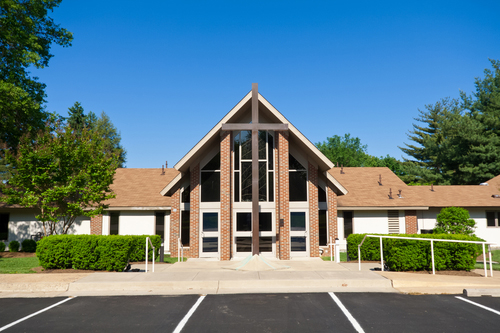
Exterior of Modern Church with Large Cross

A bill in the Illinois Senate that would have required pastors to take state-regulated classes in child protection raises important questions: Shouldn’t pastors do all they can to protect children, one colleague asked. Yes, obviously, but at what risk to religious communities’ First Amendment rights?

And, as important is this question: Why aren’t clergy engaging in stronger self-policing using a mechanism most already have in place, the ministerial code of ethics?

Sen. Melinda Bush of Lake County withdrew the bill last week, after objections from pastors on First Amendment grounds: If the state requires pastors to receive certification in this well-intended and altruistic concern, then what’s next? There aren’t many steps from this bill to government licensure of clergy and churches. “Won’t somebody please think of the children!” isn’t a sufficient argument to allow government regulation of pastoral work.

And, there’s a better way.

As a seminary student, I was required to write for myself a ministerial code of ethics. I studied a dozen examples and came up with a list of biblical and ethical ways for dealing with people, issues, and sticky situations.

A year or two later, I was the grader for that class, and I read scores of codes of ethics submitted by students. Most of these aspiring pastors took the assignment seriously, considering how they should handle counseling and confidentiality, reporting of abuse or neglect, the pastor’s relationship to the law and enforcement agencies. Some addressed euthanasia, and a few spoke to sexual identity and relationship issues just entering public discourse at the time.

Some of these students laid a good foundation for engaging and regulating their future work, so when hard questions arose, they already had biblical ways of processing the issues not based on emotion and reaction.

A good ministerial code of ethics guides pastors in their ministry to children and families in jeopardy. It requires that pastors stay up-to-date on the issues and the law. Through such personally adopted codes, pastors police themselves. They may join in voluntary association with other clergy in their enforcement.

Our Baptist polity—respecting the autonomy of the local church—doesn’t allow the denomination to enforce rules on pastors. Neither does the U. S. Constitution. That’s why we must take responsibility to govern ourselves.

For the sake of the children.

– Eric Reed

The Briefing

Has Trump found religion in the Oval Office?
President Donald Trump has increasingly infused references to God into his prepared remarks — calling on God to bless all the world after launching strikes in Syria, asking God to bless the newest Supreme Court justice, invoking the Lord to argue in favor of a war on opioids. Language like that has the Christian conservatives who helped lift Trump to the White House nodding their heads in approval. But others who have long followed Trump are skeptical that the president has found religion in the Oval Office.

Study: Evangelicals left churches over Trump
A number of Christians left their churches following last November’s election won by President Trump, including 10% of evangelicals who reported leaving their houses of worship before last December, a new study has found. The study found those most likely to leave their churches were Trump supporters who felt their clergy didn’t support him and those who opposed Trump and believed their church leaders strongly supported the billionaire real estate mogul.

Sounding the alarm on transgender regret
Robert Wenman was four years into being a “full-time” transgender woman in Ontario, Canada, when a police officer asked him: “You got all your legal rights by now. Why don’t you just enjoy life as a woman?” The question left the then-LGBT activist stuttering: Here he was, training a group of law enforcers on transgender rights, yet he couldn’t answer a basic question: Why? Why was he still campaigning, still fighting?

‘Bible Answer Man’ converts to Orthodoxy
On Palm Sunday, Hank Hanegraaff and his wife entered into Orthodox Christianity at St. Niktarios Greek Orthodox Church in Charlotte, NC. The former Protestant is well known among evangelicals as the Bible Answer Man. Since 1989, Hanegraaff has been answering questions on Christianity, denominations, and the Bible on a nationally syndicated radio broadcast.

Anticipation growing for SBC Phoenix 2017
Apparent interest in the Southern Baptist Convention’s upcoming annual meeting has necessitated an increase in hotel room availability for attendees the second consecutive year. The SBC Executive Committee has reserved an additional 500 rooms for the 2017 meeting June 13-14 in Phoenix. The previously reserved block of rooms was fully booked as early as March.

Sources: Politico, The Christian Post, World Magazine, Christianity Today, Baptist Press