Archives For November 30, 2017

The Briefing

Ken Hemphill to be SBC president nominee
Ken Hemphill, an administrator at North Greenville University and a former Southern Baptist Convention seminary president, will be nominated for SBC president, a coalition of Southern Baptists announced. Hemphill was president of Southwestern Baptist Theological Seminary from 1994-2003 and national strategist from 2003-11 for the SBC’s Empowering Kingdom Growth (EKG) emphasis, an initiative launched in 2002 calling Southern Baptists to renewed passion for God’s Kingdom.

More ‘nones’ heading back to church
About 6 in 10 people who identify their religion as “nothing in particular” stayed that way over the years, while the rest made a switch. About half of the defectors moved away from traditional faith to atheism and agnosticism (20%), while almost as many moved in the other direction and returned to the church (17.3%). Of the 2010 nones, 13.3 percent became Protestant, and 4 percent became Catholic.

After ’08 tornado, Union “united as never before”
At the 10-year point since a tornado devastated the campus, Union University marked the anniversary with a day of activities Feb. 2 featuring former administrators, students and others closely involved with the event. Former Union President David S. Dockery, in a Founders’ Day chapel address, spoke on providence, hope and unity the university experienced from the Feb. 5, 2008, tornado.

Ontario deals blow to religious freedom
Physicians in Ontario who object to performing abortions or euthanasia on moral or religious grounds must refer patients who request those procedures to another willing doctor, the Ontario Superior Court ruled. A group of Christian doctors and professional organizations said the policy infringes on rights to freedom of religion and conscience guaranteed under the Canadian Charter of Rights and Freedoms. The Ontario Superior Court justices said, while the policy does violate physicians’ rights to religious freedom, such limits are justified when weighed in balance with the need to ensure access to care for vulnerable patients.

Plan hatched to save Zimbabwe seminary
A Southern Baptist missionary from Kentucky is hatching a plan to help pastors in Zimbabwe get the training they need to lead a new generation of Christians. Nick Moore, who serves as a professor at the Baptist Theological Seminary of Zimbabwe, said few pastors can afford to attend Bible classes. But with help through the Cooperative Program, and a few local laborers, Moore has started building chicken houses as part of a community development project.

US Judge blocks deportation of Indonesian Christians
A federal judge blocked the deportation of 50 Indonesian Christians who have been living illegally in New Hampshire. The group includes people who fled violence in their country two decades ago and had been living openly for years under an informal deal with Immigration and Customs Enforcement. Judge Patti Saris in Boston ruled ICE cannot move forward with deportation until the Indonesians have a chance to make their cases for legal residence by arguing they would face persecution or violence if sent back.

Sources: Time Magazine, Christianity Today, BP News (3), The Christian Post

Summit gathers 1,000 church leaders for learning, encouragement, and reminder of shared mission

MLS main session

Springfield | Ministry in the Midwest has ups and downs, successes and struggles. The work of advancing the gospel in a diverse, large region requires creativity, perseverance, and a willingness to sacrifice personal preference.

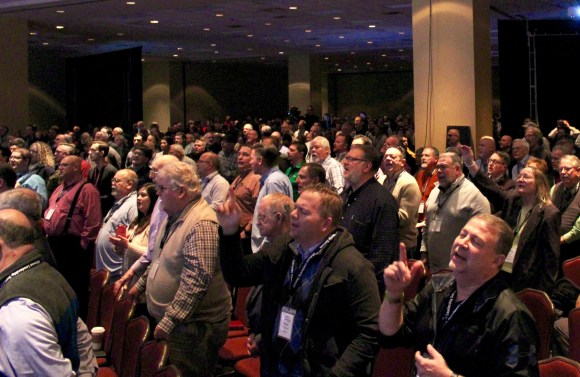
With their common calling in mind, more than 1,000 leaders from 13 Midwest states gathered in Springfield Jan. 23-25 at the Midwest Leadership Summit, a meeting organized every three years by Southern Baptist state conventions in the region.

“We share the same love for our communities and vision to see people come to Christ,” said Tim Burgess, a pastor in Mt. Vernon, Mo., “and getting together is a great reminder that we are not working at this alone.”

The large-group sessions and more than 90 breakouts tackled specific ministries—college campuses, church planting, missions, women, youth, and Disaster Relief, to name a few. Underlying each session was the need to advance the gospel in a culture that’s moving farther away from biblical truth. In our culture of change, one thing has stayed the same, said Detroit’s Darryl Gaddy.

“You look around and notice that nothing stays the same,” said the urban church planting specialist in his keynote address to open the Summit. “Nothing is as it was ten, five, or even two years ago.

“But actually there is one thing that does stay the same. Sin. Oh, the consistency of brokenness. It never takes a vacation. But friends, we are the church. And we, like Peter who raised the lame man up in the name of Jesus Christ, are called to speak into the brokenness.”

Gaddy urged Midwest leaders to be “agents of change” in their communities, which will require obedience when it’s not convenient, becoming less so others can become more, and giving up their rights to someone else—Jesus.

“We have received information for our heads, inspiration for our hearts, and implementation for our hands,” Gaddy said. “Let’s not leave here the same way we came.”

God at work
Like the Midwest itself, leaders in Springfield for the Summit represented a wide variety of contexts, including places where new churches are making inroads into previously unreached communities. North American Mission Board President Kevin Ezell facilitated a discussion with four planters who took to the main stage to talk about strategy, cooperation, and the power of prayer.

“There is a quote that I always go to when I think about our church,” said David Choi, pastor of Church of the Beloved in Chicago. “When men work, they work. But when men pray, God works. The great church planter is the Lord. Recruit prayer warriors to lift up your ministry because that’s truly the secret sauce.”

In a few years, Choi’s church has grown from one—himself—to encompass hundreds meeting for worship every weekend. He credited God for the growth, and the prayers of people who live far from his city but have made it a point to lift up Church of the Beloved.

Ezell also introduced Paul Sabino, pastor of Candeo Church on the campus of the University of Northern Iowa in Cedar Falls. Sabino is part of The Salt Network, a family of next-generation churches working together to plant churches in major university cities.

“We are seeing the power of God on us and it’s like holding a Dixie cup; it’s overflowing and we can’t contain it,” Sabino said. “Jesus said he would make us fishers of men. The fish are on college campuses and they are hungry. They are crying out for the living God to impact their lives.”

The focus on church planting was encouraging for Christine Watkins, who came to the Summit as a member of Jachin Baptist Church, a 10-month-old church plant in Flint, Mich. Her husband, Derrick, is pastor of the church named for a word found in 1 Kings 7:21. Jachin means “the Lord will establish,” Watkins said.

“I think attending this summit and hearing all the great knowledge and stories of how God has blessed young church plants is part of how God is opening doors and giving direction in how he is going to establish our church.”

‘Pray bigger prayers’
Jeff Iorg, President of Gateway Seminary in Ontario, Ca., understands what it means to advance the gospel in difficult environments.

“Much of what you are experiencing now in the Midwest we experienced 30 years ago in California,” he said during the Summit’s final session. “It seems like an impossible task with formidable obstacles…Yet, I’m here to tell you the gospel is advancing on the West Coast, and healthy churches are growing with denominational influence and cooperation.”

Iorg said the reason for the gospel’s advancement, especially in a hostile cultural environment, can be found in John 14.

“Jesus said in verse 12, ‘I assure you: The one who believes in me will also do the works that I do. And he will do even greater works than these, because I am going to the Father.’

“‘And he will do even greater works than these’—that is quite a sober declaration of Scripture,” Iorg said. “Do you believe the word of God? Do you believe Jesus meant what he said?”

Iorg encouraged leaders to pray and ask God for what is worthy to be asked for in Jesus’ name and to surrender control to the Holy Spirit.

“Confess your powerlessness and ask the Holy Spirit for the filling, guiding, and directing,” he said. “So often, we start to rely on our own strategic plans. That’s not going to work. We must depend on the filling of the Holy Spirit to get the mission done.”

The last step to advancing the gospel in this cultural environment is to teach people to read, understand, and obey the Bible. Iorg said the only time he has seen people transformed is when they engage God’s Word.

“No games, no gimmicks,” Iorg said. “Pray bigger prayers in the name of Jesus. Work in the Holy Spirit’s power and trust him to do supernatural things in you. And find a way to teach people to internalize the Word of God. That’s it. Now let’s go home and do it.”

Kayla Rinker is a freelance writer living in Missouri.

Fully staffed Court poised to rule on religious liberty issues

Christians and other conservatives hoped the U.S. Senate’s confirmation of 49-year-old Neil Gorsuch to the Supreme Court in April would tilt the court toward a favorable view of religious liberty concerns. As a U.S. Court of Appeals judge, Gorsuch’s rulings supported Hobby Lobby and other organizations that opposed—based on their religious convictions—healthcare legislation requiring their employee plans to cover abortions and abortion-inducing drugs.

So far, Gorsuch’s previous rulings have extended to his time on the High Court. In June, he was part of 7-2 ruling that found Christian schools should have the opportunity to be awarded government grants for playground upgrades. And this year, the court has agreed to hear the case of Jack Phillips, the Colorado cake artist who refused to design a wedding cake for a same-sex wedding celebration.

In 2017, other cases related to religious liberty played out elsewhere in the judicial system:

On Oct. 6, the Department of Health and Human Services issued new rules to provide relief from the requirement that employers provide their workers with coverage for contraceptives, including those that can potentially induce abortions. But a Dec. 15 ruling by a federal court in Philadelphia blocked enforcement of the new rules.

And late last year, the Oregon Court of Appeals ruled that the state did not violate the First Amendment rights of Aaron and Melissa Klein, who were fined $135,000 in 2015 for refusing to design and bake a cake for a lesbian couple’s commitment ceremony. The three-judge panel upheld a decision by the Oregon Bureau of Labor and Industries that found the Kleins’ refusal was based on unlawful discrimination against homosexuals.

While Gorsuch’s presence on the Supreme Court was a victory for religious freedom advocates, mixed results from other courts could indicate a contentious year ahead, and new territory for the church to navigate.

– With reporting from Baptist Press

The Briefing

J.D. Greear to be SBC president nominee again
Two years after withdrawing from a closely contested election for Southern Baptist Convention president, North Carolina pastor J.D. Greear once again will be nominated for SBC president, Florida pastor Ken Whitten announced Jan. 29. In a statement released to Baptist Press, Greear said, “I am again allowing my name to be placed in nomination” after “a lot of prayer, encouragement and counsel, with the consent of our [Summit] leadership team and Veronica my wife.”

Among themes Greear would emphasize as SBC president, he wrote, are “the Gospel above all” as the convention’s source of unity; “cultural and racial diversity”; “intentional, personal evangelism”; “church planting”; and “engagement of the next generation in cooperative giving and mission.”

After baptism gone wrong, court weakens church protections
A year ago, the Oklahoma Supreme Court decided a Muslim convert to Christianity couldn’t sue First Presbyterian Church in Tulsa for inadvertently alerting his would-be murderers with its online announcement of the baptism. Ten months later, the justices changed their minds, issuing a decision that the man could have his day in court. Last week, First Presbyterian has asked the state’s top court to take a third look at the case, arguing that the justices mixed up two separate issues of law: the ecclesiastical extension/church autonomy doctrine and the ministerial exception.

Barna: Atheism doubles among Generation Z
More than any other generation before them, Gen Z (born between 1999 and 2015) does not assert a religious identity. They might be drawn to things spiritual, but with a vastly different starting point from previous generations, many of whom received a basic education on the Bible and Christianity. And it shows: The percentage of Gen Z that identifies as atheist is double that of the U.S. adult population.

Same-sex couples fight citizenship battle
Two same-sex couples filed lawsuits this week against the U.S. State Department, arguing it unlawfully discriminated against them by denying their children U.S. citizenship. Since the Supreme Court’s 2015 Obergefell decision declaring same-sex marriage a constitutional right, LGBT advocates have been pushing back against laws that uphold the biological reality that every child is the genetic offspring of just one man and one woman and that a biological connection carries weight.

The internet has made Americans more casual about religion
A recent study by Baylor University has found evidence that the more we use the internet, the less likely we are to have a specific religious affiliation or to believe in and practice one religion exclusively. The study found that 55% of Americans don’t use the internet to access religious or spiritual content; another 23% said they do so at most once a month. Three-quarters of Americans said they never talk about their religious views on social media.

Sources: Baptist Press, Christianity Today, Barna Research, World Magazine, Gizmodo

Table Grace

It starts with a simple invitation.

“Have dinner with us.”

In a world where people tend to isolate themselves from their neighbors, Chad Williams and his family are recapturing an old-school concept to make a gospel difference in their community.

The family of five has a vision for biblical hospitality. They’re on a mission to bring people into their home and around their table to hear the gospel.

“They need Jesus, so we want them to come over to our house and see what it looks like to be a family that follows Christ,” said Williams, former family pastor at Tabernacle Baptist Church in Decatur and the new senior pastor of Rochester First Baptist Church.

“All of our flaws, all of our issues, our dirty house,” Williams said. “This is who we are.”

The Williamses try to designate one night a week to invite people to their home for a meal. It’s not fancy—tacos or chili. And it’s not necessarily reciprocated. But the family has been able to sow seeds of the gospel, and they’ve seen results. Recently, they invited a family from church to dinner. The father, not yet a Christian, engaged in several hours of conversation with the Williamses.

“If we really want to make an impact and get to know our neighbors, we’ve got to start engaging them in a way that they’re not expecting.” – Chad Williams, Rochester FBC

“He had a perception of who Christians were…as he got to spend time with us, there became this openness,” Williams said. A few weeks later, the man decided to follow Christ.

Asked if the commitment to spend time with others each week impinges on their family time, Williams said no, because it’s a shared commitment. The family is still at home, still sharing a meal together. They’re just inviting another family to join them. “We see this as part of our mission,” he said, “and we want to be on mission as a family.”

How can we help?
Chris Merritt and his wife, Alyssa, moved to Blue Mound, Ill., seven years ago. Both raised in central Illinois, the couple knew they wanted to live in a smaller town. Blue Mound, a community of around 1,200, is where they’re raising their two pre-teen sons.

Their church, Tabernacle Baptist in Decatur, sponsors two small groups in the region where the Merritts live. Along with their fellow life group members, the family is invested in building relationships in Blue Mound through community activities and by simply looking for opportunities to meet needs.

About a year ago, the Merritts approached their local school to see how they could help out. When the principal identified mentoring as an area of need, the couple and others from their church started a mentoring program.

“If I’m going to dedicate time for our children to be at these things, it’s logical for us to be there not just to support our children, but to build relationships in our community too.” – Chris Merritt, Tabernacle BC

“It’s just a regular, consistent positive influence of adults into kids’ lives who maybe need an extra positive influence,” said Merritt, who serves as church administrator at Tabernacle. The 12 students in the mentoring program have lunch every other week with their mentors. For that hour, he said, someone is asking them questions, encouraging them, and helping them make good decisions.

Outside of the mentoring program, the Merritts also are involved in Blue Mound through community sports leagues—the kids as players, and Merritt as a coach. He said being involved in the community through their kids’ activities is a natural choice. And they try to be intentional about making the most of their opportunities.

“If I’m going to dedicate time for our children to be at these things, it’s logical for us to be there not just to support our children, but to build relationships in our community too.”

Faith in action
Erica Luce credits her husband’s upbringing for her children’s willingness to serve their neighbors. “Dan spent his life serving others because his parents were so others-focused,” said the member of Delta Church in Springfield. That’s why their three children can often be found raking or shoveling to help a neighbor, or baking a welcome present for neighborhood newcomers.

“It’s given us so much room to speak truth into other people’s lives that are not really even seeking God,” Luce said. “They see faith in action, whether they want it or not.”

“It’s given us so much room to speak truth into other people’s lives that are not really even seeking God.” – Erica Luce, Delta Church

It’s been contagious on their block too, she said, recalling a time when her 12-year-son was shoveling a neighbor’s driveway and another neighbor came out to help.

Seeing the family home as missionary tool—whether it’s a place to invite people to, or a place missionaries are sent out of—is something Christians needs to recapture, Chad Williams said. Too often, we’ve lost the idea that our neighborhoods and workplaces are mission fields. Instead of seeing people’s need for Jesus, we see our co-workers and neighbors simply as people we interact with—and, if they’re hurting, we often don’t know it.

Rather than backing away from a culture that seems increasingly far from the gospel, Christian families have an opportunity to lean in closer, Williams said.

“If we really want to make an impact and get to know them, we’ve got to start engaging them in a way that they’re not expecting.”

IMG_5178 (1)

Church leaders from 13 Midwestern states gathered in Springfield, Ill., this week to share success stories and struggles—and to encourage each other through both—at the Midwest Leadership Summit, a meeting organized every three years by Southern Baptist state conventions in the region.

“We share the same love for our communities and vision to see people come to Christ,” said Missouri pastor Tim Burgess, “and getting together is a great reminder that we are not working at this alone.”

Watch the Midwest Leadership Summit recap video.

Over three days at Springfield’s Crowne Plaza Hotel, around 1,000 people heard from their Midwestern neighbors on a wide range of topics: collegiate church planting, urban ministry, church revitalization, women’s ministry, and a host of others presented in more than 90 breakouts.

In large-group sessions, North American Mission Board President Kevin Ezell interviewed four Midwestern church planters who have seen God grow their congregations from as few as one, into churches that welcome hundreds of worshipers each week. Jeff Iorg, president of Gateway Seminary, spoke on advancing the gospel in the current culture. And church planting specialist Darryl Gaddy shared from his experience in Detroit, calling leaders to be agents of change.

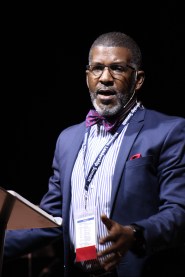
IMG_5013“Being a change agent means you have to give up your rights to someone else,” said Gaddy (right). “That someone else is Jesus Christ.”
At a luncheon for Illinois leaders following the summit, participants reflected on the most helpful, encouraging, and challenging things they heard.

Gary West, pastor of North Benton Baptist Church and director of missions for Franklin Baptist Association, said he gained new insight into how to extend the gospel to Millennials, the generation generally categorized as people born between 1981 and 2000.

“I’m re-looking at the dynamics of church and the things you used to do that don’t work anymore,” West said. “It’s not about religion, it’s about relationships.”

Look for more from the Midwest Leadership Summit in the Feb. 5 issue of the Illinois Baptist, online at ibonline.IBSA.org.

The Midwest Leadership Summit Recap (2018) from IL Baptist State Association on Vimeo.


Silent no more, abuse victims speak out

Movie producer Harvey Weinstein was only the first of countless celebrity men disgraced by allegations of sexual harassment and assault in 2017. And as the names added up—each seemingly more famous and more familiar and more unlikely than the last—so did the names and faces of their victims.

On social media, #metoo became a rallying cry for women who have been abused or oppressed or pushed aside or used by men in power. When Time named their most influential people of 2017, “the silence breakers” topped the list.

And lest those outside of Hollywood or Washington fall prey to a cavalier “who’s next” attitude, another hashtag soon appeared on Twitter: #churchtoo, used to denote people who have been abused by religious leaders, or those whose church has failed to support them when they reported an abusive situation.

In January, an associate pastor at non-denominational Highpoint Church in Memphis admitted an instance of sexual misconduct 20 years ago after the victim, then a high school student, shared her #metoo story. When the pastor, Andy Savage, spoke to his church the Sunday after the story broke, he received a standing ovation. His accuser, Jules Woodson, told The New York Times the ovation was “disgusting.”

“It doesn’t matter if I was his only victim,” Woodson said. “What matters is that this was a big problem and continues to go on.”

Late last year, more than 140 evangelical women signed on to a statement decrying abuse with the hashtag #SilenceIsNotSpiritual. “This moment in history is ours to steward,” reads the statement. “We are calling churches, particularly those in our stream of the Christian faith—evangelical churches—to end the silence and stop all participation in violence against women.”

As churches and their leaders move into a 2018 still reeling from scandal, the most pressing challenge may well be discerning how the Bible should inform and instruct Christians living in a #metoo culture. And answering this question: When a few women are silence breakers on behalf of a great many, what does that say about what the church is saying to and about women?

“The contributions of women in the advancement of the kingdom are essential and indispensable,” author and teacher Jen Wilkin said at a conference recently. “If we have crafted a vision for the church in which women are extra, in which women are nice but not necessary, we have a crafted a vision for the church that is foreign to the Scriptures.”

The Briefing

HHS division created to guard right of conscience
A new division within the U.S. Department of Health and Human Services is earning praise from religious liberty advocates. The Conscience and Religious Freedom Division will “more vigorously and effectively enforce existing laws protecting the rights of conscience and religious freedom, the first freedom protected in the Bill of Rights,” the Trump administration announced Jan. 18.

“I am thankful that HHS recognizes how imperiled conscience rights have been in recent years in this arena and is actively working and leading to turn the tide in the other direction,” said Russell Moore, president of the Ethics & Religious Liberty Commission. “Health care professionals should be freed up to care for the bodies and minds of their patients, not tied up by having their own consciences bound.”

Christian student organization takes university to court
A student organization deregistered by the University of Iowa is fighting the school’s decision in court. Business Leaders in Christ (BLinC) was deregistered in November after a former member said he was not allowed to become a leader in the organization because he is gay.

Evangelist Palau shares cancer diagnosis
International evangelist Luis Palau announced last week he is fighting stage 4 lung cancer. Acknowledging healing “would literally take a miracle,” Palau also said he is “completely at peace.”

Parenting research: More kids, not enough time
Two recent Pew Research studies measure current family dynamics, both for moms, who are having more children now than a decade ago; and dads, who say they spend too little time with their kids.

Midwest Baptist leaders meet in Illinois
The Midwest Leadership Summit begins today, drawing Southern Baptist leaders from 13 states to Springfield, Ill., for plenary sessions and breakouts facilitated by ministry leaders in a variety of specialties. Follow along on Twitter with #mwadvance.

Churches challenged to baptize 1,000 on one day

One Grand social

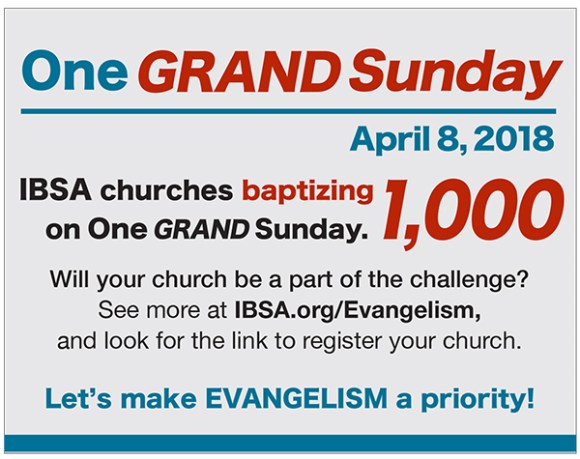
One thousand baptisms on a single Sunday. That’s the challenge behind One GRAND Sunday, an initiative designed to help IBSA churches train church members in evangelism, share the gospel, and follow-up with believer’s baptism.

One GRAND Sunday is scheduled for April 8, one week after Easter.

“Easter is normally a high attendance day, and the strategy of scheduling April 8 as One GRAND Sunday is to encourage people to return the following week to witness an historic event—their church being a part of 1,000 people being baptized on one day!” said Pat Pajak, IBSA’s associate executive director of evangelism.

The baptism-focused Sunday is part of a series of “Pioneering Spirit” challenges put before IBSA churches at the 2017 Annual Meeting. The evangelism challenge is for 200 or more IBSA churches to baptize 12 or more people each year, or to baptize more than the church’s previous three-year average. In other words, the commitment is for IBSA churches to become “frequently baptizing churches.” So far, 57 churches have accepted the challenge to engage new people with the gospel.

“Unfortunately, baptisms across our state have been declining over the past several years, and I would like to see One GRAND Sunday serve as a reminder that the church exists to evangelize and baptize those in the communities where God has planted them,” Pajak said.

The One GRAND Sunday emphasis coincides with a North American Mission Board-sponsored effort to promote gospel conversations, or opportunities to share the gospel. NAMB is urging Southern Baptists to have one million gospel conversations by next summer’s Southern Baptist Convention in Dallas. At gcchallenge.com, people can upload videos of themselves sharing about gospel conversations they’ve had, and get more information about gospel-sharing resources, like the “3 Circles” guide.

With just under three months left until April 8, Pajak suggested this timeline for churches preparing for One GRAND Sunday:

January: Collect your church’s baptism numbers for the past three years. Prayerfully set a new goal for this year.

February: Announce the baptism event and launch gospel conversations. Register your goal at IBSA.org/Evangelism. Conduct the training for church members. Consider teaching the “3 Circles” method.

March: Promote One GRAND Sunday. Personally follow-up with prospects and new believers. Teach about baptism, either personally or in a group setting.

April 8: Baptize!

April 9: Start over again.

One thousand is a large number, but Pajak put the goal in perspective. “What may look like a very lofty goal can easily be accomplished if every one of our 1,000 churches simply committed to baptizing one person.”

For more information about One GRAND Sunday and evangelism resources, or to register to participate in the April 8 emphasis, go to IBSA.org/Evangelism.

Jonathan DavisSeptember 2013 will forever be seared in my mind as when I received the phone call every seminarian hopes for: God had called me to my first pastorate.

Recognizing the weightiness of it all, one thing became quite apparent: I was going to need major help. In God’s providence, that help came in a multitude of ways. One in particular was John Piper’s book, “Brothers, We Are Not Professionals.”

With a passion and precision that he is known for, God used this veteran pastor to help shape my understanding of what it means to shepherd the flock of God. His thoughts on preaching were priceless, especially knowing I was to be responsible for the weekly preaching of God’s Word.

Within the wisdom of that book, one practical thought on preaching still reverberates in my ministry today. Piper made sure he preached on abortion at least once a year in his church.

“Pastors should put their lives and ministries on the line in this issue,” he writes. He was appalled at the “cowardice of some pastors when it comes to preaching against abortion.”

“If anyone should take up the cause of the unborn, it is the man of God in the pulpit.”

The gauntlet was thrown, and I felt the challenge deeply. I can’t fully explain it, but for me, reading those words was one of those moments when a truth concretized in an instant. I was resolved. There would be no cowardice on this issue on my watch.

Tony Merida (an author and pastor in North Carolina) said, “At its most basic level, expository preaching is preaching in such a way that the listeners get wet with God’s Word after the sermon.” Of this I was convinced. But it was Piper who convinced me that if I was going to discharge my pastoral duty faithfully, then I must make a point to preach the truth of God’s Word on the matter of abortion. He persuaded me that some topics are worthy of deliberate considering because they are just that important. The sanctity of human life is one of those topics.

God’s people are immersed in a culture of death. Whether it’s through the world at large, the onslaught of social media posts, or the inescapable daily news cycle, the spiritual forces of evil work overtime to diminish the value of life.

The cosmic powers over this present darkness are crafty in their attacks against the imago dei. They don’t care how they devalue life.

God’s ordained counter-offensive against this attack is preachers who lead their people by their preaching—empowered by the Spirit of God and armed with his Word. If anyone should take up the cause of the unborn, it is the man of God in the pulpit.

That’s not to say everyone else in the church is off the hook on this matter. But it is to say that if everyone else were to remain silent, there ought to be at least one champion for God’s image-bearers in the womb (and out of the womb, for that matter). That’s you, pastor.

In my own pastoral ministry, I have sought to lead in this way. Over the years, my definition of what I mean by “sanctity of life” has broadened. We generally think of it only being about abortion. But a legitimate category under sanctity of life is the desire for the flourishing of life.

This means in my preaching I’ve not only tried to expose the evil of abortion, but I’ve also sought to bear the gospel on racial reconciliation, proclaim the goodness of God’s design in gender, uphold the roles of men and women in the church and home, and lead God’s people in how to think through issues of euthanasia/suicide.

Now you might be thinking, “Why sanctity of life? Why this issue? Surely there are other matters to fight for as well.” If you think this, you’re right.

The sanctity of life is not the only issue. But it is worthy of a pastor’s prophetic voice in a world full of ears itching for teachers to suit their own passions.

My encouragement to you is the same mandate from Piper that fell on me: “Brothers, blow the trumpet for the unborn.”

Jonathan Davis is pastor of Delta Church in Springfield.