Archives For November 30, 1999

Throwing out a lifeline

ib2newseditor —  January 26, 2017

Resource centers and clinics aid those facing difficult choices
70116infant-being-held

Snapshots from Tennessee and Illinois    
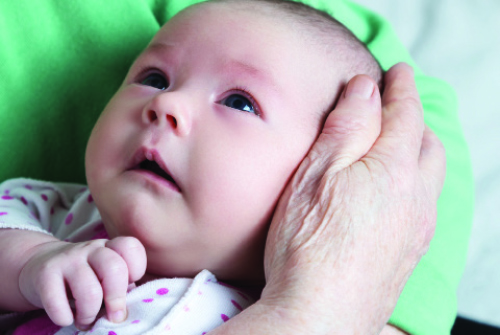
When a woman walks into the medical clinic operated by Agape House in northwest Tennessee, she won’t find evangelism tracts or Bibles in the waiting room. While she waits nervously to have an ultrasound to confirm her pregnancy, she won’t be judged regardless of her circumstances. And if she tells the clinic staff that she’s considering having an abortion, she will be given all the information she needs about her child, but won’t be pressured into a decision.

“If someone tries to talk a woman out of a decision to abort” before her heart is ready to accept it, “then someone else can easily talk her back into it after she leaves,” said Linda DeBoard, CEO of Agape House and a member of First Baptist Church in Martin, Tenn.

“When ladies come to our clinic, our mission is to empower them with the truth about life so that they can make the best choice for themselves. We know that’s a choice for life, but she has to come to that realization after she has been given all the truth.”

Agape House is one of thousands of pro-life organizations throughout the country on the front lines of elevating the sanctity of human life. Pregnancy resource centers and medical clinics such as the one operated by Agape House offer various services to support women and men faced with pregnancy decisions.

Some centers minister to those who need assistance throughout a pregnancy in the form of training classes, counseling, or material goods such as diapers. Others, like Agape House’s clinic, focus on reaching women who are at risk for abortion, offering medical services and informing them of their pregnancy options. Illinois Right to Life reports there are around 100 pregnancy resource centers in Illinois.

Angels’ Cove Maternity Center, an arm of Illinois Baptist Children’s Home and Family Services, offers expectant and new mothers a place to live, as well as life and parenting skills, individual and group therapy, and adoption services for those who choose that option.

Doug Devore, who retired this month after almost 44 years at BCHFS, said it’s a joy to see a mother hold her child after making the decision to choose life. “Whether she is 12 or 40, she may not be prepared for that child,” he said. “We have the responsibility to help get her prepared and to help her be the very best mother that she can be. That could be teaching her parenting skills, it might mean helping her get a job, helping her find housing. Whatever it’s gonna take for her to provide the best environment for that child.”

Care at every stage
Our culture has lied to women about abortion, telling them that it is a “quick fix” and that their lives will return to normal afterward, DeBoard said. Agape House is committed to providing truthful information about all pregnancy options—including parenting, adoption, and what abortion is and how the procedures work—and offering a safe space where women can process the information, she said.

DeBoard said that by offering their services this way, they have the opportunity to reach women who would never go to a church for help.

“A woman in our area who is wanting to have an abortion, and has already made the decision to have an abortion, is not going to church to tell you that she wants an abortion. She’s not,” DeBoard said. “She’s running from the church.”

A 2015 study from LifeWay Research supports that assertion. In a survey of women who have had abortions, 59% of respondents said they received or expected to receive a judgmental or condemning attitude from a local church as they considered their decision to abort, while 29% said they received or expected to receive a loving or caring response. And 54% of women would not recommend to someone close to them that they discuss their decision regarding an unplanned pregnancy with someone at a local church, while only 25% would recommend it.

Agape staff and volunteers may ask clients whether they have a faith that might influence their pregnancy decision. This often leads to opportunities to share the gospel or to encourage women in their relationship with Jesus. They also offer a Bible study program for women who have previously had abortions.

DeBoard reminds pastors that their pews may be filled with women who have abortions in their past. According to the Guttmacher Institute, a research organization with ties to Planned Parenthood, approximately 30% of women will have had an abortion by age 45. “What abortion is and does needs to be told and spoken and preached,” DeBoard said, but with sensitivity to the women who are hurting from their own abortion experiences.

“There’s no sin too great that God won’t forgive us and set us free and use our mistakes for his glory.”

Excerpted in part from an article in SBC LIFE, newsjournal of the Southern Baptist Convention. Used by permission.

For more information about services offered through Illinois Baptist Children’s Home and Family Services, go to BCHFS.com.

The BriefingIllinois House urged to reject taxpayer-funded abortions
SpeakOut Illinois, a coalition of pro-life and pro-family organizations across the state,  urged lawmakers in the Illinois House to reject legislation allowing taxpayer money to be used for abortions. House Bill 4013 lifts the current prohibition on state workers’ health insurance plans from paying for elective abortions, as well as the prohibition on using public money to pay for elective abortions for Medicaid patients. The piece of legislation could be called up for a vote as early as this week.

How many Christians are in the new Congress?
Pew’s Religion & Public Life found that 90.7% of the 115th Congress identify as Christian, a statistic that has changed little in over a half century of keeping record. “The share of U.S. adults who describe themselves as Christians has been declining for decades, but the U.S. Congress is about as Christian today as it was in the early 1960s,” noted Pew. Of the 91% Christian majority, 31.4% are Catholic, 13.5% are Baptist, 8.5% are Methodist, 6.5% are Anglican or Episcopal, and another 6.5% are Presbyterian.

Multi-faith network rescuing women from Isis
A secret underground network operating in Iraq and Syria has reportedly freed more than 3,000 Yazidi women held captive in sexual slavery by Isis. Kurdish and Christian civilians make up the group, along with other ethnic minorities and families of the victims, NGO Yazda has claimed. Rescues are carried out through word of mouth, driven by Yazidis who have escaped capture or whose loved ones are still being held in Isis territory.

Gay couple to pastor historic DC Baptist church
Calvary Baptist Church, a progressive Baptist landmark in the heart of downtown Washington, has named a gay couple as co-pastors. Sally Sarratt and Maria Swearingen were presented to the congregation during worship services Jan. 8 and will begin their new jobs on Feb. 26. The 150-year-old church severed ties with the Southern Baptist Convention in 2012.

S. Baptists lead Congressional Prayer Caucus
Rep. Mark Walker, R.-N.C., will be the new House of Representatives co-chairman of the Congressional Prayer Caucus, it was announced Jan. 9. Sen. James Lankford, R.-Okla., the other co-chairman of the prayer caucus, and former Rep. Randy Forbes, R.-Va., made the announcement. All three are members of Southern Baptist churches.

Sources: Illinois Family Institute, Christian Post, Independent, Religion News Service, Baptist Press

The BriefingIllinois B&B owners lose another round
A same-sex couple denied access to a central Illinois bed and breakfast while planning their civil union ceremony has won another legal victory in a five-year discrimination case that’s highlighted the conflict between religious freedoms and gay civil rights.

Atheists urge skipping church on Christmas
American Atheists, one of the nation’s largest secular groups, is launching a billboard campaign that encourages Americans to skip church this Christmas. The group is putting billboards up in cities across the country, including Colorado Springs, Colorado; Lynchburg, Virginia; Augusta, Georgia; Shreveport, Louisiana; and Georgetown, South Carolina.

Starbucks stirs up controversy — again
The culture wars come every December, fueled by peppermint mochas and venti soy lattes. The battleground is Starbucks. It’s always Starbucks, isn’t it? No one is complaining that the blue-and-brown holiday cups at Caribou Coffee take the “Christ” out of Christmas. Religion. Politics. The Bill of Rights. They all converge here, in front of a glass case full of cake pops.

Liberty advocates lament loss
Religious freedom advocates have expressed deep disappointment about congressional leaders’ failure to protect the rights of faith-based organizations in a national defense bill. The Russell Amendment was not included in the final version of the 2017 National Defense Authorization Act which designates nearly $620 billion in spending for the armed services. The amendment would have protected the rights of non-profit religious contractors to maintain hiring practices in keeping with their beliefs.

Docs: Don’t force us to aid suicide
A group of Vermont medical professionals is suing state officials for demanding doctors counsel patients on physician-assisted suicide. The Vermont Board of Medical Practice and Office of Professional Regulation declared the state’s assisted suicide law, enacted in 2013, requires healthcare professionals, regardless of conscience or oath, to inform terminally ill patients that one of their medical options is doctor-prescribed suicide.

Sources: Belleville News-Democrat, Fox News, Washington Post, Baptist Press, World Magazine

Missions opportunities to highlight gathering in Metro Chicago

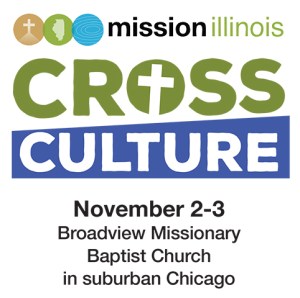
Final preparations are under way for the 110th IBSA Annual Meeting November 2-3. The event at Broadview Missionary Baptist Church in metro Chicago will focus on cross-culture ministry opportunities in Illinois. The keynote speaker will be Dr. Jeff Iorg, president of Gateway Seminary of the SBC, called Golden Gate Seminary prior to its relocation from the San Francisco Bay Area to metro Los Angeles this year.

“Dr. Iorg is among the most compelling, thoughtful, and missional voices in Southern Baptist life today, especially when it comes to understanding post-Christian culture in America,” said IBSA Executive Director Nate Adams. “I’m so grateful that he is leading our West Coast seminary into the future, where pastors and leaders will engage values and cultures that are already very different from those of the past century.”

I hope this year’s Annual Meeting will bring to all of us a new vision and higher level of commitment to ‘cross culture’ with the gospel.

Iorg is a former church planter and state convention executive director in the Pacific Northwest. As a leader of Southern Baptist work on the West Coast, Iorg has addressed many of the cultural challenges now facing evangelicals in the Midwest. He has written frequently on theological and biblical perspectives on marriage, sexuality, and gender. His book “Building Antioch” shows from the New Testament how an ordinary believing congregation can become a transformational community.

“Illinois Baptists will come away from Dr. Iorg’s messages challenged and transformed, I’m sure,” Adams said.

The Wednesday evening session, including Iorg, will focus on a four-phase process for engaging ministry across cultural barriers. Adams will outline the plan and share testimonies and videos of Illinois churches carrying the gospel to people unlike themselves.

“My own recent trips to Chicago have reminded me again how diverse our churches are, and even more so how varied and challenging are the cultures that our churches need to reach,” Adams said. “I hope this year’s Annual Meeting will bring to all of us a new vision and higher level of commitment to ‘cross culture’ with the gospel.”

IBSA President Kevin Carrothers, pastor of Rochester First Baptist Church and Vice President Adron Robinson, pastor of Hillcrest Baptist Church in Country Club Hills, will also bring messages.

In addition to the session on the variety of ministry opportunities in Illinois, the meeting will include two business sessions on Wednesday afternoon and Thursday morning. Vision tours of Chicago-area ministry opportunities are available. Seating is limited, so online registration is encouraged.

Visit www.IBSAAnnualMeeting.org to learn more.

The Faith Frontier

ib2newseditor —  October 24, 2016

Illinois has come a long way, but we still have a way to go

Illinois IL State United States of America 3d Animated State Map

When Illinois became a state in 1818, fewer than 100 people lived in Chicago, and less than that at Calhoun. The hubs of activity were places such as Kaskaskia, on the banks of the Mississippi River. The town swelled to 7,000 when it became the first state capital for one year. Then bustling Vandalia was the capital for 20 years, until Abraham Lincoln and a few others had the capital moved to Calhoun in 1839. Calhoun had been renamed after Springfield, Massachusetts, a center of trade, creativity, and innovation. They had high hopes for their new Springfield—and for all of Illinois.

Catholic priests came to the area early, following French trappers and traders into St. Louis and later Chicago, building a few churches and converting a few Native Americans. The trappers were largely unconverted. Baptists and some Methodists were on scene by 1781, starting the first Protestant congregation in Illinois and building a Baptist meeting house at New Design, across from St. Louis on the river.

Illinois was a frontier state 200 years ago. Today, in many ways, it still is.

Almost 13 million people live in Illinois. But in terms of faith, the state is wild and untamed. At least 8 million residents do not know Jesus Christ. As the population grows, the percentage who identify with any religion at all continues to decline.

The state’s population hubs are our largest mission fields, especially metro Chicago and metro East St. Louis. Our cities are teeming centers of commerce and education, with growing populations of immigrant peoples.

The last census showed Hispanic and Asian populations are the fastest growing ethnic groups in the state. In fact, the Hispanic population grew in all but one of Illinois’ 102 counties.

In Illinois, nine people groups are unreached with the gospel because of language and cultural barriers, but literally millions of English-speaking and culturally mainstream people have never heard the message of salvation in a way they have understood and believed.

On our college campuses, for example, almost 900,000 students represent a mission field with enormous potential, and historically the lowest percentage of believers among young adults ever.

The cultural withdrawal from the Christian faith is felt all across Illinois—in cities and university settings, in small towns and crossroads communities. The northwest quadrant of Illinois is one of the least-Christian areas in the nation. And scattered across the state, there are nine counties that have no Southern Baptist congregation, 12 counties have only one, and many more have minimal evangelical presence.

In 40% of Illinois counties, less than 1% of the population identifies as Southern Baptist.

By faithful, regular, systematic giving to missions through the Cooperative Program, Baptists together serve as missions pioneers, in our frontier territory in Illinois and around the world, wherever the gospel is needed.

Come to Chicago

ib2newseditor —  October 3, 2016

Annual Meeting to focus on reaching across cultures—and opportunities in Illinois

am_2016_logoWhen the lawyer—trying to get out of his moral obligation—said, “Who is my neighbor?”, Jesus’ response produced an even greater responsibility: be willing to cross cultures in order to help another.

The requirements of love in the story he told of the good Samaritan might seem excessive if Jesus himself had not already fulfilled them. The priest in the parable refused to cross the road to aid a dying man, yet Jesus chose to cross the border into forbidden territory to help an immoral woman.

For a faithful Jewish man, this was not one, but three violations of custom and law.

“Now he had to go through Samaria,” the apostle John records (John 4:4). Had to? In what way?

Good Jews avoided Samaria. They took the long way around on a trip from Judea to Galilee just to avoid their despised half-cousins the Samaritans. But Jesus felt some compulsion to travel through the forbidden region. It was there in the town of Sychar that Jesus met and spoke to the woman who was rejected by the rest of the town because of her bad behavior. First he asked her for a drink of water, then he offered her living water.

What compelled Jesus to go through Samaria?

The easy answer is love, but love is not always easy.

It’s not just ethnicity
The IBSA Annual Meeting in November will focus on cross-cultural ministry. Sharing the gospel across cultures to people of all languages, ethnicities, nationalities, and people groups is our high calling. But no one ever said it would be easy.

What better place to do this work of reconciliation than Illinois?

We live in a multi-cultural world. As the missiologists often tell us, the world is at our doorstep. Every race, religion, and people group is represented in America—and most of them, too, in Illinois. From the first beep of Telstar and the first flickering satellite images from another hemisphere, the world in our lifetimes has become a relatively small place. Figuratively speaking, and often literally, we live elbow to elbow with people very different from ourselves. The melting pot of America has become a stew bowl of people and beliefs, not mixing so much as existing side by side, sometimes peaceably, sometimes not.

If 2016 has taught us anything it is that bringing cultures together is complicated.

Misunderstanding is probable, real understanding is not. (Watch any newscast for examples.) But the Bible has taught us that bringing cultures together—in Christ—is the goal.

“There is neither Jew not Greek, slave nor free, male nor female, for you are all one in Christ Jesus” (Galatians 3:28). And Jesus himself accomplished this, “who has made the two one and has destroyed the barrier, the dividing wall of hostility” (Ephesians 2:14).

What better place to do this work of reconciliation than Illinois?

With 13 million residents and at least 8 million of them without a faith relationship with Jesus Christ, the call to be reconcilers and gospel ambassadors rings loud. But it is often drowned out by clashes of race and place, divergent views on social justice, and the widening economic divide. Add growing political arguments in an atmosphere of distrust, and we might say the task of spiritual reconciliation is as challenging in the 21st century as it was in the first. The main difference between then and now, between Samaritans and Illinoisans, is sheer volume.

Which was a neighbor to the man in need? “The one who had mercy on him.”

In Illinois our cultural divides are not only ethnic. There is the upstate-downstate dichotomy, Chicago versus everything south of I-80, Northside versus Southside, city verses suburbs, the political tug-of-war between red and blue, between Springfield and the rest of the state. And if we Christians aren’t careful, the prevailing social and political prejudices spill over into our attitudes—and even into our churches.

And one more observation: crossing cultures is not only reaching across barriers to other ethnicities and language groups. It’s also reaching out to people who hold different views on sexual and moral issues, those in lifestyles that Christ-followers believe are unbiblical. It means reaching across the back fence to neighbors who look and sound a lot like us, but whose lost condition characterizes their whole lives. For people who live in a Christian culture and try to behave in Christly ways, embracing anyone outside the church is a cross-cultural experience.

But that is our calling.

9-12-16-ib-facesWelcome to Samaria
When Jesus was telling the lawyer about eternal life, how a changed life produces love for one’s neighbors, he chose to make a Samaritan the hero of the story. “Samaritan” was virtually a curse word when it described the woman at the well. “Samaritan woman” was doubly offensive. The disciples were stunned to find Jesus talking to such an outcast, but none dared confront him on it.

Neither did anyone object when Jesus said it was a Samaritan that helped a Jewish man who had been robbed and beaten and left half dead. But they were surely surprised that the Samaritan was commended for his actions rather than the priest and the Levite who crossed the road to avoid the bloody, unclean wretch, and thereby kept the law. The invective “Samaritan” was redeemed and the merciful man made a model. The Good Samaritan.

What compelled the Samaritan to help a hurting man, likely an enemy of his people, a Jew? Love is the ready response, but Jesus pointed to mercy: that holy mixture of God’s grace motivated by unfailing love, extended to mankind.

Which was a neighbor to the man in need? “The one who had mercy on him.”

The 2016 Annual Meeting in suburban Chicago offers opportunity to see Illinois—our great mission field—with fresh eyes. This vast state with its world-class cities and fruitful, abundant plains calls for multiple approaches to ministry. One size doesn’t fit all our mission fields, but one calling does: Go.

– Eric Reed is editor of the Illinois Baptist


Mission Illinois Offering Week of Prayer Day 6

MIO-box-small75% of Illinois’ 13 million people don’t know Jesus Christ. Almost 2 million residents are from outside the U.S. and many more have not understood their need for salvation. In Chicagoland, for example, “every block is a different world, every community is a different community with different races, different beliefs,” said Kenyatta Smith, planter and pastor of Another Chance church in Chicago’s Inglewood neighborhood.
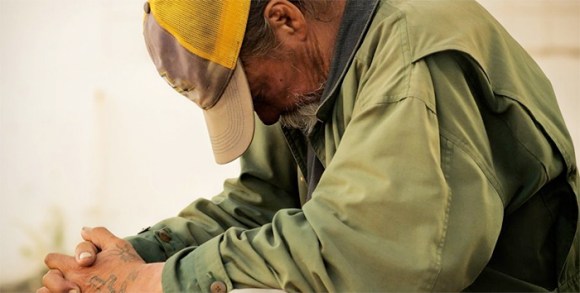
In an area filled with killing and violence, Smith is dedicated to bringing the hope of God back into this community and offering people “another chance” just like he got, through a saving relationship with Jesus Christ. And he’s planting a second congregation in nearby—but very different — Evergreen Park.

Learn more about the Mission Illinois Offering

Pray for spiritual awakening in Illinois, and the unreached people who live in our state.

Watch Kenyatta Smith’s story, “Reaching unreached people in Illinois.”

My spiritual blind spot

ib2newseditor —  August 29, 2016

Reaching the unreached in Illinois

unreached

I’ve lived in Illinois my entire life. I was born and raised in the capitol and attended college at ISU (Illinois State University). I’ve visited family each year in southern Illinois and taken countless road trips to Chicago and the northern suburbs. I’ve also been an Illinois Baptist my entire life.

MIO-box-smallHaving grown up here and very involved in the church, I know well the Baptist beliefs, as well as the spiritual state of this mission field we call home. What I didn’t know, though, is that there are 83 unreached people groups right here in the U.S… and almost 10 in our own backyard!

One (or both) of two barriers typically define what qualifies as an unreached people group: understanding and acceptance.

The issue of understanding largely comes down to language. And where many may think this is only a problem in third world countries and isolated jungles, you may be surprised to learn as I was that in Illinois, we have 9 official unreached people groups that fall into this category. Then there are many more who fall into the latter—those who are unengaged and simply refuse to accept the truth of the Bible.

Watch “Reaching the Unreached” to learn more about the unreached people groups in Illinois.

Combined, the total adds up to more than 8 million here who are lost.

And I’m sure it comes as no surprise to anyone that many of these unreached, unengaged people reside in the greater Chicagoland area—a region where approximately 70% of our state’s population lives. It’s not only the biggest, most diverse region in Illinois, but one of the nation’s largest cultural melting pots. Which is why the work of church planters there is as crucial as ever.

In this one city are millions of people from all walks of life and backgrounds. Isolated neighborhoods that look and function as if you were in a completely different country. Unreached people groups hiding among the throngs.

The potential reach of the gospel in Chicago is astounding. But the message of Jesus Christ is only going to go forth there as long as there are generous, prayerful people and willing church planters willing to support this Great Commission endeavor. To bridge the gap and meet these lost and searching individuals where they are, we must pray, give, and go.

Read the Sept. 12 edition of the Illinois Baptist to learn more about one Chicago church planter, Kenyatta Smith, and his mission to reach unbelievers and give people another chance in Christ.

My eyes have been opened to the unreached. What’s in your spiritual blind spot?

Learn more about the Mission Illinois Offering and Week of Prayer September 11-18.

– Morgan Jackson is an editorial contributor for IBSA and freelance writer living in Bloomington, IL.

Save

Save

The BriefingPastors sue Illinois over gay conversion therapy ban
A group of pastors is suing Illinois over a law that bars therapists and counselors from trying to change a minor’s sexual orientation, saying the prohibition violates free speech and religious rights. The federal lawsuit seeks to exclude clergy from the ban that took effect Jan. 1, arguing that homosexuality is “contrary to God’s purpose” and a disorder that “can be resisted or overcome by those who seek to be faithful to God and His Word.”

Olympics wrap-up: God praised by athletes in triumph, defeat
The images and memories of the 2016 Olympics will endure for much longer than the torch’s flame. Several athletes who are professing Christians joined in the medal haul. Helen Maroulis won the first gold medal ever for the United States in women’s wrestling, and said that throughout her competition she repeated to herself the mantra, “Christ in me, I am enough.”

Judge blocks transgender restroom order
A federal judge in Texas has temporarily blocked the Obama administration’s directive forcing schools to allow transgender students to use restroom and locker room facilities based on gender identity, rather than their biological sex. District Judge Reed O’Connor said the departments of Education and Justice failed to follow the Administrative Procedures Act, which requires advanced notice and a public comment period before issuing such guidelines.

Judge under fire for praying in courtroom
A Texas judge could be sued for starting every court session with a short prayer. The Freedom From Religion Foundation alleges that Judge Wayne Mack’s invocation is “unconstitutional,” and the organization is currently considering a lawsuit. Mack pointed out that both the U.S. Supreme Court and the Texas Supreme Court start their opening sessions with an invocation, and he’s just “following in their footsteps.”

Lutherans recognize agreement with Catholic Church
Nearly 500 years after Martin Luther nailed his 95 theses to the Castle Church door, the largest Lutheran denomination in the U.S. has approved a declaration recognizing “there are no longer church-dividing issues” on many points with the Roman Catholic Church. The “Declaration on the Way” was approved 931-9 by the 2016 Evangelical Lutheran Church in America Churchwide Assembly in New Orleans.

Sources: Big Story AP, Baptist Press, World Magazine, Fox News, Religion News Service

The BriefingIslamist behead priest during mass in France
An 86-year-old priest was butchered while two nuns and two parishioners were held by assailants who raided the church in Saint-Etienne-du-Rouvray near Rouen in Normandy during morning mass at 9 a.m. The clergyman, named as Jacques Hamel, is believed to have been beheaded during the attack while another hostage, said to be a nun, is fighting for life in hospital.

Chicago YMCA supports transgender bathroom, locker rooms
A recent incident caused the YMCA of Metro Chicago to craft guidelines for accommodating transgender members and guests, allowing them access to restrooms and changing areas that match their gender identity. They cover all programs and services, from gym and pool facilities to summer camps and various classes. The guidelines will apply to the YMCA’s 140,000 members at its 21 Chicagoland centers, but not some smaller, independent YMCA’s in the Chicago area.

How the push for gay rights is reshaping religious liberty
Proponents of full and equal rights for gay men and lesbians are pushing to expand the marriage equality they won at the high court into broader, society-wide freedoms. Religious conservatives are pushing back, worried that traditional religious values and protections they see as integral to the nation’s identity are being attacked as never before. Both sides feel they are victims. Both sides feel under threat.

Clinton VP pick church going Catholic
The day after appearing alongside Hillary Clinton as her running mate for the first time, Virginia Sen. Tim Kaine was in his Richmond Catholic church Sunday to seek prayers and also sang the Communion hymn. Kaine spoke to journalists after the service about his involvement in the mostly black church.

20 safest cities in Illinois — 2016
Whether you live in one the state’s rural or urban communities, you can feel good knowing that, overall, crime is on the decline in Illinois. In fact, the most recent FBI Crime Report states that incidents of violent crime and property crime each decreased by nearly 10% from 2013 to 2014. Comparing the latest Illinois crime data to information for the year 2000, we found that reported violent crimes dropped by an impressive 42% and property crimes fell by approximately the same amount.

Sources: Daily Mail, Chicago Tribune, Christian Science Monitor, Christian Post, Baptist Press, SafeWise