Archives For November 30, 1999

Prominent Southern Baptists and other evangelicals have been making the rounds in the popular media expressing their opinions regarding the Oct. 7 release of a taped conversation from 2005 of Republican presidential candidate Donald Trump making lewd comments about women that he later described a “locker room” talk.

portrait Donald John Trump candidate low poly U.S.

Many in the media are calling it an “evangelical civil war” and the debate just keeps getting hotter.

R. Albert Mohler Jr., President of Southern Seminary, told CNN Tonight host Don Lemon during an Oct. 12 appearance, “When it comes to Donald Trump, evangelicals are going to have to ask the huge question, ‘Is it worth destroying our moral credibility to support someone who is beneath the baseline level of human decency for anyone who should deserve our vote?’” Mohler said. “I think that’s a far bigger question than the 2016 election. This election is a disaster for the American people; it’s an excruciating moment for American evangelicals.

“Can we put up with someone and can we offer them our vote and support when we know that person not only sounds like what he presumes and presents as a playboy, but as a sexual predator?” Mohler said. “This is so far over the line that I think we have to recognize we wouldn’t want this person as our next door neighbor, much less as the inhabitant of 1600 Pennsylvania Avenue. And long term I’m afraid people are going to remember evangelicals in this election for supporting the unsupportable and defending the absolutely indefensible.”

Ethics and Religious Liberty Commission President Russell Moore penned an Oct. 9 editorial for the Washington Post stating, “These evangelical leaders have said that, for the sake of the ‘lesser of two evils,’ one should stand with someone who not only characterizes sexual decadence and misogyny, brokers in cruelty and nativism, and displays a crazed public and private temperament — but who glories in these things. Some of the very people who warned us about moral relativism and situational ethics now ask us to become moral relativists for the sake of an election. …The cynicism and nihilism is horrifying to behold. It is not new, but it is clearer to see than ever.”

Neither Mohler or Moore have supported Trump’s candidacy in this election cycle.

Southern Baptist megachurch Pastor James Macdonald of Harvest Bible Chapel in Chicago is a member of Donald Trump’s Evangelical Executive Advisory Board. He sent an e-mail Oct. 9 to the board’s other members condemning Trump’s remarks calling him “misogynistic trash that reveals a man to be lecherous and worthless” and threatened to quit the board.

Robert Jeffress, pastor of First Baptist Church of Dallas, TX, and a Trump advisor, appeared on the Oct. 11 episode of the O’Reilly Factor. Jeffress was asked to respond to Macdonald’s comments and overall situation.

“I think Pastor MacDonald is wrong, especially to label Donald Trump or anyone else as ‘worthless,’” said Jeffress. “I can hardly imagine Jesus saying that. But the real issue is that this is a binary choice between one candidate who is pro-life, pro-religious liberty, pro-conservative justices, and another candidate who holds the exact opposite views. For a conservative Christian to stay at home and allow Hillary Clinton to become president is unthinkable and inexcusable! I’ve been around Donald Trump and he is nothing but a gentleman and a loving person.”

Tony Perkins, Family Research Council president and Trump supporter, appeared Oct. 9 on Your World with Neil Cavuto. Perkins said Trump’s remarks were “very concerning” and “immoral.”

However, like Jeffress, he noted his support of the candidate on conservative issues. “We don’t share the same type of values. We don’t see the world the same way, although we do have some shared concerns.” Perkins said he believes Trump would be a better protector of religious liberty than any of the other candidates running for U.S. president.

But what about the man himself? It is interesting to note, very little is being said by evangelicals on either side about Trump’s video-taped apology released Oct. 8, the day after his lewd remarks were made public by the Washington Post.

In his apology Trump said, “I’ve said and done things I regret, and the words released today on this more-than-a-decade-old video are one of them. Anyone who knows me knows these words don’t reflect who I am. I said it, I was wrong, and I apologize.”

– LMS

The BriefingStorm damage hampers relief efforts in Haiti, Carolinas
In the United States, the death toll from Hurricane Matthew reached 23. As floodwaters receded and Haitians could begin to count the bodies, the death toll in the Caribbean country soared to 1,000. Officials began to bury the dead in mass graves in Jeremie, one of the hardest-hit cities.

Trump’s pastor problem
A large number of Protestant pastors are undecided ahead of the election, and few of them have endorsed a candidate from the pulpit. Their indecision poses an issue for Republican presidential nominee Donald Trump. In the past two elections, more of these pastors suggested they were firmly in the Republican camp.

InterVarsity stands for biblical marriage
InterVarsity Christian Fellowship USA, one of the largest evangelical organizations on college campuses nationwide has told its 1,300 staff members they will be fired if they personally support gay marriage or otherwise disagree with its newly detailed positions on sexuality starting on Nov. 11.

Justice Ginsburg calls Kaepernick protests ‘dumb and disrespectful’
Supreme Court Justice Ruth Bader Ginsburg, never shy to weigh in on the controversies of the day, said she thinks “it’s really dumb” for San Francisco 49ers quarterback Colin Kaepernick and others to refuse to stand for the national anthem.

Illinois marijuana sales top $20 million
Medical marijuana sales reached more than $3.8 million last month at licensed dispensaries throughout Illinois. September’s sales figures bring the total retail sales in Illinois to $23.5 million since purchasing began in November last year, topping the $20 million mark for the first time.

Sources: World Magazine, Washington Post, Time, CNN, NowDecatur

Election 2016Since the big June meeting between Donald Trump and about 1,000 evangelical leaders, including a handful of Southern Baptist pastors, the political conversation involving conservative Christians has dropped off noticeably. Christians have grown quiet on politics. Even the Twitterverse is quiet right now.

One exception: an op/ed piece in USA Today by Hobby Lobby CEO David Green pointing to the pivotal nature of the U.S. Supreme Court. “Make no mistake, the vacancy left by Justice Scalia and the subsequent appointment to fill his seat makes this presidential election one of the most significant in modern times.”

Green’s company was at the center of a 2014 judgment that allowed his corporation to refuse to pay for abortion-inducing drugs as part of its health insurance plan because of religious objections, despite requirements under the Obama Affordable Health Care Act. The high court’s ruling in favor of Hobby Lobby was 5-4. “It’s frightening to me to think that we—and all Americans—were just one vote away from losing our religious freedom,” Green wrote.

That’s the reason he gives for supporting Donald Trump. “(Hillary) Clinton has made no secret she believes government interests supersede the protection of religious liberty.”

Green’s concern for religious liberty is understandable and even commendable, but his essay serves to show that evangelicals are no longer a one-issue people.

Beginning with the emergence of the Moral Majority, evangelicals became a force and a voting bloc. Their anti-abortion theology drove evangelicals to candidates who were expressly pro-life. Fortunately, those candidates were often in agreement with conservative Christians on many other issues as well, so supporting them advanced a whole bundle of issues. It worked for 30 years.

Not so today.

Green’s commentary underscores that evangelicals are not all in agreement on the importance of any one issue any more than they support any one candidate. The world is too complex for a single-issue approach.

In this head-scratcher of election cycles, some evangelicals are valuing other issues as highly as pro-life and religious freedom: What about a candidate’s trustworthiness, honesty, temperament, and character? What is his or her history of relations with dangerous nations, prudence in peacetime or courage in war? What about the prospect of handling the nuclear codes?

Maybe many in the Christian community are relatively quiet on this presidential election because they’re still thinking about it.

And scratching their heads.

– DER

The BriefingCivil Rights report attacks religious freedom
According to Chairman Martin Castro of the United States Commission on Civil Rights, phrases such as ‘religious liberty’ and ‘religious freedom’ should now be considered “code words for discrimination, intolerance, racism, sexism, homophobia, Islamophobia, Christian supremacy or any other form of intolerance.” Those remarks are found in a new report that presents claims for religious exemptions from nondiscrimination laws as a significant threat to civil liberties.

Pence shares faith at FBC Jacksonville
Staunch Christian and Republican vice presidential nominee Mike Pence, who proudly declared in June that his identity as a Christian comes before his politics, confessed Sunday that he once walked away from the faith to which he clings so dearly now.

NCAA, ACC cancel N. Carolina events
After the NCAA announced it was withdrawing seven championship events from North Carolina over the state’s anti-discrimination law, the Atlantic Coast Conference followed suit. The ACC stated it would move all neutral-site championships for the coming academic year out of North Carolina, including the football conference championship game in December.

Hungary to favor Christian refugees
This week, Hungary, which has during the past year come under pressure for its handling of Europe’s mass migration crisis, has become the first government to open an office specifically to address the persecution of Christians in the Middle East and Europe. The move sets a precedent on the international stage.

Controversial appointee earns praise
David Saperstein, the ambassador-at-large for international religious freedom, is earning praise from across the political spectrum. At a time when violence against religious minorities has proliferated around the globe, Saperstein has shown himself diligent in confronting religious persecution. Because he held liberal views on LGBT issues and abortion, some conservatives objected to the nomination.

Sources: ERLC, Christian Post, Baptist Press, Christianity Today, World Magazine

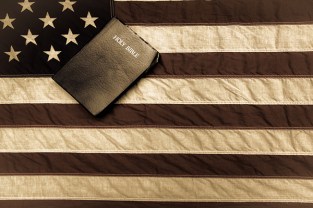
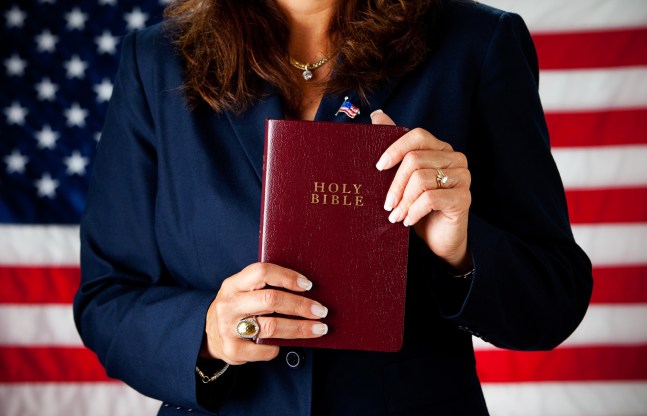
Sepia Bible and flagHouse Speaker Paul Ryan introduced the Republican nominee for vice president, Mike Pence, as a “man of faith” at the party’s national convention July 20. When the Indiana Governor took the stage he declared, “I’m a Christian, a conservative, and a Republican, in that order.”
Pence peppered his acceptance speech with phrases familiar to Christians: “I have faith that God can still heal our land” and “Pray daily for a wise and discerning heart.”

Is Pence the man evangelicals have been looking for this election cycle?

In 1994, Pence told the Indianapolis Business Journal, “I made a commitment to Christ. I’m a born-again, evangelical Catholic.” While that may sound odd to Baptist ears, it’s not as rare as some may think.

When Republican candidate for president Donald Trump announced his selection of Pence as his running mate, Trump pledged he and Pence would do away with the Johnson Amendment. The Johnson Amendment became part of the U.S. tax code in 1954 when then Texas Senator Lyndon Johnson, later president, successfully restricted tax-exempt religious organizations including churches from endorsing or opposing political candidates under penalty of losing their tax-exempt status.

It’s said Johnson’s fervor for the amendment came from is desire to silence pastors in his state who were opposing his re-election bid. Many believe the amendment is a violation of citizens’ First Amendment rights

In his speech, Trump said he “could not have won this nomination” without the support of evangelical voters. He called them “unbelievable.”

Referring to the Johnson amendment, he stated, “You are just absolutely shunned if you’re evangelical, if you want to talk religion, you lose your tax-exempt status.We put into the platform, we’re going to get rid of that horrible Johnson amendment. And we’re going to let evangelicals, we’re going to let Christians and Jews and people of religion talk without being afraid to talk.”

After sharing about amendment’s history, Trump stated, “We’re [he and Pence] going to undo it, so that religious leaders in this country, and those unbelievable people, and not because they backed me in such large numbers, but so that religion can again have a voice, because religion’s voice has been taken away. And we’re going to change that. OK? All right.”

Delegates to the Republican National Convention approved a platform, which some are calling the party’s most conservative ever, that includes this promise.

Will evangelicals who oppose Trump get on board because of this promise or the Pence addition to the ticket? Some are saying not so fast.

Pence was under fire last year when he signed the Indiana Religious Freedom Restoration Act into law. Critics claimed the bill discriminated against the LGBT community, while supporters claimed it protected the rights of religious believers to practice their faith. Corporations, major sporting events, and individuals threatened to boycott the state. A few days later, Pence signed an amendment to the bill which also protected sexual orientation and gender identity rights. Some viewed Pence’s actions as a betrayal and questioned his commitment to religious freedom.

A recent Pew survey showed the majority of white evangelicals now support Trump because they dislike presumptive Democrat nominee for president Hillary Clinton.  Whether Pence will win over the #NeverTrump evangelicals who say they will leave the checkbox for president blank or write in a name won’t truly be known until November.

Election 2016For nearly a year, evangelicals, including many high profile leaders, have been debating who to support in the 2016 U.S. Presidential election. Many have even joined the the #NeverTrump moment. But that may be changing.
A new poll released by Pew Research Center shows four-fifths of white evangelicals say they have decided to vote for the presumptive Republican nominee Donald Trump in the general election. According to Pew, 78% of white evangelicals now support the candidate. Just 17% support Hilary Clinton, the presumptive Democrat nominee, while 5% are undecided.

Support for Trump among white evangelicals is even higher than as it was for Republican Mitt Romney (71%) in 2012.

The New York Times quoted J. Tobin Grant, a professor of political science at Southern Illinois University-Carbondale, on the difference. “Trump is not a true believer in any sense, both religiously and on the issues, but he’s speaking to them,” said Tobin. “He’s actively courting them, and that’s what the activists want. They want to have a seat at the table, and they felt they didn’t have that with Romney.”

White evangelical Protestant voters make up one-fifth of the the nation’s registered voters, with one-third stating they are or at least lean Republican. Evangelicals are rivaled by religious “nones,” voters who have no religious preference or are atheist, who also make up one-fifth of registered voters. More than a quarter of the nones say they are or lean Democrat.

Writing for Religion News Service, Mark Silk touted the “big news” from the Pew poll as “the disappearance of the God gap.” In 2012, “respondents who said they attended worship at least once a week preferred Romney to Obama by 15 points, 55% to 40%. This year, the margin is just four points: 49% for Trump to 45% for Clinton.”

Silk also noted, “In 2012, less frequent attending white evangelicals preferred Romney to Obama by 29 points (62-33). This year the margin for the Republican has doubled to 57 points (76-19) — almost the same as the margin among frequent attending white evangelicals.”

Pew found voters in general are not pleased with their choices for president – “42% of voters said it would be difficult to choose between Trump and Clinton because ‘neither one’ would make a good president.”

Black Protestant voters overwhelmingly say they support Clinton – 89% to 8% for Trump. Just four percent say they are undecided. Hispanic Catholics support Clinton (77%) over Trump (16%).

The survey also measured voter motivation. Pew discovered “the desire to defeat Clinton was the prime reason evangelicals supported Trump. Of the 78% of white evangelicals who said they would vote for Trump, 45% said their decision was ‘mainly a vote against Clinton,’ while only 30% said it was ‘mainly a vote for Trump.’”

In addition, the survey found nearly half (46%) of white evangelical voters believe it it is now more difficult to be a Christian in the United States. This compares to just 18% of Catholics who believe it is now more difficult to be a Catholic in today’s society.

The survey also comes on the heels of Trump’s meeting last month with nearly 1,000 evangelicals, including many Southern Baptists. At least eight Southern Baptists now serve on Trump’s evangelical advisory panel.

The Republican National Convention takes place next week, July 18- 21, in Cleveland, Ohio. The Democrat National Convention follows July 25–28 in Philadelphia, Pennsylvania.

– Lisa Sergent

Graham and Lincoln

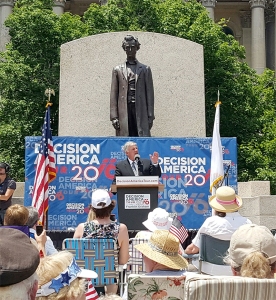
Franklin Graham speaks at the Illinois Capitol. Photo courtesy Micheal Henderson

Springfield | On Tuesday, June 14, thousands gathered in Springfield to hear Franklin Graham, oldest son of evangelist Billy Graham, as he stopped in Illinois for his 50 state, Decision America Tour. Many braved the 90-degree weather and lined the streets and lawns surrounding the Illinois state capitol, as Graham challenged Christians to pray for the country and take a stand for their faith.

Churches from across the state were represented with many bringing vans of supporters. The crowd enthusiastically sang “How Great Thou Art” preceding the rally.

When Graham arrived, he began the time leading everyone in prayer for the people affected by the Orlando shooting. Using the tragedy as an example of our country’s sinfulness, Graham plainly stated that he has no hope in either the Democratic or Republican Party to turn things around.

“The only hope for the United States of America is the Almighty God,” Graham proclaimed, stating that God’s truth and righteousness should be the utmost focus of every evangelical Christian who calls this country home.

Graham went on that Christians must make their voices heard if America is to be preserved, and the Christian heritage restored that has given us the liberties we now enjoy.

Without telling people who to vote for, Graham simply asked those in attendance to consider pledging to: daily live out biblical principles, honor God in public, vote for political candidates if at all possible who uphold biblical standards, pray for our country, and lastly, consider if God so leads, to run for office.

Graham’s parting words: “Our job as Christians is to make the impact of Christ felt in every [area] of life – religious, social, economic, political… But we can only do [this] as we surrender ourselves completely to God, allowing Him to work through us… Let’s elect men and women to office who will lead this nation back to really being one nation under God.”

– Morgan Jackson

The BriefingFloyd among evangelicals to meet with Trump
Southern Baptist Convention President Ronnie Floyd is among 500 evangelicals and other conservatives planning to meet with presumptive Republican presidential nominee Donald Trump about his faith and values at a June 21 meeting in New York. Floyd is part of a small group of leaders to spearhead the meeting as the steering committee.

Trump’s other outreach efforts include an address at the Washington conference of conservative Christians sponsored by the Faith & Freedom Coalition and Concerned Women for America June 10.

Military chaplains need the Russell Amendment
Last week, the U.S. House of Representatives kept in place an amendment to this year’s National Defense Authorization Act (NDAA) that protects the rights of military chaplains. The Russell Amendment is a provision that applies to the religious exemption of the Civil Rights Act of 1964 to federal contractors. It provides important protection to chaplains who have substantial discretion to supplement religious support programs via Department of Defense contractors and vendors.

Methodists postpone debate of LGBT issues
Amid protest, song and fears of a denominational breakup, United Methodists at their quadrennial General Conference decided yet again not to decide anything regarding LGBT rights. However, delegates voted 428-405 to allow the church’s Council of Bishops to appoint a commission to discuss whether to accept same-sex marriage or ordain LGBT clergy.

Same-sex marriage advocates work to oust WY judge
In what could be the nation’s first religious litmus test for holding a judicial post, the Wyoming Supreme Court is being asked to dismiss a municipal court judge because of her biblical views about marriage. Attorneys for Judge Ruth Neely argue the efforts of an unelected state commission to remove her from office are rooted in religious bias and misinterpretation of the law.

Churches hosting job fairs
Churches are partnering with Church Job Fairs, a faith-based organization that helps churches plan and promote job recruitment events. The events take place in local churches for the local community. The idea is simple: A church is meant to be a place of hope, encouragement, and love to its community. So why not host a job fair in a church and meet both physical and spiritual needs?

Sources: Baptist Press, Religion News, The Hill, Religion News, Baptist Press, WORLD Magazine

Politics and religion

Bloomington, Champaign, Decatur, Peoria, Springfield – these Illinois cities were all visited in the last few days by candidates vying for the U.S. presidency. As the March 15 Illinois primaries loomed so did the candidates.

I had the opportunity to attend one of these rallies, where I was packed into an auditorium with other would be voters. It wasn’t my first political rally, but I was struck as always by the sense of camaraderie displayed by the participants. You may not know anyone there, but you know you belong. You can speak freely with total strangers who won’t shout you down for your beliefs.

As we waited for the candidate to take the stage, organizers led us in enthusiastically chanting the candidate’s name. A local pastor came to the platform and lead a prayer for the nation. Then it was time to recite the Pledge of Allegiance. I almost said “amen” at its conclusion.

The candidate finally appeared on stage to much cheering and applause. As the speech continued the candidate’s voice fell into a rhythm as any good pastor’s would. Elderly women could be heard shouting, “Amen,” when something was said that they agreed with strongly. Soon they were joined by others. A few men even held their hands in the air as some do during worship services on Sunday mornings.

I realized then that for many, this was something akin to a religious experience and wondered if the churched and unchurched in the room knew it too. It frightened me in a way, and saddened me too. When was the last time I had been in a church service filled with such excitement? When had I last experienced such a sense of camaraderie and acceptance among fellow Christians?

There has been much debate lately about how Christians should behave as citizens of this nation and as citizens of heaven. Such debate is good and should take place. But what I’ll continue to ponder is how to be more loving and Christ-like to others inside and outside the walls of the church.

Lisa Sergent is a contributing editor to the Illinois Baptist.