Archives For November 30, 1999

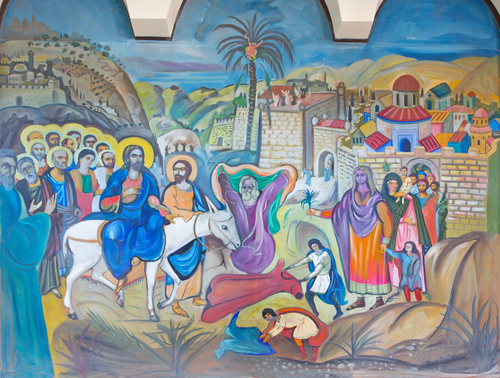
BETHLEHEM, ISRAEL - MARCH 6, 2015: The modern fresco of Palm Sun

The modern fresco of Palm Sunday in Syrian orthodox church by artist K. Veniadis (1987).

The crowd is often wrong. Popular opinion frequently misses the truth. And unfortunately, it seems that unrighteousness is usually trending.

From the earliest days of human history that has been so. The crowd was wrong in the days of Noah, as it was in the gathering at Babel. Godliness was often forsaken in the days of the prophets, and the dominant culture was usually wrong in the days of the early church.

But the crowds that gathered as Jesus entered Jerusalem on that first Palm Sunday got it gloriously right.

The crowds that gathered in the city just days later would call for the murder of Jesus. Many political and religious leaders would exult in the His crucifixion. But on that first Palm Sunday the gathered people welcomed the Messiah and Savior of the world.

Let’s note three ways the crowd got it right on that first Palm Sunday as we consider our response to Jesus on this Palm Sunday.

The crowd was right to give honor

The people got word that Jesus was entering the city and they immediately stepped forward to honor Him. He entered on a borrowed donkey which both fulfilled Old Testament prophecy and spoke to humility. People rushed to cushion each step by placing palm branches and even their own cloaks on the ground before Him.

We rightly honor Jesus by our care for the things of God. When we care more about the glory of the Lord than our own comfort, we honor Him. When we sacrifice our time and energy and possessions, we honor Him. When we look for ways to bless His work, we honor Him.

I pray you will honor the Lord with your life this Palm Sunday and Easter season. Honor Him by loving the things that matter. Honor Him with your sacrifice for the things that count. Honor Him with a bent knee and a giving heart. On Palm Sunday we remember all that Jesus is and all that He has done. And we honor that memory and that mission as we gather with the crowd.

The crowd was right to worship

The people began a spontaneous worship service as Jesus passed by on the first Palm Sunday. They sang out snatches of the Psalms. Their cries of “Hosanna” — a word of praise from the Hebrew word for “salvation” — rang out above the noise. They sensed the working of God to save mankind from sin and could not contain songs of loudest praise.

I hope you will worship the Lord joyfully this Palm Sunday and Easter season. He is worthy of all your praise. By His death, we can find life. By His work, we can find meaning and purpose in the work of our lives. By His resurrection, we have power over death and the grave. We have ample reason to praise our Messiah, Savior and Lord.

When you gather for worship on Sunday, remember who Jesus is and what He has done. And praise Him from the depth of your heart. Jesus told the skeptical Pharisees who hated this praise that the rocks would cry out if the people didn’t. We have a reason to sing and a reason to shout and Palm Sunday reminds us of this privilege. Let no stone be needed to take your place in worship. Praise His name fully and powerfully.

The crowd was right to proclaim

Matthew’s Gospel tells us the city was shaken by the crowd’s praise. People asked who it was that passed by. The crowd proclaimed, “This is the prophet Jesus from Nazareth in Galilee!” (Matthew 21:11).

We gather in worship on Palm Sunday and the Easter season to proclaim the message of Jesus. We proclaim the Gospel message that Jesus is God’s only begotten Son, that He died to pay the penalty for our sins, that He was buried but that He rose from the dead on the third day. We proclaim Christ as our Savior and as our King. We proclaim that He is the only hope for the world. We proclaim that He will return one day to claim His own and that those who repent of their sins and place their faith in Him will live for eternity with Him in heaven. This is our proclamation in song and sermon and life.

The crowd got it right on that first Palm Sunday. Let’s gather this week with other believers and all those who will hear and, together, honor and worship and proclaim the name of Jesus. There will be no need for stones to take our place.

— Doug Munton is pastor of First Baptist Church O’Fallon and first vice president of the Southern Baptist Convention. This column first appeared in Baptist Press.

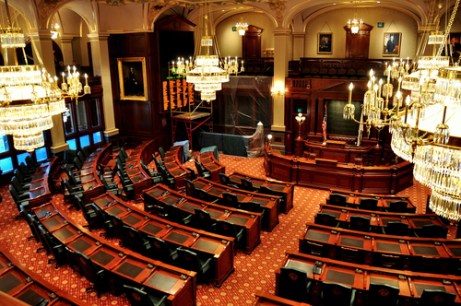
Illinois-Senate-chambers

Illinois Senate Chambers

An Illinois Senate bill that would have mandated training for clergy has been pulled by its sponsor. The bill had raised concerns regarding First Amendment rights and religious liberty.

Senate Bill 912, the Abused and Neglect Child Training Bill, mandated clergy be required to complete at least four hours of training each year to recognize signs of domestic violence against children and adults. According to Ralph Rivera, a lobbyist for the Illinois Family Institute (IFI), the bill’s sponsor, Senator Melinda Bush (Grayslake), is instead working on a resolution that would urge the Department of Children and Family Services (DCFS) to reach out to clergy and churches through an educational campaign about how to recognize child abuse and domestic violence.

In an e-mail, Rivera credited the bill’s defeat to “quite a number of pastors and citizens who contacted their senators urging them to oppose this government intrusion into the affairs of churches and religious liberties.” This included the Catholic Conference and over 500 people through IFI.

Read the next issue of the Illinois Baptist for additional coverage breaking news.

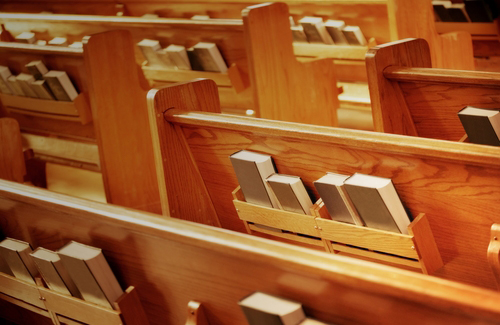
Church pews with hymnalsI’ve never really had a moment in my life—39 years—when I wasn’t going to church. My parents got engaged and married in the church. I was born into, raised in, and baptized in church.

My parents, first-generation Christians, were devout church-goers. We went every time the doors were open—and many times when they weren’t. My father, a plumber, volunteered thousands of man-hours helping build church buildings. My mother volunteered, worked as a secretary, and later served as a preschool teacher.

Since age five, I sat in services: Sunday mornings, Sunday evenings, and Wednesday night prayer meetings. I wasn’t allowed to draw. I was required to sit up straight—no fidgeting. And I wasn’t allowed to fall asleep.

Up through my teenage years, I thought of church as a bit boring. Sure, there were some life-changing, soul-stirring messages at summer camp or a special service. But for most of my life, including my years as a pastor, I did pretty much the same thing every week: singing familiar songs, reading Scripture, listening to a sermon.

Ironically, one axiom of my childhood evangelical faith was this: Church is more than the service or a building; it is the called-out people of God, living on mission every day. Church, I was told, will not get you to heaven. Only a personal relationship with God through Jesus Christ will do that.

Tantalizing ways to excite people, or timeless rituals that shape our hearts?

I still believe this, more strongly now than ever, but I also believe that in some ways church does—or did—save me. It didn’t save me in the ways you might expect: a spectacular Sunday service, a home run sermon, or a gripping worship set. God’s primary tool to transform my heart was not the conference speaker or the traveling revivalist or the worship concert. Those events were important, but now I realize that, more often, God changed my life using routine worship services in which I sang hymns I didn’t quite understand and heard messages I didn’t quite grasp.

During times of fear and anxiety, I drift back to the words of hope from Martin Luther’s epic hymn, “A Mighty Fortress Is Our God”:

And though this world, with
devils filled,
Should threaten to undo us,
We will not fear, for God hath willed
His truth to triumph through us.

When I feel insecure, I recall the lines of the Methodist hymn:
I stand amazed in the presence
Of Jesus the Nazarene,
And wonder how he could love me,
A sinner, condemned, unclean.

The hymns of the blind poet, Fanny Crosby. The majestic lines from Isaac Watts. The simple melodies of Bill Gaither. These are just a few of the hundreds of hymns that were cemented in my heart from week after week of “boring” church services. As a young child enduring the routines of our Baptist church, I didn’t realize what was happening to me.

In his book, “You Are What You Love,” James K. A. Smith talks about the way our hearts are formed:

“There is no formation without repetition. Virtue formation takes practice, and there is no practice that isn’t repetitive. We willingly embrace repetition as a good in all kinds of other sectors of our life— to hone our golf swing, our piano prowess, and our mathematical abilities, for example. If the sovereign Lord has created us as creatures of habit, why should we think repetition is inimical to our spiritual growth?”

This repetition built in my heart a deep reservoir of theology. And now, as a husband and father, and pastor, whenever I stand and sing these hymns, I can barely contain myself. Some choruses evoke memories: My father serves communion while “Jesus Keep Me Near the Cross” plays faintly in the background. Dad fights back tears as we sing “Jesus Paid It All.”

These rituals train our hearts. We sing to ourselves songs, hymns, and spiritual songs. We hear the gospel preached to us over and over. We lift the cup to our lips and the bread to our tongues remembering, again, our place at the King’s table. Through these practices, God takes our hearts and seals them for his courts above, to paraphrase another hymn writer, Robert Robinson.

Don’t get me wrong. We shouldn’t eschew creativity in the church. We are, after all, “new creation” people. But our creativity should not seek to tell a new story. It should be designed to communicate to our hearts that same, old, wonderful story of salvation.

When I think back on the simple routines that changed my life, I’m encouraged in my own pastoral role. I’m reminded afresh that the work of ministry is not so much about finding new, tantalizing ways to make people excited about Jesus, but about the timeless rituals that shape their hearts.

Daniel Darling is the vice president for communications for the SBC’s Ethics and Religious Liberty Commission. Previously, he served as a senior pastor in the Chicago suburbs. This column is excerpted from Baptist Press.

VBS Concept Metal Letterpress TypeIf you’ve ever planned a big event, you know how it feels when it’s over. All the work and energy and trial and error that went into planning and executing the project can be exhausting, and when it’s finally over, all that energy seems to fly out the window too.

But for church leaders, the end of an outreach event is only the beginning.

This is heavy on my heart as we enter Vacation Bible School season, and I’m reminded how crucial a church’s follow-up process is to their overall VBS strategy. That’s why I advise churches to recruit a follow-up director. His or her only job is to connect people from VBS or any other outreach with other people and opportunities at the church. Encourage the director to have their follow-up strategy before the first person ever walks in the door, including:

Effective registration. The follow-up director will likely work with other VBS leaders to accomplish this. The truth is, you can’t follow up with someone you can’t find. Make sure you have the full name and contact information for every person who attends your VBS. It’s important to know these things not only for follow-up, but in case you need to get in touch during VBS with someone related to the child.

Follow-up teams. Ask the director to recruit pairs or small groups of people who can make personal visits to families. The church I previously served sent our deacons two-by-two to follow up after VBS. We found in-person visits to be most effective, but some of our teams felt more comfortable making a call first to set up a time to visit.

Connection points. When our follow-up teams made their visits, they made it a point to take something that would forge a connection with the family. For example, one year the children decorated frames during VBS and we attached a calendar of church events for the deacons to deliver.

Above all, remember that a follow-up strategy doesn’t have to be complicated; it just needs to allow you to make significant contacts with people who otherwise may only encounter your church through one event. The goal of any VBS or outreach effort should be to connect unchurched people with the church for the purpose of expanding God’s kingdom. We can’t do that if we don’t follow up.

Jack Lucas is IBSA’s director of next generation ministry.

The BriefingGraham urges ‘Beast’ boycott
Franklin Graham has called for a boycott of Disney over the company’s inclusion of a gay character in the upcoming Beauty and the Beast remake. “They’re trying to push the LGBT agenda into the hearts and minds of your children—watch out!” Graham wrote in a Facebook post.

Christian bakers appeal $135K fine
Christian bakers who lost their store and were fined $135,000 for declining to make a cake for a same-sex wedding brought their case before the Oregon Court of Appeals in an attempt to overturn the judgment. Aaron and Melissa Klein, owners of Sweet Cakes by Melissa in Gresham, Oregon, said they simply want the freedom to live by the tenets of their faith.

High court vacates pro-transgender ruling
The U.S. Supreme Court set aside March 6 a ruling in favor of a transgender high school student and returned it to a lower court for reconsideration in light of the Trump administration’s recent withdrawal of a directive issued under President Obama. With the change in administration guidance, the Fourth Circuit Court of Appeals will have to weigh its April 2016 decision that the school board of an eastern Virginia county violated federal law by refusing to permit a transgender high school student — who is a female biologically but identifies as a male — to use the boys’ restroom.

Muslim chaplain to head Army division
After a ceremony this summer, Lt. Col. Khallid Shabazz will become the first Muslim division-level chaplain in the history of the U.S. military. In January, he was offered the job of chaplain for an entire division, an honor for anyone in his field but a milestone in his case – a Muslim spiritual leader for more than 14,000 mostly Christian soldiers.

Americans warm to religious groups—except evangelicals
Fewer Americans say they know an evangelical Christian. Potentially as a result, evangelicals were the one religious group that didn’t experience an increase in warmth among Americans. Pew Research asked Americans to rate their feelings toward major faith groups on a “feeling thermometer,” ranked from zero to 100—the higher the ranking, the more positive the impression. Overall, Jews (67 degrees), Catholics (66 degrees), and mainline Protestants (65 degrees) were rated warmest.

Sources: Time, The Washington Times, Baptist Press, McClatchy DC, Facts and Trends

ibdr-screen-shot-2017-03-03-at-12-16-34-pmThe storms that swept through the Midwest Feb. 28 developed into tornadoes when they went through southern and northern Illinois. Now, Illinois Baptist Disaster Relief (IBDR) volunteers are assisting victims with storm clean-up efforts.

Working in the southern Illinois town of Vergennes, volunteer Don Kragness told local television station WSIL, “We are here, basically, because we love Jesus and we want to serve Him and the best way we know how to serve Him is to help people when they’re in need.” Teams from Williamson and Saline Associations are serving the southern communities of Elkville and Vergennes. A shower unit from Franklin Association will also be deployed.

A team from Greater Wabash Association is at work in Carmi and Crossville, where one was killed, in the southeastern part of the state.

Dwayne Doyle, Illinois Baptist Disaster Relief Coordinator, said disaster relief assessors were on the ground in both parts of the state March 1. “The need is probably greater in the north in the Ottawa area, but assessment there is taking longer due to the damage.” Three died in the tornado that struck Ottawa. Doyle estimates chainsaw crews and chaplains could serve at locations around Ottawa and nearby Naplate doing cleaning up work for a week.

In an e-mail sent by Kathy Schultz on behalf of Three Rivers Association Director of Missions Dan Eddington, he wrote, “Our Disaster Relief Team leaders and Pastor John Patterson (Parkview Baptist, Marseilles) are assessing the damage… Parkview Baptist had three members from their church sustain damage to their homes from the tornado.” Volunteers from that association have been put on stand-by and were told, “There is much work to be done.”

The Illinois Baptist State Association’s Streator Baptist Camp is providing housing to volunteers serving in the Naplate area.

IBDR has over 1,600 trained volunteers who serve as part of the Southern Baptist Convention’s Disaster Relief ministry, the third largest relief agency in the United States. Disaster Relief often responds to natural disasters by providing feeding stations, mobile kitchens, child care and chaplains. In the case of flooding, volunteers in their signature yellow shirts help homeowners with “mudout,” clearing flooded properties of debris and contaminated building materials, so they can begin rebuilding and recovery.

The old adage says there are three things you should never talk about in polite company—money, religion, and politics. We already break two of those three rules every Sunday in church. Are we ready to break the third—politics?

The Free Speech Fairness Act was introduced the U.S. Senate and House of Representatives Feb. 1. The bill doesn’t repeal the Johnson Amendment, which limits church involvement in politics, but offers what Alliance Defending Freedom calls a “relief valve”—“as you carry out the mission of your church, you would have the right to speak freely on all matters of life, including candidates and elections.” Most importantly it maintains the prohibition against churches and other 501(c)(3) organizations from donating money to candidates and political campaigns.

The Johnson Amendment became part of the U.S. tax code in 1954 when then Senator Lyndon Johnson successfully restricted tax-exempt organizations, including churches, from endorsing or opposing political candidates under penalty of losing their tax-exempt status.

President Donald Trump discussed eliminating the amendment numerous times throughout his campaign and most recently at the National Prayer Breakfast Feb. 2. “[Thomas] Jefferson asked, can the liberties of a nation be secure when we have removed a conviction that these liberties are the gift of God,” Trump said. “Among those freedoms is the right to worship according to our own beliefs. That is why I will get rid of and totally destroy the Johnson Amendment and allow our representatives of faith to speak freely and without fear of retribution. I will do that, remember.”

The question is, are churches ready for this? The pastor of the small church I grew up in was not shy about sharing his political views. He shared from the pulpit who he was voting for in the presidential election, and told congregants they could vote for whomever they wanted, just go vote. I remember as a middle-schooler being shocked, not so much by his action, but by the person he was voting for on election day. His candidate lost, there was no outcry in the church, and the IRS never came knocking on our church doors.

Not all pastors and congregants want to discuss politics within the church walls, but, if passed, the Free Speech Fairness Act would give those who want to the freedom to do so.

– LMS

should-congress-fix-the-johnson-amendment-2-27-17

The Briefing‘The Shack’ film stirs debate
A fictional and emotionally destroyed Mack Phillips answers a mysterious invitation to a remote, isolated cabin. There he finds a trinity of fatherly love in a woman named “Papa” whose cohorts teach Phillips forgiveness and the faith to run on water — literally. It’s the synopsis of the movie “The Shack,” based on William Paul Young’s book by the same title, that some described as a biblically sound parable. And as with the book, others are criticizing the movie as a farce that serves to deeply distort rather than affirm biblical truths.

Poll: Decide bathroom access by biological sex
A majority of Americans think bathroom access should be granted according to biological sex, according to a new poll. Of the 545 Americans adults surveyed, 56% disagree with the assertion that people who are transitioning into the appearance of the opposite sex should be legally allowed to use whichever bathrooms they want.

Screening & abortion bringing ‘Down Syndrome-free world’
In the last nine years, no babies with Down Syndrome have been born in Iceland. Holland is following suit, with a heavy push for prenatal screening. Though 74-94% do choose to abort, a large percentage of women there (and in Britain, nearly 1/3) opt out of the prenatal screening, so some babies with Down syndrome are still born in Holland.

Christian families flee Sinai after ISIS threat
Egyptian Christians are fleeing the restive Sinai Peninsula, some with just the clothes on their backs, amid a series of killings and an explicit call by Islamic State for its followers to target the minority group. Most had gone to churches but were being provided government housing Egypt’s state newspaper, Al Ahram, quoted a parliamentary affairs minister as saying.

Tim Keller stepping down as Redeemer pastor
Later this year, Redeemer Presbyterian will no longer be a multi-site megachurch in Manhattan, and Tim Keller, 66, will no longer be its senior pastor. Keller will be stepping down in a move that corresponds with a decades-long plan to transition the single Presbyterian Church in America congregation—which has grown to 5,000 members since it began 28 years ago—into three churches.

Sources: Baptist Press, The Federalist, ForEveryMom.com, Fox News, Christianity Today

Protect your church

ib2newseditor —  February 27, 2017

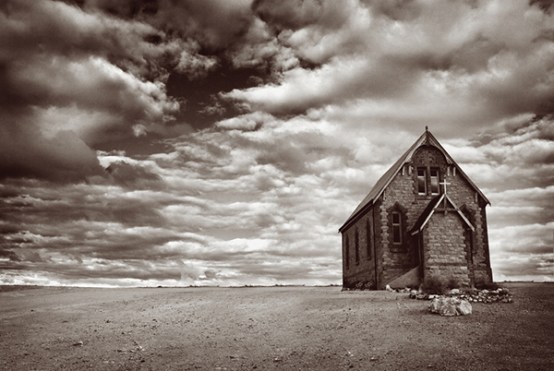
Abandoned Desert ChurchEach year, we Baptist state executive directors gather with leaders from the national Southern Baptist Convention. We discuss issues of common concern, and exchange both updates and ideas for future ministry and cooperation.

During our time together this year, a couple of the retiring executive directors were asked to speak briefly on “things I wish I had known before I started in this role.” Of course, some of the observations were humorous. But one serious observation resonated deeply with me, and with others.

This western state leader, a returning international missionary, said, “One thing that surprised me was how much time I needed to invest, and how important it is, to help existing churches navigate pastoral leadership changes.”

Congregations are especially vulnerable during leadership change.

He then referred to churches that had been “lost” to the Southern Baptist family, or that had closed entirely, when they had not done a careful or wise job selecting their next pastor. In some cases the property had been lost; in others the church had abandoned its Baptist convictions; and in still others churches had deteriorated quickly from a couple of hundred of members to just a handful.

I wish I could say these things don’t happen in Illinois—and they don’t happen frequently—but this fellow executive director’s comments brought to my mind even current examples of churches that are in peril here in Illinois. Most I would have never imagined to be vulnerable to losing their Baptist witness, or the church property for which previous generations have sacrificed. But all it takes is one unhealthy or wrongly motivated leader, invited in by one careless or compromising search and selection process.

What can churches do to protect themselves and their legacy? Two primary things come to mind.

First, whenever your church faces a pastoral leadership transition, invite experienced help from your local or state association. There are proven processes that can be employed, and predictable pitfalls that can be avoided, and you have access to experienced leaders who have been through multiple searches, with multiple churches. Of course, your autonomous church can choose which resources to use, and customize any process to your unique situation. But please take advantage of these free resources that are available to help you make a wise and Spirit-led selection.

Second, there are steps your church can take now, even if you are not facing a pastoral transition, to protect both the assets and the Baptist witness of your church. Your church governance documents, and especially the deed to your property itself, can help ensure that your church sustains its Baptist witness, even if it somehow becomes susceptible to an unhealthy leadership situation.

Once my fellow executive director shared his observation about the vulnerability of churches during leadership transitions, I was surprised how many examples started flowing between the rest of us. One executive director said that his state convention had lost 12 churches during the past year. Another told of messy lawsuits entangling a couple of churches in his state, because an unscrupulous leader was seeking to profit personally from the sale of a church property.

So while this isn’t a particularly uplifting topic to write about, I came back from these conversations committed to doing so. Please make sure your church protects both its Baptist doctrinal commitment and its property and assets from the sometimes unpredictable times and people who would take them in another direction. And please call on us at IBSA to help. As my friend reminded us, protecting the doctrinal integrity and lasting witness of our churches is one of the most important things we do.

Nate Adams is executive director of the Illinois Baptist State Association. Respond at IllinoisBaptist@IBSA.org.

Leverage others’ strengths

ib2newseditor —  February 23, 2017
carmen-halsey

Carmen Halsey

Because she was only 13 months younger than her brother in their small high school, there were many classes Carmen Halsey attended with him.

“I took the book home to study and he never did, yet he’s the one that always pulled the A,” said Halsey during a breakout session at the Illinois Leadership Summit. “ That mentality is setting people up to fail. Sometimes we are just not a natural, and all the practice just depletes our energy level and leaves us feeling incompetent.”

Halsey, who serves as IBSA’s director of women’s ministry and missions, as well as Illinois WMU executive director, spoke on how to leverage the strengths of leaders.

First, Halsey said, leaders should have a general knowledge of how God created the brain and understand how their emotions impact them.

“All people experience things emotionally before their reason kicks in, but not all people do this at the same level,” she said. “Understanding the differences of how this works within a team will increase performance and decrease time wasted and drama.”

Halsey said the next step is identifying a person’s natural talents and strengths. “Take inventory. Ask them to take a strengths survey, to describe their dream job, and the sweet spot of their current ministry,” she said. “Watch them. People will naturally nurture their strengths without much thought behind it.”

Once strengths are identified, the leader must be intentional to invest in further developing those strengths.

“We must find ways to cultivate the natural talents in people to make them even stronger,” Halsey said. “We do this in practical ways with our encouragement, and by providing training opportunities. As we come alongside our team, we are confirming their strengths.”

Finally, Halsey said, a church or organization should always position people according to their strengths. “Sometimes out of need we ask someone to sit in a seat that might not be their best position,” she said. “If that’s the case, communicate that it’s temporary. And move them to a better fit as soon as you can. That’s how a person can get from good to great.”

– Kayla Rinker