Archives For November 30, 1999

Compassionate ministry

Food Pantry

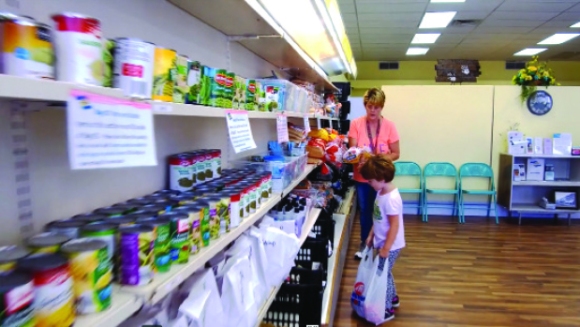
Derrick and Ailee Taylor have a heart for their small town, reaching into the community by meeting needs. The Net Community Church shows how missions and evangelism work together. Soon after the new church started, they became active with the food bank in Staunton. Participating with the local fire fighters and other congregations, the church help refurbish the facility. Now they help staff the operation, which is open twice weekly. The food bank is filling a great need for people in the community.

Many new churches use this compassion ministry approach. It puts them in contact with people who need Jesus, in the way Jesus would serve them. Every compassion opportunity becomes a faith sharing opportunity.

Pray for the Taylor family and their new church, downstate church planters, Eddie Pullen and Ken Wilson  who lead IBSA’s church planting strategy there.

Give to the Offering. If your church promotes and receives a Mission Illinois Offering, we encourage you to give that way. If not, you can also give here — www.IBSA.org/GiveToMIO.

Learn more about the Mission Illinois Offering.

Watch the Taylor’s story, “Feeding People, Loving People.”


Church Planting in Chicago

Chicago

Bryan and Marci Coble relocated far from their downstate home. Their new neighborhood in Chicago, Irving Park, is seven times larger than Marci’s hometown, with 77,000 people. The variety of people and languages there is amazing. They are engaged in church planting activities to meet the neighbors and form a core group for a new church. First they will start a Bible study at the community center in the park, followed within a few months by weekly worship services. With the partnership of their home church, IBSA, and national missions partners, the Cobles are committed to sharing Christ in our state’s largest mission field. Acts 1:8 missions strategy starts at home, and moves on to the big cities nearby, such as Chicago.

Pray for the Cobles, for more church planters in Chicagoland with its 10 million residents, and for Dennis Conner, Tim Bailey, John Yi, and Jorge Melendez who lead IBSA’s church planting strategy there.

Learn more about the Mission Illinois Offering.

Give to the Offering. If your church promotes and receives a Mission Illinois Offering, we encourage you to give that way. If not, you can also give here — www.IBSA.org/GiveToMIO.

Watch the Coble’s story, “A Heart for the City.”

Why evangelism is needed now

ib2newseditor —  September 11, 2017

The ‘blue map’ tells our story

The blue mapThis map is becoming familiar around the Illinois Baptist State Association. We call it ‘the blue map.’ With just a few brush strokes, it clearly illustrates the need for evangelism in Illinois.

The map shows the percentage of people in each county who self-identify as Southern Baptist.

Our strength as a denomination is in the southern half of the state, where in most counties at least 5% of the population is SBC. In some places, the percentage is higher than that, but with so little of this map shaded dark blue, it’s easy to understand why Southern Baptists—and evangelicals overall—are in the minority in Illinois.

The farther north we travel, the less ‘Baptist’ the state is, even as the population explodes. The gray circles show our most populous places. And in stark contrast, the white and lightest blue-shaded counties show places where there are few or no SBC churches.

The need is great all across Illinois, but especially in the cities and Northwest Illinois.

“In many parts of Illinois, Baptists are outnumbered by Muslims, Mormons, eastern religions, and people with no faith at all,” Nate Adams, executive director of the Illinois Baptist State Association said. “In fact, at least 8-million of our 13-million neighbors in Illinois do not know Jesus Christ.”

That’s why at IBSA, we often say, “Evangelism is the point of the plow.” As a ministry-support and missions-sending organization, IBSA’s missionaries and staff are engaged in many activities that assist local Baptist churches in Illinois.

The partnership we share with almost 1,000 churches, mission congregations, and church plants is vital to strengthening Baptist work in Illinois. But whatever the ministry activity, the reason behind it is equipping IBSA churches, leaders, and members to share the gospel with people who do not yet know Jesus as their personal savior.

The missionaries whose photos appear in this prayer guide each have different specialties. Church planting, age-graded discipleship, and missions mobilization are just a few. But their work has the same chief purpose: advancing the gospel.

For example, when Illinois Baptist Disaster Relief teams are cutting trees felled by storms and digging out mud-packed houses after floods, somewhere nearby a trained DR chaplain is sharing Jesus with a suffering homeowner. And many times, they find Christ in their crisis.

Who trained the chaplains? Who organized the volunteers?

You did.

By giving through the Mission Illinois Offering, you enable state missionaries to do their work in Illinois. You provide supplies for VBS training and children’s camps. You send expertise to churches in need of stronger leadership. You recruit and equip church planters to start congregations where they are desperately need. And the list goes on and on.

Your gifts through the Mission Illinois Offering stay here in Illinois: teaching students, equipping leaders, planting churches, and, at all times, advancing the gospel.

Won’t you give through the Mission Illinois Offering? Your partnership in advancing the gospel in Illinois is needed now, more than ever.

Learn more about the Mission Illinois Offering.

Marci Coble

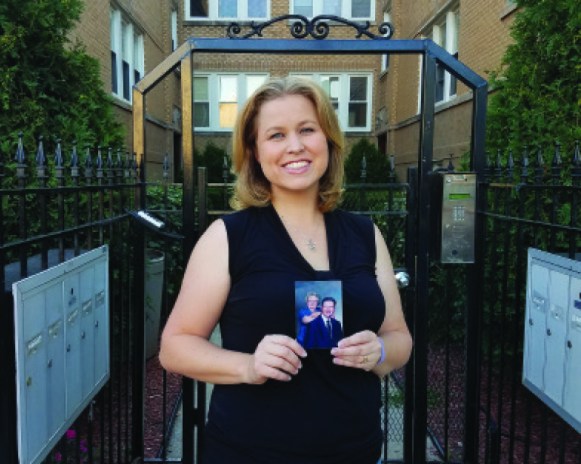
Standing outside their Chicago condo, Marci is holding a photo of her grandparents. Her grandfather, Maurice Swinford, led church development for IBSA and ultimately served as executive director.

The strategy is simple. Lost people know lost people. They hang out with lost people. If you lead one lost person to faith in Christ, suddenly you have broken into a whole new circle of people who need Jesus. And the most effective witness to the gospel is someone whose life has been changed by salvation in Jesus Christ—especially if it’s happened recently.

That’s why the Illinois Baptist State Association continues to invest in church planting as an important and effective strategy for evangelism. There are lots of places in a state of 13 million people where there is little or no evangelical witness.

IBSA is identifying 200 places and peoples that need Jesus. With at least 8 million lost people living just next door, it won’t be hard to put those pins on the map. For Bryan and Marci Coble, that pin landed in the Irving Park area of Chicago, far away and far different from her small hometown in Chatham.

Marci Coble was raised near Springfield under a strong Baptist influence. Her grandfather, Maurice Swinford, was on IBSA’s staff 15 years and served as executive director from 1988 to 1993. “He was always making sure I knew who Jesus is,” Marci says with a tear in her eye. She was a GA and Acteen, and worked one summer at Lake Sallateeska Baptist Camp.

“I was allotted a lot of opportunities and a lot of blessings that I probably wouldn’t have had without his influence and without being his granddaughter—even my call to missions.”

She is almost as emotional describing Chatham Baptist Church. “I grew up there, I was baptized there,” Marci says. “Bryan and I were married there. They shaped me and molded me and I’m blessed to call that my home.”

So when Marci’s husband, Bryan, suggested when he finished his seminary studies that they move to Portland, Ore., to plant a new church, Marci’s brows furrowed. She was willing to go wherever God led them—in fact, they visited the Pacific Northwest on a vision tour—but might God lead them to Chicago?

“Bryan had set up an appointment in Portland. And we received a note from my grandmother with an article from IBSA letting us know they need church planters in Illinois too.” Marci laughed. “And we were like, ‘Oh, that’s so sweet. I love Grandma.’” But the message stuck.

“I didn’t want to come to Chicago,” Bryan readily confesses. “I was raised 60 miles south of St. Louis and grew up a St. Louis Cardinals fan. When we started to pray about Chicago, God actually told me—this may sound crazy,” he says as an aside, “to get a Chicago Cubs hat and wear it for 30 days.”

Bryan shifts the Cubs hat on his head, as if he’s adjusting to the fit.

“My heart started to change,” the Missouri transplant says as a smile breaks out. “My love for this city and my burden for this city started to grow. We love this city so much. We love the people of this city so much,” he says.

A similar feeling started growing back in Chatham, Marci’s home church in suburban Springfield. The town of 11,000 is one-seventh the size of the Cobles’ new neighborhood. And for the church members there, Chicago has seemed like someone else’s responsibility.

“To be honest with you, Chicago has always seemed very distant to us,” says Pastor Milton Bost. But having a hometown girl serving as a missionary in the big city has changed things.

“I think Bryan and Marci are kind of pioneers for us,” Bost says.

Chatham has become heavily involved in the Cobles’ planting work 200 miles away. “Folks from Chatham came up to help us do this,” Bryan says on a rainy Saturday morning in April. A children’s playground in the center of their neighborhood is also the epicenter of their planting work. “(We) hand out flyers, hand out cookies, talk to people, build relationships.” The park is covered in people wearing green T-shirts declaring their love for the area.

“We want the community to know that we love them, we’re here to invest in them first and foremost,” Marci says.

The couple moved their two boys there last year—in time for the Cubs’ World Series win. They began surveying the city and seeking God’s direction. In the spring the Cobles bought a small condo in a pre-war three-floor building, and started meeting the neighbors—Hispanics, Anglos, and some Asian people. Their goal is to launch a Bible study, then a church, in the recreation building at the park.

“Chicago is a world city. It has high influence not just within the state of Illinois, but in the world,” Bryan says. “We need to be able to reach these people with the gospel. We do it in love, so that they will hopefully come to know Christ and be changed by the gospel. And the world with them.”

Learn more about the Mission Illinois Offer and Week of Prayer September 10-17 at www.MissionIllinois.org.

Watch the video, “A Heart for the City.”


John Mattingly

John Mattingly

Lost people matter to John Mattingly, especially those who live in the northwest quadrant of Illinois. John served as a pastor in Joy, Ill., then as director of missions for Sinnissippi Baptist Association, and now serves as IBSA’s church planting director for the region that includes Peoria, Rockford, and the Quad Cities. John takes his role as a strategist for church planting seriously. John and his wife, Jacki, sold their home so they could be unencumbered and mobile.

“A pastor’s got to come and be part of the community,” Mattingly said. Currently, that’s in Sterling, where the couple has helped restart a faltering congregation.

“John and Jacki are just a unique couple,” said Van Kicklighter, IBSA’s associate executive director of church planting. “I think part of their passion for people in northwestern Illinois comes from a deep sense that God has planted them (there).”

Mattingly is one of eight IBSA church planting catalysts working with more than 80 church planters across Illinois. Last year, IBSA and ministry partners started 16 new churches. IBSA has identified more than 200 places and people groups in Illinois that need a church. (Their work is supported, in part, by the Mission Illinois Offering.)

New churches are needed because in some places, there simply aren’t enough. Of 102 Illinois counties, 10 counties have no Southern Baptist church, and another 12 have only one. There are large sections of the state with little evangelical witness, especially in northwest Illinois and in the cities. And new churches are needed in other places too, because new congregations are effective at reaching unchurched people.

“If we are going to reach northwest Illinois, I really believe that we’re going to have to develop an appetite for risk,” Mattingly said. “Risk means that we don’t know what’s going to happen.” And that makes the northwest corner “a frontier area.” Part of his job is finding church planters who will come to this mix of cities and rural communities.

“People in northwest Illinois deserve every opportunity to hear the good news of Jesus just like someone on the other side of theglobe,” Kicklighter said of the area where factories once booming have closed, and churches once common have dwindled.

“Our communities are open to the gospel of Jesus Christ,” Mattingly concurred. “All we need are some people who will come and take some risks.”

The Mission Illinois Offering and Week of Prayer is September 10-17. Learn more about the Mission Illinois Offering.

A sunset in the rearview mirror of car as a races down the road

I recall researching an article a few years back on the actions messengers took at certain conventions. Some years were marked by insightful and course-altering votes; others had no discernable effect. With the advantage of hindsight, we ask, What actions from the 2017 Southern Baptist Convention will have lasting impact on our denomination and the effectiveness of our work in the world?

The vote on alt-right racism will be remembered; and the appointment of a task force on evangelism has the potential to change our direction. But there was one motion that could produce even greater, meaningful change—if it makes it past the Executive Committee. And there’s a second that I want to suggest.

Modest proposal 1: Shall we merge the mission boards?

A couple of years ago, a messenger moved that a merger of the North American and International Mission Boards be studied. When his motion was ruled out of order for parliamentary reasons, the messenger pleaded that exploration of the issue not be delayed because of procedural rules. He cited the emerging financial crisis of the IMB and cuts in missionaries on the field that had just been announced as motivating factors. At the time, it was clear that NAMB had plenty of reserves, and a merger could fix the money crunch. But rules are rules, and the motion was dead.

Until this year.

A similar motion was made at the 2017 meeting in Phoenix. Here’s how Baptist Press reported it, in a list of motions that were referred to the Executive Committee:

“A motion by Harvey Brown of First Baptist Church in Charlotte, N.C., requesting the president appoint a study committee to consider the feasibility of merging IMB and NAMB.”

There was no discussion this time around, or emotional pleading for the sake of missionaries on the field. And frankly, it seems some of steam has escaped on this topic.

IMB reported it is on firm financial footing. IMB President David Platt has weathered a couple of storms, and with the honeymoon over, he appears to be settling in for a long ministry focused on global missions. Platt still partners with NAMB, speaking at conferences about church planting in North America. But his heart beats for the peoples of the world.

And NAMB President Kevin Ezell has stopped making the offer, publically at least, for IMB to relocate from Richmond to Alpharetta. During Platt’s first year, Ezell said there was plenty of room at NAMB’s Georgia headquarters since his administrative staff had been radically downsized. Ezell still cheers for Platt’s presidency, but the pair aren’t making as many joint appearances. Maybe both have found their footing.

The question arises every decade or two: Is the distinction between “home” missions and “foreign” missions outdated (just as those terms are)? Should missions today be focused more on people groups and languages than geography—including in the United States? As the “nations” (translating ethnos as “nations” or “peoples”) have come to North America, should missionaries here share the gospel with them in the same ways they would back in their home countries?

And this: Should state conventions (again) lead church planting in their states, as the missions personnel most familiar with the nearby mission field and with the partner churches who can facilitate evangelistic church planting ministry?

Will one mission board focused on people groups, and state conventions focused on their own neighborhoods better achieve the evangelization of the world and the U.S.?

I can’t say for certain, but it’s a good time to explore the issue.

Modest proposal 2: Virtual messengers? In the next issue.

– Eric Reed is editor of the Illinois Baptist newspaper.

Tale of two cities

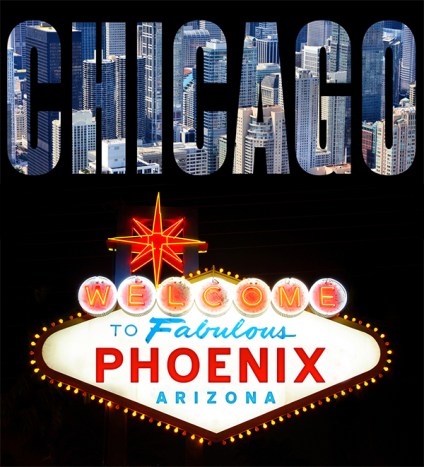
I’ve visited Phoenix a few times over the years, but attending the Southern Baptist Convention there recently reminded me again how much it differs from cities here in the Midwest. Of course, it’s a city in the desert, a reality that’s evident even from the sky as one’s plane lands. That difference is even more noticeable as you first breathe the dry air, touch the hot pavement or sand, or simply realize that, at least in the summertime, the brown of Arizona bears little resemblance to the green of Illinois.

In the short walk from my hotel to the convention center each day, I also noticed many different cultural influences, from Native American and Hispanic to the Old West. I saw colorful jewelry, pottery, and clothing in the store windows, and pragmatic architecture spread low across the skyline, all reflecting the unique beauty of the desert.

It wasn’t long, however, before I also began seeing similarities between Phoenix and cities like Chicago. For example, there is great wealth alongside great poverty. There are busy freeways, and constant traffic, and countless people in a hurry. There are many faces that seem sad, or angry, or just empty as they go about their routines. And there are relatively few Baptist churches, or visible evidence of Christian hope.

I’m taking time to paint this picture of Phoenix because I hope that by the time our IBSA Annual Meeting rolls around this November, we may be ready to invite many Illinois Baptists to return there. Discussions with Arizona Baptist leaders during the convention revealed several opportunities for partnership.

For example, there are currently only three African American Southern Baptist churches in the Phoenix association, while Chicago has dozens. On the other hand, Arizona Southern Baptists have been particularly effective in suburban church planting, an area of great need in Chicagoland. We began to see that a complementary partnership between churches in our states, focused especially on church planting in these two “Send Cities” of North America, could give each of them a needed boost in reaching people with the gospel and establishing new Baptist churches.

We also discovered that there are numerous natural connections between the mission field residents of Chicago and Phoenix. For example, according to recent census data, Chicagoans move to Phoenix more than any other metropolitan area except Champaign, Illinois. In fact, more move to Phoenix than to New York, Milwaukee, Los Angeles, Atlanta, or even Indianapolis, which round out the list of top relocation destinations. And while Phoenix is a much smaller city, more than half the number of people that move from Chicago to Phoenix each year also move the other way, from Phoenix to Chicago.

Many Chicagoans “snowbird” in Phoenix. And the fact that both the Cubs and White Sox hold their baseball spring training camps in the Phoenix area is just one factor that keeps the airports full of tourists as well as business travelers. In fact, one travel writer recently referred to Phoenix as “Chicago West,” and commented on the numerous pockets of Chicago culture that can now be found in the desert city.

So, the tale of these two cities isn’t over with the conclusion of this year’s Southern Baptist Convention, at least as far as Illinois Baptists and Arizona Baptists are concerned. We are discussing a more formal partnership, with vision trips in early 2018, facilitated mission trip opportunities next year, and the matchmaking of several church-to-church partnerships. If all goes as planned, our desert partners may even provide Illinois Baptists with a welcome, new experience—the winter mission trip.

Nate Adams is executive director of the Illinois Baptist State Association. Respond at IllinoisBaptist@IBSA.org.

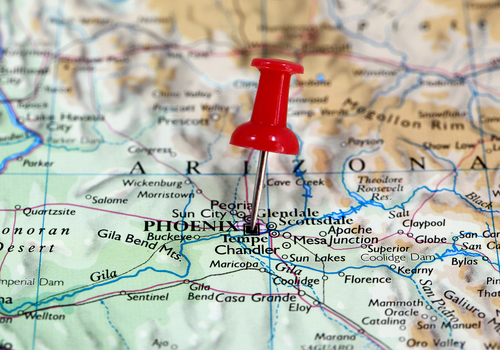
Phoenix map 2

People everywhere need the Lord, says IBSA’s Dennis Conner

In its first two years of production, “The Beverly Hillbillies,” topped the TV ratings in the U.S. It was so popular in those early years that nearly 40% of households that were watching television were watching the Clampetts. That’s a larger percentage of viewers than Game 7 of the Cub’s World Series Championship victory.

The basis for all the humor on the show was the fact that the principal characters were out of place. The family from deep in the hills of the Ozark Mountains discovers oil on their land and moves into a posh mansion in Beverly Hills. Hilarous hijinks ensue.

While not quite that extreme, a move from a small town in northeastern North Carolina to the western suburbs of Phoenix 11 years ago was a similar learning experience for my wife and me. Here are just a few of the things we learned:

People are open to the gospel. True, church attendance has declined substantially in the little more than half century of my lifetime. Yet, while people may not be going to a church gathering to hear the gospel, they are willing to hear it, discuss it, consider it, embrace it, or reject it in a park, a coffee shop, a work place, a restaurant, a classroom, a condo building, and a myriad of other places.

When we were planting Crosspointe, the Church at Tartesso, Arizona, most of the gospel conversations I had with those who became believers (and those who didn’t) were in one of the parks in our community.

In the three years I’ve lived in Chicago, I’ve learned people are open to the gospel here as well. And while I haven’t lived in the other cities, towns, villages, or farm communities that make up the varied mission field of Illinois, I’m confident that every place in our state has people who are open to the gospel, even if they might reject an initial invitation to church.

The fruit of the Spirit is effective in opening doors of opportunity for evangelism. When our lives are characterized by love, joy, peace, patience, kindness, goodness, faithfulness, gentleness, and self-control, we will never lack opportunities to talk about what produces those qualities in us.

Unbelieving people recognize the difference in us. They are drawn to the fruit of the Spirit. They will ask questions. Often, their desire to learn will be expressed in invitations to family or social events that welcome us into their lives and networks of relationships.

Effective evangelism often starts with open ears, eyes, and minds. Taking time to get to know someone is an expression of the value we place on them. Asking questions about a person’s education, family, work, or interests demonstrates a desire to know them. If that desire is genuine, it will communicate our value of others as human beings. Simply demonstrating care and concern for others earns us relational credibility and opportunities for relational influence. As Jesus-followers, our influence will lead others to go with us as we follow after him.

New people bring new opportunities for the gospel. Moving to a new place will often open people up to new relationships and new experiences. While planting a church in a brand-new planned community in Arizona, we hosted numerous community events that were intended to serve the community and gather new neighbors together.

Bringing people together at the common ground of a park or a school gave them an opportunity to get to know each other. Being a part of those networks of relationships gave the people of Crosspointe an opportunity to share the gospel with new friends.

People who are new to Chicago will often be ready to meet new people. A monthly weekend brunch for newcomers could be an effective tool in a condo building. While small towns in rural Illinois may not see as many new people as Chicago, the new people who do arrive are often even more open to new relationships because the established social networks can be hard to penetrate.

In just a few weeks, Illinois Baptists will have an opportunity to spend several days in Phoenix for the Southern Baptist Convention. Take some time to step away from the familiar crowd from Illinois. Engage some locals in conversation. If you encounter someone who is not a Phoenix native, ask them about how different it is for them. Their answer may just make you more aware of the people in your own town who need to hear and respond to the gospel.

Dennis Conner is IBSA’s director of church planting in northeast Illinois.

Welcome to our mission field

Elizabeth Young

Elizabeth Young

For the third time in 14 years, Arizona Southern Baptists will welcome the larger Southern Baptist family to Phoenix in June.

When Phoenix was chosen to host the Southern Baptist Convention’s annual meeting the first time in 2003, we were more than a little surprised, given our reputation for high summertime temperatures. But with Baptists’ repeated visits, we figured the word must have gotten out that, given our low humidity, our average 102-106 degree June temperature isn’t as bad as “back home” for a lot of folks.

We’re delighted when the family comes to town. We hope, for many, it’s a reminder that Southern Baptist work does exist outside of the Deep South and west of the Continental Divide. Illinois Baptists may feel the same way about recognition of Southern Baptists north of the Mason-Dixon Line.

While we want to offer a warm welcome to the family, we sincerely pray that our guests will remember they are on a mission field. We pray for a quiet, peaceful annual meeting so that we don’t have to explain to our lost neighbors why feuding Baptists, or Baptists engaged in culture wars, made the local news. When you’re up to your eyeballs in lost people, it puts a different perspective on priorities of concern.

Illinois Baptists probably understand this, too. Although we have some differences, we seem to have a lot in common.

You have more people—almost 13 million to our 6.9 million—but we have more land—nearly 114,000 square miles to your almost 58,000. You have more churches—nearly 1,000 to our about 450—but we have similar church-to-population ratios—one church for every 13,000 people in Illinois and one for every 15,000 in Arizona.

Both of our states have one large metropolitan area that encompasses two-thirds or more of the state’s population. And whether it’s Chicagoland or greater Phoenix, also known as the Valley of the Sun, the city is a massive sea of people who don’t know Jesus as savior.

Whether on not you make the trek to the Grand Canyon State this summer, our message to you is the same. We’re drawing from Paul’s Macedonian Call in Acts 16:9 and inviting you to “Come over…and help us.”

Consider what God is calling you to do:
• Pray for God’s work in our vast state.
• Partner with an Arizona church.
• Plant a church in Arizona.

May God give all of us a “Macedonian” vision for Arizona—and beyond!

Elizabeth Young is director of communications for the Arizona Southern Baptist Convention and the editor of Portraits magazine.

New IMB strategy targets cities and self-funded volunteers
london-table

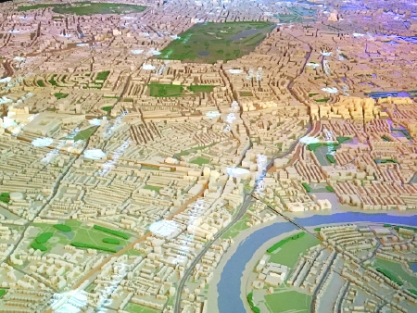
This model of London fills a room at the New London Architecture Museum. The areas marked by white circles are near Underground (subway) stations. They are the focal points of church planting, making participation in worship and Bible study groups easily accessible to the city’s highly mobile population.

(Editor’s Note: The Week of Prayer for the Lottie Moon Christmas Offering and International Missions is Dec. 4-11.) Tourists from around the world flock to Buckingham Palace, Westminster Abbey, The Tower Bridge, and other iconic English landmarks. Getting around via the Tube, red doubledecker buses, or those famous London black cabs is simple, and very British. It’s very easy to lose oneself in the surroundings. But the world is moving to London, and sharing its culture with it.

Across the street from the Royal London Hospital are rows of shops featuring Middle Eastern goods including halal meats, and just a few blocks away is the largest mosque in London. Other parts of the city are home to large Indian populations and curry has become a staple of the British diet.

Some 300 languages are spoken by its 8.3 million people within its 607 square miles. According to the International Mission Board, 37% of its residents come from outside the United Kingdom and one-quarter of its population arrived within the last five years. Forbes magazine named it “#1 City of Influence.”

London by the numbers

300 languages spoken

37% of population from outside the UK

¼ population arrived within the last 5 years

50 non-indigenous communities with populations of 10,000+

34 average age in London

44.7% profess no religion, “nones”

20 average church attendance

This diversity is why London was chosen as one of five cities the International Mission Board (IMB) has selected to be part of its Global Cities Initiative (GCI). In previous centuries most of the world’s population lived in rural areas. In this century, 54% of world’s population lives in urban areas and the Southern Baptist Convention’s missions sending agency has taken notice. The cities represent life-altering, world-changing, gospel-planting opportunities that can’t be missed.

The four other GCI cities are Dubai, where 80% of the population is foreign-born with more than 2 million residents from more than 200 nationalities; Kuala Lumpur, the capital of Malaysia, home to 8 million people with 62% following Islam and 20% Buddhism; Shanghai, the largest city in China with a population of more than 24 million people, most of whom claim to be nonreligious or atheist; and an unnamed Southeast Asian city that’s home to nearly 17 million people with large populations of Hindus and Muslims and very few Christians.

“Every people group is represented in London. This is what heaven will look like,” said James Roberts, the IMB London city manager.

He described the economic conditions of the people living in the city, “There’s a wide gap financially, the poorest of the poor and the super wealthy, very little middle class. We’re trying to work together more across affinity groups.”

london-bridge-station

Exit signs in the London subway system read “Way Out.” For Southern Baptists sharing Christ in this bustling multi-cultural melting pot, the phrase speaks of opportunity the gospel offers for more than half of Londoners who claim a non-Christian religion or no religion at all.

Where do you even begin to start in such a large city?

Victoria. Paddington. White Chapel. They’re all stations in the London Underground subway system where up to 4.8 million passenger journeys take place each day, according to Transport for London. There are 280 stations along the 11 lines of the Tube, as it’s commonly called. The stations are the key to IMB’s outreach here.

“The goal is to have a missional community in each area,” Roberts said, describing a map-driven analysis of the entire city. “A missional community is a group that discerns how God is moving and tries to gather to share community—mom’s groups, small groups, men’s groups.”

The team in London knows it won’t be easy. “It’s a lot of networking, coffee, work, limitless streams of people coming in,” Roberts said. “We try to connect, catch people as they come with the goal of starting new groups and church work. It takes a village to pull this thing off and courage to pull this together.”

Shane Mikeska is a student mobilizer on the London team. Before coming to England, he and his family lived in Asia, but illness forced a move from the tropics. “Western Europe is the hardest place to engage the population. In Asia it’s easier to have a spirited conversation. Here in this context most (people) are apathetic.”

On campuses, he said, “the students most open to new things are internationals. There are opportunities to connect to hold worship and Bible study.” Reaching them is a focal point in the cities initiative. “They can go home and go into their culture and share boldly.”

About 50,000 Americans study abroad each year and many are Christians. “We want them to come and plug into the local church and ministry, not just travel and experience things.”

You are here
The Global Cities Initiative allows people who feel called to go—but not in the traditional career-missionary way.

D. Ray Davis is part of the IMB mobilization team. “We used to say God is calling and people aren’t listening. Now we’re saying God is calling and more people are listening than we can send.”

IMB President David Platt uses the word “limitless” to describe his vision for reaching the world: limitless numbers of missionaries utilizing “multiple pathways” to the mission field. GCI is one of those pathways to “send limitless missionaries to engage lostness all over the world,” Roberts said. “Business professionals, students, retirees—a GCI person raises their own support.” Groups and individuals are also invited to come serve on short-term projects. “There’s no language barrier to overcome,” Roberts said of his London mission field.

After getting to know the city, Mikeska has grown to love London and thinks others will too. “Now, I look at this vast city and wail over it and cry over it, like in the Bible. God’s done a transformational work in my heart,” the young missionary said. Even as he weeps for the lost, Mikeska concludes, “We’re excited about the future, being part of this team.”

To learn more, visit IMB.org. All statistics, unless otherwise noted, are from the International Mission Board.

– Lisa Sergent recently traveled to London to meet with members of the International Mission Board’s communications team. With staffing changes abroad and at the Richmond, Virginia headquarters, IMB is implementing new mission strategies. The goal is to multiply the number of missionaries on the field, especially short-term and volunteer workers who will practice their professions and their faith among the world’s lost people. Targeting huge cities in five regions of the world is one of those strategies.