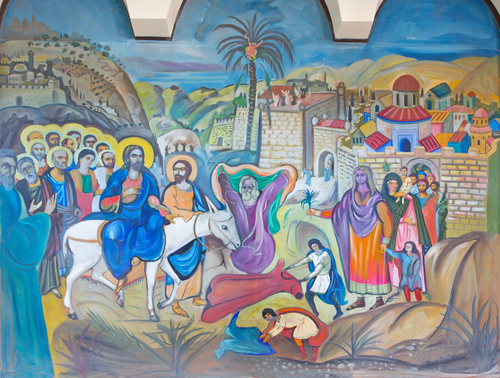
BETHLEHEM, ISRAEL - MARCH 6, 2015: The modern fresco of Palm Sun

The modern fresco of Palm Sunday in Syrian orthodox church by artist K. Veniadis (1987).

The crowd is often wrong. Popular opinion frequently misses the truth. And unfortunately, it seems that unrighteousness is usually trending.

From the earliest days of human history that has been so. The crowd was wrong in the days of Noah, as it was in the gathering at Babel. Godliness was often forsaken in the days of the prophets, and the dominant culture was usually wrong in the days of the early church.

But the crowds that gathered as Jesus entered Jerusalem on that first Palm Sunday got it gloriously right.

The crowds that gathered in the city just days later would call for the murder of Jesus. Many political and religious leaders would exult in the His crucifixion. But on that first Palm Sunday the gathered people welcomed the Messiah and Savior of the world.

Let’s note three ways the crowd got it right on that first Palm Sunday as we consider our response to Jesus on this Palm Sunday.

The crowd was right to give honor

The people got word that Jesus was entering the city and they immediately stepped forward to honor Him. He entered on a borrowed donkey which both fulfilled Old Testament prophecy and spoke to humility. People rushed to cushion each step by placing palm branches and even their own cloaks on the ground before Him.

We rightly honor Jesus by our care for the things of God. When we care more about the glory of the Lord than our own comfort, we honor Him. When we sacrifice our time and energy and possessions, we honor Him. When we look for ways to bless His work, we honor Him.

I pray you will honor the Lord with your life this Palm Sunday and Easter season. Honor Him by loving the things that matter. Honor Him with your sacrifice for the things that count. Honor Him with a bent knee and a giving heart. On Palm Sunday we remember all that Jesus is and all that He has done. And we honor that memory and that mission as we gather with the crowd.

The crowd was right to worship

The people began a spontaneous worship service as Jesus passed by on the first Palm Sunday. They sang out snatches of the Psalms. Their cries of “Hosanna” — a word of praise from the Hebrew word for “salvation” — rang out above the noise. They sensed the working of God to save mankind from sin and could not contain songs of loudest praise.

I hope you will worship the Lord joyfully this Palm Sunday and Easter season. He is worthy of all your praise. By His death, we can find life. By His work, we can find meaning and purpose in the work of our lives. By His resurrection, we have power over death and the grave. We have ample reason to praise our Messiah, Savior and Lord.

When you gather for worship on Sunday, remember who Jesus is and what He has done. And praise Him from the depth of your heart. Jesus told the skeptical Pharisees who hated this praise that the rocks would cry out if the people didn’t. We have a reason to sing and a reason to shout and Palm Sunday reminds us of this privilege. Let no stone be needed to take your place in worship. Praise His name fully and powerfully.

The crowd was right to proclaim

Matthew’s Gospel tells us the city was shaken by the crowd’s praise. People asked who it was that passed by. The crowd proclaimed, “This is the prophet Jesus from Nazareth in Galilee!” (Matthew 21:11).

We gather in worship on Palm Sunday and the Easter season to proclaim the message of Jesus. We proclaim the Gospel message that Jesus is God’s only begotten Son, that He died to pay the penalty for our sins, that He was buried but that He rose from the dead on the third day. We proclaim Christ as our Savior and as our King. We proclaim that He is the only hope for the world. We proclaim that He will return one day to claim His own and that those who repent of their sins and place their faith in Him will live for eternity with Him in heaven. This is our proclamation in song and sermon and life.

The crowd got it right on that first Palm Sunday. Let’s gather this week with other believers and all those who will hear and, together, honor and worship and proclaim the name of Jesus. There will be no need for stones to take our place.

— Doug Munton is pastor of First Baptist Church O’Fallon and first vice president of the Southern Baptist Convention. This column first appeared in Baptist Press.

The BriefingSenate lets states defund Planned Parenthood
For more than 40 years, the federal government has made funds available through Title X grants for organizations that provide family planning services. Through this program, the federal government can fund healthcare organizations directly or award grants to states, which choose money recipients. Days before President Barack Obama left office, he ordered the Department of Health and Human Services to block 13 conservative states from denying Planned Parenthood Title X funding. The Senate voted to rescind that order March 30.

VP Pence’s ‘Billy Graham Rule’ angers Internet
One line from a Washington Post profile of Second Lady Karen Pence is garnering reactions from many on social media. Ashley Parker’s profile of Indiana’s former First Lady cites a 2002 Mike Pence interview with The Hill. In it, the former Indiana congressman and governor said he never eats alone with a woman other than his wife, Karen. Pence also said he wouldn’t attend an event where alcohol would be served without her by his side.

Reprimand of Air Force colonel sparks protest
U.S. Air Force Col. Michael Madrid was reprimanded in 2016 for his Christian religious beliefs about marriage and sexuality. The Air Force originally cleared him in 2014 of charges that he made unsubstantiated derogatory comments against homosexuality to an openly gay airman. But when Madrid was placed under the command of Maj. Gen. John E. McCoy two years after the case was closed, McCoy accused Madrid of having lied during the investigation and disciplined him without any new evidence.

Judge grants man right to become genderless
A 27-year-old video game designer has become the first American to gain legal designation as “genderless” following a ruling by an Oregon judge. The game designer known as Patrick Abbatiello who is now legally designated agender, also got legal approval to become mononymous — meaning only having one name instead of a given name and a surname — and is going by the name “Patch.”

Polar bear ‘prays’ next to cross
Jessica Andrews was scanning through dozens of photos she took of a polar bear roaming around her backyard when she came across one that stopped her in her tracks. The large animal was squatting beneath a white cross, its paws together and raised skyward as it looked up in a seemingly reverential pose.

 Sources: World Magazine, Indy Star, Baptist Press, NBC News, Toronto Sun

Praying at sunset

In the past year, I have recovered a lost word and a lost practice. With all that has happened in global events, national politics, and on a personal level, “praying” hasn’t seemed enough. I’m learning to beseech.

The word is not often used these days. Its popularity in print peaked in 1827, then began a steady decline until 2000. In 2001, the people who count these things noted a slight uptick in published usage that continues until today. And while they did not note a reason for increased beseeching, it seems right to point out that 2001 is the year marked by the September 11 terrorist attacks. If only for a short while, we Americans fell to our knees to plead with God on behalf of our nation. Praying became pleading, pleading became begging, begging became beseeching.

Shakespeare used the word so often that when literary scholars were trying to determine a link between his writing and Christopher Marlowe’s, they searched “beseech” as a marker of Shakespeare’s hand. (For Marlowe, they searched “glory droopeth.”)

Beseech is commonly used in the King James Version of the Bible. It means a variety of “asks” from simple plea to intense begging.

“O Lord, do save, we beseech You…”

Psalm 118:25

Paul urges, “I beseech you therefore, brethren, by the mercies of God, that ye present your bodies a living sacrifice, holy, acceptable unto God,” while Jonah pleads, “Therefore now, O LORD, take, I beseech thee, my life from me; for it is better for me to die than to live.”

But more recent translations have minimized its use. The New American Standard Bible, still touted as the most literal among English language translations, uses beseech 10 times to indicate something more than simple asking. In most instances, it’s life or death:

Faced with death, Hezekiah beseeches the Lord. Seeing the decline of his homeland, Nehemiah beseeches the Lord. A leper, suffering and shunned, beseeches Jesus for healing. Jesus tells his followers to beseech the Lord of the Harvest to send workers into His field. And a few times in the Psalms: “The cords of death encompassed me, And the terrors of Sheol came upon me…Then I called upon the name of the Lord: “O Lord, I beseech You, save my life!” (116:3-4).

Pray, plead, beg, beseech. To ask someone to do something in a serious or emotional way, Merriam-Webster says. The Cambridge English dictionary adds: Ask in such a way that shows you need it very much.

Like the needy people in California about to be put out on the street: “Hundreds beseech East Palo Alto council to end evictions,” the October 2016 headline read. Or from war-ravaged Aleppo: “‘Help us pull our country back from the brink of the abyss,’ Syrian Christians beseech.”

In California it worked; in Syria the few who remain are still beseeching.

And if we need another picture: there’s Jesus at Gethsemane. “My soul is overwhelmed with sorrow to the point of death,” he said to his closest disciples. And to his Father, “if You are willing, take this cup away from Me—nevertheless, not My will, but Yours, be done.” And “in anguish, He prayed more fervently, and His sweat became like drops of blood falling to the ground.”

The word beseech is not used here, but its meaning was never clearer. Faced with the impossible, he prayed more fervently, and so too should we.

Eric Reed is editor of Illinois Baptist media.

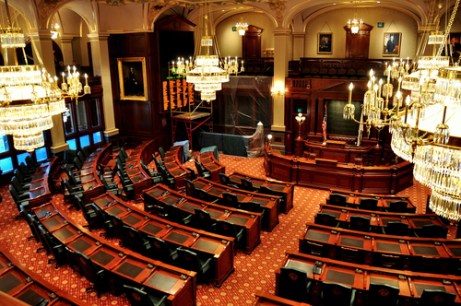
Illinois-Senate-chambers

Illinois Senate Chambers

An Illinois Senate bill that would have mandated training for clergy has been pulled by its sponsor. The bill had raised concerns regarding First Amendment rights and religious liberty.

Senate Bill 912, the Abused and Neglect Child Training Bill, mandated clergy be required to complete at least four hours of training each year to recognize signs of domestic violence against children and adults. According to Ralph Rivera, a lobbyist for the Illinois Family Institute (IFI), the bill’s sponsor, Senator Melinda Bush (Grayslake), is instead working on a resolution that would urge the Department of Children and Family Services (DCFS) to reach out to clergy and churches through an educational campaign about how to recognize child abuse and domestic violence.

In an e-mail, Rivera credited the bill’s defeat to “quite a number of pastors and citizens who contacted their senators urging them to oppose this government intrusion into the affairs of churches and religious liberties.” This included the Catholic Conference and over 500 people through IFI.

Read the next issue of the Illinois Baptist for additional coverage breaking news.

Code of Ethics

A bill pending in the Illinois senate that would require pastors to take state-regulated classes in child protection raises important questions: Shouldn’t pastors do all they can to protect children? That’s how one colleague phrased it. Yes, obviously, but at what risk to religious communities’ First Amendment rights?

And, as important is this question: Why aren’t clergy engaging in stronger self-policing using a mechanism most already have in place, the ministerial code of ethics?

Senate Bill 912 introduced by Melinda Bush of Lake County is surely purely motivated, but this means of child protection draws immediate objection based on First Amendment grounds: if the state requires pastors to receive certification in this well-intended and altruistic concern, then what’s next? There aren’t many steps from this bill to government licensure of clergy and churches. That’s why the Illinois Family Institute is urging Christians to notify state lawmakers of their objection based on religious liberty. “Won’t somebody please think of the children!” isn’t a sufficient argument to allow government regulation of pastoral work.

And, there’s a better way.

A good ministerial code of ethics guides pastors in their ministry to children and families in jeopardy.

As a seminary student, I was required to write for myself a ministerial code of ethics. I studied a dozen examples and came up with my own list of biblical and ethical ways for dealing with people, issues, and sticky situations.

A year or two later, I was the grader for that class, and I read scores of codes of ethics submitted by students. Most of these aspiring pastors took the assignment seriously, considering how they should handle counseling and confidentiality, reporting of abuse or neglect, the pastor’s relationship to the law and enforcement agencies. Some addressed euthanasia, and a few spoke to sexual identity and relationship issues just entering public discourse at the time.

Some of these students laid a good foundation for engaging and regulating their future work, so when hard questions arose, they already had in place biblical ways of processing the issues not based on emotion and reaction.

A good ministerial code of ethics guides pastors in their ministry to children and families in jeopardy. It requires that pastors stay up-to-date on the issues and the law. Through such personally adopted codes, pastors police themselves. They may join in voluntary association with other clergy in their enforcement.

Our Baptist polity—respecting the autonomy of the local church—doesn’t allow the denomination to enforce rules on pastors. Neither does the U. S. Constitution. That’s why we must take responsibility to govern ourselves.

For the sake of the children.

Eric Reed is editor of the Illinois Baptist newspaper.

The BriefingBill would to legalize marijuana
State Rep. Kelly Cassidy, Chicago, filed an amendment to House Bill 2353 on March 22 that revises the state’s Cannabis Control Act, making a number of sweeping changes “[i]n the interest of allowing law enforcement to focus on violent and property crimes, generating revenue for education and other purposes, and individual freedom.” These changes allowing the recreational use of marijuana include regulating it the same as alcohol and  legalizing the possession of 28 grams of the substance.

Bill would simplify changing gender on birth certificates
A proposal that would make it easier for transgender people to change their birth certificates to reflect their gender identity has cleared an initial hurdle. House Bill 1785 approved by the House Human Services Committee, says a birth certificate could be changed if a medical or mental health provider confirms someone has received “clinically appropriate” treatment. Current Illinois law says transgender people can only change the sex listed on their birth certificates if a doctor transition surgery has been performed.

Student sues school over girl in boys’ locker room
A high school junior is suing his Boyertown, Pa., school district after administrators told him he could either “tolerate” having a biological female share his locker room or withdraw and be homeschooled. The lawsuit filed in federal court calls on the district to rescind its secretly implemented policy granting transgender students access to the private facilities of their choice.

Princeton Seminary reverses decision to honor Keller
Princeton Seminary, the flagship institution of the Presbyterian Church (U.S.A.), had announced Tim Keller, bestselling author and pastor of New York’s Redeemer Presbyterian Church, as the recipient of its Abraham Kuyper Prize for Excellence in Reformed Theology and Public Witness, a $10,000 award. But in a March 22 letter to the seminary community, President Craig Barnes said the decision had been reversed in order to “not imply any endorsement” of Keller’s “belief that women and [lesbian, gay, bisexual, transgender] persons should not be ordained.”

President Trump to give commencement address at Liberty University
President Donald Trump will give his first commencement address as president at Liberty University, the evangelical college led Jerry Falwell Jr. Falwell, the son of the prominent televangelist, was one of Trump’s most vocal supporters among evangelical Protestant leaders during the 2016 presidential campaign. At Liberty, student reaction to the announcement was mixed.

Sources: Illinois Policy, Chicago Tribune, World Magazine, Baptist Press, Washington Post

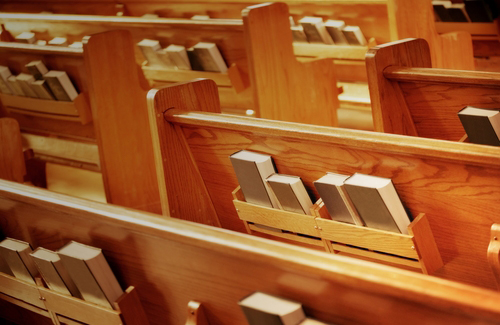
Church pews with hymnalsI’ve never really had a moment in my life—39 years—when I wasn’t going to church. My parents got engaged and married in the church. I was born into, raised in, and baptized in church.
My parents, first-generation Christians, were devout church-goers. We went every time the doors were open—and many times when they weren’t. My father, a plumber, volunteered thousands of man-hours helping build church buildings. My mother volunteered, worked as a secretary, and later served as a preschool teacher.

Since age five, I sat in services: Sunday mornings, Sunday evenings, and Wednesday night prayer meetings. I wasn’t allowed to draw. I was required to sit up straight—no fidgeting. And I wasn’t allowed to fall asleep.

Up through my teenage years, I thought of church as a bit boring. Sure, there were some life-changing, soul-stirring messages at summer camp or a special service. But for most of my life, including my years as a pastor, I did pretty much the same thing every week: singing familiar songs, reading Scripture, listening to a sermon.

Ironically, one axiom of my childhood evangelical faith was this: Church is more than the service or a building; it is the called-out people of God, living on mission every day. Church, I was told, will not get you to heaven. Only a personal relationship with God through Jesus Christ will do that.

Tantalizing ways to excite people, or timeless rituals that shape our hearts?

I still believe this, more strongly now than ever, but I also believe that in some ways church does—or did—save me. It didn’t save me in the ways you might expect: a spectacular Sunday service, a home run sermon, or a gripping worship set. God’s primary tool to transform my heart was not the conference speaker or the traveling revivalist or the worship concert. Those events were important, but now I realize that, more often, God changed my life using routine worship services in which I sang hymns I didn’t quite understand and heard messages I didn’t quite grasp.

During times of fear and anxiety, I drift back to the words of hope from Martin Luther’s epic hymn, “A Mighty Fortress Is Our God”:

And though this world, with
devils filled,
Should threaten to undo us,
We will not fear, for God hath willed
His truth to triumph through us.

When I feel insecure, I recall the lines of the Methodist hymn:
I stand amazed in the presence
Of Jesus the Nazarene,
And wonder how he could love me,
A sinner, condemned, unclean.

The hymns of the blind poet, Fanny Crosby. The majestic lines from Isaac Watts. The simple melodies of Bill Gaither. These are just a few of the hundreds of hymns that were cemented in my heart from week after week of “boring” church services. As a young child enduring the routines of our Baptist church, I didn’t realize what was happening to me.

In his book, “You Are What You Love,” James K. A. Smith talks about the way our hearts are formed:

“There is no formation without repetition. Virtue formation takes practice, and there is no practice that isn’t repetitive. We willingly embrace repetition as a good in all kinds of other sectors of our life— to hone our golf swing, our piano prowess, and our mathematical abilities, for example. If the sovereign Lord has created us as creatures of habit, why should we think repetition is inimical to our spiritual growth?”

This repetition built in my heart a deep reservoir of theology. And now, as a husband and father, and pastor, whenever I stand and sing these hymns, I can barely contain myself. Some choruses evoke memories: My father serves communion while “Jesus Keep Me Near the Cross” plays faintly in the background. Dad fights back tears as we sing “Jesus Paid It All.”

These rituals train our hearts. We sing to ourselves songs, hymns, and spiritual songs. We hear the gospel preached to us over and over. We lift the cup to our lips and the bread to our tongues remembering, again, our place at the King’s table. Through these practices, God takes our hearts and seals them for his courts above, to paraphrase another hymn writer, Robert Robinson.

Don’t get me wrong. We shouldn’t eschew creativity in the church. We are, after all, “new creation” people. But our creativity should not seek to tell a new story. It should be designed to communicate to our hearts that same, old, wonderful story of salvation.

When I think back on the simple routines that changed my life, I’m encouraged in my own pastoral role. I’m reminded afresh that the work of ministry is not so much about finding new, tantalizing ways to make people excited about Jesus, but about the timeless rituals that shape their hearts.

Daniel Darling is the vice president for communications for the SBC’s Ethics and Religious Liberty Commission. Previously, he served as a senior pastor in the Chicago suburbs. This column is excerpted from Baptist Press.

Church sues Chicago

ib2newseditor —  March 23, 2017

City tried to limit building use

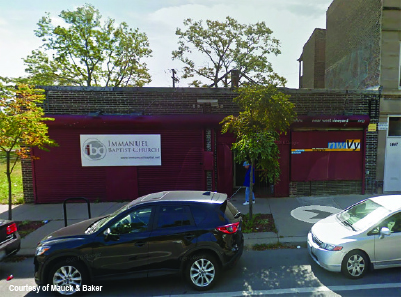
An IBSA church has filed a federal lawsuit against the City of Chicago, which is enforcing a zoning ordinance that won’t allow the church to purchase its building near the University of Illinois-Chicago campus.

“Agonizing” is how Nathan Carter, pastor of Immanuel Baptist Church, described the decision to either seek other meeting space or file the lawsuit. His congregation has met in its current location since 2011, and was set to close on the purchase of the building last summer, when city officials blocked the sale because they determined Immanuel had not established legal use.

70320Immanuel BC

The main issue is parking; the Chicago Zoning Ordinance requires religious assemblies to have a certain number of parking spaces based on how many people they’re able to seat. Immanuel needs 19 spaces to comply with the ordinance, but like many organizations in their neighborhood, the church utilizes street parking. Immanuel and the law firm representing them, Mauck & Baker, are arguing that the ordinance violates the Religious Land Use and Institutionalized Persons Act (RLUIPA) by requiring stricter standards of religious assemblies than for other organizations.

The space at 1443 W. Roosevelt had been rented by another church previously. Churches are a permitted use in the zoning, and the City’s building department gave Immanuel an occupancy permit in 2011. City officials assured Carter the sale wouldn’t be blocked despite the church’s use of street parking. But the City returned a different verdict in July 2016, informing Carter “the church still needed to meet the city’s parking requirements and that the city must determine if a religious assembly use is something it wants to promote on a commercial corridor such as Roosevelt Road,” according to a press release from Mauck & Baker.

The church’s ensuing lawsuit was a “last resort,” said the pastor. “We’ve been courteous and kind throughout the process and not adversarial, seeking to bend over backwards to meet their demands. We have our alderman’s support.”

Plus, Carter continued, “We have many of the same goals for the neighborhood as the City does. We’ve communicated that if they don’t fight it, then we won’t seek damages or fees. [The suit is] framed in such a way that they can admit they are bound by the letter of a current zoning ordinance, but then point out how that zoning ordinance is federally illegal (because of RLUIPA) by requiring more parking spots for religious assembly than it does for non-religious assembly uses that courts have determined are comparable.”

Carter referred to a sign on the door of his local library, which clearly states the library has no parking and patrons are to park on the street. City ordinances also state “live theater venues” with fewer than 150 seats need no parking, nor do libraries or cultural exhibits within the first 4,000 feet. Mauck & Baker is arguing Immanuel meets both of these requirements: their building seats 146 people and has less than 4,000 square feet.

Carter said the church is praying they can settle the suit within the next month, but if the City decides to continue to fight the purchase, the process could be a lengthy one.

Still, he said, the church sensed the Lord leading in this direction, albeit a somewhat frightening one. “Since 2005 our church has had a vision for being a long-term, stable gospel presence in our specific area of the city—a cluster of neighborhoods that surround the University of Illinois at Chicago,” Carter said. After meeting in four rented locations over the years and doing an exhaustive search of their community for other spaces, the purchase of their current building seems like a strategic decision.

“If the Lord closes this door, we have no doubt that he will open up another one,” Carter said. “But at the moment this was the only one that was cracked open, and there are scary lights coming from behind it, but we sensed the Lord wanted us to knock.”

-Meredith Flynn

The BriefingSB 912 raises religious liberty concerns for Illinois clergy
A bill working its way through the Illinois Senate that proposes mandatory training for clergy to recognize signs of child abuse is causing concern among religious liberty advocates. An amendment added to SB 912 Abused Child-Reporter Training, which specifically targets clergy is the cause for concern.

Moore, ERLC trustees issue ‘Seeking Unity’ statement
An extended statement, “Seeking Unity in the Southern Baptist Convention,” has been issued by Russell Moore and the executive committee of the Ethics & Religious Liberty Commission. Moore, in a 1,691-word portion of the March 20 statement, clarified criticism he had leveled at Christians who supported Donald Trump for president in the November 2016 election.

Divide over Gorsuch on display
The Senate Judiciary Committee began the latest hearings in what has been an often stridently contentious process for the last three decades with a day of opening statements — first from the 20 members of the panel, then from the nominee. Sixty national and state pro-life organizations weighed in on Gorsuch, urging senators in a letter to confirm him. The pro-life leaders cited his “keen understanding and respect” for religious freedom.

Coming solar eclipse: Act of God?
On Monday, Aug. 21, in the middle of the day, the sky will go dark. The temperature will suddenly get several degrees colder. The total solar eclipse that will cross America— an event that last happened 99 years ago — will be an important moment for scientific observers and a massive nationwide spectator event. It will also, for many people of faith, be evidence of God’s majesty — and even, to a few, a harbinger of the coming end of the world.

Christians respond to “Benedict Option”
More than a dozen Christian thinkers recently shared their thoughts on Rod Dreher’s “Benedict Option.” The Benedict Option is essentially responding to western cultural change by pulling away from the culture building up the local church, creating counter-cultural schools based on the classical tradition, rebuilding family life, thickening communal bonds, and developing survival strategies for doctors, teachers, and others on the front lines of persecution.

Sources: Ilga.gov, Baptist Press (2), Washington Post, Breakpoint

A new Bible

ib2newseditor —  March 20, 2017

Like most Americans, I’ve always respected founding father Thomas Jefferson. But I was surprised, and frankly disappointed, to learn recently that in the latter years of his life, Jefferson actually constructed his own version of the Bible. He did so by literally cutting and pasting, with razor and glue, numerous sections of the New Testament, intentionally omitting the miracles and any mentions of the supernatural, including the resurrection of Jesus.

To be fair, Jefferson apparently didn’t refer to his reconstruction as a Bible, but rather titled it “The Life and Morals of Jesus of Nazareth.” Yet over the years it has come to be commonly known as “The Jefferson Bible.”

In fact, from 1904 into the 1950’s, the Government Printing Office gave all new members of Congress a copy of the Jefferson Bible, and that practice was resumed by a private publisher in 1997. The American Humanist Association published its own edition of the Jefferson Bible in 2013, adding passages from the Quran, the Buddhist Sutras, the Book of Mormon, and other works, and distributing it to members of Congress as well as President Obama.

Bible readership

We as Southern Baptists should be truly grateful that, since 2004, our own LifeWay Christian Resources has stewarded its own original Bible translation from the original languages, the Holman Christian Standard Bible. And now, this month, LifeWay is introducing a revised and updated version, renamed simply the Christian Standard Bible (CSB).

Recently I was invited to LifeWay, along with other state executive directors, for an overview presentation of the new translation. In fact, it was there that the Jefferson Bible was used as an illustration of what can happen when God’s Word is not stewarded carefully, and faithfully. In the CSB, LifeWay has sought to balance the two most important aspects of Bible translation: accuracy and readability.

I came away from that presentation greatly encouraged, but also greatly challenged. You see, I also learned during this presentation that Bible ownership is not really the main problem today. 88% of American households own a Bible, and the average number of Bibles per household is 4.7. The real problem is that only 37% of Americans read the Bible once a week or more. With the CSB, LifeWay’s goal is not to sell more Bibles; it is to grow the number of people who read the Bible, and are spiritually transformed by it.

LifeWay has carefully studied the activities linked to true spiritual growth. And the number one activity contributing to spiritual growth is Bible reading (91%), followed by church attendance (87%), personal prayer life (85%), and being mentored by another mature believer (81%).

By providing a freshly updated translation, LifeWay is seeking to grow the number of people engaged in the activity that most often leads to spiritual growth—reading the Bible. In doing so, they have relentlessly preserved accuracy, calling on some of the world’s finest Bible scholars to serve on the translation committee. Yet they haven’t sacrificed readability. Rather, they have sought to carefully balance the two.

So I came home from LifeWay with a new Bible. I don’t really need one. I’m the son of a pastor and a school librarian, and I worked in Christian publishing for almost 20 years. I already have way more Bibles than the 4.7 average per household.

But this new Bible gives me a fresh incentive to delve more deeply and more frequently into God’s Word. It gives me a renewed appreciation for our friends at LifeWay who faithfully steward this translation. And it gives me a reason to give others a new copy of the Bible, and to pray that our reading of it will bring the true spiritual growth that God desires.

Nate Adams is executive director of the Illinois Baptist State Association. Respond at IllinoisBaptist@IBSA.org.