Archives For November 30, 1999

By Andrew Woodrow

YE 2018 Marion

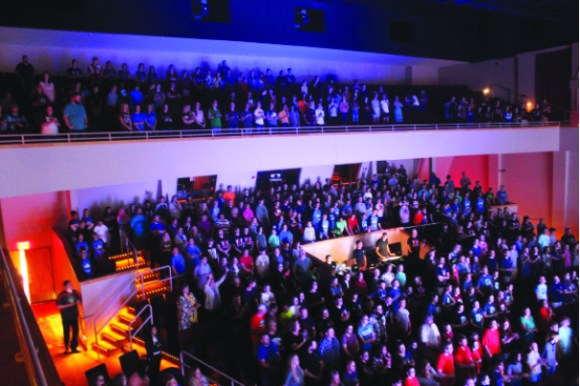
Hundreds of students and leaders gathered across Illinois in October for Youth Encounter, IBSA’s annual evangelism conference for students. In Marion (above), Decatur, and two sites in Chicagoland, almost 1,400 attenders heard from speakers and worship leaders who encouraged them to keep going in their faith, even as they face unprecedented challenges from the culture around them

For young Christians, following Jesus can be a lonely pursuit. Especially in today’s pressure cooker culture. It’s overwhelming, said student pastor Mark Davis, when young people have constant, instant access to information—and much of it beyond their years.

In that environment, discovering and developing your faith can be difficult. It’s easy to feel alone. At Youth Encounter, IBSA’s annual evangelism-focused conference for students, young believers have an opportunity to escape societal pressures for a while, and fully engage in worship with hundreds of other students like them.

They leave the conference—held this year in five locations around the state—better equipped to live out their faith and share it with the people around them.

Encouraged, emboldened
At Youth Encounter, middle school and high school students are led in worship by up-and-coming Christian artists, and inspired and challenged by some of the top student ministry speakers in the country.

But perhaps the greatest encouragement students receive from the conference is knowing they’re not alone.

“Oftentimes, the students feel that if they talk about their faith or visibly live it out, they’re going to be abandoned,” said Davis, pastor to students at Murdale Baptist Church in Carbondale. “Youth Encounter gives them a chance to see they’re not alone. And seeing there are other students in their area, not just a handful but hundreds of them, helps encourage and embolden their faith.”

For the first time this year, Youth Encounter events were scheduled in five locations across Illinois. Nearly 1,400 students and leaders attended the first four conferences, including sites in Decatur, Marion, and two in Chicagoland, and 62 people have given their lives to Christ. The final Youth Encounter conference for 2018 will be held Nov. 11 at First Baptist Church in O’Fallon.

https://player.vimeo.com/api/player.js

To students like Jade Nappier, Youth Encounter is a break “from the stress during the school year that can be hard to find at church.” Nappier, a student from First Baptist Church in Marion, also said Youth Encounter has helped her discover she’s not alone in exploring her faith, motivating her to “be the Christian I want to be.”

Selena Petrowich from Third Baptist Church in Marion has been coming to Youth Encounter ever since she can remember. Now a senior in high school, she describes how Youth Encounter helped her not feel alone in discovering her faith.

“A lot of people trying to come to Christ feel alone. I know I did. So, having more people around you that you know are exploring their own faith [makes it] definitely easier to share mine.”

Petrowich expressed how moving it is to see school acquaintances at Youth Encounter who wouldn’t otherwise show their faith. “What caught my eye was seeing so many teenagers actually open in wanting to learn about God,” she said. “That’s when you realize, ‘Okay, I can do this too.’ And for me, that was my biggest thing: realizing that not just older people can be interested in worship and in God.”

Changing world, unchanging Word
“One of the great things Youth Encounter presents to the kids is that while the culture is constantly changing, the Word is unchanging,” said Madison Presswood, minister of youth at FBC Marion. Presswood encourages his students to be less concerned with the media and warns them where their attention is kept the most is where their sphere of influence is the strongest.

There is also a need, though, to engage the culture without fear, Andrew Nippert encourages his students. “If a church wants to help their young people survive their culture they’re living in and help them prepare to engage with their culture and be gospel-relevant in their communities, you can’t be scared of the culture or of change,” said Nippert, youth and children’s minister at Third Baptist Church in Marion. “Because the one thing that should never change is God’s Word.”

Amid pressures from the world they live in, students are going to mess up, Nippert said. “But that’s why we work with them. That’s why we minister to them. Because they’re who need the Lord. We all need the Lord in our own way, and we just have to be willing to go to those that are, sometimes, the troublemakers. And give them the One who can lead them out of their troubles.”

Equipped to go out
Youth Encounter helps prepare students to take their faith into the community by exposing them to bands and speakers they can look up to, and by equipping them to live out their faith, despite cultural pressures.

“IBSA does a really good job getting solid speakers that unpack the gospel and the reality of Christ in a way that makes sense to the students’ worlds,” Nippert said. “So then, it’s a lot easier to walk back into their world with Christ at the center of what they’re doing.”
High school junior Seth Lindhorst has already been to the youth conference multiple times. He said Youth Encounter teaches students his age realistic ways to live out their faith “and still be normal.”

One of Lindhorst’s frustrations with societal pressures is the bombardment Christians receive for living a ‘boring’ life, despite attempts to be more involved and have appropriate fun outside the church. “It’s extremely difficult for a Christian my age,” said the student from Third Baptist in Marion. “So, the Christian youth in today’s culture feels pressured into doing things that really aren’t appropriate for kids our age.”

Coming to Youth Encounter, however, encourages him not to back down to the peer pressure.

“When I go back to school after Youth Encounter, I always walk with a jump in my step. It gets me pumped up,” Lindhorst said. “Youth Encounter equips you for the long run and gives guidelines you can use in your daily life. And as I’m singing songs, as I’m listening to the speaker, I’m thinking to myself, ‘How can I change my life to make Jesus’ name look better?’”

For more information about resources and opportunities for students, go to IBSA.org/students.

Pioneering-200-logo-layers-260x300The IBSA Pastors’ Conference and Annual Meeting are November 6-8 at First Baptist Church in Maryville. Find out how to make the most of your time there:

  1. Check out the exhibit hall. See how the IBSA ministry teams can assist your church. Find out what kind of services GuideStone Financial Services provides. Learn about the programs of study Baptist colleges and seminaries offer. Plus, there’s a Baptist Children’s Home and Family Services dessert reception celebrating 100 years of ministry to children and families in the exhibit hall following the Wednesday evening session. Yum!
  2. Network with old and new friends. You’re at a meeting with 100s of other pastors from cities and churches of all sizes, different backgrounds, full-time and bi-vocational, plus some just like you. Take the opportunity to talk with them about what they’ve experienced, achieved, and hope to do. Talk one child of the King to another about how to help and encourage each other.
  3. Go to the Pastors’ Conference dinner on Tuesday. Have some fried chicken, a Southern Baptist favorite, roast beef, backed rigatoni, mashed potatoes and gravy, buttered corn, salad, bread, and dessert. You’ll enjoy food, fun and fellowship Tuesday from 4:30-6 p.m. – all for just $10. Dine again at the church Wednesday evening at the IBSA Annual Meeting and eat dry-rubbed, smoked chicken, topped with cranberry barbecue sauce, pulled pork, mac and cheese, green beans, salad, bread, and dessert for just $12. Reserve tickets online until Nov. 1 at 4:30 p.m. or purchase them at the door.
  4. Welcome new sister churches. Established churches and some that have only recently constituted have gone through the credentials process and will be voted on during the meeting. There are 11 churches asking to join yours in IBSA.
  5. Tweet the Annual Meeting. Or Facebook it, but be sure to use #IBSA2018. Share what you’re learning and what inspires you. See something that you may have missed. Share your selfie with Honest Abe, Abraham Lincoln impersonator, Fritz Klein.

Learn more about the IBSA Annual Meeting.

Lincoln and HomeThe IBSA Pastors’ Conference and Annual Meeting are November 6-8 at First Baptist Church in Maryville. Here’s why you should come:
  1. Participate in democratic process. IBSA is your association. Vote on new board members, budgets, and resolutions (you can even submit one!). Elect association officers and learn how your denomination works.
  2. Be enriched. Hear IBSA President Adron Robinson preach the president’s message and Tom Hufty, senior pastor of FBC Maryville, bring the annual sermon. Be inspired by stories of churches who have embraced the Pioneering Spirit challenges and reports from ministry partners. Enjoy music by worship band Sixteen Cities, and a visit from Honest Abe himself, as portrayed by veteran Lincoln interpreter Fritz Klein. You’ll even have the opportunity to prayerwalk your way through the meeting and find new meaning in why you are there.
  3. Catch the Pioneering Spirit – 200 & Counting. As Illinois celebrates its bicentennial in 2018, we’re inspired by the fortitude of our forbearers, and we’re calling up a new generation of spiritual pioneers today. Find out how your church can join the challenge to 1) Go new places, 2) Engage new people, 3) Make new sacrifices, and 4) Develop new leaders.
  4. Invest in yourself and your church. Attend the Pastors’ Conference, listen to the speakers, and go the breakout sessions. Hear powerful messages from pastors and Bible teachers Darry Gaddy, Noah Oldham, and Matt Crain. Take notes to help you remember important points to bring back to your church and community for growing His Kingdom.
  5. Women’s Ministry. Ladies, you’re not left out. The Ministers’ Wives’ Conference and Luncheon is Wednesday morning and will feature powerful testimonies including a message from author and speaker Mary Mohler, wife of Southern Seminary President Albert Mohler. Come by the Women’s Ministry exhibit for all kinds of sweet treats and resources. Plus, the LifeWay Bookstore will be nearby.

Learn more about the IBSA Annual Meeting.

In the presence of a pioneer

Lisa Misner —  October 29, 2018

Pioneering-200-logo-layers-260x300By Nate Adams

Not long ago, I was invited by the Springfield Convention and Visitors Bureau to represent IBSA at a local event, recognizing organizations that have helped attract business to the Springfield area. IBSA was among that group because, in both 2015 and 2018, we hosted the Midwest Leadership Summit at the Springfield Crowne Plaza, drawing more than a thousand pastors and leaders from thirteen Midwest states to nearby hotels and restaurants.

The recognition event was held at the Abraham Lincoln Museum, and much to our delight, one of the presenters was Abraham Lincoln himself. As each of us were called to the platform, a Lincoln statuette was handed to us by a statuesque, flesh-and-blood Lincoln!

Of course, all of us know that our now beloved sixteenth President has been gone for more than 150 years. Our very convincing “Lincoln interpreter” was an actor named Fritz Klein, who looks remarkably like the historic Lincoln, and whose full-time profession is now portraying him in settings all over the United States.

May we be willing to go new places, engage new people, make new sacrifices, and develop new leaders.

Even so, as I was called to the platform, I found myself feeling a bit in awe of the towering figure who smiled and handed me my little statue. At his insistence, we each paused and posed for a quick photo. And for a brief moment, the warm smile and rehearsed mannerisms of Mr. Klein made me feel as if it were Mr. Lincoln who was pleased with me, and with IBSA.

Shortly after that event, I invited Mr. Klein to come and join us at our IBSA Annual Meeting this November. For one thing, it’s hard to imagine celebrating the Land of Lincoln bicentennial without some nod to Mr. Lincoln. But more importantly, I hope the image and memory of Abraham Lincoln will remind us that he was one of our state’s earliest pioneers, and that we need that pioneering spirit in our churches today.

Pioneers are willing to go new places, engage new people, make new sacrifices, and develop new leaders. Lincoln and his family personified these pioneering qualities, but so did dozens, and then hundreds, and eventually thousands of Baptists, who entered our fledgling state with both the Gospel and the desire to establish new churches.

In the early 1800’s, evangelism, church planting, missions giving, and leadership development were not easy. And they’re not easy in the early 2000’s. Even today, these kinds of missionary endeavors aren’t usually attempted or accomplished by complacent settlers, but by courageous pioneers.

By the time the IBSA Annual Meeting convenes in Maryville November 7-8, we hope to celebrate 200 years of statehood by also celebrating at least 200 Baptist churches who are embracing one or more of these “pioneering spirit” challenges. (Your church can register for these at www.pioneeringspirit.org.) A little more than 180 churches have embraced one or more of these challenges already, and we are hopeful that more than 200 will do so by the end of the IBSA Annual Meeting.

I don’t expect to have the kind of impact on Illinois or history that Mr. Lincoln did. But I do want to be the kind of pioneer that continues to bring both the Gospel and new Baptist churches to the places in Illinois that don’t have them yet. Welcoming new believers into heaven is so much more important than welcoming new business into Springfield. And of course the celebration event will be hosted by Someone so much more statuesque than Mr. Lincoln.

Nate Adams is executive director of the Illinois Baptist State Association. Respond at IllinoisBaptist@IBSA.org.

MeToo

It happens every day. Women and children, and sometimes men, are victims of physical, sexual, mental, and other types of abuse. Many are too afraid or embarrassed to seek help. Some won’t even admit to themselves what is happening. Others turn to pastors and church leaders for help. But pastors and church leaders don’t always feel equipped to help.

For those in ministry, there is increased confusion over which incidents to report, which government officials to report them to, and when it’s appropriate to break a church member’s confidence in the sometimes competing matters of compassion and compliance.

Southern Baptists were rocked last spring when the denomination came face-to-face with the #MeToo movement sweeping the country. Paige Patterson, then president of Southwestern Baptist Theological Seminary, received sharp criticism for remarks he had made in a sermon in 2000 about his counsel to a woman regarding domestic abuse and divorce. Patterson was also alleged to have mishandled allegations of sexual assault while serving as president of another Southern Baptist seminary.

The Patterson controversy, which ended in his firing, was followed by other, unrelated allegations of sexual abuse that had gone unreported for decades. In May, Southern Seminary President Albert Mohler wrote, “The SBC is in the midst of its own horrifying #MeToo moment.”

It’s not just the denomination that’s reeling from the movement; individual churches are wrestling with the issues of domestic abuse, sexual abuse, and sexual assault, and struggling to determine the legal requirements of reporting such violence. They’re also tasked with answering a different question: How do we deal faithfully with these issues, in light of the gospel?

Reporting abuse
A recent LifeWay Research study found two-thirds of pastors say domestic or sexual violence occurs in the lives of people in their church. But half say they don’t have sufficient training to address it. And about one-third of pastors who have heard of the #MeToo movement say it has caused more confusion about the issue for their church.

One helpful resource for IBSA churches is Illinois Baptist Children’s Home and Family

Services, led by Executive Director Denny Hydrick. BCHFS is very familiar with Illinois laws regarding reporting child abuse, and also employs counselors at its Pathways Counseling Centers around the state who work with people of all ages. The agency is equipped to help IBSA churches as they wade through the proper steps in reporting abuse and caring for the abused, no matter their age.

In recent years, sexual abuse scandals in religious communities have compelled churches and clergy members to become better equipped to report child abuse. Illinois law has a long list of mandated reporters—those people required to report suspected child abuse or neglect. Members of the clergy are on the list.

The Illinois Department of Children’s and Family Services Children’s Justice Task Force directs mandated reporters to “notify authorities of suspected child maltreatment immediately when they have ‘reasonable cause to believe’ that a child known to them in their professional or official capacity may be an abused or neglected child.” Reports may be made by calling (800) 252-2873.

Domestic violence can be a more difficult topic for church leaders, because reporting isn’t generally mandated. The Illinois Domestic Violence Act (IDVA), which is used to obtain orders of protection, discusses physical abuse as well as harassment, interference with personal liberty, intimidation of a dependent, willful deprivation, neglect, and exploitation.

The act doesn’t speak directly to churches or clergy, but it may offer some guidance in defining different types of domestic violence and outlining the responsibilities of law enforcement and healthcare providers.

What about events that took place in the past? In Illinois, when abuse involves what was then a minor, “you do have a duty to report that even though it is no longer occurring,” Hydrick said.

When dealing with children, attorney Richard Baker stressed that mandated reporters have a legal obligation to report abuse within 48 hours. But the standards for reporting change when dealing with adults. Baker, a partner at Mauck & Baker, LLC in Chicago, said, “The assumption is when you are an adult you have the where-with-all to report for yourself.” (Mauck & Baker specializes in religious liberty issues, and frequently represents churches in legal matters.)

The law doesn’t mandate that a pastor has to report a woman has been abused. Baker said pastors have to take into account the setting when a woman says she has been abused. “Was it confidential? Was it a group setting? Then, there isn’t such an expectation of privacy. The context is very important.”

The matter of “context” has become an issue, as some people have become concerned that public confession by an adult in a small group setting about being abused, for example, might require church leaders to notify authorities. Some church leaders in other states have suggested that is the case in their states, making sharing of personal information by group participants dicey. But, following Baker’s advice, don’t jump to conclusions just yet. Yes, it’s a gray area and laws are expanding. Baker noted new questions are being raised and precedents are being set. “[But] there are differences in religious and professional contexts,” he said.

When there are questions about what is mandated by statute, “I always go back and look it up,” he said. Licensed counselors and medical professionals have their own legal reporting standards, which are different from ministerial ethics.

Bring it to light
“We’ve heard stories in other denominations of ignoring these things or covering them up, but I think as Christians we need to be proactive in not covering them up,” Hydrick said. “I think we have to recognize sin and call it sin. We need to address sin in our own lives and churches.”

Baker argues for transparency. “Transparency in policy is a very wise thing. Everybody wants to deny and hide things under a rug, but that’s not good in the long run. We have to err on the side of love.”

This summer, messengers to the Southern Baptist Convention in Dallas approved a resolution “On Abuse.” Messengers to the IBSA Annual Meeting will be asked to consider a similar resolution next month.

In the SBC resolution, messengers voted to “condemn all forms of abuse and repudiate with a unified voice all abusive behavior as unquestionably sinful and under the just condemnation of our Holy God.” The resolution also called on “pastors and ministry leaders to foster safe environments in which abused persons may both recognize the reprehensible nature of their abuse and reveal such abuse to pastors and ministry leaders in safety and expectation of being believed and protected.”

In short: Baptist pastors are not priests, and the pastor’s office is not a confessional, but adult victims of abuse still have the priviledge of confidentiality about what may have happened to them. In contrast, alleged perpetraitors, especially in cases involving children, do not. That’s when “mandatory reporting” applies.

SBC President J.D. Greear recently announced the formation of a Sexual Abuse Advisory Committee (see column at left). And Baptist Press reported at last month’s Southern Baptist Executive Committee meeting that Gateway and Southwestern Baptist Theological Seminaries have begun partnerships with Ministry Safe, a sex abuse prevention organization, to add sexual abuse and harassment prevention training to their course offerings.

The Southern Baptist Convention provides a list of resources for sexual abuse prevention on their website, sbc.net. For more information about background checks, protecting children and vulnerable adults, creating a safe environment at church, and more, go to sbc.net/churchresources/sexabuseprevention.asp.

Be ready

Denny Hydrick of Illinois Baptist Children’s Home and Family Services suggests these four steps for churches in handling domestic and sexual violence:

1. Pastors should be aware of local resources before an issue arises. Is there a nearby domestic violence shelter, and if so, how does a person make a referral? Build relationships with local law enforcement professionals. Know other social service supports, like the local Child Advocacy Center or the State’s Attorney’s office, who may also employ a victim’s advocate.

2. Keep numbers on hand. These contacts are listed on Illinois’ Department of Human Services website:
• For suspicion of child abuse or neglect – (800)-25 ABUSE

• Imminent harm or danger of any person – 911

• Abuse of a person with mental illness or developmental disability – (800) 368-1463

• Domestic Violence Helpline – (877) 863-6338

• Elder abuse – (866) 800-1409

3. Keep an updated list of local mental health and social service professionals. BCHFS is always willing to assist pastors in handling concerns with children and families, Hydrick said. Contact BCHFS at (618) 382-4164.

4. Get assistance. Often in domestic violence situations, even the best intentions of providing for safety can lead to an increase in violence. Make sure you work with a person with experience handling domestic violence situations.

Hydrick cautioned, “Safety must always supersede an ethical dilemma that may be present. There are ways to assess safety, but that should be done by a trained professional.”

Happy Birthday, Illinois!

Lisa Misner —  October 15, 2018

By Meredith Flynn

On our state’s bicentennial, the resolve of its early settlers has new meaning for Baptists.

Settlers arriving in the Illinois territory in the early 1800s didn’t know what to make of what they found. History tells us many of them moved north from areas that were heavily wooded. They trusted land that could support so many trees. The Illinois prairie offered no such reassurance.

“The prairies posed a new set of problems for farmers,” writes historian Pamela Riney-Kehrberg. “Below the land’s surface were tough, fibrous roots of tall prairie grasses, extending downward a foot or more. A simple wooden plow could hardly penetrate the surface.”

The pioneers made do by settling mostly in the southern part of the state, where ready access to water and trees made constructing their homes and farms more feasible. Some, though, eventually headed north, and found a way to work the hard prairie soil. It was richer than they thought, historians say. They just needed different tools. Steel, instead of wood.

Industrial pioneers John Deere and Cyrus McCormick developed tools for farming the prairie lands. And Illinois boomed. Its statehood population in 1818 was 35,000. By 1830, it had grown to 157,000, and would triple over the next decade. Still, tending the land was expensive. Families sacrificed much, Riney-Kehrberg notes, to run even a modest farm.

Two hundred years later, the challenges of tilling the soil in Illinois are different. But they still exist, especially in spiritual terms. More than 8 million people in Illinois do not know Christ. Many churches are struggling against the cultural tide to see real transformation in their communities.

Blue map copy

“I have often said that even though Illinois is the second flattest state in America, being Baptist here is an uphill climb,” said IBSA Executive Director Nate Adams. “Baptists have always been somewhat counter-cultural and a minority in Illinois, but that used to be because larger groups of people from different religious cultures had settled the state.

“Now it’s because the culture overall has become less and less religious, and arguably more hardened to the gospel message.”

Like Illinois’ early settlers found years ago, sometimes hard soil calls for new tools. Last year, IBSA presented four challenges to renew “pioneering spirit” among Baptists in Illinois. (Read more about the challenges at pioneeringspirit.org.)

These “new tools” are actually tried-and-true church practices: evangelism, church planting, sacrificial giving, and raising up new generations of leaders.

“The widespread and growing lostness of our state compels us to think in new ways. Maybe old ways,” said Van Kicklighter, IBSA’s associate executive director for the Church Planting Team. “The pioneers of Illinois and parts west came to those territories knowing that if they didn’t bring the gospel with them, it just would not be present. We need that same kind of spirit and thinking today.”

‘Time to do something’
After the 2017 IBSA Annual Meeting, David Starr led his church to tackle all four of the Pioneering Spirit challenges. His congregation, Community Southern Baptist Church in Clay City, is employing these new tools to make a difference in Illinois, especially in places where there is no IBSA church.

Starr approached Joe Lawson, director of missions for Louisville Baptist Association, about starting an association-wide prayer emphasis for the 10 counties in Illinois without an IBSA church. Community Southern, which averages around 70 in worship attendance, was assigned Carroll County in northwest Illinois. They started praying. Then, they took action.

“There’s a time to pray, and there’s a time to do something,” Starr said. He spoke with IBSA staff in Springfield and leaders in northwest Illinois, planning a mission trip that would be focused on assessing needs in the region. In July, Starr and his wife and another couple from their church traveled more than 300 miles along a diagonal line from Clay City to Savanna, Ill.

During their trip, they met with a church planter in Galena for a Monday night Bible study. Then, they knocked on doors. Starr said the small team visited 70% of the homes in the focus area, and found 21 people or families who wanted to commit themselves to seeing a Southern Baptist church planted there.

“We watch God,” Starr said. “He’s done everything.”

The team also saw physical need in Carroll County. The region has lost jobs in two big industries—railroad and lumber. There’s poverty and hunger. A woman who the team encountered ran into them later at a local store. “Don’t forget us,” she said.

Starr’s team went back home to Clay City, but they’ve continued to pray. There’s a map on the church bulletin board showing the streets they visited, and printed prayer reminders for the congregation.

Along with the challenge to go new places with the gospel, Community Southern is keeping up with the other Pioneering Spirit commitments. They increased missions giving through the Cooperative Program, are working to enlist new leaders, and celebrated one baptism on One GRAND Sunday, a statewide baptism emphasis in April.

“Here is a pastor and church that captured the pioneering spirit,” Kicklighter said. “They heard about a place where there was a compelling need, and they decided to do something about it.

“We need lots of Illinois Baptist churches with this kind of passion and willingness—a pioneering spirit.”

Starr said he’s never seen anything like it in his years of ministry. His church is investing willingly in other people and places. Like Illinois’ early settlers, they’re tilling the hard soil, and using less familiar tools to do so.

“We watch God,” Starr said. “He’s done everything.”

– Meredith Flynn, with info from History.com and “The Historical Development of Agriculture in Illinois” by Pamela Riney-Kehrberg

Pioneering-200-logo-layers-260x300By Meredith Flynn

When Illinois Baptists gather Nov. 7-8, a familiar refrain will be in the air. No, not the state song, although “Illinois, Illinois” certainly fits the meeting’s theme. The 2018 IBSA Annual Meeting at First Baptist Church, Maryville, will observe our state’s bicentennial as part of a celebration of God’s work through Illinois Baptist churches across two centuries.

The meeting will also revisit the “Pioneering Spirit” emphasis, shedding light on how IBSA churches have over the past year embraced challenges to go new places, engage new people, make new sacrifices, and develop new leaders—all so more people in Illinois might hear and respond to the gospel.

First Baptist Church, Maryville, will host the 2018 Annual Meeting, preceded by the IBSA Pastors’ Conference Nov. 6-7.

Along with stories of churches who have embraced the Pioneering Spirit challenges, the Annual Meeting will feature reports from ministry partners, music by worship band Sixteen Cities, and a visit from Honest Abe himself, as portrayed by veteran Lincoln interpreter Fritz Klein.

IBSA President Adron Robinson will preach the president’s message during the Wednesday afternoon session, and Tom Hufty, senior pastor of FBC Maryville, will bring the annual sermon Thursday morning.

Annual Meeting and Pastors’ Conference information is available at IBSAannualmeeting.org, along with historical highlights, meeting logistics, and a checklist for messengers to the Annual Meeting.

The little cabin on the prairie that served as a mini-museum of Illinois history last year will return to the Annual Meeting as a house of prayer. The log cabin will feature visual displays about Illinois’ mission field, both historic and present-day.

From the cabin just inside the front entrance of the church building, messengers and guests can tour the facility using a printed guide. At stops along the way, they will be encouraged to pray for ministries in IBSA churches, based on the activities that will happen at those locations during the annual meeting. For example, pastors’ wives will meet in the FBC chapel, so that space becomes the spot to pray for pastors’ wives and families, at any time during the three-day gathering.

“We’re asking God to stir a movement of prayer for mission and ministry, to build up strong churches across our state,” said IBSA’s Eric Reed, one of the planners of the prayer tour.

“God can move our hearts to beat in rhythm with his, for the salvation of lost people in Illinois, and strengthen his disciples to represent Jesus here, where he is so desperately needed.”

Counting to 200
When the Pioneering Spirit challenges were presented last year, the goal was for at least 200 IBSA churches to accept one or more of them. To date, 184 churches have done so.

“We knew from the outset that not every IBSA church would register a commitment to the Pioneering Spirit challenges, as much as we wish they might, because these challenges require great intentionality,” said IBSA Executive Director Nate Adams.

“That’s why the goal is 200 churches, not just to match the Illinois bicentennial, but because that will be about 20% of all IBSA churches, and we think that’s about the percentage that will really want to work these challenges.”

Adams said IBSA has continued to invite churches to consider the challenges during local associational annual meetings this fall, and will do so again at the IBSA Annual Meeting in Maryville.

“I believe we will have more than 200 church commitments by the Annual Meeting, and we are eager to work with those churches, and to see them become an inspiration to many others to bear fruit in these important areas.”

Next stop: Maryville
Messengers and visitors to the IBSA Annual Meeting can reserve tickets for onsite evening meals Tuesday and Wednesday at IBSAannualmeeting.org. The Tuesday evening meal following the Pastors’ Conference afternoon sessions will be provided by Ravanelli’s Catering and feature their famous pressure fried chicken, slow roasted beef with gravy, baked rigatoni, mash potatoes and gravy, buttered corn, salad, bread, and
dessert. Tickets are $10 per person.

The Wednesday evening meal catered by Fire-N-Smoke will feature smoked chicken topped with cranberry barbecue sauce, pulled pork, macaroni and cheese, green beans, salad, bread, and dessert. Tickets are $12 per person.

Childcare will be provided by the Illinois Baptist Disaster Relief Childcare team. For more information or to reserve childcare, contact Barb Troeger at (217) 391-3123 or BarbTroeger@IBSA.org.

By John Carruthers

October is Pastor Appreciation Month

Some church members looking at the calendar saw Groundhog Day coming up and asked themselves, “If a groundhog can have its own day, shouldn’t our pastors?” So they started Pastor Appreciation Day in 1992. Since then, the day has grown to an entire month of celebration—not in February, but in October.

While churches may recognize their pastors in many different ways, the thing many pastors say they would appreciate is simply to pray for them.

During the month of October, the IBSA staff will lift up nearly 1,000 pastors and congregations in prayer, both individually and as a group. Pastors are welcome to share specific prayer requests at https://bit.ly/2PBcR9U, or by calling IBSA Church Relationships Manager John Carruthers at (217) 391-3110.

Based on recent interviews with IBSA pastors, here are five ways churches can support their pastor(s) in prayer.

1. Pray for wisdom. These men are confronted everyday with many decisions and they desire clarity from the Lord. Pray for God to supply them with his wisdom.
Proverbs 3:5-6

2. Pray for protection. Temptations and attacks come from many different angles and are continuous. Pray for God to protect the pastor from the enemy. I Peter 5:8

3. Pray for his family. Isolation, attacks, and bullying are very common for a pastor’s family to deal with. Pray protection around his family to avoid the fiery snares. Proverbs 12:22

4. Pray for financial pressures. Many pastors are underpaid and some live below the poverty level. They continue to serve joyfully through financial stress. Pray for God to provide not only basic needs but additional resources to provide for times of celebration and comfort. Philippians 4:19

5. Pray for gospel opportunities. Being a pastor can open up gospel conversations, or sometimes it can shut them down. Pray for the pastor to have friendships with unbelievers, and to have opportunity to share the gospel this week. Psalm 105:1

John Carruthers is IBSA’s Church Relationships Manager

One GRAND Sunday

Last Easter, a statewide baptism emphasis resulted in more than 650 baptisms across Illinois. If you missed the first one, you can do it now. If God blessed your church on the first One GRAND Sunday, pray He will do it again. IBSA churches are invited to participate in a second “One GRAND Sunday” this November 4.

1. Set a 2019 baptismal goal. Look at your baptismal number(s) from 2017-2018 and set a goal to increase by at least one! If you had 9 or 10, set a goal to baptize 12 or one a month. Determine to become a “frequently baptizing church!”

2. Plan to baptize on One GRAND Sunday. Announce your intention to the church, that you plan to baptize at least one person on November 4 in order to be a part of seeing 1,000 people baptized across Illinois on one day! Invite the church to join you in that strategy.

3. Pray for the lost in your community. Encourage the church to begin praying daily for unsaved friends, neighbors, relatives and coworkers that they will be able to reach them with the gospel and see them baptized on November 4 during One GRAND Sunday!

4. Have an evangelism training class. Train members how to share their personal testimony and the gospel message of salvation. Use “3 Circles Evangelism Training” to teach members how to have “A gospel conversation” with an unsaved person they meet.

5. Plan an outreach activity night. Church members will visit when a planned opportunity is made available. Plan to have a meal, provide childcare, make student ministry drivers available, set-up a homework room, and enlist visitation teams to prepare for November 4.

6. Use daylight savings time to promote the event. Use One GRAND Sunday as a strategy to draw a crowd on time-change Sunday encourage them to be a part of this miraculous and historic event. Pray – Plan – Promote and register to be involved at www.IBSA.org/pioneering.

For more information about One GRAND Sunday, visit www.IBSA.org/evangelism.

By Andrew Woodrow

Churches combine efforts to meet needs, share Jesus in their community

Food Pantry serving

Harrisburg is a tough place right now,” said Joe Thompson, an associate pastor at the southern Illinois town’s First Baptist Church. “We’re dealing with a lot of unemployment, food insecurity for children, and there’s just a lot of under-resourced people around us. And the churches are aware of that.”

Thompson’s rural community lies in one of the state’s poorest counties. There are limited resources and manpower to meet basic needs.

But that didn’t stop Thompson and his wife, Stacey, from trying.

In January 2017, the Thompsons launched a weekly community dinner at FBC Harrisburg. Since then, the couple has been overwhelmed by how quickly God has expanded the ministry, which they named His Table.

“When we asked God to show us if this is what he wanted us to do,” Joe said, “we had no idea he would answer so loudly.”

Meeting a major need

Joe and Stacey Thompson

Joe and Stacey Thompson

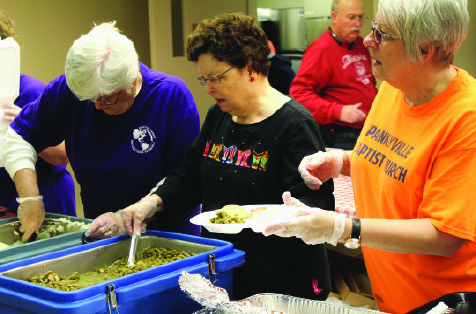
At 5 p.m. every Thursday, the doors open and diners of all ages start trickling into the fellowship hall at FBC Harrisburg. Young children find seats in the back corner. Older men and women, some who have brought babies along, sit at long tables. Volunteers bring them their food and, if time allows, stay to chat for a bit.

The His Table volunteers are a team of about 20 people, ranging in age from 14 to 92. They arrive mid-afternoon to prepare for the evening. One group makes sandwiches for the kids to last them until the end of the weekend, while another team packs meals to deliver to shut-ins who are unable to come to dinner.

When word initially spread about the dinner ministry, funds poured in from supporters and soon five other churches—Liberty, Saline, Dorrisville, Pankeyville, and McKinley Avenue—came alongside First Baptist to help. A restaurant and a local supermarket also committed to help with food provisions.

“One of our chief concerns about launching His Table was overestimating the need,” Thompson said. The worry was unfounded. At the first His Table dinner, the Thompsons served 10 meals. Now, they see around 250 diners every week, and serve 350 meals.

“I’ve been coming since I first heard of this event,” one diner said. “My wife’s not here but this meal helps sustain us both for at least another night.” The man left that night carrying two more boxes of food to take to his bedridden wife.

“This sort of thing isn’t uncommon,” Thompson said. “These people are having to make decisions, ‘Do I pay this bill or do I eat this week?’ So to sit with people who have said their last meal was Thursday night and they’ve been waiting for Thursday night to come around again is heartbreaking.”

Thompson believes this is why the churches in the community are so eager to help.

“When you think about poverty, you don’t really think about it in your own community,” said Donnie Hughes, a volunteer from Pankeyville Baptist Church. “But it wasn’t until we saw what Joe was doing firsthand that awoke us to how great the need in our community was. And seeing children come into His Table by themselves with no parents really impacted us to get involved.”

More than a meal
“It’s not enough for people to leave here thinking ‘Boy, the spaghetti was good tonight,’” Thompson said. “If that’s all on their mind, then we’ve failed.”

His Table is meant to reflect God’s unforsaken love and compassion for his people, even amid their hardships. “Life’s pretty tough right now for these folks, but for us to be able to communicate redemptive truths to them is prayerfully and hopefully the impact we’re making,” Thompson said.

“For churches to understand the overall need, come together, and very selflessly understand that together we can pool our resources and manpower to meet the needs of the community—that is how the Church is effective.”

In time, he said, the team would like to start recovery programs and help provide jobs for people in the community. If those dreams come to fruition, the His Table team would have to find additional locations and resources. But Thompson isn’t worried.

“Ultimately,” he said, “we just want to be the Church sharing the love of Christ to the community. Just as much as Jesus did to his.”

See His Table volunteers from Harrisburg churches serve their community: www.vimeo.com/ibsa/histable