Archives For November 30, 1999

The Briefing

Here’s where evangelicals are giving the most and least
Giving continues to rise for many categories of ministry, according to new research released today by the Evangelical Council for Financial Accountability (ECFA). An analysis of the finances of more than 1,800 of its accredited members found a 2.2% rise in cash contributions from 2015 to 2016. This group also saw a 3.6% rise in non-cash giving, which includes income such as government grants or real estate. That adds up to $16.2 billion of giving—$12.6 billion in cash and $3.6 billion in non-cash—to evangelical ministries in 2016.

It’s official: Evangelicals appreciate Chick-fil-A the most
You could say Chick-fil-A is one of those fast-food restaurants with a cult following. But in this case, the closed-on-Sunday chicken sandwich chain clearly has a church following. Evangelicals and fellow Christians have the most positive view of the Chick-fil-A brand, according to Morning Consult’s 2017 Community Impact Ratings. In breakout poll results provided to CT, 62 percent of evangelicals considered Chick-fil-A to have a positive impact on their community, compared to 48 percent of Americans on average.

Former fire chief Cochran’s rights aired in court
A federal court is weighing not only former Atlanta fire chief Kelvin Cochran’s right to express his beliefs but the right of others as well, religious liberty advocates say. A federal judge heard arguments Nov. 17 in Atlanta regarding the city’s 2015 firing of Cochran. The city terminated Cochran, now a staff member of a Southern Baptist church, after he wrote a men’s devotional book that advocated in a brief section the biblical view of marriage and sexuality, including that homosexual behavior is immoral.

Iraqi Archbishop pleads with Trump to save 20,000 Christians
The Chaldean Archbishop of Erbil, Bashar Warda, is urging President Donald Trump to help 20,000 Iraqi Christian families that have been driven out of their homes following attacks and dangers from Islamic extremists. Warda said in an interview that 20,000 Iraqi Christian families, or around 100,000 people, still need vital assistance following years of attacks by Islamic radicals and other conflicts.

Church of Sweden to stop using ‘he’ and ‘Lord’
The Church of Sweden has urged its clergy to use more gender-neutral language when referring to God and to avoid referring to the deity as “Lord” or “he”. The move is one of many made by the national Evangelical Lutheran Church, which is in the process of updating a 31-year-old handbook, which outlines how services should be conducted in terms of language, hymns and other aspects.

Sources: Christianity Today (2), Baptist Press, The Christian Post, The Independent

What is Pioneering Spirit?

ib2newseditor —  November 28, 2017

Churches urged to take lessons from Illinois’ early settlers

You know the pioneer in the video you made, Stephen Stilley?” the woman said. “I’m his great niece. Seven greats.”

Stilley was a veteran of the War of 1812 who returned home to Illinois to continue the church planting work he started before joining the army at age 47. Stilley’s name is on a plaque outside First Baptist Church of Elizabethtown, founded in 1806. It’s IBSA’s oldest continually operating congregation, and one of four IBSA churches that predate Illinois’ statehood in 1818.
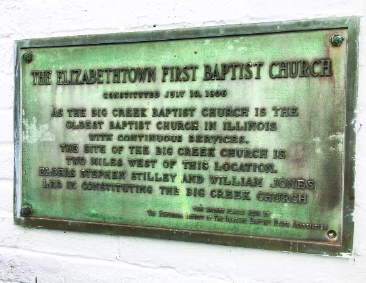
FBC Elizabethtown

“When I heard his name, my ears perked up,” said Sheila Jessen, assistant for the Baptist Foundation of Illinois. “My maiden name is Stilley.

“I went home and looked it up in our genealogy,” she continued. “My great-great-great-great-great-great grandfather John was Stephen Stilley’s brother. I’m the niece of a Baptist pioneer,” she said, her eyes welling up a little. “It’s beginning to make sense why I’m at IBSA.”

The descendant of one of the pioneering forebears was having a moment that could be common to all Illinois Baptists: realizing that we are descendants of hearty stock, both spiritual and literal, and in their pioneering DNA we find the fortitude to inhabit the land and build the Kingdom.

With the observation of Illinois’ 200th anniversary set to begin in 2018, IBSA offered a new call to spread the gospel across the state.

“What are we going to do to get off of the flat line we are on as Illinois Baptists?” Executive Director Nate Adams asked at the Annual Meeting. Adams outlined a four-fold plan to engage churches in new commitments to church planting, evangelism, missions-giving, and leader development. “We think these are at the very core of what it means to have a pioneering spirit.”

As with the pioneers in the early 19th century, the need of the 21st century is brave souls willing to do whatever it takes to stake new territory, taking the gospel where it has never been before. The goal is to have 200 or more churches committed to each of the four challenges.

Roles and role models
Throughout the meeting, the theme was interpreted with a series of interviews. First up, a couple who found in her family tree inspiration to go to a new place to plant a new church.

Bryan and Marci Coble moved their family from Texas, where he was in seminary, to Chicago. After briefly considering planting a church in Portland, Oregon, the Cobles felt led to explore Marci’s home state. Her grandmother sent them a clipping from the Illinois Baptist saying more churches are needed in Chicago.

But there was another influence. Marci, who grew up in Chatham, is the granddaughter of former IBSA executive director Maurice Swinford (1988-1993). “He was like a second father to me,” she said at the meeting in Decatur. “He encouraged me and invested in my life. He planted those seeds of leadership in my life.”
New places

Answering the call to church planting led the couple to the Irving Park neighborhood of Chicago, a diverse community of Anglo, Hispanic, African American, and Asian people on the city’s north side. The location explains why Bryan wore a Chicago Cubs cap for 30 days during their exploration process. Could this diehard Cards fan from Missouri minister successfully in the heart of Cubs territory? During that month, Bryan felt a growing love for the city and its lost people.

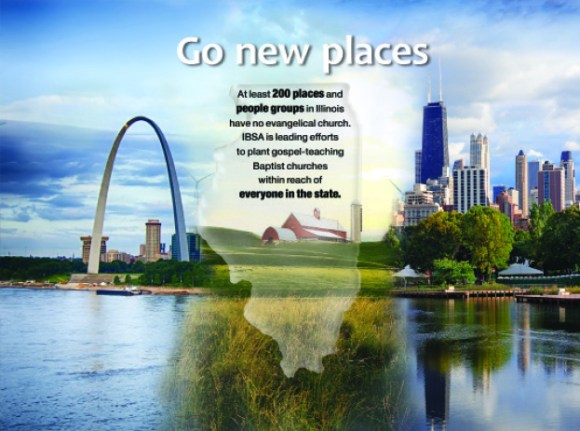
Across Illinois, there are more than 200 places and people groups in need of an evangelical church. There are many places similar to the Cobles’ neighborhood. Many are in highly populated urban areas. Many are in small towns and rural crossroads. In all of them, gospel-teaching Baptist churches are needed.

The church planting challenge is for churches to pray for new congregations, partner with a church planter to assist his work, or to lead in the planting of a new congregation.
Talking about Jesus

Pat Pajak shares Christ everywhere—even in the hospital where he had open-heart surgery. Pat told his story to show the pioneering need to engage people with the gospel. “We need to believe that God can do a marvelous thing in our church,” Pajak said. “There are lost people all around us.”

Pajak described two emphases that will be part of his work as IBSA’s Associate Executive Director for evangelism in 2018. One of them is part of a larger project led by the North American Mission Board: Gospel Conversations. Talking about Jesus is the simple calling of every believer, but many are shy to speak up. NAMB’s goal is to register one-million gospel conversations prior to the Southern Baptist Convention meeting in June. NAMB has created a website where church members can report their personal conversations with lost people. There are also short videos from people sharing their “conversation” experiences. (GCChallenge.com)

new people

Pajak announced an IBSA project to baptize 1,000 people on April 8, 2018. “One GRAND Sunday” follows Easter, with the intent that witness training and gospel conversations will lead to baptisms. “We have 8 million-plus people in the state of Illinois who don’t know Jesus,” Pajak said.

This is an evangelism challenge. “We’re praying that 200 of our IBSA churches will baptize 12 people next year,” or more than the church’s previous three-year average. The hope is that churches will turn the decline in baptisms by setting evangelism goals and equipping members to share their faith, and by engaging lost people through evangelistic events and mission trips.

The commitment is for IBSA churches to become “frequently baptizing churches.”

Walking the walk
Lindsey Yoder charmed the crowd with her account of walking from Arthur, Illinois to Nashville, Tennessee: 300 miles in 27 days. The teenager first learned about human trafficking at an AWSOM weekend for teen girls, led by Illinois Baptist Women. Then, a movie on the subject convinced Lindsey that she must do something to help free young women, girls, and boys caught in the sex trade worldwide. Even in Illinois people are forced into sexual subservience. The most common route for bringing them into the state is along I-55 from St. Louis to Chicago.

Lindsey’s story is one of sacrifice.

A 14-year-old girl from central Illinois doesn’t often take on such a massive and awful cause. But this one did, one step at a time.

“It felt like I wanted to quit a lot. I refused to quit. I don’t like to quit. Sometimes putting one foot in front of the other is a lot harder than it sounds,” Lindsey said. And yet, she kept walking. On the journey she raised enough money to sponsor two “rescues” in a South Asian country.

Such sacrifice is what it takes to save people enslaved by sin.

Lindsay’s mother, Regina, who handled logistics for the trip and followed her all the way, said the support of their church was crucial. The people of Arthur Southern Baptist Church encouraged the teen and contributed to her cause, and by their example showed how Southern Baptists everywhere give for missions.

The Cooperative Program is Southern Baptists’ best channel for supporting life-saving missions. With regular, systematic, percentage giving from its offerings, each church makes the sacrifice each week. The need calls us to greater sacrifice.

New sacrifices

Here’s how Nate Adams described this missions-giving challenge. “We’re asking churches to make missions-giving a higher priority in your budget. We’re asking would your church be willing to make CP a greater percentage of your budget—if the Lord would lead you to make new sacrifices to give through CP.”

The Pioneering Spirit commitment is for 200 or more churches to increase CP giving (for example, 1% per year) with a goal of reaching at least 10% of undesignated offerings.

Follow the leader
Roger Marshall said in his first 10 years as pastor of FBC Effingham, he conducted 150 funerals. Raising up new leaders was not an option, it was imperative. So he began to pray. “God really does identify new leaders,” he said. “It’s not just about finding new slots. It’s really about finding God’s person.”

New leaders

Roger was on the platform with his brother, David, who recently retired as associate pastor at Mt. Zion, and their father, Frank, a 63-year veteran of ministry who is 94.
“Be the kind of leader someone ought to follow,” David said. “That’s what my father was.”
The senior Marshall’s advice for leader development: help people identify their spiritual gifts and put them to use. And “don’t blame someone else for what you are…. Live your responsibility.”

This is a leadership challenge. IBSA’s Mark Emerson urged pastors to commit to leadership development for current members and potential young leaders. The goal is for 200 or more churches to have intentional development processes in place.

During the Annual Meeting, 53 IBSA churches made one or more of these commitments.
As Illinois itself turns 200, it’s clear the work of Baptist pioneers, begun by Stilley and others, is as much needed today as when the state was founded.

WATCH IT
See the video about four early Baptist pioneers in Illinois. Two current pastors tell the stories of the first church planters, starting with New Design near the Mississippi River in 1796.

Plus, watch the videos about the ministry of the Cobles (“Heart for the City”) and Pat Pajak (“Sharing Christ Everywhere”).

TAKE THE CHALLENGE
Read more about the four Pioneering Spirit challenges and how IBSA can help your church with training, goal-setting, and ministry partnership. Register your church’s commitment online.

Thanks for everything on blackboard

There are a few verses that most Christ followers at least sort of know by heart. Verses like John 3:16. Or Hebrews 11:1. Or this one:

“Be joyful always; pray continually; give thanks in all circumstances, for this is God’s will for you in Christ Jesus” (1 Thessalonians 5:16-18).

It’s a strange passage coming from someone like the apostle Paul. He’s been bitten by snakes, shipwrecked, beaten within an inch of his life on numerous occasions, abandoned by his friends on some occasions, maligned by people he cared about on others. And yet, Paul stresses the obedience of joy and thankfulness almost as much as he stresses grace and faith.

And make no mistake—it is an issue of obedience. Often we think of joy and gratitude in the realm of feelings. Either we feel joyful or thankful, or we don’t. When we feel it, we do it. But obedience doesn’t work that way.

Obedience is doing regardless of whether you’re feeling. Thankfully, as we grow in Christ, we find the Lord not only bringing about in us the correct actions but also the correct feelings that come alongside those actions. But until we are made right and whole again, it is left to us to give ourselves to the sanctifying work of the Holy Spirit by continuing to do, even (and perhaps most especially) when we do not feel.

So, your gratitude—just like mine—is not a question of whether you feel thankful, but whether you are willing to obey this command from the Lord.

But there is another issue here to examine during this season set aside for giving thanks—whether there is a difference between giving thanks IN all circumstances and giving thanks FOR all circumstances.

Gratitude isn’t a matter of how we feel in the moment, but a measure of our obedience.

If there is, it means that no matter what situation you find yourself in, there is always something to be thankful for. You may not be thankful for the suffering, the pain, the hardship or the persecution, but there are other things to lift your heart. When you consider everything that the Lord is, all that he continues to do in the world, and the next world waiting for the believer, there are plenty of reasons to say “thanks,” no matter what happens to be going on.

If there’s not a difference, it means you believe that every circumstance, regardless of how devastating or marvelous, has come from God. And since you know that God is for you, not against you, then you can be thankful for the circumstance, even if you are doing so in faith. You are thankful because you believe that ultimately good will come of it.

I think people love Jesus and believe both of these things. And at the end of the day, both sets of believers are thankful.

In my own life, I have seen how, over time, you become more thankful “for.” Over time, and with perspective, you begin to see the invisible hand of God moving in times that, in the moment, you could not see. You begin to reflect on God’s providential care and love and wisdom even when he may have seemed so significantly absent. You see how he has shaped you and guided you into a deeper experience of Jesus. And so, over time, you become thankful “for.”

To bring it full circle, notice that the command here is to give thanks in all circumstances. That’s what you can do right now, even if you don’t feel like it. You can practice the discipline of gratitude, finding the grace of God, in general and in particular, at work in your life.

But as you do that, think back a bit. Think back to those moments when you thought you would never have another reason to feel thankful again. Think back, and then look and see the redemptive hand of God at work because of those times. And maybe this is the year that you are not only obediently thankful in, but also being thankful for.

Michael Kelley is director of groups ministry for LifeWay Christian Resources. He is on Twitter at @_michaelkelley and online at michaelkelley.com, where this article first appeared.

– From Baptist Press

The real first Thanksgiving

ib2newseditor —  November 22, 2017
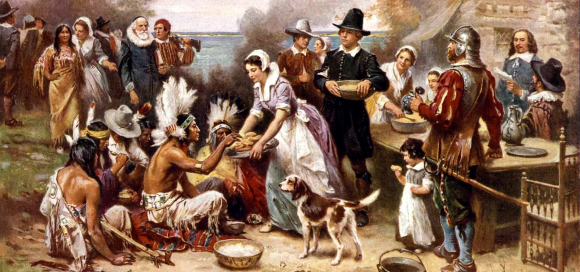
The_First_Thanksgiving_Jean_Louis_Gerome_Ferris

The First Thanksgiving Jean Louis Gerome Ferris (Public domain)

Images from the Pilgrims’ first Thanksgiving Day feast are easy to call to mind—black hats, wide white collars, Native American guests, and an idyllic feast bringing together two very different cultures. But historian Robert Tracy McKenzie—along with others in his field—say that many of those images are, to put it simply, not true.

The Pilgrims often wore bright colors, for example. And while the 1621 feast did include Native Americans, the dynamic between the two groups was likely tense.

McKenzie, chair of the history department at Wheaton College, explores the Pilgrims’ journey from England to Holland to America in his 2013 book “The First Thanksgiving: What the Real Story Tells Us About Loving God and Learning from History.”

The Pilgrims, he writes, wouldn’t have been given to celebrating very many holy days. This set them apart from the Catholic and Anglican Churches. Aside from a weekly Sabbath, the Pilgrims had two distinct reasons to call for a holy day: a day of humiliation and fasting, and a day of thanksgiving.

Both happened in 1623, as new settlers arrived while the existing colonists were already struggling to survive. Food was scarce, and now there were more mouths to feed. And on top of all that, McKenzie writes, they faced a two-month drought that summer.

The Pilgrims called a day of humiliation “to seek the Lord by humble and fervent prayer.” They prayed for eight or nine hours, McKenzie writes, during which the sky became overcast. Then, it rained for the next 14 days.

And then the Pilgrims saw reason for another holy day—a day of thanksgiving. McKenzie writes this particular day was very different from what we traditionally think of as the first Thanksgiving, which historians generally consider to have been a kind of harvest festival. The real first Thanksgiving, he says, was “called to acknowledge a very specific, extraordinary blessing from the Lord.”

The current vestiges of Thanksgiving Day celebrations are very different than what the Pilgrims embraced, McKenzie says. “In their view, an annual Thanksgiving taught human conceit and divine predictability and could easily degenerate into a meaningless ritual that reduced God’s provision for human news to his creation of the crop cycle.

“By observing Thanksgiving irregularly, on the other hand…the Pilgrims reminded one another to look with expectancy for God’s ongoing, direct intervention in every aspect of their lives.”

– The First Thanksgiving (IVP Academic, 2013)

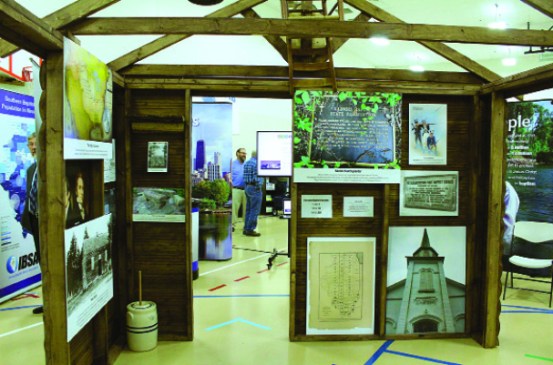
Cabin churn side

Step into 1818: Log cabin houses early Baptist history

The urgent need to get the gospel to more people was a driving theme of the 111th Annual Meeting of the Illinois Baptist State Association (IBSA). Churches were challenged to make four “Pioneering Spirit” commitments in the areas of church planting, evangelism, giving, and leadership development.

The Pioneering Spirit theme also coincides with 200th anniversary to be celebrated in 1818. In keeping with the state’s bicentennial, IBSA is asking 200 or more churches to make each of the four commitments.

Moving from our current “flatland” to new heights in those areas will require a steep uphill climb, IBSA leaders said, but it’s the only option.

“We can’t be satisfied with the status quo, because the status quo is decline,” said Kevin Carrothers during his president’s message. Preaching from the book of Numbers, Carrothers, director of missions for Salem South Baptist Association, said no one remembers the names of the nay-saying Israelites who didn’t want to go into the Promised Land. Instead, the real legacy of pioneering spirit was left by Joshua and Caleb, the two spies who trusted God to provide.

Kevin Carrothers

Kevin Carrothers

“They recognized the will of God was more important to obey than the whims and the desires of men, even if the majority won,” Carrothers said.

In the meeting’s final session Thursday morning, Pastor Sammy Simmons offered an annual sermon full of encouragement for those weary from a difficult season of life and ministry. Rely on the Lord, said the pastor of Immanuel Baptist Church in Benton, Ill. And keep taking bold steps for the sake of the gospel.

“The conditions are too rough, the lostness is too great for us to continue to do business as normal,” Simmons preached. “The cause of the gospel causes us to make bold sacrifices for King Jesus.

“I’m all in for this pioneering spirit. Oh, how much our church needs it. Oh, how much I need it. Oh, how much our state needs it.”

New challenges
During his report, IBSA Executive Director Nate Adams gave messengers a progress report on IBSA’s four key goals:

  • Develop leaders: So far in 2017 more than 500 pastors and leaders have participated in IBSA-sponsored leadership development events, Adams said. About half that number are engaged in more in-depth leadership cohorts.
  • Inspire cooperation: Adams reported that giving through the Cooperative Program and the Mission Illinois Offering is up slightly from last year, and through October, IBSA staff has had direct connection or consultation with 70% of all IBSA churches.
  • Stimulating church health and growth: So far in 2017, IBSA staff has trained over 5,800 participants from 527 churches. Children’s camp offerings have grown from three weeks to seven, Adams said, and IBSA has made major capital investments in both IBSA camps. The 75th anniversary of Lake Sallateeska Baptist Camp was celebrated with a special video presentation during the Thursday morning session.
  • Catalyzing evangelistic church planting and missions: It’s been a busy year for Disaster Relief, Adams said, with volunteers responding to in-state disasters and hurricanes elsewhere in the country. IBSA anticipates long-term involvement in the Houston area hard hit by Hurricane Harvey.

Fourteen new churches were planted in the state in 2017, Adams reported, and IBSA welcomed 17 new churches for affiliation during the Annual Meeting.

Adams also pointed to other measurements, including membership, Sunday school attendance, baptisms, missions volunteerism, and missions giving, that have remained relatively flat over the past several years. He ended his report by encouraging churches to embrace one or more of the four “Pioneering Spirit” commitments designed to challenge IBSA to courageously depart from the status quo.

Throughout the meeting, the “Pioneering Spirit” commitments were detailed through interviews with Illinois Baptists who exemplify faithful service in four key areas:

  1. Go new places is a church planting challenge, asking at least 200 churches to commit to pray for new congregations, partner with a church planter to assist his work, or to lead in the planting of a new congregation.
  2. Engage new people is an evangelism challenge, which IBSA Associate Executive Director Pat Pajak described at the meeting. “We’re praying that 200 of our IBSA churches will baptize 12 people next year,” or more than the church’s previous three-year average. The hope is that churches will turn the decline in baptisms by setting evangelism goals and equipping members to share their faith, and by engaging lost people through evangelistic events and mission trips.
  3. Make new sacrifices. “We’re asking churches to make missions-giving a higher priority in your budget,” said Adams. “We’re asking would your church be willing to make CP a greater percentage of your budget—if the Lord would lead you to make new sacrifices to give through CP.” The Pioneering Spirit commitment is for 200 or more churches to increase CP giving (for example, 1% per year) with a goal of reaching at least 10% of undesignated offerings.
  4. Develop new leaders. Mark Emerson, associate executive director of IBSA’s Church Resources Team,urged pastors to commit to leadership development for current members and potential young leaders. The goal is for 200 or more churches to have intentional development processes in place.

Other business
– Messengers approved the 2018 IBSA budget of $8.7 million, with projected Cooperative Program giving of $6.3 million. IBSA forwards 43.5% of Cooperative Program gifts on to national SBC causes, the eleventh-highest among 42 state conventions.

– Messengers approved a motion brought by the IBSA Board of Directors that all property currently held by IBSA for Baptist Children’s Home and Family Services be conveyed by deed to BCHFS in its entirety. This includes 17 tracts of property (744.9 acres) that were acquired for use and are used by BCHFS, but are currently titled to IBSA.

– IBSA’s ministry partners gave video reports throughout the business meeting, including Illinois Woman’s Missionary Union (WMU) and President Jill McNicol. God has advanced the work of WMU and given them new opportunities to reach new people, McNicol said, noting three places—Southeast Asia, the Bronx, and Cairo, Ill.—where Illinois women have served on mission in the past year.

“To the women of WMU, missions is not just a thing. It’s people. It’s lost people needing a savior. And it’s teaching Christians how to live on mission for God, to reach those lost people.”

Officers

NEW OFFICERS – Each of IBSA’s four officers were elected by
acclamation: (Left to right) Sharon Carty, assistant recording
secretary; Adron Robinson, president; Adam Cruse, vice|
president; and Robin Mayberry, recording secretary.

– IBSA’s four officers for 2018 were elected by acclamation: Adron Robinson, president, pastor of Hillcrest Baptist Church in Country Club Hills; Adam Cruse, vice president, pastor of Living Faith Baptist Church in Sherman; Robin Mayberry, recording secretary, member of Bluford Baptist Church; and Sharon Carty, assistant recording secretary, member of Emmanuel Baptist Church in Carlinville.

The next IBSA Annual Meeting is Nov. 7-8, 2018, at First Baptist Church, Maryville. Tom Hufty, pastor of FBC Maryville, will bring the annual sermon, and Michael Nave, pastor of Cornerstone Church in Marion, will serve as the alternate speaker.

Illinois Baptist Team Report

Can it happen here?

ib2newseditor —  November 18, 2017

church pews

The 26 lives taken in an act of evil at a Sunday morning church service on Nov. 5 at Sutherland Springs, Texas shocked the nation. It was the largest mass shooting at a church in the history of the United States, but sadly, not the first. And it happened at a Southern Baptist Church, one named First Baptist, like so many around the country.

Still, many believe it won’t happen “here.”

It could and it already has. In March 2009 Pastor Fred Winters was shot and killed while preaching from the pulpit at First Baptist Church Maryville.

The Illinois Baptist interviewed Rich Cochran, director of leadership development at IBSA, who was minister of education and children at FBC Maryville that tragic Sunday morning.

“We ignore reality because we don’t want to face it and don’t know what to do,” he said. “We’d rather keep our heads in the sand.”

Cochran was just getting ready to enter the sanctuary when the shots rang out. The church had a security plan, but the gunman who was also armed with a knife and stabbed two church members who tried to restrain him, still managed to fire four shots before he could be subdued. The killer, who had no known connection to Winters or the church, was later found not guilty by reason of insanity.

Remembering that morning, Cochran said, “I don’t think there was a whole lot of second guessing. We had a plan and [after] we created a more detailed plan. There was a tornado threat that day and that was the plan that had been reviewed that morning.”

The repercussions are lasting, taking an emotional toll on the staff and congregation. “There are still dreams about and emotions from what happened,” he shared.

Cochran referenced Tom Hufty’s message at the IBSA Annual Meeting on Nov. 8., when Hufty said he “still runs into people with strong hurts that don’t go away.” Hufty took Winters place as pastor of FBC Maryville.

Hufty noted the different emotional responses that occurred within the congregation. According to Hufty, some said, “I can’t come back to that place. Others closed ranks — we’ve got to stick together we can’t let Satan win. And others needed a new start.”

When asked what advice he would give to pastors and staff thinking about putting a church safety plan together, Cochran said it’s important that pastors and staff process and walk through mentally and verbally would what they do were such a thing to happen.

“Review your risk, take an assessment, know where your vulnerabilities are, minimize those vulnerabilities, live out your mission,” those are the key things they can do.

He also noted, “It’s important congregations be extremely friendly, engaging everyone. Then, you can notice when something isn’t right. Then, it doesn’t seem like you have the National Guard in your lobby. The best way, is to train people to be nice and to welcome everyone.”

There is a danger in letting fear take hold he cautioned. “If we pat our heads and build mega-forts around ourselves we do a disservice to missionaries. If we protect ourselves so much it disrupts our mission we’re out of whack. There is a constant tension.”

Prayer does play a role. “We need to pray, yes, we need to prepare,” he nodded. “Yes, we need to live by faith. We live in a world where evil is present. Even Jesus said there would be troubles.”

In the simplest of terms Cochran urged, “Prepare, prepare, prepare. Then you have to walk by faith. We’re called to illuminate the darkness.”

– Lisa Misner Sergent

Thnaksgiving Blessing Celebrating Grateful Meal Concept

(Editor’s note: For thirty years, Chicago Tribune columnist Joan Beck annually penned a wonderful essay of thanks. It was part song, part poetry, and a lovely grocery list of God’s blessings in the year nearly passed. Beck died in 1998. Here we offer our own humble version, with thanks for her example of gratitude.)

As we gather together to ask the Lord’s blessings,
396 years after the first Thanksgiving Day,
we are grateful, dear God
For pilgrim fathers and mothers
who survived privation and dismay,
only to see your rich blessings
on the other side of suffering.
Their spiritual journey reached fulfillment on these shores;
Brave Pilgrims in a fearful new world,
Found welcome and home.

Now thank we all our God—
For that signal year 1517,
When an agitated priest sounded a protest,
Nailing his complaints to the church house door.
The echo of his hammer rings today.
We are grateful inheritors of the Reformation,
Expiation, Propitiation
Justification, Sanctification;
that the just shall live by faith alone;
For grace that grants to us salvation
offered freely but in Christ alone
my hope is found,
He is my light, my strength, my song.

Here we are, five centuries past, and the Protest lives.
The freedoms won by our spiritual ancestors are still protected;
We are grateful for the Constitution that lets us worship freely—
even though our theology differs,
And to speak freely—even when others object.

O God, our help in ages past, our help for years to come…
For responders first on scene in crisis and storm,
That in their service we see the Ultimate Rescuer.
For those who come in the second wave;
“Yellow Shirts” and the Relief they bring,
the love they extend for the One who gave
his very life the dying to save,
and for standing for us all, we sing,
You’re a good, good father
It’s who you are, it’s who you are,
it’s who you are.

Give thanks with a grateful heart…
For text and Skype and e-mail too—
(I may never have said that before)—
because it keeps our loved ones close
though they live on distant shore.
For faithful companions for life’s journey
and a church that proves they’re truly family
in our time of need,
and for man’s best friend
who loves us steadily to the end
(not only because we feed them)
thank you.

For summer tomatoes and cornbread dressing,
Folded hands and children’s blessing,
The Spirit’s whisper in times distressing;
For “miracle drugs” and miracles real,
For doctors, nurses, and the God who heals,
for the will to get up and the desire to soldier on,
for endurance and insurance and the blessed assurance
that neither death, nor life, nor angels, nor principalities, nor powers, nor things present, nor things to come, nor height, nor depth, nor any other creature, shall be able to separate us from the love of God, which is in Christ Jesus our Lord.
Amen.

Eric Reed is editor of Illinois Baptist media

Blue abstract background with white spot light, abstract tropica

With less than one-sixth left of 2017, unless there’s a drastic turnaround, the year likely won’t be remembered as one of the country’s best. Devastating hurricanes. Political gridlock. The worst mass shooting in U.S. history. The headlines have only gotten bleaker as the year has worn on. And the year’s not over yet.

A new survey on what Americans fear the most paints a picture of how the year has taken a toll on lots of people. Almost 75% of Americans are afraid or very afraid of corrupt government officials, according to Chapman University’s annual survey. That topped the list last year too, but was the only fear expressed by more than half of respondents. This year, five fears were held by a majority, including the new healthcare plan, pollution, and not having enough money for the future.

Things are difficult, and people are scared. Scanning the headlines or, more likely, scrolling through a news feed, doesn’t help either. The current climate is such that as our team brainstormed how to write about Thanksgiving this year, we couldn’t come up with much of a fresh angle. Certainly, we have a lot to be thankful for; as Americans, we know that’s true. But with the din of the constant news cycle perpetually in our ears, it can be difficult to pinpoint the bright spots in an otherwise dreary year.

Perhaps that’s why a Friday conversation with an Illinois pastor’s wife was so refreshing. Jane Miller and her husband, Larry, have been part of Shiloh Baptist Church in Villa Ridge for nearly 33 years. Jane answered our call that Friday afternoon for information about the church’s recent 200th anniversary, but ended up sharing some unexpected hope too.

She talked about how she and Larry have developed deep friendships with the people in their church over the years. How he has mowed yards when some of their church members haven’t been able to do it themselves. That he keeps the church refrigerator stocked with eggs from the chickens he keeps. Every off-hand reference she made to their church and their ministry told the story of people who have put down roots in a community and are committed to each other.

That’s hopeful.

So, too, is a group of kids waiting—beach towels over their arms—to be baptized at Stonefort Missionary Baptist Church.

Perhaps it’s because the year has been so murky that these bright spots, which might have been overlooked in the past, shine even brighter. As we approach a season focused on giving thanks, may we be grateful for the little things that remind us of God’s goodness and provision, in this year and every other.

-MDF

The Briefing

TX church holds first Sunday service since attack
After an emotional sermon held outdoors under a massive white tent, congregants and the public were invited to return to the church for the first time since the tragedy. A chilling memorial set up inside First Baptist Church in Sutherland Springs included 26 white chairs bearing each victim’s name painted in gold. Pastor Frank Pomeroy shared his personal heartache and a message that the community bound together by faith can move past the evil that attacked the church seven days earlier. The service was held in a massive white tent erected in a baseball field.

Missionaries assist Muslims amid humanitarian crisis
Renewed clashes between Rohingya militants and security forces in Myanmar have created a massive new humanitarian crisis, resulting in more than 600,000 Rohingya Muslims to flee into Bangladesh since Aug. 25. The government of Myanmar faces accusations of ethnic cleansing and international condemnation. Myanmar and its Muslim neighbor Bangladesh have largely been closed off to Christian missionaries, but Christian aid groups are now in Bangladesh to help the Rohingya.

Supreme Court to weigh anti-abortion speech restrictions
The U.S. Supreme Court agreed Nov. 13 to take up a fight over a California law that requires pregnancy counseling centers, including those run by churches, to tell their patients that subsidized abortions are available elsewhere. Signed into law by Gov. Jerry Brown in 2015, the law says the centers must post or distribute a notice that says in part “California has public programs that provide immediate free or low-cost access” to such services as contraception and abortion. It was immediately challenged by religiously affiliated clinics that argue the law is worse than censorship, compelling them to communicate a message offensive to their beliefs.

Teacher removed after calling transgender student a ‘girl’
A Christian math teacher in the United Kingdom has been removed from the classroom for referring to a biologically female transgender student as a girl. Joshua Sutcliffe, a 27-year-old who teaches 11 to 18-year-olds at a school in Oxfordshire, has been removed from his teaching capacity and is facing a disciplinary hearing after a parental complaint that he discriminated against a female-born transgender student by stating “well done, girls” when addressing the student’s small group during class. The student in question self-identifies as male and Sutcliffe reportedly had not been instructed formally that she was to be referred to as a boy.

Museum of the Bible officially opens this week
The new Museum of the Bible – a project seven years in the making – officially opens its doors this week. In the heart of Washington, D.C., it’s the first museum solely dedicated to God’s holy word. With a $500 million investment and global cultural and scholastic partnerships, the Museum of the Bible hopes that its mission translates into more people reading and appreciating the best-selling book of all time.

Sources: Religion News Service, World Magazine, NBC News, The Christian Post, CBN News

Andreson-Ponce

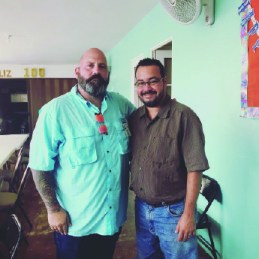
Chicago pastor Dave Andreson (left) met Puerto Rican church planters while serving on the island in October, including Jose Ponce, pastor of Iglesia Bautista Resurrección in Isabela.

Arecibo, Puerto Rico | In October, Southern Baptist volunteers began relief efforts in Puerto Rico after the U.S. territory sustained devastating damage from the one-two punch of Hurricanes Irma and Maria.

The volunteers are working through Southern Baptist Disaster Relief and the North American Mission Board’s (NAMB) Send Relief initiative, but their work is unlike other Disaster Relief projects.

“The circumstance is so unusual that we have to take the full responsibility of this response on our own,” said David Melber, president of Send Relief. “That means buying and shipping the food, renting warehouse space, sending the kitchen equipment, and then providing the volunteers to do the cooking. We are forging our entire response by ourselves.”

Chicago church planter Dave Andreson spent a week in Puerto Rico as a trained Disaster Relief chaplain. Andreson, a U.S. Army veteran, couldn’t shake the growing burden he felt for the island. “I had to get there,” said the pastor of Resurrection City Church in Chicago’s Avondale neighborhood.

While plans to send volunteers to Puerto Rico were on hold immediately after the storms, Andreson attended a two-day Disaster Relief training at Lake Sallateeska Baptist Camp in southern Illinois. One week later, with Baptist volunteers able to get into Puerto Rico, Andreson boarded a flight from Chicago to San Juan.

McKnight

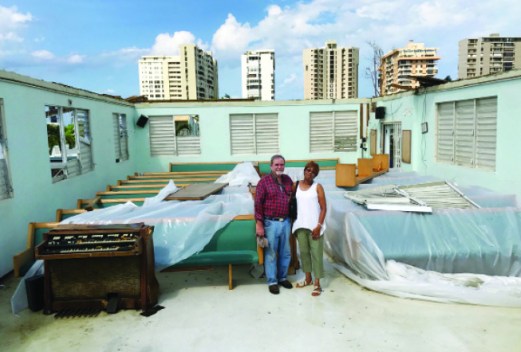
Pastor George McKnight and his wife, Debbie, pause for a photo at Green Island Baptist Church in Puerto Rico, which lost its roof and was flooded during Hurricane Maria’s sweeping destruction.

He served with a Disaster Relief team from Virginia in Arecibo, a city 50 miles west of San Juan in northern Puerto Rico. The team stayed at First Baptist Church there and spent their days cleaning out homes and removing downed trees. Andreson said the teams are working under the leadership of local pastors who understand the people and needs in their communities.

Since the hurricanes, Andreson said, many people are leaving Puerto Rico. Their workplaces are still without power, most schools are still closed, and if you have running water, it’s not safe to drink. FBC Aricebo has already lost about 40 people. One church planter Andreson talked to is worried his young congregation won’t survive.

But the Chicago pastor said he believes Puerto Rico is primed for the gospel. “Physical suffering makes us aware of physical need, and those physical needs always open the door by which the word of God, the gospel proclaimed, makes us aware of our spiritual need,” Andreson said.

“This is a horrible thing that happened, but it’s a good gift from God by which the gospel will go forward. Now more than ever, the church in Puerto Rico, the church of Jesus Christ, has an opportunity to shine the light of Christ.”

The punishing hurricane season has left its mark in other parts of the U.S., including Florida and in Texas, where Illinois teams have served in the aftermath of Hurricane Harvey. For more information about Illinois Baptist Disaster Relief opportunities and training, go to IBSA.org/dr. To learn more about opportunities in Puerto Rico through Send Relief, go to sendrelief.net.

– Meredith Flynn, with reporting from NAMB