Archives For November 30, 1999

61222word_cloud

We live by God’s surprises,” said Helmut Thielicke. The German pastor was speaking in times more trying than ours, but in the darkest days of WW2, he could see the hand of God at work—and was amazed by it.

Dare we say the same of the year just past?

We were surprised by events we witnessed. In their unfolding, we sought the reassurance of God’s sovereignty. Here are some noteworthy moments for Baptists in Illinois—some heavy, some light—and what they may say about the year before us.

– The Editors

Standing on the promises

61222trump_pence

Donald Trump (left), Mike Pence (right)

A third of Americans (34%) think Donald Trump will be a “good” or “very good” president, while 23% say “average” and 36% expect a “poor” performance. The survey by CBS News was conducted the second week of December, after Trump began announcing cabinet appointments.

The ratings fall along party lines: 70% of Republicans expect a good presidency, while 60% of Democrats predict poor results. That means evangelicals, who mostly supported Trump, have high expectations—but for what?

Religion reporter Sarah Pulliam Bailey, on her Washington Post blog, points to a half-dozen areas where Trump’s campaign promises intersect with evangelical interests. Some are the expected areas involving religious liberty. The nomination of Supreme Court justices who will uphold pro-life legislation topped the list. Trump also said he would defund Planned Parenthood, sign a bill that forbids abortions after 20 weeks, and make the Hyde Amendment permanent. It prohibits use of federal funds for most abortions. And Trump has expressed support for a group of nuns who have battled provisions in the Obama Affordable Care Act that mandate contraception as part of an organization’s health care plan. Southern Baptists have supported their lawsuit.

Trump promised to repeal the 1954 Johnson Amendment to the U.S. tax code, which prevents pastors from endorsing or opposing political candidates, or else lose their church’s tax exempt status. And he has taken a position on education funding that allows families to choose private, charter, or home schooling, with a promise to set aside $20 billion for vouchers in his first budget.

The U.S. will be a “true friend to Israel,” Trump said, a position common among evangelicals favoring Israeli interests over others in the Middle East and urging movement of the U.S. embassy to Jerusalem.

Many Southern Baptists would support these actions, if they came to pass. For SBC leaders who have been in contact with the future administration, the Trump presidency represents a new way of thinking about the White House. Since Ronald Reagan’s presidency, Southern Baptists in general have viewed Republican administrations as allies in the causes of pro-life, families and marriage, and religious liberty. They have, at the least, been sympathetic to evangelical causes, and even co-laborers in the faith. (Remember the stories of George and Laura Bush singing hymns at the White House piano with Attorney General John Ashcroft and Secretary of State Condoleezza Rice on the keyboard?) Democratic presidents, on the other hand, have often been at odds with evangelicals’ causes, even if they claimed to be Baptists, as in the case of Bill Clinton.

Donald Trump represents a third way of relating to the White House: a president who made promises to evangelicals and drew their support at the polls, but who shares no apparent faith commitment with the born-again community. (There are no stories of Trump walking on the beach with Billy Graham and committing his life to Christ. And the tycoon-turned-president has said he sees no need to ask for forgiveness for his sins.)

The evangelicals closest to Trump, including incoming vice president Mike Pence, take on the role of Joseph in Egypt—keeping the interests of God’s people before pharaoh, hoping to keep his ear and hold him to his promises.

High hopes for high court

Some voters who cast their ballots for Donald Trump said they did so because of concern for the U.S. Supreme Court. The February death of Justice Antonin Scalia left a vacancy, and three of the Justices—Ruth Bader Ginsburg, 83, Anthony M. Kennedy, 80, Stephen G. Breyer, 78—may be looking toward retirement in the next few years.

Focus on the Family founder Dr. James Dobson supported Trump. He told Christianity Today, “The next president will nominate perhaps three or more justices whose judicial philosophy will shape our country for generations to come.”

A LifeWay Research survey found 23% of evangelical pastors were most concerned about the candidates’ likely Supreme Court nominees. And 36% of Trump-supporting pastors cited the high court as a major factor in their choice.

Trump released a list of his potential Supreme Court nominees—20 judges and one senator, Mike Lee of Utah. Each met two criteria: they are pro-life and support the Second Amendment. The list was vetted and reviewed by the Federalist Society, which is comprised of conservative and libertarian lawyers, and the conservative Heritage Foundation.

Commentator Denny Burk told Baptist Press the list “does not alleviate the concerns that many of us have about his candidacy.” Because Trump didn’t promise to pick someone from the list, Burk said, “The list means nothing….And we are again being asked to trust the judgment of a man who changes his positions daily…” Burk is professor of biblical studies at Boyce College, the undergraduate school of Southern Seminary.

Reince Priebus, future White House Chief of Staff, told radio host Hugh Hewitt on December 14 that the President-Elect will likely name Scalia’s replacement near the January 20 inauguration.

Priebus said Trump may choose a younger nominee. “Well, I tend to believe younger is better, too, but I can tell you what the president (elect) believes is that the most qualified, best person to serve on the Supreme Court is what’s most important….Certainly longevity’s a factor, but it’s just a factor. Competence and having the best possible person nominated is what’s most important.”

Tension between leaders, pews
61222russell_moore

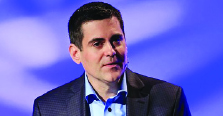
Russell Moore

The 2016 presidential campaign and election exposed deeper divides than many knew existed in the U.S.­­—and within evangelicalism. White evangelical voters overwhelmingly supported Trump, even while some of their leaders voiced their opposition.

As Wheaton College’s Ed Stetzer said after the election, “The evangelical leadership is out of touch with the evangelical rank-and-file,” during a Christianity Today podcast.
Tension over the election appears to be at least part of a rift between some Baptists and the SBC’s public policy entity, the Ethics and Religious Liberty Commission.

In November, Louisiana Baptists voted to ask their convention’s executive board to study recent actions of the ERLC.

Will Hall, editor of the state’s Baptist Message newspaper, noted that the motion did not elaborate on the issues of concern, “but ERLC President Russell Moore has come under fire nationally from Southern Baptist laymen and leaders for a number of controversial actions and statements, including…his aggressive attacks on Southern Baptists who supported Donald Trump.”

Moore, who has led the ERLC since 2013, wrote an opinion piece for The New York Times in May in which he said the election “has cast light on the darkness of pent-up nativism and bigotry all over the country.” His article caught the attention of Trump, who tweeted that Moore was a “truly a terrible representative of evangelicals.”

The op-ed also sparked a fervent debate on the SBC Voices blog, where Baptists posted a variety of opinions on Moore, from “he did what we pay him to do,” to “it is difficult for me to imagine Russell Moore functioning as ERLC President if Trump wins in November.”

The questions about Moore and the ERLC are just one example of the impact the 2016 election could have on religious organizations and denominations, and on the nature of Christian leadership. The tension leaders face, Ed Stetzer said, is between recognizing the responsibility to speak prophetically, and realizing they represent a constituency who largely feel very differently than they do.

For Christian leaders, their influence in the next four years may well depend on how well they strike the balance.

Election 2016Since the big June meeting between Donald Trump and about 1,000 evangelical leaders, including a handful of Southern Baptist pastors, the political conversation involving conservative Christians has dropped off noticeably. Christians have grown quiet on politics. Even the Twitterverse is quiet right now.

One exception: an op/ed piece in USA Today by Hobby Lobby CEO David Green pointing to the pivotal nature of the U.S. Supreme Court. “Make no mistake, the vacancy left by Justice Scalia and the subsequent appointment to fill his seat makes this presidential election one of the most significant in modern times.”

Green’s company was at the center of a 2014 judgment that allowed his corporation to refuse to pay for abortion-inducing drugs as part of its health insurance plan because of religious objections, despite requirements under the Obama Affordable Health Care Act. The high court’s ruling in favor of Hobby Lobby was 5-4. “It’s frightening to me to think that we—and all Americans—were just one vote away from losing our religious freedom,” Green wrote.

That’s the reason he gives for supporting Donald Trump. “(Hillary) Clinton has made no secret she believes government interests supersede the protection of religious liberty.”

Green’s concern for religious liberty is understandable and even commendable, but his essay serves to show that evangelicals are no longer a one-issue people.

Beginning with the emergence of the Moral Majority, evangelicals became a force and a voting bloc. Their anti-abortion theology drove evangelicals to candidates who were expressly pro-life. Fortunately, those candidates were often in agreement with conservative Christians on many other issues as well, so supporting them advanced a whole bundle of issues. It worked for 30 years.

Not so today.

Green’s commentary underscores that evangelicals are not all in agreement on the importance of any one issue any more than they support any one candidate. The world is too complex for a single-issue approach.

In this head-scratcher of election cycles, some evangelicals are valuing other issues as highly as pro-life and religious freedom: What about a candidate’s trustworthiness, honesty, temperament, and character? What is his or her history of relations with dangerous nations, prudence in peacetime or courage in war? What about the prospect of handling the nuclear codes?

Maybe many in the Christian community are relatively quiet on this presidential election because they’re still thinking about it.

And scratching their heads.

– DER

The Midwest Takeover

ib2newseditor —  September 8, 2016

The Midwest has been big this summer. Big enough that we in our office coined the phrase, “The Midwest Takeover,” as a way to describe how Baptist leaders from our region have been significantly more visible than in recent years.

The takeover started with the new slate of officers elected at the Southern Baptist Convention in St. Louis: An Illinois pastor and three Missourians were chosen to fill national SBC posts, while an Iowan will head up next year’s Pastors’ Conference.

Then, Sandy Wisdom-Martin, who led Illinois Woman’s Missionary Union before moving to Texas, was chosen to lead National WMU.

There’s even evidence of a Midwestern swing in the national election, as Indiana Governor Mike Pence works to bring solid, traditional values to Donald Trump’s controversial campaign.

Our region isn’t the buckle of the Bible Belt…but God can do things people say can’t be done, like growing a church in the Midwest.

The national election has crystallized the need for “Midwestern values,” as the culture shifts in ways most thought it never would, and as leadership we can be proud of seems hard to come by.

In the SBC, the election of Midwestern leaders may well represent a new day for the denomination. One with the understanding that Baptist thought and doctrine isn’t just rooted in the Deep South, and that while traditionally SBC-strong states have much to offer in the way of ministry innovation, so do “pioneer” regions.

Like Illinois, where FBC O’Fallon pastor and newly elected SBC First Vice President Doug Munton has served for more than 20 years. He is strong in his support for the Cooperative Program, Southern Baptists’ chief method for funding ministry and missions. But he’s also honest about the challenges of pastoring in a suburban community made even more transient by its proximity to Scott Air Force Base.

Midwestern leaders understand the challenges Baptists face in a changing world, because they’ve met those challenges as workers in regions with few evangelical churches. Our region isn’t the buckle of the Bible Belt, Munton told the Illinois Baptist in May, but God can do things people say can’t be done, like growing a church in the Midwest.

We usually think of pioneers as starters, people who are willing to do hard, unheard-of things—impossible even—for the sake of a better future.

As the work of sharing the gospel and making disciples gets more difficult, this influx of the “pioneer spirit” could be just what the SBC needs.

– MDF

The BriefingWhen it rains, it pours for weary south Louisiana
For the second time in five months, historic flooding has left widespread devastation and suffering through south Louisiana. As of Sunday afternoon, four people have been killed in the flooding, thousands have been displaced and thousands of homes, businesses and churches have been affected by the flooding. Louisiana Southern Baptist churches are responding amid the devastation.

Five Christian gold medalist Olympians at Rio 2016
Athletes from across the globe have gathered in search of gold at the 2016 Olympic Games, and five Christian sportspeople have managed to overcome obstacles to earn the top honor. Simone Manuel, Caeleb Dressel, Laurie Hernandez, Osea Kolinisau, and Anna Van Der Breggen are five Olympians whose Christian faith has helped them prevail when stumbling blocks could have prevented them from winning gold medals in Rio De Janeiro.

Egyptian sent home from Rio for refusing to shake Israeli’s hand
An Egyptian athlete who refused to shake his Israeli opponent’s hand after their judo bout has been reprimanded and sent home from the Rio Olympics. When Sasson extended his hand, El Shehaby backed away, shaking his head. The referee called the 34-year-old El Shehaby back to the mat and obliged to him to bow; he gave a quick nod and was loudly booed as he exited.

Russia’s ban on evangelism is now in effect
Last month, Russia’s new anti-terrorism laws restricting Christians from evangelizing outside of their churches, went into effect. The “Yarovaya package” requires missionaries to have permits, makes house churches illegal, and limits religious activity to registered church buildings, among other restrictions. Individuals who disobey could be fined up to $780, while organizations could be fined more than $15,000. Many are wondering how strictly will it be enforced.

Countries make Christian charity harder to give and receive
Nearly 20% of the world’s population could lose access to the ministry efforts of Western Christians next year. In April, China banned foreign nongovernmental organizations (NGOs) from engaging in or funding religious activities. The measure could expel Christian groups that are doing medical, developmental, or educational work in the world’s largest country by population, with 1.4 billion people.

Sources: Louisiana Baptist Message, Christian Post, Christianity Today, Christianity Today

Election 2016For nearly a year, evangelicals, including many high profile leaders, have been debating who to support in the 2016 U.S. Presidential election. Many have even joined the the #NeverTrump moment. But that may be changing.

A new poll released by Pew Research Center shows four-fifths of white evangelicals say they have decided to vote for the presumptive Republican nominee Donald Trump in the general election. According to Pew, 78% of white evangelicals now support the candidate. Just 17% support Hilary Clinton, the presumptive Democrat nominee, while 5% are undecided.

Support for Trump among white evangelicals is even higher than as it was for Republican Mitt Romney (71%) in 2012.

The New York Times quoted J. Tobin Grant, a professor of political science at Southern Illinois University-Carbondale, on the difference. “Trump is not a true believer in any sense, both religiously and on the issues, but he’s speaking to them,” said Tobin. “He’s actively courting them, and that’s what the activists want. They want to have a seat at the table, and they felt they didn’t have that with Romney.”

White evangelical Protestant voters make up one-fifth of the the nation’s registered voters, with one-third stating they are or at least lean Republican. Evangelicals are rivaled by religious “nones,” voters who have no religious preference or are atheist, who also make up one-fifth of registered voters. More than a quarter of the nones say they are or lean Democrat.

Writing for Religion News Service, Mark Silk touted the “big news” from the Pew poll as “the disappearance of the God gap.” In 2012, “respondents who said they attended worship at least once a week preferred Romney to Obama by 15 points, 55% to 40%. This year, the margin is just four points: 49% for Trump to 45% for Clinton.”

Silk also noted, “In 2012, less frequent attending white evangelicals preferred Romney to Obama by 29 points (62-33). This year the margin for the Republican has doubled to 57 points (76-19) — almost the same as the margin among frequent attending white evangelicals.”

Pew found voters in general are not pleased with their choices for president – “42% of voters said it would be difficult to choose between Trump and Clinton because ‘neither one’ would make a good president.”

Black Protestant voters overwhelmingly say they support Clinton – 89% to 8% for Trump. Just four percent say they are undecided. Hispanic Catholics support Clinton (77%) over Trump (16%).

The survey also measured voter motivation. Pew discovered “the desire to defeat Clinton was the prime reason evangelicals supported Trump. Of the 78% of white evangelicals who said they would vote for Trump, 45% said their decision was ‘mainly a vote against Clinton,’ while only 30% said it was ‘mainly a vote for Trump.’”

In addition, the survey found nearly half (46%) of white evangelical voters believe it it is now more difficult to be a Christian in the United States. This compares to just 18% of Catholics who believe it is now more difficult to be a Catholic in today’s society.

The survey also comes on the heels of Trump’s meeting last month with nearly 1,000 evangelicals, including many Southern Baptists. At least eight Southern Baptists now serve on Trump’s evangelical advisory panel.

The Republican National Convention takes place next week, July 18- 21, in Cleveland, Ohio. The Democrat National Convention follows July 25–28 in Philadelphia, Pennsylvania.

– Lisa Sergent

The BriefingEvangelical leaders quiz Trump
The event with as many as 1,000 social conservative leaders – mostly evangelical – starts at 10:15 a.m. Tuesday and ends around midday. There isn’t a poll or endorsement coming at the end and participants say they are coming with an open mind. However, polls show a majority of white evangelicals – and social conservatives in particular – leaning towards Trump. The question is how strongly.

Inside today’s Trump meeting with evangelicals
What started as a closed-door gathering of 400 social conservative leaders to test Trump’s values has grown to a daylong conference of 1,000, involving nearly all the traditional political influencers of the religious right. For some, it is an effort to get Trump to better understand their policy positions.

Baptists go beyond conservative politics
The Southern Baptist Convention has been closely associated with conservative politics for years, but at its annual meeting this week the denomination showed that its concerns are becoming more diverse along with its membership. Where 20 years ago the convention voted to boycott Disney for promoting homosexuality, last week delegates passed a resolution extending love and compassion to the victims of the recent shooting at an Orlando gay night club.

Chicago’s deadly weekend
On Father’s Day weekend in Chicago, 12 people were murdered in 54 different shootings across the city. Among the dead is a 16-year-old boy. The youngest of the injured is just 3. This weekend is unfortunately not atypical in Chicago, where shooting deaths this year are on track to be the worst in two decades.

Refugees arrive in St. Louis
This time of year is when refugee resettlement is the busiest in the U.S. And with President Barack Obama announcing in September that he would bump to 85,000 from 70,000 the number of refugees accepted into the U.S. this year — 10,000 of them from Syria — St. Louis is seeing a higher-than-usual number of refugees.

Sources: Washington Post, Time, Washington Post, CNN, St. Louis Post-Dispatch

“Elizabeth, you can now exhale, my girl.” Fred Luter adjourned the 2013 Southern Baptist Convention with a smile, a word to his wife, and probably a sigh of relief. His first convention as president brought little controversy – a half-hour discussion on a Boy Scouts resolution was the most buzz-worthy topic. And, while fewer in number than in previous years, Baptists gathered at the George R. Brown Convention Center were focused on reversing the denomination’s decline, with a focus on true revival.

“Lord, send a revival, and let it begin with me,” Luter said in his last words to messengers.

Unofficial numbers show 5,103 messengers registered in Houston. Despite the low-key tone, trends emerged that could chart a new course for the SBC:

-Events targeted toward young leaders were well attended, allaying fears – for now – that the next generation is unengaged and uninterested.

-Under the leadership of new Ethics and Religious Liberty Commission President Russell Moore, Southern Baptists’ policy agency could be marked by an emphasis on “convictional kindness.”

-The convention’s declining baptism and membership numbers are very real indicators of decline, but for the most part, the meeting kept a hopeful tone, buoyed largely by Luter’s good-natured approach to his time at the podium. Re-elected to a second term, he will play a key role in reigniting Baptists’ passion and commitment to cooperate together, as the convention looks toward the 2014 Annual Meeting in Baltimore.

The June 17 issue of the Illinois Baptist will cover all this and more – read it online this Friday and ibonline.IBSA.org. And thanks for following along these past few days. As they say in Texas (we think), So long, pardner!

Fred Luter and his wife, Elizabeth, are recognized by convention messengers Wednesday afternoon. Luter was elected to a second term as SBC President in Houston this week.

Fred Luter and his wife, Elizabeth, are recognized by convention messengers Wednesday afternoon. Luter was elected to a second term as SBC President in Houston this week.