Archives For November 30, 1999

Floyd calls Trump prexy ‘our moment’

National Prayer Service in Washington DC

SBC Pastors Ronnie Floyd (center left) and David Jeremiah (center right) exit the platform and prepare to greet President Trump at the conclusion of the National Prayer Service Jan. 21 at the National Cathedral in Washington DC. Fox Phoenix screen capture

“Right now we’ve got a shot to really make a difference,” Ronnie Floyd told his congregation on Sunday. “God has given us a moment. It’s time to pray more than we’ve ever prayed in our country…to pray more with stronger conviction that every life matters to God.”

Floyd was just one of the notable Southern Baptist pastors participating in inaugural ceremonies for incoming President, Donald Trump. The pastor of Cross Church in Northwest Arkansas was one of the evangelical advisors to Trump.

Noting the current discord in the nation, Floyd said, “This is not about Democrats and Republicans. It’s about spiritual warfare; right and wrong. It’s not about what it appears to be about, it’s not about flesh and blood.

“You don’t announce you’re going to put pro-life judges on the Supreme Court and expect the world to receive it,” Floyd said in a video posted at his website.

Southern Baptists were prominent at the National Prayer gathering on Saturday following the inauguration, both in their placement in the program and on the platform among the 26 religious leaders invited to participate in the event.

Floyd and David Jeremiah, pastor of Shadow Mountain Community Church in El Cajon, Calif., sat on the dais of the National Cathedral, just behind the Episcopal celebrants who were leading the service and in front of the choir loft. Jeremiah read from Romans 5, the passage about character, endurance, patience, and hope. And Floyd read Psalm 23 from the King James Version.

Prestonwood Baptist Church pastor Jack Graham was one of the speakers in the “prayers of the people,” reading a scripted prayer on behalf of “those who serve.” And a granddaughter of Billy Graham, Franklin’s daughter Cissie Graham Lynch, read a similar prayer in a procession that included a rabbi, representatives of several Protestant denominations, and several Eastern religions.

Ramiro Peña, pastor of Christ the King Baptist Church in Waco, Texas, wrapped up the litany of prayers with The Lord’s Prayer. In an unofficial count, Southern Baptists outnumbered other faiths among clergy participating in the inauguration and prayer service. The interfaith service held an an Anglical cathedral had distinctly evangelical touches. Melania Trump led a standing ovation for the solo singer of “How Great Thou Art,” and the service concluded with “Great Is Thy Faithfulness,” which Vice President Mike Pence and his wife, Karen, sang from memory.

On Inauguration Day, Robert Jeffress, pastor of First Baptist in Dallas, delivered the sermon at the private prayer service prior to the swearing-in ceremony. He titled the sermon, “When God Chooses a Leader,” taking the message from Nehemiah 1:11.

“When I think of you,” Jeffress said to Trump, “I am reminded of another great leader God chose thousands of years ago in Israel. The nation had been in bondage for decades, the infrastructure of the country was in shambles, and God raised up a powerful leader to restore the nation. And the man God chose was neither a politician nor a priest. Instead, God chose a builder whose name was Nehemiah.”

He noted the first step God instructed Nehemiah to take in rebuilding the nation was building a wall around Jerusalem to protect is citizens. “You see, God is not against building walls,” Jeffress shared. Jeffress recalled sitting with Trump on a jet, eating Wendy’s cheeseburgers, and talking about the challenges facing the USA. Jeffress was an early supporter of Trump.

He told the incoming President and Vice President to look to God for strength and guidance: “…the challenges facing our nation are so great that it will take more than natural ability to meet them. We need God’s supernatural power.

“The good news is that the same God who empowered Nehemiah nearly 2,500 years ago is available to every one of us today who is willing to humble himself and ask for His help.”

He instructed them, “God says in Psalm 50:15 ‘Call upon Me in the day of trouble I shall rescue you and you will honor Me.’”

– Staff Report, with info from Baptist Press, RonnieFloyd.com, FirstDallas.org, and C-SPAN.

61222word_cloud

We live by God’s surprises,” said Helmut Thielicke. The German pastor was speaking in times more trying than ours, but in the darkest days of WW2, he could see the hand of God at work—and was amazed by it.

Dare we say the same of the year just past?

We were surprised by events we witnessed. In their unfolding, we sought the reassurance of God’s sovereignty. Here are some noteworthy moments for Baptists in Illinois—some heavy, some light—and what they may say about the year before us.

– The Editors

SBC candidates: Unity matters

What the U.S. presidential election may have lacked in civility, the 2016 election for Southern Baptist Convention President more than made up for in grace. When a close vote forced a run-off between Steve Gaines and J.D. Greear, the election seemed poised to divide Baptists over matters of theology and generation.

Instead, the candidates talked the night before the third vote was to be taken, and one bowed out, urging his supporters to vote for his opponent.

“It’s time for us to step up and get involved, to keep pushing forward and engaging in the mission with those who have gone before us,” North Carolina pastor Greear posted in support of Tennessee pastor Gaines. “It’s time to look at what unites us.”

On paper, this decade’s SBC presidents are a diverse bunch, not united by much in terms of their backgrounds and interests:

  • Atlanta-area pastor Bryant Wright (2010-2012), who recently spoke out in favor of ministering to refugees
  • Dynamic New Orleans preacher Fred Luter (2012-2014), elected as the SBC’s first ever African American president
  • Ronnie Floyd (2014-2016), pastor of a multi-site church in Arkansas and a prolific blogger who led the denomination toward a laser-like focus on prayer
  • And Gaines, elected in 2016, who has espoused traditional Baptist theology and his own intense focus on evangelism.

What does unite them is a logical progression in the things they have called Baptists toward: For Wright, it was a return to Great Commission principles. Luter’s presidency was marked by impassioned pleas for spiritual awakening and revival. And Floyd called Southern Baptists to their knees—for themselves, their churches, the denomination, the nation, and the world.

Gaines announced he will continue the emphasis on prayer at the 2017 Southern Baptist Convention in Phoenix. It may be a sign that the desire for unity, despite differences in age, theological perspective, and communication style, is actually, in Greear’s words, “what unites us.”

A new missions paradigm

After a season in which budget shortfalls and personnel cuts seemed to limit the future potential for Baptist missions engagement around the world, International Mission Board President David Platt continued to preach a message to the contrary.

“Limitless” is the word Platt has used to describe the mission force needed to take the gospel to places without it. To achieve that goal, he has said, the SBC has to think differently about missions and missionaries than we have in the past.

“Let me be crystal clear: the IMB is still going to send full-time, fully-funded career missionaries just like we’ve always sent,” Platt said during his report at the 2016 Southern Baptist Convention in St. Louis. “They are the priceless, precious, critical core of our mission force.”

But the IMB’s emerging strategy is to put around those missionaries a “limitless” force of students, retirees, and professionals—people who, to borrow Platt’s words, are willing to leverage their jobs and lives so that more might hear and respond to the gospel.

The newly redesigned IMB website reflects the strategy, with buttons for people in a variety of categories to search for opportunities overseas. There are needs for business consultants, healthcare professionals, construction engineers, and more. The IMB also offers training resources for churches to equip and mobilize members for missions, both short-term and longer.

Global mission “is not just for a select few people in the church, but for multitudes of Spirit-filled men and women across the church,” Platt said in St. Louis.

A year ago, when hundreds of IMB missionaries moved back home, the chances of getting the gospel to some of the world’s darkest places seemed dimmer. Now, with a strategy focused on everyday people like the ones who sparked a gospel fire in the New Testament, the opportunities seem endless. Or, limitless.

If I had a hammer

We’ll hear it a lot in the new year. On Halloween night in 1517, disgruntled priest Martin Luther nailed his 95 complaints on the church door in Wittenberg and started an ecclesial revolution. We’re likely to hear about it from all corners, including events at our seminaries, panels at the Southern Baptist Convention in Phoenix, and bus tours of Germany. And we may have a few serious discussions about the theological direction of the SBC. Look for Reformation@500 in the pages of the Illinois Baptist throughout 2017.

Read Cloudy with a chance of surprises, pt. 1

Sandy WM outdoors

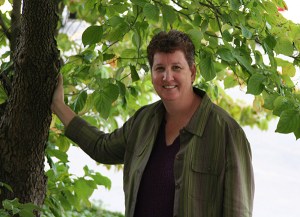
Sandy Wisdom-Martin during her tenure as IBSA’s women’s missions and ministries director.

The news spread quickly among Illinois Southern Baptists that one of their own daughters was named to serve as executive director/treasurer of Woman’s Missionary Union, SBC. Sandy Wisdom-Martin, an Illinois native who grew up near the small southern Illinois town of Marissa, was unanimously elected by the WMU executive board at a special-called meeting July 29-30 in Birmingham, Ala.

“My commitment has always been to walk where God leads,” Wisdom-Martin said in a press release from National WMU, “yet this has been a difficult process because I am in a very good place. I love the assignment God has given us (in Texas). This certainly caught my family by surprise and was not a part of our plan, but we believe God is sovereign and all the details of our lives are in His hands. I trust Him completely for the future.”

In the release she said what excites her most about this opportunity is to put total trust in the Father, serve Him with reckless abandon and see where the adventure leads.

“I don’t do what I do because of my employment,” Wisdom-Martin continued “I do what I do because I believe in the restoration of brokenness through hope in Christ. Through WMU, the only reason we do what we do is because he is risen and we must tell the good news.”

Evelyn Tully, IBSA WMU Director from 1985-2000, told the Illinois Baptist, “I am thrilled beyond words in Sandy’s selection as Executive Director of WMU, SBC.  Her missions commitment, her ministry lifestyle, and her exemplary relationships have uniquely prepared her for this tremendous responsibility.  I know Illinois missions-minded women will be her strong prayer supporters.”

Wisdom-Martin was the first recipient of the Darla Lovell Scholarship from Illinois WMU while studying at Southern Baptist Theological Seminary in Louisville, KY. While growing up she also served served on the state Acteens Panel, lead five Acteens Activator Teams, and was a seminary intern.

Wisdom-Martin served as IBSA women’s missions and ministries director from 2001-2010 before becoming executive director of WMU of Texas in 2010 through the present. While at IBSA she also served as president of Mississippi River Ministries and led the first international WMU Habitat for Humanity Team, which traveled to Ghana to build houses.

She and her husband Frank, who grew up in Sandwich, IL, are the parents of daughter Hannah.

Prior to coming to IBSA, she served as a Cooperative Program Missionary with the Arkansas Baptist State Convention from 1991-2001.

– Lisa Sergent with additional reporting from National WMU

I did not grow up a Southern Baptist. In fact, I only stumbled into the denomination 12 years ago. But every year I become happier and happier to be associated with this great tradition and organization. And this year’s Southern Baptist Convention in St. Louis made me more pleased than ever before to be a Baptist.

Maybe I am set up for future disappointment. I hear that these meetings are not always as eventful. This year, attendance was up. Emotions were high. We gathered in the immediate wake of the mass shooting in Orlando, the worst in our country’s history. We remembered the tragic shooting in Charleston one year earlier and acknowledged the racially charged atmosphere reflected in nearby Ferguson. “Election” also loomed large. The theological understanding of the term was a subtext for the hotly contested SBC presidential election. And the upcoming U.S. presidential election was in everyone’s mind.

One of the most memorable moments for me, though, came amid a flurry a motions presented to convention messengers. One brother from Arkansas had requested the removal of Southern Baptist officials or officers who support a right for Muslims in America to build mosques. The next day, after the Ethics & Religious Liberty Commission’s report, the same brother pressed ERLC President Russell Moore on the issue, likening the defense of the right to construct mosques to Jesus endorsing the erection of temples for Baal in ancient Israel.

As our culture unravels, we must remember our hope is in Christ, not country.

Dr. Moore’s response was sharp and received by the majority of messengers with applause. “The answer to Islam is not government power,” he said. “The answer is the gospel of Jesus Christ and the new birth that comes from that.”

In defending the idea of soul freedom for every individual, he illuminated a critical theological concept that lies at the heart of being Baptist. I am referring to religious liberty—the belief that no religion should be established by the state, but all faiths should be free to win adherents through the power of persuasion and not the sword.

In our history, Baptists have been persecuted by the government for non-conformity. We have seen the damage done by state churches to true religion. We do not baptize babies, in part, because we believe you cannot be born a Christian. Everyone must be genuinely converted without coercion. This should compel us to a radical witness to our Muslim neighbors and refugees, not to seek political action against them.

Recently there was a debate between a Christian and an atheist at the university near our church. It was sponsored by an evangelical campus ministry. To get there, you took the escalators to the third floor and turned left to find a small room with perhaps 100 mostly Anglo attenders. That same night, in the large room to the right of the escalators, there was a banquet for Islam Awareness Week with hundreds of Muslims from places like the Middle East and South Asia.

The lesson is this: We can wring our hands at the growing influence of Islam in the U.S., or we can get to work witnessing in new ways. Now is not the time for fear, but for bold faith.

In the New Testament era, the church is an altogether different institution than the state, with distinct ends and means. The two cannot be confused. So today, the proper analog to Baal altars in Israel is not Islamic Centers in Wheaton. It is idolatry in the corporate worship of the Church.

Patriotism definitely has its place, but perhaps one appropriate application would be to examine whether nationalism has crept into our Christianity. There are many forms of syncretism. As former SBC President James Merritt eloquently said in favor of a resolution to cease display of the Confederate battle flag, “Southern Baptists are not a people of any flag. We march under the banner of the cross of Jesus and the grace of God.”

As our culture continues to unravel and even the Bible Belt unbuckles, we must remember that our hope is in Christ, not country. His kingdom is unshakeable. And in many ways the dismantling of cultural Christianity that fused God and country is a good thing for the cause of the gospel. We Baptists want real believers that worship Christ alone, even if they are persecuted by a secular state or Islamic State.

– Nathan Carter is pastor of Immanuel Baptist Church in Chicago.

Race panel

Resolution urges no more use of Confederate battle flag

The Southern Baptist Convention rejected use of an iconic Southern emblem, the Confederate battle flag still commonly seen in the South, because it is for many representative of slavery and ongoing racism against African Americans. The resolution states: “We call our brothers and sisters in Christ to discontinue the display of the Confederate battle flag as a sign of solidarity of the whole Body of Christ, including our African-American brothers and sisters.”

Its passage by a considerable majority was met with enthusiastic applause.

The vote came after an impassioned plea by Georgia pastor and former SBC President James Merritt, himself the descendant of two Confederate war veterans.

“Make no mistake, this is a seminal moment in our convention,” said Merritt. “I believe God has brought the SBC to both the kingdom and our culture for such a time as this. What we do today with this issue will reverberate in this nation, not just today, but I believe a hundred years from now. This is not a matter of political correctness, it is a matter of spiritual conviction and biblical compassion.”

Merritt proposed an amendment which strengthened the resolution, and removed a phrase some had used about “honor(ing) their loved one’s valor.” He substituted language to “discontinue the display of the Confederate battle flag as a sign of solidarity of the whole Body of Christ, including our African-American brothers and sisters.”

The amendment passed. While not all messengers who spoke supported the resolution, the will of the Convention was clear: Southern Baptists have broken with the racism of their past. After statements in 1995 and the election of an African American president in 2013, some expressed hope the sins of the past are repudiated as well as the flag.

SBC President Ronnie Floyd chose the St. Louis convention, just a few miles from Ferguson, Missouri, as the place to discuss racial reconciliation. Convention week began with outreach ministry in Ferguson, site of riots in 2014 following the police shooting of a black teenager.

Floyd told convention messengers, “America is…experiencing a racial crisis. Any form of racism defies the dignity of human life. Regardless of the color of human skin, God has put his imprint on each of us…Racism is a major sin and stronghold in America.”

Floyd staged a panel discussion, a rarity in SBC business sessions, called “A National Conversation on Racial Unity in America,” with 10 leaders.

“I am absolutely, totally convinced that the problem in America can be put totally at the doorsteps of our churches,” said Jerry Young, president of a mostly African American denomination, the National Baptist Convention.

Young noted Christ told his disciples to be the salt and light of the world, and he said Christians are failing in the task. “I challenge you to know that the problem in America is a problem with the church being what God called it to be….Here’s what needs to happen in America: Somebody needs to pass the salt and turn on the lights.”

The panel discussed the killing of nine people at Emanuel AME Church in Charleston, South Carolina last year. “That racially motivated murder hurt all of us,” said Marshall Blalock, pastor of the mostly white First Baptist Church in Charleston. “The white community for the first time began to understand.”

Blalock noted, “The killer was a terrorist, he wanted to create fear and cause hopelessness. But he went to church where there is no room for fear, or hate, or hopelessness…Only the gospel can eliminate racism.”

Kenny Petty, pastor of the Gate Church in St. Louis, said incidents such as the Charleston church shooting and police shooting of Michael Brown in Ferguson, Mo., exposed an infection. “That wound opened up and it reeked.” Since the shooting, “there has been some healing (in Ferguson), but we’ve got a long way to go. We found out that infection didn’t just stop with the culture, it went on to the doorstep of the church.”

“What we need is the mind of Christ,” Young said. “If we want to change racism in our churches and America we’re going to have to change our attitude through Christ.”

President of the SBC’s Ethics and Religious Liberty Commission Russell Moore called the convention’s action “an extraordinary moment.”

“We watched a denomination founded by slaveholders vote to repudiate the display of the Confederate battle flag in solidarity with our African American brothers and sisters in Christ,” Moore said.

– Lisa Sergent

Almost a thousand evangelical Christian leaders gathered in New York City Tuesday to meet with presumptive Republican presidential nominee Donald Trump. Among them were a number of prominent Southern Baptists. Eight were among the 25 leaders appointed to Trump’s evangelical advisory panel.

They are: Ronnie Floyd, immediate past president of the Southern Baptist Convention and pastor of Cross Church in northwestern Arkansas; Jerry Falwell Jr., president of Liberty University; Jack Graham, pastor of Prestonwood Baptist Church in Plano, Texas, and a former SBC president; Robert Jeffress, pastor of First Baptist Church in Dallas; David Jeremiah, pastor of Shadow Mountain Community Church; Richard Land, president of Southern Evangelical Seminary and former Ethics and Religious Liberty Commission president; James MacDonald, pastor of Harvest Bible Chapel in Chicago, which only recently joined the SBC; and Jay Strack, motivational speaker and founder and president of Student Leadership University.

Being on the advisory board does not amount to a full public endorsement (Falwell, Jr. is the only one who has publicly endorsed Trump) , however to many it does imply a tacit endorsement. Some have been critical of the leaders’ action, to which Land replied via an editorial in the Christian Post. “What would our critics have us do?,” he asked. “Would they really have us spurn the opportunity to give spiritual counsel and advice to Mr. Trump and his team? How would that be obedience to our Savior’s command to be the salt of the earth and the light of the world? (Matthew 5:13-16). After all, as Evangelicals we all believe that the heart of the king “is in the hand of the Lord . . . He turneth it whithersoever He will” (Proverbs 21:1).”

Current ERLC president, Russell Moore, has been a vocal opponent of Trump, tweeting Tuesday afternoon, “If you wondered why younger, theological, gospel-centered evangelicals reacted neg to the old guard Religious Right, well, now you know.”

And, a few minutes later, “Forget the politics. Forget the country. An unrepentant lost person pronounces himself to be a believer. And you stand there and applaud?”

At last week’s Southern Baptist Convention, in the President’s message, Floyd stated, “Our nation is divided. We are known more for being the divided states of America than the United States of America. The national political races we have observed over this past year personify the fractured, dysfunctional condition in America relationally.”

Floyd also led a panel on Pastor’s and Politics at the convention. He introduced the panel saying, “Disagreement doesn’t have to result in a strained relationship with brothers and sisters in Christ…This presidential panel is an attempt to address this conversation.”

Graham, who was one of the panelists urged Southern Baptists not to sit at home but to get involved in the process. “One concern we should all have 30-40 million stayed home and did not participate…This is a critical election for the future of America,” he said.

He pointed to three primary issues Christians should be looking at when voting for a presidential. They are choosing Supreme Court justices, belief in the sanctity of life, and maintaining religious liberty. Graham noted, “We must not abdicate our responsibility to pray and to vote.”

There words appeared to be at odds with other convention leaders. At the B21 Luncheon during the convention, Moore and Albert Mohler, president of the Southern Baptist Theological Seminary were among the panelists speaking. Replying to a question about the 2016 U.S. presidential elections, Mohler said, “I find myself in a situation I’ve never found myself in as a Christian. I’m going to find myself unable to vote for either candidate.”

Moore agreed and said he plans to write in a name on his ballot.

One thing is certain, there will be continued disagreement regarding the presidential election. Another thing is also certain, many in the U.S. appear to be having flashbacks to 1976 and having their own Howard Beale, “Network” moments in this election cycle.

– Lisa Misner Sergent

The BriefingEvangelical leaders quiz Trump
The event with as many as 1,000 social conservative leaders – mostly evangelical – starts at 10:15 a.m. Tuesday and ends around midday. There isn’t a poll or endorsement coming at the end and participants say they are coming with an open mind. However, polls show a majority of white evangelicals – and social conservatives in particular – leaning towards Trump. The question is how strongly.

Inside today’s Trump meeting with evangelicals
What started as a closed-door gathering of 400 social conservative leaders to test Trump’s values has grown to a daylong conference of 1,000, involving nearly all the traditional political influencers of the religious right. For some, it is an effort to get Trump to better understand their policy positions.

Baptists go beyond conservative politics
The Southern Baptist Convention has been closely associated with conservative politics for years, but at its annual meeting this week the denomination showed that its concerns are becoming more diverse along with its membership. Where 20 years ago the convention voted to boycott Disney for promoting homosexuality, last week delegates passed a resolution extending love and compassion to the victims of the recent shooting at an Orlando gay night club.

Chicago’s deadly weekend
On Father’s Day weekend in Chicago, 12 people were murdered in 54 different shootings across the city. Among the dead is a 16-year-old boy. The youngest of the injured is just 3. This weekend is unfortunately not atypical in Chicago, where shooting deaths this year are on track to be the worst in two decades.

Refugees arrive in St. Louis
This time of year is when refugee resettlement is the busiest in the U.S. And with President Barack Obama announcing in September that he would bump to 85,000 from 70,000 the number of refugees accepted into the U.S. this year — 10,000 of them from Syria — St. Louis is seeing a higher-than-usual number of refugees.

Sources: Washington Post, Time, Washington Post, CNN, St. Louis Post-Dispatch

Brandon McNeely, Sean Morecraft, Phil Nelson, and Dalton Sharro

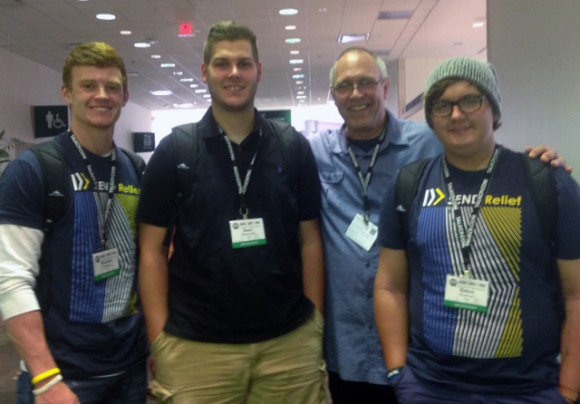
Lakeland Baptist Church, Carbondale, SBC messengers: Brandon McNeely, Sean Morecraft, Phil Nelson, and Dalton Sharrow.

The world is currently experiencing its largest refugee crisis since the second world war with more than 65 million people displaced by war. The majority of these refugees come from the Middle East and Africa and are Muslim. It’s an issue that’s fraught with controversy

Last September, President Barack Obama pledged to bring 85,000 refugees to the United States with 10,000 coming from Syria. Southern Baptists took a stand on the issue, which has become a political hot potato in the race for U.S. president, at their annual meeting held this year in St. Louis June 14-15.

Resolution 12: On Refugee Ministry acknowledged the suffering refugees endure and Baptist’s historical role in refugee care, calling upon them to “minister care, compassion, and the Gospel to refugees who come to the United States.”

The resolution also called on the government to “implement the strictest security measures possible in the refugee screening and selection process.”

Phil Nelson, pastor of Lakeland Baptist Church in Carbondale, came to the convention as a messenger, bringing with him three young men from his church, Dalton Sharrow, Sean Morecraft, and Brandon McNeely. Resolution 12 (scroll down to read the full text of the resolution) in particular, caught their attention, said Nelson. “We saw the resolutions and we saw what’s going on with the Confederate flag and some others, and we thought that’s awesome the walls have come down, but we need to communicate to the world outside the ports of America that when our government and society is saying, ‘No, don’t come,’ we represent a different Kingdom.”

Together, the four wrote and proposed an amendment to further strengthen the resolution. Their amendment encouraged, “Southern Baptist churches and families to welcome and adopt refugees into their churches and homes as a means to demonstrate to the nations that our God longs for every tribe, tongue, and nation to be welcomed at His Throne…”

The resolution received immediate support from the leaders of evangelical refugee relief organizations.

“I applaud the Southern Baptist leaders who have urged their churches and members to demonstrate Christ’s love to refugees, perhaps the most unwanted, unwelcome and unloved people in our world,” said Richard Stearns, the President of World Vision U.S.

Stephan Bauman, President of World Relief, expressed his gratefulness and said, “We believe that the biblical mandate for welcoming those fleeing persecution is clear. We see the arrival of refugees as a remarkable opportunity for the Church to live out our faith.”

Speaking with the Illinois Baptist shortly after the amendment was approved, Nelson explained, “Our citizenship is in a different place. We want to communicate clearly we belong to a different Kingdom. It’s not an American Kingdom, it’s the Kingdom of God.  We want to tell all those who are orphans and refugees you’re welcome here. I don’t care what religion, what background, you’re welcome because we believe the gospel can rescue and save everyone.”

“When we first heard David Platt give his story about the refugee issues in Somalia and Syria and other places, I couldn’t stop weeping,” Nelson said, his voice breaking. “I started seeing the kids that had no place to go. All of a sudden I thought, we have 46,000 Southern Baptist churches, what would happen if each one of those churches said we’ll take a refugee. We’ll take a family.”

Nelson shared how another Southern Baptist pastor was part of their inspiration. As they were writing it, a friend of Nelson’s who is originally from India stopped to say hello. The friend, now a pastor in South Carolina, “came over here in 1990 as a Hindu, had his gods in a suitcase,” described Nelson.

That friend was a refugee when he came to the United States and learned about Christ. “It was a Baptist family that adopted him, let him come and live with them, where he saw the gospel lived out, and as a result gave up his Hindu background, gave up his Hindu gods,” Nelson told the Illinois Baptist. “Now he’s going back to India every year planting churches. I thought if we’re going to reach the nations, and we’re going to convince the world that the gospel is for everybody, we’ve got to set the standard and say, ya’ll come.”

Nelson encourages Christians to reach out to refugees settling into their communities. “We’ve got homes, we’ve got hearts, we don’t do bombs and bullets we do hearts and homes,” he said.

– Lisa Misner Sergent


RESOLUTION 12: ON REFUGEE MINISTRY

WHEREAS, The world is facing the largest refugee crisis since World War II, with over sixty million people displaced throughout the world and considered refugees; and

WHEREAS, War, violence, genocide, religious persecution, and other forms of oppression have contributed to massive people movements across the globe, as millions flee for their lives; and

WHEREAS, Southern Baptists have a long record of caring for and ministering to refugees throughout our history; and

WHEREAS, This history of refugee ministry includes the sponsoring of almost 15,000 refugees from 1975–1985, resulting in the starting of 281 ethnic churches and a 1985 resolution commemorating this decade of ministry; and

WHEREAS, There are expected to be 85,000 refugees coming into the United States in 2016 from four continents and the Caribbean; and

WHEREAS, Scripture calls for and expects God’s people to minister to the sojourner (Exodus 22:21–24; Exodus 23:9–12; Leviticus 19:33–34; Deuteronomy 10:17–22; Deuteronomy 24:17–22; Deuteronomy 26:5–13; Psalm 146:8–9; Matthew 25:35–40); now, therefore, be it

RESOLVED, That the messengers to the Southern Baptist Convention meeting in St. Louis, Missouri, June 14–15, 2016, encourage Southern Baptists to minister care, compassion, and the Gospel to refugees who come to the United States; and be it further

RESOLVED, That we encourage Southern Baptist churches and families to welcome and adopt refugees into their churches and homes as a means to demonstrate to the nations that our God longs for every tribe, tongue, and nation to be welcomed at His Throne (Revelation 5:9; Revelation 7:9-12; Psalm 68:5; James 1:27; Leviticus 25:35; Leviticus 19:33-34); and be it further

RESOLVED, That we call on the governing authorities to implement the strictest security measures possible in the refugee screening and selection process, guarding against anyone intent on doing harm; and be it finally

RESOLVED, That we affirm that refugees are people loved by God, made in His image, and that Christian love should be extended to them as special objects of God’s mercy in a world that has displaced them from their homelands.

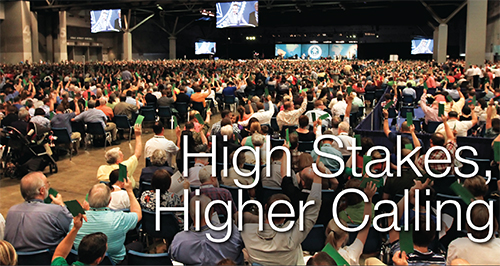
High stakes higher calling

Facing cultural decline and denominational woes, Southern Baptists leave St. Louis amazed by grace.

St. Louis | The stakes are high, Southern Baptist Convention President Ronnie Floyd declared to Southern Baptists gathered in St. Louis. And perhaps they’ve never been higher.

Christians are being martyred around the world. Refugees are fleeing for their lives. There are still thousands of people groups unreached with the gospel, but limited funds required the SBC this year to reduce its missions force by more than 1,000.

“As followers of Jesus Christ, everything we believe in and place in high value is at stake,” said Floyd, an Arkansas pastor who finished his second one-year term as SBC president.

At home, spiritual lostness is growing. Religious freedom is under fire. And the threat of domestic terrorism looms large, exhibited in Orlando just hours before Southern Baptists convened in St. Louis.

The attack on a gay nightclub early June 12 that left 50 people dead cast a shadow on the St. Louis meeting, and sent Southern Baptists to their knees in prayer. Because all human beings are made in the image of God, Floyd said, the attack “is against each of us.”

Every pastor or leader who prayed from the platform during the meeting included Orlando in his prayer.

Baptists’ commitment to missions and evangelism also were on display in St. Louis, in messages preached at the Pastors’ Conference and through a joint presentation by the SBC’s two mission agencies that highlighted the role of the local church and individual Christians in taking the gospel to unreached communities.

And at the heart of the meeting was a show of humility by SBC leaders, as two men vying for the denomination’s presidency met before their run-off election, each telling the other one to take the post.

When Baptists dispersed from St. Louis, they left having unified around a new president, and having heard a call to urgency for and commitment to the gospel of Christ.

Good thing, because the stakes are historically high.

Grassroots participation

As pastors and churches struggle to navigate social change and growing lostness, the stakes are high for people in the pew as well, Floyd said.

“Our pastors and churches need you to be engaged more on Sundays than ever before,” he preached in his president’s address Tuesday morning. “But we also need you to intentionally integrate your faith on the front lines of culture.” In everything you do, no matter where you are.

At the St. Louis meeting, everyday Baptists were urged to take the gospel to the communities as they live their everyday lives, and were shown examples of regular people who are doing just that.

During his agency’s presentation, North American Mission Board President Kevin Ezell interviewed a group of church planters who have started new congregations in Iowa college towns and are moving next to Columbia, Missouri. On large video screens, meeting attenders heard from a college student planning to pay out-of-state tuition so she can be part of the new church in the state next door, and share the gospel with people who don’t know Christ.

“When you really get to it, we talk about the gospel more than we actually advance the gospel,” Floyd preached.

If we had just one-fourth of the passion for evangelism that we have for American politics, SBC politics, theological discourse, blogging, and a whole host of things, we could change the world for Christ, Floyd said before adding, “I can’t be president again, so I might as well be honest.”

We must recapture a vision for evangelism, Floyd preached, starting in our own towns. “This is where it begins.”

Class action

Many thought the election of a new SBC President would signal whether it was time for a generation of older pastors to pass the baton. There were theological issues at play too: Two of the candidates for president—Steve Gaines, 58, and J.D. Greear, 43—are established leaders of different theological streams within the SBC.

In the end, age and theology differences gave way to the greater good. A first vote between Gaines, Greear, and third candidate David Crosby of New Orleans forced a run-off between Gaines and Greear. A second vote was still too close to call, with Gaines narrowly edging Greear but not receiving the needed majority due to 108 disallowed votes. Greear announced Wednesday morning there was no need for another vote, because he was withdrawing his name from contention.

“Through this whole process, I’ve been praying for unity,” Greear, pastor of The Summit Church in Raleigh-Durham, posted on his website. “…If we go to a third vote, and one of us wins by one-half of one percent, it doesn’t matter which of us it is—it’s hard to see how that makes us a united body.”

After announcing his intention to withdraw, Greear received a long standing ovation from those in the convention hall. Floyd asked Greear to pray for Gaines and for the denomination, and messengers elected Gaines president by acclamation.

“I think it was a transcendent moment for the Convention because it embodies the spirit of humility that we as Christians are called to have,” said Kevin Carrothers, pastor of Rochester First Baptist Church and president of the Illinois Baptist State Association. “I think it was well-timed. I think it was a God thing. So, I’m excited about moving ahead, and admire both men and respect their decisions, both willing to step aside for the sake of something bigger than them.”

At a press conference after the election, Gaines said he and Greear “both were sensing the Holy Spirit moving in the same direction.” As both men considered dropping out of the race, they met together with SBC leaders the evening before the third vote was to be taken.

“I looked at him and I said, ‘Man, you can have it,’” recounted Gaines, who pastors Bellevue Baptist Church in Memphis. “He said, ‘No, I want you to have it.’” The meeting prompted Gaines to remember Psalm 133: “How good and pleasant it is when brothers dwell in unity!”

“When the leaders are unified in the Lord Jesus Christ, it brings unity to the body,” Gaines said. As president, he plans to emphasize spiritual awakening, soul winning, and stewardship.

Greear encouraged his supporters also to exhibit a unified spirit. “The task for those of you who voted for me is not to complain that things didn’t go our way,” he posted the morning of his announcement. “It’s to follow the example of our Savior, who came not to be served, but to serve.

“It’s time for us to step up and get involved, to keep pushing forward and engaging in the mission with those who have gone before us. It’s time to look at what unites us.”

Munton elected

It took a little longer than expected for messengers to elect Illinois’ Doug Munton as First Vice President. Because Tuesday’s business proceedings ran over time, Munton’s election didn’t happen until Wednesday afternoon. The pastor of First Baptist Church in O’Fallon, who ran unopposed, told the Illinois Baptist the St. Louis convention was in some ways the most unusual one he’s been to, but also encouraging.

“God brought some unity, much-needed unity, to our Convention. That’s encouraging for our future. I’m grateful for it, and hopeful because of it,” Munton said. “The Lord is obviously at work. He is not done with the Southern Baptist Convention.”

Also elected as officers were Malachi O’Brien, pastor of The Church at Pleasant Ridge in Harrisonville, Mo., as second vice president; John Yeats, executive director of the Missouri Baptist Convention, to his 20th term as recording secretary; and Jim Wells, retired member of the Missouri Baptist Convention staff, to a 15th term as registration secretary.

The 2017 Southern Baptist Convention convenes in Phoenix June 13-14.

– Meredith Flynn

Greear Floyd Gaines2

JD Greear, Ronnie Floyd, and Steve Gaines.

There are three winners at the conclusion of the SBC presidential race: Steve Gaines takes the position and the responsibility; J.D. Greear takes the mantel as most Christ-like, and Southern Baptists leave St. Louis unified behind a single presidential candidate.

Greear’s action, withdrawing his name from the race after two ballots failed to produce a winner, was a first for longtime observers of the convention. Greear guaranteed two things: many of his supporters who are young and are new to SBC life are more likely stay engaged if they do not feel pushed out by the older, traditional constituency Gaines represents. And Greear guaranteed himself a place in SBC leadership for decades to come.

Would anyone be surprised if Greear ran unopposed in 2018? The 50% of SBC messengers who had backed Gaines could easily support in the next election the young man who did the very mature thing.

Deferring to the older candidate is indeed a mature move. And, in this case, it’s wise.

Both Greear and Gaines cited the need for unity in the denomination in this decision. “For the sake of our convention and our mission, we need to leave St. Louis united,” Greear said.

Gaines said he, too, had considered withdrawing. He quoted a close friend who said to him after the first day of the annual meeting, “We’re in a mess, aren’t we.” After two ballots, Gaines was still four votes short of a majority, because 108 ballots were disqualified by improper markings. Messengers at the best-attended convention in a decade or more were split right down the middle.

“It’s tricky,” Greear joked as he stepped to the podium to make his announcement, referring to a rap music video produced by a member of his church that some had construed as endorsements by several SBC-entity heads. The crowd laughed.

But it would be tricky to lead the denomination with the membership divided into two camps: established and traditional epitomized by Gaines, and younger and Reformed led by Greear.

For the sake of unity, Greear withdrew.

Gaines had offered to make the same move.

At 43, Greear will likely have another opportunity to be SBC president. Perhaps at 58, it is Gaines’s turn. With his mid-South megachurch platform, Gaines is likely to lead the convention in renewed evangelism, which Floyd and others have said is so vital.

And Greear has a little longer to bring his half of the SBC populace into leadership to form a new mainstream and identity, rather engage in a tug of war with the old guard over theology and tactics. “We are united by a gospel too great and a mission too urgent to let any lesser thing stand in our way,” Greear said.

The two men hugged on the platform, as Gaines was declared the winner by outgoing president Ronnie Floyd.

He could have as easily said, We all win.

– Eric Reed