Archives For November 30, 1999

Dennis_KimNEWS | The SBC Voices blog posted late Tuesday afternoon that Dennis Kim, pastor of Global Mission Church of Greater Washington, will be nominated for president of the Southern Baptist Convention when it convenes in Baltimore in June.

Texas pastor Dwight McKissic will nominate Kim, whose predominantly Korean church is the largest in the Baptist Convention of Maryland/Delaware, according to a report by the convention’s communications director.

Kim is a past president of the Council of Korean Southern Baptist Churches in America, and recently served on a task force appointed by the North American Mission Board to study the SBC’s declining baptisms.

Dr. Kim’s heartbeat is evangelism and discipleship,” McKissic wrote in a letter announcing he would nominate Kim. “He has been faithfully serving as the senior pastor of this church for 23 years with a great passion for evangelism, discipleship and world missions. Fulfilling the Great Commission is the all-consuming passion of his ministry.

“…He is fully bilingual in Korean and English with a keen understanding of multicultural world views. If elected, he will be an ambassador for the Kingdom and Southern Baptists that’s well qualified.”

Kim joins Ronnie Floyd, pastor of Cross Church in northwest Arkansas, and Jared Moore, pastor of New Salem Baptist Church in Hustonville, Ky., in the election to succeed current SBC President Fred Luter.

Read more about Kim in this article from BaptistLIFE, the newsjournal of the Baptist Convention of Maryland/Delaware.

Jared Moore

Jared Moore

Update (May 20): Bennie Smith, a deacon from New Salem Baptist Church in Hustonville, Ky., will nominate Jared Moore for president at the SBC Annual Meeting in Baltimore.

NEWS | Kentucky pastor Jared Moore announced this week he will allow himself to be nominated for president of the Southern Baptist Convention at the denomination’s June meeting in Baltimore. Moore, pastor of New Salem Baptist Church in Hustonville, Ky., currently is the SBC’s second vice president.

In a post on his blog and SBC Voices, Moore listed four reasons he’s willing to serve: He wants to serve Southern Baptists, represent rural Southern Baptists, promote unity in the SBC, and promote the Cooperative Program.

“I was saved in a rural Southern Baptist church, and I’ve primarily served rural Southern Baptists ever since,” Moore wrote. “Where I live now, the nearest gas station is 7 miles away. My church is a small church made up of about 60 people. They’re a loving, caring, godly group of people…I want to represent Southern Baptists like the ones I serve on a daily basis who may not have the opportunity to attend the convention or serve at the convention level.”

I want to represent Southern Baptists like the ones I serve on a daily basis who may not have the opportunity to attend the convention or serve at the convention level. – See more at: http://sbcvoices.com/why-i-am-allowing-myself-to-be-nominated-for-sbc-president/#sthash.M2hwtrUG.dpuf

Moore joins Ronnie Floyd, pastor of Cross Church in northwest Arkansas, in the election to succeed current SBC President Fred Luter. Fellow Kentucky pastor Paul Sanchez will nominate Moore, and Albert Mohler, president of The Southern Baptist Theological Seminary, will nominate Floyd.

I was saved in a rural Southern Baptist Church, and I’ve primarily served rural Southern Baptists ever since. Where I live now, the nearest gas station is 7 miles away. My church is a small church made up of about 60 people. They’re a loving, caring, godly group of people. – See more at: http://sbcvoices.com/why-i-am-allowing-myself-to-be-nominated-for-sbc-president/#sthash.M2hwtrUG.dpuf

I was saved in a rural Southern Baptist Church, and I’ve primarily served rural Southern Baptists ever since. Where I live now, the nearest gas station is 7 miles away. My church is a small church made up of about 60 people. They’re a loving, caring, godly group of people. – See more at: http://sbcvoices.com/why-i-am-allowing-myself-to-be-nominated-for-sbc-president/#sthash.M2hwtrUG.dpuf

COMMENTARY | Eric Reed

If there is any swordplay between the dominant camps at the Southern Baptist Convention this summer, it will likely be in the vice presidential races. Reformed leader Al Mohler announced he will reach across the aisle and nominate for the SBC presidency Arkansas pastor Ronnie Floyd, who is not known as a Calvinist. So, dueling will be consigned to lower ranks. And the first candidate has stepped forward.

Clint Pressley of North Carolina will be nominated for first vice president. What’s interesting is that it was Pressley who nominated Mississippi pastor Eric Hankins for second vice president in 2012.

Hankins is the author of a document called “A Statement of the Traditional Southern Baptist Understanding of God’s Plan of Salvation.” The document was a response to the rise of Calvinist theology in the Convention. That bubbling debate cooled only when Executive Committee President Frank Page invited Hankins, Mohler, and 17 others to join him in a study group seeking a peace between the sides and avoidance of a schism.

Hankins was not elected second vice president. He and another candidate were defeated by a surprise nominee, Iowa pastor and blogger Dave Miller. Miller’s nominator had posited him as a less divisive alternative.

Hankins exited the platform that year, but has remained active in the discussion of SBC polity and theology. Now, Pressley returns, not to nominate, but to be nominated.

That’s not at all surprising.

From a seat two rows behind them in Hebrew class, it was clear these young men were headed somewhere. Tall, sharp, and confident, in the football-player way, Hankins and Pressley went through college together as best friends. At seminary, they were a better-behaved version of Butch and Sundance. They were young men on life’s adventure as friends, role models, family men, pastors of ever-larger churches. And apparently, they were instrumental at the start of a movement to recapture “traditional” as a theological position worth holding and an identity worth upholding.

One started the race; we’ll see if the other can carry the torch on the next lap.

One more development on the traditional front: A group calling itself Connect 316 announced its first meeting to be held during the Convention. Offering their network as an alternative to “Calvinist-leaning” groups such as the Founders Ministry, 9 Marks, and Acts 29, they claim the theological tradition of Herschel Hobbs and Adrian Rogers. In other words, “traditionalists.”

A friend of mine is looking forward to the Convention in June. She wants to see if Pressley will again make an appearance in his seersucker suit. The summer staple of Southern lawyers was an old-time favorite of preachers, too. Could seersucker, and traditionalists, make a comeback in Baltimore?

Eric Reed is editor of the Illinois Baptist newspaper.

Pat_Pajak_blog_calloutCOMMENTARY | Pat Pajak

You might actually be tearing down the very thing you’re trying to build if you’re guilty of these teamwork killers:

1. Practicing the age-old adage: My way or the highway
When trying to build teamwork, don’t forget that everyone has an opinion. Oftentimes, the thoughts, ideas and suggestions that arise through team discussions can be helpful. Listen to and learn from your team, involve them in decision making, ask for their input, and embrace the reality that teamwork can often be better than “my way or the highway!”

2. Being all about the numbers
Make no mistake about it, numbers do matter and the bottom line is important, but it’s not the final measurement. The very best teamwork (strategies, goals, planning and effort) doesn’t always produce the expected results. Numbers become a problem when a leader puts so much focus on them that he or she forgets about the importance of the team – the people who are making those numbers happen. People matter more than numbers, and forgetting that fact destroys teamwork.

3. Talking without listening
If no one else can get a word in or share an opinion, there is no teamwork. A leader destroys the opportunity to build future leaders if he or she is always talking and never listening. If people are never heard, they will soon cease to share things that matter.

4. Changing things just for the sake of changing things
Change is good and sometimes necessary. But it must be based on a specific outcome. Any leader who takes this to another level by changing things just to let you know they’re in charge doesn’t really understand teamwork. Operating as a team requires a leader to explain why change is necessary, move carefully through the process, and be willing to admit that what the team is saying sometimes makes perfect sense. Failure to survey the impact, timing and necessity of change destroys teamwork. Get everyone on board before any change takes place.

5. Micro-managingThe quickest way to destroy a team is to micro-manage every decision, action and assignment. Team members know the difference between being given a responsibility, and being handed a predetermined to-do list. Leaders who care more about things being done exactly their way destroy the notion of teamwork. Are you really interested in building a team? Remember the word of Dr. John Maxwell: “People don’t care how much you know until they know how much you care.”

Pat Pajak leads IBSA’s church strengthening team.

Part of solving the leadership puzzle is determining whether a particular role calls for a manager, visionary, intern, or seasoned leader.

Part of solving the leadership puzzle is determining whether a particular role calls for a manager, visionary, intern, or seasoned leader.

COMMENTARY | Carmen Halsey

Every church should be mindful that the recruitment of leaders is necessary. New leaders can bring new ideas, offer different perspectives and bring a fresh burst of energy, giving respite to an existing team. But the key phrase is can bring. Before you bring in new leaders, it’s crucial to know who and for what you are recruiting.

Your ministry’s leadership needs could include, but are not limited to:

1. Managers, capable of caring for the existing programs and maintaining a high level of performance

2. Visionaries, able to forecast future needs and develop present plans to meet them

3. Interns, willing to learn and desiring to hold positions in the future, but with little to no experience at present time

4. Seasoned leaders, possessing a transferrable skill set and core knowledge requiring minimal support or oversight

A common mistake is to promote an individual from within to an area of leadership assuming they will be effective. But just because someone performed well with one set of responsibilities does not guarantee desired performance in another. This error often repeats itself in an organization, costing precious resources like time, money, relationships and – most crucial but often unnoted – loss of self-esteem by the individual. We have a responsibility to individuals and to the organization to identify the right person for a particular leadership role.

Excerpted from the Spring 2014 issue of Resource magazine, online at http://resource.IBSA.org. Carmen Halsey is IBSA’s director of missions mobilization and Illinois WMU. A nurse by profession, she also has a Master’s degree in Organizational Leadership and has served in numerous leadership roles in her field and in church life.

pull quote_ADAMS_augustCOMMENTARY | Nate Adams

This month two important committees will meet at the IBSA Building here in Springfield. Each typically meets only once per year, but when their jobs are done well, hours of preparation and follow up buttress those single meetings.

I’m referring to the IBSA Committee on Committees and the IBSA Nominating Committee. And it’s those hours of prayerful preparation prior to the meetings that deserve the attention and involvement of every one of us that understands what it takes for a thousand Baptist churches to work together here in Illinois.

You see, when IBSA churches cooperate, they give more than $6 million annually through the Cooperative Program, and they steward more than $9 million in annual resources through the IBSA budget. They provide a staff of around 40 to assist churches throughout the state in hundreds of different ways, and provide funding for dozens of church planters and other missions personnel.

Each year those churches provide the services of the Baptist Foundation of Illinois, and of Baptist Children’s Home and Family Services. They facilitate the operations of two statewide camps. They determine how much of their missions giving should go to the ministries of the national Southern Baptist Convention and how much should go to work here in Illinois.

And while the above only scratches the surface of their financial stewardship, IBSA churches work together to steward much more than money. They also steward the doctrinal and missional criteria for what it means to be a faithful, cooperating IBSA church. They set the riverbanks for how member churches will work together procedurally. They both preserve our history and seek to protect our future.

I could write much, much more about all our churches do together, but the more I would write, the more the question would emerge, “How do they do all that? How do a thousand diverse, geographically dispersed, busy churches of all sizes and styles work together to accomplish so much?”

As unglamorous or even mundane as it may sound, the answer to those questions, and the genius of how so many diverse churches are able to work together, is rooted in responsibilities like those of the Committee on Committees and the Nominating Committee. Year in and year out, these committees select trustworthy leaders who work within well-established processes to facilitate the near-miracle of cooperative missions among autonomous Baptist churches.

Have you guessed yet the point, the appeal, toward which I’m writing? This Great Commission system of cooperative missions depends on IBSA churches putting forth their most trustworthy, mature, and dependable members as candidates. The quality and effectiveness of our work together rises or falls on the servant leaders you recommend, whether from your church or from another.

This year’s deadline for submitting recommendations to these two important committees is August 9. You can download nomination forms quickly and easily from the home page article on http://www.IBSA.org. And you can read more there about the specific requirements of each IBSA committee or board. Or call Sandy Barnard at (217) 391-3107 for help submitting your nominations.

It’s been my privilege to work with some wonderful committee and board members over the past few years. But I’ve also observed that the number of churches supplying leaders for our committees and boards is fewer and less representative than it could be, and that each year we have far fewer recommendations than we have vacancies.

Between now and August 9, please consider recommending the most trustworthy servant leaders you know to serve on an IBSA committee or board. And be ready to say yes if you learn that someone has recommended you.

Nate Adams is executive director of the Illinois Baptist State Association.

pull quote_MILLERCOMMENTARY | Dave Miller

Editor’s note: Dave Miller served as second vice president of the Southern Baptist Convention for a year following the annual meeting in New Orleans in 2012. He wrote about his year “at the table” for the June 17 Illinois Baptist. Read it online here.

A little over a year ago, I got a call from a blogging friend who asked me if I’d allow my name to be placed in nomination for second vice president of the Southern Baptist Convention. Stunned, I told him I would consider it. After a lot of prayer, I decided to go forward with the process.

No one, including me, really thought I would be elected, but it happened.

One of the reasons I agreed to be a candidate was to raise awareness about the whole Baptist world that exists outside of the mainline Southern states. Being a Baptist in Iowa, or the Dakotas, or Minnesota, or Wisconsin, or Illinois is different than being one in Alabama, Mississippi or Texas. I like serving as a Southern Baptist in a new work state and I wanted to raise a little awareness of the work we do.

I’ve learned a few lessons along the way. First, the SBC, while far from perfect, is led by some pretty competent and capable leaders. I got into blogging a few years ago as an outsider who was upset about a few things and wasn’t afraid to express that displeasure. But as time went on, I realized that while I still don’t agree with everything everyone does in our entities, we are well served by godly men.

Frank Page, president of the SBC Executive Committee, is exactly the leader we need at the helm during difficult days. If you don’t read Thom Rainer’s blog, you ought to. We have some remarkable men as seminary presidents, and leaders at the IMB and NAMB are working to extend the Gospel around the world.

Second, I’m excited about the movement toward greater racial diversity in our leadership. A prominent black leader at our Orlando convention a few years ago: “Dave, there has not been a single black man on that stage.”

I promised him I would join him in calling Baptists to a greater inclusion of ethnic leaders. It was my great privilege to serve this year alongside President Fred Luter. Beyond that, we have seen entity leadership positions show greater racial diversity. We haven’t arrived yet, but we have taken several steps in the right direction.

Lastly, the SBC is truly a grassroots organization. I’m a pastor of a small- to medium-sized church in Sioux City, Iowa. We are at the outer limits of the Baptist world! But, because of the democratic, grassroots nature of the SBC, I had an opportunity that I never thought I would have.

We are part of something wonderful as Southern Baptists. The challenges are great and work is never going to be easy. But we have a firm foundation in God’s Word, and an unequalled opportunity to share, through Cooperative Program missions, in perhaps the most aggressive world missions program in church history. And we have a powerful living God.

I am thankful to be part of Southern Baptists and consider this last year as a convention officer, representing Baptists in the Midwest, to be a great privilege.

Dave Miller is pastor of Southern Hills Baptist Church in Sioux City, Iowa, and editor of the blog SBC Voices.

John Bolin, minister of worship and arts at FBC Houston, leads in worship at the Southern Baptist Pastors' Conference, which began Sunday, June 9.

John Bolin, minister of worship and arts at FBC Houston, leads in worship at the Southern Baptist Pastors’ Conference, which began Sunday, June 9.

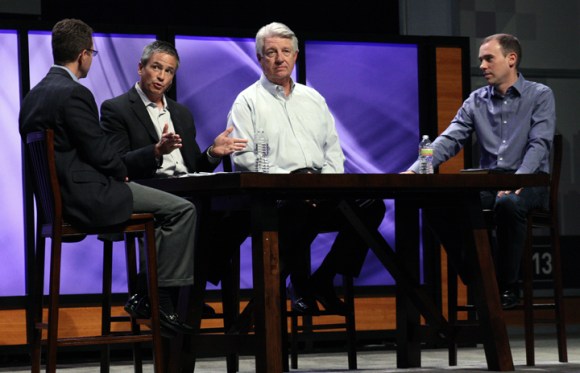
Greg Matte, pastor of FBC Houston, Texas, moderated a panel discussion on leadership with Rodney Woo (International Baptist Church, Singapore, Jack Graham (Prestonwood Baptist, Plano) and Eric Geiger (LifeWay Christian Resources).

Greg Matte, pastor of FBC Houston, Texas, and president of the SBC Pastors’ Conference, moderated a panel discussion on leadership with Rodney Woo (International Baptist Church, Singapore, Jack Graham (Prestonwood Baptist, Plano) and Eric Geiger (LifeWay Christian Resources).

Children in costumes representing nations around the world join FBC Houston's praise team and choir to sing a moving version of  "How Great is Our God".

Children in costumes representing nations around the world join FBC Houston’s praise team and choir to sing a moving version of “How Great is Our God”.

Southern Baptist Convention President Fred Luter closed the Pastors' Conference opening session with a message from Psalm 34.

Southern Baptist Convention President Fred Luter closed the Pastors’ Conference opening session with a message from Psalm 34.

Affliction will come to the righteous, Luter quoted Psalm 34, but, "You know how I know you're going to make it?" he asked pastors. "It's in the script!" he said, holding up his Bible.

Affliction will come to the righteous, Luter quoted Psalm 34, but, “You know how I know you’re going to make it?” he asked pastors, holding up his Bible. “It’s in the script!”

No more Twinkies?

Meredith Flynn —  November 29, 2012

COMMENTARY | Nate Adams

Hostess Brands, the baker of sweet treats that include Twinkies, Ho Hos, and Ding Dongs, recently announced its intent to go out of business and lay off its 18,500 workers. Executives blamed a labor strike by two key unions, which they said compounded already high labor and pension costs. Union leaders countered that mismanagement had kept the company in bankruptcy for all but three of the past eight years, and that executives received large pay raises while asking for 30% wage and benefit cuts from the other workers.

I’m not in a position to judge which side bears more responsibility for the company’s failure. But as a consumer, I simply find myself thinking, “What? No more Twinkies?”

And I’m not alone. Texas-based Hostess has about $2.5 billion in annual sales. So if something’s not done, there could be literally millions of people bemoaning the loss of their Hostess Cupcakes, Susie Q’s, and Sno Balls.

And then of course there are the thousands of workers in 33 plants across the United States that face unemployment. At least from the outside, we can’t help but wonder, “Couldn’t this have been avoided? Couldn’t the leaders and the workers have worked out their differences, and in doing so protected the mission of the organization, the value of its products, and the very livelihoods of their families?”

Sadly, we sometimes see the same tragic dynamic at work in churches today. A pastor insists that the people he leads are apathetic, or unwilling to change or sacrifice. Or leaders in a congregation assert that the pastor isn’t effective, or isn’t listening to the right people. They find themselves in conflict over direction, or style, or who should make what compromises or sacrifices.

I guess it’s no longer shocking to me that those kinds of disagreements can arise in a church. What does surprise me is how much the pastor, or congregation, or both are often willing to sacrifice to hold their position. And what sometimes surprise me even more are the words or behaviors that can flow from God’s people in those circumstances.

Recently I talked to two different pastors whose wives were urging them to leave not only their churches but also the ministry. I simply asked them how things were going at their church, and agony, disappointment and disillusionment flowed freely from their hurting souls.

Not long before that a lay leader lamented to me that his pastor had led the church in decline down to practically nothing before leaving. Another said that the pastor had left with most of the younger members to start another church nearby.

As with the Hostess Brand, I’m not always in a position to judge which side bears the greater responsibility in these church conflicts. But in every case, the loss is so much greater than Twinkies. The loss is often the effective Gospel witness of the church, at least for a while.

I’m told that some other company is almost sure to step in and rescue Hostess. Even though the current executives and many of the laborers have probably forfeited their roles, the brand and the product line continue to have incredible value. Someone will continue to make Twinkies.

And by God’s grace and providence someone will continue to deliver the Gospel. Whether it’s Hostess or the local church, leaders and workers who are willing to risk the mission and the health of the organization itself for the sake of their preferences or personal benefits always make the wrong choice. Those who submit lovingly to one another in the spirit of Philippians 2 make the right choice. And in the case of the church, they protect the wonderful privilege of delivering the Gospel.

Nate Adams is executive director of the Illinois Baptist State Association.