Archives For November 30, 1999

Sharing Jesus everywhere

ib2newseditor —  August 21, 2017

Pat Pajak praying

Pat Pajak will make you cry. Why? Because he cries.

Whenever there’s talk about how many people in Illinois don’t know Jesus, you can count on Pat to get choked up. And whenever Pat tells how he had the privilege of sharing the gospel with someone—and that someone accepted Jesus as Savior—tears will flow. His shoulders shake up and down. His voice cracks. And for a moment, the story stops. But he catches a breath, and continues.

And invariably, the person he’s witnessing to agrees that they need Jesus, and prays to receive him as Savior.

The biker. The nurse. The couple at the gas station on the way to North Carolina. “I believe in witnessing opportunities wherever you’re at,” Pajak said.

Pat Pajak has a gift. Some would say his gift is evangelism, but that’s only part of it. Pat makes lostness in Illinois—vast, unfathomable, and seemingly almost too big to tackle—become real, and personal, and up-close.

“Lostness” is people, and Pat knows them personally. Even if he doesn’t, he’ll sidle up to them and ask if they go to church anywhere. And that leads to real conversation about knowing—and believing in—Jesus Christ.

Whether it’s 8 million people in a state of 13 million, or the nurse at the Decatur hospital where he had heart surgery, lost people matter to Pat, because they matter to God.

After three decades as a pastor of growing evangelistic churches, and another leading church strengthening in Illinois, Pat today serves as associate executive director of evangelism for IBSA.

Winning Illinois, one by one
For some people, simply walking across the room to start a conversation feels like taking a risk. Taking the next step—turning a conversation toward the gospel—may feel even riskier. But that’s what we’re all called to do. Share the gospel.

And for many IBSA churches and their members, that’s where Pat Pajak comes in.
Pat will train more than 200 churches in soul-winning this year. And through IBSA’s Pastor’s Evangelism Network, Pat will help mentor more than 100 pastors. Encouraging pastors who encourage their churches in faith-sharing is Pat’s specialty.

“The easiest way, I think, to impact lostness in Illinois, is to build friendships with people where they begin to trust you,” he said.

For Pat and his wife, Joyce, that level of trust was established in a crisis more than 30 years ago, when a house fire claimed their infant son and a pastor soon led them to Jesus. Not every conversion comes after crisis, but Pat finds opportunity to share Christ in tough times, even his own.

“After Memorial Day last year, I had a heart attack…and quadruple bypass surgery,” he said. And since he believes in sharing Christ wherever you happen to be, that included the ICU and later the cardiac rehab unit. Eventually, he led eight nurses to faith in Jesus Christ in a three-month period.

“I said, ‘Will you allow me to pray with you?’” he recalled from an encounter with Gina. “So I shared the Romans Road with her and asked if that made sense to her. She said yes, and she prayed and asked Jesus Christ to come into her heart.”

Pat wells up when he tells the story. “I saw her today and she hugged me and said, ‘I love you.’”

From complete stranger to sister in Christ.

“What a difference it would make if our church (members) decided, ‘I have the responsibility of sharing Christ, not just my pastor,’” he said.

With support from the Mission Illinois Offering and Week of Prayer, IBSA is equipping pastors, church members, and church planters to share the gospel. “Now is the moment,” Pajak said, because people in Illinois need Jesus Christ. “We just need to capture that.”

In other words, now more than ever.

Learn more about the Mission Illinois Offering at MissionIllinois.org.

totaleclipsecolumbiasc.com

totaleclipsecolumbiasc.com

When the sun goes dark Aug. 21, southern Illinois will be one of the best places to catch the first total solar eclipse visible from the U.S. since 1979. Churches in the region, along with others across the country, are planning to use the event as an opportunity to share the gospel.

Everyone in the contiguous U.S. will be able to see at least a partial eclipse, but the 70-mile-wide “path of totality,” in which a total eclipse will be visible, will pass through 14 states, including Illinois. Makanda, Ill., located just south of Carbondale, has been cited as the “greatest point of duration,” or the place where the eclipse will be visible the longest—2 minutes and 38 seconds, according to a city website devoted to sharing eclipse information.

Lakeland Baptist Church in Carbondale hosted an area-wide prayer and worship rally Aug. 14 to spiritually prepare for the influx of people. And Nine Mile Baptist Association, through a partnership with IBSA, plans to distribute 50,000 gospel tracts during the weekend prior to the eclipse. Additionally, people will be stationed at each of Carbondale’s four entry points to pray over every car that enters the city. “We want to cover our city in prayer,” said Lakeland Pastor Phil Nelson.

Elsewhere in the eclipse’s path, churches are utilizing the unique ministry opportunity to meet spiritual needs in their community—whether it’s inviting eclipse viewers to use their parking lots, or using the event to launch future ministries.

In Casper, Wyo., Mountain View Baptist Church and College Heights Baptist Church have partnered with Child Evangelism Fellowship of Central Wyoming to purchase copies of a DVD titled “God of Wonders,” which explains how creation reveals God and how salvation is available through Jesus Christ. Church members will distribute the DVDs during the eclipse along with 3,000 evangelistic bookmarks.

“Additionally,” Mountain View pastor Buddy Hanson said, “if our parking lot is utilized for eclipse watchers, we will take that opportunity to try and share the gospel.”
In Lincoln, Neb., the launch of Hope City, a North American Mission Board church plant, is set to correspond with the eclipse. The congregation’s first service is slated for Aug. 20. That day and during the eclipse, the church will distribute 2,000 “college survival kits” at the University of Nebraska-Lincoln.

First Baptist Church in Hendersonville, Tenn., will host a gospel concert on Sunday, Aug. 20, and is inviting people to watch the eclipse from their parking lots the next day. “We have already handed out over 4,000 eclipse viewing glasses and have several hundred more for those needing them,” said Executive Pastor Bruce Raley.

Beginning just after 10 a.m. local time in Lincoln Beach, Ore., the total eclipse will take approximately an hour and a half to pass over Oregon, Idaho, Wyoming, Montana, Nebraska, Iowa, Kansas, Missouri, Illinois, Kentucky, Tennessee, Georgia, North Carolina, and South Carolina. Viewers are strongly encouraged to wear eclipse glasses or other protective eyewear.

– From Baptist Press, with additional reporting by the Illinois Baptist

The Briefing

Pro-LGBT group plans protest at SBC 2017
The advocacy group Faith in America (FIA) has announced plans to “politely disrupt” the Southern Baptist Convention Annual Meeting June 13-14 in Phoenix. The group hopes to persuade the nation’s largest Protestant denomination to change its interpretation of Scripture, FIA said in a press release accusing the SBC of marginalizing and harming lesbian, gay, homosexual and transgender (LGBT) children in particular by discouraging sexual sin.

Illinois forces foster parents to support gender transition
The state of Illinois’ social services policies now bar social workers from employment and foster families from caring for children if they refuse to facilitate a child’s gender transition. The director of the Department of Children and Family Services approved “enhanced department procedures” that established “mandatory minimum standards for LGBTQ children under its authority.” These state standards, reportedly drafted with the assistance of the ACLU, “will not tolerate exposing LGBTQ children and youth to staff/providers who are not supportive of children and youths’ right to self-determination of sexual/gender identity.”

Planned Parenthood reports abortion increase
Despite a significant decrease in clients, decrease in contraceptive services, and increase in the number of abortions it performs, Planned Parenthood still claims abortions make up only 3% of its overall business. According to the abortion giant’s annual report, released last week, it performed 328,348 abortions and 9,494,977 total services. The report came out about six months later than normal, prompting speculation about what it might contain.

Christian hospitals win Supreme Court case
In a decision that has religiously affiliated hospitals cheering, the Supreme Court ruled federal pension rules don’t apply to them. The 8-0 ruling reverses lower court decisions that sided with hospital workers who argued that the exemption from pension laws should not extend to hospitals affiliated with churches.

DoD wants fewer generic Christians
The general categories of “Protestant, no denominational preference” and “Protestant, other churches” have been removed from the Department of Defense (DoD) list of recognized religions as the US military seeks out more detailed designations for its 1.3 million service members. This spring, the DoD doubled the religious identities that military personnel can declare on official paperwork and dog tags. The list now totals 216 different affiliations, including 30 types of Baptists.

Sources: Baptist Press, Christian Post, World Magazine, Religion News Service, Christianity Today

The Briefing

Illinois family killed in ISIS attack in Egypt
An Illinois man and several of his relatives, including two sons and a grandchild, were among 29 killed during an ISIS attack on a church bus in Egypt. Family members say the bus was full of Christians on their way to a remote Egyptian monastery when they were attacked by members of the Islamic state.

Illinois House approves transgender ID change bill
The Illinois House has endorsed a plan to make it easier for transgender people to change their birth certificates. The bill would allow transgender citizens to change their gender designation with authorization from a medical professional confirming they have undergone medically appropriate treatment. Current law requires proof of a surgical operation.

Evidence against Planned Parenthood disappears from YouTube
Last week, lawyers for The Center for Medical Progress released more footage of abortionists discussing late-term abortions at National Abortion Federation conventions. The video, along with other footage under temporary injunction after a civil suit filed by the National Abortion Federation (NAF) and Planned Parenthood, disappeared from YouTube after U.S. District Judge William Orrick ordered it taken down.

TX governor signs bill to ‘shield’ pastors’ sermons
Texas Governor Greg Abbott has signed legislation that prohibits Texas government agencies from subpoenaing the sermons of religious leaders. Four of the five Houston pastors whose sermons became the target of a sweeping 2014 subpoena “fishing expedition” by City of Houston attorneys and then-Mayor Annise Parker joined the signing ceremony.

Christian school bans pregnant teen from graduation
Despite a public outcry and growing pressure from national antiabortion groups to reconsider, Heritage Academy in Hagerstown, Maryland says that senior Maddi Runkles broke the school’s rules by engaging in intimate sexual activity. In a letter to parents Tuesday evening, school principal David R. Hobbs said that Runkles is being disciplined, “not because she is pregnant but because she was immoral. … The best way to love her right now is to hold her accountable for her morality that began this situation.”

Sources: News Channel 20, US News, Baptist Press, World Magazine, Washington Post

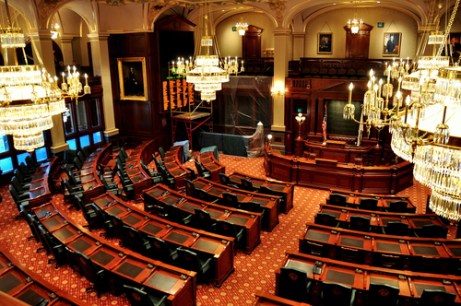
Illinois-Senate-chambers

Illinois Senate Chambers

An Illinois Senate bill that would have mandated training for clergy has been pulled by its sponsor. The bill had raised concerns regarding First Amendment rights and religious liberty.

Senate Bill 912, the Abused and Neglect Child Training Bill, mandated clergy be required to complete at least four hours of training each year to recognize signs of domestic violence against children and adults. According to Ralph Rivera, a lobbyist for the Illinois Family Institute (IFI), the bill’s sponsor, Senator Melinda Bush (Grayslake), is instead working on a resolution that would urge the Department of Children and Family Services (DCFS) to reach out to clergy and churches through an educational campaign about how to recognize child abuse and domestic violence.

In an e-mail, Rivera credited the bill’s defeat to “quite a number of pastors and citizens who contacted their senators urging them to oppose this government intrusion into the affairs of churches and religious liberties.” This included the Catholic Conference and over 500 people through IFI.

Read the next issue of the Illinois Baptist for additional coverage breaking news.

Code of Ethics

A bill pending in the Illinois senate that would require pastors to take state-regulated classes in child protection raises important questions: Shouldn’t pastors do all they can to protect children? That’s how one colleague phrased it. Yes, obviously, but at what risk to religious communities’ First Amendment rights?

And, as important is this question: Why aren’t clergy engaging in stronger self-policing using a mechanism most already have in place, the ministerial code of ethics?

Senate Bill 912 introduced by Melinda Bush of Lake County is surely purely motivated, but this means of child protection draws immediate objection based on First Amendment grounds: if the state requires pastors to receive certification in this well-intended and altruistic concern, then what’s next? There aren’t many steps from this bill to government licensure of clergy and churches. That’s why the Illinois Family Institute is urging Christians to notify state lawmakers of their objection based on religious liberty. “Won’t somebody please think of the children!” isn’t a sufficient argument to allow government regulation of pastoral work.

And, there’s a better way.

A good ministerial code of ethics guides pastors in their ministry to children and families in jeopardy.

As a seminary student, I was required to write for myself a ministerial code of ethics. I studied a dozen examples and came up with my own list of biblical and ethical ways for dealing with people, issues, and sticky situations.

A year or two later, I was the grader for that class, and I read scores of codes of ethics submitted by students. Most of these aspiring pastors took the assignment seriously, considering how they should handle counseling and confidentiality, reporting of abuse or neglect, the pastor’s relationship to the law and enforcement agencies. Some addressed euthanasia, and a few spoke to sexual identity and relationship issues just entering public discourse at the time.

Some of these students laid a good foundation for engaging and regulating their future work, so when hard questions arose, they already had in place biblical ways of processing the issues not based on emotion and reaction.

A good ministerial code of ethics guides pastors in their ministry to children and families in jeopardy. It requires that pastors stay up-to-date on the issues and the law. Through such personally adopted codes, pastors police themselves. They may join in voluntary association with other clergy in their enforcement.

Our Baptist polity—respecting the autonomy of the local church—doesn’t allow the denomination to enforce rules on pastors. Neither does the U. S. Constitution. That’s why we must take responsibility to govern ourselves.

For the sake of the children.

Eric Reed is editor of the Illinois Baptist newspaper.

The BriefingBill would to legalize marijuana
State Rep. Kelly Cassidy, Chicago, filed an amendment to House Bill 2353 on March 22 that revises the state’s Cannabis Control Act, making a number of sweeping changes “[i]n the interest of allowing law enforcement to focus on violent and property crimes, generating revenue for education and other purposes, and individual freedom.” These changes allowing the recreational use of marijuana include regulating it the same as alcohol and  legalizing the possession of 28 grams of the substance.

Bill would simplify changing gender on birth certificates
A proposal that would make it easier for transgender people to change their birth certificates to reflect their gender identity has cleared an initial hurdle. House Bill 1785 approved by the House Human Services Committee, says a birth certificate could be changed if a medical or mental health provider confirms someone has received “clinically appropriate” treatment. Current Illinois law says transgender people can only change the sex listed on their birth certificates if a doctor transition surgery has been performed.

Student sues school over girl in boys’ locker room
A high school junior is suing his Boyertown, Pa., school district after administrators told him he could either “tolerate” having a biological female share his locker room or withdraw and be homeschooled. The lawsuit filed in federal court calls on the district to rescind its secretly implemented policy granting transgender students access to the private facilities of their choice.

Princeton Seminary reverses decision to honor Keller
Princeton Seminary, the flagship institution of the Presbyterian Church (U.S.A.), had announced Tim Keller, bestselling author and pastor of New York’s Redeemer Presbyterian Church, as the recipient of its Abraham Kuyper Prize for Excellence in Reformed Theology and Public Witness, a $10,000 award. But in a March 22 letter to the seminary community, President Craig Barnes said the decision had been reversed in order to “not imply any endorsement” of Keller’s “belief that women and [lesbian, gay, bisexual, transgender] persons should not be ordained.”

President Trump to give commencement address at Liberty University
President Donald Trump will give his first commencement address as president at Liberty University, the evangelical college led Jerry Falwell Jr. Falwell, the son of the prominent televangelist, was one of Trump’s most vocal supporters among evangelical Protestant leaders during the 2016 presidential campaign. At Liberty, student reaction to the announcement was mixed.

Sources: Illinois Policy, Chicago Tribune, World Magazine, Baptist Press, Washington Post

Church sues Chicago

ib2newseditor —  March 23, 2017

City tried to limit building use

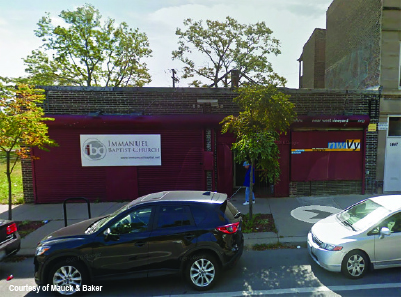
An IBSA church has filed a federal lawsuit against the City of Chicago, which is enforcing a zoning ordinance that won’t allow the church to purchase its building near the University of Illinois-Chicago campus.

“Agonizing” is how Nathan Carter, pastor of Immanuel Baptist Church, described the decision to either seek other meeting space or file the lawsuit. His congregation has met in its current location since 2011, and was set to close on the purchase of the building last summer, when city officials blocked the sale because they determined Immanuel had not established legal use.

70320Immanuel BC

The main issue is parking; the Chicago Zoning Ordinance requires religious assemblies to have a certain number of parking spaces based on how many people they’re able to seat. Immanuel needs 19 spaces to comply with the ordinance, but like many organizations in their neighborhood, the church utilizes street parking. Immanuel and the law firm representing them, Mauck & Baker, are arguing that the ordinance violates the Religious Land Use and Institutionalized Persons Act (RLUIPA) by requiring stricter standards of religious assemblies than for other organizations.

The space at 1443 W. Roosevelt had been rented by another church previously. Churches are a permitted use in the zoning, and the City’s building department gave Immanuel an occupancy permit in 2011. City officials assured Carter the sale wouldn’t be blocked despite the church’s use of street parking. But the City returned a different verdict in July 2016, informing Carter “the church still needed to meet the city’s parking requirements and that the city must determine if a religious assembly use is something it wants to promote on a commercial corridor such as Roosevelt Road,” according to a press release from Mauck & Baker.

The church’s ensuing lawsuit was a “last resort,” said the pastor. “We’ve been courteous and kind throughout the process and not adversarial, seeking to bend over backwards to meet their demands. We have our alderman’s support.”

Plus, Carter continued, “We have many of the same goals for the neighborhood as the City does. We’ve communicated that if they don’t fight it, then we won’t seek damages or fees. [The suit is] framed in such a way that they can admit they are bound by the letter of a current zoning ordinance, but then point out how that zoning ordinance is federally illegal (because of RLUIPA) by requiring more parking spots for religious assembly than it does for non-religious assembly uses that courts have determined are comparable.”

Carter referred to a sign on the door of his local library, which clearly states the library has no parking and patrons are to park on the street. City ordinances also state “live theater venues” with fewer than 150 seats need no parking, nor do libraries or cultural exhibits within the first 4,000 feet. Mauck & Baker is arguing Immanuel meets both of these requirements: their building seats 146 people and has less than 4,000 square feet.

Carter said the church is praying they can settle the suit within the next month, but if the City decides to continue to fight the purchase, the process could be a lengthy one.

Still, he said, the church sensed the Lord leading in this direction, albeit a somewhat frightening one. “Since 2005 our church has had a vision for being a long-term, stable gospel presence in our specific area of the city—a cluster of neighborhoods that surround the University of Illinois at Chicago,” Carter said. After meeting in four rented locations over the years and doing an exhaustive search of their community for other spaces, the purchase of their current building seems like a strategic decision.

“If the Lord closes this door, we have no doubt that he will open up another one,” Carter said. “But at the moment this was the only one that was cracked open, and there are scary lights coming from behind it, but we sensed the Lord wanted us to knock.”

-Meredith Flynn

The BriefingSB 912 raises religious liberty concerns for Illinois clergy
A bill working its way through the Illinois Senate that proposes mandatory training for clergy to recognize signs of child abuse is causing concern among religious liberty advocates. An amendment added to SB 912 Abused Child-Reporter Training, which specifically targets clergy is the cause for concern.

Moore, ERLC trustees issue ‘Seeking Unity’ statement
An extended statement, “Seeking Unity in the Southern Baptist Convention,” has been issued by Russell Moore and the executive committee of the Ethics & Religious Liberty Commission. Moore, in a 1,691-word portion of the March 20 statement, clarified criticism he had leveled at Christians who supported Donald Trump for president in the November 2016 election.

Divide over Gorsuch on display
The Senate Judiciary Committee began the latest hearings in what has been an often stridently contentious process for the last three decades with a day of opening statements — first from the 20 members of the panel, then from the nominee. Sixty national and state pro-life organizations weighed in on Gorsuch, urging senators in a letter to confirm him. The pro-life leaders cited his “keen understanding and respect” for religious freedom.

Coming solar eclipse: Act of God?
On Monday, Aug. 21, in the middle of the day, the sky will go dark. The temperature will suddenly get several degrees colder. The total solar eclipse that will cross America— an event that last happened 99 years ago — will be an important moment for scientific observers and a massive nationwide spectator event. It will also, for many people of faith, be evidence of God’s majesty — and even, to a few, a harbinger of the coming end of the world.

Christians respond to “Benedict Option”
More than a dozen Christian thinkers recently shared their thoughts on Rod Dreher’s “Benedict Option.” The Benedict Option is essentially responding to western cultural change by pulling away from the culture building up the local church, creating counter-cultural schools based on the classical tradition, rebuilding family life, thickening communal bonds, and developing survival strategies for doctors, teachers, and others on the front lines of persecution.

Sources: Ilga.gov, Baptist Press (2), Washington Post, Breakpoint

Multiple pregnancy resource centers are suing Illinois Governor Bruce Rauner over a new law they say prohibits free speech and requires them to voice a message about abortion that is directly contrary to their mission.

On Feb. 9, 18 pregnancy resource centers filed for an injunction to avoid being forced to comply with an amendment to the Health Care Right of Conscience Act that was approved by the Illinois General Assembly last year and went into effect January 1. The amendment requires pregnancy centers and pro-life physicians to discuss abortion as a legal treatment option, to talk about its “benefits,” and, if asked, to refer clients to abortion providers, said Attorney Thomas Olp of the Thomas More Society, one of the legal organizations working with pregnancy care centers to fight enforcement of the new law.

“It’s an interfering by the government with their ability to communicate feely about an important moral issue,” Olp said. The law also constitutes “viewpoint discrimination,” he added, in that it only regulates the speech of people with a particular viewpoint.

Olp said the government has to have a compelling interest in order to enforce such a law, and the view of the Thomas More Society is that it doesn’t, because information about abortion is readily available. Therefore, the government doesn’t have to compel people to talk about it.

Pregnancy resource centers have already felt the effects of the measure, Olp said. “Some of them have decided not to do sonograms because that’s a medical procedure that clearly is covered by the new law.” Hope Life Center in Sterling, one of the centers represented by the Thomas More Society in a separate lawsuit filed Feb. 2, suspended its medical services at the beginning of the year. Debbie Case, the center’s executive director, posted on its website about the change in operations.

“We see any compliance with this law as morally abhorrent and have determined to obey God rather than man,” Case said. “The law is unclear on what the penalties are for non-compliance (and even what constitutes compliance), but it’s reasonable to expect that if a complaint is filed against our organization we will be fined $10,000 per violation and (even more troubling) our medical personnel will be subject to the scrutiny of the state licensing board and may even lose their licenses.”

Last December, several pro-life health care providers won an injunction against enforcement of the law. Olp said they hope for a hearing and decision on the current case within a month; an injunction would stay the law until resolution of the lawsuit, which could take another year or so, he said.

Because the pregnancy centers are not willing to comply with the law, they won’t be able to continue to operate if the lawsuit isn’t resolved in their favor, Olp said. Which is exactly what proponents of the bill want, he added.

“It’s a pro-abortion law that wants to stymie and eliminate pregnancy resources centers’ message to women who are considering abortion.”

There are more than 90 pregnancy resource across Illinois.

Publicly-funded abortions
Lawmakers could vote any time on Illinois House Bill 40, which would allow taxpayer dollars to be used to pay for abortions. If approved, the legislation, sponsored by Rep. Sara Feigenholtz (D-Chicago), would provide abortions for women covered by Medicaid for any reason at any point in their pregnancy. Current state law only allows Medicaid coverage for “medically necessary” abortions or those in the case of rape, incest, or to protect the life of the mother.

Emily Troscinski, executive director of Illinois Right to Life, estimates that if HB 40 is approved, it could increase the number of abortions in Illinois by 12,000 a year.

The bill also makes wider, more sweeping provisions about abortion, including:

  • Removing language from Illinois that states “the unborn child is a human being from the time of conception…and is entitled to the right to life from conception,” and
  • Making the provision that should the U.S. Supreme Court overturn Roe vs. Wade, abortion would still be legal in Illinois.

-Meredith Flynn