Archives For November 30, 1999

No help for florist, baker, photo-maker
Reports are circulating about a leaked draft of an executive order designed to expand protections for individuals, organizations, and corporations’ religious convictions—including traditional beliefs on gender, sexuality, and marriage. According to experts, the four-page draft, titled “Establishing a Government-Wide Initiative to Respect Religious Freedom,” would strengthen religious exemptions under federal laws and programs, but it wouldn’t have the reach to quell debates over Christian-owned businesses refusing to serve same-sex weddings.

Congress proposes Johnson Amendment overhaul
Members of Congress have introduced legislation to enable churches and other non-profit organizations to endorse candidates or otherwise participate in political campaigns without fear of penalties from the Internal Revenue Service. The Free Speech Fairness Act would free pastors, churches and other tax-exempt entities to intervene on behalf of or against candidates in an election campaign. The measure would still prohibit financial donations from such organizations to candidates or campaigns, a bill sponsor said.

Falwell to head Trump ed task force
Evangelical Christian leader Jerry Falwell Jr. will head an education reform task force under President Donald Trump and is keen to cut university regulations, including rules on dealing with campus sexual assault, the school he heads said. The Liberty University president believes on-campus sexual assault investigations are best left to police and prosecutors.

Scouting and gender politics
The Boy Scouts of America announced it would allow girls who identify as boys to participate in its boys-only programs. In the past three years, the group has allowed both homosexual adults and young men to join as Scouts and leaders. The Scouts required parents to show birth certificates to verify their child’s gender. Now, the Scouts will accept whatever gender parents list on the application forms.

Pig embryos with human cells ‘problematic’
Biologists at the Salk Institute in La Jolla, Calif., announced they generated stem cells from human skin, then injected them into a pig embryo and allowed the embryo to grow four weeks in a sow’s uterus. After four weeks, human cells “were distributed randomly across the chimera,” The Washington Post reported. Joy Riley, a physician and executive director of the Tennessee Center for Bioethics and Culture, told Baptist Press the pig embryos with human calls are “morally problematic.”

 Sources: Christianity Today, Baptist Press, Religion News, World Magazine, Baptist Press

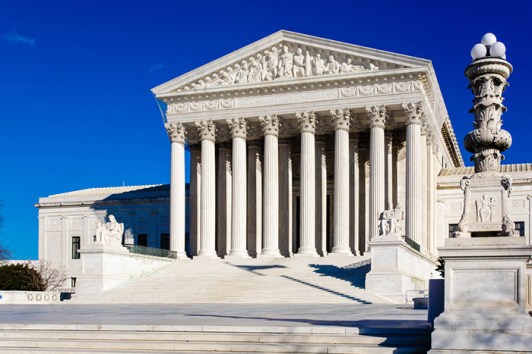
supreme-court-buildingImmediately following the election, Pew Research found 81% of white evangelicals said they for voted for Donald Trump. Many have said they did so because, with one vacancy on the U.S. Supreme Court and the potential for others, they believed Trump would choose conservative nominees who would reflect their values. In naming Neil Gorsuch to replace the late Justice Antonin Scalia, President Trump did exactly that.

Following the Gorsuch announcement, Southern Baptist culture watcher Ed Stetzer recalled that Pew poll and wrote on his blog at Christianity Today, “Evangelical Trump voters made a choice and many of them saw today, with the nomination of Neil Gorsuch, that their choice was validated. They voted for the sanctity of life and for religious liberty.” Stetzer is the former head LifeWay Research who now leads the Billy Graham Center at Wheaton College.

Gorsuch, a 49-year-old Episcopalian from Denver, Colorado, appointed by President George W. Bush to the U.S. Court of Appeals for the Tenth Circuit in 2006. His mother, Anne Gorsuch Burford, was appointed by President Ronald Reagan as the first woman to head the Environmental Protection Agency.

Gorsuch is a proponent of originalism. According to the Washington Post court reporter, Robert Barnes, this means “judges should attempt to interpret the words of the Constitution as they were understood at the time they were written — and a textualist who considers only the words of the law being reviewed, not legislators’ intent or the consequences of the decision.”

In a Jan. 27 interview with CBN, Trump said, “I think evangelicals, Christians will love my pick. And will be represented very fairly.” Gorsuch was the judge who had sided with Christian employers and religious organizations in the Burwell vs. Hobby Lobby and the Little Sisters of the Poor Supreme Court cases. Suits were filed because the Affordable Care Act had imposed rules requiring them to violate their religious beliefs and provide abortion causing contraceptives to employees.

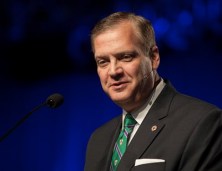
After the announcement, Southern Seminary President Albert Mohler expressed thanks for Trump and supporting the nomination: “Judge Gorsuch is committed to textualism and will uphold the Constitution of the United States. His academic credentials are impeccable and his experience as a clerk for two Supreme Court justices and his own distinguished tenure as an appeals court judge qualify him for this nomination without question.”

Russell Moore, President of the SBC’S Ethics and Religious Liberty Commission (ERLC) released a similar statement, calling Gorsuch, “an exceptional choice for Supreme Court justice. He is a brilliant and articulate defender of Constitutional originalism in the mold of the man he will replace: Justice Antonin Scalia.…I heartily support President Trump’s excellent appointment.”

The Gorsuch nomination follows several others of interest to evangelicals. Former SBC president Ronnie Floyd, who attended the National Prayer Breakfast in Washington Feb. 2., pointed out other Trump nominees whom he called “followers of Christ”: Education Secretary nominee Betsy Devos, Sonny Perdue for agriculture secretary, Rick Perry for Energy Department head, Tom Price to head Health and Human Services, Scott Pruitt to lead the Environmental Protection Agency, and Jeff Sessions as Attorney General.

–with info from Pew Research, ChristianityToday.com, and the Washington Post

The BriefingTrump relying on God now more than ever
President Trump told the Christian Broadcasting Network becoming President of the United States has made him rely on God more than ever. “I would say that the office is so powerful that you need God even more,” Trump told The Brody File. “There’s almost not a decision that you make when you’re sitting in this position that isn’t a really life-altering position. So, God comes in even more so.”

Trump to announce Supreme Court pick Jan. 31
Setting up a high-stakes legal and political battle, President Trump said Monday he will announce his Supreme Court choice in a prime-time address Tuesday night, two days earlier than initially scheduled. He did not disclose the identity of his nominee, but told reporters that his pick is “unbelievably highly respected” and people will be “very impressed” by the selection.

ERLC deploys online effort for PPFA defunding
The ERLC announced an online advertising campaign to rally support for the congressional drive to cut federal dollars for Planned Parenthood, the country’s No. 1 abortion provider. The effort is the first of its kind by the ERLC and includes a digital petition that makes it possible for the commission to deliver the list of signers to congressional leaders.

Tornado damages William Carey University
An EF3 tornado that ripped through southern Mississippi Jan. 21 in the wee hours of the morning damaged nearly all the 30 buildings on William Carey University’s Hattiesburg campus and left seven students injured. William Carey is affiliated with the Mississippi Baptist Convention and has campuses in Hattiesburg and Biloxi.

Super Bowl won’t stop church services
For churches that have Sunday night activities, most pastors say it’s still “game on” despite the big game next weekend. According to a new study from LifeWay Research, 68% of Protestant pastors say their church typically has some activity on Sunday night. And among those pastors, almost 6 in 10 (59%) say they will continue as normal on the night of the Super Bowl.

 Sources: CBN, USA Today, Baptist Press, Facts & Trends, Baptist Press (2)

Editor’s note: This post has been updated to include a blog post/podcast from Albert Mohler.

Four  prominent Southern Baptists are taking public—and differing—positions on President Trump’s executive order that restricts immigration from seven Muslim countries, suspends entrance of all refugees for 120 days, and prevents all Syrian refugees from entering the United States indefinitely.  Commentary from both Russell Moore and Ed Stetzer was published in the Washington Post, while Ronnie Floyd and Albert Mohler are speaking out on their blogs.

61222russell_moore

Russell Moore

Russell Moore, the president of the SBC’s Ethics and Religious Liberty Commission, has begun commenting on actions by the new administration, after a relatively quiet December. He wrote a letter to President Trump, Vice President Pence, Speaker Ryan, and Majority Leader McConnell responding to the president’s order on refugees that the Post has exclusively on its opinion page.  In the Jan. 30 letter, Moore references the Resolution on Refugee Ministry passed by messengers to the 2016 Southern Baptist Convention in St. Louis. “’Scripture calls for and expects God’s people to minister to the sojourner.’ Southern Baptist churches throughout the United States lead the way in carrying out this calling,” Moore wrote.

Moore also expressed concern for the safety of Southern Baptists who, “are among the many Americans living in majority-Muslim countries to carry out the biblical call to love their neighbors.” He also called on the president to reaffirm his administration’s “commitment to religious freedom” and “adjust the Executive Order as necessary.”

Ed_Stetzer_PC

Ed Stetzer

Ed Stetzer, the former Executive Director of LifeWay Research who now serves as the Billy Graham Distinguished Chair at Wheaton College in Wheaton, IL, had his own op-ed published by the Post Jan. 26, “Evangelicals, we cannot let alternative facts drive U.S. refugee policy.” Stetzer agreed with the president on a need for a greater focus on national security however, he said, “I’m concerned that the president is operating on generated fear rather than facts. We need a better way.”

Stetzer’s better way is to “reject false facts,” “recapture a vision of what it means that all are made in God’s image,” and to “fight for those without a voice.”

Ronnie_Floyd_press

Ronnie Floyd

Ronnie Floyd, pastor of Cross Church and immediate past president of the Southern Baptist Convention, published, “Navigating through the refugee issue from a biblical perspective,” to his blog, RonnieFloyd.com. In his post Floyd declared, “If we do not look at it biblically, we enter into dialogue without authority and clarity.” He advised: Love the refugee, fix the immigration system, and pray diligently.

He too referenced the 2016 Resolution on Refugee Ministry, “…one line in this resolution that realized the biblical responsibility of government: ‘RESOLVED, That we call on the governing authorities to implement the strictest security measures possible in the refugee screening and selection process, guarding against anyone intent on doing harm…’”

Floyd, who served on Trump’s religious advisory board during the election, wrote, “This line was included in the resolution because as followers of Christ, we must understand the tension that occurs because our government has a responsibility it is mandated to fulfill.”

He concluded by asking Christians to stress balance in their reactions to what is taking place. “Believing and operating with biblical balance, we know the Church must realize biblically that the government’s duty is to protect its citizens. Simultaneously, we must affirm the responsibility of the Church to minister to refugees who are brought inside the borders of America.”

albert-mohler2

Albert Moher

Albert Mohler, president of Southern Seminary, devoted the January 30 edition of The Briefing to the controversy. He sought to clarify misconceptions many have concerning the executive order by pointing out the seven countries on the identified in the order are known terrorist threats. He noted several other countries have much larger Muslim populations and do not appear on the list.

“The entire system of laws in this country concerning our borders and entry into the country is a part of the government’s responsibility to keep the nation secure,” Mohler said.

Mohler compared previous immigrants who came not just to live in America but to be American, to the teachings of classical Islam. “It is not just what is often called radical Islam, it is classical Islam, it is the Islam believed by the vast majority of Muslims around the world that requires that every Muslim seek to bring every nation under the law of the Quran, under Sharia law.”

He cautioned, “The significant issue to observe here is that even though some who are coming in terms of these waves of Muslim immigration intend to join these communities and these cultures, the reality is that the majority of these immigrants and Muslims have not been assimilated into the cultures. To put it in terms of the American experiment, we have to be very careful that we do not reshape America by creating a population that does not intend, even though they are resident in this country, to be a part of the American project.” He pointed to the situation in Europe as an example of this reshaping.

Floyd calls Trump prexy ‘our moment’

National Prayer Service in Washington DC

SBC Pastors Ronnie Floyd (center left) and David Jeremiah (center right) exit the platform and prepare to greet President Trump at the conclusion of the National Prayer Service Jan. 21 at the National Cathedral in Washington DC. Fox Phoenix screen capture

“Right now we’ve got a shot to really make a difference,” Ronnie Floyd told his congregation on Sunday. “God has given us a moment. It’s time to pray more than we’ve ever prayed in our country…to pray more with stronger conviction that every life matters to God.”

Floyd was just one of the notable Southern Baptist pastors participating in inaugural ceremonies for incoming President, Donald Trump. The pastor of Cross Church in Northwest Arkansas was one of the evangelical advisors to Trump.

Noting the current discord in the nation, Floyd said, “This is not about Democrats and Republicans. It’s about spiritual warfare; right and wrong. It’s not about what it appears to be about, it’s not about flesh and blood.

“You don’t announce you’re going to put pro-life judges on the Supreme Court and expect the world to receive it,” Floyd said in a video posted at his website.

Southern Baptists were prominent at the National Prayer gathering on Saturday following the inauguration, both in their placement in the program and on the platform among the 26 religious leaders invited to participate in the event.

Floyd and David Jeremiah, pastor of Shadow Mountain Community Church in El Cajon, Calif., sat on the dais of the National Cathedral, just behind the Episcopal celebrants who were leading the service and in front of the choir loft. Jeremiah read from Romans 5, the passage about character, endurance, patience, and hope. And Floyd read Psalm 23 from the King James Version.

Prestonwood Baptist Church pastor Jack Graham was one of the speakers in the “prayers of the people,” reading a scripted prayer on behalf of “those who serve.” And a granddaughter of Billy Graham, Franklin’s daughter Cissie Graham Lynch, read a similar prayer in a procession that included a rabbi, representatives of several Protestant denominations, and several Eastern religions.

Ramiro Peña, pastor of Christ the King Baptist Church in Waco, Texas, wrapped up the litany of prayers with The Lord’s Prayer. In an unofficial count, Southern Baptists outnumbered other faiths among clergy participating in the inauguration and prayer service. The interfaith service held an an Anglical cathedral had distinctly evangelical touches. Melania Trump led a standing ovation for the solo singer of “How Great Thou Art,” and the service concluded with “Great Is Thy Faithfulness,” which Vice President Mike Pence and his wife, Karen, sang from memory.

On Inauguration Day, Robert Jeffress, pastor of First Baptist in Dallas, delivered the sermon at the private prayer service prior to the swearing-in ceremony. He titled the sermon, “When God Chooses a Leader,” taking the message from Nehemiah 1:11.

“When I think of you,” Jeffress said to Trump, “I am reminded of another great leader God chose thousands of years ago in Israel. The nation had been in bondage for decades, the infrastructure of the country was in shambles, and God raised up a powerful leader to restore the nation. And the man God chose was neither a politician nor a priest. Instead, God chose a builder whose name was Nehemiah.”

He noted the first step God instructed Nehemiah to take in rebuilding the nation was building a wall around Jerusalem to protect is citizens. “You see, God is not against building walls,” Jeffress shared. Jeffress recalled sitting with Trump on a jet, eating Wendy’s cheeseburgers, and talking about the challenges facing the USA. Jeffress was an early supporter of Trump.

He told the incoming President and Vice President to look to God for strength and guidance: “…the challenges facing our nation are so great that it will take more than natural ability to meet them. We need God’s supernatural power.

“The good news is that the same God who empowered Nehemiah nearly 2,500 years ago is available to every one of us today who is willing to humble himself and ask for His help.”

He instructed them, “God says in Psalm 50:15 ‘Call upon Me in the day of trouble I shall rescue you and you will honor Me.’”

– Staff Report, with info from Baptist Press, RonnieFloyd.com, FirstDallas.org, and C-SPAN.

Inauguration news round-up

ib2newseditor —  January 20, 2017

small American flags in the background

Time: Trump held a very Godly inauguration
Christianity has been a part of the presidential inauguration since George Washington laid his hand on a Bible for the very first swearing-in. So, it was not unusual that Donald Trump sought to involve faith in his inauguration. But the ways in which the 45th President invoked God in unusually blunt ways in his inaugural address were. He quoted a Psalm of David from the Bible to buttress his policy. “The Bible tells us, ‘how good and pleasant it is when God’s people live together in unity.’”

S. Baptist involvement in the inauguration
The participation of at least five Southern Baptist pastors in inaugural activities for President Donald Trump continues a tradition of prayer, Scripture, and references to God surrounding presidential inaugurations dating back to George Washington. In addition to Friday’s activities, a Saturday, Jan. 21 National Prayer Service at the National Cathedral in Washington will feature Arkansas pastor Ronnie Floyd, Texas pastors Jack Graham and Ramiro Peña and California pastor David Jeremiah.

Muslims angry imam to participate in prayer service
A popular Washington-area imam’s decision to issue the Muslim call to prayer at Trump’s inaugural prayer service has sparked a heated debate among American Muslim community leaders and activists over the appropriate ways to engage with a president, who they say has repeatedly disparaged Islam. Mohamed Magid, a Sudanese-American imam, is the only Muslim leader listed on a lineup packed with Evangelicals and other faith leaders who are scheduled to participate in the National Prayer Service at the National Cathedral.

SBC Pres. Gaines pens Christian response to inauguration
Today Donald J. Trump became the 45th President of the United States. As you know, Mr. Trump won a highly volatile election last November. Some see him as a candidate of much-needed change, readily resonating with his Reaganish slogan, “Make America Great Again!” Others see Mr. Trump as a less than desirable candidate for the highest office in the land. What are Southern Baptists to do?

Three S. Baptists nominated for cabinet positions
Three Southern Baptists — Tom Price, Scott Pruitt, and Sonny Perdue – have been nominated to serve in cabinet positions for the Trump administration. Price, a regular attendee at Johnson Ferry Baptist Church in Marietta, Ga., has been nominated as secretary of the Department of Health and Human Services. Pruitt, a member of Tulsa-area First Baptist Church in Broken Arrow, Okla., has been nominated as administrator of the Environmental Protection Agency. Former Georgia Gov. Sonny Perdue, was announced Jan. 18 as Trump’s choice for agriculture secretary.

Presidents who mentioned God in inaugural address
Every U.S. President has mentioned God in their inaugural address, even if speaking of the Lord in their own way, fitting with the times. With thanks to Bill Federer in America’s God and Country, consider this sampling of mentions.

Sources: Time, Baptist Press Washington Post, Baptist Press (2), Christian Post

Trump to be sworn in on Lincoln, family Bibles
When President-elect Donald Trump takes his oath of office on Inauguration Day, his hand will rest on his family Bible and the President Abraham Lincoln Bible, used most recently as part of President Barack Obama’s first and second inauguration ceremonies. Trump’s Bible, a revised standard version, was presented to him in 1955 by his mother upon graduation from Sunday Church Primary School in New York.

Pence to be sworn in with Reagan Bible, hand on 2 Chronicles
The Presidential Inaugural Committee announced Vice President Elect Mike Pence will be the first public office holder since the 40th president to be sworn into office using the Reagan Family Bible.During the oath, the Bible will be opened to 2 Chronicles 7:14, which is the same passage that was used during Reagan’s inaugurations. Supreme Court Justice Clarence Thomas will deliver the oath to Pence during the ceremony.

FBC Dallas’ Jeffress preaching prayer service
First Baptist Dallas, Robert Jeffress, will preach at a private service held at St. John’s Episcopal Church before President-elect Donald Trump’s inauguration. About 300 people, including Vice President-elect Mike Pence, are expected to attend. Jeffress noted the title of his sermon in a tweet: “When God Chooses a Leader.”

The religious leaders praying at the inauguration
Six religious leaders — including a rabbi, a cardinal, and a diverse group of Protestant preachers — will participate, more than for any previous president, said Jim Bendat, an author and historian of inaugural ceremonies. Each will have 60 to 90 seconds to offer a reading or lead a prayer.

Moore: Pray for Trump no matter how you voted
With the inauguration of a new president of the United States, now is a time to pray for President Trump and to remember our obligation as Christians to pray for all those who are in civil authority. The Apostle Paul charges us to offer prayers, intercessions and thanksgivings for “all people,” and includes in that list “kings and all who are in high positions” (1 Tim. 2:2). This very act of praying is itself a counter-cultural act.

Sources: The Tennessean, Christian Post, Dallas News, Washington Post, NY Times, Washington Post

61222word_cloud

We live by God’s surprises,” said Helmut Thielicke. The German pastor was speaking in times more trying than ours, but in the darkest days of WW2, he could see the hand of God at work—and was amazed by it.

Dare we say the same of the year just past?

We were surprised by events we witnessed. In their unfolding, we sought the reassurance of God’s sovereignty. Here are some noteworthy moments for Baptists in Illinois—some heavy, some light—and what they may say about the year before us.

– The Editors

Standing on the promises

61222trump_pence

Donald Trump (left), Mike Pence (right)

A third of Americans (34%) think Donald Trump will be a “good” or “very good” president, while 23% say “average” and 36% expect a “poor” performance. The survey by CBS News was conducted the second week of December, after Trump began announcing cabinet appointments.

The ratings fall along party lines: 70% of Republicans expect a good presidency, while 60% of Democrats predict poor results. That means evangelicals, who mostly supported Trump, have high expectations—but for what?

Religion reporter Sarah Pulliam Bailey, on her Washington Post blog, points to a half-dozen areas where Trump’s campaign promises intersect with evangelical interests. Some are the expected areas involving religious liberty. The nomination of Supreme Court justices who will uphold pro-life legislation topped the list. Trump also said he would defund Planned Parenthood, sign a bill that forbids abortions after 20 weeks, and make the Hyde Amendment permanent. It prohibits use of federal funds for most abortions. And Trump has expressed support for a group of nuns who have battled provisions in the Obama Affordable Care Act that mandate contraception as part of an organization’s health care plan. Southern Baptists have supported their lawsuit.

Trump promised to repeal the 1954 Johnson Amendment to the U.S. tax code, which prevents pastors from endorsing or opposing political candidates, or else lose their church’s tax exempt status. And he has taken a position on education funding that allows families to choose private, charter, or home schooling, with a promise to set aside $20 billion for vouchers in his first budget.

The U.S. will be a “true friend to Israel,” Trump said, a position common among evangelicals favoring Israeli interests over others in the Middle East and urging movement of the U.S. embassy to Jerusalem.

Many Southern Baptists would support these actions, if they came to pass. For SBC leaders who have been in contact with the future administration, the Trump presidency represents a new way of thinking about the White House. Since Ronald Reagan’s presidency, Southern Baptists in general have viewed Republican administrations as allies in the causes of pro-life, families and marriage, and religious liberty. They have, at the least, been sympathetic to evangelical causes, and even co-laborers in the faith. (Remember the stories of George and Laura Bush singing hymns at the White House piano with Attorney General John Ashcroft and Secretary of State Condoleezza Rice on the keyboard?) Democratic presidents, on the other hand, have often been at odds with evangelicals’ causes, even if they claimed to be Baptists, as in the case of Bill Clinton.

Donald Trump represents a third way of relating to the White House: a president who made promises to evangelicals and drew their support at the polls, but who shares no apparent faith commitment with the born-again community. (There are no stories of Trump walking on the beach with Billy Graham and committing his life to Christ. And the tycoon-turned-president has said he sees no need to ask for forgiveness for his sins.)

The evangelicals closest to Trump, including incoming vice president Mike Pence, take on the role of Joseph in Egypt—keeping the interests of God’s people before pharaoh, hoping to keep his ear and hold him to his promises.

High hopes for high court

Some voters who cast their ballots for Donald Trump said they did so because of concern for the U.S. Supreme Court. The February death of Justice Antonin Scalia left a vacancy, and three of the Justices—Ruth Bader Ginsburg, 83, Anthony M. Kennedy, 80, Stephen G. Breyer, 78—may be looking toward retirement in the next few years.

Focus on the Family founder Dr. James Dobson supported Trump. He told Christianity Today, “The next president will nominate perhaps three or more justices whose judicial philosophy will shape our country for generations to come.”

A LifeWay Research survey found 23% of evangelical pastors were most concerned about the candidates’ likely Supreme Court nominees. And 36% of Trump-supporting pastors cited the high court as a major factor in their choice.

Trump released a list of his potential Supreme Court nominees—20 judges and one senator, Mike Lee of Utah. Each met two criteria: they are pro-life and support the Second Amendment. The list was vetted and reviewed by the Federalist Society, which is comprised of conservative and libertarian lawyers, and the conservative Heritage Foundation.

Commentator Denny Burk told Baptist Press the list “does not alleviate the concerns that many of us have about his candidacy.” Because Trump didn’t promise to pick someone from the list, Burk said, “The list means nothing….And we are again being asked to trust the judgment of a man who changes his positions daily…” Burk is professor of biblical studies at Boyce College, the undergraduate school of Southern Seminary.

Reince Priebus, future White House Chief of Staff, told radio host Hugh Hewitt on December 14 that the President-Elect will likely name Scalia’s replacement near the January 20 inauguration.

Priebus said Trump may choose a younger nominee. “Well, I tend to believe younger is better, too, but I can tell you what the president (elect) believes is that the most qualified, best person to serve on the Supreme Court is what’s most important….Certainly longevity’s a factor, but it’s just a factor. Competence and having the best possible person nominated is what’s most important.”

Tension between leaders, pews
61222russell_moore

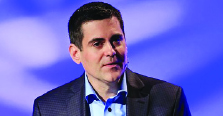
Russell Moore

The 2016 presidential campaign and election exposed deeper divides than many knew existed in the U.S.­­—and within evangelicalism. White evangelical voters overwhelmingly supported Trump, even while some of their leaders voiced their opposition.

As Wheaton College’s Ed Stetzer said after the election, “The evangelical leadership is out of touch with the evangelical rank-and-file,” during a Christianity Today podcast.
Tension over the election appears to be at least part of a rift between some Baptists and the SBC’s public policy entity, the Ethics and Religious Liberty Commission.

In November, Louisiana Baptists voted to ask their convention’s executive board to study recent actions of the ERLC.

Will Hall, editor of the state’s Baptist Message newspaper, noted that the motion did not elaborate on the issues of concern, “but ERLC President Russell Moore has come under fire nationally from Southern Baptist laymen and leaders for a number of controversial actions and statements, including…his aggressive attacks on Southern Baptists who supported Donald Trump.”

Moore, who has led the ERLC since 2013, wrote an opinion piece for The New York Times in May in which he said the election “has cast light on the darkness of pent-up nativism and bigotry all over the country.” His article caught the attention of Trump, who tweeted that Moore was a “truly a terrible representative of evangelicals.”

The op-ed also sparked a fervent debate on the SBC Voices blog, where Baptists posted a variety of opinions on Moore, from “he did what we pay him to do,” to “it is difficult for me to imagine Russell Moore functioning as ERLC President if Trump wins in November.”

The questions about Moore and the ERLC are just one example of the impact the 2016 election could have on religious organizations and denominations, and on the nature of Christian leadership. The tension leaders face, Ed Stetzer said, is between recognizing the responsibility to speak prophetically, and realizing they represent a constituency who largely feel very differently than they do.

For Christian leaders, their influence in the next four years may well depend on how well they strike the balance.

The BriefingNew outlook for high court cases under Trump?

Several Obama administration executive actions are currently in litigation and may disappear if Donald Trump’s administration undoes his predecessor’s policies. But many question marks remain about what executive actions Trump will take. One of the major cases at the Supreme Court this term, Gloucester County School Board v. G.G., addresses the matter of transgender restroom use in public schools.

Texas association may expel churches for LGBTQ views
Two Texas Baptist churches may be expelled from the Baptist General Convention of Texas for their welcoming open-door policies toward LGBTQ people, reports say. Wilshire Baptist in Dallas and First Baptist in Austin received letters from BGCT officials stating that because the churches had affirmed themselves with the LGBTQ people, they were “no longer being in harmonious cooperation with the BGCT.”

People donating to Planned Parenthood as Mike Pence
Some Americans unhappy with the election results have found a new way to protest. They’re sending donations to Planned Parenthood in the name of Vice President-elect Mike Pence, who has called for cutting off federal funds to the organization and — as governor of Indiana — imposed tougher restrictions on abortion for women in his state.

Muslim attacks on Egyptian Christians rising
The Christian and Muslim villagers grew up together, played on the same soccer fields as kids, and attended the same schools. But that didn’t matter on a recent day: An argument between boys sparked clashes between neighbors, with Muslims torching shops owned by Christians. A Christian farmer ran into the melee to protect his two sons. Someone in the crowd hit him with a stick. Others jumped in, striking him repeatedly until he fell to the ground with blood seeping from his head.

LifeWay won’t sell Amy Grant Christmas album
LifeWay Christian Resources will not be selling Amy Grant’s new Christmas album this year, and the manager for the Nashville-based singer says it’s because it’s not Christian enough for the Southern Baptist retailer.

Sources: World Magazine, Houston Chronicle, CNN, Washington Post, The Tennessean

The BriefingMuhammad Ali heard Gospel from Graham, Rogers
Billy Graham, Adrian Rogers, and Dan Dumas are among the Christians who have told of Gospel conversations with the late  boxing champion Muhammad Ali. Concern over Ali’s religious beliefs once led his father to take the boxer to visit evangelist Billy Graham. Rogers, a former Southern Baptist Convention president, told in at least three sermons between 1986 and 1994 of sharing the Gospel with Ali.

Moore: Trump ‘lost’ soul’ who must repent
Southern Baptist leader Russell Moore has not been shy about mixing it up with Donald Trump, and now Moore is at it again, telling an interviewer that the presumptive Republican presidential nominee is a “lost person” who needs to find Jesus. Moore has for months blasted what he sees as Trump’s boorish behavior and character flaws.

How the transgender directive could affect Christian education
In response to President Barack Obama’s order that public schools allow students to use the restrooms and changing facilities that correspond to their gender identities, Christian Schools International (CSI) and Association of Christian Schools international (ACSI) issued gender policy guidelines to their members. The transgender directive will most immediately affect Christian schools participating in state sports competitions as public schools adopt new transgender policies or other policies related to LGBT students.

Baylor story shows how religious schools struggle with sex assault
Reports that Baylor University fired Ken Starr due to his handling of a sex assault scandal rocketed around political circles, but the allegations were equally big for a different reason: Baylor is the world’s largest Baptist university. The reports about Starr were explosive among many evangelicals because they tap into a couple of the most basic contemporary debates at religious schools: What is the impact of the honor codes many religious schools have around sexual behavior? Is there a conflict between being a religious school and trying to be a major athletic powerhouse?

Evangelicals feel alienated, anxious
Religious conservatives could once count on their neighbors to at least share their view of marriage. Those days are gone. Now, many evangelicals say liberals want to seal their cultural victory by silencing the church.  The Associated Press reports evangelicals see evidence of the threat in every new uproar over someone asserting a right to refuse recognition of same-sex marriages — whether it be a baker, a government clerk, or the leaders of religious charities, and schools.

Sources: Baptist Press, Religion News, WORLD Magazine, Washington Post,  Napa Valley Register