Archives For November 30, 1999

When God calls, you go

Meredith Flynn —  February 16, 2015

HEARTLAND | “I think for most people when God really calls you out in faith to something deep, you know in your soul it’s going to cost you everything,” says church planter Nathan Brown.

“But when God calls you on his mission, you go because you love him.”

Brown came to Illinois from California to plant Real Church Chicago. Hear more about the challenging call to start a new work in the city in this video clip:

The Chicago vortex

nateadamsibsa —  January 12, 2015

HEARTLAND | Nate Adams

It’s January, and another “polar vortex” appears to be descending upon our heartland homes. Just a few days ago the temperature outside was flirting with 50 degrees. But then yesterday was barely above freezing, and as I write now it’s 16 degrees, heading for a low of 6 tonight, with wind chill temperatures that will require those dreadful minus signs in front of them.

Nate_Adams_Jan12So instead I’m choosing to think about next summer, and I encourage you to do so too. Now, in the dead of winter, is a perfect time to start planning a summer missions experience.

Your church may already have a plan for sending one or more groups on mission trips outside your own community this year. Many churches in Illinois have adopted an Acts 1:8 strategy, and are seeking to send mission groups to serve nearby in their local association, as well as elsewhere in Illinois, North America and internationally. These are modern day equivalents of the “Jerusalem, Judea, Samaria, and the Ends of the Earth” mission fields that Jesus spoke of in His last words on earth.

If your church doesn’t yet have a mission trip planned for this summer, and especially if you have teenagers in your church, let me suggest one option where most of the planning has already been done for you. It’s called ChicaGO 2015, and it will be hosted July 26-31 on the campus of Judson University in Elgin. You can find more detailed information on the IBSA website, or by calling or
e-mailing Rachel Carter (217-391-3101 or RachelCarter@IBSA.org). Even if you only have two or three who can go, they will be quickly welcomed into the larger group.

During ChicaGO 2015, your group will be housed on the Judson campus there in Elgin, but during the days you will explore one or more of Chicago’s 77 neighborhoods or diverse suburbs. Morning training sessions and evening worship experiences will allow you to meet some of the dynamic church planting missionaries that are seeking to advance the gospel in our nation’s third largest mission field. And during the day you will work right alongside them, and alongside other students and adults from Illinois churches that share your heart for advancing the gospel there.

Wherever you live in Illinois, ChicaGO 2015 is relatively nearby, and affordable. Planning and preparations for the week, such as meals and work projects, will have been done by IBSA before you get there. Participants can be both students and adults, and the environment is one that’s safe, and yet that will open your group’s eyes to the vast and diverse lostness that is Chicago.

You see, Chicago itself is a vortex, and not just in the winter. A vortex is defined either as a “whirling mass,” or simply as “something overwhelming.” That’s why, when the frigid air from the Arctic Circle whirls its way down into Illinois, we feel the overwhelming
brutality of its icy grip. But there is also a whirling mass of people in Chicago that are in the icy grip of lostness. Many have never heard the true gospel in a way they can understand, or from people that care enough to meet them where they are.

That’s why now, this winter, right in the middle of our polar vortex, is an ideal time to plan a summer mission trip. Perhaps you will join our church planters and me in the Chicago vortex next July. Or perhaps your church has identified a different vortex of lostness or two to enter. Last year more than 26,000 Illinois Baptists did. It warms my heart just to think about it.

Nate Adams is executive director of the Illinois Baptist State Association.

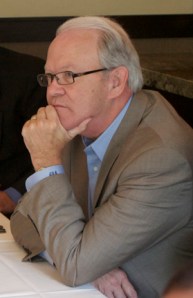
Church planter Scott Venable (second from right) shares about the process of starting Mosaic Church in Wicker Park, during a listening session hosted by SBC Executive Committee President Frank Page.

Church planter Scott Venable (second from right) shares about the process of starting
Mosaic Church in Wicker Park, during a listening session hosted by SBC Executive Committee
President Frank Page (photo below).


NEWS | Frank Page
is president of the Southern Baptist Convention’s Executive Committee, but he also carries the title CEO, which he has often said means “chief encouraging officer.” Operating in that role, Page joined pastors and church planters in northern Illinois for two “listening sessions” in August.

Throughout the year, Page has met with leaders in several states. In Chicagoland, he and members of his staff hosted church planters at a luncheon in Edgewater to discuss specific ministry challenges related to planting in the city. They also were at Broadview Missionary Baptist Church for a session with more than 50 leaders.

“I think the key is building relationships and building trust,” Page told SBC Life about the listening sessions. “It’s time to build some momentum on correct relationships.”

Broadview Pastor Marvin Parker said he was impressed Page “is taking the time to go around the country, to hear what SBC pastors are talking about.” In the Chicago sessions, Page and leaders addressed several issues:
Page_blogChurch size and diversity. Page previously has called small churches the “backbone” of the convention. In the session at Broadview, he told leaders that a large majority of Southern Baptist churches run 100 people or less, said Pastor Don Sharp. “And to me, that’s a story that needs to be told over and over and over again,” said Sharp, pastor of Faith Tabernacle Baptist Church in Chicago.

“…We hear these stories of people coming in places and [the] membership’s quadrupled and the baptisms are off the board, so to speak, but it doesn’t speak to many of us” pastors of small churches, Sharp said. Faced with the comparisons, leaders can fall into fear that they’re the reason their church doesn’t measure up.

“If nothing else, I came out of that meeting with a sense of, ‘Keep doing what you’re doing, and leave room for God to do the rest.’”

The group also discussed diversity in the SBC, and the need for more ethnic groups to be represented in convention leadership, Sharp said. He paraphrased Page’s words: “The election of Fred Luter (as the SBC’s first African American president) should not be an anomaly…it shouldn’t take another 30 or 40 years for something like that to happen again.”

Cooperative Program education. The CP is Southern Baptists’ main method of supporting missions around the world, but it doesn’t have a Lottie Moon or Annie Armstrong to help promote it. “One of the keys for the future is to somehow put a face on the Cooperative Program,” said IBSA’s Dennis Conner during the Edgewater meeting of church planters. “We are deep into a cultural shift where people want to know the people they support.”

That challenge is something his team deals with every day, Page said, asking for ideas. The planters suggested using social media or daily news briefs to connect Southern Baptists with missionaries they support through the Cooperative Program.

The Executive Committee’s Ashley Clayton suggested a more foundational plan to help communicate the importance of CP giving in the next generation. “Perfunctory” support for CP has been tailing off for several decades even among older Baptists, Clayton said. There’s a need to elevate again Baptists’ core values, like international missions, reaching unreached people groups, planting churches, and theological education.

“These are core values, that when you say it in a room full of pastors, they nod their heads, they’re in agreement, they go, ‘Yeah, I’ll support that.’”

The Chicago challenge. Also in Edgewater, Page heard from Chicagoland church planters about how long it often takes to grow a church. Michael Allen, city coordinator for Send North America: Chicago, said he tells planters, “When you come to Chicago to plant a church, buy a cemetery plot.”

“In other words, don’t come to Chicago thinking I’m going to try this church planting thing and see if it works out….Many [church planters] who start do not last, and I think primarily they didn’t realize just how hard the ground is, and how much gumption you have to have.”

Page told the leaders around the lunch table that he understands the role of a sponsoring church pastor, but hasn’t had personal experience as a church planter. “I don’t even pretend to understand what you might be going through,” he said.

“I will tell you that what I hear, what I’ve seen in the past four to five years, is that things are changing across our nation….Even in the deep south, we’re seeing an encroaching lostness in some areas that is profoundly more than what you might think.”

The planters and Page discussed the temptation church planters have to move to a new place with the hope of winning the city, but without really understanding its culture and context.

Page said he was praying for “an indigenous move of God, that native Chicagoans will be able to reach the city for Christ, in addition to those that God does bring in from the outside that has called, and equipped, and [that] have the staying power to get it done.”

prayer_1

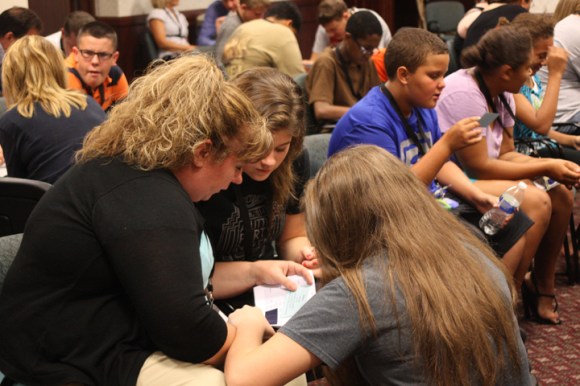
Students and their leaders at ChicaGO Week pray for specific neighborhoods that are in need of a new church.


HEARTLAND |
How do you introduce junior high and high school students to the intricacies of church planting in one of the country’s largest cities?

Take them there, and let them try it out.

More than 50 teens will spend this week working alongside five church planters in Chicagoland as part of the first-ever ChicaGO Week, a project sponsored by the Illinois Baptist State Association. The week kicked off July 13 at Judson University in Elgin, where youth groups from Harrisburg, Chicago, and several places in between will gather for worship after days at their project sites.

prayer_2During the opening worship service, the students heard from someone with lots of experience juggling the responsibilities of church planting.

And lots of experience with actual juggling too.

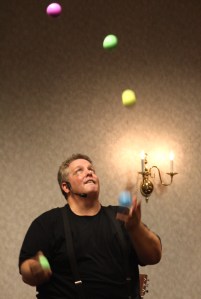
Ken Schultz is a professional entertainer with the stage name “The Flying Fool.” He’s also co-pastor of Crosswinds Church in Plainfield, a church he started several years ago with nuclear engineer John Stillman.

“God uses my juggling and John as a nuclear engineer to help grow a church,” Schultz told the students. Crosswinds has an average weekly attendance of 120 people, and 60% of those came to Christ through the church’s ministry.

“John makes killer spreadsheets,” Schultz said of his co-pastor. “I do this,” he said, before wowing the crowd by juggling three long knives.

juggling

Pastor Ken Schultz used his juggling and unicycle-riding skills in a message on boldness.

“What are you good at?” Schultz asked the students. “Can God use that to build his church?

“He can. You just need to give it to him.”

This week, they’ll do just that at Backyard Bible Clubs, through prayer walking and community clean-up projects, and by offering their time to church planters working hard to get to know their neighbors. It’s a lot to juggle, but God empowers His people to do His work.

“Let this generation be bold, let them be bold as lions for your glory and your good,” Schultz prayed at the end of his message. “If You can use a silly guy who juggles, You can use anybody.”


NEWS | Meredith Flynn

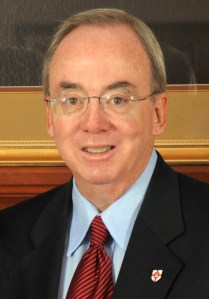
David_Dockery_0414David Dockery, a leading Southern Baptist thinker and college president for 18 years, will serve as the next president of Trinity International University.

“We are overwhelmingly grateful to God for the invitation from the Trinity Board to serve the students, staff, faculty and various institutional constituencies
in the days ahead,” Dockery said after his unanimous election.

He has served as president of Union University in Jackson, Tenn., since 1995. Union is affiliated with the Tennessee Baptist Convention.

As president of Trinity, whose primary campus is 30 miles north of downtown Chicago, Dockery will lead the institution’s four schools: a liberal arts college, graduate school, law school, and Trinity Evangelical Divinity School, known as TEDS. Trinity has numerous notable alumni, including pastors Bill Hybels and James MacDonald, historian Mark Noll, and apologist Ravi Zacharias.

“Almost every Southern Baptist seminary and many key Baptist universities, including Union University, have a number of Trinity grads on their faculties,”
Dockery told the Illinois Baptist. “So Trinity’s influence in Chicagoland, across the nation, and around the world has few parallels in the entire evangelical world.”

Dockery announced last year his intention to transition out of his role as president at Union. During his tenure, the school more than doubled in enrollment,
expanded and improved its campus, and increased its net assets from less than $40 million to $120 million. Dockery also established an annual scholarship banquet that has drawn speakers like George H.W. Bush, Colin Powell and Condoleeza Rice.

He helped establish Union as a leading center for Baptist education with events like the Baptist Identity Conferences of 2006 and 2007. And he led the school through the aftermath of a devastating tornado in 2008.

“As we were considering the opportunities beyond our days at Union (we always used the language of transition from the presidency to the next phase;
we have not really thought of this as a time for retirement), we asked the Lord to grant us guidance and to open doors that would be clear to us (not only
to us, but also to others) that the Spirit of God was leading our steps,” Dockery said of the process he and his wife, Lanese, have followed from Union to Trinity.

“Trinity’s commitment to theological education with excellence, their focus on global opportunities and partnerships, and the distinctive prospect of serving in one of the world’s great metropolitan areas were all strong attractions for us.”

Trinity is affiliated with the Evangelical Free Church of America, and Dockery will officially assume the presidency after the denomination’s board of directors approves his appointment. He will begin serving as Acting President June 1.

“We will trust the Lord to give us the opportunity to serve and support many churches across the evangelical landscape from our work at Trinity,” he said. “It will be a special joy to introduce Illinois Baptists in a deeper way to the work of Trinity and to introduce the Trinity community to the work of Illinois Baptists.”

Additional reporting by Baptist Press

Tuesday_BriefingTHE BRIEFING | Meredith Flynn

“The reason I am here is because I don’t want to have to rescue you.” 

Tajuan McCarty stood in front of more than 100 teenage girls and their leaders in November, pulling no punches as she told her story. Speaking in short, unflinching sentences, she explained how she was pushed into prostitution at age 15, and trafficked into every state except Hawaii and Alaska over the next 11 years.

“I am a survivor of trafficking.”

McCarty is founder and director of The Wellhouse, a ministry that rescues women trapped in the same kind of life that once enslaved her. Headquartered in Birmingham, The Wellhouse is in a prime location to fight trafficking along I-20, known as the sex trafficking superhighway. She also helps raise awareness about the global problem that is deeply entrenched in the United States.

McCarty has been a Christian for four years, so her message begins with this: All women are beautiful, because they’re made in God’s image.

“If you walk away from here thinking prostitution is a choice and/or she’s doing it because she’s on drugs, I have not done my job,” McCarty told a captivated audience at AWSOM, an annual missions event for young women in Illinois. Drugs are only a symptom of the problem, she added.

“At The Wellhouse, what we try to do is reach the core of the problem. And yes, we introduce them to Jesus because that is the only way to heal people.”

Read more in the new Illinois Baptist, online at http://ibonline.IBSA.org.

Other news:

New missions housing opens in Chicagoland
The new home of the Chicago Metro Baptist Association also has room for volunteers serving in the city. The Rockwell Street building’s 9,000 square feet on three floors have been remodeled into several large spaces for mission teams to stay, plus a chapel/meeting space, and in the basement a large dining hall and full commercial kitchen. And nine showers. At $15 per mission tripper per night, “it’s a clean, affordable, functional place,” said Jay Noh, “and I am prayerfully optimistic that many more churches will be able to bring groups to minister in the city.” Read more here, and check out page 6 of the newest Illinois Baptist for information about another mission housing opportunity in the Chicago suburb of Plainfield.

Rainer blogs 14 trends for 2014
LifeWay President Thom Rainer’s predictions for 2014 include more megachurches, downsized denominations, smaller worship centers and a stronger focus on small groups. Read more of his 14 predictions for churches at ThomRainer.com. (Note: Predictions are split into two posts.)

Creation Museum president vs. Science Guy in evolution debate
The president of a museum dedicated to creationism will soon debate Bill “the Science Guy” Nye on evolution. Ken Ham, president of the Creation Museum in Petersburg, Ky., and Nye will engage in a sold-out public debate at the museum on Feb. 4. “It is an important debate to have as we deal with the question, ‘Is creation a viable model of origins in today’s modern scientific era?'” Ham posted on his blog.

Nye, host of TV’s “Bill Nye the Science Guy” in the mid-1990s, made headlines last year with a YouTube video calling creationism inappropriate for kids. A recent study by Pew Research found 60% of Americans believe in evolution. Read more about the survey here, and go to anwersingenesis.org for more about the debate, which also will be live streamed.

Most popular Scripture passages of 2013
According to analysis shared on ChristianityToday.com, Philippians 4:13 was the most popular verse on the YouVersion Bible app last year, followed by Isaiah 40:31, Matthew 6:13, Joshua 1:9, and Philippians 4:6. Read YouVersion’s top 10 shared verses of 2013 at ChristianityToday.com.

Michael_AllenChicago connections key in pastor’s new role

NEWS | Uptown Baptist Church pastor Michael Allen has been named Send City coordinator for Chicago by the North American Mission Board (NAMB). He succeeds IBSA’s Tim Cotler, who moved from the local coordinator position to a Midwest regional role in NAMB’s church planting strategy that targets 32 major metropolitan areas in North America.

The local “Send” strategy committee identified 184 areas and people groups in Chicagoland that need churches. The city itself has 77 neighborhoods. Allen says his goal is to plant 77 new churches, one in each of those neighborhoods, in the next five years.

Allen has a big job ahead of him, helping coordinate the work of churches and church planting partners, including IBSA.

“Just as Allen has adopted Chicago as his hometown, his heart is to invite a new generation of Southern Baptists to adopt Chicagoland as their mission field,” said Van Kicklighter, IBSA’s associate executive director for church planting.

“It’s like what politicians say about Iowa,” Allen said. “All roads to the White House go through Iowa. Chicago is like that when it comes to church planting. We’re such a key crossroads of our country and the world. Just about any ethnic group you want to reach with the gospel, you name it, they’re here.”

Allen has served as pastor of Uptown Baptist Church since 2005. He will continue as senior pastor at the church, whose work among an eclectic population includes weekly outreach to homeless and hungry people, as well as those living in high-rise condominiums on Lake Michigan.

“Our neighborhood is the most diverse in Chicago,” Allen said, “in any way you want to measure diversity, whether it’s educated and uneducated, rich and poor and then the various ethnic groups—those who are living in multi-million dollar homes and those living on the streets. [Uptown Church is] right in the middle of all of that, and it gives me a great learning perspective.”

Allen was born in Jamaica but moved to Florida with his family when he was 9. He first moved to Chicago to attend Trinity Evangelical Divinity School. He also became the first African-American staff member of Chicago’s famous Moody Church, pastored by Erwin Lutzer.

After three years on staff at Sagemont Baptist Church in Houston, Allen returned to Chicago. He was also a NAMB missionary there while serving as pastor at Uptown.

Chicagoland is the third-largest metro area among NAMB’s 32 Send cities, topped only by New York and Los Angeles. With 308 Southern Baptist churches in the metro’s four associations, Chicagoland has only one SBC congregation for every 32,000 residents.

-Reporting by Illinois Baptist and NAMB

THE BRIEFING | Meredith Flynn

Chaplains on the ‘front lines’ of cultural change
The North American Mission Board has released updated guidelines for Southern Baptist military chaplains serving in the days after the repeal of “Don’t Ask Don’t Tell” and the Defense of Marriage Act. The guidelines reiterate Southern Baptist doctrine, Baptist Press reports, and the expectation that SBC chaplains will not participate in or attend wedding ceremonies for gay members of the military.

The policies are already causing some to say Southern Baptist chaplains should step down from their posts, Southern Seminary President Al Mohler blogged Sept. 17. “Make no mistake, the moral revolution driven by those who demand the total normalization of homosexuality and same-sex relationships will not stop with the crisis over military chaplains,” Mohler wrote. “But at this moment, the chaplains are on the front lines of the great cultural and moral conflict of our times.” Read the full story here.

Iorg: America applauds immorality
The trouble today isn’t the rise of immorality, said Golden Gate Seminary President Jeff Iorg during the school’s fall convocation. “The troubling issue is the applause” that now accompanies it. After a summer that saw the U.S. Supreme Court abolish the Defense of Marriage Act, Iorg addressed students and faculty on the topic of “Ministry in the New Marriage Culture.”

“The last step of rejecting biblical morality is when people applaud or celebrate those who legitimize immoral practices,” he said. “We have reached that point in America.” Watch Iorg’s convocation address at GGBTS.edu.

Chicago tops FBI’s homicide list
Chicago had the highest number of murders of any city in 2012, according to FBI information released this month. At 500, the city’s homicide rate rose 20% above 2011, and was 81 more than New York City, which is three times as populous. So far in 2013 there have been fewer homicides, but Chicago has seen recent rashes of violence, including a Labor Day weekend during which eight people were killed and at least 25 more injured by gun violence.

Pastor Michael Allen, whose Uptown congregation was shaken by a drive-by shooting near the church steps in August, tweeted Sept. 17: “Praying against the spirit/culture of violence and that God would replace that with His Spirit of peace.”

Baby ‘Messiah’ keeps his name
Messiah McCullough
will keep his biblical first name, thanks to a ruling that overturned Child Support Magistrate Lu Ann Ballew’s earlier decision to require his parents to change it. Ballew ruled in August that the 8-month-old be named “Martin” instead of his given name, because the word Messiah is a title “that has only been earned by one person – and that one person is Jesus Christ.” The baby’s parents appealed her decision and this month won the right to name their child the 387th most popular baby name. Read the full story at ChristianPost.com.

Mullins’ story told on screen
“Ragamuffin,” a new film detailing the life of Christian musician Rich Mullins, will premiere early next year. Best known for an authentic approach to his faith and for praise songs like “Awesome God,” Mullins died in a car crash in 1997. The biopic, produced by Green Color Films, has a trailer online at ragamuffinthemovie.com.

MIO_blogDAY 4: Watch “Big City, Big Challenge”

Metro Chicago is a mix of neighborhoods and small towns and mid-size cities, all stitched together into the urban patchwork we call “Chicagoland.” With 2,000 people groups and 200 languages spoken, Chicago has many people who desperately need the Gospel.

As God draws missionaries, pastors, and church planters to share the Gospel with the region’s 10 million people, he calls some to come from far away. Others he calls to invest their lives in their hometowns.

“When God first called me, I wanted to go far away, like Jonah,” Pastor Marcus Randle said. “But he sent me right back here to the Southside.”

When we first introduced Randle, his congregation was moving into an old church-school complex, with big plans to expand their outreach to at-risk kids and homeless women. Settled in now, the challenges are big for Resurrection House, but the opportunities are bigger.

Read: Jonah 3:1-4; Isaiah 6:1-6

Think: Why does God send people to minister in places where, at first, they refuse to go?

Pray for 80 church planters and their families working in Illinois today. Ask that they have favor in the many neighborhoods without a church.

It could have been me

Meredith Flynn —  September 9, 2013

Jonathan_HayashiHEARTLAND | Jonathan Hayashi

Editor’s note: The following column is adapted from a response Jonathan Hayashi wrote after a gang-related shooting outside Uptown Baptist Church in Chicago August 19.

August 19 was a normal Monday here at Uptown Baptist Church.

We started our second service that evening with “Amazing Grace,” while around 100 people in the pews waiting to hear the sermon. Then, “Bang, bang, bang!” About 20 loud noises that sounded like fireworks. In fact, that’s what our speaker said from the podium. But it was too loud to be fireworks.

Pastor Michael Allen rushed to the east side door that opens onto Sheridan Avenue. We opened the doors to chaos. It looked like a war had taken place. People running in every direction, hundreds of people on the streets, people screaming and crying. Shattered glass, bullet shells on the ground; two men I remember coming through the building, one was shot in his thighs and another in his wrist.

I knew I could have been one of them.

If I had stayed in the gang, it could have easily been me. I still remember like it was yesterday, when I found out a friend had died at age 18 because of gang activity. I knew God loved me and had a plan for my life. But what about them?

God is not willing that any should perish. The problem is us.

We would rather stay safe, while neglecting our call to evangelism and discipleship. We are called to be the hands and feet of Jesus. The Great Commission itself is about people being with the people and living there with the people!

Evangelist Dwight L. Moody recognized this important principle. “Moody was one of the few who had the audacity and courage to go into the worst district of Chicago, the Sands,” writes Lyle Dorsett in his biography of the missionary. “Sometimes called ‘Little Hell,’ this is where Moody went to rescue souls.”

Church, we are to rise up! Let’s get out of our seats and go into the streets. We wonder why revival doesn’t break forth in our community. But where are all the Christians? We are to be salt and light, seasoned by God’s grace and holding to the teaching of Scripture. Surely, then, there will be change in our communities.

We must learn how to view both the city and the Gospel with new eyes. We must see every person as more than a number, each made in the image of God. Every number has a name, and every name has a story. We must recognize the Gospel more like an every day process than a one-time event.

Moody himself said, “Water runs down hill, and the highest hills are the great cities. If we can stir them, we shall stir the whole country.” It’s time for a fresh wind in the Windy City. We must win souls for Christ and have victory for Jesus, but there will be no victory without a battle.

Jonathan Hayashi is minister of music at Uptown Baptist Church in Chicago and a student at Moody Theological Seminary.