Archives For November 30, 1999

Michael Allen

In a complete revamp from any year in memory, the 2017 Southern Baptist Pastors’ Conference features pastors of average-sized SBC churches who will preach through one book of the Bible—Paul’s letter to the Philippians.

Michael Allen, pastor of Uptown Baptist Church in Chicago and a former president of IBSA’s Pastors’ Conference, is one of 12 pastors who will take the stage in Phoenix June 11-12. The group also includes David Choi, pastor of Chicago’s Church of the Beloved.

Allen spoke with the Illinois Baptist about his upcoming message and what pastors like him contribute to the SBC family:

Q: What passage will you preach in Phoenix?

A: I’ll be preaching Philippians 3:17-21. This passage gives us a reminder of our citizenship in heaven, and helps the church distinguish itself from the world in how we think, act, and live. And then it also reminds us that it is the resurrection power of Christ that changes us both inside and out.

Q: What do you think is unique about what smaller or average-sized churches (and their pastors) add to SBC life?

A: The conference choice of pastors who lead small and medium-sized churches helps the conference attendees better identify and relate to guys just like them. We know that most churches in America, regardless of denomination, are small (less than 100). It also highlights the fact that pastors of smaller churches can effectively handle the Word of God, even in big venues. The Scriptures remind us not to “despise small beginnings” (Zech. 4:10).

Q: The conference this year also is focused on diversity. In your opinion, what is the value of hearing from pastors of different ethnicities and backgrounds?

A: We all have a unique cultural background which colors how we see and experience life. Culture also is a lens through which we see and interpret God’s Word and God himself. So hearing from ethnically diverse preachers in our convention enriches us all, because God made us different and his intentions are that we learn from and complement each other.

Q: You represent both the Midwest and one of the country’s largest cities. What about your ministry experience in Chicago do you want the larger SBC family to hear and understand?

A: The SBC family needs to understand that the world continues to move into ever-growing metropolitan cities, making them more and more diverse—ethnically, socio-economically, religiously, and every other measurement of diversity. Therefore, we have a great opportunity to win the world to Christ without ever boarding a plane.

At the same time [increasing diversity] makes ministry more complex, and more resources are needed to do ministry here. Whatever strategy the International Mission Board is using to reach the world for Christ can and should be prayerfully considered to be employed in America’s rich and diverse urban centers. IMB and the North American Mission Board ought to continue to seek ways they can collaborate with each other for the glory of God in the salvation of souls.

The primary group of preachers at the Pastors’ Conference will be joined by four pastors who will give testimonies of how their lives and ministries have benefited from smaller membership churches:

  • SBC President Steve Gaines, pastor of Bellevue Baptist Church, Memphis
  • J.D. Greear, pastor of The Summit Church, Raleigh-Durham, N.C.
  • Johnny Hunt, pastor of First Baptist Church, Woodstock, Ga., and former SBC president
  • Fred Luter, pastor of Franklin Avenue Baptist Church, New Orleans, and former SBC president

For more information on the Pastors’ Conference, including a full schedule, go to sbcannualmeeting.net.

Church sues Chicago

ib2newseditor —  March 23, 2017

City tried to limit building use

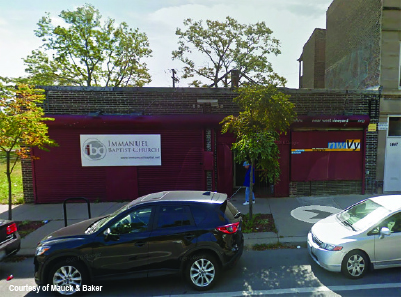
An IBSA church has filed a federal lawsuit against the City of Chicago, which is enforcing a zoning ordinance that won’t allow the church to purchase its building near the University of Illinois-Chicago campus.

“Agonizing” is how Nathan Carter, pastor of Immanuel Baptist Church, described the decision to either seek other meeting space or file the lawsuit. His congregation has met in its current location since 2011, and was set to close on the purchase of the building last summer, when city officials blocked the sale because they determined Immanuel had not established legal use.

70320Immanuel BC

The main issue is parking; the Chicago Zoning Ordinance requires religious assemblies to have a certain number of parking spaces based on how many people they’re able to seat. Immanuel needs 19 spaces to comply with the ordinance, but like many organizations in their neighborhood, the church utilizes street parking. Immanuel and the law firm representing them, Mauck & Baker, are arguing that the ordinance violates the Religious Land Use and Institutionalized Persons Act (RLUIPA) by requiring stricter standards of religious assemblies than for other organizations.

The space at 1443 W. Roosevelt had been rented by another church previously. Churches are a permitted use in the zoning, and the City’s building department gave Immanuel an occupancy permit in 2011. City officials assured Carter the sale wouldn’t be blocked despite the church’s use of street parking. But the City returned a different verdict in July 2016, informing Carter “the church still needed to meet the city’s parking requirements and that the city must determine if a religious assembly use is something it wants to promote on a commercial corridor such as Roosevelt Road,” according to a press release from Mauck & Baker.

The church’s ensuing lawsuit was a “last resort,” said the pastor. “We’ve been courteous and kind throughout the process and not adversarial, seeking to bend over backwards to meet their demands. We have our alderman’s support.”

Plus, Carter continued, “We have many of the same goals for the neighborhood as the City does. We’ve communicated that if they don’t fight it, then we won’t seek damages or fees. [The suit is] framed in such a way that they can admit they are bound by the letter of a current zoning ordinance, but then point out how that zoning ordinance is federally illegal (because of RLUIPA) by requiring more parking spots for religious assembly than it does for non-religious assembly uses that courts have determined are comparable.”

Carter referred to a sign on the door of his local library, which clearly states the library has no parking and patrons are to park on the street. City ordinances also state “live theater venues” with fewer than 150 seats need no parking, nor do libraries or cultural exhibits within the first 4,000 feet. Mauck & Baker is arguing Immanuel meets both of these requirements: their building seats 146 people and has less than 4,000 square feet.

Carter said the church is praying they can settle the suit within the next month, but if the City decides to continue to fight the purchase, the process could be a lengthy one.

Still, he said, the church sensed the Lord leading in this direction, albeit a somewhat frightening one. “Since 2005 our church has had a vision for being a long-term, stable gospel presence in our specific area of the city—a cluster of neighborhoods that surround the University of Illinois at Chicago,” Carter said. After meeting in four rented locations over the years and doing an exhaustive search of their community for other spaces, the purchase of their current building seems like a strategic decision.

“If the Lord closes this door, we have no doubt that he will open up another one,” Carter said. “But at the moment this was the only one that was cracked open, and there are scary lights coming from behind it, but we sensed the Lord wanted us to knock.”

-Meredith Flynn

The BriefingTrump admin. policy change on transgender students
The Trump administration signaled Feb. 10 that it was changing course on the previous administration’s efforts to expand transgender rights. The administration will no longer defend transgender students use of restrooms that do not match their anatomical gender identity. The move by the Justice Department does not change the situation for the nation’s public schools; a federal judge had already put a temporary hold on the guidance as a lawsuit by a dozen states moved through the courts.

Pregnancy resource centers sue Gov. Rauner
Eighteen Illinois women’s health organizations have sued Gov. Bruce Rauner over a law requiring pregnancy centers to tell patients about the benefits of abortion despite conscience-based objections. The measure requiring the dispensing of abortion information changed a 1977 law allowing health care professionals to refuse services they consider morally objectionable. The centers say the law violates the First Amendment.

Chicago restaurants’ Planned Parenthood bake sale
A baker’s dozen of Chicago’s upscale restaurants and bakeries are hosting a cookie sale to benefit Planned Parenthood. Supporters can purchase a box with one cookie each from the 13 restaurants for $75 with 100% of the proceeds directly benefit Planned Parenthood Illinois.

DeVos confirmation leaves Baptists hopeful
With the confirmation of Betsy DeVos as U.S. secretary of education, some Southern Baptists hope that emphases at the Department of Education will parallel themes expressed in Southern Baptist Convention resolutions on education adopted in 2014 and 2006. David Dykes, chairman of the 2014 SBC Resolutions Committee, noted he is “very encouraged by President Trump’s choice of people [for cabinet posts] who are outside the circle of politicians and the status quo for these positions. I think he really wants to shake things up, and I’m in favor of doing that.”

Strobel’s ‘The Case for Christ’ now a movie
Atheist-turned-Christian Lee Strobel’s 1998 best-selling book The Case for Christ heads to the screen April 7, with its first trailer revealed on usatoday.com. Mike Vogel plays Strobel as a Chicago Tribune investigative reporter in 1980, when Strobel begins to investigate Christianity, compelled by his wife Leslie’s (Erika Christensen) newfound faith.

 Sources: Washington Post, News Channel 20, Chicago Tribune, Baptist Press, USA Today

The BriefingStudy: Christians most persecuted
According to the Director of the Centre for Studies on New Religions (Cesnur), Massimo Introvigne, Christians are the most persecuted religious group in the world, with over 90,000 Christians killed in 2016 alone. Introvigne said there are nearly half a billion Christians who are unable to express or practice fully their Christian faith.

Chicago ends 2016 with 762 homicides
An argument between two men at an Uptown bar in the early hours of Jan. 1 ended with the two shooting at one another, leaving both dead. Their deaths ushered in the new year, marking the first and second homicides of 2017 and keeping up 2016’s soaring pace of violence.

Chicago priest puts a ‘bounty’ on killers
The violence on Chicago’s South Side is so pervasive that Father Michael Pfleger, a priest with the largest Catholic congregation in the area, isn’t waiting for a savior — he’s taking it upon himself to find murderers by offering rewards for information leading to an arrest. Pfleger says he’s given out 24 rewards over the last 10 years.

Judge rules against sex change coverage
Doctors and healthcare providers do not have to break with their consciences to perform sex change operations under a preliminary injunction against an Obama administration mandate. U.S. District Judge Reed O’Connor of Texas ruled in favor of eight states and three Christian healthcare groups by blocking a Department of Health and Human Services (HHS) rule set to go into effect Jan. 1.

Turkey denies appeal for U.S. pastor
A Turkish court has denied the appeal of a Christian pastor from North Carolina, who was imprisoned last month in Turkey on a false terrorism charge because of his Christian faith, according to the American Center for Law and Justice.  Andrew Brunson was imprisoned Dec. 9 after being charged with “membership in an armed terrorist organization.”

Sources: Fox News, Chicago Tribune, CBS News, World Magazine, Christian Post

The BriefingCastro death unlikely to halt revival or spur liberty
Cuban dictator Fidel Castro, who died at age 90, is being remembered as both an unwitting catalyst of revival and an opponent of religious liberty. His death, said Southern Baptists with ties to Cuba, is unlikely to yield significant increases in religious liberty for the island nation until the fall of the communist government he inaugurated 57 years ago.

3 dead, 5 sickened after church’s Thanksgiving dinner
Three people have died and five more were sickened after eating Thanksgiving dinner at an event organized by a church in the San Francisco Bay Area, health officials said. Sutter Delta Medical Center said it received eight patients with probable symptoms of foodborne illness Friday and Saturday. Three of the patients died, four patients were treated and released and one remains hospitalized. It remains unclear exactly what caused the illness.

Violent Thanksgiving weekend in Chicago
Chicago saw one its most violent Thanksgiving holidays in years, with eight people killed and 62 others wounded. The toll towers over the number of shootings in the previous two Thanksgiving holiday weekends, according to data kept by the Tribune.

Why Jerry Falwell Jr. turned down Trump’s Cabinet position
Liberty University President Jerry Falwell Jr. believes that Donald Trump “will become America’s greatest president since Abraham Lincoln.” But that wasn’t enough to persuade him to accept Trump’s offer to become secretary of education. Falwell told RNS the decision was due to concerns for the health of his family and the university he leads.

Pope challenged by conservative cardinals
Four senior Catholic cardinals went public with a private letter they sent to Pope Francis, asking him to state plainly whether he is liberalizing Church practice on divorced, remarried Catholics. The letter also questions whether the Pope is relaxing traditional and biblical standards on morality in general. Francis refused to respond so, the cardinals published their letter on various Catholic news sites.

Sources: Baptist Press, Fox News, Chicago Tribune, Religion News, CNN

Missions opportunities to highlight gathering in Metro Chicago

Final preparations are under way for the 110th IBSA Annual Meeting November 2-3. The event at Broadview Missionary Baptist Church in metro Chicago will focus on cross-culture ministry opportunities in Illinois. The keynote speaker will be Dr. Jeff Iorg, president of Gateway Seminary of the SBC, called Golden Gate Seminary prior to its relocation from the San Francisco Bay Area to metro Los Angeles this year.

“Dr. Iorg is among the most compelling, thoughtful, and missional voices in Southern Baptist life today, especially when it comes to understanding post-Christian culture in America,” said IBSA Executive Director Nate Adams. “I’m so grateful that he is leading our West Coast seminary into the future, where pastors and leaders will engage values and cultures that are already very different from those of the past century.”

I hope this year’s Annual Meeting will bring to all of us a new vision and higher level of commitment to ‘cross culture’ with the gospel.

Iorg is a former church planter and state convention executive director in the Pacific Northwest. As a leader of Southern Baptist work on the West Coast, Iorg has addressed many of the cultural challenges now facing evangelicals in the Midwest. He has written frequently on theological and biblical perspectives on marriage, sexuality, and gender. His book “Building Antioch” shows from the New Testament how an ordinary believing congregation can become a transformational community.

“Illinois Baptists will come away from Dr. Iorg’s messages challenged and transformed, I’m sure,” Adams said.

The Wednesday evening session, including Iorg, will focus on a four-phase process for engaging ministry across cultural barriers. Adams will outline the plan and share testimonies and videos of Illinois churches carrying the gospel to people unlike themselves.

“My own recent trips to Chicago have reminded me again how diverse our churches are, and even more so how varied and challenging are the cultures that our churches need to reach,” Adams said. “I hope this year’s Annual Meeting will bring to all of us a new vision and higher level of commitment to ‘cross culture’ with the gospel.”

IBSA President Kevin Carrothers, pastor of Rochester First Baptist Church and Vice President Adron Robinson, pastor of Hillcrest Baptist Church in Country Club Hills, will also bring messages.

In addition to the session on the variety of ministry opportunities in Illinois, the meeting will include two business sessions on Wednesday afternoon and Thursday morning. Vision tours of Chicago-area ministry opportunities are available. Seating is limited, so online registration is encouraged.

Visit www.IBSAAnnualMeeting.org to learn more.

Which church are you?

ib2newseditor —  October 26, 2016


By Adron Robinson

Editor’s note: This post is one in a series on cross-cultural ministry, taken from a round table discussion between four Illinois pastors and leaders. Click here to read more from their conversation, published in the September 29 issue of the Illinois Baptist newspaper. 

adron-robinsonAdron Robinson is pastor of Hillcrest Baptist Church in Country Club Hills and vice president of IBSA. He will deliver the annual sermon on Thursday, Nov. 3, during the Illinois Baptist State Association’s Annual Meeting at Broadview Missionary Baptist Church in Chicagoland. The theme of the meeting is “Cross-Culture.”
On finding an identity
Every church is going to be “that” church. People are going to say that’s the church that does this, or that church does that. As leaders, we need to get out front in defining what our church is going to be known for. John 13:35 just comes to mind: “By this all people will know that you are my disciples, if you have love for one another.” Your church needs to be known for showing your community God’s love in some way.

Your church needs to be known for showing your community God’s love in some way.

I grew up next door to a church. The church’s driveway was right in between it and the house where I was raised. Growing up, I thought the driveway was ours because we never saw church people until Sunday. On Sunday, they would come in and park on the street and fill up the driveway. They would be in the building all day and you would hear the music, but the rest of the week, the building was empty.

The church was just “that” church next door. When they came around on Sunday, they were “those” church people.  The complaint among the neighbors was that they took up all our parking. Other than that, they had no interaction whatsoever with the block, not to mention the rest of the community.

On engaging your community
Churches can do a great service to their community just by being good neighbors, and engaging people around them. Go be a coach, or just be a parent watching your kids play on a local sports team. Let people see the love of Christ in you. You don’t have to always be carrying a big Bible around, but just get to know people and start the relationships and let your love for the Lord be seen amid those interactions. You do much more for the gospel that way.

I think we try to reinvent the wheel too much. The community is already gathering together; go to those areas and take the gospel with you.

With the IBSA Annual Meeting just weeks away, pastors and church members who plan to serve as messengers at the Nov. 2-3 meeting are encouraged to make preparations now. See the checklist below for a step-by-step plan of how to get ready for Chicago.

The meeting at Broadview Missionary Baptist Church is preceded by the annual IBSA Pastors’ Conference, which begins Tuesday, Nov. 1 at 1 p.m. and will feature preachers H.B. Charles, Fred Luter, Scott Nichols, and Jonathan Peters. The Pastors’ Conference also will include breakout sessions on cross-culture ministry and evangelism.

“Cross-Culture” is the theme of the Annual Meeting, which begins at 1:15 p.m. on Wednesday, Nov. 2. Jeff Iorg, president of Gateway Seminary of the Southern Baptist Convention, will help interpret the meeting’s theme throughout the sessions, and will join IBSA Executive Director Nate Adams and other guests for Mission Illinois: “Cross-
Culture” on Wednesday evening.

The meeting also will feature preaching by Kevin Carrothers, IBSA president and pastor of Rochester First Baptist Church, and Adron Robinson, IBSA vice president and pastor of Hillcrest Baptist Church in Country Club Hills.

Meeting attenders will have an opportunity to see Chicago missions and ministry sites on vision tours planned for Nov. 1 and Nov. 3. Space is limited; go to IBSA
annualmeeting.org to sign up and choose your route (Northside, Southside, Westside, Suburban, or a Chicago sampling).

IBSA also will offer dine-in meal opportunities during the Pastors’ Conference and Annual Meeting. See details below and order meal tickets at IBSAannualmeeting.org/meal-tickets.

Check the website, IBSAannualmeeting.org, for all other meeting details, including information about travel, parking, and hotel accommodations. And take note of the other meetings also scheduled Nov. 1-3:

Young Leaders Network
When: Tuesday, Nov. 1, 9:30 p.m.
Where: Broadview Baptist Church
Menu: Wings ‘n things

Pastors’ Wives Luncheon
When: Wednesday, Nov. 2, 9 a.m. to noon
(Coffee fellowship begins at 8:30 a.m.)
Where: Broadview Fellowship Hall
Cost: $15; send check made out to IBSA Pastors Wives to Stevi Smith, 1302 W. Robinson St., Harrisburg, IL 62946
RSVP: Pre-registration is not required, but strongly recommended by Monday, Oct. 24. E-mail Lindsay McDonald at lmcdonald_31@hotmail.com.

Church Planters Breakfast
When: Thursday, Nov. 3, 7 a.m.
Where: Broadview Fellowship Hall
Cost: This is a free breakfast for planters and spouses, but pre-registration is appreciated.
RSVP: RachelCarter@IBSA.org, (217) 391-3101

Directors of Missions/Moderators Breakfast
When: Thursday, Nov. 3, 7 a.m.
Where: Broadview Fellowship Hall
RSVP: If you have received an invitation, please RSVP to LindaDarden@IBSA.org or (217) 391-3137.

annual-mtg-checklist


A popular hotel chain is running a television commercial that cleverly depicts several groups of people trying to decide whether or not to attend a wedding. One is a group of bridesmaids, who clearly aren’t thrilled about the turquoise dresses the bride has chosen. Another group is former boyfriends of the bride, wondering why on earth they all got invited. And one sad lady simply doesn’t want to see Uncle Joe dance in public again. I think it might be Uncle Joe’s wife.

The musical background for the commercial is a rock song from the 1980’s. Over and over that song chants the simple question, “Should I stay, or should I go?”

Because Chicago is our state’s largest and most diverse mission field, we all need to get more familiar with, and comfortable in, this world class city.

As the November 2-3 IBSA Annual Meeting approaches, I imagine there are Illinois Baptists asking themselves that same question. For the first time in several years, the meeting is being hosted near Chicago, at Broadview Missionary Baptist Church. The drive will be quite a distance for those in other parts of the state, just as last year’s location in Marion was a long drive for northern churches.

And of course some will not want to brave the congestion and the traffic. In fact, I don’t know any Chicagoland natives who look forward to that part.

The message of the hotel chain’s commercial is that their comfortable, affordable hotels give even reluctant travelers reasons to go, rather than stay home. So let me suggest some reasons to go to the IBSA Annual Meeting this year.

We need to see and care about and partner with its churches.

First, the challenging theme of this year’s gathering is “Cross Culture.” The program will intentionally showcase the diversity of Illinois Baptists and also point to multiple cultures in our state that desperately need the gospel. There’s no better place in Illinois to receive the challenge to “cross culture” than in Chicago.

Second, because Chicago is our state’s largest and most diverse mission field, we all need to get more familiar with, and comfortable in, this world class city. We need more practice going there. We need to better understand its neighborhoods, its problems, its needs, and its people. We need to see and care about and partner with its churches.

Third, a lot of advance preparation has already gone in to making your stay in Chicagoland as easy as possible. Broadview is a wonderful, generous church, with lots of parking and lots of practice hosting large events. Catered meals have been arranged on site at the church to make the dinner hour easier and more convenient. Nearby hotels have provided very reasonable rates that include breakfast. And Broadview’s near west suburban location makes it a wonderful home base for seeing more of the city, either on your own or as part of two pre-planned vision tours.

Should you stay or should you go?

I could go on and on, but let me cite just one more reason, one that really applies to every Annual Meeting, regardless of location. It’s just very, very good for our Baptist family in Illinois to be together. Throughout the year, we as pastors and leaders and devoted church members work hard in our various local contexts to fulfill the Great Commandment and the Great Commission of Jesus. As the year draws to a close, it is good for us to assemble, and network, and be inspired, and remember that we are not alone in this mission.

Should you stay or should you go? If at all possible, you should go. It may surprise you what the Lord has done across our state over the past year. And it may surprise you how he and the fellowship of your brothers and sisters in Christ will inspire you for the year to come. I look forward to seeing you there.

For more information about the IBSA Annual Meeting and Pastors’ Conference, visit www.IBSAAnnualMeeting.org.

Nate Adams is executive director of the Illinois Baptist State Association. Respond at IllinoisBaptist@IBSA.org.

Come to Chicago

ib2newseditor —  October 3, 2016

Annual Meeting to focus on reaching across cultures—and opportunities in Illinois

am_2016_logoWhen the lawyer—trying to get out of his moral obligation—said, “Who is my neighbor?”, Jesus’ response produced an even greater responsibility: be willing to cross cultures in order to help another.

The requirements of love in the story he told of the good Samaritan might seem excessive if Jesus himself had not already fulfilled them. The priest in the parable refused to cross the road to aid a dying man, yet Jesus chose to cross the border into forbidden territory to help an immoral woman.

For a faithful Jewish man, this was not one, but three violations of custom and law.

“Now he had to go through Samaria,” the apostle John records (John 4:4). Had to? In what way?

Good Jews avoided Samaria. They took the long way around on a trip from Judea to Galilee just to avoid their despised half-cousins the Samaritans. But Jesus felt some compulsion to travel through the forbidden region. It was there in the town of Sychar that Jesus met and spoke to the woman who was rejected by the rest of the town because of her bad behavior. First he asked her for a drink of water, then he offered her living water.

What compelled Jesus to go through Samaria?

The easy answer is love, but love is not always easy.

It’s not just ethnicity
The IBSA Annual Meeting in November will focus on cross-cultural ministry. Sharing the gospel across cultures to people of all languages, ethnicities, nationalities, and people groups is our high calling. But no one ever said it would be easy.

What better place to do this work of reconciliation than Illinois?

We live in a multi-cultural world. As the missiologists often tell us, the world is at our doorstep. Every race, religion, and people group is represented in America—and most of them, too, in Illinois. From the first beep of Telstar and the first flickering satellite images from another hemisphere, the world in our lifetimes has become a relatively small place. Figuratively speaking, and often literally, we live elbow to elbow with people very different from ourselves. The melting pot of America has become a stew bowl of people and beliefs, not mixing so much as existing side by side, sometimes peaceably, sometimes not.

If 2016 has taught us anything it is that bringing cultures together is complicated.

Misunderstanding is probable, real understanding is not. (Watch any newscast for examples.) But the Bible has taught us that bringing cultures together—in Christ—is the goal.

“There is neither Jew not Greek, slave nor free, male nor female, for you are all one in Christ Jesus” (Galatians 3:28). And Jesus himself accomplished this, “who has made the two one and has destroyed the barrier, the dividing wall of hostility” (Ephesians 2:14).

What better place to do this work of reconciliation than Illinois?

With 13 million residents and at least 8 million of them without a faith relationship with Jesus Christ, the call to be reconcilers and gospel ambassadors rings loud. But it is often drowned out by clashes of race and place, divergent views on social justice, and the widening economic divide. Add growing political arguments in an atmosphere of distrust, and we might say the task of spiritual reconciliation is as challenging in the 21st century as it was in the first. The main difference between then and now, between Samaritans and Illinoisans, is sheer volume.

Which was a neighbor to the man in need? “The one who had mercy on him.”

In Illinois our cultural divides are not only ethnic. There is the upstate-downstate dichotomy, Chicago versus everything south of I-80, Northside versus Southside, city verses suburbs, the political tug-of-war between red and blue, between Springfield and the rest of the state. And if we Christians aren’t careful, the prevailing social and political prejudices spill over into our attitudes—and even into our churches.

And one more observation: crossing cultures is not only reaching across barriers to other ethnicities and language groups. It’s also reaching out to people who hold different views on sexual and moral issues, those in lifestyles that Christ-followers believe are unbiblical. It means reaching across the back fence to neighbors who look and sound a lot like us, but whose lost condition characterizes their whole lives. For people who live in a Christian culture and try to behave in Christly ways, embracing anyone outside the church is a cross-cultural experience.

But that is our calling.

9-12-16-ib-facesWelcome to Samaria
When Jesus was telling the lawyer about eternal life, how a changed life produces love for one’s neighbors, he chose to make a Samaritan the hero of the story. “Samaritan” was virtually a curse word when it described the woman at the well. “Samaritan woman” was doubly offensive. The disciples were stunned to find Jesus talking to such an outcast, but none dared confront him on it.

Neither did anyone object when Jesus said it was a Samaritan that helped a Jewish man who had been robbed and beaten and left half dead. But they were surely surprised that the Samaritan was commended for his actions rather than the priest and the Levite who crossed the road to avoid the bloody, unclean wretch, and thereby kept the law. The invective “Samaritan” was redeemed and the merciful man made a model. The Good Samaritan.

What compelled the Samaritan to help a hurting man, likely an enemy of his people, a Jew? Love is the ready response, but Jesus pointed to mercy: that holy mixture of God’s grace motivated by unfailing love, extended to mankind.

Which was a neighbor to the man in need? “The one who had mercy on him.”

The 2016 Annual Meeting in suburban Chicago offers opportunity to see Illinois—our great mission field—with fresh eyes. This vast state with its world-class cities and fruitful, abundant plains calls for multiple approaches to ministry. One size doesn’t fit all our mission fields, but one calling does: Go.

– Eric Reed is editor of the Illinois Baptist