Archives For November 30, 1999

How a biblical proverb can help us manage modern money

COMMENTARY | Doug Morrow

Doug_Morrow_blog_calloutI’ve been working on a project since mid-November. Once a week (okay, once every two weeks), I write an extended devotional or comment based on a chapter of Proverbs and have been addressing it to my children. Proverbs represents some of the most amazing “counsel” ever written, and much is written as from a parent to a child. I’ve been trying to amplify the Proverbs into my own paternal voice for the benefit of Reed, Lauren and Claire.

It was in this process that I discovered a nugget that describes what I believe in so passionately, and the mission of the Baptist Foundation of Illinois:

“Honor the Lord with your wealth and with the first fruits of all your produce,” reads Proverbs 3:9, “then your barns will be filled with plenty, and your vats will be bursting with wine.”

King Solomon’s words can be difficult to translate to our time and culture. “First fruits” has a different meaning in an America so replete with cheap food that we’re far more likely to queue up at the McDonald’s drive-thru than pray for rain for the wheat crop. Few of us have barns, and ever since municipal water projects, there are even fewer with “vats bursting with wine.” So, what could the Spirit say to us through these words to those living in the wealthiest nation in our planet’s history? “Honor the Lord with our wealth?”

In truth, most of the assets we steward for the Lord aren’t in our income (technically our “first fruits”), or emergency cash. Over time, most people collect “wealth” in things like real estate (67% of Illinoisans own their home), IRA or other retirement assets (often acquired ‘pre-tax’), life insurance, or other “stuff” we collect over our lifetimes.

I think the way we honor the Lord with this wealth, along with our first fruits, is amazingly simple and can be found in the text itself. The pattern we apply to our wealth should be consistent with the pattern we establish with our “first fruits!”

Do we take care of our needs such as food, shelter and clothing with our first fruits?

Do we use those fruits to care for our children and dependents?

What about supporting the work of God’s church?

Absolutely, on all three counts. And because we do those things with our first fruits, we should do so with our wealth.

How does all of this come together in a way that accomplishes this God-honoring stewardship plan? Well, since most of our “wealth” is not accessed until our death, it’s important to put together a Christian Estate Plan now. Such a plan accomplishes the “pattern” that God has called us to live out in our lives—taking care of our own needs, caring for children and dependents, and investing in the work of God’s church.

These are the elements I commonly refer to as the “big four” parts of a Christian Estate Plan:

• A will and possibly a living trust
• A financial (durable) power of attorney (when not using a living trust)
• A health care power of attorney
• Careful attention to titling, beneficiary designations, or transfer on death devices on retirement assets, life insurance, financial accounts or other assets, since any asset designated in this way bypasses the will and the probate process

The Baptist Foundation has actually made the process simpler than you might imagine—and much less expensive than you might fear. A great place to start is with the Life Stewardship Navigator, a free download from http://www.BaptistFoundationIL.org. BFI provides complimentary and confidential help in putting together a plan that enables you to provide for your family and support Christian causes in exactly the manner you wish to support.

Over the next few months, I’ll keep working on the Proverbs chapters (my wife wants me to arrive at chapter 31 in time for Mother’s Day). In the meantime, it’s important that we begin this year with the counsel that all we are, hope to be, or ever will steward belongs to our God. May we carefully honor Him in everything.

Doug Morrow is executive director of the Baptist Foundation of Illinois.

One Baptist leader says Scripture’s case for cooperation is the most compelling reason to work together.

Micah_Fries_blog“My entire life growing up, what I heard about the Cooperative Program was, ‘give to it because it works,’” said Micah Fries (left), vice president of LifeWay Research.

Indeed, historical evidence supports it—CP does work. Southern Baptists’ main method of supporting missions and ministry here and around the world, will turn 100 in 10 years, and has helped mobilize one of the largest missionary forces in the world.

Last year, Baptists gave more than $186 million through the CP Allocation Budget to send and support church planters in rural America and the country’s largest cities, and to get the gospel to places and people around the world that have never heard it. At a meeting of the SBC Executive Committee last year, CEO Frank Page called CP the best way to “concurrently, consistently and, yes, completely fulfill Acts 1:8 as a church body. Through that, you’re involved in missions and ministries all over the world, all the time.”

But the average percentage churches give through CP has fallen over the years, from 10.7% in 1982, to less than 5.5% the last few years.

In this climate of decline when it comes to cooperative engagement, there is a better, more compelling reason to work together than to do so “because it works,” Fries said during a breakout session at the recent Midwest Leadership Summit in Springfield, Ill. He argued for a theological foundation, rather than pragmatic justification.

“…I want to plead with you to go back to your churches and plead with your churches, go back to your associations and your state conventions and plead with them to be faithful at partnership mission, but not because it works. But because the Bible tells me so.”

A better rationale
Our need for a biblical foundation for cooperation, Fries said, starts with characteristics we have that are specifically human, and specifically American. In our consumer-driven culture, most people shop for churches like they shop for blue jeans. Where can I get the best product for the lowest cost? If the personal price is too high, they’ll look elsewhere.

That consumerism, along with pride, independence, and the valuing of perception over reality, runs counter to the ideas of community and cooperative engagement.

“…When you and I call for community in the context of the local church, and cooperation or collaboration between local churches, we need to understand that what we’re calling for is a radically counter-cultural identity,” Fries said. “It strips away the core of who we are, and calls us to be like Jesus.

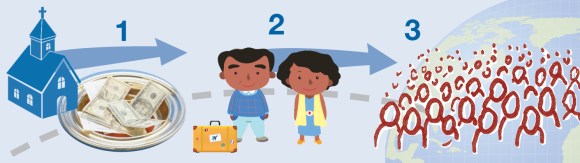
CP charts are complicated, Fries said, even for those who have long understood the system. “Stop making it so confusing for people.” “That’s what the Cooperative Program does," Fries said.

CP charts are complicated, Fries said, even for those who have long understood the system. “Stop making it so confusing for people. You put money in the plate, money goes to a missionary, missionary tells people about Jesus. That’s what the Cooperative Program does.”


“This is challenging. This is why it’s not enough to say, ‘We need to give to the Cooperative Program because it works.’ Because ‘it works’ is not a compelling enough reason to deny the core of who we are.

“Because it makes us to be like Jesus, because it helps to advance the gospel, because it helps to glorify God; those are compelling reasons to engage in counter-cultural activity.”

Younger Baptists are looking for more than pragmatic justification too, Fries said. The generation raised after the Conservative Resurgence spends more time thinking about what the Bible actually says, than arguing its truth. “So, you’re not going to compel them with pragmatic arguments, it’s going to have to a biblical rich, theologically rooted argument.”

Toward gospel advance
“Without a doubt, the high calling and common cause that unites diverse Baptist churches in cooperation is the Great Commission of Jesus to make disciples of all the world’s peoples,” IBSA Executive Director Nate Adams wrote for Resource magazine last year. “Wherever else Baptists may disagree, we are agreed on the priority of advancing the gospel, both across the street and around the world.”

CP also helps involve different kinds of churches in that mission, Page noted during the Midwest Leadership Summit. The SBC is a convention of small churches, including many ethnic congregations. “The Cooperative Program levels the playing field so everyone has opportunity to bring worshipers to God.”

Ultimately, biblical cooperation leads to an advanced gospel, which is “the compelling apologetic for collaborative mission,” Fries said. Choosing for the gospel to go forward through believers wasn’t the most pragmatic choice for God to make, he said; rather, he designed it that way because it brings him glory and brings us joy.

Read more from the Feb. 2 issue of the Illinois Baptist, online at http://ibonline.IBSA.org.

Rob (left) and Mona Payne (center) lead worship during "Pop Up Church" for Downtown Phoenix Church, also known as DTPHX Church. Photo by Shawn Hendricks/BP

Rob (left) and Mona Payne (center) lead worship during “Pop Up Church” in Phoenix. Photo by Shawn Hendricks/BP

THE BRIEFING | Meredith Flynn

Young adults in downtown Phoenix “don’t think about going to church on Sunday morning any more than you and I think about going to bingo on Friday nights,” says Pastor Jim Helman. To reach Millennials, his Downtown Phoenix Church “pops up” every other week at a coffee shop or in a park, and uses the other weeks to serve the community. Read more at BPNews.net.


His Seattle Seahawks may have lost the Super Bowl in stunning fashion (that second down call!), but quarterback Russell Wilson seems to already be bouncing back via Twitter. After the game, the outspoken Christian posted motivational messages and Psalm 18:1–“I will love You, O LORD, my strength.”


Imprisoned pastor Saeed Abedini thanked President Obama for meeting with his wife and children last week, and for assuring the couple’s young son that he will try to secure his father’s release by March (when Jacob Abedini will celebrate his 7th birthday). “I know that as a father you can truly understand the pain and anguish of my children living without their father and the burden that is on my wife as a single mother,” Abedini wrote to Obama from Rajaee Shahr prison in Iran.

In the letter, provided online by the American Center for Law and Justice, Abedini also thanked Obama “for standing up for my family and I and for thousands of Christians across the world who are persecuted for their faith in Jesus Christ.”


The American Bible Society will relocate to Philadelphia after selling its Manhattan building for $300 million, reports The Christian Post. The 12-story facility on Broadway, which has housed ABS since 1966, is about 10 blocks from another ministry: the offices of the Metro New York Baptist Association.


Religion writer Cathy Lyn Grossman reports on the “post-seculars,” a group defined in a new study as falling between “traditional” and “modern” views of science and religion. Said study co-author Timothy O’Brien, “We were surprised to find this pretty big group (21 percent) who are pretty knowledgeable and appreciative about science and technology but who are also very religious and who reject certain scientific theories.”


Democrats feel more warmly toward Muslims than do Republicans, Pew reports in a study on how ideology and age affect American “temperatures” about Muslims and Islam.


As Boko Haram continues to wage a war of terror in Nigeria, “…God has raised up believers who have remained steadfast and bold in the midst of applied pressures to silence them,” said one Christian worker, according to this Baptist Press story.


Image from a May 2012 YouTube video Saeed Abedini made before his imprisonment.

Image from a May 2012 YouTube video Saeed Abedini made before his imprisonment.

THE BRIEFING | At a meeting last week with the wife and children of imprisoned pastor Saeed Abedini, President Barack Obama said securing his release is a top priority, according to a release from the American Center for Law and Justice.

“The President was focused and gracious – showing concern to me and my children,” said Naghmeh Abedini. “I know that this meeting could not have occurred without prayer and I am grateful to the many people around the country and world who continue to pray for Saeed’s release.”

Obama reportedly told the Abedinis’ young son that he would try to have his father home by the boy’s birthday in March. The pastor, an American citizen, was arrested in Iran in 2012 and charged with “undermining national security,” Christianity Today reports. Last June, he was awarded a religious liberty award by the Southern Baptist Ethics and Religious Liberty Commission, which his wife accepted on his behalf.


Jury selection started yesterday in the trial over Houston’s Equal Rights Ordinance, spearheaded by a coalition of ministers who collected petitions to repeal the ordinance passed by the City Council last May. (The city disqualified many of the 50,000 signatures collected.) The complicated case also included an effort to subpoena communications and sermons by five Houston ministers; the subpoenas were eventually dropped.

Opponents of the Houston ordinance recently aided Plano residents in collecting signatures to stop a similar ordinance in their city, Baptist Press reported.


A rumored protest by Westboro Baptist Church didn’t come to fruition at a Quad Cities-area Illinois Baptist church, but representatives of the infamous Kansas congregation (which is not affiliated with the Southern Baptist Convention) did visit some churches in the area, and were met with counter-protestors. Prior to Sunday, January 25, Westboro protestors were scheduled to be at Northcrest Calvary, an Illinois Baptist State Association church in Rock Island.


Alabama is the most recent state to face a challenge to its ban on same-sex marriage, Baptist Press reports. Judge Callie V.S. Granade ruled the ban unconstitutional Jan. 23, in a case involving a lesbian couple who married in California but were denied adoption rights in Alabama. The state’s association of probate judges–who are responsible for issuing marriage licenses–said Granade’s ruling doesn’t impact anyone not named in the case.


The struggle continues between New York City public schools and churches that want to rent their space for Sunday worship, Christianity Today reports. The most recent development is an apparent change of heart by Mayor Bill de Blasio.


George Perdikis, who co-founded The Newsboys in the 1980s, has officially renounced his Christian faith, The Christian Post reports. The musician wrote in a recent post on Patheos.com: “I always felt uncomfortable with the strict rules imposed by Christianity. All I wanted to do was play rock and roll.”


Where does your city rank when it comes to “Bible-mindedness?” Barna and the American Bible Society released their annual list of the most Bible-minded cities in the U.S. Four Illinois cities landed in the top 50; see which ones at Barna.com.


Editor’s note: This piece is reprinted from Baptist Press (BPNews.net). Sanctity of Human Life Sunday is January 18. For resources, go to ERLC.com/life.

COMMENTARY | The claim of some pro-choice groups that Scripture does not address abortion would have surprised both Jews and Christians living in the first century. That’s because they were virtually unanimous that the Bible implicitly—though clearly—prohibited the killing of unborn children.

David_Roach_calloutAbortion advocates today tend either to deny this fact or remain gladly ignorant of it. For example, Planned Parenthood, America’s largest abortion provider, issued a “pastoral letter to patients” last spring stating, “Many people wrongly assume that all religious leaders disapprove of abortion. The truth is that abortion is not even mentioned in the Scriptures—Jewish or Christian—and there are clergy and people of faith from all denominations who support women making this complex decision.”

Of course, the Bible does not contain the direct commandment, “Thou shalt not have an abortion.” But based on passages like Psalm 139:14-16, Jeremiah 1:4-5, Amos 1:13 and others, ancient Jews and Christians believed it was clear that God cared for the unborn and regarded abortion as a sin.

Some may be surprised to learn that abortion existed more than 2,000 years ago, with surgical and chemical abortions performed in pagan cultures hundreds of years before Christ’s birth. The Greeks were among the first Ancient Near Eastern people to permit abortion, with Plato arguing in “The Republic” that pregnant women over 40 should be required to have abortions. In contrast to pagan cultures, Judaism emphasized the value of unborn and pre-born life dating back at least to the time of Moses, when God’s people protected infant males from being slaughtered at birth as Pharaoh ordered (Exodus 1:15-21).

In fact, some scholars believe Pharaoh’s command to kill Hebrew boys “on the birthstool” (Exodus 1:16) was actually a command to commit partial birth abortion, with “birth stool” functioning as a Hebrew euphemism for “birth canal.”

Either way, the Jewish culture of life was evident, and the Jews of Jesus’ time expressed their anti-abortion convictions. The Jewish work Sentences of Pseudo-Phocylides, written between 50 B.C. and A.D. 50, taught that “a woman should not destroy the unborn in her belly.” First Enoch, which was written in the first or second century B.C., said it was evil to “smash the embryo in the womb.”

Josephus, a Jewish historian born in A.D. 37, summarized, “The Law orders all offspring to be brought up, and forbids women either to cause abortion or to make away with the fetus.”

Early Christians agreed. The Didache, a first-century document that some church fathers argued should have been included in the New Testament, taught, “Thou shalt not murder a child by abortion nor kill them when born.” Another Christian writing considered for inclusion in the New Testament, the Epistle of Barnabas, said, “You shall not abort a child nor, again, commit infanticide.” Both of these documents were read aloud in some churches.

When Spanish bishops convened a council in approximately 305 in the city of Elvira, they voted unanimously to decree eternal excommunication for women who had abortions—a decision that reflected their just condemnation of the practice though it failed to reflect the biblical promise of forgiveness to post-abortive women who confess their sin and trust Christ as their Lord and Savior.

“If a woman conceives in adultery and then has an abortion, she may not commune again…because she has sinned twice,” the council decreed.

Among other early church leaders whose writings condemned abortion explicitly were Tertullian (c. 150-c. 229), Clement of Alexandria (c. 153-c. 215), Basil of Caesarea (c. 329-379), Jerome (c. 347-419) and John Chrysostom (c. 349-407).

Perhaps one reason the New Testament writers did not address abortion was that they did not need to. For the first 500 years of Christianity, there was a strong and practically unanimous consensus among believers that terminating a pregnancy violated Scripture’s doctrine of the sanctity of human life.

A thousand years later, John Calvin demonstrated that the Christian tradition of opposing abortion was still alive and well. Commenting on Exodus 21:22-23, Calvin wrote, “The fetus, though enclosed in the womb of its mother, is already a human being, and it is almost a monstrous crime to rob it of the life which it has not yet begun to enjoy. If it seems more horrible to kill a man in his own house than in a field, because a man’s house is his place of most secure refuge, it ought surely to be deemed more atrocious to destroy a fetus in the womb before it has come to light.”

In the strictest sense, abortion advocates are correct: The Bible does not speak explicitly to abortion. But that should not leave believers in a state of moral confusion any more than the Bible’s failure to explicitly address money laundering or internet pornography. For more than 2,000 years, the Lord’s followers have extrapolated from biblical principles that some behaviors are obviously sinful. The united witness of Jews and Christians regarding abortion is a case in point.

Basil, Jerome, Chrysostom, Calvin and a host of other believers from every nation, tribe, people and tongue would scoff at the claim that Scripture is silent and that God’s people historically have been divided regarding abortion.

David Roach is chief national correspondent for Baptist Press.

Newsweek_0112COMMENTARY | Meredith Flynn

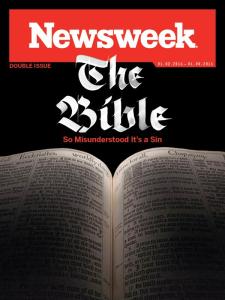
Christians who read Kurt Eichenwald’s Dec. 23 cover story might have been reminded of a well-known line from a comic strip:

“We have met the enemy, and he is us.”

The words, written by Pogo cartoonist Walt Kelly, weren’t about Bible-believers coming face to face with an article claiming to debunk some really famous stories. But read through the Newsweek article, paying particularly close to the pictures, and it might be difficult not to squirm in your seat or look over your shoulder.

We have met the enemy—or, at least, we know who Newsweek thinks it is. It’s us.

As Southern Seminary President Al Mohler and others have pointed out, the first two paragraphs of Eichenwald’s article read like an attack: “They wave their Bibles at passersby, screaming their condemnations of homosexuals. They fall on their knees, worshipping at the base of granite monuments to the Ten Commandments while demanding prayer in school.”

And those are just the first two sentences. What follows is mostly about the Bible, but tinged with the same hostility toward Christians, which also has been noted by numerous leaders and scholars. Mohler called it “one of the most irresponsible articles ever to appear in a journalistic guise.” Michael Kruger, president of Reformed Theological Seminary in Charlotte, said Eichenwald deserved a “slap on the journalistic wrist.”

But even for those who can’t counter every one of the anti-Bible arguments in the article or don’t care to debate its journalistic merits, if you can get past Eichenwald’s angry words, his piece can bring some valuable introspection. Because as soon as you realize you’re his enemy, you scroll past a photo of a protest by members of the infamous Westboro Baptist Church. Or controversial TV preacher Pat Robertson. Eichenwald lumps all Christians together, like it or not.

What else would you expect from a non-Christian, one might ask? It’s a good question, but the better question is, What is this non-Christian asking of us? Near the end of the article, Eichenwald puts forth two pleas:

Christians, know the Bible, he writes. (His stinging criticism suggests many of us “seem to read John Grisham novels with greater care” than God’s Word.) That’s good advice, even from a source that proved less than empathetic in his previous 8,500 words.

“And embrace what modern Bible experts know to be the true sections of the New Testament,” Eichenwald writes. “Jesus said, Don’t judge. He condemned those who pointed out the faults of others while ignoring their own. And he proclaimed, ‘Thou shalt love thy neighbor as thyself. There is none other commandment greater than these.’”

To that we would say Amen, and we’re glad Eichenwald acknowledges some biblical teaching is worthy of embrace. But there are plenty of modern scholars who believe the whole Bible is true. He should talk to some of them next time.

In a border town of Turkey, a Syrian family who fled from the civil war struggles to find food and shelter. IMB photo by Jedediah Smith

In a border town of Turkey, a Syrian family who fled from the civil war struggles to find food and shelter. IMB photo by Jedediah Smith

THE BRIEFING | Meredith Flynn

The International Mission Board’s pictures of the year show “light in the darkness” around the world. In the Philippines, hard hit by a typhoon just over a year ago; in Turkey, where a Syrian family tries to escape civil war (right); and in the Dominican Republic, where church planting efforts reach across geographical and cultural divides. See them all and more at IMB.org.


Almost 9.5 million people heard the gospel through the Billy Graham Evangelistic Association in 2014, and more than 1.6 million of those trusted Christ. “Our hearts overflow with gratitude to God for all He has done and is doing, and we are eager to keep pressing forward as He continues to open doors,” BGEA’s chief executive officer Franklin Graham wrote recently, The Christian Post reported.


Also from The Christian Post: Houston Baptist University will create a Center for American Evangelism, spearheaded in part by apologist Lee Strobel and directed by author Mark Mittelberg.


“I’ve been there, done that and I’d love to share with you a few reasons why, even though I’ve failed, I’m doing it again,” Trillia Newbill writes about her resolve to read the Bible in 2015. Read about the four step plan she chose at ERLC.com.


Most of us make and break them every year, but can New Year’s Resolutions actually be harmful? Author (and Billy Graham’s grandson) Tullian Tchividjian says yes, in this interview with Religion News Service. “When it’s up to you to go out and get the love you crave, create your own worth, or work at becoming acceptable to those you want to impress, life gets heavy,” Tchividjian told writer Jonathan Merritt. “New Year’s Resolutions are a burdening attempt to fix ourselves and make ourselves more lovable.”


The current basketball season has gone “in the opposite direction” L.A. Laker Jeremy Lin anticipated, he posted on his blog at the beginning of this year. But despite his slump, Lin—a known Christian—said he wants to live with more joy in the coming year. “…[T]hrough it all, I’ve been learning how to surrender the results to God, how to walk by faith and not by sight, how to be renewed through times of prayer/Scripture and how to fight for a life of joy in the midst of trials.”


THE BRIEFING | Meredith Flynn

Tis the season for best-of lists, and several interesting are already floating around the internet:

Other news:

“I’m proud of you,” Rick Warren told Mars Hill Church Dec. 28. Via video, Warren, pastor of Saddleback Church in Lake Forest, Ca., preached the final message members of the multi-site church will hear before Mars Hill disbands and several of the locations become independent congregations. “You know, anybody can follow Jesus when it’s a party,” Warren said. “The real test of spiritual maturity is how you handle the storms of life, the difficulties, and even the changes that you didn’t ask for.” Mars Hill Pastor Marc Driscoll resigned in October amid charges of unbiblical leadership.

“We can support the police and talk about how to make policing better at the same time,” writes Ed Stetzer. “We can seek to insert grace into these difficult moments.” The missiologist and president of LifeWay Research (and native New Yorker) reflected on his blog in the wake of the murders of two New York City police officers.

If the United States’ unchurched population was its own country, it would be the eighth most populous nation in the world, Barna reports in these “10 Facts About America’s Churchless.”

A positive note to end on: Seven NFL players participated in a holiday Bible giveaway, reports The Christian Post. “God placed us here for a reason. Use the time you have on this platform to spread His Word,” Tampa Bay Buccaneer Alterraun Verner told CP.

HEARTLAND | Eric Reed

The world has gotten scarier in recent months. If the ongoing threat from Al Qaida, government-sponsored terror in Syria, escalating conflict in Israel, and the persecution of Christians across the Middle East were not enough, now there’s the march of ISIS, a vast, mobile, and unpredictable kind of terror that produces beheadings on our TV screens and a surge in troop deployment.

We might soothe ourselves by saying, “That’s far away—over there,” if not for Ferguson, Missouri. The scenes of protests following the shooting death of a teenager by a city policeman are still fresh, and the threat of deadly riots pending the outcome of a grand jury investigation of the policeman’s actions is even scarier. Our Illinois friends who live in metro St. Louis television market have been subjected to four months of daily news coverage predicting trouble. Teachers, pastors, and church leaders have all been advised what to do if protests again turn violent.

Eric_Reed_Nov24And don’t forget Ebola. For people all over the world, these are scary days. But into such frightening times, God often sends a message: fear not.

The Lord assures Joshua as he assumes command after Moses, “Haven’t I commanded you: be strong and courageous? Do not be afraid or discouraged, for the Lord your God is with you wherever you go” (Joshua 1:9).

Gideon, ordered to save Israel from the Midianites, is fearful until he hears from God himself: “But the Lord said to him, ‘Peace to you. Don’t be afraid, for you will not die’ (Judges 6:23).

From Lamentations, the prayer of all Israel: “You come near when I call on You;
You say: ‘Do not be afraid.’” (Lam. 3:57).

And most famously, the head of a night-sky army tells a little band of shepherds outside Bethlehem, “Fear not, for behold…” In their declaration there’s a reason for steely nerve: A savior, a rescuer has been born.

When God sends the message to be brave and courageous, he often couples it with an assurance of his own presence. “Do not fear, for I am with you; do not be afraid, for I am your God. I will strengthen you; I will help you; I will hold on to you with My righteous right hand” (Isaiah 41:10).

In Isaiah’s question, “Who has believed what we have heard?
And who has the arm of the Lord been revealed to?” (53:1), the prophet is referring to the coming Messiah. God’s strong right arm is Jesus himself. That’s who will defend us. That’s who will protect us.

“Fear not” is not an idle command; God backs up what he says. “For behold” is an invitation to look and see that His promise is ready to be tested and fully verified.

Jesus, walking on water, tells the disciples: “‘Have courage! It is I. Don’t be afraid.’

‘Lord, if it’s You,’ Peter answered Him, ‘command me to come to You on the water.’

‘Come!’ He said” (Matt 14:27-29).

Fear not, Peter, the Lord’s strong arm will hold you up, even on the roiling sea. With such an all-powerful guard alongside, there is no reason to be afraid.

Kizzie Davis, owner of the Ferguson Burger Bar, told KMOX radio last week she refused to board up her new business, as other owners were doing ahead of the grand jury’s report. The mom-and-pop hamburger shop opened one day before the death of Michael Brown and survived the first protests. “We had no issues at that time,” Davis told the reporter. “Prayerfully, we won’t have any issues if unrest occurs this time.”

Customers commended her brave stance. “Cool management. They fear no one, but God,” one posted at the restaurant’s website. (And the turkey burger topped with a fried egg got five stars.)

Davis reminds us all that we can’t live in fear, even in fearful times. And if we follow her example, we too will stay open, keep cooking, and pray.

Eric Reed is editor of the Illinois Baptist and associate executive director for IBSA’s Church Communications Team.

THE BRIEFING | Meredith Flynn

At the Vatican’s Humanum Colloquium on the complementarity of man and woman in marriage—happening this week—Pope Francis affirmed marriage as providing “unique, natural, and fundamental good for families, humanity, and societies,” according to a report by the Ethics and Religious Liberty Commission.

“Pope Francis made clear that male/female complementarity is essential to marriage, and that this cannot be redefined by ideology or by the state,” said ERLC Executive Director Russell Moore, who is in Vatican City for the gathering of 300 religious leaders.

The_Briefing“I am glad to hear such a strong statement on this, and on how an eclipse of marriage hurts the poor and the vulnerable.”


Construction on the Washington D.C. Museum of the Bible is set to start by Dec. 1, reports Baptist Press. The museum will house the world’s largest private collection of biblical artifacts, owned by the Green family, who also own Hobby Lobby stores.

“We want to invite all people to engage with this book,” said museum board chairman Steve Green. “We think education is the first goal, for people to realize how this book has impacted their lives, and then consider the principles and apply them to their own lives because of the benefits that it brings.”

The eight-story museum, three blocks from the U.S. Capitol, is set to open in 2017.


Memphis pastor Michael Ellis was unanimously elected the first African American president of the Tennessee Baptist Convention during the convention’s annual meeting last week. “I just happen to be an African American,” said the pastor of Impact Baptist Church, who ran unopposed. “Race doesn’t matter,” Ellis told The Baptist & Reflector. “That’s what I love about our convention.”


With a sermon clocking in at 53 hours and 18 minutes, Pastor Zach Zehnder of Florida broke the Guinness world record for Longest Speech Marathon, The Christian Post reports. Zehnder’s message, preached from Friday to Sunday, raised money for a non-profit dedicated to drug and alcohol-addiction recovery.

The goal of the marathon message, he said, “was to talk about God’s ridiculous commitment to his people.”


One in every 30 U.S. children experienced homelessness last year, according to a report by the National Center on Family Homelessness. “America’s Youngest Outcasts” outlines the prevalence of the problem in every state and ranks them from best to worst. Illinois is in the middle at #25.


Baptists in Illinois joined in a “Concert of Prayer” at their Annual Meeting Nov. 5-6 in Springfield. Read a full report here.