Archives For November 30, 1999

Syrian refugees cross the border from Syria to Jordan. IMB photo by Jedediah Smith

Syrian refugees cross the border from Syria to Jordan. IMB photo by Jedediah Smith


NEWS | Ava Thomas & Eden Nelson
(Baptist Press)

Aman* used to be a banker in Syria, but that’s a life he can hardly remember anymore.

Now three years on the other side of a harrowing escape from his war-torn homeland, he’s stuck in a bleak job market, washing dishes for 10 hours a day to feed his starving family.

And worst of all, he’s starting to wonder if it’s ever going to end.

It’s an exhausting life for Aman and the 3 million other Syrian refugees who have flooded surrounding countries, Don Alan*, a Christian leader in the region, said.

Think back to a day when you missed a meal, or a night when you weren’t sure you were ever going to get home, Alan said. “Multiply that by 100 or 1,000, and that is a portion of what the Syrian refugee feels.”

Alan hopes Christians in the West will take up the cause of their Syrian brothers and sisters and persist in holding them up.

“Pray that we would not become weary of this crisis,” Alan said. “Some of them have been refugees for more than three years. We must persevere in supporting them.”

Aid funds from government organizations are drying up, he said, and Syria’s neighbors are bending under the burden of refugees spilling over their borders.

Lebanon’s tallies indicate that by year’s end, one third of the tiny country’s population will be refugees from Syria. Ross Mountain, the U.N. resident and humanitarian coordinator, called it an “existential crisis” for Lebanon. More than one million refugees have amplified the country’s water shortage into a serious problem.

Refugees are also straining the country’s economy, accepting jobs for less pay than Lebanese, Mountain said.

To the north of Syria, many Turks are also growing weary of absorbing more and more waves of their neighbors.

Though the Turkish government has extended health care and other continuing aid to Syrian refugees, in a January poll 55% of Turks indicated they would like to see the borders closed to fleeing Syrians. Going further, 30% of those wanted to send back the Syrians already living in Turkey.

“Surrounding countries continue to seek ways to find stability in the midst of such a crush of refugees,” Alan said.

Those countries also face fresh challenges, thanks to the emergence of the Islamic state spanning parts of Syria and Iraq, he said.

The militant group ISIS, which recently declared the Islamic state, is exacerbating the region’s refugee problem at an extraordinary rate through broad violence and religious persecution, Alan said. Iraqis are now joining their Syrian neighbors in pouring over the borders – especially Christians.

In mid-July, ISIS gave thousands of Christians in northern Iraq an ultimatum to leave the region or face execution. As a result, Christians are being forced to leave homes and villages where they have lived for centuries, Alan said.

Thousands have fled, and many people are asking if this signals the end of Christianity in Iraq (see sidebar).

The ramifications of the Middle East’s refugee crisis will be “felt for decades to come,” Alan said. It’s a bleak situation, he said, but he hopes Christians around the globe will pray that in the midst of the darkness God will do “something new in our day.”

“Pray that we would be courageous and bold. The Gospel is one of peace, even in the midst of pain and turmoil,” he said. “Pray that we would respond with open hearts and open hands. There are ways we can help today by giving, praying and speaking of the hurt of those fleeing this conflict.”

When the Bible is so clear about helping the marginalized, Alan said, how can Christians not respond to “one of the greatest crises of our time?”

“The question to you and me is will we catch His vision for what He is doing?” Alan said. “As Jesus reminded us, if we do it to the least, the one most forgotten, then we do it to Him.”

*Name changed

Baptist Global Response is providing food and hygiene kits to refugee families. For more info, go to www.gobgr.org

Ava Thomas and Eden Nelson are writers for the Southern Baptist International Mission Board. Story excerpted from Baptist Press.


THE BRIEFING | Dozens of people came to faith in Christ at the August 2 funeral for 15-year-old Braxton Caner, according to reports on social media.

“Dozens saved today @ Brax’s funeral. We wanted the Gospel given,” tweeted Braxton’s father, Ergun Caner, president of Brewton-Parker College in Georgia. Caner also re-tweeted a photo of his son’s football teammates kneeling and praying after the service for Braxton, whose death was reported July 29 as a suicide.

On July 30, Ergun Caner wrote, “No words. No sermon. No funny quotes. No answers. No note. Nothing but excruciating pain & the assurance that I’ll see him in Glory.” The next day, he posted a photo of himself baptizing then-6-year-old Braxton.

Pastor Rick Warren, who lost his 27-year-old son to suicide last year, was one of many Christian leaders who reached out to Caner and his wife over Twitter. “I am weeping with you @erguncaner and Jill.”

Read The Christian Post’s report here.

Other news:

The_Briefing‘Third way’ church could be removed from fellowship with Baptist association
The executive board of the Los Angeles Southern Baptist Association has recommended that messengers from New Heart Community Church not be seated at the association’s annual meeting in October. Danny Cortez, pastor of the La Mirada congregation, announced earlier this year that he no longer believes same-sex relationships are sinful. The church voted to become a “third way” church that neither condemns nor affirms homosexuality. Read more at BPNews.net.

Missionary doctor recovering from Ebola virus in U.S.
The director of the Centers for Disease Control and Prevention said Aug. 3 that Dr. Kent Brantley is “improving” after contracting the Ebola virus. Brantley, an aid worker in Liberia with Samaritan’s Purse, was flown to Atlanta for treatment Aug. 2. Fellow American Nancy Writebol is expected to join him today. Both doctors contracted the Ebola virus while treating patients in a region where hundreds have died from a recent outbreak. Read more at SamaritansPurse.org.

IMB worker reports on ‘invisible war’ with Ebola
The Southern Baptist International Mission Board says it is monitoring the Ebola epidemic in West Africa, and medical coordinators “have been in touch with Southern Baptist missionaries in the region to keep them informed of the changing situation,” Baptist Press reports. The IMB has personnel in Guinea and Liberia, two of the countries affected by the outbreak.

A Christian worker in Liberia shared her account of what it’s like to live in a country where people are fighting an “invisible” enemy like the virus. Read it at BPNews.net.

Praying for peace in Jerusalem
Southern Baptist Convention leader Roger S. Oldham gives several specific ways to pray for the conflict between Israel and Hamas. “On the political front, the ‘peace of Jerusalem’ seems to be an elusive dream,” Oldham wrote. “But on the spiritual front, those who know the Prince of Peace have learned that peace is a gift the Lord gives (John 14:27).”

COMMENTARY | Josh Laxton

Last spring, my wife and I bought a used minivan. Honestly, I’m not a big fan of minivans, nor am I a fan of buying a much-older car. (I didn’t learn auto repair in seminary.) However, I am a big fan of making my wife happy.

Not long after purchasing the van, I was driving with our three small children when, suddenly, after a few mildly intense sputtering episodes, the van died. There I was, with a broken down car, stranded in the middle of the road, with no shoulder to move the vehicle to safety. As I tried to decide what to do, my 4-year-old daughter had her own breakdown. Her piercing cries of, “Daddy, Daddy!” were accompanied by heavy sobbing and huge tears. Ellie broke down because of our van’s condition.

Josh_Laxton_July31For many of us, our churches are like my minivan. Depending on the source, 80-90% of churches are in a state of plateau or decline. They were running fine, but something happened along the way, and now the church is not functioning and operating the way Jesus intended—as a God-glorifying, gospel-centered, mission-oriented, disciple-making, church-planting vehicle. Sure, the flashers, radio, horn, and air still work (worship and programs are still going, committees are still meeting). But there is a breakdown in the primary reason for the church’s existence—it’s literally not moving, not going anywhere.

The question is not whether our churches need a breakout to the next level of growth or ministry. Rather, it’s how we as leaders can get them there. To do so, like Ellie, we need to have a breakdown over the condition of the church.

Nehemiah is an excellent example of a leader who identified the need for breakout, and in doing so, had a breakdown. Although he had never been to Jerusalem, he had great affection and concern for his homeland; therefore, when his brothers came to visit, he asked how his countrymen were faring. The news he received was bad; the people and the city were broken. The Bible says that upon hearing this, Nehemiah “wept and mourned” for days. In addition, he “continued fasting and praying before the God of heaven.”

What led to Nehemiah’s breakdown? Two key truths stand out:

First, he knew the truth about God and what God had called His people to be and do (Genesis 12:3; Exodus 19:4-6). When Nehemiah learned that the wall was in ruins and the people lived in great trouble and shame, he recognized that they were not where they were supposed to be. That has implications for our ministry today: Do we know with certainty the honest, transparent conditions of our church in relation to God’s intended reality, rather than our own presuppositions, preferences, or traditions?

Second, not only did Nehemiah know the truth about God’s intended reality for his people, he also knew the heart of God. In other words, he not only knew about God and His plan, but he also knew God. Thus, when he heard about the condition of the city and the people, he went immediately to the Father, weeping, morning, fasting, and praying.

He was broken over their condition because God was broken over their condition. As a result, the Bible tells us, Nehemiah “continued” going to the Father.

Nehemiah led in a way that reflected the heart of God and how He viewed the condition of the people. As leaders, are we leading in a way that reflects the heart of God towards the people in our churches?

Breakout in Jerusalem didn’t happen until Nehemiah broke down. The good news is that God still works in our brokenness to lead his people to breakout.

Josh Laxton is lead pastor of Western Oaks Baptist Church in Springfield. His second column on Nehemiah will appear in the August 18 issue of the Illinois Baptist, online at http://ibonline.IBSA.org.

The_BriefingTHE BRIEFING | The U.S. State Department released its International Religious Freedom Report on Monday, citing 2013 as a year when “the world witnessed the largest displacement of members of religious communities in recent memory.”

The report also listed nations where religious freedom is severely threatened and violated. Those “countries of particular concern” are Burma, China, Eritrea, Iran, North Korea, Sudan, Saudi Arabia, Turkmenistan and Uzbekistan.

Before U.S. Secretary of State John Kerry presented the report, President Barack Obama announced his nominee for the country’s ambassador-at-large for international religious freedom. Rabbi David Saperstein would be the first non-Christian to hold the post, reports Christianity Today. He is director of the Religious Action Center of Reform Judaism, an attorney, and an adjunct professor at Georgetown University Law Center. Saperstein’s nomination requires confirmation by the U.S. Senate.

“Rabbi Saperstein is a respected thinker and leader who brings gravity to this important task,” said Russell Moore, president of the SBC’s Ethics and Religious Liberty Commission. “He has my prayers and my pledge of full cooperation. The downgrade of religious freedom and the persecution of religious minorities around the world must end.”

Other news:

Texas church ministers with blankets, BIbles, coloring books at the border
De Dorman first felt a burden for families stranded at the U.S./Mexico border when she herself was stuck in an airport for three days in June. Dorman, a member of First Baptist Church in McAllen, Texas, went back home and organized a group of volunteers from her church to help out at an immigrant processing center in their town. Part of their ministry is giving out blankets to children who aren’t used to constant air conditioning, along with bilingual Bibles and Gospel-themed coloring books. “We tell them wherever you journey, the Lord wants to go with you,” Dorman told the Southern Baptist Texan. “We do our best, as God opens the doors, to speak to them and to set resources into their hands for that long bus ride.”

Pastor preaches forgiveness after hate crime
A church in Clarksville, Tenn., has forgiven whoever burned a cross outside their building, said Pastor Vernon Hooks of New Hope Missionary Baptist Church. “Whoever did it, we forgive them,” Hooks said after the cross was discovered on the grounds of his mostly African American church early on July 22. “That’s the message, that we are a forgiving church and we’ll let the police do their job.” Police have classified the incident as a hate crime and are still investigating. Read the full story from the Clarksville Leaf-Chronicle.

The Bible, re-designed?
A project aimed at making the Bible more readable for more people has earned more than $1.4 million in support on the fundraising site Kickstarter.com. “Bibliotheca,” an idea from book designer Adam Lewis Greene, organizes the Bible into four volumes designed like modern books. The text is in one column, and there are no verse or chapter notations. A video on Greene’s Kickstarter page explains  the inspiration behind the project.

Barna survey measures Americans’ dietary worries
Healthier eating habits may be on trend these days, but nearly half of all Americans are worried they eat too much. And 63% say they’re concerned about not eating enough fresh produce. The new research from Barna also found 55% of Americans experience some kind of “food guilt.” Read more at Barna.org.


HEARTLAND | Nate Adams

It feels like I have had more than a few challenging days of ministry recently. But today is an especially good Sunday, and I’d like to tell you about it.

I leave home very early, to drive almost 200 miles to an IBSA church where I know the pastor, but have never attended on a Sunday morning. It’s their 70th anniversary, and I have a nice plaque from IBSA to present to them. In all those regards, it’s not really an unusual Sunday.

Nate_Adams_July28What’s a little more unusual is that my wife, Beth, is traveling with me. Our youngest son Ethan is leading the worship team at our home church in Springfield, and Beth would like to be there too. But by evening we will be at the church where our middle son Noah is youth pastor, and so she has decided to come along. So it’s already an especially good Sunday.

We drive past one, two, three IBSA churches, and eventually past the one where I recall speaking three years ago when my oldest son Caleb also shared his testimony. He had just returned to the Lord after years as a prodigal. And as I realize that today my wife is with me, and that all three of our sons are worshiping and serving in an IBSA church, I realize that this is an especially good Sunday.

At the church celebrating its 70th anniversary we are greeted warmly, with appreciation for both IBSA and for our long drive that morning. I watch as an effective pastor loves his people, and they love him back. I meet a 93-year-old former church planter and pastor, who tells me he helped plant one of the first SBC churches in northern Indiana. He’s surprised I don’t recognize his former supervisor’s name, until I remind him I wasn’t born yet.

Later when I’m presenting the plaque, I tell both the 93-year-old church planter and the 70-year-old church that my wife and I are on our way, after church, to IBSA’s first “ChicaGO” student camp at Judson University. It’s a pilot church planting camp that we hope will continue to produce church planters, church plants, and eventually 70-year-old churches. And as I describe this picture of church planting across the generations – I realize that this is an especially good Sunday.

We arrive at Judson University late in the afternoon, and help greet students and chaperones from 11 different IBSA churches. Then a bus-load of IBSA All State Youth Choir students unload, and I remember they are there for a couple of days too, to join the ChicaGO mission week, and share a couple of concerts in the area.

That night the choir sings at Calvary Baptist Church in Elgin. In addition to being my mom’s and son’s church, this is also the church where Wilma and Jack Booth are members. During the concert, IBSA Worship Director Steve Hamrick reminds us that Wilma was one of the leaders that started the IBSA All State Choir 36 years ago. And as I reflect on the blessing of tomorrow’s worship leaders being equipped for churches across the generations – I realize that this is an especially good Sunday.

I will have to wait until my next column to tell you about the “week in the life of church planters” that follows this special Sunday. But let me punctuate this account by telling you that as the All State Youth Choir led us in singing “Jesus Messiah,” I found my eyes welling up with tears. God was reminding me that, though there will be challenging days, He is steadfastly building churches and growing leaders across the state and across the generations here in Illinois. And whenever I can see that as clearly as I do today, well, it’s an especially good Sunday.

Nate Adams is executive director of the Illinois Baptist State Association.

The U.S. Supreme Court ruled June 30 in favor of Hobby Lobby and Conestoga Wood Specialties, deciding that the companies do not have to cover abortion-inducing drugs in their employee health plans.

The U.S. Supreme Court ruled June 30 in favor of Hobby Lobby and Conestoga Wood Specialties, deciding that the companies do not have to cover abortion-inducing drugs in their employee health plans.

COMMENTARY | Lisa Sergent

The recent U.S. Supreme Court ruling in the Hobby Lobby case allows employers with religious objections to opt out of providing contraception coverage under the Affordable Care Act. On the surface, one could read that sentence and assume that Hobby Lobby will not provide any contraception coverage to its employees. In talking with friends who only get their news from mainstream media, I found this is what they actually believe.

I will admit that as a self-described “news junkie” I may be better informed on the issue than they are. I read the daily newspaper as an elementary school student, was an early viewer of CNN, read Time and Newsweek magazines in the school library, and became a fan of talk radio in college. The advent of the Internet opened up a whole new world of news for me, beyond the big three networks.

This exposure to a wider variety of news and opinions widened my worldview. As the years have passed, I’ve become less trusting of the old news sources and prefer to investigate more myself.

In this case, I knew from sources I trusted, including the Southern Baptist Convention’s Ethics and Religious Liberty Commission and Baptist Press, that the Food and Drug Administration has approved 20 contraceptives that are required to be covered under the Health and Human Services (HHS) mandate. Four of these are considered abortifacients. These four drugs are the only “contraceptives” Hobby Lobby was refusing to provide for its employees.

So, when the high court’s ruling was announced, I understood what it meant and explained it to a couple of friends in an animated discussion: Hobby Lobby and similar “closely held companies” would continue to provide contraceptive coverage for their employees, but would not pay for abortion-causing drugs.

My friends, who rely on the old guard media, were outraged by the ruling.

None of the mainstream media really explained what the ruling means, or that it is a victory for religious liberty. Instead, the Christians in these cases have been portrayed as bigots who want to deny women their rights and are surprisingly finding new allies in the male justices of the U.S. Supreme Court.

Is this inaccurate portrayal purposeful? I know what I think, but I’ll let you decide. In the meantime, I’m putting on my earbuds. I have a podcast to listen to.

Lisa Sergent is director of communications for IBSA and contributing editor of the Illinois Baptist newspaper.

The_BriefingTHE BRIEFING | A new survey shows 21% of same-sex couples in Illinois have opted to wed since it became legal in the state June 1, but a second survey asks how long those marriages will last. And two more new polls cast doubt on the percentage of homosexuals in the U.S.

Equality Illinois, a group that advocates for lesbian, gay, bisexual and transgender issues in Illinois, surveyed the state’s 102 counties and found at least 3,274 marriage licenses have been issued to same-sex couples and 1,694 civil unions have been converted to marriages. According to the most recent U.S. Census, 23,409 same-sex couples reside in Illinois. Using this data, 21.2% of same-sex couples in the state have married or plan to marry.

The group stated the exact number of licenses issued or civil union conversions is difficult to determine because not all of the state’s county clerks recorded whether licenses were issued to same-sex couples, while others recorded conversions together with licenses, not separately.

Nine counties reported no licenses issued to same-sex couples or civil union conversions and five counties did not respond to the survey.

What might the future hold for these couples? The National Review’s online blog, The Corner, reported this month in a new Scandinavian study of civil unions (more heavily equated to marriage than in the U.S.) over the nearly two decades that they have been legal in that region of the world. The study reported male couples were 35% more likely to divorce than heterosexual couples, and female couples were over 200% more likely to divorce. It also found, whether or not the couples had children made little difference in the divorce rate.

Gay, more or less

In related news, the Centers for Disease Control and Prevention reported July 15 that less than 3% of the U.S. population identify themselves as gay, lesbian or bisexual. It’s the first time the government has measured American’s sexual orientation through the National Health Interview Survey.

According to the 2013 survey just out, 1.6% of adults self-identify as gay or lesbian, and 0.7% consider themselves bisexual.

And these findings conflict with a new Pew Research Center survey that says there are more homosexuals in the United States than previously reported. The figure cited for years was 10%, based mostly on the Kinsey Report of 1948. Critics called Kinsey’s methods flawed, and said the number was more like 4% to 8%.

Pew used two survey methods, allowing for indirect responses. While the “direct report” method shows 11% of U.S. adults “do not consider themselves heterosexual,” the “veiled report” showed considerably higher numbers: 19% of U.S. adults said they “do not consider themselves heterosexual.” That’s 15% of men and 22% of women.

Using the “veiled method,” Pew also found that 27% of U.S. adults admitted having a sexual experience with someone of the same sex.

Overall, the public perception of the number of homosexuals in the U.S. has grown as same-sex marriage has dominated the news. A 2013 Gallup poll that found Americans believe 25% of the population is gay, lesbian or transgendered.

-Reported by Lisa Sergent for the Illinois Baptist

Other stories:

SBC leaders tour Texas border shelters
Southern Baptist Convention President Ronnie Floyd and ethicist Russell Moore will today visit two border facilities tending to the needs of children detained after attempting to cross into the U.S. The Department of Homeland Security reports 57,000 such kids have been detained in the last nine months. The children “need immediate attention that elevates their health and safety above all,” Floyd wrote for Baptist Press last week. “From my point of view, the children must become our number one priority.” Read more at BPNews.net

Research guages ‘religious temperatures’
Americans view Jews, Catholics and evangelical Christians warmly, according to a new study from Pew Research that measures perceptions about different religious groups. Respondents ranked groups on a “feeling thermometer” of 0 to 100. The “warm” groups all received average rankings in the low 60s, while atheists (41) and Muslims (40) received the lowest numbers. Read more at PewForum.org.

Baptist school gets partial win in court
A California Superior Court ruled in July that a Southern Baptist university had the right to expel a transgender student for violating its code of conduct. Domaine Javier, a former California Baptist University nursing student who identifies as a female, sued the school for gender discrimination after being expelled for claiming to be female on his application.

Judge Gloria Connor Trask ruled the school didn’t violate the state’s Unruh Civil Rights Act because its on-campus activities do not constitute a “business enterprise.” But Trask did award attorney’s fees and $4,000 in damages to Javier because he was excluded from off-campus enterprises open to the public. Read more at BPNews.net.

Movies to explore Tolkien/Lewis friendship
Christianity Today reports on two upcoming movies that will look at the relationship between beloved Christian authors C.S. Lewis and J.R.R. Tolkien. The films “Tolkien and Lewis” and “Jack and Tollers” are expected in 2015, and another movie about Tolkien’s life also is in the works.


Students meet in their "family group" at Super Summer, IBSA's discipleship week for students in Greenville, Ill.

Students meet in a “family group” at Super Summer, IBSA’s discipleship week for students in Greenville, Ill.

HEARTLAND | When you ask him if students in his youth group are different after they experience Super Summer, Tim Drury pops open his laptop and pulls up a video of Hannah Batista sharing her testimony. Hannah came to Christ last summer during the annual discipleship week at Greenville College.

Most students are already Christians when they get to Super Summer, which is sponsored by the Illinois Baptist State Association. But the week is still life-changing. They grow, and they want to grow more, said Drury, youth minister at FBC Bethalto.

“My job as a student pastor is to take what they’ve learned, and for the other 51 weeks of the year, help them put it into practice.”

It’s something he’s been learning how to do since the early 2000s, when he first came to Super Summer as a youth pastor. He now serves as an assistant dean in the gray school, a group for students preparing to go to college in the fall. The dean of the gray school, Lakeland Baptist Pastor Phil Nelson, has been at every Super Summer since the beginning, more than 20 years ago.

The students aren’t the only ones being mentored, Drury said. He’s being discipled too, by pastors like Nelson who take a week away from their churches to come to Greenville.

Caleb Ellis was a student in Drury’s gray school this year. The 18-year-old, who’s also from Bethalto, likened his first Super Summer to drinking from a fire hose. But he learned “tools for practical, modern faith,” and was already talking in Greenville about how he could go home and start Gospel conversations with a friend from another culture.

When he came to Bethalto, Drury said, “I needed something that did heavy discipleship and challenged our kids to look more like Jesus.” Super Summer helps fill in the gaps caused by the time limitations he faces as a youth minister. He may only see most students once a week, for example, and it’s difficult to do intensive classes for specific ages or genders. But in Greenville, his students are “under the pressure of the Gospel” – it’s a refining process for them, an opportunity to evaluate their relationship with Christ.

And for him. The students are learning things here that he’s still learning, Drury said.

For more on Super Summer, read the July 28 issue of the Illinois Baptist, online later this week at http://ibonline.IBSA.org.

Editor’s note: Erich Bridges is global correspondent for the Southern Baptist International Mission Board. His “WorldView Conversation” posts, including this one, appear occasionally at BPNews.net.

COMMENTARY | Erich Bridges

No matter how long the school year dragged on, I knew that once summer came, I’d get to go to my grandmother’s beach house. Once there, I could count on her good cooking and unconditional love.

Praying ManWe would fish in the surf or from the boardwalk and watch the sun go down beyond the horizon as the ocean wind cooled our faces. We sometimes talked, but silence was just as good. Being together sufficed.

I think about those summers as today’s July heat begins to bake. Grandma is long gone, and I miss her. But my spirit still yearns for beaches, rivers, mountains and other places that offer respite from the daily routine.

It’s a desire common to humanity. It predates by millennia the idea of vacation, which is a modern phenomenon. We long for a break, however brief, from the daily grind, a pause from the familiar. We crave rest and renewal. A “separation from the world, a penetration to some source of power and a life-enhancing return,” the folklorist Arnold van Gennep described it.

Church folks call it a retreat. Modern-day retreats have become scheduled events with programs, speakers, themes and such. But the older concept of Christian spiritual retreat harks back to the holy men and women of the early church who went into the desert to seek the Lord. They followed the example of Christ, who sought out the wilderness to pray and be alone with His Father before returning to minister to the needy crowds.

The craving for retreat is never stronger than when the world seems to be falling apart. Wars that were supposed to be over aren’t. Old enemies remain and new ones emerge. Political and cultural disputes become more hateful by the day. People refuse to make peace with God or each other, holding onto their evil ways. Those closest to us let us down. We let them down. We disappoint the Lord. It’s time for a rest and a fresh start.

These are times for a retreat in the old sense. Jesus beckons us to come away with Him to a quiet place, there to rest with Him and renew our spirits. Vacationing is OK, but it’s a poor imitation of walking with Jesus in the wilderness.

The other great thing about true retreat is returning to the world. Vacations these days tend to be rushed, expensive, over-planned and more tiring than the demands they’re supposed to relieve. When you get home, you’re ready for a vacation from your vacation. But you return from a retreat with the Lord refreshed, renewed and ready to follow Him back into the fray.

That’s the real point of retreat — being with God, then returning to the world. He needs servants who have met with Him before they enter the global struggle for souls. If we try to serve Him in our own puny power, we’ll make no impact.

Seek Him in the wilderness and quiet, and renew yourself in His Spirit. Return to the world to shine His light into darkness.

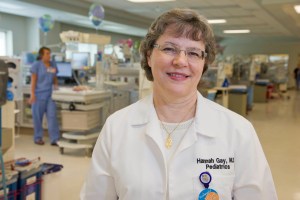
Hannah_Gay

“…I learned many, many years ago that God is far too big for me to understand Him, but at the same time that His love for mankind is just as far beyond my comprehension,” Dr. Hannah Gay told Baptist Press. “So I trust Him even when I don’t understand.”

THE BRIEFING | Meredith Flynn

The news that a child believed to be functionally cured of HIV once again has the virus growing inside her “felt like a punch to the gut,” the specialist who treated the child told CNN.

But Hannah Gay also said God is evident in the details of the case.

“For confidentiality reasons I cannot share any of those details publicly but there are many and they have helped to not just reaffirm my faith in God,” Gay told Baptist Press, “but to actually strengthen it.”

The associate professor of pediatric infectious diseases at the University of Mississippi Medical Center was credited in March 2013 with achieving a “functional” cure of the child born with HIV, meaning the virus couldn’t be detected by standard clinical tests. But tests this month revealed the more than two-year remission is over.

Gay, who has credited God with the functional cure, said she’s learned to trust Him even when she doesn’t understand current circumstances. Read the full story at BPNews.net.

Moore: Compassion needed at border
The church’s response to the border crisis “cannot be quick and easy,” wrote Russell Moore, president of the Southern Baptist Ethics and Religious Liberty Commission. “But, for the people of God, our consciences must be informed by a Kingdom more ancient and more permanent than the United States.” Read his column at RussellMoore.com.

LifeWay poll: 56% of Americans want more movies with Christian values
In a year where faith-based movies have seen success at the box office, LifeWay Research found a majority of Americans say they want more such films, although adults under 30 were the age group least likely to agree. In other movie news, 20th Century Fox has released the trailer for October’s “Exodus: Gods and Kings.”

Pew defines ‘closely held’ corporations
Wondering what the Supreme Court meant by “closely held” businesses in their recent decision on Hobby Lobby? Pew Research released this explanation of the label.

Illinois students serving in Chicago, Oklahoma
The All-State Youth Choir is on tour this week, and heading to Oklahoma after a concert at Six Flags in St. Louis today. Follow them at www.Facebook.com/IllinoisBaptist.