Disliking their options, some evangelicals consider withdrawing from presidential politics this time around.

USA symbols mapWith eight months to go until the presidential election, a World magazine survey finds 8 in 10 evangelical leaders say they would vote for an outside third-party candidate as president over Democrat Hillary Clinton or Republican Donald Trump.

Meanwhile, Trump has been victorious in several southern states where voters identified heavily as evangelical, sparking a debate over the meaning of the word “evangelical.”

This tension has not been unnoticed by the media. A recent Yahoo Politics article declared, “Donald Trump’s candidacy has sparked a civil war inside American Christianity.” In an essay for the New York Times, Russell Moore, head of the Southern Baptist Ethics and Religious Liberty Commission, asked, “Have evangelicals who support Trump lost their values?” In the article he decries Trump’s past behaviors and urges Christians to vote according to biblical moral values.

World’s March survey of 103 evangelical leaders and influencers showed more than 50% said they would, on principle, “vote for a third-party candidate who had no chance to win.” The survey also found 76% would vote for Sen. Ted Cruz as president if he secured the Republican nomination. In the eight prior surveys, their choice had been Sen. Marco Rubio who has since ended his campaign.

The debate continues over the disconnect between evangelical leaders and some people in the pews. D. C. Innes, King’s College professor and World magazine contributor, told the Deseret News evangelicals support Trump because they believe they’ve lost the culture wars. “Evangelicals, for example, became politically engaged to preserve their way of life and they don’t feel they’ve gotten their support’s worth from politicians. Abortion, gay marriage—they’ve lost on every front,” said Innes. “The support for Trump is an act of desperation: Protect us. We’re not free to be Christians anymore, so you’ve got my vote.”

Turning to Trump, who is decidely not evangelical, is one option. At the other end of the spectrum is The Benedict Option. In 500 AD, after the fall of the Roman empire, Benedict moved to the city of Rome to continue his education. Disgusted by the decadence there, he left the city and withdrew from society. Benedict became a monk and started several monasteries, leading to the Catholic order that bears his name.

Rod Dreher, writing for the American Conservative, calls this “a communal withdrawal from the mainstream, for the sake of sheltering one’s faith and family from corrosive modernity and cultivating a more traditional way of life.”

A less severe option calls on Christians not to withdraw, but to focus on their churches as “counter-cultural communities of disciples who covenant to walk together for the sake of worship, catechesis, witness, and service.”

Nathan Finn of Union University says this movement (called the Paleo-Baptist Option because it draws from Baptist history) is necessary because “all Christians need to learn from each other, sharpen one another, and spur each other on to love and good deeds. We need each other as our respective traditions seek to follow Christ and bear witness to his kingship in a culture that is increasingly hostile to all forms of orthodox, full-throated, publicly engaged Christianity.”

Of course, considering either outright withdrawal from politics or shoring up “the Christian resistance against what the empire represents,” possibly by way of supporting a third-party run, is all conjecture at this point. With Super Tuesday behind us, and until both parties choose their nominees for the general election, believing evangelicals can only watch and pray for better options.

Metro St. Louis leaders ready for Crossover partners

Crossover-Banner-smallSt. Louis | As Southern Baptists across the country turn their eyes to St. Louis, Ronny Carroll is more than ready to receive a few thousand extra laborers in order to achieve a great harvest.

“With the manpower coming, our churches can really pull off something God-sized,” said Carroll, executive director of missions for the Metro East Baptist Association, which serves the Illinois side of the St. Louis area. “The preparation alone has already given our churches a boost of energy and excitement in anticipation of what God’s going to do.”

Crossover St. Louis will take place on June 11, just before the 2016 Southern Baptist Convention (SBC) annual meeting, which will be held June 14-15 at the city’s America’s Center. Crossover will include more than 70 service and outreach projects throughout five counties in the St. Louis metropolitan area.

Prior to the 2015 SBC annual meeting in Columbus, Ohio, thousands of seeds were planted resulting in at least 345 people who made professions of faith. Carroll is hoping to double that this year.

“We are praying for 1,000 souls to come to Jesus and for 27 new churches to be established,” he said. “I believe God is going to do his job, we just need to be ready for his movement.”

Carroll said that during the last few months and even years, God has been paving the way for an epic revival of hope and healing to break out in St. Louis. And he said God has used Southern Baptists every step of the way.

“Look at all that has happened, in particular the flooding that occurred around Christmas, where Southern Baptists have been the hands and feet of Jesus,” Carroll said, referring to SBC Disaster Relief efforts in St. Louis just a few months ago. “At one level, Crossover will tie into the work that has already been done and add one more dimension to the truth that Southern Baptists, as individuals and as churches, really care about the people and the communities and quality of life they have. They are primed and ready to receive the eternal hope and salvation that Christ offers.”

And to do that, Carroll said the plan for Crossover St. Louis is to “keep it small, but make it huge.”

Crossover will impact churches in six different associations in both Missouri and Illinois. But, because of the unique needs within each association and community, the projects are indigenous to what will make the biggest impact in a given neighborhood.

“Each church has its own local vision and the 21 projects on our side of the river reflect the unique flavor of our communities,” Carroll said. “We are working with city officials and mayors for some of our cleanup projects and planning block parties, or fiestas, in some of our growing Hispanic neighborhoods.”

Tom Firasek, ministry and partnership coordinator for the St. Louis Metro Baptist Association, said organization-wise they are already miles ahead of where past Crossover events were at this stage of the preparation process.

“We met with Rich Halcombe (director of missions in Columbus) and other Columbus Southern Baptist leadership and spent the day learning what works, what doesn’t and what logistical needs might come up,” Firasek said.

“When you are about to support and rally behind 75 or so highly visible events at the same time, you want to be sure to orchestrate everything with excellence, while at the same time pointing to Jesus and proclaiming the gospel every step of the way.”

In addition, Firasek said between 100-150 seminary students will be joining the effort in St. Louis during the week leading up to Crossover.

“We would love to see God open up the needs and challenges of St. Louis so that some of these folks would consider planting their lives here or making ongoing partnerships here,” Firasek said. “In the metro area we have one church for every 7,500 people. We need more church starts.”

With Crossover St. Louis just a couple months away, Carroll said their biggest need is for more volunteers to commit to join them.

“If God’s leading you to be a part of Crossover, please commit to join us soon so we can get you partnered with a project,” he said. “Also, we would love for you to join us in prayer. We are praying God will flood us with his mercy and grace and that He will prepare the lost people to receive Jesus as their Lord and Savior.”

Carroll said they are also praying for churches to be ready to plug new Christians into their ministries and for church plants to grow quickly from the influx of new believers across St. Louis.

“God has already opened so many doors for the gospel to be presented in a mighty way here,” he said. “Pray that we will be faithful with the doors he’s opened.”

For more information on projects taking place during Crossover St. Louis visit the Metro East Baptist Association website at meba.org or visit namb.net/crossover.

Kayla Rinker is a freelance journalist in Missouri.

The BriefingIllinois judge orders Christian B&B to host same-sex wedding

An Illinois administrative judge has given the owners of a bed and breakfast one year to provide their facility to a gay couple “for an event celebrating their civil union.” The order, part of a decision handed down March 22 in a discrimination case filed by the two men, also includes an $80,000 fine.

Religious liberty focus of new study
A growing number of Americans believe religious liberty is on the decline and that the nation’s Christians face growing intolerance, according to a survey by LifeWay Research. Two-thirds (63%) say Christians face increasing intolerance, up from half (50%) in 2013. Those surveyed also noted American Christians complain too much.

Feds threaten NC aid over transgender law
The Obama administration is considering whether North Carolina’s new law on gay and transgender rights makes the state ineligible for billions of dollars in federal aid for schools, highways and housing. Cutting off federal money would put major new pressure on North Carolina to repeal the law, which prohibits transgender people from using public bathrooms that do not match the sexes on their birth certificates.

Abortion pill guidelines eased
The Food and Drug Administration has updated its guidelines concerning the abortion drug mifepristone, allowing women to take it later in pregnancy and with reduced medical supervision. The New York Times called the update “an unequivocal victory for abortion rights advocates.”

Evangelicals love baseball
Religion, it turns out, is a better predictor of who is a baseball fan than age or where one lives. A poll last year by CBS found that while there is a gender gap (but evangelical women are among baseball’s biggest fans), there are also religious differences. The “nones” are less likely to be fans; Catholics and evangelicals are more likely to root, root, root for the home team.

Sources: WORLD Magazine, Facts & Trends, New York Times, Baptist Press, Religion News Service

International Mission Board President David Platt says he wasn’t aware he would appear on a campaign video for Southern Baptist Convention President nominee J.D. Greear, according to a report by the Louisiana Baptist Message.

Platt_blog

International Mission Board President David Platt (BP photo)

The video, posted on YouTube shortly after Greear’s nomination was announced in March, was created by Ashley Unzicker, whose 2014 rap pardoy schooled Baptists on their own history (set to the theme song from “The Fresh Prince of Bel-Air.”) Unzicker’s new rap about Greear’s candidacy features cameos by SBC leaders, including Platt, Ethics and Religious Liberty Commission President Russell Moore, and Southeastern Seminary President Danny Akin, saying the line “It’s tricky.” (The rap is set to Run-D.M.C.’s 1986 song of the same name.)

In response to the video, some outlets (including this blog) have questioned whether SBC leaders should be seen as endorsing one candidate over another.

Baptist Message editor Will Hall informed fellow editors in an email April 4 that Platt “denies he knowingly endorsed J.D. Greear for president of the Southern Baptist Convention, stating he was not aware Greear’s request for a video clip was for the purpose of creating a campaign ad.”

In an email response to an IMB trustee March 23, Platt said he was overseas when Greear asked him to shoot the 2-second video clip, but he wasn’t aware how it would be used.

“Please be assured (and please assure anyone who asks you about it) that I am not personally (and we are certainly not organizationally) endorsing anyone for SBC president,” Platt wrote. He said he would “be thrilled” to serve alongside Greear or Steve Gaines, the pastor of Bellevue Baptist Church in Memphis, Tenn., who was announced as a candidate March 9, or “any other faithful Southern Baptist pastor who might be nominated to serve in this important role.”

Platt added that he had called Gaines “to assure him that I was not in any way ‘endorsing’ J.D., and I expressed my delight in the prospect of Steve potentially being in that role. We had a great conversation about his vision for the SBC, and I am completely confident in the Lord’s leadership in whoever serves in this role for the next couple of years.”

David Crosby, pastor of First Baptist Church, New Orleans, was announced on March 24 as a third nominee for the denomination’s top elected post. Messengers to the Southern Baptist Convention in St. Louis will vote for the office of president on Tuesday, June 14.


Top 10

“I feel like in some ways, after 10 years, I’m just figuring things out,” Nate Adams told the Illinois Baptist State Association Board of Directors last month during a celebration of his service as executive director.

Adams offered some reflection on IBSA’s victories over the last ten years, and a few challenges ahead, all in the form of a “top ten list.”

10. Goals and measurements. IBSA now has a consistent, annual pattern of evaluating churches’ needs (surveys), measuring churches’ progress (ACP), setting focused, organizational goals, and measuring effectiveness through multiple, strategic metrics. Our goals are based on facts and feedback, not programs or preferences. Everything from annual budgets to the Annual Meeting theme are driven by purpose and strategy.

9. Strong church participation. Over the past 10 years, IBSA churches baptized 49,584 people and planted 242 new churches. Mission trip participation is up 23% to more than 24,000. Nearly $90 million was given to missions, including more than $64 million through the Cooperative Program (CP). This growth in church participation is in spite of fewer total churches and members.

8. Financial frugality, stability, and health. Over the past 10 years, annual income over expense has averaged $395,000 or around 5% (in 2006 it was $36,608). IBSA’s Cooperative Agreement with the Baptist Foundation of Illinois (BFI) has helped it to grow and for the CP subsidy of BFI to be reduced from a peak of $153,000 to $35,000 in the 2016 IBSA budget.

While 2015 CP giving was $411,000 less than 2009 and NAMB revenue was $252,000 less, IBSA has avoided involuntary lay-offs, and modest compensation increases have been possible each year.

7. Updated and renewed facilities. In 2012, IBSA completed a $1.9-million renovation of its Springfield building and grounds, debt-free and on schedule. The building now hosts groups of up to 250. In 2014, Lake Sallateeska expanded and renovated its dining hall and two other buildings.

6. Staff efficiency and strength. IBSA has trimmed, restructured, and right-sized its staff to adjust to available resources, increased personnel costs, and the evolving needs of churches. Part-time zone consultants are the most notable example. Today, the IBSA staff is not only more diverse, but far more field-based and closer to churches than it was 10 years ago.

5. Effective change management. IBSA has weathered significant economic and social change, from the secular culture, to the national SBC, to local associations and churches themselves. Many organizations and state conventions in particular have had traumatic adjustments to these changes. By acting early, budgeting conservatively, and an “elastic” restructuring, IBSA has for the most part been able to manage a gradual altitude adjustment with minimal negative consequences to IBSA churches. Changes at both the national SBC and local association level present IBSA with new opportunities and challenges for the future.

Those are the victories of the past 10 years. Now the challenges ahead:

4. IBSA churches’ relatively low net impact on lostness in Illinois. While 242 churches have been planted, the net IBSA congregation count has dropped from 1,032 to 957. IBSA churches baptized 4,400 in 2015, yet dropped 3,352 in Sunday School attendance.

3. Reversing health and growth trends among churches. Annual baptisms are down 18% from the 2009 level. Overall worship attendance is now basically the same in 2016 as 2006, though it rose as much as 9.3% (in 2008). Overall Sunday school attendance in 2016 was 17.4% lower than in 2006.

2. Rekindling the passion and renewing the power of cooperation. Some younger leaders and those without Baptist backgrounds do not always understand or buy in to the cooperative missions model. After dropping to 6.8% in 2013 and 2014, the CP giving percentage rebounded to 7.1% in 2015. Nationally, the average is 5.5%. “Engagement” is key for IBSA’s future.

1. Raising the bar of leadership. Most of the challenges and problems with which IBSA churches struggle are rooted in leadership issues. As the 2015 Midwest Leadership Summit and 2016 Illinois Leadership Summit demonstrated, there is a hunger for leadership development among IBSA churches and leaders.

Fulkerson and Porter group photo web

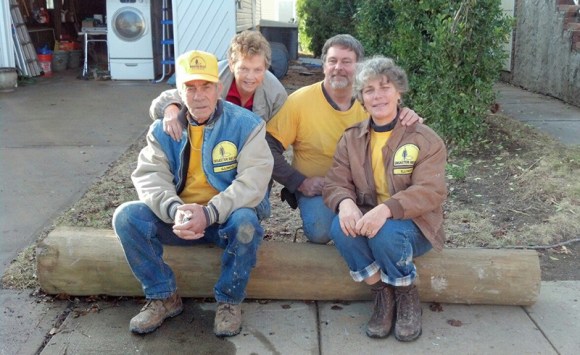
Disaster Relief volunteers Bob Fulkerson and his wife Margie (left) and Butch and Debbie Porter (right) rest for a moment during a call out a few years ago in New York. Fulkerson passed away Tuesday, March 29 while serving on a call out in Leesville, La. Both couples are members of First Baptist Church of Galatia, Ill. Photo courtesy Butch and Debbie Porter.

Funeral arrangements have been made for Southern Baptist Disaster Relief (DR) volunteer Don Fulkerson, who died of a heart attack Tuesday, March 29, while serving flood victims in Leesville, Louisiana. Fulkerson, 77, was with a group of trained DR workers from First Baptist Church of Galatia, IL, and volunteers from other Illinois Baptist churches.

Visitation will take place Friday, April 1 from 6-9 p.m.  and Saturday, April 2 from 9-11 a.m. at First Baptist Church of Galatia, 108 E. Church St., Galatia, IL 62935. His funeral will be Saturday, April 2 at 11 a.m. also at First Baptist Church of Galatia. Fulkerson was a member of the church.

Rex Alexander, Disaster Relief coordinator for the Illinois Baptist State Association (IBSA), suggested DR volunteers attending the funeral, “wear your yellow shirts in honor of Don’s faithful service to the Lord through Disaster Relief Ministry.” Southern Baptist DR volunteers are easily identified at disaster recovery scenes by the bright yellow shirts they wear.

“The callout to Louisiana was Don’s 15th response over a period of only four years and his wife, Margie, was almost always by his side serving whenever the opportunity arose,” shared Alexander. “Their faithful service to Christ brought great joy to both of them as they served side by side in the ministry of Disaster Relief.”

Cards of condolence may be mailed to his widow Margie Fulkerson, P.O. Box 5, Galatia, IL 62935.

The DR team from First Baptist Church of Galatia were first responders in what is expected to be a series of callouts to aid victims of spring floods in Louisiana. IIBSA teams will serve alongside teams from around the country.

IBSA has 1,600 trained volunteers who serve as part of the Southern Baptist Convention’s Disaster Relief ministry (SBDR), the third largest relief agency in the United States. Disaster Relief often responds to natural disasters by providing feeding stations, mobile kitchens, child care, and chaplains. In the case of flooding, volunteers in their signature yellow shirts help homeowners with “mudout,” clearing flooded properties of debris and contaminated building materials, so they can begin rebuilding and recovery.

Lessons from Tom Adams

ib2newseditor —  March 31, 2016
Tom Adams

Tom Adams

It still surprises and moves me that so many people in Illinois Baptist churches fondly remember my father Tom Adams, or at least his writing. Dad entered his eternal life with the Lord ten years ago, just one month after I began my role here as IBSA’s executive director. Yet more often than not when I visit a church, one or more of its members will tell me how much my dad or his writing meant to them.

In fact, it’s not uncommon for one of those older church members to reach into their Bible and pull out a yellowed clipping of one of his columns because it met a particular, deep need in their lives. Dad wrote for the Illinois Baptist for 34 years, through columns such as “Problem Corner,” or “Ask Tom Adams.” So he became a sort of corresponding counselor to many.

Frankly, I thought I would have my dad’s counsel for a few more years here in Illinois.  Instead I have needed to rely on the years I had to observe him as father, pastor, and associational leader. With his memory in my heart, here are some of the lessons I learned from Tom Adams.

1. Writing broadens and lengthens influence.
Dad never pastored a large church, nor held a position of great stature. But because he wrote down carefully considered thoughts at least every couple of weeks for decades, he touched tens of thousands of people he wouldn’t have otherwise.

2. Few words can be more impactful than many words.
Dad was a man of few words interpersonally, and the format of his columns gave him only a little room to express an opinion or idea in writing. But he demonstrated both in speech and writing that a few, carefully considered words can have great impact. Apparently they also fit better in your Bible.

3. Readers are better leaders.
My dad would be the first to admit that his wisdom didn’t come from his own deep intellect or extensive formal education. But he was one of the more widely read men I have ever known. Just ask my mom, whose house is still filled with an incredible variety of books, even after giving many away. I’ve never been the avid reader my dad was. But I’ve rarely gone in to a serious meeting or problem without doing my homework.

4. Face your fears with faith.
I didn’t know it until years later, but my dad was scared to death to move our family from Southern Illinois to the Chicago area. My mom tells me he became physically ill over the decision to follow God’s call there. What was very hard for him became very good for me, and in their own ways for the rest of our family. For reasons I can’t go into here, I doubt very much if I would be at IBSA today if he hadn’t made that move when I was fourteen. But his example helps me face my fears with faith, even today.

5. Invest fully where you are.
Dad was never a self-promoter, or a ladder-climber. I know he dreamed of another position or two in his life, but he always chose to invest fully where he was called, until God through others beckoned him elsewhere. Me too.

I jotted down some other lessons I learned from Tom Adams: Do what you know is right, and trust God with the consequences. Marry well and let your spouse be herself.  How you say something can be just as important as what you say.  Some burdens are best borne privately.  Leaders come in all personality types.

A few years ago my mom and I helped my dad organize some of his Illinois Baptist columns into a book, titled after one of his columns, “Speaking Out.” If you don’t have a copy and will write me, I will be glad to send you one. He would be pleased for you to have it.  And I will be pleased for his influence to touch your life, as it deeply has mine.

Nate Adams is executive director of the Illinois Baptist State Association. Respond at IllinoisBaptist@IBSA.org.

Don Fulkerson

Don Fulkerson

Leesville, Louisiana | A volunteer with a Southern Baptist Disaster Relief (DR) team from Illinois died of a heart attack Tuesday, March 29, while serving flood victims in Leesville, Louisiana. Don Fulkerson, 77, was a member of First Baptist Church of Galatia, Illinois. He was serving with a group of trained relief workers from the church and others from churches around Illinois.

“The callout to Louisiana was Don’s 15th response over a period of only four years and his wife, Margie, was almost always by his side serving whenever the opportunity arose,” said Rex Alexander, Disaster Relief coordinator for the Illinois Baptist State Association (IBSA). “Their faithful service to Christ brought great joy to both of them as they served side by side in the ministry of Disaster Relief,” Alexander said.

The DR team from First Baptist Church of Galatia were first responders in what is expected to be a series of callouts to aid victims of spring floods in Louisiana. Illinois teams will serve alongside teams from around the country.

“Our Illinois Baptist family certainly grieves with and is in prayer for the Fulkerson family, and the entire church family at First Baptist in Galatia,” said IBSA Executive Director Nate Adams. “We appreciate so much Don’s and Margie’s service, along with so many other devoted disaster relief volunteers, and we are confident that Don’s life and sacrifice will bring eternal rewards, both to him and to the lives he touched.”

The North American Mission Board (NAMB) coordinates Southern Baptist Disaster Relief on the national level. NAMB president and former Illinois Baptist pastor Kevin Ezell extended his condolences to the family of Fulkerson as they mourn his passing. “Don is a great example of someone who chose to stay active into his later years and to contribute in a way that truly made a difference in the lives of others,” said Ezell. “I pray that his wife Margie and his entire family will feel God’s love and comfort during these days and that they will also be aware of the gratitude and appreciation for them from their entire Southern Baptist family.”

IBSA has 1,600 trained volunteers who serve as part of the Southern Baptist Convention’s Disaster Relief ministry (SBDR), the third largest relief agency in the United States. Disaster Relief often responds to natural disasters by providing feeding stations, mobile kitchens, child care, and chaplains. In the case of flooding, volunteers in their signature yellow shirts  help homeowners with “mudout,” clearing flooded properties of debris and contaminated building materials, so they can begin rebuilding and recovery.

Contact:
Illinois Baptist State Association
Lisa Sergent, Director of Communications
3085 Stevenson Drive
Springfield, Illinois 62703
LisaSergent@IBSA.org
(217) 391-3119


The BriefingGeorgia governor to veto pastor protection bill

Georgia Governor Nathan Deal said he will veto legislation shielding opponents of same-sex marriage, after a groundswell of opposition from companies such as Coca-Cola, Disney, and the NFL threatening to boycott the state if it became law.

Crosby 3rd candidate for SBC president
Louisiana pastor David Crosby will be nominated for president of the Southern Baptist Convention, former SBC President Fred Luter announced. During the 20 years Crosby has pastored First Baptist Church in New Orleans, the congregation has given between 7 and 15% of its undesignated receipts through the Cooperative Program, Luter said.

Indiana bans Down’s Syndrome abortions
Indiana Governor Mike Pence signed a new pro-life bill into law that will, among other things, prevent the abortions of babies diagnosed with a disability or defect. “Some of my most precious moments as governor have been with families of children with disabilities, especially those raising children with Down syndrome,” said Pence.

Suspects, arms seized after attack on Pakistani Christians kills 72
Security forces, hunting for suspects in the deadly Easter Sunday bombing targeting Christians in a Lahore park, raided locations in three cities overnight and arrested suspected terrorists. A splinter group of the Pakistani Taliban, Jamat-ul-Ahrar, claimed responsibility for the attack and vowed more such attacks.

4 Wycliffe Associates Bible translators murdered
Four Wycliffe Associates workers have been killed in an attack by radicals in the organization’s office in the Middle East. Two of the Wycliffe workers were apparently killed by gunshots, while two others laid on top of the lead translator and died while “deflecting bludgeoning blows from the radicals’ spent weapons,” and managed to save his life.

Sources: Time, Baptist Press, MRCTV, CNN, Christian Post

David Crosby

David Crosby

New Orleans pastor David Crosby is the third candidate to be named as a nominee for Southern Baptist Convention president. On March 24, former SBC President Fred Luter announced he will nominate Crosby, pastor of First Baptist Church, to the post during the SBC Annual Meeting in St. Louis.

“I have watched David the last 10 years here in New Orleans as he has taken the leadership of all the churches and pastors of our city in helping to rebuild New Orleans, which everybody knows was totally destroyed [in 2005] in Hurricane Katrina,” Luter, pastor of Franklin Avenue Baptist Church in New Orleans, told Baptist Press.

Crosby joins previously announced candidates — J.D. Greear, pastor of The Summit Church in Raleigh-Durham, N.C., and Steve Gaines, pastor of Bellevue Baptist Church in Cordova, Tenn.

In contrast to Greear and Gaines, Crosby has lead his church to a higher percentage in Cooperative Program giving. According to Luter, during the 20 years Crosby has pastored First Baptist, the congregation has given between 7-15% of its undesignated receipts through the Cooperative Program. Annual Church Profile reports show First Baptist’s total missions giving to be at least 22% of its undesignated receipts annually over the past five years.

Greear’s church gives 2.4% of undesignated receipts to CP, while Gaines’ gives approximately 4.6% of undesignated receipts to CP.

First Baptist has averaged 658 people in Sunday morning worship services and 24 baptisms between 2011 and 2015. The Summit’s baptisms increased from 19 in 2002, when Greear arrived, to 928 in 2014. Bellevue has averaged 481 baptisms annually during Gaines’ tenure.

Crosby is married and has three children and eight grandchildren. He earned a master of divinity from New Orleans Baptist Theological Seminary and a doctor of philosophy from Baylor University.

March 2 Jimmy Scroggins, pastor of Family Church in West Palm Beach, Fla., announced he will nominate Greear, and March 9 Johnny Hunt, former SBC president and pastor of First Baptist Church in Woodstock, Ga., said he will nominate Gaines.

The 2016 Southern Baptist Convention will take place June 14-15 in St. Louis, MO. Current SBC President Ronnie Floyd is finishing his second term in the post. Floyd is pastor of Cross Church, Northwest Arkansas.