Nathan Carter

Nathan Carter

At our church we have a questionnaire that anyone who desires to be an elder has to fill out. One of the questions is, “What are the five solas of the Reformation and would you be willing to be burned alive at the stake for holding these?” We strongly believe these rallying cries of the Reformation are still just as needed today as they were 500 years ago.

Before returning to Germany and facing his eventual martyrdom at the hands of the Nazis, theologian and pastor Dietrich Bonhoeffer lived for a time in the United States. His assessment of the religious scene here was “Protestantism without Reformation.” This critique still largely holds true. We may not be Roman Catholic, but might some of the same problems that precipitated the Reformation in 16th century Europe be present in 21st century evangelicalism? I am afraid so.

The five solas provide a helpful grid for assessing the American church’s current spiritual climate and guide us in how to pray and work for revival.

Sola Scriptura (Scripture alone)
I think there are many churches who say on paper that they believe the Bible to be the inspired, inerrant, authoritative, sufficient Word of God. But in practice, you cannot tell. Scripture does not saturate their worship services. The sermon is cut short and full of stories and tips instead of exposition and proclamation of the whole counsel of God. The Word is not trusted to grow the church, but rather we look to and lean on techniques and tricks. Science is respected over Scripture, psychology prized over theology, experience trusted over exegesis. And many church-goers today are as biblically illiterate as they were in the Middle Ages.

Sola Fide (faith alone)
If we gave Southern Baptist church-goers a test with this true or false question—“People get into heaven by doing good”—I imagine a majority would know enough to say FALSE. But that doesn’t mean they could pass an essay question on what justification by faith entails.

We may have simply lowered the bar or tried to lighten the law, but we still are preaching a form of works-righteousness when we major on what people need to do…to end sex-trafficking, get out of debt, have healthy families…instead of what Christ has done to free us from sin, forgive us our debts, and adopt us into his family. The truth is that you actually have to be perfect to get into heaven, and thus our only hope is having Jesus’ perfect record given to us as a gift, received by faith.

Sola Gratia (grace alone)
We like grace—when it is seen as an assist for our slam dunk. The polls are heart-rending that show the number of Christians who think that the quote “God helps those who help themselves” comes from the Bible. Do we really believe our salvation is wholly of grace? If so, we could never allow our Christianity to be a badge of pride that makes us feel superior to or live in fear of the big, bad world.

Solus Christus (Christ alone)
We may say that we believe Jesus is the only way to God, but do our actions back that up? We live in a highly pluralistic society. Do we really believe that the nice Hindu family living down the street is destined for hell apart from faith in Christ? Do we believe it enough to lovingly and sacrificially share with them the gospel of what Christ has uniquely done?

Our lack of evangelism betrays our lack of belief in the exclusivity of Christ. Furthermore, so much of our faith talk is vague spirituality that does not really need the virgin birth, perfect life, substitutionary death, victorious resurrection, and imminent return of the historical God-man Jesus Christ. We spout meaningless Oprah-esque mumbo-jumbo and it is no wonder that our kids start to think Christianity is not that distinct from the other religions and philosophies of their friends.

Soli Deo Gloria (the glory of God alone)
Ministry can so easily become about our name or brand. We like to take the credit for our successes. Plus, there is a pervasive man-centeredness in our culture which has seeped into our churches. We are not in awe of God, but obsessed with our felt needs. Therefore, we fundamentally view God as there to serve us instead of the other way around. We have not been struck by the utter weightiness of the triune God, but are pathetically shallow and flit easily from this fad to that fad.

In our consumeristic context where everyone is bombarded with endless options all the time, the solas can at first seem like a straightjacket. But they truly represent our only hope. We are in desperate need of a fresh vision of God’s glory, in the face of Jesus Christ, as a result of his grace, perceived by faith, in the pages of the Bible.

Nathan Carter is pastor of Immanuel Baptist Church in Chicago.

The BriefingClash of worldviews on defunding Planned Parenthood
Evangelicals have long advocated for the end of government funding of Planned Parenthood. President Trump recently offered to keep the funding in place if Planned Parenthood would agree to stop performing abortions.  Here are two different views on the subject:
– Trump to Planned Parenthood: Halt abortions, receive funds
– Abortion ‘vital’ to Planned Parenthood mission; Southern Baptist leaders respond

Church sued after baptism made public
After a Syrian Muslim man converted to Christianity, he asked to be baptized by First Presbyterian Church in Tulsa. The man said the church promised to keep his baptism quiet, since shari‘ah law demands that converts from Islam be executed. He flew to Syria almost immediately after his baptism to marry his fiancée. A few weeks later, while still in Syria, he was kidnapped by Islamist extremists who said they learned about his conversion from the church’s website.

Married lesbian Baptist co-pastors say all ‘beloved’
Rev. Maria Swearingen stood in the pulpit for the first time as the lesbian co-pastor of Calvary Baptist Church in Washington, D.C., her wife and fellow co-pastor, the Rev. Sally Sarratt, smiling over her left shoulder as they began their new joint roles. Raised in Southern Baptist households, at one point in their lives they thought the best path for ministry might be to become pastor’s wives. “The spirit works in mysterious ways,” said Swearingen.

How many Americans have a Biblical worldview?
Millions of Americans call themselves Christians, but how does their faith shape their worldview? A new Barna Group study says, “not so much.” Researchers asked American Christians about their views on issues like lying, cheating, the nature of God, and sin. They found that while more than seven out of 10 Americans call themselves Christians, just one out of every 10 were able to answer basic questions about the Bible and the faith.

Islam largest religion by 2070
Pew Research analyzed demographic change among the world’s major religions and found that the world’s population of Muslims will grow by 73% between 2010 and 2050, compared to 35% for Christians, the next fastest-growing faith. The world’s population will grow by 37% over the same period. If those rates of growth continue past 2050, Muslims will outnumber Christians by 2070, the report found.

Sources: Fox News, Baptist Press, Christianity Today, Religion News Service, CBN, The Telegraph (U.K.)

VBS Concept Metal Letterpress TypeIf you’ve ever planned a big event, you know how it feels when it’s over. All the work and energy and trial and error that went into planning and executing the project can be exhausting, and when it’s finally over, all that energy seems to fly out the window too.
But for church leaders, the end of an outreach event is only the beginning.

This is heavy on my heart as we enter Vacation Bible School season, and I’m reminded how crucial a church’s follow-up process is to their overall VBS strategy. That’s why I advise churches to recruit a follow-up director. His or her only job is to connect people from VBS or any other outreach with other people and opportunities at the church. Encourage the director to have their follow-up strategy before the first person ever walks in the door, including:

Effective registration. The follow-up director will likely work with other VBS leaders to accomplish this. The truth is, you can’t follow up with someone you can’t find. Make sure you have the full name and contact information for every person who attends your VBS. It’s important to know these things not only for follow-up, but in case you need to get in touch during VBS with someone related to the child.

Follow-up teams. Ask the director to recruit pairs or small groups of people who can make personal visits to families. The church I previously served sent our deacons two-by-two to follow up after VBS. We found in-person visits to be most effective, but some of our teams felt more comfortable making a call first to set up a time to visit.

Connection points. When our follow-up teams made their visits, they made it a point to take something that would forge a connection with the family. For example, one year the children decorated frames during VBS and we attached a calendar of church events for the deacons to deliver.

Above all, remember that a follow-up strategy doesn’t have to be complicated; it just needs to allow you to make significant contacts with people who otherwise may only encounter your church through one event. The goal of any VBS or outreach effort should be to connect unchurched people with the church for the purpose of expanding God’s kingdom. We can’t do that if we don’t follow up.

Jack Lucas is IBSA’s director of next generation ministry.

Luther: action hero

ib2newseditor —  March 9, 2017
Martin Luther playmobll

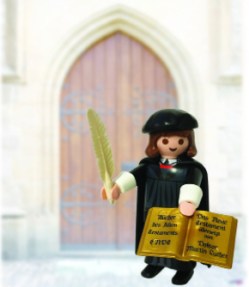
This 3” tall toy from Playmobil is a big seller in Germany this year.

His story has all the markings of a summer blockbuster: thunder, lightning, daring escapes, an imprisonment (of sorts) in a German castle. But Martin Luther, born in 1483, was supposed to have been a lawyer and lived a much quieter, less adventurous life.

As a young teen, Luther was sent to school to study the law. His life changed dramatically in 1505 as he was traveling through a thunderstorm and a bolt of lightning struck too close for comfort. In desperation, Luther promised to become a monk.

He was ordained as a priest in 1507, but after 10 years of monastic life and increasing disillusionment with church practices, he sent a letter to leaders protesting the sale of indulgences, or pardons for sin. He included in the letter 95 Theses on faith, grace, sin, redemption, and religious authority. Those concepts, which sparked the Protestant Reformation, will celebrate their 500th anniversary this October 31, the date of Luther’s letter to church leaders.

Of the Scripture passages believed to have inspired Luther’s transformation, it is Romans 1:17 that theologian R.C. Sproul said “turned the lights on for Luther” because it details a righteousness given by God to those who would receive it by faith, rather than to those who could earn it.

In 1523, his life took another unexpected turn when a group of nuns asked for his help to escape their convent. He did so, sneaking them out in fish barrels. One of the sisters, Katherine Von Bora, eventually became Luther’s wife and the mother of his six children. (Von Bora must have been an unlikely partner for Luther; he once said that upon hearing of his choice, his close friends said, “For heaven’s sake, not this one.”)

Luther’s battles with established religion continued throughout his life, leading to his excommunication from the Catholic church after he refused to recant the Reformation’s ideals. Labeled a heretic and an outlaw, he was put in protective custody at Wartburg Castle. There, he translated the New Testament into German.

In the end, Luther left a legacy even larger than the life he led.

– Meredith Flynn, with info from Christianity Today, Ligonier Ministries, and Britannica.com

The BriefingGraham urges ‘Beast’ boycott
Franklin Graham has called for a boycott of Disney over the company’s inclusion of a gay character in the upcoming Beauty and the Beast remake. “They’re trying to push the LGBT agenda into the hearts and minds of your children—watch out!” Graham wrote in a Facebook post.

Christian bakers appeal $135K fine
Christian bakers who lost their store and were fined $135,000 for declining to make a cake for a same-sex wedding brought their case before the Oregon Court of Appeals in an attempt to overturn the judgment. Aaron and Melissa Klein, owners of Sweet Cakes by Melissa in Gresham, Oregon, said they simply want the freedom to live by the tenets of their faith.

High court vacates pro-transgender ruling
The U.S. Supreme Court set aside March 6 a ruling in favor of a transgender high school student and returned it to a lower court for reconsideration in light of the Trump administration’s recent withdrawal of a directive issued under President Obama. With the change in administration guidance, the Fourth Circuit Court of Appeals will have to weigh its April 2016 decision that the school board of an eastern Virginia county violated federal law by refusing to permit a transgender high school student — who is a female biologically but identifies as a male — to use the boys’ restroom.

Muslim chaplain to head Army division
After a ceremony this summer, Lt. Col. Khallid Shabazz will become the first Muslim division-level chaplain in the history of the U.S. military. In January, he was offered the job of chaplain for an entire division, an honor for anyone in his field but a milestone in his case – a Muslim spiritual leader for more than 14,000 mostly Christian soldiers.

Americans warm to religious groups—except evangelicals
Fewer Americans say they know an evangelical Christian. Potentially as a result, evangelicals were the one religious group that didn’t experience an increase in warmth among Americans. Pew Research asked Americans to rate their feelings toward major faith groups on a “feeling thermometer,” ranked from zero to 100—the higher the ranking, the more positive the impression. Overall, Jews (67 degrees), Catholics (66 degrees), and mainline Protestants (65 degrees) were rated warmest.

Sources: Time, The Washington Times, Baptist Press, McClatchy DC, Facts and Trends

ibdr-screen-shot-2017-03-03-at-12-16-34-pmThe storms that swept through the Midwest Feb. 28 developed into tornadoes when they went through southern and northern Illinois. Now, Illinois Baptist Disaster Relief (IBDR) volunteers are assisting victims with storm clean-up efforts.

Working in the southern Illinois town of Vergennes, volunteer Don Kragness told local television station WSIL, “We are here, basically, because we love Jesus and we want to serve Him and the best way we know how to serve Him is to help people when they’re in need.” Teams from Williamson and Saline Associations are serving the southern communities of Elkville and Vergennes. A shower unit from Franklin Association will also be deployed.

A team from Greater Wabash Association is at work in Carmi and Crossville, where one was killed, in the southeastern part of the state.

Dwayne Doyle, Illinois Baptist Disaster Relief Coordinator, said disaster relief assessors were on the ground in both parts of the state March 1. “The need is probably greater in the north in the Ottawa area, but assessment there is taking longer due to the damage.” Three died in the tornado that struck Ottawa. Doyle estimates chainsaw crews and chaplains could serve at locations around Ottawa and nearby Naplate doing cleaning up work for a week.

In an e-mail sent by Kathy Schultz on behalf of Three Rivers Association Director of Missions Dan Eddington, he wrote, “Our Disaster Relief Team leaders and Pastor John Patterson (Parkview Baptist, Marseilles) are assessing the damage… Parkview Baptist had three members from their church sustain damage to their homes from the tornado.” Volunteers from that association have been put on stand-by and were told, “There is much work to be done.”

The Illinois Baptist State Association’s Streator Baptist Camp is providing housing to volunteers serving in the Naplate area.

IBDR has over 1,600 trained volunteers who serve as part of the Southern Baptist Convention’s Disaster Relief ministry, the third largest relief agency in the United States. Disaster Relief often responds to natural disasters by providing feeding stations, mobile kitchens, child care and chaplains. In the case of flooding, volunteers in their signature yellow shirts help homeowners with “mudout,” clearing flooded properties of debris and contaminated building materials, so they can begin rebuilding and recovery.

Steve GainesIt seems a fair question, especially following the loquacious and public presidency of Ronnie Floyd. Steve Gaines, by comparison, is almost invisible. This is not a criticism of Gaines, that he would have a different style as Southern Baptist Convention president. That is to be expected. Each president makes his own way and leads from his own strengths. But Gaines’s style, working in a less public way that his immediate predecessors, leaves us wondering: What is Steve Gaines doing?

And we find ourselves hoping that he’s focusing on issues that we just haven’t heard about yet.

Floyd wrote. Floyd spoke. A lot. Almost every week Floyd published on his blog and in Baptist Press his thoughts on righting the denomination and meeting the culture conflict head on. He quickly assumed a statesman position for his two years in office, urging support for missions and the Cooperative Program. We in the local Baptist news media came to rely on his thoughtful, well-reasoned analysis of current events.

Gaines, on the other hand, has spoken for publication rarely. He offered a few comments in the election season and after the January inauguration, mostly encouraging Southern Baptists to pray for the Trump Administration. And in February he addressed Baptist newspaper editors and state convention executive directors in Los Angeles. Gaines spoke on Trump’s election, appointments, and early actions as president. And he urged prayer for revival in America. Gaines has themed the 2017 SBC Annual Meeting “Pray: For Such a Time as This,” following Floyd and his predecessor, Fred Luter, in bringing Southern Baptists to our knees for spiritual awakening.

But it’s his comment on the complaints about the Ethics and Religious Liberty Commission and its president Russell Moore that, we hope, gives a glimpse at Gaines’s work behind the curtain.

“I hope the kind of talk we have been hearing is not the direction in which we are going. I hope Russell will remain in his position and that we have reconciliation with a lot of people,” Gaines said in Los Angeles. His comment came almost simultaneously with the announcement by Dallas-area pastor Jack Graham that his megachurch, Prestonwood Baptist, would be holding in escrow its $1-million offering through the Cooperative Program. Graham expressed concerns about the direction of the SBC and the ERLC, in particular, after an election cycle marked by anti-Trump tweets, Moore’s ongoing concern for refugees, and the “friend of the court” support of a freedom of religion case, in which both the ERLC and the International Mission Board (IMB) opposed onerous government regulations placed on a New Jersey mosque.

Southern Baptists do not need another era of suspicion, doubt, and sometime demagoguery. Our mission cause is too important to withhold funding over ancillary anxieties. The reconciliation that Gaines spoke about requires behind-the-scenes diplomacy and skillful mediation. That’s what we might hope Gaines is doing, even if we never hear about it publicly.

-Eric Reed is editor of the Illinois Baptist

The old adage says there are three things you should never talk about in polite company—money, religion, and politics. We already break two of those three rules every Sunday in church. Are we ready to break the third—politics?

The Free Speech Fairness Act was introduced the U.S. Senate and House of Representatives Feb. 1. The bill doesn’t repeal the Johnson Amendment, which limits church involvement in politics, but offers what Alliance Defending Freedom calls a “relief valve”—“as you carry out the mission of your church, you would have the right to speak freely on all matters of life, including candidates and elections.” Most importantly it maintains the prohibition against churches and other 501(c)(3) organizations from donating money to candidates and political campaigns.

The Johnson Amendment became part of the U.S. tax code in 1954 when then Senator Lyndon Johnson successfully restricted tax-exempt organizations, including churches, from endorsing or opposing political candidates under penalty of losing their tax-exempt status.

President Donald Trump discussed eliminating the amendment numerous times throughout his campaign and most recently at the National Prayer Breakfast Feb. 2. “[Thomas] Jefferson asked, can the liberties of a nation be secure when we have removed a conviction that these liberties are the gift of God,” Trump said. “Among those freedoms is the right to worship according to our own beliefs. That is why I will get rid of and totally destroy the Johnson Amendment and allow our representatives of faith to speak freely and without fear of retribution. I will do that, remember.”

The question is, are churches ready for this? The pastor of the small church I grew up in was not shy about sharing his political views. He shared from the pulpit who he was voting for in the presidential election, and told congregants they could vote for whomever they wanted, just go vote. I remember as a middle-schooler being shocked, not so much by his action, but by the person he was voting for on election day. His candidate lost, there was no outcry in the church, and the IRS never came knocking on our church doors.

Not all pastors and congregants want to discuss politics within the church walls, but, if passed, the Free Speech Fairness Act would give those who want to the freedom to do so.

– LMS

should-congress-fix-the-johnson-amendment-2-27-17

The Briefing‘The Shack’ film stirs debate
A fictional and emotionally destroyed Mack Phillips answers a mysterious invitation to a remote, isolated cabin. There he finds a trinity of fatherly love in a woman named “Papa” whose cohorts teach Phillips forgiveness and the faith to run on water — literally. It’s the synopsis of the movie “The Shack,” based on William Paul Young’s book by the same title, that some described as a biblically sound parable. And as with the book, others are criticizing the movie as a farce that serves to deeply distort rather than affirm biblical truths.

Poll: Decide bathroom access by biological sex
A majority of Americans think bathroom access should be granted according to biological sex, according to a new poll. Of the 545 Americans adults surveyed, 56% disagree with the assertion that people who are transitioning into the appearance of the opposite sex should be legally allowed to use whichever bathrooms they want.

Screening & abortion bringing ‘Down Syndrome-free world’
In the last nine years, no babies with Down Syndrome have been born in Iceland. Holland is following suit, with a heavy push for prenatal screening. Though 74-94% do choose to abort, a large percentage of women there (and in Britain, nearly 1/3) opt out of the prenatal screening, so some babies with Down syndrome are still born in Holland.

Christian families flee Sinai after ISIS threat
Egyptian Christians are fleeing the restive Sinai Peninsula, some with just the clothes on their backs, amid a series of killings and an explicit call by Islamic State for its followers to target the minority group. Most had gone to churches but were being provided government housing Egypt’s state newspaper, Al Ahram, quoted a parliamentary affairs minister as saying.

Tim Keller stepping down as Redeemer pastor
Later this year, Redeemer Presbyterian will no longer be a multi-site megachurch in Manhattan, and Tim Keller, 66, will no longer be its senior pastor. Keller will be stepping down in a move that corresponds with a decades-long plan to transition the single Presbyterian Church in America congregation—which has grown to 5,000 members since it began 28 years ago—into three churches.

Sources: Baptist Press, The Federalist, ForEveryMom.com, Fox News, Christianity Today

Protect your church

ib2newseditor —  February 27, 2017

Abandoned Desert ChurchEach year, we Baptist state executive directors gather with leaders from the national Southern Baptist Convention. We discuss issues of common concern, and exchange both updates and ideas for future ministry and cooperation.

During our time together this year, a couple of the retiring executive directors were asked to speak briefly on “things I wish I had known before I started in this role.” Of course, some of the observations were humorous. But one serious observation resonated deeply with me, and with others.

This western state leader, a returning international missionary, said, “One thing that surprised me was how much time I needed to invest, and how important it is, to help existing churches navigate pastoral leadership changes.”

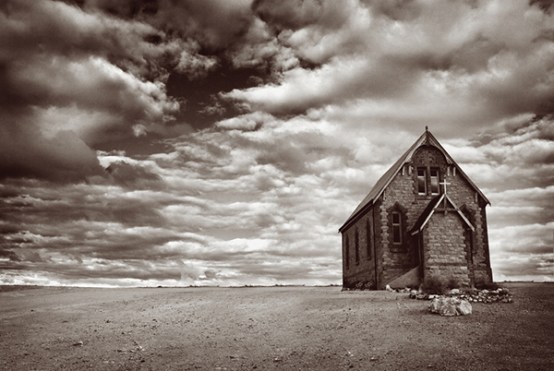
Congregations are especially vulnerable during leadership change.

He then referred to churches that had been “lost” to the Southern Baptist family, or that had closed entirely, when they had not done a careful or wise job selecting their next pastor. In some cases the property had been lost; in others the church had abandoned its Baptist convictions; and in still others churches had deteriorated quickly from a couple of hundred of members to just a handful.

I wish I could say these things don’t happen in Illinois—and they don’t happen frequently—but this fellow executive director’s comments brought to my mind even current examples of churches that are in peril here in Illinois. Most I would have never imagined to be vulnerable to losing their Baptist witness, or the church property for which previous generations have sacrificed. But all it takes is one unhealthy or wrongly motivated leader, invited in by one careless or compromising search and selection process.

What can churches do to protect themselves and their legacy? Two primary things come to mind.

First, whenever your church faces a pastoral leadership transition, invite experienced help from your local or state association. There are proven processes that can be employed, and predictable pitfalls that can be avoided, and you have access to experienced leaders who have been through multiple searches, with multiple churches. Of course, your autonomous church can choose which resources to use, and customize any process to your unique situation. But please take advantage of these free resources that are available to help you make a wise and Spirit-led selection.

Second, there are steps your church can take now, even if you are not facing a pastoral transition, to protect both the assets and the Baptist witness of your church. Your church governance documents, and especially the deed to your property itself, can help ensure that your church sustains its Baptist witness, even if it somehow becomes susceptible to an unhealthy leadership situation.

Once my fellow executive director shared his observation about the vulnerability of churches during leadership transitions, I was surprised how many examples started flowing between the rest of us. One executive director said that his state convention had lost 12 churches during the past year. Another told of messy lawsuits entangling a couple of churches in his state, because an unscrupulous leader was seeking to profit personally from the sale of a church property.

So while this isn’t a particularly uplifting topic to write about, I came back from these conversations committed to doing so. Please make sure your church protects both its Baptist doctrinal commitment and its property and assets from the sometimes unpredictable times and people who would take them in another direction. And please call on us at IBSA to help. As my friend reminded us, protecting the doctrinal integrity and lasting witness of our churches is one of the most important things we do.

Nate Adams is executive director of the Illinois Baptist State Association. Respond at IllinoisBaptist@IBSA.org.