CONVERSIONS COUNT – “We have to help our churches focus on bearing fruit, and to keep up with that as a measure of how they’re doing,” NOBTS President Chuck Kelley told associational leaders in Illinois. “Fruitlessness is becoming endemic in Southern Baptist Life.”

CONVERSIONS COUNT – “We have to help our churches focus on bearing fruit, and to keep up with that as a measure of how they’re doing,” NOBTS President Chuck Kelley told associational leaders in Illinois. “Fruitlessness is becoming endemic in Southern Baptist Life.”

The SBC’s declining numbers are real. But there are solutions, says seminary president Chuck Kelley.

NEWS | Eric Reed

Since he began studying and teaching evangelism more than 30 years ago, New Orleans Baptist Theological Seminary President Dr. Chuck Kelley, told associational leaders in Illinois in January, we’ve been quoting the same statistic: 30% of our churches are growing, and 70% of all Southern Baptist churches are plateaued or declining. “The difference today is the 70% aren’t so much ‘plateauted;’ our churches are declining. We are a convention at a crossroads.”

Kelley is one voice in a chorus of national leaders calling on Southern Baptists to end the decline in baptisms and missions giving in our churches that threatens fulfillment of our kingdom work and the future of the denomination itself.

The head of the convention’s executive committee, Dr. Frank Page, also delivered a stark address in January. “…You say, ‘What is our future?’ I do not know. I’m asked that every week by someone, and I say, ‘I cannot answer.’ If things do not change, I can tell you in 20 years we will be happy to have 27,000, not 47,000 churches,” Page said.

In a “State of the SBC” address at Midwestern Seminary, Page cited “fault lines” in the denomination, where pressure has built and the fabric of the organization is threatened. Among them are the arguments over the nature and authority of Scripture in the 1980s, and more recently the debate over Reformed theology, methods of funding missions, and democratic-based church governance.

The effect of these “fault lines” is seen in declining baptisms and a 20-year downward trend in missions funding through the Cooperative Program. “We have argued over issues that have taken away our evangelistic fervor to the point that now our baptismal rates have reached a low not seen since 1948,” Page said. “God help us.”

Southern Baptists baptized 314,956 people in 2012, the most recent tally available. That was a decline of 5.5%. The figure compares to the post-war baptismal rate, when Southern Baptists numbered 6 million, in contrast to today’s 16 million. A decade-long focus on evangelism after World War II produced the denomination’s greatest surge of conversions, peaking at 445,725 baptisms in 1972, and the steam to power the next six decades downhill from there.

Leaders are hopeful that a final tally on 2013 baptisms and Cooperative Program giving, due soon, will show a slight uptick, and perhaps end the slippery slope. And in Illinois, baptisms and giving are up for 2013.

Still, national leaders are now talking publicly and regularly about the SBC as a denomination that is plateaued and declining, mostly declining.

Page’s speech, now being viewed widely on the internet, comes on the heels of “an open letter” from LifeWay President Thom Rainer calling on members of what is still the largest Protestant denomination in the United States to recapture their zeal for evangelism.

“Where is the passion in most of our churches to reach the lost?” Rainer asked. “I thank God for our affirmation of the total truthfulness of Scripture. I thank God for orthodoxy. But I pray that it is not becoming a dead orthodoxy – an orthodoxy that has lost its first love.”

“I have no proposal,” Rainer summarized. “I have no new programs for now. I simply have a burden.”

Kelley’s proposal

The history of every church and denomination is growth, plateau, and decline, Kelley told associational leaders meeting at the Illinois Baptist State Association building January 27-28. Pointing to Methodists, Presbyterians, and other mainline

denominations, Southern Baptists for many years expressed thanks we weren’t following their decline. Now we are. “We are seeing a growing gap in the rhetoric about Southern Baptists and the reality of where we are,” he said.

And the declines are in all parts of the U.S. “We’re losing the South,” Kelley said. “You need to be aware that the South is becoming more like Illinois; large blocks of unreached people, and churches that are smaller.”

And a new generation that is not following their parents’ lead by staying in church after they reach adulthood.

Kelley likened the denomination’s downward turn to an airplane in a tailspin: beyond a certain point, the pilot can’t pull the nose upward and right the plane. “We’re nearing that point,” Kelley said.

He identified four factors in this precipitous decline, problem areas that also point to possible solutions:

Elephant 1: Awakening

“We have a power problem,” Kelley said. “We have gotten so used to working without the filling of the Spirit of God, we don’t know it’s not normal. Kelley called for church leaders to encourage prayer for spiritual awakening: “This is like stacking the firewood for God to light the fire.

“We need to have solemn assemblies, for our people to seek a move of God… If God isn’t moving, there is an issue within us,” he said, pointing to the need for repentance.

Elephant 2: Conversions

As the numbers have dropped, Southern Baptists have moved away from publically counting baptisms as a measure of our fruitfulness. While Kelley acknowledged there have been misuses of the system in the past, he said our churches must return to a focus on fruitfulness. Specifically, we need to see conversions as a measure of “what God is doing in our churches.”

“Many of our churches have the Sunday school attendance posted somewhere, and last week’s offering,” Kelley said, “but I have been in very few churches that have in a public place how many people they have baptized – and even fewer that have a public goal of how many they want to baptize.”

He offered three measures of fruitfulness: beyond conversions, churches should measure ministry to the community. “Most churches do not have a muscle set for ministry to the community,” he pointed out, but it is community ministry that opens doors for evangelism.

And churches should measure church planting, their own participation in the reproductive process that brings healthy new congregations into existence, with members fueled by the salvations of their lost family and friends.

Elephant 3: Discipleship

While the rhetoric in our high-point decades was about evangelism (“A million more in ’54!”), the real genius of the period, Kelley contends, was in our dis

ciple-making mechanisms: Sunday school and training union. These methods focused on making new believers into disciples, who then led more people to Christ.

But, he said following extensive study, “Every methodology has a shelf life, and as the methodology wore out its shelf life, we did not replace it…. Our discipleship processes have been dismantled, not intentionally, but by attrition. Our discipleship has become a patchwork that is reinvented every year. It’s a series of things, not a cohesive strategy.”

In the last 20 years, Kelley said there has been a “megashift” in SBC life from the priority of discipleship to the priority of worship. One result is under-educated people who call themselves Christian, but whose lifestyles are little different from unbelievers.

“When I grew up, we still had a sense of being a stranger is a strange land. We were counter-culture…. I’m not calling for a return to the sixties. I am saying we have to find for today what a distinctly Christian lifestyle looks like and teach our people what living distinctly Christian lives is, so that we have evangelism that will impact our society.”

One of our needed conversations is how we will lead our congregations to spiritual maturity in this new era.

Elephant 4: Fighting

Finally, Kelley pointed to a significant shift he has witnessed from the seminary campus: “Today’s seminary students are not interested in going into existing churches, because they are scared. They have seen the results and heard the horror stories of church fights,” Kelley said.

Yet, that’s where the need is, in existing churches that are plateaued or declining. “If a pastor comes to bring growth, there will be conflict. We need to have conversations about how to have conflict.”

Kelley said leaders need to help their churches process conflict in ways that bring positive change and do not harm the Body of Christ. “Not all church fights are the result of failure on the part of the pastor, or of having ungodly people in the pews. It is the result of change. Leading change creates conflict,” Kelley said.

It also turns declining churches – and denominations.

Mark_Warnock_blog_calloutCOMMENTARY | Mark Warnock

I resigned in December from my church, First Baptist Columbia, to return to my home state of Florida. God has burdened me with the vast lostness of South Florida, and impressed upon me a duty to be closer to my aging parents. I’m moving down to join a church planting movement in South Florida, and to shine my little Gospel light in that darkness.

This move brings to a close 17 years of ministry in Illinois – six-and-a-half years in Chicagoland, and eleven years in the Metro East. I leave behind a host of people at my church and throughout the state that I love and respect. As I leave Illinois, I see both a lingering challenge and a great hope.

The primary challenge I see is the same one the church faces everywhere: selfishness. On a personal level, a church level, and a denominational level, we must fight constantly the Satanic gravity of our own selfishness that wants to make our lives all about us, our churches all about us, and our denomination all about us.  Jesus our Savior came not to be served, but to serve, and He calls us to deny ourselves, to take up our cross and to follow Him.

God formed a church to be a light to the world, for His glory. He has graciously allowed us to cooperate as a denomination to pool our efforts to fulfill the Great Commission, for His glory. So to the leaders in Illinois: Do not stop calling us outward, to the lost. Remember Luke 15, and the priority of God our Father: “…there is joy in the presence of God’s angels over one sinner who repents.”

This fight to keep our eyes outward is not in vain, because there are signs of hope everywhere. Here are three I see:

Planting churches. I learned during my time at Columbia that one key to a healthy church is a steady stream of new converts. Like families, which continue to exist only if new babies are regularly born into them, churches begin to die without new spiritual life, and denominations begin to die without new churches.

I’m encouraged that God is calling men and women to devote their lives to starting new churches, and that IBSA is giving great priority to new church starts all across the state. Even more, I’m encouraged that increasingly, established IBSA churches are beginning to discover the joy and adventure of partnering with, supporting and working alongside church plants for the advancement of the Gospel.

Thinking students. I began teaching high school students at IBSA’s Super Summer in the late 90s. Many of the students I had in the early years are now pastoring or leading in churches across our state. I have been consistently impressed with the quality of the students in Illinois. They are passionate about the Gospel, hungry to be taught, and eager to love God with their minds. If our churches fail to equip our students with a clear understanding of the Gospel and the intellectual tools to be apologists in a hostile culture, we are in deep, deep trouble. The good news is that when presented with the challenge, our students – our future leaders – consistently rise to it.

A saving God. The real reason I have hope for the Gospel in Illinois and in South Florida? God keeps saving people. In my Monday night men’s group in Columbia, God kept saving some of the most unlikely men. In my first Sunday at my new church in West Palm Beach, I met a woman who came to church without an invitation, just stirred by the Spirit, and not knowing why she was there. She came to faith that week.

Consider Jesus’ answer to the scribes in Mark 2:17 who asked why He was eating with unlikely dinner guests – sinners and tax collectors. “Those who are well don’t need a doctor, but the sick do need one. I didn’t come to call the righteous, but sinners.”

No one is as passionate as our God to save sinners like us.

So to my colleagues in the Gospel across Illinois: Thank you for 17 years of friendship and love. Don’t lose heart. Let your light shine in the darkness. Keep speaking of Jesus. Keep fighting the good fight. Keep holding out the Gospel, because our God is willing and mighty to save.

Mark Warnock formerly served as associate pastor of First Baptist, Columbia.

Six Illinois volunteers, arriving in the Philippines this week, will help rebuild this school on Gibitngil Island.

Six Illinois volunteers, arriving in the Philippines this week, will help rebuild this school on Gibitngil Island. Photo is from the project’s Facebook page.

THE BRIEFING | Meredith Flynn

A team of six Illinois Disaster Relief volunteers will travel to the Philippines this week to help rebuild after last fall’s Typhoon Haiyan.

The group, composed of “blue cap” leaders from around the state, is part of a multi-week, multi-crew project to rebuild a school on Gibitngil Island. The team is the first from Illinois to join the long-term relief effort in the Philippines coordinated by Baptist Global Response. Keep up with their project here.

Other news:

Forum to focus on biblical sexuality
“The Gospel and Human Sexuality” is the theme of a Nashville summit planned for pastors and leaders this spring. The Southern Baptist Ethics and Religious Liberty Commission will host the April 21-23 meeting on marriage, family, purity, morality and culture.

“So many of the questions pastors grapple with today deal with situations that would not even have been possible a generation ago,” said ERLC President Russell Moore. “…We’ll talk about these questions, and how we can be faithful in ministry, Gospel-focused in engagement and Christ-shaped spiritual warriors in the ways we seek to wrestle with the principalities and powers of this age.” Read more at ERLC.com.

Blessed are the … athletic?
Just before the Super Bowl and Winter Olympics took over our TV screens, Americans weighed in on whether God rewards faithful athletes with health and success. Opinion is evenly split, according to the Public Religion Research Institute, with 48% saying yes and 47% disagreeing. But among white evangelicals, 62% believe God rewards faithful athletes. Read more at ChristianityToday.com.

Military’s religious climate questioned
The U.S. military has long been serious about protecting the religious freedom of its troops, said retired Gen. Doug Carver in submitted testimony before a House subcommittee last month. But Carver, who directs the North American Mission Board’s chaplaincy ministry, noted a climate within the military that could restrict religious liberty. Rep. Brad Wenstrup (R.-Ohio) summarized the prevailing concern: “There is a fine line between accommodation and respecting all religions and restricting religious freedom and that’s the line we are walking on here.”

Subcommittee chairman Joe Wilson (R.-S.C.) called for another hearing on the issue in the next 60 days. Read more at BPNews.net.

Bible-themed movies coming soon
2014 may well be the “Year of the Bible,” says culture writer Jonathan Merritt. At the movies, at least. Merritt lists five movies that will have the Bible front and center in the country’s consciousness, beginning with this month’s “Son of God.” Biblical biopics “Noah” and “Mary, Mother of Christ” are due late this year, along with “Exodus.” And although “Heaven is for Real” (April) isn’t based on the Bible, Merritt includes it on his list because “it will likely riff on popular Bible themes such as heaven, Jesus, and salvation.” Read more at JonathanMerritt.com.

BIG_pic_0210HEARTLAND | It had been a long, frustrating boat ride.

Mark Emerson and Harold Booze were just off Africa’s west coast, trying to locate a people group everyone seemed familiar with, but no one could find. With evening approaching and no place to stay for the night, Emerson knew they needed to go back to Kamsar, the city they had left a few hours before.

Go to IBSA’s Facebook page for a slideshow from the trip.

“The crushing blow is, I’ve had to turn this boat around, and I haven’t gotten to give the Gospel to anyone,” he said.

Emerson and Booze had come to Guinea with three other Illinois Baptist pastors to share Bible stories with people in the mostly Muslim, largely illiterate country. The group had split up, each with a missionary guide and an interpreter, and each in search of people groups who haven’t yet been engaged with the Gospel.

On the boat, “I’m going to give the Gospel to somebody,” Emerson decided. Along with the boat captain, two other Guineans were also on board. Emerson started telling “every ship story of Jesus, one right after the other,” he said, laughing at the memory.

On a later visit to an historic village, the Americans took a turn as listeners, hearing the story of how the people had come to settle there. When they finished the detailed account, the villagers said, “You tell us a story.”

Emerson replied, “I’ve got a great one.”

The International Mission Board will host a Base Camp training conference March 28-29 at FBC, Woodlawn, Ill., for churches interested in engaging unreached people groups of Sub-Saharan Africa. E-mail MarkEmerson@IBSA.org for more information.

Part of solving the leadership puzzle is determining whether a particular role calls for a manager, visionary, intern, or seasoned leader.

Part of solving the leadership puzzle is determining whether a particular role calls for a manager, visionary, intern, or seasoned leader.

COMMENTARY | Carmen Halsey

Every church should be mindful that the recruitment of leaders is necessary. New leaders can bring new ideas, offer different perspectives and bring a fresh burst of energy, giving respite to an existing team. But the key phrase is can bring. Before you bring in new leaders, it’s crucial to know who and for what you are recruiting.

Your ministry’s leadership needs could include, but are not limited to:

1. Managers, capable of caring for the existing programs and maintaining a high level of performance

2. Visionaries, able to forecast future needs and develop present plans to meet them

3. Interns, willing to learn and desiring to hold positions in the future, but with little to no experience at present time

4. Seasoned leaders, possessing a transferrable skill set and core knowledge requiring minimal support or oversight

A common mistake is to promote an individual from within to an area of leadership assuming they will be effective. But just because someone performed well with one set of responsibilities does not guarantee desired performance in another. This error often repeats itself in an organization, costing precious resources like time, money, relationships and – most crucial but often unnoted – loss of self-esteem by the individual. We have a responsibility to individuals and to the organization to identify the right person for a particular leadership role.

Excerpted from the Spring 2014 issue of Resource magazine, online at http://resource.IBSA.org. Carmen Halsey is IBSA’s director of missions mobilization and Illinois WMU. A nurse by profession, she also has a Master’s degree in Organizational Leadership and has served in numerous leadership roles in her field and in church life.

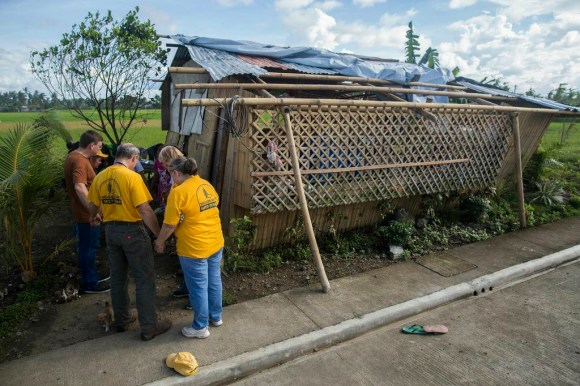
Disaster relief volunteers from the Southern Baptists of Texas Convention visited families whose homes and livelihoods were disrupted by Typhoon Haiyan. The volunteers listened to the families’ heartbreaking stories and prayed with them, then distributed badly needed food and building supplies.  BGR photo, via BP

Disaster relief volunteers from the Southern Baptists of Texas Convention visited families whose homes and livelihoods were disrupted by Typhoon Haiyan. The volunteers listened to the families’ heartbreaking stories and prayed with them, then distributed badly needed food and building supplies. BGR photo, via BP

THE BRIEFING | Posted by Meredith Flynn

Nearly three months after Typhoon Haiyan, some aid organizations have completed their work in the Philippines. But Baptists are gearing up for a long-term relief effort, led by Baptist Global Response.

“…The need is massive,” BGR Executive Director Jeff Palmer told Baptist Press. “We are initiating large-scale work with communities, local believers and volunteers and will be constantly assessing and gauging the effectiveness of our choices.

“Please continue to pray for our team members and volunteers as they help in the face of overwhelming needs. Pray that we choose the most strategic and effective places to work that truly help people physically and spiritually.”

The biggest repair needs are for water systems, homes and schools, Baptist Press reported. BGR has created a housing kit that will construct a small home on stilts for about $250. The goal is for the construction projects to breathe life into the local job market, Palmer said.

“The community has a labor force needing work, and capable, skilled men will be contracted to work alongside [a] U.S. disaster response team and local volunteer labor when available.”

Disaster Relief chapters from five state conventions – Missouri, California, Tennessee, Kansas-Nebraska, and the Southern Baptists of Texas – have adopted different areas of the Philippines. Read the full story at BPNews.net.

Other news:

Frank Page addresses denominational fault lines in ‘State of the SBC’ speech
The president of the Southern Baptist Executive Committee began a Jan. 15 speech with an analogy about earthquakes. “Fault lines happen even in organizations,” said Frank Page during a “State of the SBC” address at Midwestern Baptist Theological Seminary. “And like on the earth, where the fault lines and tectonic plates come together, pressure builds. If that pressure is not alleviated, then deep damage occurs.”

Page addressed some of the denomination’s current and past fault lines, including the debate over Reformed theology. He also spoke about the task force he appointed to study how Baptists with theological differences can work together. “Do I think that fault line is fixed forever? Hardly. But I said to them in all honesty, ‘I want us to work together so that we can at least win some people to Christ for now. Can we do that?'”

Read the full report by Midwestern’s Tim Sweetman at BPNews.net, and click here for a link to Page’s address.

Church ministers through abortion recovery class
Dr. Chris Midkiff likely didn’t know what kind of bombshell she had just dropped during a women’s leadership meeting at Bethel Baptist Church in Troy. The OB/GYN mentioned an abortion recovery Bible study she’d read about called Surrendering the Secret. Some of the women in the meeting personally understood the need for such a study. Read the story here.

One Baptist prof’s take on the Grammy’s
You’ve probably heard about the 33 couples, including some same-sex pairs, married by Queen Latifah during Sunday’s Grammy awards show. The song performed by Macklemore during the ceremony “took aim at Christians and their views on marriage,” blogged Denny Burk, an associate professor at Boyce College in Louisville, Ky. But the lyrics got one thing right, Burk said: We all come from one creator God. Read his post here.

Mark Emerson, pictured here, and a team of four volunteers from Illinois spent a week in Guinea engaging people there with stories from the Bible.

Mark Emerson, pictured here, and a team of four volunteers from Illinois spent a week in Guinea engaging people there with stories from the Bible.

HEARTLAND | In Guinea on a short-term mission trip, Mark Emerson met his own version of the man from Macedonia (see Acts 16:9).

Emerson and fellow Illinois volunteer Harold Booze were waiting for a boat to take them and their missionary guide to share Bible stories with an unreached, unengaged people group. As they endured the six-hour wait, they met John, a soldier from a nearby village. When they told him where they were going and why, John asked, “Why are you passing by me?”

“So, on our return, we came back a day early to tell stories to him and his family,” Emerson said.

John was one of many Guineans who heard true stories from the Bible that week. Five volunteers from Illinois partnered with International Mission Board missionaries to locate and share with unreached people groups in the country. The mostly Muslim nation is largely non-literate; the people rely on stories to pass down their traditions and culture. In one historic village, the Americans listened first to the story of how the people had come to settle there. After detailing hundreds of years of their people group’s history – including specific names – the Guineans turned to the Americans and said, “You tell us a story.”

“I’ve got a great one,” Emerson said before launching into the account of the Good Samaritan.

The Bible stories were the group’s inroads into the villages, a way to begin building relationships so that missionaries and future teams can go back and keep sharing about Jesus. In a village where they stayed several days, the chief brought a sick child to them. After they prayed for him, the Muslim chief was so moved by the passion of their prayers that he took the group from place to place so they could pray for more people.

They met a man near death and prayed for him, that he would choose Jesus. Their missionary guide felt like they shouldn’t leave the room until they had given the man the Gospel, so, “I gave him the whole thing, the full-barrel Gospel,” Emerson said. The man didn’t turn to Christ, but the missionary encouraged Emerson and the other volunteers. “At least he had a choice.”

“My responsibility is to help people have a choice,” Emerson said once back in the U.S. “I didn’t win anybody to Jesus, but I got a whole lot of people closer.” Like the chief who told him, with his hand on his own chest, “God has designed us to know Him in our hearts.”

Church’s recovery class aids healing

Troy, Ill. | Dr. Chris Midkiff likely didn’t know what kind of bombshell she had just dropped during a women’s leadership meeting at Bethel Baptist Church.

The OB/GYN mentioned an abortion recovery Bible study she’d read about called Surrendering the Secret.

Some of the women in the meeting personally understood the need for such a study.

Karen Schemerhorn remembers thinking, “What expression should I have on my face?” The prison ministry leader hadn’t told anyone about her abortions.

Mary Beth*, also there for the meeting said, “If you’re a woman who has had that in your past, you’re sweating, you’re nervous, you’re thinking everybody’s looking at you because everybody knows.

“It’s one of those secret sins that just eats you alive.”

Now, more than five years later, Bethel’s women’s ministry has facilitated numerous Surrendering the Secret classes. Dr. Midkiff hosts the group at an off-campus location, and confidentiality is vital as women share their stories, many for the first time ever.

Karen cites a statistic that nearly half of all women of child-bearing age have had at least one abortion. It’s a problem in churches too. “That’s why my mother and father had to hide my abortion,” says Karen, the daughter of a Southern Baptist minister. “What would this do to his ministry?”

The eight-week Surrendering the Secret class had already met for two cycles when she decided to join. She couldn’t get it off her mind, she said, but she didn’t want to go. She had been a leader at the church, a Sunday school teacher. When she arrived for her first class, she was welcomed with open arms.

Carrying the shame

Telling her story was a major point in her life, Karen says. After she went through the class, her story was written down by Jill Finley, Bethel’s women’s
ministry director. In the article, published in the ministry’s magazine, Karen describes the process of facing her past.

“As I was confronted by the reality of what I had done, waves of grief washed over me. I began to weep and grieve for my children and for the choices I had made. I felt God gently wrapping me in His arms and rocking me as I held those babies to my chest, and I started to understand the meaning of His sacrifice. Those sins, MY sins – He carried to the cross.

“There was nothing I had done, or could do that His blood would not cover. He took me out of it and it was no longer about what I did, but what Christ did for me! The chains fell right off!”

When asked now how integral the Bible is to the Surrendering the Secret study, Karen skims her class materials, calling out passages: God’s desire for peace for His people in Jeremiah 6:14. Hagar’s story in Genesis 16. Christ’s promise to save and not condemn, as told in John 3:17.

“As you’re freeing yourself and surrendering the secret,” Karen says of the Bible study, “you’re filling yourself up with God. And you’re allowing him to fill you, instead of guilt and shame.”

Sharing the truth

Surrendering the Secret generally meets twice a year. The names of women attending the class are kept confidential, but Jill says ladies involved in Bethel’s women’s ministry know when a class is going on. “And we pray for those women.”

Those who have been in the class take an active role in leading it for the next group, Jill says. Mary Beth went through Surrendering the Secret and has now helped lead the classes for several years. She underscores the importance of protecting the women’s privacy.

“The biggest encouragement you can give those women is providing them with a sense of confidentiality, privacy, and to give them a place where they feel like they can maintain that secret even within the group.

“I pray every day, never let their names slip off my tongue.”

She also emphasizes how important it is for women who have gone through abortion to hear the honest testimony of someone else who’s been in the same place.

Karen combined her passion for prison ministry with her powerful testimony and now leads Surrendering the Secret classes inside a Greenville prison. Before she even finished her cycle of classes, she shared about it with women attending a Bible study at the prison.

“One of the ladies just started bawling,” Karen remembers. “And she said, ‘I’ve had an abortion, I’ve never told anybody. This is the first I’ve ever spoken of it.’” The woman was set to be released soon, so Karen met with her and a friend two days a week. Since then, she’s led the classes in the prison twice a year.

“God just opened the doors,” Jill says. Supplies that might be forbidden inside the prison are allowed for Surrendering the Secret classes. And women have been saved, she adds.

For Karen, “Being free from any secrets has totally opened me up to accepting everybody, and looking at everybody differently,” she says. “And just knowing that if my story is God’s story, I want everything to be for His glory.”

Editor’s note: We think this column by Greg Smith, which first appeared at BPNews.net, is especially timely as many Christians start a read-through-the-Bible plan – beginning in the Old Testament.

Greg_Smith_0120COMMENTARY | Greg Smith

Marcion of Sinope lived in the second century during some of the most formative years of the early church. The son of a bishop, he was also active as a teacher in the region of Asia Minor. In 144 AD, Marcion parted ways with the Christian community by starting his own movement; by doing so, he encouraged thousands through his teachings to better appreciate the Bible.

There was just one problem.

In 144 AD, Marcion was excommunicated from the church for heresy. What was his crime? Marcion taught his followers to reject the Old Testament entirely. His reason? Marcion thought that the Old Testament represented a god different from the New Testament. One cannot have two gods. Thus, Marcion and his followers read only selective books from the Bible and rejected the 39 books of the Old Testament entirely.

Callout_0123Is the cult of Marcionism still alive and active in our churches? It has become apparent to me over the last seven years of teaching Old Testament Survey that students come to my class with an under-appreciation for the text and history of the Old Testament. This stems from the fact that most of their exposure to the Bible, through teaching and preaching, has come largely from the New Testament. For many of my students, the stories of the Old Testament have served as illustration material and have rarely been allowed to speak theologically. This situation falls dangerously close to what the followers of Marcion practiced in the second century.

So what can pastors and teachers do to help their congregations and classrooms grow in their appreciation for the entire Bible?

First, ground your people in the truth that all Scripture is under the inspiration of God and beneficial for preaching, teaching, correction and spiritual growth (2 Timothy 3:16). For Paul and the other authors of the New Testament, the Bible of their day, the Bible that they read and used in the writing of the books of the New Testament, was the Old Testament.

Second, preach and teach from an entire book of the Old Testament and cover every verse. Will this require a few good commentaries and other resources that assist with understanding the culture, background and history of Israel? Yes, most definitely. But as you preach and teach the text and incorporate that information into what you say, you will make the Scriptures come alive for your people. You will also give them a context for reading the Old Testament on their own, with confidence, and with the ability to draw appropriate application for their lives.

Third, model life-changing application from the Old Testament in your teaching and preaching. While it is true that some things have changed over salvation history, the Old Testament still contains timeless truths that need to be incorporated into the life of the faithful.

Finally, inspire your flock with the simple but profound truth that God is always the same yesterday, today and forever (Hebrews 13:8). The “old” of the Old Testament cannot mean that God is somehow “updated” in the pages of the New Testament. Help make the pages of the Old Testament come alive for your congregation as you focus on the gracious and loving God who has revealed Himself throughout the entire 66 books of the Bible.

Greg Smith is associate vice president for academic administration and associate professor of Bible at The College at Southwestern, the undergraduate school of Southwestern Baptist Theological Seminary. This column first appeared at http://www.BPNews.net.

Tuesday_BriefingTHE BRIEFING | Meredith Flynn

Nearly 400 Southern Baptist pastors met in Atlanta last week to pray for revival and spiritual awakening, doubling the attendance of a similar meeting last fall. Ronnie Floyd, an Arkansas pastor who organized the meetings, reflected on the most recent gathering on his blog by posting five reasons pastors pray:

1. They’re burdened for a great move of God.2. They’re aware they’re limited, and their churches are in need.
3. Pastors are concerned beyond words for our nation.
4. They believe the Great Commission (Jesus’ words in Matthew 28:18-20) can be fulfilled in their generation.
5. Pastors know we need to work together now more than ever before.

The pastors’ prayer meetings raise a question: What is the role of Christians in America’s next great awakening? Read the full story from the Illinois Baptist here.

Phone app calls people to pray for women considering abortion
What if there was a way to direct a woman considering abortion to a crisis pregnancy center, and simultaneously rally a national network of partners to pray for her? Online for Life, a nonprofit business, has developed online marketing techniques to connect abortion-minded women to CPCs, and an app to mobilize intercessors to pray for them. Read the story, first reported by the Southern Baptist TEXAN, in the January 20 issue of the Illinois Baptist (page 6).

Hannah_Gay‘God cured that baby,’ HIV specialist says. ‘I just happened to be standing close by.’
Hannah Gay, who describes herself as “the shiest pediatrician in America” has been in the spotlight for months after achieving a functional cure of a child with HIV. The continued lack of any replication of the virus indicates the first documented case of HIV remission in a child, The New England Journal of Medicine reported in October. Read the full story at BPNews.net.

Poll: Most pastors want diversity, but most churches aren’t diverse
“Having a racially diverse church remains more dream than reality for most Protestant pastors,” reports LifeWay Research about a study released just before the anniversary of Martin Luther King’s birthday. While 85% of senior pastors of Protestant churches say every church should strive for racial diversity, only 13% have more than one predominant racial or ethnic group in their congregation. Read more at LifeWayResearch.com.

The (church) dating game
A new game show will test the matchmaking prowess of church members competing to set up a single member of their congregation. “It Takes a Church,” set to premiere on GSN this year, will be hosted by singer Natalie Grant. “There are a growing number of singles in the church who do not want to be single,” Grant told The Christian Post. The show will visit a new church each week, and the winning “cupid” gets a donation made to the church in their name. The best part: GSN says the unmarried church members will be “unsuspecting” until camera crews arrive. Read more at ChristianPost.com.