Archives For November 30, 1999

Southern Baptist Convention

Many Southern Baptist churches will mark the Week of Prayer for North American Missions this week. For more information about the week of prayer or the Annie Armstrong Easter Offering, contact IBSA’s Missions team at (217) 391-3138.

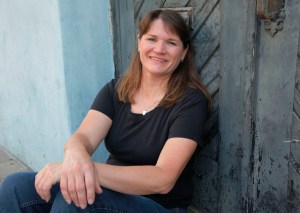
Baptist Friendship HouseKay Bennett, black shirtDay 4 – Kay Bennett
Several years ago, Melanie was homeless, pregnant, and struggling with substance abuse. A newspaper article about rebuilding efforts in New Orleans caught her eye and, desperate to rebuild her life as well, Melanie set out for the city. She was on the path to a divine appointment with missionary Kay Bennett.

“Melanie contacted me and came into our transitional housing program,” said Bennett, director of New Orleans’ Baptist Friendship House. “She got a job, got into college and is working towards her social work degree now.” At the center, Bennett helps vulnerable women and children as they transition into to new lives. She and her team also host events throughout the year designed to meet the physical, emotional and spiritual needs of their community.

Pray for encouragement for Bennett and her staff as they encounter hurting people every day.

Go to www.anniearmstrong.com/kaybennett to watch “Simply Jesus,” the story of how the Baptist Friendship House helped give a family a new future.

Many Southern Baptist churches will mark the Week of Prayer for North American Missions this week. For more information about the week of prayer or the Annie Armstrong Easter Offering, contact IBSA’s Missions team at (217) 391-3138.

NAMB WOP Missionary Peter YanesDay 3 – Peter and Irene Yanes
If anyone understands the impact church planting and evangelism can have on someone, it’s Peter Yanes. Born and raised in the islands of the Philippines, Yanes was in high school when a friend invited him to a Bible study hosted by a church plant. “That’s where I came to know Jesus Christ in a personal way,” he said. “Since then, there’s been no turning back.”

Yanes has a heart for church planting, which makes him the perfect fit for his role as a mobilization missionary for the Baptist Convention of Pennsylvania/South Jersey. Based in Philadelphia, Yanes identifies and support planters and partners as they start and grow new churches, and works specifically to catalyze ethnic church planters to reach the growing number of people groups in the area.

Pray for more established churches to partner with ethnic church planters, reaching all nations for Christ.

Go to www.anniearmstrong.com/peteryanes to watch “Returning a Favor,” a video about a new Filipino church in Pottstown, Pennsylvania.

Many Southern Baptist churches will mark the Week of Prayer for North American Missions this week. For more information about the week of prayer or the Annie Armstrong Easter Offering, contact IBSA’s Missions team at (217) 391-3138.

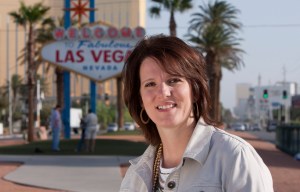
12-21LornaBiusDay 2: Lorna Bius
As a child, Lorna Bius watched her dad deliver groceries to a family in need. “I realize now that was the first time I saw LoveLoud in action,” said Bius, who now works with churches in the western U.S. seeking to serve their communities through acts of service.

LoveLoud is the North American Mission Board’s emphasis on community ministries like food pantries, after-school programs, and outreaches in apartment complexes. In Denver and other parts of the West, Bius is working to discover what churches are doing that’s working, and how to replicate it in other neighborhoods.

Pray God will provide key people who can help develop LoveLoud ministries in the most effective places, and that churches and ministries will be motivated to reach out to their communities like never before.

Go to www.anniearmstrong.com/lornabius to watch “The Castaways,” a video about a LoveLoud ministry to families in Reno, Nevada.

COMMENTARY | Posted by Meredith Flynn

LifeWay Christian Resources recently released the Annual Church Profile, a statistical picture of the health of Southern Baptist churches and denomination as a whole. There was some good news: slight increases in baptisms, total number of churches, and giving. But also some bad news: a nearly 1% decline in total membership (from 16,136,044 million last year to 15,978,112 this year). It’s the fifth straight year total membership of SBC churches has dropped.

More concerning, said LifeWay Vice President Ed Stetzer, is the rate of decline. In a Baptist Press column June 13, Stetzer wrote total membership has declined 2% since 2007, including nearly one whole percentage point this year. “This trend points to a future of more and faster decline — and it is a 60-year trend.”

Rather than manage the decline like other denominations, Stetzer said, there are some steps Southern Baptist pastors and leaders can take to “fight for our future.” Four steps he suggests:

1. Rally around the things we agree on under the Baptist Faith & Message, and refuse to engage in battles over secondary issues that will only end in further division.

2. Raise up new leaders who represent a variety of ethnicities and generations.

3. Reach more people. “Southern Baptists love evangelism, as long as someone else is doing it,” Stetzer wrote. “But ‘someone else’ is not doing it either. Every year, it takes more Southern Baptists to reach one lost person, as the member to baptism ratio shows.”

4. Plant more churches by equipping and then supporting church planters.

Now it’s your turn: How can leaders, pastors and members of Southern Baptist churches help reverse the denomination’s trend of decline?

By Nate Adams, IBSA Executive Director

I can usually measure the value of a meeting by the follow-up actions I note for myself as a result of it. If I don’t write anything down, the meeting was probably pretty pointless. If the meeting moves me to action or change, it may have been worthwhile.

So let me share with you a few of my follow-up notes from the recent Southern Baptist Convention in New Orleans, at least as they relate to the major issues discussed at this year’s annual meeting. You can read about these issues in the July 2 of the Illinois Baptist or at IBSA.org.

My notes about the informal name “Great Commission Baptists” as an alternative to “Southern Baptists” could be summarized simply by the phrase “wait and see.” Clearly a large number of churches feel that having an alternate name, even an optional one, is not a positive thing. But the majority that voted to endorse the alternate name gave those who wish to try it out a new tool to potentially reach people for whom the term “Southern” may be a barrier.

For now, I plan to “wait and see” how many churches embrace the new name, especially here in the Midwest. I suspect we will continue using the “Illinois Baptist” identity in our communications more than either of the others.

My notes about the various issues that have the Calvinist vs. Arminian theology debate at their root simply say, “stay above the fray.” Both outgoing President Bryant Wright and SBC Executive Committee President Frank Page served us well, I thought, when they essentially stated that the Baptist Faith and Message is big enough for both strains of theological thought, and that there is more danger in our heart attitudes about either position than in the doctrinal differences themselves.

Some time ago I came to the personal conclusion that Calvinist theology describes salvation more from God’s perspective outside time, and that Arminian theology describes salvation more from man’s perspective within time. I’m sure that those for whom that explanation is not sufficient will continue this centuries-old debate. I plan to try and stay above the fray of that argument, and pray it does not distract us from our far more important Great Commission task.

Finally, you may not think I need follow-up notes from the election of Fred Luter as the SBC’s first African American president. But I found I did. Tuesday night, just after Pastor Luter’s election, I attended a dinner with the African American Fellowship of Southern Baptists that included SBC entity executives and state executive directors like myself from all over the country.

Even during that dinner, I formed several follow up notes for myself: Don’t just sit with people you know – get to know some new African American brothers and sisters. Learn to understand and appreciate the history and the pain, the culture and the passions of African American churches and their leaders, especially those that have chosen to be part of the Southern Baptist family. Relax and enjoy different worship and preaching styles – God wants to speak to you through those too! Recognize how important it is to make sure African American leaders are participating in Southern Baptist life, both in key discussions and in key leadership positions. Develop more personal, not just professional, relationships with African American pastors and leaders.

As I said, I can measure the value of a meeting by the follow-up actions I note for myself. If the meeting truly moves me to action or change, it may have been worthwhile. My follow through on these notes has the potential to make this year’s SBC meeting truly worthwhile. I hope these notes for needed future action help you too.

(Editor’s note: New Orleans in Rear View. Now that we’re back home, our Illinois Baptist news team reflects on the question: What is the lasting value of the 2012 SBC?)

 Posted by Meredith Flynn

David Platt, pastor of The Church at Brook Hills in Birmingham, Ala., delivers a Pastors' Conference message in New Orleans on true repentance and salvation.

David Platt, pastor of The Church at Brook Hills in Birmingham, Ala., delivers a Pastors’ Conference message in New Orleans on true repentance and salvation.

Before the convention, many (especially us press types) were buzzing about how a growing debate over Reformed theology might come up from the floor. The answer: It didn’t really pan out like we thought it might, at least in terms of a heated debate.

Instead, Pastors’ Conference speakers and panelists at some of the surrounding meetings encouraged Southern Baptists to work together, even if it means crossing theological lines. And some, most notably Alabama pastor David Platt, spoke passionately about the bigger fish we have to fry.

During his message Monday afternoon, Platt referenced a YouTube video from a message he preached at an inter-denominational conference earlier this summer. On the widely-watched video, Platt said the sinner’s prayer is a “superstitious” prayer that never appears in Scripture, and called into question some traditional evangelism methods.

In his message at the Pastors’ Conference, Platt admitted that as a young pastor, he would be wise to watch his words. But then he stayed true to what he said briefly in the video, pleading with Southern Baptists to preach the true Gospel, full of the messages of repentance, belief, discipleship, and global mission.

Two days later, after some debate on the convention floor, messengers approved a resolution upholding the “sinner’s prayer” as a biblical means to salvation.

How we lead people toward a saving knowledge of Christ, and where we find the conviction of our own salvation, is the most important conversation we can have, in my view. I’m grateful for the discussion, and look forward to watching and listening as God moves us closer to His heart for people.

(Editor’s note: New Orleans in Rear View. Now that we’re back home, our Illinois Baptist news team reflects on the question: What is the lasting value of the 2012 SBC?)

Posted by Eric Reed

Parents watch the convention proceedings from the "stroller section," a cordoned-off area for families with young children.

Parents watch the convention proceedings from the “stroller section,” a cordoned-off area for families with young children.

Descending the escalator on the final day of the convention, I watched on the floor below me as a four-year-old had a meltdown. He wasn’t alone. His sister, a couple of years younger, perched in a carrier seat atop a stroller, teared up, and eventually wailed.

I felt the same way. We were all tired. The only difference between us was, I couldn’t get away with a meltdown.

Landing at the foot of the two-story escalator, I was suddenly in a sea of small children. “Don’t run!” the father of one said futilely. “There are grown-ups here.”

Really?

Not as many grown-ups as children, it seemed at times. This was a convention of young people. Once the domain of people with hair in various shades of gray and blue, this gathering was marked by a large percentage of young adults, many of whom bought their families. (There were strollers everywhere, even a “stroller section” roped off near the platform.) And their presence was felt in all the proceedings of the convention.

Perhaps the Pastors Conference foreshadowed a shift we should notice. Opening on Fathers Day, the line-up included sons introducing their better-known fathers as conference speakers. “Dad’s gonna bring the heat!” one son said before his father preached. But in one notable reversal, it was the father, a former convention president, who introduced his up-and-coming son. There was a changing of the guard, it seemed.

The most challenging and emotionally gripping moments among the pre-meeting sermons came from the youngest preacher, in his early 30s.

The debate over use of “the sinner’s prayer” started with young people, as an older generation’s tried and accepted method is challenged. 

And it is young people who raised debate over Reformed theology and Calvinism. A young pastor (age 40, son of a past SBC president) drafted a response and coined the phrase “Traditionalists” to describe his (and many elders’) Southern Baptist theology.

Many messengers speaking from the floor mics during the business sessions were younger pastors. 

This emergence of young people in SBC life was clearest at the Baptist 21 panel discussion (and turkey po-boy lunch). “21” in the name refers to 21st century, but it might have characterized their age. Fully half the people in the SRO crowd of nearly 1,000 were in their 20s and 30s.

For watching the panel discussion, the Conservative Resurgence of the 1980s was ancient history. Like WW2. Many of them were not born at the time today’s senior convention leaders stopped what they described as a left-leaning drift and returned the denomination to biblical inerrancy. For these young people, Judge Paul Pressler and Dr. Paige Patterson are historical figures to be honored (which they were at the luncheon).

For a few minutes in New Orleans, the convention’s past met its future. And it was clear in that moment that this is not your grandfather’s SBC.

Or even your father’s.

It belongs to the kids.

(Editor’s note: New Orleans in Rear View. Now that we’re back home, our Illinois Baptist news team reflects on the question: What is the lasting value of the 2012 SBC?)

 Posted by Lisa Sergent

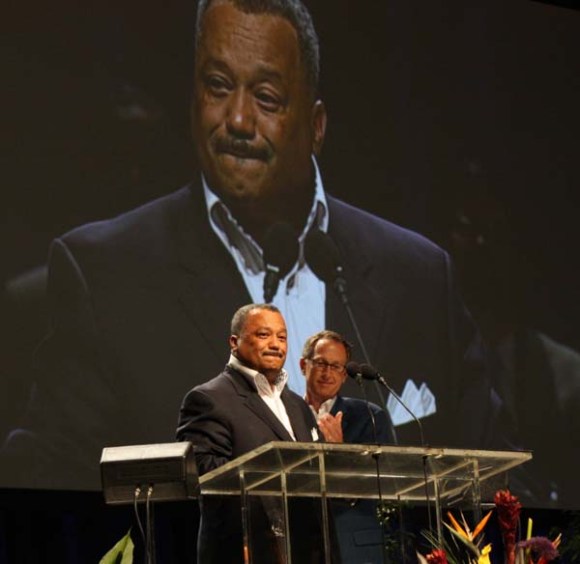
Pastor Fred Luter, the SBC's new president, receives a standing ovation from messengers at the convention's annual meeting.

Pastor Fred Luter, the SBC’s new president, receives a standing ovation from messengers at the convention’s annual meeting.

The 2012 SBC Annual Meeting in New Orleans was historic for many reasons.  The return of Southern Baptist Convention for the first time since Hurricane Katrina, the adoption of the “Great Commission Baptist” descriptor name, and the election of Pastor Fred Luter as convention president.

Luter’s election made headlines across the country because he is the first African-American to be elected President of the Southern Baptist Convention, a convention which some still associate with its birth in the support of slavery. But, as I listened to the various platform speakers, I began to grow concerned. Yes, Luter is an African-American, but this is not why he is president. Luter is president because of his character, leadership abilities, heart for Christ, and the way he has allowed God to lead him in his ministry.

One example of his leadership, commitment, and faith was seen in the aftermath of Hurricane Katrina when Franklin Avenue Baptist Church sat in 13 feet of floodwater. While some of the churches over 7,000 members remained in New Orleans, others were scattered to Baton Rouge and Houston. On the first and third Sunday’s of the month, he would preach an early morning service to members who gathered in First Baptist New Orleans church building. In the afternoon, he would travel to Baton Rouge to lead a service for more members. The second and fourth Sunday’s of the month saw Luter in Houston, Texas, leading church services for still more members. He did this for over two years until the Franklin Avenue’s building was ready for services again.

As Southern Baptists we need to focus on Luter’s God-given abilities and pray for him as he leads our convention. He is president because of the content of his character in the tradition of Dr. Martin Luther King Jr.’s dream. His election is a historic step for the Southern Baptist Convention, but his election is wonderful because he is a faithful man of God, whom God has already used and will continue to use in great and wonderful ways.

Your team of IB reporters

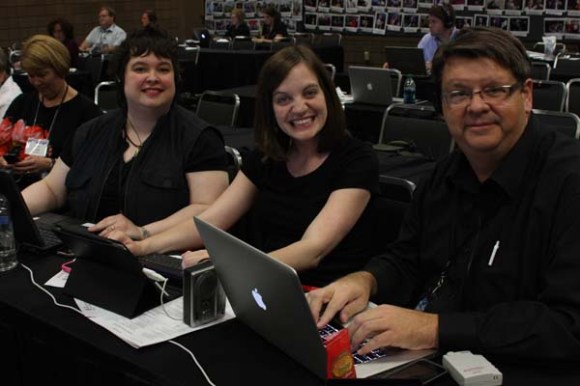
Your team of IB reporters.

Thank you for reading our coverage of the 2012 Southern Baptist Convention Pastors’ Conference and Annual Meeting. We’re hot, tired and hungry and heading for the airport. It’s been a great convention, we saw history made, unity after debate, a younger generation emerge, and commitment to the beliefs that make us Southern Baptist.

We have a lot of work to do when we get back home putting together a special edition of the Illinois Baptist. Also look online for more convention follow-up.

God bless

Good-bye NOLA

Meredith Flynn —  June 21, 2012

Posted by Meredith Flynn

It’s been quite a week here in New Orleans, especially for our SBC first-timer, Chris Flynn. As we get ready to head back to Illinois this morning, we talked a little about he’ll remember the week after the fog of long days and lots of sermons has lifted. Here’s what Chris said: “It was re-charging to be around so many people who are charged.”

I agree with him. Attending a Southern Baptist Convention is at once tiring and energizing. And I think the temporary things that drained us – the heat, late nights, too many beignets – will fade as we remember the important conversations that were had, the historical events we saw right in front of us, and the renewed sense of not being alone in this that we felt.

Thank you for reading along this week!

20120621-071545.jpg
Morning in New Orleans.

20120621-071717.jpg
Fred and Elizabeth Luter are introduced to the convention.

20120621-072242.jpg
A streetcar ride, our last New Orleans-y thing to do.