Archives For November 30, 1999

News of interest to Illinois Baptists

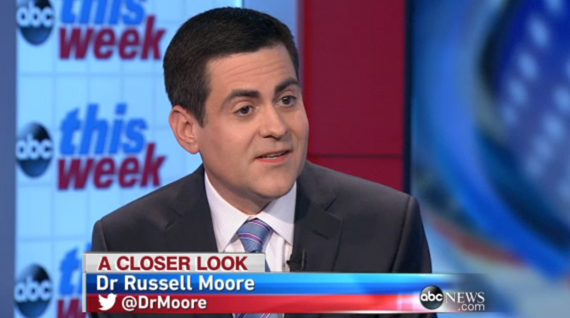
Russell Moore was joined on ABC's "The Week" by fellow panelists Franklin Graham, Ralph Reed and Cokie Roberts.

Russell Moore was joined on ABC’s “The Week” by fellow panelists Franklin Graham, Ralph Reed and Cokie Roberts. Photo from video on abcnews.go.com

NEWS | On Easter Sunday morning, ABC’s “This Week” featured a panel of guests discussing whether the influence of evangelicals is waning in the current culture. The group included Russell Moore, president of the Southern Baptist Ethics and Religious Liberty Commission, who said it is indeed a new day for Christians.

The percentage of people that are members of a church or synagogue has fallen from 70% in 1992 to 59% in 2013, said moderator Martha Raddatz, citing a Gallup statistic. She asked Moore if the numbers worry him, and what can be done about the decline.

“I’m not worried… because I think what we’re seeing is the collapse of a cultural, nominal form of Christianity,” Moore said. There was a time in America where in order to be a good person, to be seen as a good citizen, one had to nominally at least be a member of a church. Those days are over, and so we’re at a point now where Christianity is able to be authentic, and Christianity is able to be authentically strange.”

Moore pointed out that Christianity’s foundational beliefs are hard to grasp for the culture at large, but the disconnect isn’t unprecedented.

“Many people now when they hear about what Christians believe, what evangelical Christians believe, their response is to say, ‘That sounds freakish to me, that sounds odd and that sounds strange.’ Well, of course it does. We believe that a previously dead man is now the ruler of the universe and offers forgiveness of sins to anyone who will repent and believe.

“That’s the same sort of reaction that happened in the Greco-Roman empire when Christianity first emerged. So it offers an opportunity for the church to speak clearly, articulately, about what it is that we believe, to give a winsome and clear message about what the Gospel actually is.”

Raddatz asked Moore about his recent comment that “the illusion of a Moral Majority is no longer sustainable in this country.”

“Yes, it’s a different time,” Moore said on Sunday’s broadcast, “and that means that the way that we speak, we speak in a different way. We speak to people who don’t necessarily agree with us. There was a time in which we could assume that most Americans agreed with us on life, and on abortion, and on religious liberty and other issues. And we simply had to say, ‘We’re for the same things you’re for, join us.’

“It’s a different day. We have to speak to the rest of the culture and say, ‘Here’s why this is in your interest to value life, to value family, to value religious liberty.'”

The panel’s 10-minute conversation is available for viewing at the ABC News website.


NEWS | Meredith Flynn

David_Dockery_0414David Dockery, a leading Southern Baptist thinker and college president for 18 years, will serve as the next president of Trinity International University.

“We are overwhelmingly grateful to God for the invitation from the Trinity Board to serve the students, staff, faculty and various institutional constituencies
in the days ahead,” Dockery said after his unanimous election.

He has served as president of Union University in Jackson, Tenn., since 1995. Union is affiliated with the Tennessee Baptist Convention.

As president of Trinity, whose primary campus is 30 miles north of downtown Chicago, Dockery will lead the institution’s four schools: a liberal arts college, graduate school, law school, and Trinity Evangelical Divinity School, known as TEDS. Trinity has numerous notable alumni, including pastors Bill Hybels and James MacDonald, historian Mark Noll, and apologist Ravi Zacharias.

“Almost every Southern Baptist seminary and many key Baptist universities, including Union University, have a number of Trinity grads on their faculties,”
Dockery told the Illinois Baptist. “So Trinity’s influence in Chicagoland, across the nation, and around the world has few parallels in the entire evangelical world.”

Dockery announced last year his intention to transition out of his role as president at Union. During his tenure, the school more than doubled in enrollment,
expanded and improved its campus, and increased its net assets from less than $40 million to $120 million. Dockery also established an annual scholarship banquet that has drawn speakers like George H.W. Bush, Colin Powell and Condoleeza Rice.

He helped establish Union as a leading center for Baptist education with events like the Baptist Identity Conferences of 2006 and 2007. And he led the school through the aftermath of a devastating tornado in 2008.

“As we were considering the opportunities beyond our days at Union (we always used the language of transition from the presidency to the next phase;
we have not really thought of this as a time for retirement), we asked the Lord to grant us guidance and to open doors that would be clear to us (not only
to us, but also to others) that the Spirit of God was leading our steps,” Dockery said of the process he and his wife, Lanese, have followed from Union to Trinity.

“Trinity’s commitment to theological education with excellence, their focus on global opportunities and partnerships, and the distinctive prospect of serving in one of the world’s great metropolitan areas were all strong attractions for us.”

Trinity is affiliated with the Evangelical Free Church of America, and Dockery will officially assume the presidency after the denomination’s board of directors approves his appointment. He will begin serving as Acting President June 1.

“We will trust the Lord to give us the opportunity to serve and support many churches across the evangelical landscape from our work at Trinity,” he said. “It will be a special joy to introduce Illinois Baptists in a deeper way to the work of Trinity and to introduce the Trinity community to the work of Illinois Baptists.”

Additional reporting by Baptist Press

Layout 1Same-sex marriage gains support in courts, public opinion

NEWS | Eric Reed

Update: Last week, Michigan became the latest state to allow same-sex marriages, after Judge Bernard Friedman overturned the state’s ban on gay marriage. About 300 couples were married before the judgment was stayed, and Michigan Governor Rick Snyder has said the state will not recognize the marriages as of now. But U.S. Attorney General Eric Holder said the government will offer federal benefits to the married couples, mirroring the action it took in Utah earlier this year.

Same-sex marriage is not being tried in the court of public opinion. It’s being tried in the courts and public opinion. And the latest evidence is it’s winning in both sectors.

Same-sex marriage is legal in 17 states. And, one way or another, it’s pending in the remaining 33.

Even in states where marriage is legally limited to one man/one woman, there is a growing sense that pending court decisions will force recognition of gay marriages performed in other states.

At the same time, new polls show a majority of Americans support recognition of same-sex marriages. The ABC News-Washington Post poll shows 59% of Americans say they support same-sex marriage (34% are opposed), and 50% say the U.S. Constitution already guarantees homosexuals the right to marry (41% say it does not).

In states that prohibit same-sex marriage, 53% of those surveyed favored allowing it; 40% remained opposed. Support for same-sex marriage is lowest among Republicans (only 40% approve), and among conservatives and evangelical Protestants at one-third or less.

The Post’s analysis of its polling is that “support for same-sex marriage has changed more rapidly than almost any social issue in the past decade.” In March 2004, only 38% of respondents said same-sex marriage should be legal, and 59% said it should not.

In all this polling, the generation gap is noteworthy. Younger people of every political and religious view were more likely to favor legalizing gay marriage. For example, a Pew survey found 61% of young Republicans under age 30 supported same-sex marriage.

The question arising in recent weeks is whether public opinion is driving the courts or if the courts are driving public opinion. And this: Have we reached the tipping point?

In six of the nation’s 11 federal appellate courts, legal challenges involving same-sex marriage are pending that could eventually go the U.S. Supreme Court.

4th Circuit, Virginia: A lower court struck down Virginia’s amendment that prevents gay couples from marrying. Opening arguments are set for the week of May 12.

5th Circuit, Texas: A Texas court ruled the state’s ban on marriages for same-sex couples was unconstitutional. The governor is appealing. No court date set.

6th Circuit, Kentucky: A federal judge ordered the state to recognize same-sex marriages performed out of state. The state attorney general refused to appeal, saying emotionally he had prayed about it and it was the right thing to do. The governor said he will use outside attorneys to appeal. No court date set.

Ohio: A federal judge ruled Ohio must recognize the out-of-state marriages of same-sex couples in the case of couples being listed as “married” on death certificates. Briefs due April 10.

7th Circuit, Illinois: A federal judge ruled same-sex couples can marry now, even before the June 1 date the state’s law takes effect. Attorney General Lisa Madigan concurred. No appeal has been announced.

9th Circuit, Nevada: The state announced it will not defend its ban on same-sex couples marrying, following the U.S. Supreme Court’s partial strike of the federal Defense of Marriage Act (DOMA). April 9 oral arguments were cancelled, will be rescheduled.

10th Circuit, Oklahoma: A federal judge ruled the state’s ban on gay marriage is unconstitutional. Oral arguments April 17.

Utah: 1,000 couples married after a federal judge ruled the state’s gay marriage ban unconstitutional, then refused to stay his ruling until an appeal could be heard. Oral arguments April 10.

And then there’s the issue of the rights of Christian service providers to refuse the business of gay couples, with the proposed Arizona law as chief example. In February, the governor refused to allow the bill, which would have protected business owners based on their religious convictions, to become law.

In all these cases, no strong Christian response seems to have arisen. The window for Christians to file suits or to urge their state governments to pursue legal action is a brief one. The cases are moving quickly to court, and no organized effort to participate, as in the early days of the pro-life movement, has materialized.

What is happening now is the waiting – waiting for one of these cases to reach the U.S. Supreme Court, and for the Court to rule on whether same-sex marriages performed in one state must be recognized in all states.

As New York Times columnist Ross Douthat concluded in a March 1 column titled “The Terms of Our Surrender”: “We are not really having an argument about same-sex marriage anymore, and on the evidence of Arizona, we’re not having a negotiation. Instead, all that’s left is the timing of the final victory – and for the defeated to find out what settlement the victors will impose.”

Eric Reed is IBSA’s associate executive director for communications and editor of the Illinois Baptist newspaper.


Carbondale_CMD

Children’s Ministry Day volunteers deliver goodies to a hospital in Carbondale, one of nine locations where kids served on March 15. Photo by Joanna Samples

GUEST POST | Sarah Richardson

On the sunny day of March 15, children from all over Illinois participated in Children’s Ministry Day, sponsored by the Illinois Baptist State Association. The object of the event was to involve kids in ministry by doing service projects around the local community.

Nearly 1,110 kids, leaders and volunteers gathered in nine cities around the state for the event.

One of the host churches was Lakeland Baptist in Carbondale. The service projects were arranged beforehand by Lakeland church members. They involved simple services that made a difference for people and businesses around town.

One project involved delivering handmade cards and bags to a pediatric wing at the local hospital. Along with chaperones, the children made crafts in a large room at the church. Preparation made the project not only fun, but meaningful. The cheerful children wrote Bible verses on the cards, as well as drew their own unique art. It was obvious the kids were involved and excited to help others.

Some children made chocolate chip cookies for firefighters and policemen. When they delivered the cookies, the firefighters gave a tour of the station. The children learned how the honorable people work to keep people safe.

Other projects included helping the elderly, preparing food at a soup kitchen and working at a horse stable. After work was done, the children returned to Lakeland and enjoyed popcorn, soda and a mission trivia contest. While sharing testimonies, the children enthusiastically reflected on why they do missions. The closing ceremony reminded everyone that Jesus is the reason for our mission.

Children’s Ministry Day teaches kids that though they are young, they can make a difference by the grace and power of God. Not only does it bless the volunteers and the kids, it helps the people who work at the places where they served. It is a great way to teach children about missions, helping your community, and ultimately glorifying God.

Sarah Richardson, 14, is a member of Lakeland Baptist in Carbondale.

Young volunteers from Calvary Baptist Church in Pittsfield do yard work outside a crisis nursery facility in Springfield. Nearly 1,100 volunteers participated in Children's Ministry Day on March 15.

Young volunteers from Calvary Baptist Church in Pittsfield do yard work outside a crisis nursery facility in Springfield. Nearly 1,100 volunteers participated in Children’s Ministry Day on March 15.

Springfield | One by one, kids told their Children’s Ministry Day stories in brief, honest sentences.

“We raked up gum balls, and not the kind you chew,” said Gavin.

“It made me feel really happy, because I love cooking and I love helping people,” said Elana, who helped cook a meal for families at Springfield’s Ronald McDonald House.

Ella, a volunteer from Pittsfield, answered a question about whether her yard work crew had stayed positive during the day: “We mostly did it with a good attitude.”

For the fourth consecutive year, kids and their leaders served across the state through Children’s Ministry Day, a one-day missions experience that culminates with a celebration service at each project site. In Springfield, Gavin, Elana, Ella and others shared about the projects they did this year, which marked the fourth annual Children’s Ministry Day in Illinois.

Created by national Woman’s Missionary Union, the day of service for kids has taken on a life of its own in Illinois. Nearly 1,100 children, leaders and volunteers representing 75 churches served at nine locations around the state on March 15.

This year’s theme, “Make a Splash,” came from Matthew 10:42, where Jesus says, “And whoever gives just a cup of cold water to one of these little ones because he is a disciple – I assure you: He will never lose his reward!”

Children’s Ministry Day is now IBSA’s most successful mission involvement activity, said Mark Emerson, who leads the organization’s missions team. The event has grown in number of locations and participants each year since 2011, when he organized the first set of projects in Springfield. Local associations began hosting the projects last year, and the service day expanded to nine cities in 2014, including first-time locations Bridgeport, Chicago, Decatur, Granite City and Peoria.

“I think more churches identify that this is a high impact project with an easy engagement possibility,” Emerson said. “The logistics of the day are already complete, so all the church has to do is to figure out how to get the kids enlisted, and get the kids to the event.”

Pastor David Brown has led kids from his church, Dow Southern Baptist, to Children’s Ministry Day each of the last four years. Standing outside an urban ministry center in Springfield, he recalled each of their projects: making baby blankets, baking cookies for police officers, visiting with nursing home residents, and this year, raking leaves and sorting donated supplies.

“This is one of the best events that we can do, because we’re starting at a foundational age,” Brown said. His fourth grade daughter, Cameryn, accompanied him to Springfield this year and has participated in every Children’s Ministry Day.

“And if they fall in love with serving when they’re kids,” Brown said, “they’re going to keep serving when they’re teens, and hopefully when they’re adults and grandparents. It’s foundational; it’s what the church is all about.”

Helping people is a bonus, Brown said, but days like this are really about growing the church. The teenagers at Dow Southern are planning to go on their first World Changers mission trip this summer to Cincinnati.

“We’ve done a couple of just individual mission trips, but they’ve never been the big organized ones,” Brown said. “It’s coming out of the group that said, ‘Well, we did Children’s Ministry Day, what are we going to do now?’”

The day is certainly about expanding the kingdom through service, but it’s also an opportunity to teach kids spiritual truth. Rob Gallion kicked off the Springfield location with a devotional about Jesus washing the disciples feet. In simple terms, he explained that that’s what the kids would be doing during the day.

The day can also serve as a jumping off point for churches that want to implement more missions involvement and awareness, Emerson said. “We will follow up with the churches that attend, and seek to connect them to mission education possibilities in their church.”

Any church interested in starting a new missions organization can receive six months of curriculum free from WMU through IBSA. Contact MarkEmerson@IBSA.org for more information.

Marriage_Map_New

NEWS | Meredith Flynn

At the Southern Baptist Convention’s annual meeting in June, Birmingham pastor David Platt chuckled when a fellow panelist asked him to give an update on his state and same-sex marriage. Alabama was standing firm, Platt said. No one would have argued with him eight months ago.

But court rulings have fallen like dominoes across the country over the past several days, making same-sex marriage a nearing reality for even the most conservative states.

A federal judge in Kentucky today ordered officials to recognize same-sex marriages performed in other states. The state’s Attorney General has asked for a 90-day delay to determine whether to appeal a Feb. 12 ruling that overturned the state’s ban on same-sex marriage.

And Texas on Wednesday became the latest state to have its ban on same-sex marriage overturned by a federal judge. Like in Utah, Oklahoma, Virginia and Kentucky, the ruling was immediately stayed, pending appeal.

The rulings came after U.S. Attorney General Eric Holder said on Monday that state attorneys general do not have to defend laws they view as discriminatory. From the The New York Times: “Mr. Holder was careful not to encourage his state counterparts to disavow their own laws, but said that officials who have carefully studied bans on gay marriage could refuse to defend them.”

Even after the U.S. Supreme Court struck down part of the federal Defense of Marriage Act in June, the Bible belt seemed the least likely region to embrace a new definition of marriage. But the rulings in Kentucky and Texas (and traditionally conservative Utah) make one wonder where it might happen next.

PolicyMic.com asked the same question last summer, but in reverse. They listed the top 7 states least likely to support marriage equality, with Mississippi in the top spot. Sixth on the list was Utah. And at #4, Kentucky.

What a difference eight months makes.

Meredith Flynn is managing editor of the Illinois Baptist newspaper.

Floyd, pictured here at the 2012 IBSA Pastors' Conference, is pastor of Cross Church in northwest Arkansas.

Floyd, pictured here at the 2012 IBSA Pastors’ Conference, is pastor of Cross Church in northwest Arkansas.

Nashville, Tenn. | For all who had been wondering who will succeed Fred Luter as president of the Southern Baptist Convention, we have our first nomination: Ronnie Floyd, pastor of Cross Church in northwest Arkansas, will be nominated by Southern Seminary President Al Mohler.

Describing Floyd in an open letter announcing the nomination, Mohler said, “He has unparalleled experience as a leader among us, an unquestioned commitment to the Great Commission, and he has demonstrated an unstinting urgency to unite Southern Baptists around our shared beliefs, mission, and programs.”

Floyd recently organized two gatherings for Southern Baptist ministers to come and pray together for spiritual awakening and revival.

That Mohler is nominating Floyd may signal the kind of unity that SBC Executive Committee President Frank Page had in mind when he formed a task force to study how Baptists of different theological persuasions can work together. With the 2014 convention set for Baltimore, where attendance will likely be lower but Baptist “frontiers” better represented, some had wondered if Mohler or another Reformed-thinking leader might run. But Thursday’s letter has made his choice clear:

“Southern Baptists are engaged in a healthy theological conversation, but we need leadership that can help that conversation to be directed toward energizing us to a great common (goal) for reaching the world and reaching our nation – together,” Mohler wrote.

“Fred Luter has led us so well as he has unified and inspired us. Our next president needs to unify and inspire us for our next steps together. I believe that Ronnie Floyd is the leader Southern Baptists need.”

Click here for the Baptist Press story.

Kurt Crail, a volunteer from Ashmore Baptist Church, visits with school kids on Gibitngil Island in the Philippines.

Kurt Crail, a volunteer from Ashmore Baptist Church, visits with school kids on Gibitngil Island in the Philippines.

Editor’s note: Rex Alexander is in the Philippines this week with an Illinois Disaster Relief team, helping to rebuild a school damaged by Typhoon Haiyan. This is excerpted from an email update he sent today.

Friday, Feb. 14 | Today was Valentine’s Day in the Philippines. This was an exciting day for the kids because they wrote Valentines to each other and to our team members as well.

In the afternoon the entire school had a special assembly for Valentines and then some free time for games, etc. The principal of the school (who is a Christian) asked if I would bring a message to the school children about the difference between Valentine love and God’s love. So I gave a brief presentation about how we celebrate Valentine’s Day in America. Then I talked about God’s love which is greater than all other kinds of love.

I was able to give a clear gospel presentation and explained how everyone can accept God’s love by receiving his Son, Jesus. I was hoping that I was not “overstepping” my bounds in this public school setting. Then afterwards the principal received a Valentine from the school children and then she brought a message which was similar to mine. She quoted several scriptures and told that children that only God’s love will ever bring satisfaction to them. It was unexpected and pretty cool especially because we got to speak to the whole school! She is a bold Christian woman who loves her children and teachers.

Read more about the team’s work in the Philippines in the next issue of the Illinois Baptist, online at http://ibonline.IBSA.org.

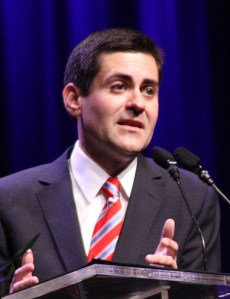
Russell Moore, pictured here at the SBC's 2013 annual meeting,

Russell Moore, pictured here at the Southern Baptist Convention’s 2013 annual meeting, told Baptist leaders this week that marriage is more a Gospel issue than a political one.

Courts moving ‘very, very fast,’ Moore says

NEWS | Eric Reed

“I expected 2014 to be ‘the year of same-sex marriage,’ I just didn’t expect it to be in Utah, Oklahoma, and Kentucky,” said Russell Moore, president of the Southern Baptist Convention’s Ethics and Religious Liberty Commission.

His comments came on Wednesday, the same day a federal judge in Kentucky struck down a law which protected that state from recognizing same-sex marriages performed in other states. Courts in nine other stated have issued similar bans.

“This is moving very, very fast, and in some unexpected ways,” Moore said. He spoke by Skype to executive directors of SBC state conventions and editors of Baptist state newspapers meeting in Idaho.

Asked about his advice for pastors and denominational leaders, Moore said, “We need to equip our people to deal with same-sex marriage. And not just in the blue states, but in places like Mississippi and Alabama.”

Moore pointed to the battles in the courts as determinative for states that have not approved same-sex marriages or that have banned it. Ultimately the United States Supreme Court will decide. That’s why it’s important for Christians to be involved in court actions early in this process.

“The principle we ought to see is from the apostle Paul appealing to Caesar. His appeal was not about his rights as a Roman citizen, but for the ability to preach the Gospel—for everyone.”

The marriage issue is a Gospel issue, he said, more than a political issue.

Moore pointed to the impact of court rulings on the institutional level. The most vulnerable ministries are not the churches themselves, that they may be forced to perform same-sex marriages, but the institutions that operate as separate ministries of churches or denominations. He cited Kentucky’s Sunrise Children’s Services (that state’s Baptist children’s home) that faced a lawsuit over its hiring practices.

And, closer to home, Moore said individuals who refuse services to gay couples will be increasingly vulnerable. One example is the owner of a Washington state florist sued because she didn’t wish to provide flowers for a gay wedding.

“A government that can pave over the conscience of that florist or photographer can pave over the conscience of anyone,” Moore warned.

Moore addressed several other issues including immigration reform and abortion. He finds little real difference of opinion among national politicians on immigration and is optimistic that some meaningful fix can come within a year or so.

On abortion, Moore said he is “both optimistic and pessimistic.” He is optimistic that 40 years after Roe v. Wade the prolife movement is strong. The rallies he has attended since assuming leadership of the ERLC are “filled, filled, filled with young people.”

But Moore is pessimistic that the decision will be reversed, even though experts on both sides of the argument admit Roe v. Wade is what Moore called “bad law, a train wreck of a ruling.” Abortion activists remain well funded and well organized, he said.

Pro-life activists need to be watching the developments in abortion technology, he said. The next front for pro-life is not clinical, where abortions are performed, but chemical, drugs that make abortions more easily obtained.

Eric Reed is IBSA’s associate executive director, communications, and editor of the Illinois Baptist.

CONVERSIONS COUNT – “We have to help our churches focus on bearing fruit, and to keep up with that as a measure of how they’re doing,” NOBTS President Chuck Kelley told associational leaders in Illinois. “Fruitlessness is becoming endemic in Southern Baptist Life.”

CONVERSIONS COUNT – “We have to help our churches focus on bearing fruit, and to keep up with that as a measure of how they’re doing,” NOBTS President Chuck Kelley told associational leaders in Illinois. “Fruitlessness is becoming endemic in Southern Baptist Life.”

The SBC’s declining numbers are real. But there are solutions, says seminary president Chuck Kelley.

NEWS | Eric Reed

Since he began studying and teaching evangelism more than 30 years ago, New Orleans Baptist Theological Seminary President Dr. Chuck Kelley, told associational leaders in Illinois in January, we’ve been quoting the same statistic: 30% of our churches are growing, and 70% of all Southern Baptist churches are plateaued or declining. “The difference today is the 70% aren’t so much ‘plateauted;’ our churches are declining. We are a convention at a crossroads.”

Kelley is one voice in a chorus of national leaders calling on Southern Baptists to end the decline in baptisms and missions giving in our churches that threatens fulfillment of our kingdom work and the future of the denomination itself.

The head of the convention’s executive committee, Dr. Frank Page, also delivered a stark address in January. “…You say, ‘What is our future?’ I do not know. I’m asked that every week by someone, and I say, ‘I cannot answer.’ If things do not change, I can tell you in 20 years we will be happy to have 27,000, not 47,000 churches,” Page said.

In a “State of the SBC” address at Midwestern Seminary, Page cited “fault lines” in the denomination, where pressure has built and the fabric of the organization is threatened. Among them are the arguments over the nature and authority of Scripture in the 1980s, and more recently the debate over Reformed theology, methods of funding missions, and democratic-based church governance.

The effect of these “fault lines” is seen in declining baptisms and a 20-year downward trend in missions funding through the Cooperative Program. “We have argued over issues that have taken away our evangelistic fervor to the point that now our baptismal rates have reached a low not seen since 1948,” Page said. “God help us.”

Southern Baptists baptized 314,956 people in 2012, the most recent tally available. That was a decline of 5.5%. The figure compares to the post-war baptismal rate, when Southern Baptists numbered 6 million, in contrast to today’s 16 million. A decade-long focus on evangelism after World War II produced the denomination’s greatest surge of conversions, peaking at 445,725 baptisms in 1972, and the steam to power the next six decades downhill from there.

Leaders are hopeful that a final tally on 2013 baptisms and Cooperative Program giving, due soon, will show a slight uptick, and perhaps end the slippery slope. And in Illinois, baptisms and giving are up for 2013.

Still, national leaders are now talking publicly and regularly about the SBC as a denomination that is plateaued and declining, mostly declining.

Page’s speech, now being viewed widely on the internet, comes on the heels of “an open letter” from LifeWay President Thom Rainer calling on members of what is still the largest Protestant denomination in the United States to recapture their zeal for evangelism.

“Where is the passion in most of our churches to reach the lost?” Rainer asked. “I thank God for our affirmation of the total truthfulness of Scripture. I thank God for orthodoxy. But I pray that it is not becoming a dead orthodoxy – an orthodoxy that has lost its first love.”

“I have no proposal,” Rainer summarized. “I have no new programs for now. I simply have a burden.”

Kelley’s proposal

The history of every church and denomination is growth, plateau, and decline, Kelley told associational leaders meeting at the Illinois Baptist State Association building January 27-28. Pointing to Methodists, Presbyterians, and other mainline

denominations, Southern Baptists for many years expressed thanks we weren’t following their decline. Now we are. “We are seeing a growing gap in the rhetoric about Southern Baptists and the reality of where we are,” he said.

And the declines are in all parts of the U.S. “We’re losing the South,” Kelley said. “You need to be aware that the South is becoming more like Illinois; large blocks of unreached people, and churches that are smaller.”

And a new generation that is not following their parents’ lead by staying in church after they reach adulthood.

Kelley likened the denomination’s downward turn to an airplane in a tailspin: beyond a certain point, the pilot can’t pull the nose upward and right the plane. “We’re nearing that point,” Kelley said.

He identified four factors in this precipitous decline, problem areas that also point to possible solutions:

Elephant 1: Awakening

“We have a power problem,” Kelley said. “We have gotten so used to working without the filling of the Spirit of God, we don’t know it’s not normal. Kelley called for church leaders to encourage prayer for spiritual awakening: “This is like stacking the firewood for God to light the fire.

“We need to have solemn assemblies, for our people to seek a move of God… If God isn’t moving, there is an issue within us,” he said, pointing to the need for repentance.

Elephant 2: Conversions

As the numbers have dropped, Southern Baptists have moved away from publically counting baptisms as a measure of our fruitfulness. While Kelley acknowledged there have been misuses of the system in the past, he said our churches must return to a focus on fruitfulness. Specifically, we need to see conversions as a measure of “what God is doing in our churches.”

“Many of our churches have the Sunday school attendance posted somewhere, and last week’s offering,” Kelley said, “but I have been in very few churches that have in a public place how many people they have baptized – and even fewer that have a public goal of how many they want to baptize.”

He offered three measures of fruitfulness: beyond conversions, churches should measure ministry to the community. “Most churches do not have a muscle set for ministry to the community,” he pointed out, but it is community ministry that opens doors for evangelism.

And churches should measure church planting, their own participation in the reproductive process that brings healthy new congregations into existence, with members fueled by the salvations of their lost family and friends.

Elephant 3: Discipleship

While the rhetoric in our high-point decades was about evangelism (“A million more in ’54!”), the real genius of the period, Kelley contends, was in our dis

ciple-making mechanisms: Sunday school and training union. These methods focused on making new believers into disciples, who then led more people to Christ.

But, he said following extensive study, “Every methodology has a shelf life, and as the methodology wore out its shelf life, we did not replace it…. Our discipleship processes have been dismantled, not intentionally, but by attrition. Our discipleship has become a patchwork that is reinvented every year. It’s a series of things, not a cohesive strategy.”

In the last 20 years, Kelley said there has been a “megashift” in SBC life from the priority of discipleship to the priority of worship. One result is under-educated people who call themselves Christian, but whose lifestyles are little different from unbelievers.

“When I grew up, we still had a sense of being a stranger is a strange land. We were counter-culture…. I’m not calling for a return to the sixties. I am saying we have to find for today what a distinctly Christian lifestyle looks like and teach our people what living distinctly Christian lives is, so that we have evangelism that will impact our society.”

One of our needed conversations is how we will lead our congregations to spiritual maturity in this new era.

Elephant 4: Fighting

Finally, Kelley pointed to a significant shift he has witnessed from the seminary campus: “Today’s seminary students are not interested in going into existing churches, because they are scared. They have seen the results and heard the horror stories of church fights,” Kelley said.

Yet, that’s where the need is, in existing churches that are plateaued or declining. “If a pastor comes to bring growth, there will be conflict. We need to have conversations about how to have conflict.”

Kelley said leaders need to help their churches process conflict in ways that bring positive change and do not harm the Body of Christ. “Not all church fights are the result of failure on the part of the pastor, or of having ungodly people in the pews. It is the result of change. Leading change creates conflict,” Kelley said.

It also turns declining churches – and denominations.