Archives For November 30, 1999

Church in the United StatesThe election for President of the Southern Baptist Convention last month understandably attracted a lot of attention. But I was just as intrigued with the election for President of the annual SBC Pastors Conference that took place the day before.

Dave Miller, pastor of a medium-sized church in Sioux City, Iowa, somewhat surprisingly prevailed with 55% of the vote. The Pastors Conference President has traditionally been a megachurch pastor, often from a southern or larger state.

From my perspective, Pastor Miller ran not so much on his personal ministry resume as on a platform of ideas that proposed taking at least the 2017 Pastors Conference in a very new direction. Conference speakers would be only from SBC churches. No one who has spoken at the Pastors Conference in the past five years would speak at the 2017 meeting. Speakers would represent a diversity of geography, age, ethnicity, preaching style, and perspective. And there would be a focus on inviting pastors to speak who lead churches of 500 or fewer.

I’m glad we are reminded that these churches have a lot
to offer.

Not many of these parameters describe the Pastors Conferences of recent years, and the new ideas clearly resonated with a majority of those voting. Pastor Miller was elected, and his response the next day in his SBC Voices blog reminded me a little of the old adage, “Be careful what you wish for.” He wrote, “The budget of this two-day event is pretty much the annual budget of my church…But we are in this together and we are going to be looking to expand our circle.”

While I personally would have been glad for either candidate to lead next year’s Pastors Conference, I can’t help but feel a sense of satisfaction in the ideas that it appears will now influence next year’s program. I too have wondered why the same men sometimes speak in consecutive years of the Pastors Conference, or why speakers aren’t always from SBC churches.

Most of all, as a Midwestern Southern Baptist, I celebrate the idea that there are gifted preachers in small to medium-sized churches, and in churches outside the Deep South, and in churches of diverse cultural settings. The Pastors Conference will benefit from some of these voices, as it has from the gifted communicators who lead many of our megachurches.

After 10 years at IBSA, I still speak in or visit a church for the very first time at least once or twice a month. Many times someone in those churches will say something like, “We didn’t think you would come to a church our size,” or “We waited until our 100th anniversary to invite you because we know you’re so busy.”

I’m always humbled and a little embarrassed by those assumptions. So I want to say again that IBSA and I personally truly desire to serve and assist each and every local church we can, regardless of size, location, ethnicity, or age. Especially if I’ve never been there, I would love to come to your church, to get to know your church family, and to listen to your pastor or give him a week off, whatever serves the church best.

The average Southern Baptist church in Illinois had about 80 in worship last year. Across the SBC, the average was around 110. It may be that larger churches tend to have more full-time pastors and more practiced and polished preachers. But the ones I’ve been learning from all my life lead these wonderful, average churches. I’m glad a pastor from western Iowa reminded us that pastors from these churches have a lot to offer. And I’d love to come and worship in yours sometime soon.

Nate Adams is executive director of the Illinois Baptist State Association. Respond at IllinoisBaptist@IBSA.org.

Princesses and Hot Dogs

A lesson in leadership from a bold five-year-old.

A few days ago I saw a brief news story about a dance class for five- and six-year-olds, where the instructor had invited the little girls to wear costumes at their next rehearsal. She dubbed it “Princess Day,” knowing how many of her tiny dancers would enjoy dancing as princesses, and also how many of them already had princess costumes.

What helped the story go viral and hit the headlines, however, was the photo of seven little girls in princess costumes standing with one very unique little girl, dressed in a hot dog costume. Five-year-old Ainsley chose to come to Princess Day not with a tiara on her head, but with a stripe of mustard down her front. One of the many captions and tweets that circulated with the photo simply read, “In a world of princesses, dare to be a hot dog.”

“In a world of princesses, dare to be a hot dog.”

There are so many things that encourage me about this story. First, there is the individuality, confidence, and boldness of the little girl. Many times I have found myself wanting, even needing, to be the hot dog in a group of princesses. I had a minority opinion, or a different point of view, or simply knew that the direction of the group was not right. It’s just easier to conform than to stand alone.

Then there was the dad who encouraged little Ainsley. He later tweeted, “No parent is ready to learn that their daughter is trending…Best part is it was all her idea!” The courage and confidence to be different, and the empowerment to act on that difference, often comes from those closest to us.

But for me, the most encouraging character in this little real-life drama was dance teacher Sarah, who was suddenly placed in the position of leading a group with a non-conformist. Sarah could have taken offense at the little girl who didn’t follow instructions or apparently respect her position as teacher. She could have sent her home, or embarrassed her in front of the class, or not included her in the dance or the picture.

Instead, this good-natured teacher embraced the little hot dog’s uniqueness, accepted both her and her costume into the group, and proudly took the picture that ended up making her class famous.

In doing so, Sarah challenged me as a leader. And I think she should challenge all of us who lead as pastors, Sunday school teachers, and ministry leaders. As hard as it is to be the hot dog in a group of princesses, it may be even harder to effectively lead a group of presumed princesses when a hot dog shows up.

That hot dog may be the deacon with an outreach idea that would take a church outside its comfort zone. It may be the sincere new believer in a Sunday school class who asks questions that don’t have tidy or pat answers. It may be the church member who presses an uncomfortable budget issue in a business meeting, when it would be easier to just vote yes and go home.

A confident, secure leader embraces multiple points of view and even minority opinions as ways to potentially make the final decision or outcome even better. An insecure leader wants only quick, compliant agreement.

After the picture became famous, teacher Sarah revealed that Ainsley was actually wearing a princess costume underneath her hot dog costume. Ainsley explained that she was still a princess on the inside. I found that to be an extra encouragement. When we’re patient and accepting of hot dogs, even on Princess Days, we often find that deep down they want to dance too. And God may even use them, or you or me, to make the dance more famous.

Nate Adams is executive director of the Illinois Baptist State Association. Respond at IllinoisBaptist@IBSA.org.

Graham and Lincoln

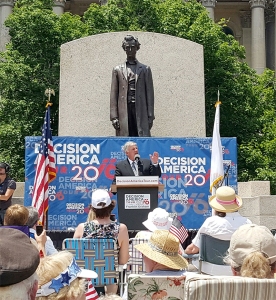
Franklin Graham speaks at the Illinois Capitol. Photo courtesy Micheal Henderson

Springfield | On Tuesday, June 14, thousands gathered in Springfield to hear Franklin Graham, oldest son of evangelist Billy Graham, as he stopped in Illinois for his 50 state, Decision America Tour. Many braved the 90-degree weather and lined the streets and lawns surrounding the Illinois state capitol, as Graham challenged Christians to pray for the country and take a stand for their faith.

Churches from across the state were represented with many bringing vans of supporters. The crowd enthusiastically sang “How Great Thou Art” preceding the rally.

When Graham arrived, he began the time leading everyone in prayer for the people affected by the Orlando shooting. Using the tragedy as an example of our country’s sinfulness, Graham plainly stated that he has no hope in either the Democratic or Republican Party to turn things around.

“The only hope for the United States of America is the Almighty God,” Graham proclaimed, stating that God’s truth and righteousness should be the utmost focus of every evangelical Christian who calls this country home.

Graham went on that Christians must make their voices heard if America is to be preserved, and the Christian heritage restored that has given us the liberties we now enjoy.

Without telling people who to vote for, Graham simply asked those in attendance to consider pledging to: daily live out biblical principles, honor God in public, vote for political candidates if at all possible who uphold biblical standards, pray for our country, and lastly, consider if God so leads, to run for office.

Graham’s parting words: “Our job as Christians is to make the impact of Christ felt in every [area] of life – religious, social, economic, political… But we can only do [this] as we surrender ourselves completely to God, allowing Him to work through us… Let’s elect men and women to office who will lead this nation back to really being one nation under God.”

– Morgan Jackson

Headline prayers

ib2newseditor —  May 30, 2016

Today’s headlines are driving me frequently to deeper and more desperate prayer. Many of us probably whisper something like “God help them” when we see a tragedy reported on the news. But I’m not primarily referring to headlines about a natural disaster, or a rare, heinous crime by an isolated, evil person. The headlines driving me to deeper prayer are those that reveal a declining morality in our culture that seems more and more widely accepted.

My main dose of these daily headlines usually comes in the early morning while I’m exercising in front of the TV. As I flip from one news channel to another, I more and more regularly see behaviors and lifestyles and decisions that would have been considered shameful or scandalous a generation ago. Now they are reported as progressive, or even normal. And the proud spokespeople for many of these decadent trends are interviewed by often adoring news anchors, as if they were the civil rights voices of today.

I often find myself asking “Help them, help us, help me.”

Unrestricted freedom of individual choice, preference, and expression seem to have become idols in American culture today. Just this past week, a story and its follow up interview so shocked and deflated me that I moaned out loud, “Oh God, help them!”

“Help them to see the deception they have bought into, and the damage they are doing, and the long-term consequences of the sinful lifestyle they are advocating, both to themselves and to others. Convict them of sin, God, and show them the same mercy and grace that you show me when you convict me of my sin.”

But as the disturbing interview went on, I also found my prayer deepening. “Yes, God, help them, but also help us! Your gospel had no voice in that headline, and your church had no spokesperson in that panel discussion. Interviewer and interviewee alike just presented that issue totally void of biblical perspective or truth. God, don’t let that happen! Don’t let millions of viewers gradually learn to accept that position as true and normative. Give your truth a voice through your people!”

The story passed, and I don’t know what was on the screen next, because my prayer was driven even deeper. “Yes God, help them, and help us. But oh God, help me too!  My voice is so silent. My life is so impotent. My efforts to carry the truth of your word and the power of your gospel are so weak. I’m going to go to the office in a few minutes to answer some e-mails, sit in some meetings, and move some projects along. But what will I have personally done to make any difference in the cultural decline I have just witnessed?”

My feeling of powerlessness was frustrating. And that frustration made me angry. I found myself wanting to pray for God’s righteous judgment to simply fall upon these people, and upon our land if necessary, and make it all right again.

But I’ve learned to be careful, even fearful, about calling for God’s judgment. I am too often deserving of it myself. And when I was most deserving of it, when I was still a sinner by lifestyle and choice, when I was just as far from God as the frustrating people in the headlines, that’s when God in Christ reached out to me in mercy, and with conviction and grace and forgiveness. And he still does that today.

So I am meeting the morning headlines these days with these three prayers: God, help them. Help us. Help me. I invite you to join me in these prayers.

Nate Adams is executive director of the Illinois Baptist State Association. Respond at IllinoisBaptist@IBSA.org.

Meet_us_in_St._Louis

Online registration by messengers urged; big prayer meeting Tuesday night

Southern Baptist Convention President Ronnie Floyd has clear objectives in mind for Baptists meeting June 14-15 in the Gateway City. When they depart from St. Louis, he told Baptist Press, he’s praying they will do so with a “deep burden for our nation, a new commitment to racial unity and an extraordinary commitment to evangelize America.”

Floyd, completing his second one-year term as SBC President, is planning the second-annual Convention-wide prayer meeting for the Tuesday evening session in St. Louis. “A National Call to Prayer for Spiritual Leadership, Revived Churches, Nationwide and Global Awakening” will feature SBC leaders and pastors, with music by Keith and Kristyn Getty, the composers of modern hymns including “In Christ Alone.”

“Here is what I know: If we do not plan to pray, we will not pray!” Floyd blogged in April.

“It is past time for us to prioritize prayer, both personally and in the church, as well as in our Southern Baptist Convention. For far too long, we have seen what we can do; it is time for us to see what God can do. This can only happen when we pray.”

The 2015 prayer meeting highlighted the need for racial unity and diversity in the SBC. In St. Louis, African American pastor Jerry Young, president of the National Baptist Convention, USA, Inc., will participate in the prayer meeting and also in a Tuesday morning session titled “A National Conversation on Racial Unity in America.” Marshall Blalock, pastor of First Baptist Church in Charleston, S.C., also will join the conversation.

“With the racial unrest in St. Louis due to what happened in Ferguson in August of 2014, Southern Baptists will have a strong opportunity to represent Christ through Crossover ministry in the city,” Floyd said, noting the evangelistic effort prior to the Convention.

“I believe we will leave St. Louis with a powerful, strong, clear and encouraging testimony of the need for loving one another, regardless of the color of one’s skin.”

In addition to racial unity, the convention will include a panel discussion on pastors, churches and politics, and a Q&A session with SBC entity leaders, who will answer questions from messengers.

Meeting highlights

The North American and International Mission Boards will host a Sending Celebration to conclude the Convention Wednesday afternoon. NAMB also will launch “Send Relief,” an initiative to train church members to engage their communities with gospel-centered compassion ministries.

Prior to the convention, NAMB will host several ministry opportunities in the St. Louis area, including a partnership with First Baptist Church, Ferguson, Mo., to give away Backpacks of Hope and host a carnival for Ferguson children. Southern Baptist volunteers, in partnership with the Red Cross, will also go door-to-door to install free smoke detectors for Ferguson residents.

“We hope Southern Baptists can walk away from the convention this year knowing that there is a very attainable ministry that they can be involved with that will help them engage with and reach their community,” said David Melber, NAMB’s vice president for Send Relief.

The mission board also will operate mobile dental and medical clinics in St. Louis, and plans to make the units available to churches desiring to do similar ministry in their communities.

LifeWay Christian Resources will screen two movies during the Convention, including “The Insanity of God,” a documentary featuring real-life stories of persecuted Christians around the world. The film, produced by the International Mission Board, is based on the book of the same name by Nik Ripken.

“The Insanity of God” will be shown free of charge in Ferrara Theatre at America’s Center Monday, June 13, at 9 p.m. Tickets are not required, but seating will be limited. LifeWay Films will screen an additional movie following the Tuesday evening session.

The Ethics and Religious Liberty Commission will release the first three books in its “Gospel for Life” series in St. Louis. The 9-book series “aims to help the church in navigating through ethical and cultural issues,” said ERLC President Russell Moore. The first three books in the series focus on religious liberty, racial reconciliation, and same-sex marriage.

The SBC Exhibit Hall will once again include a Wellness Center hosted by GuideStone Financial Resources. The center will offer cholesterol and glucose screenings, as well as data to determine body mass index. Participants will receive a personalized report that is suitable to take to their family doctors, and on-site medical professionals will be available to discuss results.

GuideStone also will offer three seminars aimed at various audiences: “Retirement Income Solutions,” “Health Care Reform Impacts Your Church, Too,” and “The Struggle is Real: The Solution is Simple,” a seminar for younger investors. All seminars are free, space is limited. Visit GuideStone.org/SBC16 to register.

Business notes

In addition to the three candidates for SBC President (see page B-3), Illinois pastor Doug Munton has announced he will be nominated for the office of First Vice President. John Yeats, executive director of the Missouri Baptist Convention, will be nominated for a 20th term as SBC Recording Secretary.

John Avant, pastor of First Baptist Concord in Knoxville, Tenn., will be nominated for president of the Southern Baptist Convention Pastors’ Conference.

Several Baptists from Illinois have been selected for committees meeting during the Convention: Munton and Michael Allen, pastor of Uptown Baptist Church in Chicago, will serve on the Committee on Committees, which nominates members of the Committee on Nominations who, in turn, nominate trustees for the boards of SBC entities.

Dan Eddington, director of missions for Three Rivers Baptist Association, and Ric Worshill, a member of Crossroads Community Church in Port Barrington, will serve on the SBC Credentials Committee.

Online registration tools

Convention messengers can register online at sbcannualmeeting.net under the Messengers/Guests tab. To help ensure the orderly flow of attendees and enhance security of the convention hall, this year each messenger, exhibitor, and guest must be registered and properly badged for entrance into the general sessions June 14-15.

After completing online registration, each individual will receive an eight-digit registration code to present at the express registration lane. There, the code can be entered into a computer and a nametag will be printed.

Registration is also open for preschool child care, Giant Cow Children’s Ministries, Children in Action Missions Camp, and Youth on Mission in conjunction with annual meeting. All activities for children and youth will be housed at America’s Center. Youth who have completed grades 7-12 will begin their days at the convention center with worship before going into the community for hands-on mission projects.

Pre-registration is required and is available online at sbcannualmeeting.net under the Children/Youth tab.

The SBC Annual Meetings app is again available to Convention-goers, including a listing of speakers for the SBC Pastors’ Conference and SBC annual meeting, as well as the daily program schedule, daily events, exhibitor listing, convention center maps, 2016 Book of Reports and more.

For more information on the 2016 Southern Baptist Convention and the SBC Pastors’ Conference in St. Louis, as well as other meetings and events, go to sbcannualmeeting.net.

– From Baptist Press reports

My history attending the annual Southern Baptist Convention is not as long or as deep as many. Occasionally I meet someone who will tell me, “This is my 40th SBC,” or “I haven’t missed a convention in 25 years.”

Though my father was a pastor and then director of missions, I didn’t attend my first SBC until 1992. That year the convention came to Indianapolis, as close as it had been in many years to the Chicago suburbs where we lived. A friend from church suggested going, “because it’s rarely so close.” Indeed, the SBC would not come within 500 miles of Chicago for another 10 years. So we went and took my dad along with us.

Little did I know that only five years later I would be flying to only my second SBC in Dallas, to be voted on as a vice president with the newly formed North American Mission Board. I haven’t missed an annual SBC meeting since then. This year, Lord willing, will be 20 in a row.

If you haven’t been to the convention before, or can’t go often, this is the year.

I share this personal history to say that I really do understand why the average person may not regularly attend the annual SBC. Unless there’s a controversy or crisis of some kind, the SBC is often left primarily to professionals who have travel budgets, and pastors who may direct part of their family vacation time there. Perhaps that’s why attendance at the SBC has only topped 10,000 three times in the last 15 years. Peak attendance during the conservative resurgence of the mid-1980’s was over 40,000.

But now, let me challenge you to attend the June 14-15 SBC in St. Louis this year. As my friend said, it will be years before it’s this close to Illinois churches again. If you haven’t been before, or can’t go often, this is the year.

More importantly, this year’s elections and other actions will be significant. It was announced just last week that Illinois’ own Doug Munton, pastor of First Baptist, O’Fallon, will be nominated as First Vice President. I’m really excited about that. I hope hundreds and hundreds of Illinois Baptists will be there to support this outstanding Illinois pastor for this national role.

The election for president this year also presents a significant choice between pastors with notable differences, not just in ministry experience, but in the areas of doctrinal conviction and missions cooperation. Illinois messengers will want to study these in advance of the convention, and arrive prepared to support the nominee who best represents not only their own churches’ practices and convictions, but also the direction that they feel is best for our Great Commission cooperation as Baptist churches in the future.

Normally Illinois ranks about 15th of 42 state conventions in the number of messengers it sends to the national SBC. But the last time the convention was in St. Louis (2002), Illinois ranked 5th, with 611 messengers from 193 churches. And in 1987, the previous time the SBC was in St. Louis, Illinois churches sent 1,373 messengers. Yet last year only 139 messengers from Illinois churches attended the SBC in nearby Columbus.

To encourage messengers to turn out in record numbers this year, IBSA will be hosting a reception for Illinois Baptists at the St. Louis convention center, on the Monday night following the Pastors’ Conference and just prior to the convention’s start on Tuesday morning.

Whether this year is your 40th SBC, or your very first, I hope you will make the SBC in nearby St. Louis a priority this year. What happens at the SBC is really up to folks like you and me.

Nate Adams is executive director of the Illinois Baptist State Association. Respond at IllinoisBaptist@IBSA.org.

Signs of Hope

ib2newseditor —  May 5, 2016

Illinois women on a mission in South Asia see lives changed by the story many there had never heard.

Editor’s note: In April, a team of women from Illinois traveled to South Asia to share gospel stories and witness how believers there are working to push back spiritual darkness. Lindsay McDonald, a pastor’s wife from First Baptist Church in Casey, captured the trip in words and pictures.

Okay, you can start,” Mim* says, leaning towards Gail Faulkner, who sits on the chair beside her. Having practiced the “Creation to Christ” story for months now, today is Gail’s opportunity to tell the gospel story that her team traveled nearly 8,000 miles to share.

“So, I should go ahead and start the story?” Gail confirms with Mim, a believer working to reach others in her country. About 20 women are gathered, clustered together on handcrafted floor mats.

A Hindu woman offered her simple, empty home for today’s story. The room is dark and still.

The women look expectantly at the visiting Americans and their translators and ministry partners—women from this country who have converted to Christianity.

“Yes, tell them. They are thirsty,” Mim responds with urgency.

S_Asia_women_no_text

Women here talk to each other while they prepare meals, wash clothes in the village pond, and care for their children. When the women in the last village on the last day were asked about how to apply the story to their lives, they said, “If we spend less time gossiping, we will have more time to share the gospel.”

Gail, a pastor’s wife from Bethalto, Ill., joined this mission team even when this part of the world wasn’t on her radar. She says God made it clear to her that it was her time to be on the team, and cleared her path of any financial obstacles to traveling thousands of miles from home.

Joining her on the team were six other women from Illinois and three from the Carolinas. They came from a variety of life stages: young mothers, grandmothers, retirees, professionals. All prepared and trained for months to bring the message of hope Isaiah prophesied to the Israelites thousands of years earlier: a perfect sacrifice, Jesus.

The Illinois volunteers came to partner with two missionaries serving in this densely populated country, and three national believers who served as their guides and interpreters. These Christians focus primarily on evangelism to Muslim women, who they can encounter more freely because of the culture here. The nation’s oral tradition is built on conversations and storytelling. Much like the story about to begin in this dark house.

Out of darkness

Life in South Asia is hard.

“Oppression is real and hope seems distant,” says Amy Neibel, a mission team member from First Baptist Church in Carmi. In this country in South Asia, 80% of the people live on less than $2 a day, and 40% live on less than $1.

Poverty is real.

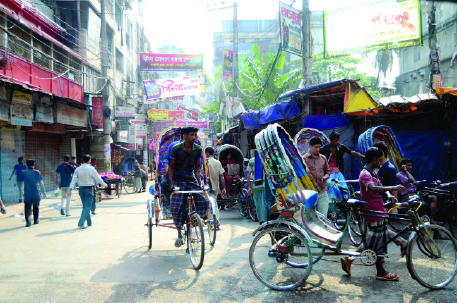
It bombards all of your senses—the smell of waste in the street, as adults and children sift through it, looking for items to recycle and sell. Cars honk in the dense traffic, and rickshaw drivers pedal passengers to and fro for a minimal wage.

Darkness is prevalent.
S_Asia_street_no_text.jpg

Sights of daily life whizzed past our van as we traveled the dusty, dirty, bumpy roads that are congested with chaos. Traffic, animals, people. Vendor after vendor sells fruit, meat and South Asian cuisine. Physically and mentally disabled adults lay on the side of the road, and beggars tap on the vehicle window looking for money.

“It is a place where you not only sense it, but also see the spiritual darkness on the faces of the people,” Amy says. The country is 98% Muslim and many haven’t heard about salvation through Jesus.Almost 16 million people hear the Muslim call to prayer fives times a day; some stop and pray and others proceed with their day.“Though you can sense the darkness, they are just like us—they are hurting,” team leader Kimberly Sowell says during a morning devotional. Sowell’s ministry, Bangladesh: For Faith and Freedom, supports job training for women and girls, offering them a way out of the hopelessness that is so prevalent.

“All of God’s people are called to be used of him but why do some not go?” Kimberly asks the team. They answer, We’re comfortable where we are. The missions call is for “other people.” There’s plenty of spiritual need at home.

Most of all, this place is hard.

“God is working here. That’s why there is persecution, if God wasn’t moving there would be no persecution,” says Mim.

Into the light

Walking is a part of the daily routine here. While out one day in the capital city and a nearby port city, Gail says, “I noticed there was no life. The faces of the women passing me were stoic. No expression. The lack of hearing the voices of children crushed my grandma’s heart. I’ve never been to an area where the noise of children playing, yelling, running and crying could not be heard.”

Stepping into the Light of Life and Light of Hope Learning Centers is a different story. Within these walls, there is life! Young smiles greet the team as they enter. They play Twister, Phase Ten, and Old Maid with the girls to teach them colors, animals, numbers, and occupations.

The ministry Sowell began in 2013 supports efforts to provide nutrition, hygiene, education and vocational training to young women. Here, they also hear the gospel, so they can find faith and freedom in Jesus Christ.

“The Light of Hope Learning Center is an amazing place full of laughter and love,” says Connie Lang, a volunteer from First Baptist of Casey, on her first international mission trip. “It is run by an amazing missionary, Susan Kirker,* who loves the girls and their mothers.

“As we built relationships with the girls, I loved hearing them recite the Bible story that was being taught to them,” Connie says. “This trip has been life-changing. I have grown closer to the Lord and have seen the power of prayer at work.

“I would love to go back again.”

While leaving the capital city headed to our next area of work on Friday, we had just started to pray for the city when we drove by a mosque. Hundreds of men were lying facedown praying to Allah. Our hearts were sick to see the lostness right before our eyes. It’s everywhere—less than 1% are believers. You can feel the spiritual darkness.

Both centers are funded by the International Mission Board, but they are run independently from one another, with different directors and school formats. Light of Life, located in the capital, has a school for at-risk girls during the day and brings in Muslim women in the afternoons for sewing lessons.

Light of Hope offers similar activities. Girls have the opportunity to sew in the mornings while earning a daily wage, and then attend school in the afternoon.

Both centers give hope to hopeless lives of the girls living in the city slums. “Yet it is even more than that,” Gail says. “The girls are offered a daily clean shower, two meals for the day, an education, sewing skills, Bible teaching and love.”

 Walking in new life

Back in the dark village house, the Hindu and Muslim women listen to the “Creation to Christ” story and then take turns repeating it, trying to commit it to memory. Since they live in an oral culture, many do not know how to read or write. Messages must be verbally transmitted in speech or song among friends and family, and then passed down through generations.

More than 30 women accepted Christ after hearing the stories the team shared. Several who believed have already set up a time to be baptized—a big step of obedience in a place where the decision to follow Christ could bring persecution.

“God showed himself mightily to the South Asians and our team,” said Niece Edwards from First Baptist, Carmi. “I was stretched as never before and learned more about God’s sustaining power.”

“Walking through this South Asian country during this season of my life, really displayed how I need to walk beside my husband with the purpose of harvest,” said team member Kathy Fullerton. “We need to be intentional with neighbors, strangers, friends, and family because the gospel can permeate cultural bounds. Jesus died for those in burkas and overalls alike.”

*Names changed.

Worth the risk

ib2newseditor —  May 2, 2016
A whirl of color – The Illinois mission team tries on pieces of the sari indigenous to the culture.

A whirl of color – The Illinois mission team tries on pieces of the sari indigenous to the culture.

As Carmen Halsey walked the roads of this South Asian country, she challenged herself to a game of sorts. “I’m a make eye contact, smile kind of person,” said IBSA’s director of women’s ministry and missions. Halsey tried to lock eyes with women she passed and see if she could get them to smile. But it never happened.

“I’ve never seen the face of oppression like what I saw there,” Halsey said, remembering how she tired of the multiple calls to prayer at the mosque, ringing out daily and reminding her mission team of how many people are walking in spiritual darkness.

Halsey’s trip to South Asia was actually years in the making. When she joined the IBSA staff in 2013, she mobilized women in the state around awareness and prevention of human trafficking—a focus started by National Woman’s Missionary Union.

In Illinois, Halsey has continued that emphasis, putting in place a task force to study the issue, create resources for churches, and facilitate mission trips in North America and internationally to be involved in rescuing victims of trafficking. The trafficking focus is how Halsey met Kimberly Sowell and Bangladesh: For Faith and Freedom.

The April trip, led by Sowell, gave Halsey and Illinois women an opportunity to see up-close trafficking prevention and rescue at the Light of Hope Center. But they also saw the importance of encouraging national Christians—South Asian women who have come to Christ and are now risking persecution to reach others with the gospel.

During their trip, the Illinois women saw in a new, real way the threats Christians face in other parts of the world. The awareness that believers in South Asia could lose their lives for their faith spurred the team on, Halsey said, and inspired “intense, beautiful” prayer. It also left Halsey wrestling with a bigger question: As Christians in the U.S., most of us don’t have a target on our backs. Why then are we not sharing here?

As the team ministered in a village one day, they were asked to pray for people who were sick. One woman went to get her son, a Muslim, so Halsey could pray for him. Halsey describes what happened next as her boldest moment. “I looked at him and said, ‘I will pray for you. But I have got to be clear: There is only one name I’ll pray to.”

In this place, where people are in desperate need of hope, only one Name can deliver it: Jesus.

For more information about IBSA mission opportunities, contact Carmen Halsey at (217) 391-3138 or CarmenHalsey@IBSA.org.

– Meredith Flynn

See you in St. Louis?

ib2newseditor —  April 25, 2016

St. Louis map pin2

What takes place at the convention is important—in the meetings and in the streets.

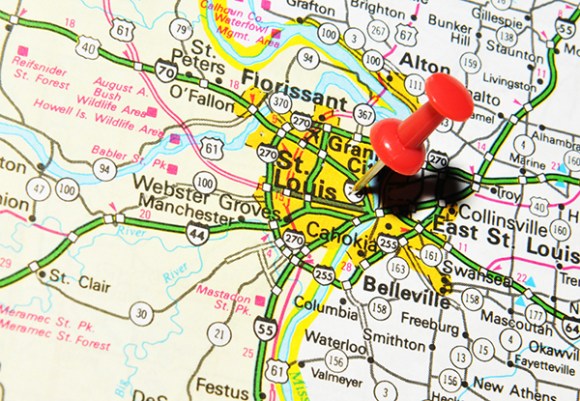
When the national Southern Baptist Convention convenes in St. Louis on June 14, I’m hoping there will be a record number of messengers from Illinois churches present. Among the cities where the SBC has met in recent years, St. Louis is certainly the most accessible to a majority of Illinois churches. But convenience isn’t the main reason I’m hoping to see hundreds, even thousands of messengers from Illinois.

First, this is an important SBC presidential election year. As President Ronnie Floyd is completing his second one-year term, three pastors have announced their intent to be nominated. As in the campaign for U. S. President, there are clear and important differences to be found in the leadership records, public statements, and declared priorities of each person seeking to lead the SBC into the future.

In fact, this year’s candidates have notable differences, not just in ministry experience, but in doctrinal conviction and missions cooperation. Messengers will want to study these in advance of the Convention, and arrive prepared to support the nominee who best represents not only their own churches’ practices and convictions, but also the direction they feel is best for our Great Commission cooperation as Baptist churches in the future.

Through the Illinois Baptist, IBSA.org, and other channels, IBSA is providing churches with objective information about and from the SBC President nominees and other issues anticipated at the Convention. IBSA will host a reception for Illinois Baptists at the St. Louis convention center on Monday night following the Pastors’ Conference and just prior to the convention’s start on Tuesday morning. So please, stay engaged and informed!

It’s also important that representatives from your church arrive as registered messengers, and not just as guests. Remember to elect messengers in advance at a church business meeting and register them online if possible. If you need help with this process, contact us here at IBSA.

A second important reason for coming to St. Louis is the evangelistic opportunity called Crossover that takes place just prior to the Convention. In fact, many Illinois churches could participate in Crossover on Saturday, June 11, return to worship in their own churches on June 12, and return for the Pastors’ Conference and Convention the following week.

Metro East Baptist Association Director of Missions Ronny Carroll and others have been representing the Illinois side of the river in planning this emphasis, which includes a variety of volunteer opportunities. You can find a complete listing online at meba.org/crossover-st-louis-2016/.

The people of the cities where the annual SBC is hosted certainly notice when Southern Baptists come to town. The Southern Baptist Convention is a major event, often covered in the news. Church messengers saturate the convention center, hotels and restaurants, and sometimes outside protesters try to step into the spotlight to advance their agendas.

This very public setting provides a wonderful opportunity for thousands of evangelistic volunteers to come and bring the host city both sacrificial service and the good news of the gospel. What takes place in the reporting, worship and business sessions of the SBC meeting itself is vitally important, and worth our time as messengers from Illinois churches, especially this year. And what takes place out in the streets at Crossover can be eternally significant to those who may meet Christ there. It’s well worth our time, both in St. Louis and in our own communities. And these are two very good reasons why I hope I will see you in St. Louis.

Nate Adams is executive director of the Illinois Baptist State Association. Respond at IllinoisBaptist@IBSA.org.

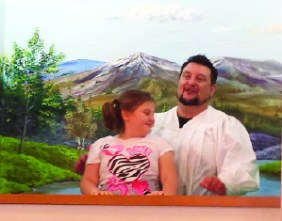
Pastor Brad Sloan baptizes his daughter, Delaney, at Dahlgren Baptist Church.

Pastor Brad Sloan baptizes his daughter, Delaney, at Dahlgren Baptist Church.

How did Dahlgren Baptist Church move from two baptisms in 2014 to 17 last year?

“I’ll give you the short answer: It’s all about Jesus,” said Pastor Brad Sloan.

His church is located in a small, predominantly Catholic village 15 miles southeast of Mt. Vernon, IL. “There were a few people who were like, man, I don’t know if you’ll ever see much growth there,” said Sloan, who was installed as pastor in August of 2014.

The church hasn’t yet seen massive growth, “but what we have seen are souls (saved).”

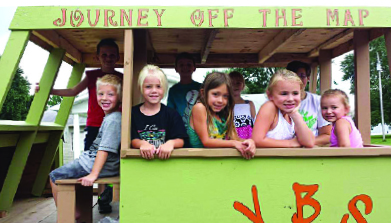
Dahlgren’s Awana program for children reaches kids in the community whose parents aren’t yet connected to the church. Last summer, the church held its first Vacation Bible School in 10 years, with 33 kids in attendance.

In 2015, Dahlgren Baptist Church hosted its first Vacation Bible School in 10 years.

In 2015, Dahlgren Baptist Church hosted its first Vacation Bible School in 10 years.

Through those outreach efforts and intentional Sunday school-based discipleship, Sloan is trying to inspire in his leaders a hunger for people to come to know Christ. In turn, the leaders challenge the students they’re discipling to examine what it means to have a relationship with Jesus.

“We’ve just had a lot of victory (in student ministry) when kids begin to be challenged: Hey, what do you believe about Christ?”

In 2015, the majority of Dahlgren’s baptisms were children (although the total also included a family and a grandmother, Sloan said). The kids are now participating in children’s church and youth activities, and are learning to share their faith. The church also works to engage parents as they come to pick up their children from church.

Sloan sees revival happening in his community, particularly in the schools, as students are being stirred to really live like Christ.

“There’s not one person in this little village that Jesus can’t impact,” he said, “and it’s up to us to introduce them to him.”