Archives For November 30, 1999

Heath_Tibbetts_blog_calloutCOMMENTARY | Heath Tibbetts

“And they devoted themselves to the apostles’ teaching and the fellowship, to the breaking of bread and the prayers.” Acts 2:42

Baptist prayer lists are where requests go to die. How many times have you looked at the prayer list at your church and said, “Who’s that person?”
Most of us have come across the request that was once pressing and now forgotten. Oft times I have asked someone about a previous request, only to watch them stare at me blankly. I suddenly realize I’ve prayed about their request more than they have.

The problem isn’t really with the prayer list, but our listless prayers.

The early believers in Jerusalem devoted themselves to many areas that Southern Baptists pride ourselves on today. We are known for our devotion to strong biblical teaching and to friendly, fried fellowships. But how devoted are we in our personal
prayer lives?

We can never have a praying church without a praying membership.

The word “devoted” in Acts 2:42 indicates the church prayed with expectation and then waited for results. Many of these new believers had rarely heard prayer outside the temple and now they had direct access to the Father through Jesus, their great high priest. Prayer was now powerful and personal and they became praying people building a praying church.

It still happens today. As we watch from half a world away, Ukraine is mired in difficult days. And yet IMB worker Shannon Ford, who lives in the capital city of Kiev, gives this report: “The response from the churches has been fantastic. It really has been a time for prayer – not simply saying we’re going to pray, but actually going and being seen and guiding other people to pray.”

This is the work of the church. God didn’t call us to be a house of activity, but a house of prayer in Isaiah 56:7. Churches must begin praying with expectation, waiting to see God move. The great call of the church is to call on God.

So, how do we make this shift, and how can we tell if we’re even getting close?

First, we must never assume people in our churches are praying. Luke 11:1 tells us of Jesus completing His prayer time and being asked by his disciples, “Lord, teach us to pray.” These were guys who had grown up in church, and they had no idea how to talk to God.

Ask people about their prayer lives, and encourage them by praying with them and for them. I’ve even found sending a quick text, Facebook message, or e-mail can be a great way to encourage fellow believers to make time for prayer.

And secondly, pray! I believe we should see prayer going on all over the church. I was greatly encouraged a few weeks ago when I saw a hurting family being prayed for by one of our church leaders in the hallway. This needs to happen more. Stop saying, “I’ll pray for you,” and instead say, “Let’s pray.”

The greatest encouragement I can provide as you examine your own church is in Romans 8:26: “Likewise the Spirit helps us in our weakness. For we do not know what to pray for as we ought, but the Spirit himself intercedes for us with groanings too
deep for words.”

Even a praying church is a credit to the work of God.

Don’t just take prayer requests, but truly pray. Let people know you’re praying for them, and take the opportunity to rejoice together when God moves in a request. Let us no longer pray because it’s scheduled, but because we’re moved. And watch us make that subtle, but powerful, turn from a church that prays to a praying church!

Heath Tibbetts is pastor of FBC Machesney Park, Ill.

Thom_Rainer_blog_calloutCOMMENTARY | Thom Rainer

Editor’s note: Thom Rainer is president and CEO of LifeWay Christian Resources. This article was originally published Feb. 12 at ThomRainer.com.

Many churches are busy, probably too busy. Church calendars fill quickly with a myriad of programs and activities. While no individual activity may be problematic, the presence of so many options can be.

An activity-driven church is a congregation whose corporate view is that busier equals better. More activities, from this perspective, mean a healthier church. The reality is that churches who base their health on their busyness already have several problems. Allow
me to elaborate on seven of those challenges:

1. Activity is not biblical purpose. Certainly some activities can move a congregation toward fulfilling her biblical purposes. But busyness per se should not be a goal of a healthy congregation.

2. Busyness can take us away from connecting with other believers and non-believers. It is sadly ironic that local churches are often a primary reason we do not connect on a regular basis with people in our community and in the world. We are too busy “doing church.”

3. An activity-driven church often is not strategic in its ministries. Leaders do not think about what is best; they often just think about what is next on the activity list.

4. A congregation that is too busy can hurt families. Sadly, some church members are so busy with their churches that they neglect their families. Our churches should be about strengthening families, not pulling them apart.

5. An activity-driven church often has no presence in the community. Christians should be Christ’s presence in the communities their churches serve. Some Christians are just too busy doing church activities to have an incarnational presence in the community.

6. Activity-driven churches tend to have “siloed” ministries. So the student ministry plans activities that conflict with the children’s ministries that conflict with the senior adult ministries, and so on. Instead of all the ministries and activities working together for a strategic purpose, they tend to work only for their particular areas.

7. Churches that focus on activities tend to practice poor stewardship. Many of the activities are not necessary. Some are redundant. Others are sacred cows. Ministry effectiveness can often be enhanced with less instead of more.

Many of our churches have traded effectiveness for busyness. Good use of the resources God has given us demands that we rethink all we are asking our members to do in our churches. We really need more simple churches. Now that’s a novel concept.

Ronnie_Floyd_blogCOMMENTARY | Meredith Flynn

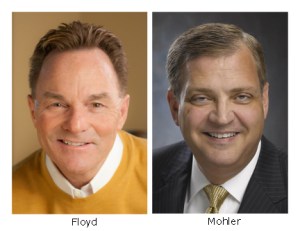
Ronnie Floyd is the first candidate to toss his hat in the ring for the next Southern Baptist Convention president. Although, in keeping with tradition, Floyd’s nominator actually did
the tossing: Southern Seminary President Al Mohler announced last month he will nominate Floyd for the convention’s top elected post at the annual meeting in Baltimore.

No one else has allowed his name to be brought forth so far. This unusual across-the-aisle nomination, and a potential single-candidate race, has several implications for Southern
Baptists:

1. The Calvinism debate doesn’t have to result in a hostile takeover for either camp. Mohler’s well-known and well-documented theological perspective is different from what is known of Floyd’s. In an open letter announcing the nomination, the seminary president and leading Reformed thinker lauded Floyd as a unifier. He specifically mentioned the theology talk that has dominated conversation over the past several years, pointing to Floyd as a leader who can move the SBC toward a common goal of reaching the world for Christ.

Mohler’s nomination of Floyd is likely the kind of unifying event SBC Executive Committee President Frank Page had in mind when he appointed an advisory committee to study how the two “sides” can work together.

2. The generation gap may be narrowing. Mohler has the ear of many young Baptists, as a seminary president and proponent of Reformed theology, whose adherents tend to skew younger. He is in the unique position of being able to steer 30-somethings toward active participation in Southern Baptist life, without being a 30-something himself. His nomination
of Floyd indicates he’s willing to guide young leaders away from a concentration on divisive issues and toward goals we can work on together.

3. With revival as the goal, Baptists are ready to rally around the Great Commission. Current SBC President Fred Luter made revival and spiritual awakening his platform during his two years of leadership, aiming to stem the decline in baptisms. “Fred Luter has led us so well as he has unified and inspired us,” Mohler wrote in his nomination letter. “Our next president needs to unify and inspire us for our next steps together.”

Floyd chaired the Great Commission Resurgence Task Force, which presented a comprehensive strategy in 2010 to push funding to areas of the country (and world) that are less churched and often more urban. More recently, he organized two prayer gatherings to guide pastors and leaders toward personal and corporate revival.

“Pastors believe the Great Commission can be fulfilled in their generation,” Floyd blogged after the prayer meeting in Atlanta. If he’s elected in June, he’ll be charged with communicating that vision to a multigenerational, theologically diverse denomination.

Meredith Flynn is managing editor of the Illinois Baptist.

Eric_Reed_blog_calloutCOMMENTARY | Eric Reed

We need to learn how to talk with young people.

I must have entered some stage of fogey-dom if I feel the need to make this topic a course of personal study. But I do. We all do.

The millennial generation is making important adult life decisions now: marriage, family, and faith. So many of them have eschewed the church, but they are the generation who will turn the tide and secure the future of our denomination, if it is to happen.

But how will we bring them into the kingdom, and into the church? More specifically, how will we bring them into Southern Baptist life?

Some fresh insight on this comes from an unexpected source, a Catholic professor who studies and teaches about contemporary religions. Patricia O’Connell Killen was a conference speaker at the February meeting of Baptist newspaper editors. Many of her observations of the American religious landscape were good summations of things we’ve already heard:

  • 1 in 5 U.S. adults claims “none” as their religious preference, with people under age 30 leading the exodus.
  • Fewer than 50% of U.S. adults claim to be Protestant, making Protestantism the minority religion for the first time in our national history.
  • The resulting “open” religious environment means people are very willing to experience without the pressures of cultural and family expectations; the choices are up to individuals as never before.

But when the professor spoke of the students in her classroom, most around age 20, I heard something I think we all need to hear. Here’s my interpolation:

Today’s young adults aren’t all looking for churches that are always adapting to the latest cultural trend. They don’t want a lot of the so-called “relevance” their parents sought. They want something in their faith and in their experience of church that is solid, unchanging, immutable.

Why? Things that change too much are untrustworthy, her students have said, and they want something they can trust. (One of Dr. Killen’s observations is especially pointed: “What is tradition for children who have negotiated three-to-five sets of parents since the age of two?”)

The professor contends that this emerging generation struggles to make decisions. The millennials had more options than any generation before them. (Which of 100 channels do you want to watch on TV, baby? Which video game do you want to play? What do you want to wear today, princess? Which toy do you want in your Happy Meal?)

The parents let the kids make the choices. And the kids – by chat, text, and tweet –consulted their friends. An entire generation with nothing but options was always testing the winds to see how their crowd was leaning.

That produced a lot of indecisive people who are always changing and, ironically, are suspicious of change.

The application to church life is counter-intuitive to me. I thought a generation of choice-addicts would want churches that offer lots of choices. But the professor says, not so. The church or denomination that is always changing for the sake of relevance doesn’t meet their needs, but instead feeds their deepest fears: There’s nothing I can really hold on to.

We who have preached against “tradition” in previous generations will bless a future generation if we point out the value of some biblically sound traditions. For Southern Baptists to have meaningful conversations with young people today, we must focus on the unchanging aspects of our theology and missiology: We are people of the Book, we preach salvation in Jesus Christ and there is salvation in no other, and everyone needs the opportunity to hear that Gospel.

This is not an excuse for our churches to get stuck in the old ways. Methods may change, because methods wear out and need to be replaced. And styles may change to fit communication needs and technologies. But worship is more than singing nothing but ditties written last Thursday, discipleship grows in relationships that endure for years, and faith is based on the unchanging God, “…the same yesterday, today and forever” (Hebrews 13:8).

In today’s conversations, our starting point may not be what’s new, but what’s not.

Eric Reed is editor of the Illinois Baptist, online at http://ibonline.IBSA.org.

wedding_bandsCOMMENTARY | Lisa Sergent

It wasn’t an exorcism, not in the way most people think of it: priests confronting the possessed with crosses and commands, the possessed responding with spinning heads and levitation. You know, like in the movies.

Instead, this was a worship service in a cathedral, led by a bishop. And its content was the rejection of Satan and his lies, affirmation of God and His truth, and repentance for the actions of our leaders in government.

The service was held at the same time Governor Quinn was signing the newly-passed same-sex marriage bill into law at an exuberant celebration in Chicago. Inside the Cathedral, it was prayerful and peaceful. A quick glance outside showed only a few protesters. And while the service was well attended by Catholics and some conservative Christians who had fought legalization of same-sex marriage, it went mostly unreported outside Illinois.

Until now.

It was one year ago last week, on February 14, 2013, that the State Senate passed SB 10. The succeeding flurry of rallies and legislative maneuverings produced a roller coaster of emotions for people on both sides, until the House passed the bill on November 5, 2013. Same-sex marriages will begin in Illinois on June 1.

Until then, what remains are the questions: How will churches respond when same-sex couples seek use of their facilities for wedding ceremonies?

Will churches allow the threat of lawsuits to have a chilling effect on other outreach ministries to their communities?

Will Christians remember the actions of their local legislators when they enter the voting booths in March and November?

And how long will mainstream media continue to depict people who hold to a biblical definition of marriage – Protestants and Catholics alike – as intolerant and extremist?

In answer to the last question: For a long time to come.

In January, Salon.com published excerpts of an interview with Springfield Bishop Thomas John Paprocki, calling the November event “a massive exorcism.”

“Certainly the redefinition of marriage is an opposition to God’s plan for married life,” the Bishop explained. “So I thought that would be a fitting time to have that prayer, really for praying for God and his power to drive out the Devil from his influence that seems to be pervading our culture.”

Now, three months later, Paprocki equates his actions with parenting: “Perhaps it’s the permissiveness of our society that people think…that you’re somehow being hateful, if you don’t give them what they want. But sometimes, like any good parent will tell you, that sometimes you have to discipline your child, sometimes you have to say no.”

Lisa Sergent is IBSA’s director of communications.

Pat_Pajak_blog_calloutCOMMENTARY | Pat Pajak

You might actually be tearing down the very thing you’re trying to build if you’re guilty of these teamwork killers:

1. Practicing the age-old adage: My way or the highway
When trying to build teamwork, don’t forget that everyone has an opinion. Oftentimes, the thoughts, ideas and suggestions that arise through team discussions can be helpful. Listen to and learn from your team, involve them in decision making, ask for their input, and embrace the reality that teamwork can often be better than “my way or the highway!”

2. Being all about the numbers
Make no mistake about it, numbers do matter and the bottom line is important, but it’s not the final measurement. The very best teamwork (strategies, goals, planning and effort) doesn’t always produce the expected results. Numbers become a problem when a leader puts so much focus on them that he or she forgets about the importance of the team – the people who are making those numbers happen. People matter more than numbers, and forgetting that fact destroys teamwork.

3. Talking without listening
If no one else can get a word in or share an opinion, there is no teamwork. A leader destroys the opportunity to build future leaders if he or she is always talking and never listening. If people are never heard, they will soon cease to share things that matter.

4. Changing things just for the sake of changing things
Change is good and sometimes necessary. But it must be based on a specific outcome. Any leader who takes this to another level by changing things just to let you know they’re in charge doesn’t really understand teamwork. Operating as a team requires a leader to explain why change is necessary, move carefully through the process, and be willing to admit that what the team is saying sometimes makes perfect sense. Failure to survey the impact, timing and necessity of change destroys teamwork. Get everyone on board before any change takes place.

5. Micro-managingThe quickest way to destroy a team is to micro-manage every decision, action and assignment. Team members know the difference between being given a responsibility, and being handed a predetermined to-do list. Leaders who care more about things being done exactly their way destroy the notion of teamwork. Are you really interested in building a team? Remember the word of Dr. John Maxwell: “People don’t care how much you know until they know how much you care.”

Pat Pajak leads IBSA’s church strengthening team.

Mark_Warnock_blog_calloutCOMMENTARY | Mark Warnock

I resigned in December from my church, First Baptist Columbia, to return to my home state of Florida. God has burdened me with the vast lostness of South Florida, and impressed upon me a duty to be closer to my aging parents. I’m moving down to join a church planting movement in South Florida, and to shine my little Gospel light in that darkness.

This move brings to a close 17 years of ministry in Illinois – six-and-a-half years in Chicagoland, and eleven years in the Metro East. I leave behind a host of people at my church and throughout the state that I love and respect. As I leave Illinois, I see both a lingering challenge and a great hope.

The primary challenge I see is the same one the church faces everywhere: selfishness. On a personal level, a church level, and a denominational level, we must fight constantly the Satanic gravity of our own selfishness that wants to make our lives all about us, our churches all about us, and our denomination all about us.  Jesus our Savior came not to be served, but to serve, and He calls us to deny ourselves, to take up our cross and to follow Him.

God formed a church to be a light to the world, for His glory. He has graciously allowed us to cooperate as a denomination to pool our efforts to fulfill the Great Commission, for His glory. So to the leaders in Illinois: Do not stop calling us outward, to the lost. Remember Luke 15, and the priority of God our Father: “…there is joy in the presence of God’s angels over one sinner who repents.”

This fight to keep our eyes outward is not in vain, because there are signs of hope everywhere. Here are three I see:

Planting churches. I learned during my time at Columbia that one key to a healthy church is a steady stream of new converts. Like families, which continue to exist only if new babies are regularly born into them, churches begin to die without new spiritual life, and denominations begin to die without new churches.

I’m encouraged that God is calling men and women to devote their lives to starting new churches, and that IBSA is giving great priority to new church starts all across the state. Even more, I’m encouraged that increasingly, established IBSA churches are beginning to discover the joy and adventure of partnering with, supporting and working alongside church plants for the advancement of the Gospel.

Thinking students. I began teaching high school students at IBSA’s Super Summer in the late 90s. Many of the students I had in the early years are now pastoring or leading in churches across our state. I have been consistently impressed with the quality of the students in Illinois. They are passionate about the Gospel, hungry to be taught, and eager to love God with their minds. If our churches fail to equip our students with a clear understanding of the Gospel and the intellectual tools to be apologists in a hostile culture, we are in deep, deep trouble. The good news is that when presented with the challenge, our students – our future leaders – consistently rise to it.

A saving God. The real reason I have hope for the Gospel in Illinois and in South Florida? God keeps saving people. In my Monday night men’s group in Columbia, God kept saving some of the most unlikely men. In my first Sunday at my new church in West Palm Beach, I met a woman who came to church without an invitation, just stirred by the Spirit, and not knowing why she was there. She came to faith that week.

Consider Jesus’ answer to the scribes in Mark 2:17 who asked why He was eating with unlikely dinner guests – sinners and tax collectors. “Those who are well don’t need a doctor, but the sick do need one. I didn’t come to call the righteous, but sinners.”

No one is as passionate as our God to save sinners like us.

So to my colleagues in the Gospel across Illinois: Thank you for 17 years of friendship and love. Don’t lose heart. Let your light shine in the darkness. Keep speaking of Jesus. Keep fighting the good fight. Keep holding out the Gospel, because our God is willing and mighty to save.

Mark Warnock formerly served as associate pastor of First Baptist, Columbia.

Part of solving the leadership puzzle is determining whether a particular role calls for a manager, visionary, intern, or seasoned leader.

Part of solving the leadership puzzle is determining whether a particular role calls for a manager, visionary, intern, or seasoned leader.

COMMENTARY | Carmen Halsey

Every church should be mindful that the recruitment of leaders is necessary. New leaders can bring new ideas, offer different perspectives and bring a fresh burst of energy, giving respite to an existing team. But the key phrase is can bring. Before you bring in new leaders, it’s crucial to know who and for what you are recruiting.

Your ministry’s leadership needs could include, but are not limited to:

1. Managers, capable of caring for the existing programs and maintaining a high level of performance

2. Visionaries, able to forecast future needs and develop present plans to meet them

3. Interns, willing to learn and desiring to hold positions in the future, but with little to no experience at present time

4. Seasoned leaders, possessing a transferrable skill set and core knowledge requiring minimal support or oversight

A common mistake is to promote an individual from within to an area of leadership assuming they will be effective. But just because someone performed well with one set of responsibilities does not guarantee desired performance in another. This error often repeats itself in an organization, costing precious resources like time, money, relationships and – most crucial but often unnoted – loss of self-esteem by the individual. We have a responsibility to individuals and to the organization to identify the right person for a particular leadership role.

Excerpted from the Spring 2014 issue of Resource magazine, online at http://resource.IBSA.org. Carmen Halsey is IBSA’s director of missions mobilization and Illinois WMU. A nurse by profession, she also has a Master’s degree in Organizational Leadership and has served in numerous leadership roles in her field and in church life.

Editor’s note: We think this column by Greg Smith, which first appeared at BPNews.net, is especially timely as many Christians start a read-through-the-Bible plan – beginning in the Old Testament.

Greg_Smith_0120COMMENTARY | Greg Smith

Marcion of Sinope lived in the second century during some of the most formative years of the early church. The son of a bishop, he was also active as a teacher in the region of Asia Minor. In 144 AD, Marcion parted ways with the Christian community by starting his own movement; by doing so, he encouraged thousands through his teachings to better appreciate the Bible.

There was just one problem.

In 144 AD, Marcion was excommunicated from the church for heresy. What was his crime? Marcion taught his followers to reject the Old Testament entirely. His reason? Marcion thought that the Old Testament represented a god different from the New Testament. One cannot have two gods. Thus, Marcion and his followers read only selective books from the Bible and rejected the 39 books of the Old Testament entirely.

Callout_0123Is the cult of Marcionism still alive and active in our churches? It has become apparent to me over the last seven years of teaching Old Testament Survey that students come to my class with an under-appreciation for the text and history of the Old Testament. This stems from the fact that most of their exposure to the Bible, through teaching and preaching, has come largely from the New Testament. For many of my students, the stories of the Old Testament have served as illustration material and have rarely been allowed to speak theologically. This situation falls dangerously close to what the followers of Marcion practiced in the second century.

So what can pastors and teachers do to help their congregations and classrooms grow in their appreciation for the entire Bible?

First, ground your people in the truth that all Scripture is under the inspiration of God and beneficial for preaching, teaching, correction and spiritual growth (2 Timothy 3:16). For Paul and the other authors of the New Testament, the Bible of their day, the Bible that they read and used in the writing of the books of the New Testament, was the Old Testament.

Second, preach and teach from an entire book of the Old Testament and cover every verse. Will this require a few good commentaries and other resources that assist with understanding the culture, background and history of Israel? Yes, most definitely. But as you preach and teach the text and incorporate that information into what you say, you will make the Scriptures come alive for your people. You will also give them a context for reading the Old Testament on their own, with confidence, and with the ability to draw appropriate application for their lives.

Third, model life-changing application from the Old Testament in your teaching and preaching. While it is true that some things have changed over salvation history, the Old Testament still contains timeless truths that need to be incorporated into the life of the faithful.

Finally, inspire your flock with the simple but profound truth that God is always the same yesterday, today and forever (Hebrews 13:8). The “old” of the Old Testament cannot mean that God is somehow “updated” in the pages of the New Testament. Help make the pages of the Old Testament come alive for your congregation as you focus on the gracious and loving God who has revealed Himself throughout the entire 66 books of the Bible.

Greg Smith is associate vice president for academic administration and associate professor of Bible at The College at Southwestern, the undergraduate school of Southwestern Baptist Theological Seminary. This column first appeared at http://www.BPNews.net.

Nate_Adams_blog_calloutCOMMENTARY | Nate Adams

The Christmas and New Year holidays have passed, again. The decorations are mostly put away. The gifts have been placed into use, or into storage, or quietly returned. The various stresses of the season now finally seem to be subsiding, only to be replaced with something new – the stresses of returning to our regular routines.

One of the Christmas messages I heard last month focused on the shepherds. Before telling the story of how the angels came to announce Jesus’ birth, and how the shepherds left immediately for Bethlehem, the pastor went into some detail on how miserable the life of a shepherd was during that day. Their work was hard, and long, and dirty. They were poor. They had no status in society, no education, no real prospects. They were not only physically unclean, they were also considered spiritually unclean, at least by religious people. They had little hope.

As the pastor spoke, I began to think about how hard and thankless and frustrating work can be, and the drudgery of life’s routines. None of us have it as rough as first century shepherds. But I started thinking about the stacks of papers I had brought home from the office, and had not yet touched. I thought about my job’s most challenging problems, projects, and people, all of which would be waiting for me after the holidays.

Yes, leaving my own field of work for a break had actually sounded pretty good to me just prior to Christmas. The question was, where would I find my enthusiasm for returning to that field? Where do any of us find new hope and purpose for our work at the start of a new year, or a new week, or a new day?

We find it the same place the shepherds did. We find it in the presence of our King.  We intentionally pull away from our work, both its importance and fulfillment, and also its occasional drudgery and hopelessness. And we worship. We run to Jesus, and we realize again that He is our hope, that He is our strength, that He is our reason for living and that He gives purpose to our work.

Whatever our life’s work may be, if we do it merely for a paycheck, or for status or success, or to try and give our lives meaning, we will constantly feel like hopeless shepherds. But look at how these shepherds returned to their fields after worshiping the Christ child! They were enthusiastic, they had hope, and they were eager to tell everyone about the Immanuel who had come and made all the difference in their lives.

Especially if you are a pastor or busy church leader, you may have allowed the holidays to come and go this year without pulling away for some genuine, personal, renewing worship time. If so, let me urge you to do that before returning to your ministry field’s routines for 2014. Gaze at Christ as if for the first time, and remind yourself what your life, and His, and your work, and His, are really all about.

In fact, throughout the year, let’s let the shepherds remind us that we can always return to the fields of our work and our ministries different, with renewed strength and purpose, after experiencing true, heartfelt worship. It’s true once in a lifetime, when we meet Christ. It’s true once a year, when we pull away for the holidays and then start a new year. It’s true every week, when we remember the Sabbath day, and keep it holy. It can even be true every day that we go to work, if we return to that same old field with a fresh view of the King.

Nate Adams is executive director of the Illinois Baptist State Association.