Archives For November 30, 1999

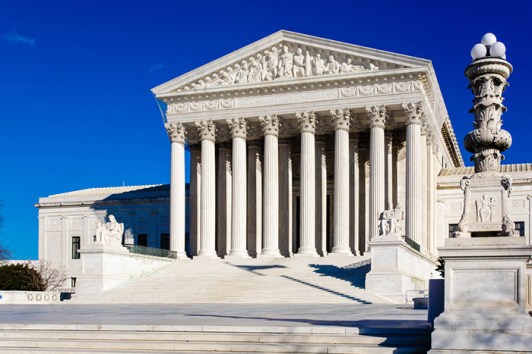
supreme-court-buildingImmediately following the election, Pew Research found 81% of white evangelicals said they for voted for Donald Trump. Many have said they did so because, with one vacancy on the U.S. Supreme Court and the potential for others, they believed Trump would choose conservative nominees who would reflect their values. In naming Neil Gorsuch to replace the late Justice Antonin Scalia, President Trump did exactly that.

Following the Gorsuch announcement, Southern Baptist culture watcher Ed Stetzer recalled that Pew poll and wrote on his blog at Christianity Today, “Evangelical Trump voters made a choice and many of them saw today, with the nomination of Neil Gorsuch, that their choice was validated. They voted for the sanctity of life and for religious liberty.” Stetzer is the former head LifeWay Research who now leads the Billy Graham Center at Wheaton College.

Gorsuch, a 49-year-old Episcopalian from Denver, Colorado, appointed by President George W. Bush to the U.S. Court of Appeals for the Tenth Circuit in 2006. His mother, Anne Gorsuch Burford, was appointed by President Ronald Reagan as the first woman to head the Environmental Protection Agency.

Gorsuch is a proponent of originalism. According to the Washington Post court reporter, Robert Barnes, this means “judges should attempt to interpret the words of the Constitution as they were understood at the time they were written — and a textualist who considers only the words of the law being reviewed, not legislators’ intent or the consequences of the decision.”

In a Jan. 27 interview with CBN, Trump said, “I think evangelicals, Christians will love my pick. And will be represented very fairly.” Gorsuch was the judge who had sided with Christian employers and religious organizations in the Burwell vs. Hobby Lobby and the Little Sisters of the Poor Supreme Court cases. Suits were filed because the Affordable Care Act had imposed rules requiring them to violate their religious beliefs and provide abortion causing contraceptives to employees.

After the announcement, Southern Seminary President Albert Mohler expressed thanks for Trump and supporting the nomination: “Judge Gorsuch is committed to textualism and will uphold the Constitution of the United States. His academic credentials are impeccable and his experience as a clerk for two Supreme Court justices and his own distinguished tenure as an appeals court judge qualify him for this nomination without question.”

Russell Moore, President of the SBC’S Ethics and Religious Liberty Commission (ERLC) released a similar statement, calling Gorsuch, “an exceptional choice for Supreme Court justice. He is a brilliant and articulate defender of Constitutional originalism in the mold of the man he will replace: Justice Antonin Scalia.…I heartily support President Trump’s excellent appointment.”

The Gorsuch nomination follows several others of interest to evangelicals. Former SBC president Ronnie Floyd, who attended the National Prayer Breakfast in Washington Feb. 2., pointed out other Trump nominees whom he called “followers of Christ”: Education Secretary nominee Betsy Devos, Sonny Perdue for agriculture secretary, Rick Perry for Energy Department head, Tom Price to head Health and Human Services, Scott Pruitt to lead the Environmental Protection Agency, and Jeff Sessions as Attorney General.

–with info from Pew Research, ChristianityToday.com, and the Washington Post

Editor’s note: This post has been updated to include a blog post/podcast from Albert Mohler.

Four  prominent Southern Baptists are taking public—and differing—positions on President Trump’s executive order that restricts immigration from seven Muslim countries, suspends entrance of all refugees for 120 days, and prevents all Syrian refugees from entering the United States indefinitely.  Commentary from both Russell Moore and Ed Stetzer was published in the Washington Post, while Ronnie Floyd and Albert Mohler are speaking out on their blogs.

61222russell_moore

Russell Moore

Russell Moore, the president of the SBC’s Ethics and Religious Liberty Commission, has begun commenting on actions by the new administration, after a relatively quiet December. He wrote a letter to President Trump, Vice President Pence, Speaker Ryan, and Majority Leader McConnell responding to the president’s order on refugees that the Post has exclusively on its opinion page.  In the Jan. 30 letter, Moore references the Resolution on Refugee Ministry passed by messengers to the 2016 Southern Baptist Convention in St. Louis. “’Scripture calls for and expects God’s people to minister to the sojourner.’ Southern Baptist churches throughout the United States lead the way in carrying out this calling,” Moore wrote.

Moore also expressed concern for the safety of Southern Baptists who, “are among the many Americans living in majority-Muslim countries to carry out the biblical call to love their neighbors.” He also called on the president to reaffirm his administration’s “commitment to religious freedom” and “adjust the Executive Order as necessary.”

Ed_Stetzer_PC

Ed Stetzer

Ed Stetzer, the former Executive Director of LifeWay Research who now serves as the Billy Graham Distinguished Chair at Wheaton College in Wheaton, IL, had his own op-ed published by the Post Jan. 26, “Evangelicals, we cannot let alternative facts drive U.S. refugee policy.” Stetzer agreed with the president on a need for a greater focus on national security however, he said, “I’m concerned that the president is operating on generated fear rather than facts. We need a better way.”

Stetzer’s better way is to “reject false facts,” “recapture a vision of what it means that all are made in God’s image,” and to “fight for those without a voice.”

Ronnie_Floyd_press

Ronnie Floyd

Ronnie Floyd, pastor of Cross Church and immediate past president of the Southern Baptist Convention, published, “Navigating through the refugee issue from a biblical perspective,” to his blog, RonnieFloyd.com. In his post Floyd declared, “If we do not look at it biblically, we enter into dialogue without authority and clarity.” He advised: Love the refugee, fix the immigration system, and pray diligently.

He too referenced the 2016 Resolution on Refugee Ministry, “…one line in this resolution that realized the biblical responsibility of government: ‘RESOLVED, That we call on the governing authorities to implement the strictest security measures possible in the refugee screening and selection process, guarding against anyone intent on doing harm…’”

Floyd, who served on Trump’s religious advisory board during the election, wrote, “This line was included in the resolution because as followers of Christ, we must understand the tension that occurs because our government has a responsibility it is mandated to fulfill.”

He concluded by asking Christians to stress balance in their reactions to what is taking place. “Believing and operating with biblical balance, we know the Church must realize biblically that the government’s duty is to protect its citizens. Simultaneously, we must affirm the responsibility of the Church to minister to refugees who are brought inside the borders of America.”

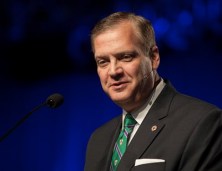
albert-mohler2

Albert Moher

Albert Mohler, president of Southern Seminary, devoted the January 30 edition of The Briefing to the controversy. He sought to clarify misconceptions many have concerning the executive order by pointing out the seven countries on the identified in the order are known terrorist threats. He noted several other countries have much larger Muslim populations and do not appear on the list.

“The entire system of laws in this country concerning our borders and entry into the country is a part of the government’s responsibility to keep the nation secure,” Mohler said.

Mohler compared previous immigrants who came not just to live in America but to be American, to the teachings of classical Islam. “It is not just what is often called radical Islam, it is classical Islam, it is the Islam believed by the vast majority of Muslims around the world that requires that every Muslim seek to bring every nation under the law of the Quran, under Sharia law.”

He cautioned, “The significant issue to observe here is that even though some who are coming in terms of these waves of Muslim immigration intend to join these communities and these cultures, the reality is that the majority of these immigrants and Muslims have not been assimilated into the cultures. To put it in terms of the American experiment, we have to be very careful that we do not reshape America by creating a population that does not intend, even though they are resident in this country, to be a part of the American project.” He pointed to the situation in Europe as an example of this reshaping.

The Reformation at 500

ib2newseditor —  January 30, 2017
70116rose-parade-jan-2

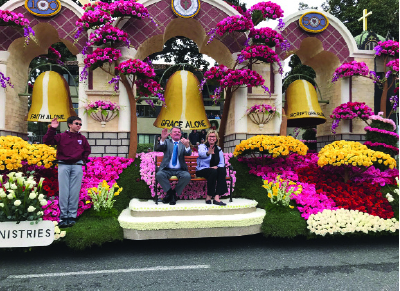
Rose Parade Jan. 2, 2017

When the Protestant Reformation gets its own float in the Tournament of Roses Parade, something big must be happening. Not that we needed the Pasadena tableau to underscore the upcoming event, but we must admit it was surprising to hear NBC’s Al Roker announce the 500th anniversary of the Reformation as three flower-covered church bells tolling “A Mighty Fortress Is Our God” cruised by at 10 mph.

Would Martin Luther—ex-communicated, jailed, and persecuted for his pursuit of biblical faith—have been shocked to see his life’s work trussed in rose petals and paraded before cheering crowds?

I was.

There, following the surfing dogs, the Rose Queen, and the Salvation Army Band, was the Wittenberg Door, covered in black beans and poppy seeds, commemorating that All Hallow’s Eve in 1517 when the angry priest Luther nailed his complaints against the Catholic Church on the front door. Inscribed on the giant bells was “Faith Alone,” “Grace Alone,” and “Scripture Alone,” the three-sola distillation of Reformation theology.

Also at the front of the float was a man dressed as Jesus, waving to the crowd on one side of Colorado Boulevard and then the other. We can’t fault the sponsors, Lutheran Layman’s League, for their exuberance, for Luther himself redirected the attention of the faithful worldwide to the finished work of Christ as the only means of salvation. Not obeisance to saints or Mary, time served in purgatory, the purchase of “indulgences” for others or ourselves—only God’s grace through faith in Jesus Christ can save us. So commonplace today, this must have sounded radical to Luther’s first audiences. Yet, here we stand, benefactors of his brave actions, celebrating his Halloween escapade and all that resulted from it.

70116luther
But five centuries after the fact, this anniversary is an opportune time for Southern Baptists to ask a few serious questions:

How Reformed are we? What was started by Luther was picked up, refined, and defined by John Calvin and others. The line from Calvin (and other Reformers) to Southern Baptists isn’t as obvious as is the line from John Knox to the Presbyterians or Luther to the Lutherans, but the Reformers have certainly informed our Baptist theology.

Some Southern Baptists fully embrace Calvin’s doctrines of grace, the sovereignty of God, and election, considering themselves “five-point Calvinists.” Others, who defined their position as “traditional” Southern Baptist in the 2012 debate at the New Orleans convention, accept some of Calvin’s points, but rely more on the verses about God’s desire that all would be saved. Some would say they live in the tension between Calvinism and Arminianism, between the sovereignty of God in bringing people to salvation and the free will of man to accept or reject God’s offer.

This anniversary is a good opportunity for churches to study the principles of Reformed theology and ask, How Reformed are we?

What is the appeal of Reformed theology? For people who have grown up in an era of slushy theology and postmodern uncertainty, Reformed theology offers clear, clean delineation of belief. It’s faith with handles on it. That might explain the appeal to Christians who were described as “young, restless, and reformed” in Collin Hansen’s seminal work by that name in 2008. Hansen capsulized a phenomenon that had been in development for two decades by the time he wrote the book, and must be credited in large part, in SBC life, to Albert Mohler. From his position as president of Southern Seminary starting in 1993, Mohler has schooled a generation of young pastors, theologians, and now seminary presidents.

What is the long-term impact of rising Reformed theology on the SBC? Not everyone is enamored by the growth of Calvinism in Southern Baptist ranks. Some leaders have expressed concern about the possible impact on missions and evangelism.

Certainly our theological debate has been invigorated in recent decades. A denomination given to pragmatic, applicable theology through the Baby Boom years has more recently turned to serious consideration of the nature of the gospel. Can committed Calvinists, “traditional” Southern Baptists focused on evangelism, and the “somewhat Reformed” all coexist in the SBC tent, with a shared purpose that unites us, despite differences over finer points of theology? Or is another schism coming?

What will happen to evangelism? Our denomination’s baptism numbers continue to decline. Southwestern Seminary President Paige Patterson, a “traditionalist,” continues to express concern that rising Calvinism will naturally cool the fires of evangelism.

International Mission Board President David Platt might demonstrate a new kind of Reformed pastor, for whom evangelistic work by God’s people has high priority in God’s sovereignty. Will Platt’s zeal prove characteristic of the younger generation who are following his charge: “For the nations!” Or will the soul-winning Calvinist prove to be an anomaly?

Now, 500 years after Luther struck the first blows for Reformation, these are a few of the issues Southern Baptists must address—before the parade passes by.

– Eric Reed is editor of the Illinois Baptist.

61222word_cloud

We live by God’s surprises,” said Helmut Thielicke. The German pastor was speaking in times more trying than ours, but in the darkest days of WW2, he could see the hand of God at work—and was amazed by it.

Dare we say the same of the year just past?

We were surprised by events we witnessed. In their unfolding, we sought the reassurance of God’s sovereignty. Here are some noteworthy moments for Baptists in Illinois—some heavy, some light—and what they may say about the year before us.

– The Editors

SBC candidates: Unity matters

What the U.S. presidential election may have lacked in civility, the 2016 election for Southern Baptist Convention President more than made up for in grace. When a close vote forced a run-off between Steve Gaines and J.D. Greear, the election seemed poised to divide Baptists over matters of theology and generation.

Instead, the candidates talked the night before the third vote was to be taken, and one bowed out, urging his supporters to vote for his opponent.

“It’s time for us to step up and get involved, to keep pushing forward and engaging in the mission with those who have gone before us,” North Carolina pastor Greear posted in support of Tennessee pastor Gaines. “It’s time to look at what unites us.”

On paper, this decade’s SBC presidents are a diverse bunch, not united by much in terms of their backgrounds and interests:

  • Atlanta-area pastor Bryant Wright (2010-2012), who recently spoke out in favor of ministering to refugees
  • Dynamic New Orleans preacher Fred Luter (2012-2014), elected as the SBC’s first ever African American president
  • Ronnie Floyd (2014-2016), pastor of a multi-site church in Arkansas and a prolific blogger who led the denomination toward a laser-like focus on prayer
  • And Gaines, elected in 2016, who has espoused traditional Baptist theology and his own intense focus on evangelism.

What does unite them is a logical progression in the things they have called Baptists toward: For Wright, it was a return to Great Commission principles. Luter’s presidency was marked by impassioned pleas for spiritual awakening and revival. And Floyd called Southern Baptists to their knees—for themselves, their churches, the denomination, the nation, and the world.

Gaines announced he will continue the emphasis on prayer at the 2017 Southern Baptist Convention in Phoenix. It may be a sign that the desire for unity, despite differences in age, theological perspective, and communication style, is actually, in Greear’s words, “what unites us.”

A new missions paradigm

After a season in which budget shortfalls and personnel cuts seemed to limit the future potential for Baptist missions engagement around the world, International Mission Board President David Platt continued to preach a message to the contrary.

“Limitless” is the word Platt has used to describe the mission force needed to take the gospel to places without it. To achieve that goal, he has said, the SBC has to think differently about missions and missionaries than we have in the past.

“Let me be crystal clear: the IMB is still going to send full-time, fully-funded career missionaries just like we’ve always sent,” Platt said during his report at the 2016 Southern Baptist Convention in St. Louis. “They are the priceless, precious, critical core of our mission force.”

But the IMB’s emerging strategy is to put around those missionaries a “limitless” force of students, retirees, and professionals—people who, to borrow Platt’s words, are willing to leverage their jobs and lives so that more might hear and respond to the gospel.

The newly redesigned IMB website reflects the strategy, with buttons for people in a variety of categories to search for opportunities overseas. There are needs for business consultants, healthcare professionals, construction engineers, and more. The IMB also offers training resources for churches to equip and mobilize members for missions, both short-term and longer.

Global mission “is not just for a select few people in the church, but for multitudes of Spirit-filled men and women across the church,” Platt said in St. Louis.

A year ago, when hundreds of IMB missionaries moved back home, the chances of getting the gospel to some of the world’s darkest places seemed dimmer. Now, with a strategy focused on everyday people like the ones who sparked a gospel fire in the New Testament, the opportunities seem endless. Or, limitless.

If I had a hammer

We’ll hear it a lot in the new year. On Halloween night in 1517, disgruntled priest Martin Luther nailed his 95 complaints on the church door in Wittenberg and started an ecclesial revolution. We’re likely to hear about it from all corners, including events at our seminaries, panels at the Southern Baptist Convention in Phoenix, and bus tours of Germany. And we may have a few serious discussions about the theological direction of the SBC. Look for Reformation@500 in the pages of the Illinois Baptist throughout 2017.

Read Cloudy with a chance of surprises, pt. 1

61222word_cloud

We live by God’s surprises,” said Helmut Thielicke. The German pastor was speaking in times more trying than ours, but in the darkest days of WW2, he could see the hand of God at work—and was amazed by it.

Dare we say the same of the year just past?

We were surprised by events we witnessed. In their unfolding, we sought the reassurance of God’s sovereignty. Here are some noteworthy moments for Baptists in Illinois—some heavy, some light—and what they may say about the year before us.

– The Editors

Standing on the promises

61222trump_pence

Donald Trump (left), Mike Pence (right)

A third of Americans (34%) think Donald Trump will be a “good” or “very good” president, while 23% say “average” and 36% expect a “poor” performance. The survey by CBS News was conducted the second week of December, after Trump began announcing cabinet appointments.

The ratings fall along party lines: 70% of Republicans expect a good presidency, while 60% of Democrats predict poor results. That means evangelicals, who mostly supported Trump, have high expectations—but for what?

Religion reporter Sarah Pulliam Bailey, on her Washington Post blog, points to a half-dozen areas where Trump’s campaign promises intersect with evangelical interests. Some are the expected areas involving religious liberty. The nomination of Supreme Court justices who will uphold pro-life legislation topped the list. Trump also said he would defund Planned Parenthood, sign a bill that forbids abortions after 20 weeks, and make the Hyde Amendment permanent. It prohibits use of federal funds for most abortions. And Trump has expressed support for a group of nuns who have battled provisions in the Obama Affordable Care Act that mandate contraception as part of an organization’s health care plan. Southern Baptists have supported their lawsuit.

Trump promised to repeal the 1954 Johnson Amendment to the U.S. tax code, which prevents pastors from endorsing or opposing political candidates, or else lose their church’s tax exempt status. And he has taken a position on education funding that allows families to choose private, charter, or home schooling, with a promise to set aside $20 billion for vouchers in his first budget.

The U.S. will be a “true friend to Israel,” Trump said, a position common among evangelicals favoring Israeli interests over others in the Middle East and urging movement of the U.S. embassy to Jerusalem.

Many Southern Baptists would support these actions, if they came to pass. For SBC leaders who have been in contact with the future administration, the Trump presidency represents a new way of thinking about the White House. Since Ronald Reagan’s presidency, Southern Baptists in general have viewed Republican administrations as allies in the causes of pro-life, families and marriage, and religious liberty. They have, at the least, been sympathetic to evangelical causes, and even co-laborers in the faith. (Remember the stories of George and Laura Bush singing hymns at the White House piano with Attorney General John Ashcroft and Secretary of State Condoleezza Rice on the keyboard?) Democratic presidents, on the other hand, have often been at odds with evangelicals’ causes, even if they claimed to be Baptists, as in the case of Bill Clinton.

Donald Trump represents a third way of relating to the White House: a president who made promises to evangelicals and drew their support at the polls, but who shares no apparent faith commitment with the born-again community. (There are no stories of Trump walking on the beach with Billy Graham and committing his life to Christ. And the tycoon-turned-president has said he sees no need to ask for forgiveness for his sins.)

The evangelicals closest to Trump, including incoming vice president Mike Pence, take on the role of Joseph in Egypt—keeping the interests of God’s people before pharaoh, hoping to keep his ear and hold him to his promises.

High hopes for high court

Some voters who cast their ballots for Donald Trump said they did so because of concern for the U.S. Supreme Court. The February death of Justice Antonin Scalia left a vacancy, and three of the Justices—Ruth Bader Ginsburg, 83, Anthony M. Kennedy, 80, Stephen G. Breyer, 78—may be looking toward retirement in the next few years.

Focus on the Family founder Dr. James Dobson supported Trump. He told Christianity Today, “The next president will nominate perhaps three or more justices whose judicial philosophy will shape our country for generations to come.”

A LifeWay Research survey found 23% of evangelical pastors were most concerned about the candidates’ likely Supreme Court nominees. And 36% of Trump-supporting pastors cited the high court as a major factor in their choice.

Trump released a list of his potential Supreme Court nominees—20 judges and one senator, Mike Lee of Utah. Each met two criteria: they are pro-life and support the Second Amendment. The list was vetted and reviewed by the Federalist Society, which is comprised of conservative and libertarian lawyers, and the conservative Heritage Foundation.

Commentator Denny Burk told Baptist Press the list “does not alleviate the concerns that many of us have about his candidacy.” Because Trump didn’t promise to pick someone from the list, Burk said, “The list means nothing….And we are again being asked to trust the judgment of a man who changes his positions daily…” Burk is professor of biblical studies at Boyce College, the undergraduate school of Southern Seminary.

Reince Priebus, future White House Chief of Staff, told radio host Hugh Hewitt on December 14 that the President-Elect will likely name Scalia’s replacement near the January 20 inauguration.

Priebus said Trump may choose a younger nominee. “Well, I tend to believe younger is better, too, but I can tell you what the president (elect) believes is that the most qualified, best person to serve on the Supreme Court is what’s most important….Certainly longevity’s a factor, but it’s just a factor. Competence and having the best possible person nominated is what’s most important.”

Tension between leaders, pews
61222russell_moore

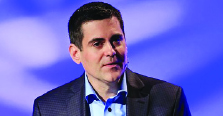
Russell Moore

The 2016 presidential campaign and election exposed deeper divides than many knew existed in the U.S.­­—and within evangelicalism. White evangelical voters overwhelmingly supported Trump, even while some of their leaders voiced their opposition.

As Wheaton College’s Ed Stetzer said after the election, “The evangelical leadership is out of touch with the evangelical rank-and-file,” during a Christianity Today podcast.
Tension over the election appears to be at least part of a rift between some Baptists and the SBC’s public policy entity, the Ethics and Religious Liberty Commission.

In November, Louisiana Baptists voted to ask their convention’s executive board to study recent actions of the ERLC.

Will Hall, editor of the state’s Baptist Message newspaper, noted that the motion did not elaborate on the issues of concern, “but ERLC President Russell Moore has come under fire nationally from Southern Baptist laymen and leaders for a number of controversial actions and statements, including…his aggressive attacks on Southern Baptists who supported Donald Trump.”

Moore, who has led the ERLC since 2013, wrote an opinion piece for The New York Times in May in which he said the election “has cast light on the darkness of pent-up nativism and bigotry all over the country.” His article caught the attention of Trump, who tweeted that Moore was a “truly a terrible representative of evangelicals.”

The op-ed also sparked a fervent debate on the SBC Voices blog, where Baptists posted a variety of opinions on Moore, from “he did what we pay him to do,” to “it is difficult for me to imagine Russell Moore functioning as ERLC President if Trump wins in November.”

The questions about Moore and the ERLC are just one example of the impact the 2016 election could have on religious organizations and denominations, and on the nature of Christian leadership. The tension leaders face, Ed Stetzer said, is between recognizing the responsibility to speak prophetically, and realizing they represent a constituency who largely feel very differently than they do.

For Christian leaders, their influence in the next four years may well depend on how well they strike the balance.

Keep Christmas alive

ib2newseditor —  December 29, 2016

pouring-teaIt feels so wonderful! The spirit of Christmas adds oomph to life. We live in anticipation and we’re even nice to strangers. We become very intentional about giving to others.

But as we turned the calendar page to December 26, did that Christmas spirit fade? As you pack up those Christmas decorations, consider these five simple reminders to help keep that spirit of joy and generosity at the forefront all year.

1. Live expectantly. Anticipation is at a high during Christmas, but a sense of expectancy is a good thing all year long. It keeps us on our toes, helps us use time wisely, and reminds us to lean on God. So, live with enthusiasm every day of the year. “Don’t burn out; keep yourselves fueled and aflame. Be alert servants of the Master, cheerfully expectant” (Romans 12:11-12a MSG).

2. Be extra nice to strangers. Are you kinder to total strangers at Christmas? Your job as a Christian is to be God’s ambassador, representing him with your every word and deed. Take your ambassador job seriously all year long. Be nice to strangers.

3. Practice a “shoebox continuum.” Wasn’t it awesome to stuff gifts in shoeboxes for Operation Christmas Child or backpacks for Appalachian children? Don’t stop. Each month this year, gift a carefully prepared backpack or box to a local child in extraordinary need. Include a “God loves you” note.

4. Engage in better benevolence. Use Christmas ministry projects as a springboard to yearlong generosity. For example, instead of a give-and-run delivery of gifts or dinner for a local needy family, make a plan to show God’s love to them all year. Get to know them. Listen to their story. Invite them to church and welcome them. Pray with them. Introduce them to Jesus.

5. Smile freely. The Christmas season lends itself to joy. Joy isn’t seasonal for a Christian. It radiates from inside, and it’s there on happy days and desperate days, on New Year’s Day and Groundhog Day and every other day of the year. Radiate the joy of Jesus in non-December months.

The “spirit of Christmas” is not a December event. It’s a Christian’s lifestyle and mission. It’s our everyday marching orders from Christ. Exude the true Christmas spirit—God’s Spirit—as you live with joy, expectancy, love, and generosity.

© Diana Davis, dianadavis.org

empty-frame2The period between Thanksgiving and Christmas always ignites the stress of finding just the right gifts for loved ones and friends.

The reality is that Christmas in America is more of a commercial event than a religious holiday. Decrying commercialism won’t change things much, but there are some ideas to make your holiday season a more spiritual experience for your family.

Let me recommend an amazing gift you can give this year that will have long-lasting impact.

I propose that you write your conversion story.
You could print it on parchment paper and perhaps frame it as a gift, or just write it as a letter. OK, so your kids and grandkids will want something more but, in the end, your story will be the greatest gift they receive.

As Christians, we need to leave a legacy of faith to our families. This could be a wonderful way to tell your faith story to your family. Title it your “Legacy of Faith.”
Here is an outline of how you might approach writing your story. It doesn’t have to be complicated; just share your story from your heart. And be sure to sign it when you finish.

Place your life in context.
For me, I can tell my family of the rich spiritual heritage I enjoy because of the faith of their great-grandparents and grandparents. I can tell of the spiritual umbrella that was cast over our home because of the living faith in Christ and unreserved commitment to the church displayed in our home.

Your story may be different. The context of your journey may be filled with brokenness and pain. Share your story with truth while not glorifying your past.

Relate what led to your decision to follow Christ.
I cannot remember a time I did not love Jesus. As a child, I knew the plan of salvation. Yet, one morning in Sunday school, my teacher told us the story of the cross and said, “Boys and girls, someday you will give your heart to Jesus and trust him as your savior.”

At that moment, the Holy Spirit made the reality of my sin and Jesus’ death on the cross for my sin collide. I made the decision then to ask Jesus to forgive me and become my savior. I went forward in the service that morning, but I really decided to follow Jesus in Sunday school.

Share your faith journey since your decision.
What are the ways you have learned to follow Jesus? How has Christ made a difference in your life? What are some of the life situations you have faced when Christ has walked through with you? There may have been times of financial struggle, sickness, or death. How has Christ blessed you and your family throughout your Christian life?

My life is transformed day by day as I follow Jesus. As I learned to feed on his Word and communicate with him through prayer, he became my forever friend. In every circumstance, I know I have a friend who will walk with me. Space will not allow me to elaborate, but you get the picture.

Even if your family members are younger and do not understand the significance of the gift you place in their hands, there will come a day when this gift will mean more than gold.

So give a gift to your children, your children’s children and generations who follow. Leave them a written “Legacy of Faith.”

“These words that I am giving you today are to be in your heart. Repeat them to your children. Talk about them when you sit in your house and when you walk along the road, when you lie down and when you get up…. Write them on the doorposts of your house and on your gates” (Deut. 6:6-7, 9).

Anthony L. Jordan is executive director of the Baptist General Convention of Oklahoma. This column is courtesy of Baptist Press.

‘Why we do what we do’

ib2newseditor —  December 8, 2016

Week of Prayer missionaries take gospel light to dark places

lmco-ms-escalator

Rodney and Helen Cregg’s work in a large city helps rescue women from prostitution.

The Indian bride wore blue silk, trimmed with gold. Rich fabrics in brilliant hues are traditional for wedding saris in this megacity.

But the guest list was anything but typical. Among those celebrating this day were 20 prostitutes—women who were like family to Shanti.* She knew them from the years she shared their heartbreaking lifestyle as a prostitute. That was before the ministry of a Christian activity center rescued Shanti from her former life. She is now a believer and has a good job to support herself. And on this day, she even married a Christian man.

International Mission Board missionaries Rodney and Helen Cregg* have partnered in establishing the activity center that offers prostitutes a place to learn basic skills in the middle of a notorious red-light district.

The Creggs are supported by the Lottie Moon Christmas Offering, an annual offering facilitated by the International Mission Board and Woman’s Missionary Union in partnership with Baptist state conventions. Many churches will mark the Week of Prayer Dec. 4-11.

“This is why we do what we do, to see these ladies—and other people in [this city]—realize the hope in the gospel and then find victory in freedom,” Rodney says.

Another woman at the center agrees: “Being involved at the center, I am finding the love I didn’t get from my family from people who know the Lord. Through Jesus I am experiencing love. I am blessed.”

lmco-prayer-circle

Young men in Southeast Asia meet to study the Bible.

Finding home again
Missionary Layla Murphy* was shopping in a vegetable market in Southeast Asia when she heard phrases she understood. Two women were speaking the language of the Buddhist country from which she had just been expelled, after laboring for years to share the gospel.

Soon Layla learned that hundreds of thousands of migrant workers and refugees from her former country lived in this sprawling urban center. God’s providence had set her right in the middle of the gospel-hungry people that she’d felt called to serve. Then, a national pastor asked her to stay right there to teach, train, and disciple new believers from the country that she can’t live in but calls “home.”

On the first day of class, she planned for 15 students but 50 showed up. “God had put hunger for his Word deep in their hearts and this was the first time that they’d ever had the chance to learn [the Bible].” Though she would rather serve in the country she loves, “this deepened my trust in God.” Her students tease her that she is also a refugee—the American refugee, Layla says.

“That sort of binds our hearts together.”

For more Lottie Moon and Week of Prayer resources, go to IMB.org/lottie-moon-christmas-offering.

*Names changed.

– From IMB.org

After a destructive election cycle, it’s time to ask some basic questions. 

Flag of USA painted on cracked wall. Political concept. Old text

Inwardly I chuckled when church historian Mark Noll said, “Evangelicalism is a fractious beast.” I was interviewing him for a documentary on the role Billy Graham played in the development of the evangelical movement when he founded Christianity Today magazine in 1956. As described by Noll, at the time a Wheaton College professor, evangelicals had no driving force other than their love for Jesus and desire to share him with the world.

In post-war mid-century America, the number of evangelicals, including Southern Baptists, was growing rapidly, but they were a people “about many things” as Jesus described Martha, with impact on society disproportionately weak compared to their numbers. They had no recognized think-tank to coalesce and articulate their conservative, biblical views and no central voice to bring those views to bear on culture, the courts, and behavior of the masses. No one was really paying attention to evangelicals as a political or cultural phenomenon.

We could use another Billy Graham today.

Graham remedied that by bringing top Christian thinkers together in his magazine, brought unity around a few ideals such that evangelicals over the next twenty years became a movement, and through a popular medium of the day he gave them a megaphone to broadcast their beliefs.

We could use another Billy Graham today.

Evangelicals today are fractured. The 2016 election cycle has divided us. While 4 out of 5 white evangelicals (the SBC’s predominant constituency) voted for Trump, that fact should not be read as evangelical unity. Believers who may have voted for Trump did so for a variety of reasons. Some were wholeheartedly behind the candidate; some were choosing “the lesser of two evils.” Some were motivated by religious liberty issues, or the future of the U.S. Supreme Court, or pro-life concerns.

No single issue or theology can be said to have brought together the 81% of self-identified white evangelicals who voted for Trump.

And there’s the other 19% who didn’t. And African Americans, Asians, and Hispanic believers who pollsters don’t measure as “evangelicals” and often lump in with other Protestants groups or even Catholics.

We are divided. The divides are between white and black, urban and rural, high levels of education and lesser. And in Southern Baptist life, we have seen some divide between older and younger Christians (especially Millennials), and notable differences among spokesmen for Baptist causes, and distance between leaders and pews.

What are the few things we will stand for—that will bring us together in the name of Jesus Christ?

For the first time in a generation, the Ethics and Religious Liberty Commission does not appear to have spoken for average Southern Baptists. Russell Moore and a few others were critical of Trump, especially on issues of character and behavior. On the other hand, a few leading megachurch pastors, including Robert Jeffress of First Baptist Church of Dallas, stood with Trump. Others kept mum. SBC president Steve Gaines advised not making politics a church issue, so as not to offend people who need to the hear the gospel.

In this election, there were many reasons for speaking up—or not. Thus, in their analysis of the Republican win, pundits may report evangelicals a “silent majority,” but if that is the case, this majority was bound by many motivations.

The need of the hour is for evangelicals, Southern Baptists in particular, to process this awkward election theologically—not practically, politically, or emotionally—and identify the kingdom-worthy reasons for future political involvement. What are the few things we will stand for—that will bring us together in the name of Jesus Christ?

Is it U.S. Supreme Court appointments that preserve religious liberty? Marriage, family, gender preservation?

Is it social justice and a biblical view of peace, poverty, and the sanctity of human life?

And what is the role of character and trustworthiness in supporting a candidate or, moving forward, working with a presidential administration? Which is mandatory for Christ-followers when choosing political allies: biblical political positions or biblical behavior? (It appears nearly impossible to find both in a single person these days.)

In the 1950s, Graham drew Christians together around conservative, biblical theology, and eventually brought that to bear on politics and politicians—not the other way around. At 98 (his birthday was the day before the election), does Graham even recognize the movement he codified?

Eric Reed is editor of the Illinois Baptist. 

Well, here we are

ib2newseditor —  November 9, 2016

Old Glory Flag

Though the majority of the nation is still surprised and in shock, half the nation is angry and hurting, and way more than half the nation is still overwhelmingly discontent with the outcome of last night’s election, here we are. The election process is over. Half of the country helped elect what they consider to be “the lesser of two evils” and the other half is stunned that the victorious candidate is considered by anyone to be “the lesser of two evils”.

As I have spent time reflecting on this election – this crazy, unbelievable, disappointing, and astonishing election – I have found myself ending up at the same place over and over again.

Though (I hope) few, if any, Christians would actually say this, most seem to view their political party of choice as the primary agent of cultural change and hope for our nation. Then again, I know many who would actually say that. But the idea that the Democratic Party is the party of God because it prioritizes things like diversity, equality, harmony, and caring for the poor, or, likewise, the idea that the Republican Party is the party of God because it prioritizes things like religious freedom, pro-life movements, and a conservative supreme court – needs to go.

Now, let me be clear – part of the beauty of our democracy is that we all have the freedom to care about certain issues and vote our conscience. That freedom is a gift from God for which every American should be grateful. But, Christians cannot continue to allow the church to become as polarized as our nation. Yes, our nation is more polarized than it has been in a long time because of this election and the events surrounding it. But in the face of such polarization, the church ought respond with unification, re-commitment to the Kingdom of God and the gospel message, and submission to the Lordship of Jesus Christ. Our identity as the Church defines us infinitely more deeply and profoundly than our identity as Republicans or Democrats. To see so much passion and so much anger surrounding this election only reminds us that so many have slipped into the idolatrous idea that our government is our savior and king.

Neither candidate was messiah and neither party is God’s chosen agent of change in this world – His Church is that agent of change. Neither party will deliver us from evil – only God will. Neither party can save us from a downward spiral, only God can. Neither party can offer true hope, only God can. There is no easier day and no easier year to see these truths than on this day of this year.

American is not God’s chosen nation. The Democratic Party is not God’s chosen party. The Republican Party is not God’s chosen party. And most importantly, neither party is His great love. The Church alone is God’s chosen people, whom he has drawn to himself and called to be the greatest agent of change the world has ever seen. The church alone is God’s embassy of hope, left here to represent his kingdom in this foreign land.

As we begin a new four year “reign” under a new political regime, may we constantly remind ourselves that Jesus alone is King and that his gospel message is the only message that matters.

Noah Adams is associate pastor at Calvary Baptist Church in Elgin, IL. He is also the son of IBSA Executive Director Nate Adams and wife Beth. This article was originally posted on Noah’s blog, Honest Thoughts About Church.