Archives For November 30, 1999

Youth_choirHEARTLAND | Todd Starnes, via Baptist Press

As the sun began to fade behind Pikes Peak, firefighters trudging back to their command post at Pine Creek High School in Colorado Springs heard a most unusual sound.

“Amazing grace, how sweet the sound …”

It was Tuesday, June 18. 8 p.m. Shift change.

“Twas grace that taught my heart to fear …”

The command center was a flurry of activity. Weary firefighters were returning from the front lines — looking for a hot meal. Their replacements were suiting up — fire engines rumbled, sirens wailed. But amid the clamor was that most unusual sound.

“Through many dangers, toils and snares …”

Many of the firefighters had been away from their families for days to wage war on the Black Forest Fire, a blaze that had killed at least two people, destroyed more than 500 homes and consumed more than 14,000 acres of land.

But for a brief moment on Tuesday, a group of young people from more than 1,400 miles away brought a bit of joy to the command post when they serenaded the firefighters.

The 100-voice student choir from First Baptist Church in Montgomery, Ala., was in Colorado on their summer tour — performing at rescue missions, nursing homes and even at a Colorado Rockies baseball game.

On Tuesday, they had been invited to sing at Focus on the Family’s headquarters in Colorado Springs. After their performance, a staff member asked if they might consider singing for the firefighters.

“We said absolutely,” music minister Chip Colee told Fox News.

The Alabama youngsters were taken aback by what they saw. Local residents stood along the road leading to the command center cheering the firefighters, holding signs that read “We love our firefighters” and “Thank you.”

The group started off singing “The Star Spangled Banner” and then launched into a 20-minute concert.

“It was very moving — for all of us,” Colee said.

Caroline Elliott, 18, told Fox News it was an honor to be able to sing for the firefighters.

“I feel like it was something we had to do,” she said. “It almost felt like we had a duty to pay back to them for all they do for us.”

Chris Colee, the music minister’s son, said the choir felt compelled to extend their hours in Colorado Springs.

“These guys are putting it all on the line,” he said, referring to the firefighters. “It was the least we could do — to go out there and sing to the Lord for them.”

After their concert, they were asked to sing for firefighters eating meals in food tents.

“So we took all 100 of our kids and moved from tent to tent to sing for the guys who were eating,” the music minister said. “We were so touched. Here were these guys and ladies — hot, sweaty, exhausted. We just wanted to put a smile on their faces.”

The young choir members said they hope their songs were an encouragement to the community.

“All we’re trying to do is shine the light of the Lord,” the music minister said.

The choir went now back on the road, heading toward Wichita where they were to sing on Wednesday — but Colee believes what happened in Colorado Springs will be a lifetime memory.

“Our kids will never forget that,” he said. “They will never forget the looks on the faces of the guys fighting those fires.”

Before they left, one firefighter told the young people she had been away from her family and her church for days.

“She told us that when we started to sing “Amazing Grace,” she felt like she was back home,” Colee said.

“When we’ve been there ten thousand years, bright shining as the sun, we’ve no less days to sing God’s praise, than when we first begun.”

Todd Starnes, with the Fox News Channel, is the author of “Dispatches From Bitter America.” This article first appeared at http://www.toddstarnes.com.

pull quote_MILLERCOMMENTARY | Dave Miller

Editor’s note: Dave Miller served as second vice president of the Southern Baptist Convention for a year following the annual meeting in New Orleans in 2012. He wrote about his year “at the table” for the June 17 Illinois Baptist. Read it online here.

A little over a year ago, I got a call from a blogging friend who asked me if I’d allow my name to be placed in nomination for second vice president of the Southern Baptist Convention. Stunned, I told him I would consider it. After a lot of prayer, I decided to go forward with the process.

No one, including me, really thought I would be elected, but it happened.

One of the reasons I agreed to be a candidate was to raise awareness about the whole Baptist world that exists outside of the mainline Southern states. Being a Baptist in Iowa, or the Dakotas, or Minnesota, or Wisconsin, or Illinois is different than being one in Alabama, Mississippi or Texas. I like serving as a Southern Baptist in a new work state and I wanted to raise a little awareness of the work we do.

I’ve learned a few lessons along the way. First, the SBC, while far from perfect, is led by some pretty competent and capable leaders. I got into blogging a few years ago as an outsider who was upset about a few things and wasn’t afraid to express that displeasure. But as time went on, I realized that while I still don’t agree with everything everyone does in our entities, we are well served by godly men.

Frank Page, president of the SBC Executive Committee, is exactly the leader we need at the helm during difficult days. If you don’t read Thom Rainer’s blog, you ought to. We have some remarkable men as seminary presidents, and leaders at the IMB and NAMB are working to extend the Gospel around the world.

Second, I’m excited about the movement toward greater racial diversity in our leadership. A prominent black leader at our Orlando convention a few years ago: “Dave, there has not been a single black man on that stage.”

I promised him I would join him in calling Baptists to a greater inclusion of ethnic leaders. It was my great privilege to serve this year alongside President Fred Luter. Beyond that, we have seen entity leadership positions show greater racial diversity. We haven’t arrived yet, but we have taken several steps in the right direction.

Lastly, the SBC is truly a grassroots organization. I’m a pastor of a small- to medium-sized church in Sioux City, Iowa. We are at the outer limits of the Baptist world! But, because of the democratic, grassroots nature of the SBC, I had an opportunity that I never thought I would have.

We are part of something wonderful as Southern Baptists. The challenges are great and work is never going to be easy. But we have a firm foundation in God’s Word, and an unequalled opportunity to share, through Cooperative Program missions, in perhaps the most aggressive world missions program in church history. And we have a powerful living God.

I am thankful to be part of Southern Baptists and consider this last year as a convention officer, representing Baptists in the Midwest, to be a great privilege.

Dave Miller is pastor of Southern Hills Baptist Church in Sioux City, Iowa, and editor of the blog SBC Voices.

Southern Baptist Convention President Fred Luter was re-elected to a second term during the denomination's annual meeting in Houston last week. Luter is the SBC's first African American president.

Southern Baptist Convention President Fred Luter was re-elected to a second term during the denomination’s annual meeting in Houston last week. Luter is the SBC’s first African American president.

THE BRIEFING | Meredith Flynn

Southern Baptists arrived at the 2013 Annual Meeting in Houston expecting lively conversations about Calvinism and the Boy Scouts. But those issues took a back seat to a report released by LifeWay Christian Resources just before the convention, showing declines in baptisms, average attendance and membership in SBC churches across the country.

Concerns about the report and the denomination’s future were compounded by a low number of registered messengers in Houston – just 5,103 by the time the final total was tallied.

Just before the convention convened, LifeWay released the 2012 Annual Church Profile, which showed declines in baptisms, church membership, average attendance and total giving.

Almost every leader that stepped to a microphone or sat in on a panel discussion in Houston offered input on how to reverse decline in the Southern Baptist Convention. But their solutions didn’t necessarily offer hope that the downturned numbers will rebound. Rather, they encouraged Southern Baptists to look at the effectiveness of their own local churches.

“This is not a convention problem; this is a local church problem,” said David Platt, pastor of The Church at Brook Hills in Birmingham, at a luncheon for young leaders. “To bring it a little closer to home, this is a pastor problem.”

Are we making disciples, are we multiplying the Gospel, Platt asked. “I want to lead out in this by example.”

Fred Luter’s president’s message rang out across the convention hall with a similar theme: Lord, send a revival, and let it begin with me! And, let us be unified.

“Lord, revive us and make us one like the early believers in Acts 2 where the Scripture says that the believers and Jesus Christ were all together in one accord, in one place,” preached Luter, who was re-elected in Houston to a second term as SBC president.

“Let me say that again, that the believers were all together in one accord, in one place and as a consequence, because they were all together in one accord, in one place, the Bible says they turned the world upside down.”

Do Baptists have the opportunity to change the world, even a world that may not recognize them for the cultural force they once were? In his report, SBC Executive Committee President Frank Page offered an optimistic outlook:

“Some have said that doing denominational work and being a part of a denomination in the 21st century is like the Titanic, it’s headed for disaster. And the best you can do is rearrange the deck chairs,” Page said.

“I choose to believe that kind of analogy is not appropriate. I believe that we together can see victory moving forward and applying Christ-like selflessness, can see days of cooperation and days of victory ahead.”

Read all of the Illinois Baptist’s 2013 SBC Annual Meeting coverage in the current issue, online at ibonline.IBSA.org.

Other news:

Lottie Moon offering tops $149M
Southern Baptists did get a piece of very good denominational news: They gave the third-largest ever Lottie Moon Christmas Offering in 2012, sending more than $149 million to support International Mission Board (IMB) missionaries serving across the globe. The offering, more than $2.4 million more than the previous year, “is a reminder that missions is the stack pole around which Southern Baptists place their hearts, afire for the Gospel,” said IMB President Tom Elliff. Read more at BPNews.net.

Atheist group plans 1-800 hotline
Recovering from Religion, an atheist group in the U.S. and Britain, plans to launch a telephone hotline to offer advice and answers to spiritual doubters, CNN reports. In response to criticism that the 24-hour hotline is devised as a way to convert people to atheism, Recovering from Religion executive director Sarah Morehead said, “Most of the people who contact us are working their way towards disbelief, so of course we are very equipped to handle that. That is not the goal, though, or the job of the facilitators.” Read the full story on CNN’s Belief blog.

Majority says gay marriage ‘inevitable’
A Pew Research survey released this month found 72% of Americans say it’s “inevitable” that same-sex marriage will be legally recognized, compared to 59% who thought so in 2004. Of those in the nearly three-fourths majority, 85% are same-sex marriage supporters, and 59% oppose it. Read more at PewForum.org.

Book explores faith on the field

“Intentional Walk”, a new book by sports writer Rob Rains, explores the Christian faith of several members of the St. Louis Cardinals, including manager Mike Matheny and stars Adam Wainwright, Carlos Beltran and David Freese. The book, subtitled “An inside look at the faith that drives the St. Louis Cardinals,” chronicles the 2012 season. “These players realize how lucky and fortunate they are to play for the Cardinals and to play Major League Baseball in general,” Rains said, “but they also realize how lucky they are to have such a strong faith in God. Read the full story at BPSports.net.

pull quote_ADAMSjuneHEARLTAND | Nate Adams

I would love to have the privilege of worshiping in every Illinois Baptist church. When I began with IBSA, I remember calculating that if I visited two churches a week, it would take about 10 years to get to all 1,000 churches. Visiting one new church per week is probably more realistic, but that would require 20 years, longer than any IBSA executive director has served.

But after seven years, I’ve learned it is more than time that limits the number of churches I can visit in a year. For one thing, I need to be in my home church at least occasionally, even if it’s only once a month. And then there are weeks when I must be out of the state, such as at the recent Southern Baptist Convention.

What would help me most of all to get acquainted with more churches, however, is simply an invitation. Sometimes people assume IBSA staff members are too busy to come to their church, or that their church is too small or too far away. That’s simply not true!

I absolutely love it when I receive an invitation to a church where I have never been before. The reality is that some churches tend to invite our staff to come over and over again, and of course we’re glad to do that too. But what really gets me pumped to drive on a Sunday morning is to know I’m going to meet some new people in a new place, even if I have to look up the town on a map to figure out where it is!

When I look at where I’ve been the past few years, I realize I could have been in a much higher percentage of IBSA churches. In fact, I would like to devote the next several months to worshiping in churches where I’ve never attended. If you pastor or attend one of those churches, please just invite me to come!

It doesn’t matter to me whether you need me to preach that day or not. I would enjoy worshiping with you and hearing a good sermon from an IBSA pastor just as much, if not more. Just invite me to church like I hope you do your neighbors every week!

That’s what I’ve been thinking recently as I’ve been “looking where I’ve been.” But let me also challenge you as a church to look where you’ve been as well.

When I get ready to visit a church for the first time, my assistant Sandy prints out for me the statistical history for that church, as well as the association it is in and directions, etc. These help me know a little about the setting into which I’m going.

Recently our director of information and support services, Drew Heironimus, has completed 20-year statistical summaries for every IBSA church. In other words, we can send you a brief report that shows your church’s worship and Sunday School attendance, baptisms, church program enrollments, missions giving, and more for the past 20 years. Recently my son Noah joined one of our church’s staff, and it’s the first thing he requested from IBSA. I guess he knew it’s easier to figure out where you need to go once you understand a little about where you’ve been.

Looking at where I’ve been these past few years makes me want to come to your church, especially if I’ve never been there before. Maybe looking at where you’ve been as a church over the past 20 years will give you some new insights, and new desires as well.

Nate Adams is executive director of the Illinois Baptist State Association.

“Elizabeth, you can now exhale, my girl.” Fred Luter adjourned the 2013 Southern Baptist Convention with a smile, a word to his wife, and probably a sigh of relief. His first convention as president brought little controversy – a half-hour discussion on a Boy Scouts resolution was the most buzz-worthy topic. And, while fewer in number than in previous years, Baptists gathered at the George R. Brown Convention Center were focused on reversing the denomination’s decline, with a focus on true revival.

“Lord, send a revival, and let it begin with me,” Luter said in his last words to messengers.

Unofficial numbers show 5,103 messengers registered in Houston. Despite the low-key tone, trends emerged that could chart a new course for the SBC:

-Events targeted toward young leaders were well attended, allaying fears – for now – that the next generation is unengaged and uninterested.

-Under the leadership of new Ethics and Religious Liberty Commission President Russell Moore, Southern Baptists’ policy agency could be marked by an emphasis on “convictional kindness.”

-The convention’s declining baptism and membership numbers are very real indicators of decline, but for the most part, the meeting kept a hopeful tone, buoyed largely by Luter’s good-natured approach to his time at the podium. Re-elected to a second term, he will play a key role in reigniting Baptists’ passion and commitment to cooperate together, as the convention looks toward the 2014 Annual Meeting in Baltimore.

The June 17 issue of the Illinois Baptist will cover all this and more – read it online this Friday and ibonline.IBSA.org. And thanks for following along these past few days. As they say in Texas (we think), So long, pardner!

Fred Luter and his wife, Elizabeth, are recognized by convention messengers Wednesday afternoon. Luter was elected to a second term as SBC President in Houston this week.

Fred Luter and his wife, Elizabeth, are recognized by convention messengers Wednesday afternoon. Luter was elected to a second term as SBC President in Houston this week.

BREAKING_NEWSHOUSTON | Messengers to the 2013 Southern Baptist Convention approved a resolution this morning calling for Boy Scouts of America (BSA) to “remove from executive and board leadership those individuals who, earlier this year, sought to change both the membership and leadership policy of Scouts.”

The resolution doesn’t prescribe any specific action as related to continuing or discontinuing fellowship with Boy Scouts, but does “affirm the right of all families and churches prayerfully to assess their continued relationship with the BSA.”

A messenger from Florida moved that the Resolutions Committee strike a reference to churches who choose to remain in fellowship with Boy Scouts. The amendment was defeated. Debate on the issue last around a half hour, requiring the committee to move the second half of their report to the afternoon session. On the docket: resolutions on the Cooperative Program, WMU, prayer for the President, religious freedom, age discrimination in healthcare rationing, and America’s growing prison population.

This morning, messengers also approved resolutions for:

-Appreciation for the 2013 annual meeting

-Recognition of the Bill Graham Evangelistic Team

-Support for safe and healthy children’s ministries, and to protect children against sexual abuse, and

-Commitment to minister to people who struggle with mental health concerns

HOUSTON | The first official day of the Southern Baptist Convention’s Annual Meeting in Houston started with a joke from President Fred Luter (he pretended to bobble the historic gavel used to call the meeting to order). Luter kept the tone light throughout most of the day, but ended with a rousing president’s message that urged Southern Baptists to reach more people with the Gospel. Here, the day’s highlights in pictures:

Danny Akin, president of Southeastern Seminary, was part of a panel at the "Marriage on the Line" breakfast hosted by the Ethics and Religious Liberty Commission. The meeting covered issues like same-sex marriage, religious freedom for churches, and recent Boy Scouts policy changes.

Danny Akin, president of Southeastern Seminary, was part of a panel at the “Marriage on the Line” breakfast hosted by the Ethics and Religious Liberty Commission. The meeting covered issues like same-sex marriage, religious freedom for churches, and recent Boy Scouts policy changes.

Reflecting his desire for greater ethnic representation in the Southern Baptist Convention, Executive Committee President Frank Page prays with African American and Asian leaders during his report.

Reflecting his desire for greater ethnic representation in the Southern Baptist Convention, Executive Committee President Frank Page prays with African American and Asian leaders during his report.

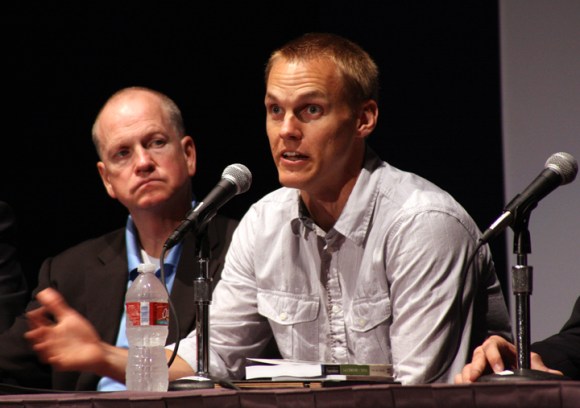
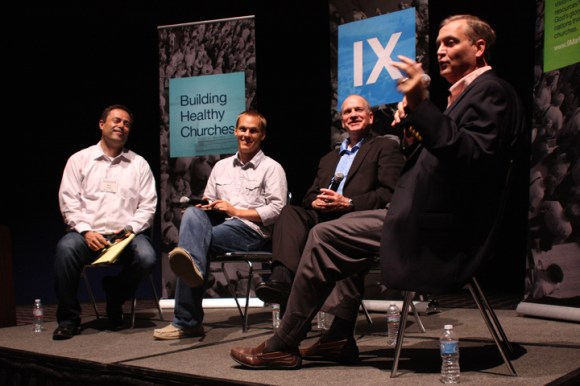
At the Baptist 21 luncheon and panel, the discussion turned to issues that put the church at odds with the larger culture. Alabama pastor David Platt told the audience, "We can't pick and choose when we believe the Gospel, which social issues we're going to apply the Gospel to, and which we're not."

At the Baptist 21 luncheon and panel, the discussion turned to issues that put the church at odds with the larger culture. Alabama pastor David Platt told the audience, “We can’t pick and choose when we believe the Gospel, which social issues we’re going to apply the Gospel to, and which we’re not.”

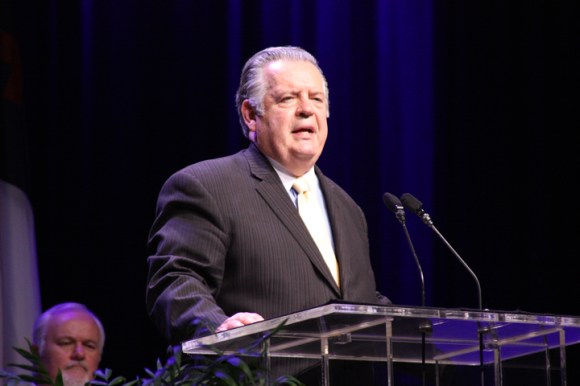
Richard Land, who served as president of the Ethics and Religious Liberty Commission for 25 years, delivered his final report Tuesday as the entity's leader.

Richard Land, who served as president of the Ethics and Religious Liberty Commission for 25 years, delivered his final report Tuesday as the entity’s leader.

New ERLC President Russell Moore answers questions at a press conference.

Russell Moore answered questions at a press conference before his first presentation as president of the Ethics and Religious Liberty Commission.

Frank Page (left) stood with the advisory team he appointed to study theological differences within the convention. The group's work was "an attempt to start talking to each other, rather than about each other and at each other," Page said.

Frank Page (left) stood with the advisory team he appointed to study theological differences within the convention. The group’s work was “an attempt to start talking to each other, rather than about each other and at each other,” Page said.

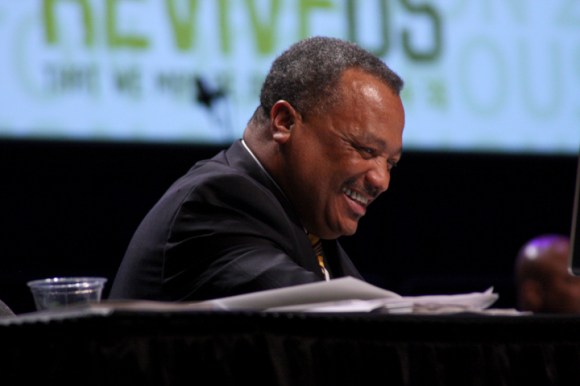
Fred Luter laughs as Virginia pastor Mark Croston nominates him for a second term as SBC President. Luter, pastor of Franklin Avenue Baptist Church in New Orleans, was unopposed.

Fred Luter laughs as Virginia pastor Mark Croston nominates him for a second term as SBC President. Luter, pastor of Franklin Avenue Baptist Church in New Orleans, was unopposed.

Adam Cruse, pastor of First Baptist Church, Mt. Carmel, Ill., closes Tuesday afternoon's session in prayer.

Adam Cruse, pastor of First Baptist Church, Mt. Carmel, Ill., closes Tuesday afternoon’s session in prayer.

Charles Billingsley, worship leader at Thomas Road Baptist Church in Lynchburg, Va., leads convention messengers in worship with help from the choir from Houston's Second Baptist Church.

Charles Billingsley, worship leader at Thomas Road Baptist Church in Lynchburg, Va., leads convention messengers in worship with help from the choir from Houston’s Second Baptist Church.

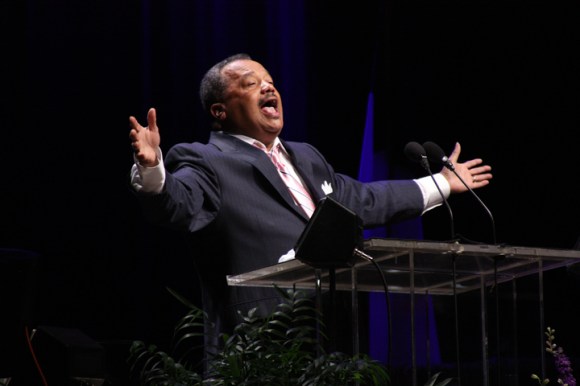
"We need to understand that we're in this together," Luter said in his president's address. "It's not about your church and my church. It's not about your ministry and my ministry. If's not about your kingdom and my kingdom. It's about all of us as Southern Baptists working together."

“We need to understand that we’re in this together,” Luter said in his president’s address. “It’s not about your church and my church. It’s not about your ministry and my ministry. If’s not about your kingdom and my kingdom. It’s about all of us as Southern Baptists working together.”

Mark Dever, pastor of Capitol Hill Baptist Church in Washington, D.C., hosted a 9Marks at 9 session on "the current state of the SBC."

Mark Dever, pastor of Capitol Hill Baptist Church in Washington, D.C., hosted a 9Marks at 9 session on “the current state of the SBC.”

Al Mohler, president of Southern Seminary, explains the Conservative Resurgence of the 1970s and 80s to young leaders gathered for 9Marks at 9.

Al Mohler, president of Southern Seminary, explains the Conservative Resurgence of the 1970s and 80s to young leaders gathered for 9Marks at 9.

Brothers and sisters, I’ve said it before and I’ll say it again at this convention: Nothing, nothing, absolutely nothing can be politically right if it’s biblically wrong.

Fred Luter, preaching his president’s message at the Southern Baptist Convention

Russell Moore (right), the new president of the Ethics and Religious Liberty Commission explains that the ERLC will support principles, rather than specific legislation. President Emeritus Richard Land (left) led the commission for 25 years.

Russell Moore (right), the new president of the Ethics and Religious Liberty Commission explains that the ERLC will support principles, rather than specific legislation. President Emeritus Richard Land (left) led the commission for 25 years.

HOUSTON | Richard Land, President of the Southern Baptist Ethics and Religious Liberty Commission for the past 25 years, turned over the organization’s leadership reigns to new president Russell Moore during the ERLC’s report Tuesday afternoon.

The two men only stood together for a moment, to tag-team answer a question about the ERLC’s stance on immigration reform.

Land’s contribution to the ERLC and to Southern Baptist history was celebrated in a video that showed a lighter side of the long-time culture warrior. Footage of Land telling humorous stories from his past was intercut with words of appreciation from SBC leaders like Al Mohler and Paige Patterson, and from conservative stalwarts on Capitol Hill. Land received a standing ovation from the audience in Houston.

Then, Moore took to the podium. Repeating a phrase he used at Tuesday morning’s “Marriage on the Line” breakfast hosted by the ERLC, he committed to lead churches to act with “convictional kindess” in a world that presents questions that wouldn’t have been asked a generation ago. And referencing Ephesians 6, he urged Southern Baptists to remember who the true enemies are.

“We oppose demons. We don’t demonize opponents.”

He also tried to put in perspective Christians’ ideological differences with the culture.

“We have no reason to be fearful or sullen or mean. We’re not the losers of history,” Moore said.

“Since Jesus is marching onward and since the gates of hell cannot hold Him back, why on earth would we be panicked over the Supreme Court?”


What the Conservative Resurgence bought for us as a denomination was a second chance to be theological, rather than dead.

Al Mohler, speaking at the B21 panel discussion in Houston