Archives For November 30, 1999

Layout 1To prepare for celebration of the Resurrection, we must first witness the agony of the cross. Crucifixion is a most torturous form of execution. It may last several hours or several days. The body’s systems shut down and the condemned man’s lungs fill with fluid. In effect, he drowns. As he pulls against the spikes in his flesh, trying to lift his body just enough to gulp another breath, Jesus uses his last energies to make seven bold declarations.

Standing at the foot of the cross with his most devoted follower, John, and his mother, Mary, we watch as Jesus pours out his life. We listen for clues to his future – and ours – as the Lord of all creation bows to his Father’s will on our behalf.

Use these devotionals once a day during Holy Week, or as an hour’s contemplation on Good Friday.

“Father forgive them,”
Read John 19:17-24, Luke 23:32-34

forgivenIt’s brazen. The soldiers who beat Jesus then stripped him and nailed him to the beam. They raised the cross and let it drop into the hole that held it up, letting Jesus’ full weight pull against the severed flesh where the great nails affixed him. Now they have the nerve, stooping to the ground before that very cross, to gamble for the only nice thing Jesus had on earth, his seamless robe.

And yet, their brazen offense, to kill a man and rob him of his clothes as payment, is not the most heinous crime Jesus suffered that day. He had laid on his back all the sins of all people of all time. And still, he says, Forgive them.

Who else could offer such a word? Only the one who is offended has the right to forgive the offender. Only he could extend grace to the one who sins against him. Jesus’ desire is always that we accept his forgiveness and live in his grace.

PRAY Lord, I, too, am responsible for your death. Help me to live in gratitude for your forgiveness.

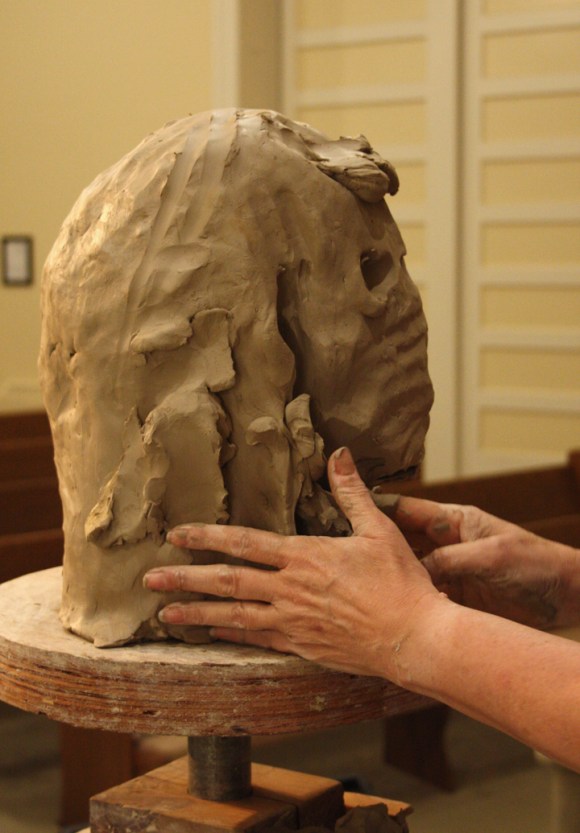
potteryHarrisburg, Ill. chalk_art| Worship in a sanctuary is usually reserved for church days. But on a recent Friday morning at First Baptist in Harrisburg, a handful of people focused on Jesus as artist Libby Morecraft turned a 75-pound mound of clay into a sculpture of his face.

She demonstrated her skills for the Easter issue of the Illinois Baptist (online here), but sculpture is just one part of the outreach she calls “Work of Art Ministries.” She also uses pottery and chalk art to lead people in worship during services, conferences and retreats. Libby, who’s married to Saline Association director of missions Rusty Morecraft, recently led during the annual IBSA Ministers’ Wives’ Retreat.

Check out how the sculpture came to life in the slideshow below, and go to the Work of Art Ministries Facebook page for more on her work.

LM_1LM_2LM_4LM_5LM_6LM_8LM_10LM_12

Nate_Adams_blog_callout_AprilCOMMENTARY | Nate Adams

In churches both here and around the world, so much preparation goes into getting ready for Easter. Of course, that’s as it should be. Easter is arguably the church’s greatest single day of celebration. Though surrounded by distractions like bunnies, egg hunts and new spring fashions, it suffers far less
secularization than Christmas. And because Easter is always Sunday, it gives every local church a special opportunity to shine in its own community. Yet, in an effective, evangelistic church, Easter is only the beginning.

Several years ago, I was part of a group that helped start a new church in the suburbs of Chicago. We decided to hold our first public worship service on Easter Sunday. We called it our church’s birthday.

Prior to that “launch Sunday,” we had prepared for a full year. For weeks, four families prayed and studied and planned. Then three neighborhood Bible studies grew into a core group of about 40. Then we met for weeks in teams to plan ministries and outreach strategies and worship services that would be relevant and inviting to our community.

In the days leading up to Easter, we stuffed envelopes, hung door hangers, and placed ads in the local papers. And on Easter Sunday, 182 people came to the grade school gym where we held our first Easter celebration.

But Easter was only the beginning. Because that first Sunday was our new church’s “birth,” we decided that birthday cakes would be great welcome gifts for all our first time guests. So we baked birthday cakes – dozens of them. And for hours after we packed up our portable church that afternoon, our core group delivered both a welcome and a friendly witness to those who lived in our Jerusalem.

Across North America, including right here in Illinois, new churches often still choose Easter to begin a new witness in a new Jerusalem. But even in churches like yours and mine that have been around a while, Easter can be preceded by special preparations that invite new people to come and meet Christ, and followed by tireless effort to make them feel welcome, both at church and in the family of God.

Do you feel comfortable, even enthusiastic, inviting your friends and neighbors to come to your church? Are you confident in what they will experience there? Is your church ready, not only to welcome and accept first time guests, but also to go the extra mile to understand their needs and questions, and respond with compassion to their imperfect lives?

It takes love and great intentionality to continually invite new people to church, and even more to be truly ready for them when they find the courage to come. The great thing is that Easter Sunday gives a church one of its best opportunities all year to welcome new people, and even churches that do little
inviting are often blessed with first-time guests on that special Sunday.

Let’s be ready this Easter. In fact, let’s be ready each and every Lord’s Day. Let’s be winsome and sensitive and compassionate and good listeners. Let’s
make sure we prepare and invite, and that the Gospel message is clear, and lovingly delivered in multiple ways. And let’s not let Sunday lunch be the end of it.

For the early church, Easter was not the grand finale; it was the start of something big. The risen, ascended, and returning Lord sent His Spirit to fill His
disciples with power, and with boldness. And He said they would be His witnesses, from Jerusalem to the ends of the earth.

It’s the same for us today. The ends of the earth still really need the Gospel, and so do the people who live in our Jerusalems. Again this year, Easter is only the beginning.

Take a closer look at Noah’s ‘rock monsters’

Photo is unavailable for the "Noah" rock giants, but for those who haven't seen the movie, they're less like the Fraggles and more like Easter Island.

Photo is unavailable for the “Noah” rock monsters, but for those who haven’t seen the movie, they’re less like the Fraggles and more like Easter Island.

THE BRIEFING | Meredith Flynn

Noah” has made around $61 million since its March 28 release, keeping alive a debate about the film’s biblical-ness that started well before it hit theaters. Indeed, the movie presents some head-scratchers for those who thought they knew Noah’s story: A magical Methusaleh, rock monsters (read on for more about them), and a stowaway on the ark, among others.

It seems many movie goers are looking to another source for the full story. According to a story on TheBlaze.com, Bible app YouVersion and website Bible Gateway both reported big increases in the number of users reading the Noah story.

And the newest edition of the “Questions and Ethics” podcast looks specifically at the movie’s rock monsters, depicted as the Nephilim mentioned in Genesis 6:4, as well as how the film can spark helpful conversations between Christians and non-Christians. All in less than nine minutes. Click here to hear the latest commentary from Ethics and Religious Liberty Commission President Russell Moore.

Baptist to helm Chicago university
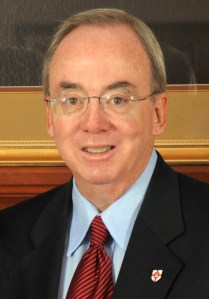
David Dockery, a leading Southern Baptist thinker and college president for 18 years, will serve as the next president of Trinity International University, headquartered in Deerfield, Ill. Dockery has served as president of Union University, affiliated with the Tennessee Baptist Convention, since 1995.

As president of Trinity, whose primary campus is 30 miles north of downtown Chicago, Dockery will lead the institution’s four schools: a liberal arts college, graduate school, law school, and Trinity Evangelical Divinity School, known as TEDS. Trinity has numerous notable alumni, including pastors Bill Hybels and James MacDonald, historian Mark Noll, and apologist Ravi Zacharias. Read the full story here.

Supreme Court won’t hear photographers’ case
The U.S. Supreme court said April 7 it will not consider the ruling by a lower court against Elane Photography, a business run by New Mexico photographers Jonathan and Elaine Huguenin. The couple was found to be in violation of their state’s discrimination ban when they refused to photograph a same-sex commitment ceremony. Some religious liberty advocates say the Court’s decision could have far-reaching implications for people in a variety of professions. Read the full story at BPNews.net.

CEO ousted for marriage views
Employees at tech company Mozilla protested their new CEO, Brendan Eich, after it was revealed he supported Prop 8, a measure in California to define marriage as being between a man and a woman. Eich co-founded Mozilla, maker of the Internet browser Firefox, and was named CEO on March 24. He resigned just 10 days later, after online dating site OkCupid encouraged a Firefox boycott because of Eich’s views. “Can we avoid the consequences of speaking the truth in love?” blogger Denny Burk asks in a post about the controversy surrounding Eich.

Golden Gate heads south
Golden Gate Baptist Theological Seminary President Jeff Iorg announced this month the school will sell its Mill Valley, Ca., property and relocate its primary campus to southern California. The seminary, located near San Francisco, had been unable to develop its current campus because of zoning laws.

“This is an unprecedented opportunity to build a new kind of seminary campus for education in the 21st century,” Iorg told students and faculty. The seminary plans to operate a commuter campus in the Bay Area after relocation. Read more at BPNews.net.

Church gets kicked out of school
A New York appeals court ruled last week that public schools can forbid churches from meeting in their buildings. “We’re very sad about it,” Pastor Robert Hall told the New York Daily News. His church, the Bronx Household of Faith, has been fighting almost 20 years for meeting space. “There seems to be an increasing attempt to marginalize Christianity in civilization,” Hall said. The Christian Post reports the church’s attorneys are considering appealing to the U.S. Supreme Court, which refused to hear the case in 2011. Read more at ChristianPost.com.


NEWS | Meredith Flynn

David_Dockery_0414David Dockery, a leading Southern Baptist thinker and college president for 18 years, will serve as the next president of Trinity International University.

“We are overwhelmingly grateful to God for the invitation from the Trinity Board to serve the students, staff, faculty and various institutional constituencies
in the days ahead,” Dockery said after his unanimous election.

He has served as president of Union University in Jackson, Tenn., since 1995. Union is affiliated with the Tennessee Baptist Convention.

As president of Trinity, whose primary campus is 30 miles north of downtown Chicago, Dockery will lead the institution’s four schools: a liberal arts college, graduate school, law school, and Trinity Evangelical Divinity School, known as TEDS. Trinity has numerous notable alumni, including pastors Bill Hybels and James MacDonald, historian Mark Noll, and apologist Ravi Zacharias.

“Almost every Southern Baptist seminary and many key Baptist universities, including Union University, have a number of Trinity grads on their faculties,”
Dockery told the Illinois Baptist. “So Trinity’s influence in Chicagoland, across the nation, and around the world has few parallels in the entire evangelical world.”

Dockery announced last year his intention to transition out of his role as president at Union. During his tenure, the school more than doubled in enrollment,
expanded and improved its campus, and increased its net assets from less than $40 million to $120 million. Dockery also established an annual scholarship banquet that has drawn speakers like George H.W. Bush, Colin Powell and Condoleeza Rice.

He helped establish Union as a leading center for Baptist education with events like the Baptist Identity Conferences of 2006 and 2007. And he led the school through the aftermath of a devastating tornado in 2008.

“As we were considering the opportunities beyond our days at Union (we always used the language of transition from the presidency to the next phase;
we have not really thought of this as a time for retirement), we asked the Lord to grant us guidance and to open doors that would be clear to us (not only
to us, but also to others) that the Spirit of God was leading our steps,” Dockery said of the process he and his wife, Lanese, have followed from Union to Trinity.

“Trinity’s commitment to theological education with excellence, their focus on global opportunities and partnerships, and the distinctive prospect of serving in one of the world’s great metropolitan areas were all strong attractions for us.”

Trinity is affiliated with the Evangelical Free Church of America, and Dockery will officially assume the presidency after the denomination’s board of directors approves his appointment. He will begin serving as Acting President June 1.

“We will trust the Lord to give us the opportunity to serve and support many churches across the evangelical landscape from our work at Trinity,” he said. “It will be a special joy to introduce Illinois Baptists in a deeper way to the work of Trinity and to introduce the Trinity community to the work of Illinois Baptists.”

Additional reporting by Baptist Press

My job and the Gospel

Meredith Flynn —  April 7, 2014

Carrie_Campbell_blog_calloutHEARTLAND | Carrie Campbell

Looking around my middle school classroom in Springfield, I’m struck by how different it is than where I was eight months ago, surrounded by the beautiful mountains of eastern Kentucky.

Or five months ago, when I was immersed in the bright and flashing lights of New York City.

After college, I decided to take a season of my life and do full-time ministry. I spent two years in Kentucky working with at-risk kids. I followed that up with a
few months in Brooklyn, learning about ministry in an urban context. I came back home to Illinois in November and felt called to live out a personal dream: becoming a teacher. I received an exciting job offer to teach current events to sixth, seventh and eighth graders.

My classroom isn’t as scenic as the mountains or the city, but it’s certainly a mission field.

Going from a mission-minded environment to a secular workplace was a big jump for me. In many ways it was one of my biggest life challenges. I went from being surrounded by those who have the same eternal goal in mind, to working with people who have lots of different goals. I quickly learned that the “harvest is plentiful but the workers are few.” But God has given me opportunities to share the Gospel.

One of the first things I noticed among my co-workers was that the environment in my school was very negative. I started writing encouraging notes to the teachers on my team as well as the administrative staff. My coworkers quickly took notice of that and sought me out to talk about their struggles. A before-school prayer meeting started up again. People are more positive now. I realized that sharing the Gospel starts with the small things, and God can take those small things and transform a school.

The most valuable part of my job is getting to know my students and letting them know I care about their needs. Even though I’m not allowed to say, “Christ has a future for you,” I can give positive feedback and point them toward their strengths.

One student recently was placed in my room for a behavior problem. He quickly got bored, so I gave him the simple task of fixing my three-hole punch. He liked that I gave him some attention and that he was able to accomplish this task for me. We’ve had a positive relationship since then, and he knows that I care about him and want him to do better in school.

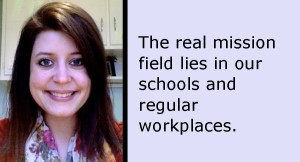
Even with the challenges this new workplace brings, I have been constantly reminded that Christ is in control, and that the real mission field lies in our schools and regular workplaces. People with needs are crying out and, for us who are Christians, being able to step into those places and bring the Gospel is an honor.

Carrie Campbell is a member of Delta Church in Springfield.

COMMENTARY | Eric Reed

If there is any swordplay between the dominant camps at the Southern Baptist Convention this summer, it will likely be in the vice presidential races. Reformed leader Al Mohler announced he will reach across the aisle and nominate for the SBC presidency Arkansas pastor Ronnie Floyd, who is not known as a Calvinist. So, dueling will be consigned to lower ranks. And the first candidate has stepped forward.

Clint Pressley of North Carolina will be nominated for first vice president. What’s interesting is that it was Pressley who nominated Mississippi pastor Eric Hankins for second vice president in 2012.

Hankins is the author of a document called “A Statement of the Traditional Southern Baptist Understanding of God’s Plan of Salvation.” The document was a response to the rise of Calvinist theology in the Convention. That bubbling debate cooled only when Executive Committee President Frank Page invited Hankins, Mohler, and 17 others to join him in a study group seeking a peace between the sides and avoidance of a schism.

Hankins was not elected second vice president. He and another candidate were defeated by a surprise nominee, Iowa pastor and blogger Dave Miller. Miller’s nominator had posited him as a less divisive alternative.

Hankins exited the platform that year, but has remained active in the discussion of SBC polity and theology. Now, Pressley returns, not to nominate, but to be nominated.

That’s not at all surprising.

From a seat two rows behind them in Hebrew class, it was clear these young men were headed somewhere. Tall, sharp, and confident, in the football-player way, Hankins and Pressley went through college together as best friends. At seminary, they were a better-behaved version of Butch and Sundance. They were young men on life’s adventure as friends, role models, family men, pastors of ever-larger churches. And apparently, they were instrumental at the start of a movement to recapture “traditional” as a theological position worth holding and an identity worth upholding.

One started the race; we’ll see if the other can carry the torch on the next lap.

One more development on the traditional front: A group calling itself Connect 316 announced its first meeting to be held during the Convention. Offering their network as an alternative to “Calvinist-leaning” groups such as the Founders Ministry, 9 Marks, and Acts 29, they claim the theological tradition of Herschel Hobbs and Adrian Rogers. In other words, “traditionalists.”

A friend of mine is looking forward to the Convention in June. She wants to see if Pressley will again make an appearance in his seersucker suit. The summer staple of Southern lawyers was an old-time favorite of preachers, too. Could seersucker, and traditionalists, make a comeback in Baltimore?

Eric Reed is editor of the Illinois Baptist newspaper.

Noah_movie_posterTHE BRIEFING | Meredith Flynn

Director Darren Aranofsky’s controversial “Noah” movie (rated PG-13) grabbed the top spot at the box office over the weekend, grossing $44 million in the U.S. and Canada and almost $100 million worldwide. Many Christians voiced objections to the movie’s content prior to its release, and the debate continued over social media as people went to the theater to see what all the fuss was about. The verdict: Christians are still divided on the film’s value.

“This is not a ‘buy up a block of tickets’ moment for churches…,” National Religious Broadcasters President Jerry Johnson blogged at ChristianityToday.com before the film’s release. “Noah, the film, may be inspired by the biblical character and events – but it is not a straightforward retelling of that story. Churches who are looking for that kind of movie will not find it here.

“However, many people will go to this film and enjoy it. The main events from the Noah story are depicted in a powerful way on the big screen by name brand actors and quality production. Christians should be ready to engage moviegoers in conversation about biblical and cultural themes that are portrayed in this movie.”

Your turn: Have you seen “Noah”? What did you think? Leave us a comment below.

Other news:

Saddleback, Warrens host conference on the church and mental health
Nearly a year after their son, Matthew, committed suicide, Rick and Kay Warren invited experts in the field of mental health to a one-day conference at Saddleback Church. More than 3,300 people attended the meeting March 28, which featured workshops for people and families struggling through mental illness, as well as church leaders who want to be better equipped to handle mental health issues in their churches and communities. “We do this in honor and memory of our son and others lost to mental illness, realizing there is hope for others dealing with this condition,” Kay Warren said, according to a report by The Christian Post.

Judge makes Michigan latest state to take up same-sex marriage issue
Judge Bernard Friedman overturned Michigan’s ban on gay marriage last week, and about 300 couples were married after his decision. The ruling was stayed, and Michigan Governor Rick Snyder has said the state will not recognize those marriages as of now. But U.S. Attorney General Eric Holder said the government will offer federal benefits to the married couples, mirroring the action it took in Utah earlier this year. Click here to read about action in other states and to view the updated marriage map.

Barna researches why 64% of Americans aren’t regular church attenders
Author Donald Miller sparked controversy recently with a blog about why he doesn’t attend church (he feels more connected to God through his work than through a worship service). Research from Barna indicates many people feel the same way. Of the 64% of Americans who don’t attend church regularly, 40% say they find God elsewhere, and 35% say church is not relevant to them personally. Read more, including details about church attendance for the millenial generation, at Barna.org.

Faith, family more important than mirror ball trophy for former ‘Full House’ star
Candace Cameron Bure, who came to fame as DJ Tanner on 90’s TV series “Full House,” is also a contestant on this season of “Dancing with the Stars.” During a recent episode, she explained the modest choices she made when planning her rumba with professional partner Mark Ballas: “My life revolves around my relationship with Jesus Christ so with the overall tone of the dance or the costumes, it’s not going to take a backseat.”

Bure told host Erin Andrews after the dance: “I want to reserve some things for my husband so I think we did the best that we could with the rumba that I still felt comfortable doing.” Read more at ChristianPost.com.


Layout 1Same-sex marriage gains support in courts, public opinion

NEWS | Eric Reed

Update: Last week, Michigan became the latest state to allow same-sex marriages, after Judge Bernard Friedman overturned the state’s ban on gay marriage. About 300 couples were married before the judgment was stayed, and Michigan Governor Rick Snyder has said the state will not recognize the marriages as of now. But U.S. Attorney General Eric Holder said the government will offer federal benefits to the married couples, mirroring the action it took in Utah earlier this year.

Same-sex marriage is not being tried in the court of public opinion. It’s being tried in the courts and public opinion. And the latest evidence is it’s winning in both sectors.

Same-sex marriage is legal in 17 states. And, one way or another, it’s pending in the remaining 33.

Even in states where marriage is legally limited to one man/one woman, there is a growing sense that pending court decisions will force recognition of gay marriages performed in other states.

At the same time, new polls show a majority of Americans support recognition of same-sex marriages. The ABC News-Washington Post poll shows 59% of Americans say they support same-sex marriage (34% are opposed), and 50% say the U.S. Constitution already guarantees homosexuals the right to marry (41% say it does not).

In states that prohibit same-sex marriage, 53% of those surveyed favored allowing it; 40% remained opposed. Support for same-sex marriage is lowest among Republicans (only 40% approve), and among conservatives and evangelical Protestants at one-third or less.

The Post’s analysis of its polling is that “support for same-sex marriage has changed more rapidly than almost any social issue in the past decade.” In March 2004, only 38% of respondents said same-sex marriage should be legal, and 59% said it should not.

In all this polling, the generation gap is noteworthy. Younger people of every political and religious view were more likely to favor legalizing gay marriage. For example, a Pew survey found 61% of young Republicans under age 30 supported same-sex marriage.

The question arising in recent weeks is whether public opinion is driving the courts or if the courts are driving public opinion. And this: Have we reached the tipping point?

In six of the nation’s 11 federal appellate courts, legal challenges involving same-sex marriage are pending that could eventually go the U.S. Supreme Court.

4th Circuit, Virginia: A lower court struck down Virginia’s amendment that prevents gay couples from marrying. Opening arguments are set for the week of May 12.

5th Circuit, Texas: A Texas court ruled the state’s ban on marriages for same-sex couples was unconstitutional. The governor is appealing. No court date set.

6th Circuit, Kentucky: A federal judge ordered the state to recognize same-sex marriages performed out of state. The state attorney general refused to appeal, saying emotionally he had prayed about it and it was the right thing to do. The governor said he will use outside attorneys to appeal. No court date set.

Ohio: A federal judge ruled Ohio must recognize the out-of-state marriages of same-sex couples in the case of couples being listed as “married” on death certificates. Briefs due April 10.

7th Circuit, Illinois: A federal judge ruled same-sex couples can marry now, even before the June 1 date the state’s law takes effect. Attorney General Lisa Madigan concurred. No appeal has been announced.

9th Circuit, Nevada: The state announced it will not defend its ban on same-sex couples marrying, following the U.S. Supreme Court’s partial strike of the federal Defense of Marriage Act (DOMA). April 9 oral arguments were cancelled, will be rescheduled.

10th Circuit, Oklahoma: A federal judge ruled the state’s ban on gay marriage is unconstitutional. Oral arguments April 17.

Utah: 1,000 couples married after a federal judge ruled the state’s gay marriage ban unconstitutional, then refused to stay his ruling until an appeal could be heard. Oral arguments April 10.

And then there’s the issue of the rights of Christian service providers to refuse the business of gay couples, with the proposed Arizona law as chief example. In February, the governor refused to allow the bill, which would have protected business owners based on their religious convictions, to become law.

In all these cases, no strong Christian response seems to have arisen. The window for Christians to file suits or to urge their state governments to pursue legal action is a brief one. The cases are moving quickly to court, and no organized effort to participate, as in the early days of the pro-life movement, has materialized.

What is happening now is the waiting – waiting for one of these cases to reach the U.S. Supreme Court, and for the Court to rule on whether same-sex marriages performed in one state must be recognized in all states.

As New York Times columnist Ross Douthat concluded in a March 1 column titled “The Terms of Our Surrender”: “We are not really having an argument about same-sex marriage anymore, and on the evidence of Arizona, we’re not having a negotiation. Instead, all that’s left is the timing of the final victory – and for the defeated to find out what settlement the victors will impose.”

Eric Reed is IBSA’s associate executive director for communications and editor of the Illinois Baptist newspaper.


map of Ukraine - vector illustrationHEARTLAND | Frank Page, president of the Southern Baptist Convention Executive Committee, prayed over the phone recently with Vyacheslav Nesteruk, president of the Baptist Union of Ukraine. Here are four requests the Ukrainian leader shared, reported by Roger Oldham of the Executive Committee:

  • That there would be no war in Ukraine, but peace.
  • That there would be a sense of peace in the hearts of Ukrainian people, rather than a sense of unrest or anxiety.
  • For the economic situation, as sanctions imposed by Russia have already begun making life difficult in Ukraine.
  • Most of all, that people would be open to the Gospel and actively seek the Gospel during these troubled times.

Ukraine has had a turbulent year so far, with the overthrow of its president, violent protests, and recent Russian military action in Crimea. Read more about the conversation between the Baptist leaders at BPNews.net.