Archives For November 30, 1999

Disliking their options, some evangelicals consider withdrawing from presidential politics this time around.
USA symbols mapWith eight months to go until the presidential election, a World magazine survey finds 8 in 10 evangelical leaders say they would vote for an outside third-party candidate as president over Democrat Hillary Clinton or Republican Donald Trump.

Meanwhile, Trump has been victorious in several southern states where voters identified heavily as evangelical, sparking a debate over the meaning of the word “evangelical.”

This tension has not been unnoticed by the media. A recent Yahoo Politics article declared, “Donald Trump’s candidacy has sparked a civil war inside American Christianity.” In an essay for the New York Times, Russell Moore, head of the Southern Baptist Ethics and Religious Liberty Commission, asked, “Have evangelicals who support Trump lost their values?” In the article he decries Trump’s past behaviors and urges Christians to vote according to biblical moral values.

World’s March survey of 103 evangelical leaders and influencers showed more than 50% said they would, on principle, “vote for a third-party candidate who had no chance to win.” The survey also found 76% would vote for Sen. Ted Cruz as president if he secured the Republican nomination. In the eight prior surveys, their choice had been Sen. Marco Rubio who has since ended his campaign.

The debate continues over the disconnect between evangelical leaders and some people in the pews. D. C. Innes, King’s College professor and World magazine contributor, told the Deseret News evangelicals support Trump because they believe they’ve lost the culture wars. “Evangelicals, for example, became politically engaged to preserve their way of life and they don’t feel they’ve gotten their support’s worth from politicians. Abortion, gay marriage—they’ve lost on every front,” said Innes. “The support for Trump is an act of desperation: Protect us. We’re not free to be Christians anymore, so you’ve got my vote.”

Turning to Trump, who is decidely not evangelical, is one option. At the other end of the spectrum is The Benedict Option. In 500 AD, after the fall of the Roman empire, Benedict moved to the city of Rome to continue his education. Disgusted by the decadence there, he left the city and withdrew from society. Benedict became a monk and started several monasteries, leading to the Catholic order that bears his name.

Rod Dreher, writing for the American Conservative, calls this “a communal withdrawal from the mainstream, for the sake of sheltering one’s faith and family from corrosive modernity and cultivating a more traditional way of life.”

A less severe option calls on Christians not to withdraw, but to focus on their churches as “counter-cultural communities of disciples who covenant to walk together for the sake of worship, catechesis, witness, and service.”

Nathan Finn of Union University says this movement (called the Paleo-Baptist Option because it draws from Baptist history) is necessary because “all Christians need to learn from each other, sharpen one another, and spur each other on to love and good deeds. We need each other as our respective traditions seek to follow Christ and bear witness to his kingship in a culture that is increasingly hostile to all forms of orthodox, full-throated, publicly engaged Christianity.”

Of course, considering either outright withdrawal from politics or shoring up “the Christian resistance against what the empire represents,” possibly by way of supporting a third-party run, is all conjecture at this point. With Super Tuesday behind us, and until both parties choose their nominees for the general election, believing evangelicals can only watch and pray for better options.


The BriefingIllinois judge orders Christian B&B to host same-sex wedding

An Illinois administrative judge has given the owners of a bed and breakfast one year to provide their facility to a gay couple “for an event celebrating their civil union.” The order, part of a decision handed down March 22 in a discrimination case filed by the two men, also includes an $80,000 fine.

Religious liberty focus of new study
A growing number of Americans believe religious liberty is on the decline and that the nation’s Christians face growing intolerance, according to a survey by LifeWay Research. Two-thirds (63%) say Christians face increasing intolerance, up from half (50%) in 2013. Those surveyed also noted American Christians complain too much.

Feds threaten NC aid over transgender law
The Obama administration is considering whether North Carolina’s new law on gay and transgender rights makes the state ineligible for billions of dollars in federal aid for schools, highways and housing. Cutting off federal money would put major new pressure on North Carolina to repeal the law, which prohibits transgender people from using public bathrooms that do not match the sexes on their birth certificates.

Abortion pill guidelines eased
The Food and Drug Administration has updated its guidelines concerning the abortion drug mifepristone, allowing women to take it later in pregnancy and with reduced medical supervision. The New York Times called the update “an unequivocal victory for abortion rights advocates.”

Evangelicals love baseball
Religion, it turns out, is a better predictor of who is a baseball fan than age or where one lives. A poll last year by CBS found that while there is a gender gap (but evangelical women are among baseball’s biggest fans), there are also religious differences. The “nones” are less likely to be fans; Catholics and evangelicals are more likely to root, root, root for the home team.

Sources: WORLD Magazine, Facts & Trends, New York Times, Baptist Press, Religion News Service

Top 10

“I feel like in some ways, after 10 years, I’m just figuring things out,” Nate Adams told the Illinois Baptist State Association Board of Directors last month during a celebration of his service as executive director.

Adams offered some reflection on IBSA’s victories over the last ten years, and a few challenges ahead, all in the form of a “top ten list.”

10. Goals and measurements. IBSA now has a consistent, annual pattern of evaluating churches’ needs (surveys), measuring churches’ progress (ACP), setting focused, organizational goals, and measuring effectiveness through multiple, strategic metrics. Our goals are based on facts and feedback, not programs or preferences. Everything from annual budgets to the Annual Meeting theme are driven by purpose and strategy.

9. Strong church participation. Over the past 10 years, IBSA churches baptized 49,584 people and planted 242 new churches. Mission trip participation is up 23% to more than 24,000. Nearly $90 million was given to missions, including more than $64 million through the Cooperative Program (CP). This growth in church participation is in spite of fewer total churches and members.

8. Financial frugality, stability, and health. Over the past 10 years, annual income over expense has averaged $395,000 or around 5% (in 2006 it was $36,608). IBSA’s Cooperative Agreement with the Baptist Foundation of Illinois (BFI) has helped it to grow and for the CP subsidy of BFI to be reduced from a peak of $153,000 to $35,000 in the 2016 IBSA budget.

While 2015 CP giving was $411,000 less than 2009 and NAMB revenue was $252,000 less, IBSA has avoided involuntary lay-offs, and modest compensation increases have been possible each year.

7. Updated and renewed facilities. In 2012, IBSA completed a $1.9-million renovation of its Springfield building and grounds, debt-free and on schedule. The building now hosts groups of up to 250. In 2014, Lake Sallateeska expanded and renovated its dining hall and two other buildings.

6. Staff efficiency and strength. IBSA has trimmed, restructured, and right-sized its staff to adjust to available resources, increased personnel costs, and the evolving needs of churches. Part-time zone consultants are the most notable example. Today, the IBSA staff is not only more diverse, but far more field-based and closer to churches than it was 10 years ago.

5. Effective change management. IBSA has weathered significant economic and social change, from the secular culture, to the national SBC, to local associations and churches themselves. Many organizations and state conventions in particular have had traumatic adjustments to these changes. By acting early, budgeting conservatively, and an “elastic” restructuring, IBSA has for the most part been able to manage a gradual altitude adjustment with minimal negative consequences to IBSA churches. Changes at both the national SBC and local association level present IBSA with new opportunities and challenges for the future.

Those are the victories of the past 10 years. Now the challenges ahead:

4. IBSA churches’ relatively low net impact on lostness in Illinois. While 242 churches have been planted, the net IBSA congregation count has dropped from 1,032 to 957. IBSA churches baptized 4,400 in 2015, yet dropped 3,352 in Sunday School attendance.

3. Reversing health and growth trends among churches. Annual baptisms are down 18% from the 2009 level. Overall worship attendance is now basically the same in 2016 as 2006, though it rose as much as 9.3% (in 2008). Overall Sunday school attendance in 2016 was 17.4% lower than in 2006.

2. Rekindling the passion and renewing the power of cooperation. Some younger leaders and those without Baptist backgrounds do not always understand or buy in to the cooperative missions model. After dropping to 6.8% in 2013 and 2014, the CP giving percentage rebounded to 7.1% in 2015. Nationally, the average is 5.5%. “Engagement” is key for IBSA’s future.

1. Raising the bar of leadership. Most of the challenges and problems with which IBSA churches struggle are rooted in leadership issues. As the 2015 Midwest Leadership Summit and 2016 Illinois Leadership Summit demonstrated, there is a hunger for leadership development among IBSA churches and leaders.

Fulkerson and Porter group photo web

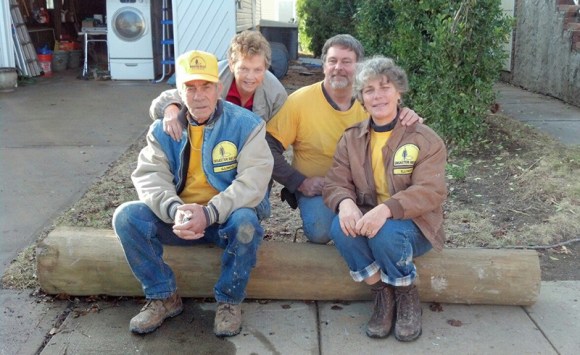
Disaster Relief volunteers Bob Fulkerson and his wife Margie (left) and Butch and Debbie Porter (right) rest for a moment during a call out a few years ago in New York. Fulkerson passed away Tuesday, March 29 while serving on a call out in Leesville, La. Both couples are members of First Baptist Church of Galatia, Ill. Photo courtesy Butch and Debbie Porter.

Funeral arrangements have been made for Southern Baptist Disaster Relief (DR) volunteer Don Fulkerson, who died of a heart attack Tuesday, March 29, while serving flood victims in Leesville, Louisiana. Fulkerson, 77, was with a group of trained DR workers from First Baptist Church of Galatia, IL, and volunteers from other Illinois Baptist churches.

Visitation will take place Friday, April 1 from 6-9 p.m.  and Saturday, April 2 from 9-11 a.m. at First Baptist Church of Galatia, 108 E. Church St., Galatia, IL 62935. His funeral will be Saturday, April 2 at 11 a.m. also at First Baptist Church of Galatia. Fulkerson was a member of the church.

Rex Alexander, Disaster Relief coordinator for the Illinois Baptist State Association (IBSA), suggested DR volunteers attending the funeral, “wear your yellow shirts in honor of Don’s faithful service to the Lord through Disaster Relief Ministry.” Southern Baptist DR volunteers are easily identified at disaster recovery scenes by the bright yellow shirts they wear.

“The callout to Louisiana was Don’s 15th response over a period of only four years and his wife, Margie, was almost always by his side serving whenever the opportunity arose,” shared Alexander. “Their faithful service to Christ brought great joy to both of them as they served side by side in the ministry of Disaster Relief.”

Cards of condolence may be mailed to his widow Margie Fulkerson, P.O. Box 5, Galatia, IL 62935.

The DR team from First Baptist Church of Galatia were first responders in what is expected to be a series of callouts to aid victims of spring floods in Louisiana. IIBSA teams will serve alongside teams from around the country.

IBSA has 1,600 trained volunteers who serve as part of the Southern Baptist Convention’s Disaster Relief ministry (SBDR), the third largest relief agency in the United States. Disaster Relief often responds to natural disasters by providing feeding stations, mobile kitchens, child care, and chaplains. In the case of flooding, volunteers in their signature yellow shirts help homeowners with “mudout,” clearing flooded properties of debris and contaminated building materials, so they can begin rebuilding and recovery.

Don Fulkerson

Don Fulkerson

Leesville, Louisiana | A volunteer with a Southern Baptist Disaster Relief (DR) team from Illinois died of a heart attack Tuesday, March 29, while serving flood victims in Leesville, Louisiana. Don Fulkerson, 77, was a member of First Baptist Church of Galatia, Illinois. He was serving with a group of trained relief workers from the church and others from churches around Illinois.

“The callout to Louisiana was Don’s 15th response over a period of only four years and his wife, Margie, was almost always by his side serving whenever the opportunity arose,” said Rex Alexander, Disaster Relief coordinator for the Illinois Baptist State Association (IBSA). “Their faithful service to Christ brought great joy to both of them as they served side by side in the ministry of Disaster Relief,” Alexander said.

The DR team from First Baptist Church of Galatia were first responders in what is expected to be a series of callouts to aid victims of spring floods in Louisiana. Illinois teams will serve alongside teams from around the country.

“Our Illinois Baptist family certainly grieves with and is in prayer for the Fulkerson family, and the entire church family at First Baptist in Galatia,” said IBSA Executive Director Nate Adams. “We appreciate so much Don’s and Margie’s service, along with so many other devoted disaster relief volunteers, and we are confident that Don’s life and sacrifice will bring eternal rewards, both to him and to the lives he touched.”

The North American Mission Board (NAMB) coordinates Southern Baptist Disaster Relief on the national level. NAMB president and former Illinois Baptist pastor Kevin Ezell extended his condolences to the family of Fulkerson as they mourn his passing. “Don is a great example of someone who chose to stay active into his later years and to contribute in a way that truly made a difference in the lives of others,” said Ezell. “I pray that his wife Margie and his entire family will feel God’s love and comfort during these days and that they will also be aware of the gratitude and appreciation for them from their entire Southern Baptist family.”

IBSA has 1,600 trained volunteers who serve as part of the Southern Baptist Convention’s Disaster Relief ministry (SBDR), the third largest relief agency in the United States. Disaster Relief often responds to natural disasters by providing feeding stations, mobile kitchens, child care, and chaplains. In the case of flooding, volunteers in their signature yellow shirts  help homeowners with “mudout,” clearing flooded properties of debris and contaminated building materials, so they can begin rebuilding and recovery.

Contact:
Illinois Baptist State Association
Lisa Sergent, Director of Communications
3085 Stevenson Drive
Springfield, Illinois 62703
LisaSergent@IBSA.org
(217) 391-3119


The BriefingGeorgia governor to veto pastor protection bill
Georgia Governor Nathan Deal said he will veto legislation shielding opponents of same-sex marriage, after a groundswell of opposition from companies such as Coca-Cola, Disney, and the NFL threatening to boycott the state if it became law.

Crosby 3rd candidate for SBC president
Louisiana pastor David Crosby will be nominated for president of the Southern Baptist Convention, former SBC President Fred Luter announced. During the 20 years Crosby has pastored First Baptist Church in New Orleans, the congregation has given between 7 and 15% of its undesignated receipts through the Cooperative Program, Luter said.

Indiana bans Down’s Syndrome abortions
Indiana Governor Mike Pence signed a new pro-life bill into law that will, among other things, prevent the abortions of babies diagnosed with a disability or defect. “Some of my most precious moments as governor have been with families of children with disabilities, especially those raising children with Down syndrome,” said Pence.

Suspects, arms seized after attack on Pakistani Christians kills 72
Security forces, hunting for suspects in the deadly Easter Sunday bombing targeting Christians in a Lahore park, raided locations in three cities overnight and arrested suspected terrorists. A splinter group of the Pakistani Taliban, Jamat-ul-Ahrar, claimed responsibility for the attack and vowed more such attacks.

4 Wycliffe Associates Bible translators murdered
Four Wycliffe Associates workers have been killed in an attack by radicals in the organization’s office in the Middle East. Two of the Wycliffe workers were apparently killed by gunshots, while two others laid on top of the lead translator and died while “deflecting bludgeoning blows from the radicals’ spent weapons,” and managed to save his life.

Sources: Time, Baptist Press, MRCTV, CNN, Christian Post

David Crosby

David Crosby

New Orleans pastor David Crosby is the third candidate to be named as a nominee for Southern Baptist Convention president. On March 24, former SBC President Fred Luter announced he will nominate Crosby, pastor of First Baptist Church, to the post during the SBC Annual Meeting in St. Louis.

“I have watched David the last 10 years here in New Orleans as he has taken the leadership of all the churches and pastors of our city in helping to rebuild New Orleans, which everybody knows was totally destroyed [in 2005] in Hurricane Katrina,” Luter, pastor of Franklin Avenue Baptist Church in New Orleans, told Baptist Press.

Crosby joins previously announced candidates — J.D. Greear, pastor of The Summit Church in Raleigh-Durham, N.C., and Steve Gaines, pastor of Bellevue Baptist Church in Cordova, Tenn.

In contrast to Greear and Gaines, Crosby has lead his church to a higher percentage in Cooperative Program giving. According to Luter, during the 20 years Crosby has pastored First Baptist, the congregation has given between 7-15% of its undesignated receipts through the Cooperative Program. Annual Church Profile reports show First Baptist’s total missions giving to be at least 22% of its undesignated receipts annually over the past five years.

Greear’s church gives 2.4% of undesignated receipts to CP, while Gaines’ gives approximately 4.6% of undesignated receipts to CP.

First Baptist has averaged 658 people in Sunday morning worship services and 24 baptisms between 2011 and 2015. The Summit’s baptisms increased from 19 in 2002, when Greear arrived, to 928 in 2014. Bellevue has averaged 481 baptisms annually during Gaines’ tenure.

Crosby is married and has three children and eight grandchildren. He earned a master of divinity from New Orleans Baptist Theological Seminary and a doctor of philosophy from Baylor University.

March 2 Jimmy Scroggins, pastor of Family Church in West Palm Beach, Fla., announced he will nominate Greear, and March 9 Johnny Hunt, former SBC president and pastor of First Baptist Church in Woodstock, Ga., said he will nominate Gaines.

The 2016 Southern Baptist Convention will take place June 14-15 in St. Louis, MO. Current SBC President Ronnie Floyd is finishing his second term in the post. Floyd is pastor of Cross Church, Northwest Arkansas.

Smart phones make smart disciplesMy faith was greatly impacted in college by a church that challenged me to be a student of the Bible. That love for personal Bible study has motivated me to become an advocate for biblical literacy—a need highlighted by a recent Lifeway Research study that found only 45% of regular church attenders read the Bible more than once a week.
Before becoming a pastor, I always viewed the main responsibility as preaching. But now I understand why the role isn’t called “Senior Preacher.” As a pastor, I have a responsibility to build stronger disciples in Jesus Christ, and that’s an impossible task apart from the Bible.

To help combat biblical illiteracy at our church, we have turned to an app called YouVersion. I think of it as an example of what Paul meant when he wrote in 1 Corinthians 9:22: “I have become all things to all people, that by all means I might save some.” YouVersion is a 21st century response to Paul’s approach.

With over 200 million downloads, the app is a helpful tool that any church can easily use. It’s free, can be carried on any smart phone or tablet (or accessed by a computer at bible.com), and offers valuable opportunities for biblical accountability and community.

A long-time church member stopped by my office last month and said, “I want to grow closer to the Lord.” After listening to his testimony of faith, I inquired about his personal devotional times. He admitted to not reading the Bible much, and so I asked him to pull out his phone. We quickly downloaded YouVersion, and got him started on a daily reading plan through the Gospel of John.

He texted me later that night to tell me he finished the entire book of John! “Should I just go onto Acts?” he asked. Since then, he has not only finished Acts for the first time, but is now re-reading it to gain a better understanding of the story. He credits his success to the ease of YouVersion.

We’ve used YouVersion with recent converts to Christ. I helped them get the download and choose a reading plan. This has provided these brand new believers with a clear plan and goal for their Bible reading.

As with other forms of social media, you can “friend” others through YouVersion. As you do, your homepage fills up with news of their progress through Bible plans or verses they highlighted. So I not only learn from my own Bible reading, but that of others in my church. And anytime one of my friends has been offline for a while, I know to check in with them.

Two weeks in a row, highlighted Scriptures from members of my church made their way into the messages I had been working on for that week. They were thrilled to know their personal study of the Bible had influenced my own.

Even my 10-year-old daughter switched to YouVersion on her Kindle last year and I use it to monitor and comment on her reading.

I also use my YouVersion newsfeed as a prayer list. As I see the names of friends and passages they’re studying, I pray for their study and usually let them know I’m praying. And watching comments between our members regarding a particular passage is a great encouragement to me as their pastor.

We as a church also use the YouVersion live component. This allows us to create “events” for each upcoming sermon. People can read the Scripture passage and interact through polls, or by posting comments or questions. And again, it’s 100% free.

I should tell you, YouVersion doesn’t pay me for my advocacy. I’m merely sharing how this Bible app has had an impact on our church. Like many churches, we’re often slow adopters when it comes to technology. And while a digital Bible is no better than a traditional Bible, it’s time we used every opportunity available to us in building biblically literate believers in Jesus Christ.

Heath Tibbetts pastors First Baptist Church, Machesney Park.

Pastor combats violence

Lisa Misner —  March 24, 2016

Takes to airwaves to save kids and streets

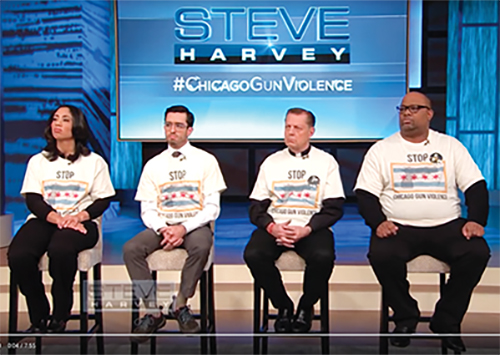
An IBSA pastor appeared on the “Steve Harvey Show” last month to bring attention to rampant gun violence in his city. Corey Brooks, who pastors New Beginnings Church on Chicago’s South Side, was part of a four-person panel on Harvey’s Feb. 15 episode, the whole of which was dedicated to violence in Chicago.

Chicago pastor Corey Brooks (right)

Chicago pastor Corey Brooks (far right), “The thing that will change and solve the problem of violence is the gospel.”

It’s a problem Brooks has been fighting for years, most notably during his 2011 campaign on the roof of a motel across the street from his church. “I was just tired of it,” Brooks said of the crime that riddled the motel. With only a tent to protect him from the Chicago winter, Brooks spent 94 days on the roof, until he had raised $555,000—enough money to buy the hotel and tear it down. His church is now raising money to build a community center in its place.

In 2015, Chicago had 468 homicides, the Chicago Tribune reported, the most of any U.S. city. More than 2,900 people were shot. Already in 2016, there have been 467 shooting victims in Chicago.

Brooks’s church sits in a neighborhood that one newspaper labeled in 2014 the city’s most dangerous. But when New Beginnings moved in to the location, they were looking for a place they could make a difference.

“We wanted an area that really needed the gospel, an area that really needed a lot of help,” Brooks told the Illinois Baptist. “God has really been good to us, and we’re doing the best we can do in that area. It’s difficult, but we’re working really hard.”

The church started a non-profit called “Project HOOD” that focuses on mentoring initiatives. It was Brooks’s time on the motel roof that first introduced him to talk show host Steve Harvey, who gave the pastor his Best Community Leader Award in 2012. Harvey’s foundation has since partnered with Project HOOD.

On the Feb. 15 episode of Harvey’s show, which tapes in Chicago, Brooks’s fellow panelists—a former school principal, a journalist, and a Catholic priest—came from very different walks of life than his own. But to solve the problem of gun violence, Brooks said, people are going to have to work together.

In fact, that’s why his church affiliated with the Illinois Baptist State Association in 2015. “I realized that this issue is a lot bigger than what an independent church can handle,” Brooks said. “You need to be aligned and partnering and collaborating with other groups that believe what you believe” so that you can bring needed resources into communities, he said.

“The thing that will change and solve the problem of violence is the gospel.”

Meredith Flynn is an editorial contributor to the Illinois Baptist.

‘Tricky’ endorsements

Lisa Misner —  March 22, 2016

The young woman who summarized all of Baptist history in a five-minute rap video in 2013 has returned with a campaign video for J. D. Greear. Ashley Unzicker tells in beat-box rhyme how Southern Baptist Convention presidential candidate Greear would lead the massive SBC, saying “it’s tricky.” The rap is a parody of Run-D.M.C.’s “It’s Tricky” released in 1986.

Several leading SBC figures appear in the video, each repeating the line, “it’s tricky.”

They include the heads of three SBC entities: International Mission Board president David Platt, Ethics and Religious Liberty Commission president Russell Moore, Southeastern Seminary president Danny Akin and former SBC president Bryant Wright. Their sound bites appear to have been recorded by the entity heads on cell phones.

A disclaimer on the video says the opinions expressed are those of the rap-artist, and not necessarily the opinions of the Southern Baptist Convention, International Mission Board, North American Mission Board, Greear or his church. A card at the end requests the viewer “keep all angry comments, blog posts, and e-mails to yourself.” The rapper may mean that to be funny, but it appears she means it.

And no, we won’t.

We don’t expect the heads of SBC entities to endorse candidates for SBC office. The next SBC president will appoint the people who name trustees and board members for denominational entities. Indirectly, they affect the budgets. Appearing in a particular candidate’s video—even a funny one produced by a well-meaning church member—could be interpreted as an endorsement. Is that ethical?

What’s next? Should Frank Page, Paige Patterson, Chuck Kelley, and O.S. Hawkins form a quartet to sing on Steve Gaines’s behalf? For many reasons, let us hope not.

Expressing support for your friends is admirable; but when they could, even indirectly, affect the flow of money in your direction, well, it’s tricky.

–  The Illinois Baptist Editors