Archives For November 30, 1999

The BriefingFloyd among evangelicals to meet with Trump
Southern Baptist Convention President Ronnie Floyd is among 500 evangelicals and other conservatives planning to meet with presumptive Republican presidential nominee Donald Trump about his faith and values at a June 21 meeting in New York. Floyd is part of a small group of leaders to spearhead the meeting as the steering committee.

Trump’s other outreach efforts include an address at the Washington conference of conservative Christians sponsored by the Faith & Freedom Coalition and Concerned Women for America June 10.

Military chaplains need the Russell Amendment
Last week, the U.S. House of Representatives kept in place an amendment to this year’s National Defense Authorization Act (NDAA) that protects the rights of military chaplains. The Russell Amendment is a provision that applies to the religious exemption of the Civil Rights Act of 1964 to federal contractors. It provides important protection to chaplains who have substantial discretion to supplement religious support programs via Department of Defense contractors and vendors.

Methodists postpone debate of LGBT issues
Amid protest, song and fears of a denominational breakup, United Methodists at their quadrennial General Conference decided yet again not to decide anything regarding LGBT rights. However, delegates voted 428-405 to allow the church’s Council of Bishops to appoint a commission to discuss whether to accept same-sex marriage or ordain LGBT clergy.

Same-sex marriage advocates work to oust WY judge
In what could be the nation’s first religious litmus test for holding a judicial post, the Wyoming Supreme Court is being asked to dismiss a municipal court judge because of her biblical views about marriage. Attorneys for Judge Ruth Neely argue the efforts of an unelected state commission to remove her from office are rooted in religious bias and misinterpretation of the law.

Churches hosting job fairs
Churches are partnering with Church Job Fairs, a faith-based organization that helps churches plan and promote job recruitment events. The events take place in local churches for the local community. The idea is simple: A church is meant to be a place of hope, encouragement, and love to its community. So why not host a job fair in a church and meet both physical and spiritual needs?

Sources: Baptist Press, Religion News, The Hill, Religion News, Baptist Press, WORLD Magazine

Meet_us_in_St._Louis

Online registration by messengers urged; big prayer meeting Tuesday night

Southern Baptist Convention President Ronnie Floyd has clear objectives in mind for Baptists meeting June 14-15 in the Gateway City. When they depart from St. Louis, he told Baptist Press, he’s praying they will do so with a “deep burden for our nation, a new commitment to racial unity and an extraordinary commitment to evangelize America.”

Floyd, completing his second one-year term as SBC President, is planning the second-annual Convention-wide prayer meeting for the Tuesday evening session in St. Louis. “A National Call to Prayer for Spiritual Leadership, Revived Churches, Nationwide and Global Awakening” will feature SBC leaders and pastors, with music by Keith and Kristyn Getty, the composers of modern hymns including “In Christ Alone.”

“Here is what I know: If we do not plan to pray, we will not pray!” Floyd blogged in April.

“It is past time for us to prioritize prayer, both personally and in the church, as well as in our Southern Baptist Convention. For far too long, we have seen what we can do; it is time for us to see what God can do. This can only happen when we pray.”

The 2015 prayer meeting highlighted the need for racial unity and diversity in the SBC. In St. Louis, African American pastor Jerry Young, president of the National Baptist Convention, USA, Inc., will participate in the prayer meeting and also in a Tuesday morning session titled “A National Conversation on Racial Unity in America.” Marshall Blalock, pastor of First Baptist Church in Charleston, S.C., also will join the conversation.

“With the racial unrest in St. Louis due to what happened in Ferguson in August of 2014, Southern Baptists will have a strong opportunity to represent Christ through Crossover ministry in the city,” Floyd said, noting the evangelistic effort prior to the Convention.

“I believe we will leave St. Louis with a powerful, strong, clear and encouraging testimony of the need for loving one another, regardless of the color of one’s skin.”

In addition to racial unity, the convention will include a panel discussion on pastors, churches and politics, and a Q&A session with SBC entity leaders, who will answer questions from messengers.

Meeting highlights

The North American and International Mission Boards will host a Sending Celebration to conclude the Convention Wednesday afternoon. NAMB also will launch “Send Relief,” an initiative to train church members to engage their communities with gospel-centered compassion ministries.

Prior to the convention, NAMB will host several ministry opportunities in the St. Louis area, including a partnership with First Baptist Church, Ferguson, Mo., to give away Backpacks of Hope and host a carnival for Ferguson children. Southern Baptist volunteers, in partnership with the Red Cross, will also go door-to-door to install free smoke detectors for Ferguson residents.

“We hope Southern Baptists can walk away from the convention this year knowing that there is a very attainable ministry that they can be involved with that will help them engage with and reach their community,” said David Melber, NAMB’s vice president for Send Relief.

The mission board also will operate mobile dental and medical clinics in St. Louis, and plans to make the units available to churches desiring to do similar ministry in their communities.

LifeWay Christian Resources will screen two movies during the Convention, including “The Insanity of God,” a documentary featuring real-life stories of persecuted Christians around the world. The film, produced by the International Mission Board, is based on the book of the same name by Nik Ripken.

“The Insanity of God” will be shown free of charge in Ferrara Theatre at America’s Center Monday, June 13, at 9 p.m. Tickets are not required, but seating will be limited. LifeWay Films will screen an additional movie following the Tuesday evening session.

The Ethics and Religious Liberty Commission will release the first three books in its “Gospel for Life” series in St. Louis. The 9-book series “aims to help the church in navigating through ethical and cultural issues,” said ERLC President Russell Moore. The first three books in the series focus on religious liberty, racial reconciliation, and same-sex marriage.

The SBC Exhibit Hall will once again include a Wellness Center hosted by GuideStone Financial Resources. The center will offer cholesterol and glucose screenings, as well as data to determine body mass index. Participants will receive a personalized report that is suitable to take to their family doctors, and on-site medical professionals will be available to discuss results.

GuideStone also will offer three seminars aimed at various audiences: “Retirement Income Solutions,” “Health Care Reform Impacts Your Church, Too,” and “The Struggle is Real: The Solution is Simple,” a seminar for younger investors. All seminars are free, space is limited. Visit GuideStone.org/SBC16 to register.

Business notes

In addition to the three candidates for SBC President (see page B-3), Illinois pastor Doug Munton has announced he will be nominated for the office of First Vice President. John Yeats, executive director of the Missouri Baptist Convention, will be nominated for a 20th term as SBC Recording Secretary.

John Avant, pastor of First Baptist Concord in Knoxville, Tenn., will be nominated for president of the Southern Baptist Convention Pastors’ Conference.

Several Baptists from Illinois have been selected for committees meeting during the Convention: Munton and Michael Allen, pastor of Uptown Baptist Church in Chicago, will serve on the Committee on Committees, which nominates members of the Committee on Nominations who, in turn, nominate trustees for the boards of SBC entities.

Dan Eddington, director of missions for Three Rivers Baptist Association, and Ric Worshill, a member of Crossroads Community Church in Port Barrington, will serve on the SBC Credentials Committee.

Online registration tools

Convention messengers can register online at sbcannualmeeting.net under the Messengers/Guests tab. To help ensure the orderly flow of attendees and enhance security of the convention hall, this year each messenger, exhibitor, and guest must be registered and properly badged for entrance into the general sessions June 14-15.

After completing online registration, each individual will receive an eight-digit registration code to present at the express registration lane. There, the code can be entered into a computer and a nametag will be printed.

Registration is also open for preschool child care, Giant Cow Children’s Ministries, Children in Action Missions Camp, and Youth on Mission in conjunction with annual meeting. All activities for children and youth will be housed at America’s Center. Youth who have completed grades 7-12 will begin their days at the convention center with worship before going into the community for hands-on mission projects.

Pre-registration is required and is available online at sbcannualmeeting.net under the Children/Youth tab.

The SBC Annual Meetings app is again available to Convention-goers, including a listing of speakers for the SBC Pastors’ Conference and SBC annual meeting, as well as the daily program schedule, daily events, exhibitor listing, convention center maps, 2016 Book of Reports and more.

For more information on the 2016 Southern Baptist Convention and the SBC Pastors’ Conference in St. Louis, as well as other meetings and events, go to sbcannualmeeting.net.

– From Baptist Press reports

Dr. Doug Munton, Senior Pastor of First Baptist Church of O’Fallon, Illinois

Doug Munton

Doug Munton, expected Southern Baptist Convention First Vice President nominee, is a featured guest on SBC This Week’s May 20 podcast. You can listen to the interview and learn more about his vision for the SBC and the Cooperative Program at sbcthisweek.com.

Munton, senior pastor of First Baptist Church, O’Fallon, Ill., announced April 26 he will be nominated for First Vice President of the Southern Baptist Convention.

The nomination will be made by John Marshall, pastor of Second Baptist Church, Springfield, Mo., during the SBC’s annual meeting in St. Louis June 14-15.

Munton, 56, has pastored FBC O’Fallon for more than 20 years, during which time the church has grown from 550 to over 1,600 people in average attendance and has baptized about 2,000 people. In the 2014-15 reporting year, the church gave just over 8% of budget receipts through the Cooperative Program—Southern Baptists unified method of supporting missions and ministry.

He served as president of the Illinois Baptist State Association for two years, and is currently on the SBC’s Committee on Committees. His wife, Vickie, is the president of the Ministers’ Wives Conference this year at the Southern Baptist Convention in St. Louis. The Muntons have four adult children and will soon have their seventh grandchild.

Ready with a reason

ib2newseditor —  May 19, 2016

Crossover volunteers prepare for St. Louis

Steven_Glover[2]

Stephen Glover

Last summer, Steven and Robin Glover went home again—kind of. The Chicago couple and their children traveled to Columbus, Ohio, for the Southern Baptist Convention and Crossover, the annual evangelistic outreach held prior to the SBC.

Steven Glover, born and raised in Columbus, is an IBSA zone consultant in Chicagoland. His wife, Robin, is a writer and homeschool teacher to their four daughters. The Glovers lived in Ohio before moving to Chicago in January 2015, where Steven began a church planting internship at Uptown Baptist Church.

Each year before the SBC’s annual meeting, Uptown sends a team to work with a church in the convention host city. In Columbus, Uptown’s volunteers led a practicum on prayer, evangelism and discipleship at United Faith International Church. They gathered for training, then went out into the community to put into practice what they’d learned.

“Two groups comprised of 8-10 people targeted a neighborhood near the church for prayer walking as well as evangelism,” Steven said. “Upon arrival, the evangelism team had an immediate opportunity to share the gospel with young men hanging out in a local park who happened to be Muslims from Ethiopia.”

Glover and a man from the partnering church launched into an apologetics discussion with one of the young men who was interested in talking about his faith. They talked about Jesus, discussing the places where Islamic and Christian scriptures differed. “[We] took the opportunity to explain the purpose of Christ coming and the importance of his death, burial, and resurrection,” Glover said.

Nearby, his wife, Robin, and others on the team prayed for the conversation, even asking God for a break from the heat. “We were very hot and the sun was beaming down, so we prayed for a breeze,” she remembered. “Soon thereafter, there was a nice breeze and some light rain. The sun then returned to its work of warming.

“God was with us in Columbus. I was blessed to have joined him while he worked.”
Their Columbus experience gave the Glovers some advice for volunteers who will serve through Crossover in St. Louis.

“It is important that mission teams participating in Crossover 2016 be familiar with the demographic make-up of St. Louis,” Steven advised. “Through prior research, our mission team discovered that Columbus is known to have a large Islamic population, therefore, I brought with me a Quran (in English) to use in a witnessing conversation in order to establish the true identity and ministry of Jesus Christ.”

He referenced 1 Peter 3:15: “But sanctify the Lord God in your hearts and be ready always to give an answer to every man that asketh you a reason of the hope that is in you with meekness and fear” (KJV).

For a list of Crossover projects in Illinois, go to meba.org/crossover-st-louis-2016. Watch the Crossover St. Louis video at namb.net/crossover.

The BriefingRestroom directive harms the transgendered
The Obama administration’s directive regarding restroom use for transgender students at public schools and universities likely will harm children struggling with their gender identity and increase the number who become transgendered. That’s the conclusion of two Southern Baptist psychologists who have treated adolescents with gender dysphoria.

Transgender bathroom laws worry even liberal parents
Girls from a swim team in New York City’s Upper West Side are too scared to use the women’s locker room at a Parks Department swimming pool. In March, a sign appeared noting that everyone has the the right to use the restroom or locker room consistent with their “gender identity or gender expression.” Around the same time, the girls became concerned after they saw a “bearded individual” in the women’s changing room.

Abortion mandate cases returned to lower courts
The U.S. Supreme Court returned to the lower courts for reconsideration a disagreement between religious objectors and the federal government over the Obama administration’s abortion/contraception mandate, which requires employers to make contraceptives available to their workers, including ones that can potentially induce abortions. The appeals involve the Little Sisters of the Poor and GuideStone Financial Resources.

Stetzer leaving LifeWay for Wheaton College
Dr. Ed Stetzer has been appointed to a newly created chair, The Billy Graham Distinguished Endowed Chair for Church, Mission, and Evangelism. In this role, he has been named Executive Director of the Billy Graham Center for Evangelism at Wheaton College (BGCE). Stetzer shared some of the details as to why he’s making the move.

Going to church could help you live longer
Researchers have found that women who went to church more than once a week had a 33% lower risk of dying during the study period compared with those who said they never went. Women who regularly attended religious services also had higher rates of social support and optimism, had lower rates of depression and were less likely to smoke.

Sources: Baptist Press, Time, Baptist Press, Christianity Today, CNN

My history attending the annual Southern Baptist Convention is not as long or as deep as many. Occasionally I meet someone who will tell me, “This is my 40th SBC,” or “I haven’t missed a convention in 25 years.”

Though my father was a pastor and then director of missions, I didn’t attend my first SBC until 1992. That year the convention came to Indianapolis, as close as it had been in many years to the Chicago suburbs where we lived. A friend from church suggested going, “because it’s rarely so close.” Indeed, the SBC would not come within 500 miles of Chicago for another 10 years. So we went and took my dad along with us.

Little did I know that only five years later I would be flying to only my second SBC in Dallas, to be voted on as a vice president with the newly formed North American Mission Board. I haven’t missed an annual SBC meeting since then. This year, Lord willing, will be 20 in a row.

If you haven’t been to the convention before, or can’t go often, this is the year.

I share this personal history to say that I really do understand why the average person may not regularly attend the annual SBC. Unless there’s a controversy or crisis of some kind, the SBC is often left primarily to professionals who have travel budgets, and pastors who may direct part of their family vacation time there. Perhaps that’s why attendance at the SBC has only topped 10,000 three times in the last 15 years. Peak attendance during the conservative resurgence of the mid-1980’s was over 40,000.

But now, let me challenge you to attend the June 14-15 SBC in St. Louis this year. As my friend said, it will be years before it’s this close to Illinois churches again. If you haven’t been before, or can’t go often, this is the year.

More importantly, this year’s elections and other actions will be significant. It was announced just last week that Illinois’ own Doug Munton, pastor of First Baptist, O’Fallon, will be nominated as First Vice President. I’m really excited about that. I hope hundreds and hundreds of Illinois Baptists will be there to support this outstanding Illinois pastor for this national role.

The election for president this year also presents a significant choice between pastors with notable differences, not just in ministry experience, but in the areas of doctrinal conviction and missions cooperation. Illinois messengers will want to study these in advance of the convention, and arrive prepared to support the nominee who best represents not only their own churches’ practices and convictions, but also the direction that they feel is best for our Great Commission cooperation as Baptist churches in the future.

Normally Illinois ranks about 15th of 42 state conventions in the number of messengers it sends to the national SBC. But the last time the convention was in St. Louis (2002), Illinois ranked 5th, with 611 messengers from 193 churches. And in 1987, the previous time the SBC was in St. Louis, Illinois churches sent 1,373 messengers. Yet last year only 139 messengers from Illinois churches attended the SBC in nearby Columbus.

To encourage messengers to turn out in record numbers this year, IBSA will be hosting a reception for Illinois Baptists at the St. Louis convention center, on the Monday night following the Pastors’ Conference and just prior to the convention’s start on Tuesday morning.

Whether this year is your 40th SBC, or your very first, I hope you will make the SBC in nearby St. Louis a priority this year. What happens at the SBC is really up to folks like you and me.

Nate Adams is executive director of the Illinois Baptist State Association. Respond at IllinoisBaptist@IBSA.org.

SBC_VotingWith another call to prayer for the redemption of America, another missionary commissioning, and another bunch of resolutions on national politics and the precipitous slide in our national moral values, this might appear to be another fairly predictable meeting when the Southern Baptist Convention convenes in St. Louis June 14-15.

It isn’t.

The more significant news from the convention is not likely to come from its political statements or from protests by cultural liberals outside the hall. What can be said about the run for the White House, same-sex marriage, or sexual identity that hasn’t already been said? It will be in the election of an SBC president to succeed outgoing Arkansas pastor Ronnie Floyd that messengers will signal a turn.

Floyd has issued a “national call to prayer for spiritual leadership” in the Tuesday evening session. Floyd is using the mid-America location to address issues at the spiritual heart of America, in particular the need for evangelism and spiritual awakening, and renewed efforts at racial reconciliation. (See “What are the three greatest challenges facing the SBC?”)

By the time of the prayer gathering, messengers will already have selected a new president—and perhaps a new direction. At this crossroads, signs point to missions funding, evangelism and theology, and the age of denominational leaders.

The most obvious turn could be generational. Only recently has the “greatest generation” of Southern Baptists handed off leadership to their children, the Baby Boomers born after World War II. The possible election of 43-year-old J.D. Greear over Steve Gaines, 58, or David Crosby, 63, would confirm the handoff to Generation X, or the Baby Busters. These younger leaders, born after 1964, have already assumed leadership of the Convention’s two missions boards.

Leaders have reported that the demographics of convention attenders have shifted younger over the past decade. The meeting isn’t as gray as it used to be, and that’s good news observers say. These younger Southern Baptists are making their presence known through Baptist 21, SEND conferences, and other venues aimed at Busters and their quickly advancing successors, the Millennials. Electing one of their own could hasten the transition.

“One of the things God has put on my heart is that my generation needs to take personal responsibility for the agencies and the mission boards of the SBC and not just think of them as the SBC’s, but think of them as ours,” said Greear in his nomination announcement.

A second turning point for the Convention is the future of the Cooperative Program. Implicit in the election of a president is endorsement of his view of CP funding for missions and Southern Baptist work, whether it is whole-hearted and longstanding, recently renewed as part of the Great Commission Resurgence, or newly embraced as one of many ways of funding missions. The three candidates for president all speak highly of the Cooperative Program, but their churches have notable differences in their historic support of CP and their current giving levels.

Crosby’s response to a question from the Illinois Baptist is enlightening: “As SBC president, I will not talk or act as if a return to the society method of supporting our cooperative work is progress.” (See “What are the three greatest challenges facing the SBC?”) At its foundation, this is what a church’s record of CP support demonstrates: Is missions giving through Cooperative Program the main way Southern Baptist churches fund missions, or rather one of many ways?

And third, simmering under the surface in this election is the role of election in salvation and the future commitment to evangelism in the SBC.

“Listen very carefully: We have criticized evangelism right out of the Southern Baptist Convention,” Floyd told the SBC Executive Committee in February. “Years ago, something happened where pastors and churches that reached and baptized people effectively came under the microscope of other Baptists who oftentimes did not have a heart for evangelism themselves. A culture of skepticism about evangelism began to creep into our Convention. Evangelism began to die.”

This culture shift was framed by some as evangelism versus discipleship. Evangelism was criticized as “easy believe-ism” while discipleship was elevated. Discussion of the “sinner’s prayer” at the 2012 Pastors’ Conference was followed by Executive Committee CEO Frank Page’s appointment of an ad hoc panel to address the rise of Reform Theology and whether Calvinists and “Traditionalists” as they were called at that time could peacefully coexist in the SBC tent.

Gaines was an outspoken supporter of the “sinner’s prayer” style of personal commitment at the time, while International Mission Board President David Platt, then pastor of Birmingham megachurch The Church at Brook Hills was critical of evangelism that emphasized acts of conversion, such as “walking the aisle” at church, over discipleship of new believers that emphasizes personal recognition of God’s call and sovereignty in their salvation.

This election brings up that question again. Gaines and Crosby have traditional views on evangelism and conversion, while Greear’s theology is Reform. The church Greear pastors is evangelistic, baptizing 928 in 2014, but it is also active in the Acts 29 Network of church planting, which expects its members to hold Reform views. And of the three candidates, Greear has the greatest support among the rising group of younger, Reformed pastors in the SBC.

These three issues—and the candidates holding different views on them—stand before Southern Baptists at the crossroads.

– Eric Reed is editor of the Illinois Baptist

The BriefingTrump: ‘Moore Is Truly a Terrible Representative of Evangelicals’
Presumptive Republican presidential nominee Donald Trump lashed out at ERLC President Russell Moore with a tweet May 9. The tweet comes after Moore told “Face the Nation”that “the Donald Trump phenomenon” is an “embrace of the very kind of moral and cultural decadence that conservatives have been saying for a long time is the problem.” He also noted some conservatives “now are not willing to say anything when we have this sort of reality television moral sewage coming through all over our culture.”

Evangelicals feel abandoned by GOP
Some conservatives whose voting decisions are guided by their Christian faith find themselves dismayed and adrift now that Trump has wrested control of the Republican Party. Even progressive Christians — evangelicals and Catholics, among others — who don’t necessarily vote Republican are alarmed that Trump is attracting many voters who call themselves religious.

Justice Dept., NC sue over bathroom law
The Justice Department and North Carolina filed dueling lawsuits May 9 over the state’s controversial “bathroom” law, with the Obama administration answering an early-morning lawsuit filed by Republican Gov. Pat McCrory with legal action of its own.

51 Illinois families sue over transgender bathroom policy
A group of 51 families whose children attend a Palatine, IL high school filed a federal lawsuit attempting to reverse a policy that allows a transgender student to use girls’ bathrooms, locker rooms, and other sex-specific facilities. They are challenging a policy at District 211 that was mandated by the U.S. Department of Education to accommodate the transgender student, who was born male but identifies as a female.

111 Methodist clergy come out as LGBT
Dozens of United Methodist clergy members came out as lesbian, gay or bisexual on May 9, defying their church’s ban on “self-avowed practicing homosexuals” serving in ministry and essentially daring their supervisors to discipline them.

Bono wants Christian music to get honest
When U2 musician Bono reads Psalms he sees the full range of human emotions: anger, irritation, sadness, bliss. Bono, who has become more outspoken about his Christian faith in recent years, is advocating Christian music return to the raw and honest emotion of the Psalms.

Sources: Christian Post, Baptist Press, Washington Post, Fox News, Daily Signal, CNN, Huffington Post

The Illinois Baptist editors asked the SBC Presidential candidates this question: What are the three greatest challenges facing the SBC? Here are their replies:

David CrosbyDavid Crosby
First Baptist Church, New Orleans

1. We must get out of our buildings and into our communities. We are plagued with the mentality that people “go to church.” This says that “church” is a location somewhere. We need the reverse: “Churches go to people.”

I want us to expand the presence of our churches in their communities. I will seek to foster strategies of compassion ministries that keep us in touch with neighbors in need and open wide the doors of loving witness. These ministries break down racial and class barriers and help our churches look more like our communities and more like heaven. This is our future.

2. We must bring a message of hope to our churches and our culture. The primary metaphor for being in the world as believers is not warfare. It is light. Anyone in darkness is thrilled to see a glimmer of light. Our warfare mentality has had the unintended effect of stealing hope from our hearts and our message. An angry and fearful posture in the world is unwise, unfounded, and unchristian. Losing the culture wars is no loss at all compared to losing the message of a living hope.

My daily reality is the hardscrabble world of urban New Orleans. I will lead the SBC from the perspective of this highly diverse and difficult mission field where God’s people shine like stars and loving engagement brings true hope.

3. We must be cooperative. Southern Baptists are distinguished from other groups in that they actually do mission together, not just independently. Cooperation, we believe, is biblical and is a superior strategy for accomplishing the world mission of the church.

The spirit of cooperation has waned, but the need for it has not.

As SBC President, I will not talk or act as if a return to the society method of supporting our cooperative work is progress. I will cultivate and promote a cooperative spirit. I will demonstrate cooperation by continuing to give a substantial percentage of the undesignated receipts of my church to our unified giving plan.


Steve GainesSteve Gaines
Bellevue Baptist Church, Memphis

Three of our greatest challenges in the SBC are: spiritual awakening, soul winning, and stewardship.

Regarding the second challenge, the SBC is in a 15-year downward trajectory in baptisms, the longest in SBC history. In 2014 we baptized 100,000 fewer people than in 1999. Regarding the third challenge, we recently called 1,000+ IMB missionaries home due to financial deficits.

In my opinion, the first challenge, our need for spiritual awakening, is the most important. If prioritized, it can solve the other two.

The SBC needs fresh wind and fire from heaven. That will only come when a spirit of prayer and repentance captivates our pastors, lay leaders, church members, associations, state conventions, and SBC entities.

I will seek to lead our SBC to prioritize passionate prayer in each person’s personal life, and encourage the development of specific prayer strategies for pastors, church members and all who serve in our SBC agencies. Without spiritual awakening, the SBC will continue to decline. God can do more in revival in one hour than we can do in years without it.

Both the early church (cf. Acts 2:1f) and missions (cf. Acts 13:1f) were birthed in prayer meetings. Prayer and revival caused the early church to win multitudes to faith in Jesus. Prayer and revival also made the early believers strong financial stewards who gave generously. When we pray, we will evangelize and make disciples. God will also activate his angelic army to defeat our enemy, the devil, and thus advance his kingdom in our churches, Convention and culture.

If chosen to lead the SBC, I will give myself wholeheartedly to help the SBC experience spiritual awakening to bring glory to God through souls being saved, people being discipled, financial resources being made available, and more missionaries being sent out to the ends of the earth.


JD GreearJ.D. Greear
The Summit Church, Raleigh-Durham

First and foremost, we need a continued re-awakening to the gospel. Historically, revival has begun not with lost people getting saved, but with the church getting “re-converted” to the gospel, which then leads to massive evangelism. I know we feel like we live in a dark age, but if we look at the last four awakenings in the Western world, we see that the conditions in our country are riper for revival now than at any other point since the Great Awakening.

The time is right. The harvest is ready. So we need to boldly ask God for what we know he wants to give us. And our entities need to respond accordingly. The Convention doesn’t exist for sake of the entities or the state conventions. It exists for the Great Commission. We must constantly re-evaluate everything we do in light of that.

Second, we need to bring a new generation of Southern Baptists to the table to partner with older generations in the cooperative missions of the SBC. There is a new wave of excitement about the SBC, but many newer generations of churches are still sitting on the sidelines. We need to take personal responsibility for the entities of the SBC and step up to own the mission. We must join with a faithful older generation to sacrificially give, support, and serve in these entities, boards, and institutions.

Third, we need to see diversification in the leadership of the SBC. About one in five churches in the SBC now is predominantly non-Anglo (praise God!), and we want to see our brothers and sisters from these non-Anglo backgrounds join us in leadership. I believe we are at a kairos moment in this. We should strive to see SBC leadership reflect the diversity of the SBC—culturally and racially, including younger and older, more traditional and more modern. We are united by The Baptist Faith and Message (2000) and our passion for the Great Commission. I believe that our greatest days are yet ahead!

Signs of Hope

ib2newseditor —  May 5, 2016

Illinois women on a mission in South Asia see lives changed by the story many there had never heard.

Editor’s note: In April, a team of women from Illinois traveled to South Asia to share gospel stories and witness how believers there are working to push back spiritual darkness. Lindsay McDonald, a pastor’s wife from First Baptist Church in Casey, captured the trip in words and pictures.

Okay, you can start,” Mim* says, leaning towards Gail Faulkner, who sits on the chair beside her. Having practiced the “Creation to Christ” story for months now, today is Gail’s opportunity to tell the gospel story that her team traveled nearly 8,000 miles to share.

“So, I should go ahead and start the story?” Gail confirms with Mim, a believer working to reach others in her country. About 20 women are gathered, clustered together on handcrafted floor mats.

A Hindu woman offered her simple, empty home for today’s story. The room is dark and still.

The women look expectantly at the visiting Americans and their translators and ministry partners—women from this country who have converted to Christianity.

“Yes, tell them. They are thirsty,” Mim responds with urgency.

S_Asia_women_no_text

Women here talk to each other while they prepare meals, wash clothes in the village pond, and care for their children. When the women in the last village on the last day were asked about how to apply the story to their lives, they said, “If we spend less time gossiping, we will have more time to share the gospel.”

Gail, a pastor’s wife from Bethalto, Ill., joined this mission team even when this part of the world wasn’t on her radar. She says God made it clear to her that it was her time to be on the team, and cleared her path of any financial obstacles to traveling thousands of miles from home.

Joining her on the team were six other women from Illinois and three from the Carolinas. They came from a variety of life stages: young mothers, grandmothers, retirees, professionals. All prepared and trained for months to bring the message of hope Isaiah prophesied to the Israelites thousands of years earlier: a perfect sacrifice, Jesus.

The Illinois volunteers came to partner with two missionaries serving in this densely populated country, and three national believers who served as their guides and interpreters. These Christians focus primarily on evangelism to Muslim women, who they can encounter more freely because of the culture here. The nation’s oral tradition is built on conversations and storytelling. Much like the story about to begin in this dark house.

Out of darkness

Life in South Asia is hard.

“Oppression is real and hope seems distant,” says Amy Neibel, a mission team member from First Baptist Church in Carmi. In this country in South Asia, 80% of the people live on less than $2 a day, and 40% live on less than $1.

Poverty is real.

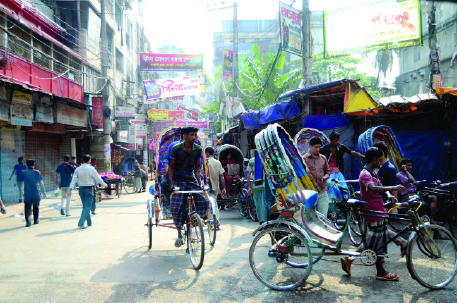
It bombards all of your senses—the smell of waste in the street, as adults and children sift through it, looking for items to recycle and sell. Cars honk in the dense traffic, and rickshaw drivers pedal passengers to and fro for a minimal wage.

Darkness is prevalent.
S_Asia_street_no_text.jpg

Sights of daily life whizzed past our van as we traveled the dusty, dirty, bumpy roads that are congested with chaos. Traffic, animals, people. Vendor after vendor sells fruit, meat and South Asian cuisine. Physically and mentally disabled adults lay on the side of the road, and beggars tap on the vehicle window looking for money.

“It is a place where you not only sense it, but also see the spiritual darkness on the faces of the people,” Amy says. The country is 98% Muslim and many haven’t heard about salvation through Jesus.Almost 16 million people hear the Muslim call to prayer fives times a day; some stop and pray and others proceed with their day.“Though you can sense the darkness, they are just like us—they are hurting,” team leader Kimberly Sowell says during a morning devotional. Sowell’s ministry, Bangladesh: For Faith and Freedom, supports job training for women and girls, offering them a way out of the hopelessness that is so prevalent.

“All of God’s people are called to be used of him but why do some not go?” Kimberly asks the team. They answer, We’re comfortable where we are. The missions call is for “other people.” There’s plenty of spiritual need at home.

Most of all, this place is hard.

“God is working here. That’s why there is persecution, if God wasn’t moving there would be no persecution,” says Mim.

Into the light

Walking is a part of the daily routine here. While out one day in the capital city and a nearby port city, Gail says, “I noticed there was no life. The faces of the women passing me were stoic. No expression. The lack of hearing the voices of children crushed my grandma’s heart. I’ve never been to an area where the noise of children playing, yelling, running and crying could not be heard.”

Stepping into the Light of Life and Light of Hope Learning Centers is a different story. Within these walls, there is life! Young smiles greet the team as they enter. They play Twister, Phase Ten, and Old Maid with the girls to teach them colors, animals, numbers, and occupations.

The ministry Sowell began in 2013 supports efforts to provide nutrition, hygiene, education and vocational training to young women. Here, they also hear the gospel, so they can find faith and freedom in Jesus Christ.

“The Light of Hope Learning Center is an amazing place full of laughter and love,” says Connie Lang, a volunteer from First Baptist of Casey, on her first international mission trip. “It is run by an amazing missionary, Susan Kirker,* who loves the girls and their mothers.

“As we built relationships with the girls, I loved hearing them recite the Bible story that was being taught to them,” Connie says. “This trip has been life-changing. I have grown closer to the Lord and have seen the power of prayer at work.

“I would love to go back again.”

While leaving the capital city headed to our next area of work on Friday, we had just started to pray for the city when we drove by a mosque. Hundreds of men were lying facedown praying to Allah. Our hearts were sick to see the lostness right before our eyes. It’s everywhere—less than 1% are believers. You can feel the spiritual darkness.

Both centers are funded by the International Mission Board, but they are run independently from one another, with different directors and school formats. Light of Life, located in the capital, has a school for at-risk girls during the day and brings in Muslim women in the afternoons for sewing lessons.

Light of Hope offers similar activities. Girls have the opportunity to sew in the mornings while earning a daily wage, and then attend school in the afternoon.

Both centers give hope to hopeless lives of the girls living in the city slums. “Yet it is even more than that,” Gail says. “The girls are offered a daily clean shower, two meals for the day, an education, sewing skills, Bible teaching and love.”

 Walking in new life

Back in the dark village house, the Hindu and Muslim women listen to the “Creation to Christ” story and then take turns repeating it, trying to commit it to memory. Since they live in an oral culture, many do not know how to read or write. Messages must be verbally transmitted in speech or song among friends and family, and then passed down through generations.

More than 30 women accepted Christ after hearing the stories the team shared. Several who believed have already set up a time to be baptized—a big step of obedience in a place where the decision to follow Christ could bring persecution.

“God showed himself mightily to the South Asians and our team,” said Niece Edwards from First Baptist, Carmi. “I was stretched as never before and learned more about God’s sustaining power.”

“Walking through this South Asian country during this season of my life, really displayed how I need to walk beside my husband with the purpose of harvest,” said team member Kathy Fullerton. “We need to be intentional with neighbors, strangers, friends, and family because the gospel can permeate cultural bounds. Jesus died for those in burkas and overalls alike.”

*Names changed.