Archives For November 30, 1999

Russell_Moore

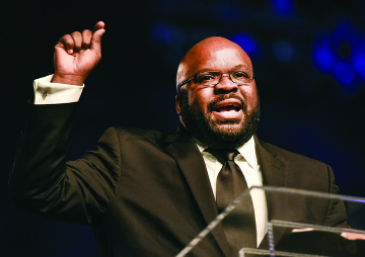
Russell Moore, President of the Southern Baptist Convention’s Ethics and Religious Liberty Commission

I think I’ll count the number of times people say, “It’s a dry heat.” 101 degrees is still 101 degrees, as far as I’m concerned. But some of the folks here in Phoenix take solace in the low humidity.

But will the relative comfort outside temper the actions inside the Phoenix Convention Center over the next four days?

A Wall Street Journal article published on Friday predicted some time in the hot seat for Russell Moore, President of the Southern Baptist Convention’s Ethics and Religious Liberty Commission, but recent developments that may (underline that word, may) dissuade some unhappy messengers from bringing action from the floor. The journal’s article paints a dark picture for Moore and the ERLC, and one of generational discontent. Coming into Phoenix today, the forecast seems too dark.

The Journal article recounted the foment surrounding Moore’s criticism of Donald Trump during the presidential election, the dissatisfaction expressed by a few Southern Baptist pastors, and the withholding of Cooperative Program dollars by Dallas-area megachurch Prestonwood.

The article pointed out that Moore was not invited to White House functions after the election, including the recent Rose Garden ceremony where President Trump signed an executive order aiming at protecting religious liberty. (Prestonwood Pastor Jack Graham was present, but that was not mentioned in the article.)

And the article said that Moore’s team has seemed to be excluded from other meaningful contact with the new administration on behalf of evangelicals, Southern Baptists in particular.

The Journal article did not reference some of the internal workings of the SBC concerning the ERLC, including efforts by top leaders at reconciliation between Moore and more Trump-friendly SBC pastors. Nor did it point out that SBC President Steve Gaines has said publically that he hopes Moore will stay in his position.

The article did not mention that Prestonwood restored its CP giving after a month-long examination of the issues, which, included the ERLC’s participation in a religious liberty lawsuit as a “friend of the court” where a New Jersey Islamic group was suiting the local government for preventing their construction of a mosque.

And the article did not mention that, following a probe, the Louisiana Baptist Convention’s executive board will recommend churches continue their CP support, including the ERLC, to its messengers at their fall meeting.

The Journal focused on perceived generational differences in the SBC that were typified by the disagreements over the ERLC. Moore, it says, is more supported by younger Southern Baptists, and less so by older, more traditional leaders and people in the pews.

We’ll see how this plays out, starting on Tuesday.

The ERLC report to the Convention is the last item on the agenda Wednesday, when the time for new business will already have passed.

–Eric Reed in Phoenix

Billed as the small church pastor’s conference, the annual meeting-before-the-meeting starts Sunday evening with Chicago church planter David Choi, pastor of Church of the Beloved in the city’s University District. He will be followed on Monday by Uptown Baptist Church Pastor Michael Allen.

Iowa pastor and blogger Dave Miller ran for president of the SBC Pastors Conference on an “average-church” platform. He promised to bring speakers from regular-size churches, instead of the usual slate of megachurch pastors and parachurch preachers. He also planned to focus on a single book of the Bible, with the preachers taking successive passages, rather than letting speakers take their best shot at a theme.

The book is Philippians.

Choi will start with chapter 1, the first eleven verses. Allen will preach Philippians 3:17-21 on Monday evening. They are among 12 preachers from regular-size churches.

Filling the bill may have been a challenge. Often megachurch pastors who serve as president of the conference have their churches to fill that role, and their megachurch colleagues help fund it. New Orleans Baptist Theological Seminary came alongside Miller to plan and execute the event.

With NOBTS’ assistance, four pastors of larger churches were invited to bring “testimonies”: Johnny Hunt, J.D. Greear, Fred Luter, and Steve Gaines, current SBC President. Music is by Keith and Kristyn Getty, famed composers of “In Christ Alone.”

With an SBC Annual Meeting located as far west as Phoenix, attendance may not be as high as it is when the SBC meets in the Bible Belt. And there’s another big event in town Sunday night, the “Harvest” crusade featuring evangelist Greg Laurie. That preaching event is being simulcast to churches across the nation. This 2017 outing, which was a late addition to the schedule of convention-related events, will the replace “Crossover” evangelistic outreach next year, when the SBC meets in Houston.

Look for reports on Choi and Allen’s sermon later.

Watch it live at http://sbcpc.net/.

— Eric Reed in Phoenix

For the joy

Decatur | Deana Moore didn’t mind the less than stellar running conditions that greeted her early on Saturday morning, April 28. Instead of derailing her from participating in a planned 5K race, the rain and unseasonably cool temperatures helped her enjoy nature and the people she ran with in the event, which is held along with IBSA’s Priority Women’s Conference.

“It was quite an accomplishment for me too, because I was able to run the whole thing without walking or stopping,” said Moore, a member of Tabernacle Baptist Church in Decatur. Running alongside her were several other women who participated in a spring “Run for God” Bible study that met on Wednesday evenings at Tabernacle.

The 5K in Decatur was a “graduation race” for the class led by Leigh Johnson, a veteran runner and the wife of Tabernacle Pastor Randy Johnson. Run for God is a curriculum created in 2010 by Georgia runner Mitchell Hollis that combines the physical and the spiritual in a 12-week study that also includes group runs.

At Tabernacle, Johnson’s group ran outside on Wednesday evenings when they could, and inside when the weather didn’t permit it. The building’s upstairs loop was their track, she said, as the group carefully dodged around children from the church’s Awana program.

“They were very gracious to kind of bob and weave with us,” Johnson said. The run also took the class through the balcony around the sanctuary, where they heard the worship band practicing for Sunday’s worship service.

The music could well have served as a reminder for the group’s ultimate purpose—to grow closer to God while doing something he has equipped them to do. “Being able to physically do those things—[to] build up to running like we did—I know that wasn’t me,” Moore said after her recent 5K. “I know that it was all God helping me to do that.”

Unhindered

Rainy weather didn’t keep runners from participating in the Priority Women’s Conference 5K race April 28
in Decatur.

One class for all levels
Leigh Johnson first heard about Run for God during last year’s Priority conference. IBSA’s Carmen Halsey, director of women’s missions and ministry, introduced the curriculum at the annual 5K race and offered to partner with churches who wanted to use it as an evangelistic outreach.

Johnson went home and looked up the program. “I was all over it,” she said.

Each week of the study focuses on a devotional piece and correlating Scripture passages, along with an educational component about running.

One week, the lesson focused on Jesus feeding the 5,000. He recognized the physical hunger in front of him, but also an even deeper need—the spiritual hunger of the people. Johnson’s group talked about how the things people do—going to church, reading books, listening to sermons in the car—are good and valuable. But they’re snack-like compared to the sustaining nourishment of a relationship with Jesus that includes personal quiet time, reading, praying, and searching.

Greeting

Members of Leigh Johnson’s Run for God Bible study group were among the runners, and she greeted them at the finish line.

Before their Wednesday evening runs together, the women discussed the Scripture passages provided with each week’s lesson. Johnson brought in local experts—including a physical trainer and a representative from a running shoe store—to help teach the group about the proper way to run.

Johnson said the study was beneficial to people at all stages of physical fitness, and spiritual development.

“I think it’s beautiful in that sense, that it could be for anyone,” she said. “For the runner, the non-runner, the person that’s been a Christian for years, a non-Christian, or a baby Christian that’s just accepted the Lord.”

One woman in the class was brought back into the hope of a relationship with Christ, after feeling like her connection with him had been broken. Another rediscovered the joy of personal devotional times with God.

Deana Moore said the week the class was challenged to share their own stories was particularly effective for her. “It made me think about my own testimony: if I’m called to give it, am I prepared for that?”

Since the 12-week class ended, Moore has also already signed up for two more 5K races, and is involving her teenage daughters in running with her.

Johnson, a self-described uncomfortable public speaker, discovered the encouragement of her group—and strength from God—could help her do something she didn’t previously think was possible. After she made a Facebook promotional video for the class and flyers were printed about the upcoming study, she realized, “I’m really going to have to do this,” Johnson said.

But with “deep breath after deep breath and prayer and prayer,” she moved forward, leaning on Scripture verses like Philippians 4:13 and Joshua 1:9, whick is a key verse for Run for God. Johnson said she’s “blown away” that God would use something she’s comfortable doing—running—to help her with something she’s less comfortable with—leading in a public setting.

At the Priority 5K in Decatur, she had to take on a completely different role after injuring her foot just before the race. Rather than running with her group, she had to take a step back and cheer them on at the finish line. Johnson stood in the rain under a large umbrella, greeting her friends as they completed the run and handing out finisher’s medals.

Had she run herself, she said, she might have forgotten what the day was supposed to be about. Instead, she ran a different race that Saturday, one that, judging by the hugs she gave and received, was every bit as vital.

For more information about women’s ministry and missions opportunities across Illinois, go to IBSA.org/women or contact Carmen Halsey at (217) 391-3143 or CarmenHalsey@IBSA.org.

–Meredith Flynn

Phoenix map 1

It’s going to be hot enough in Phoenix without a squabble. Maybe we won’t see motions from the floor at the 2017 Southern Baptist Convention to defund the Ethics & Religious Liberty Commission or dismiss its president, Russell Moore.

There are several reasons for this new hope. First, both sides in the election-year dust up have offered conciliatory statements. Jack Graham, pastor of Dallas-area megachurch Prestonwood, announced his congregation would restore their Cooperative Program giving in April. The church had “escrowed” its SBC missions contributions while they examined complaints that Moore had criticized presidential candidate Donald Trump and those who planned to vote for him.

The complaints from the Texas church and others exposed some theological and political distance between ERLC leadership responsible for articulating Southern Baptist views in Washington and those Southern Baptists back home who fund them.

Similarly, the Louisiana Baptist Convention’s Executive Board studied “issues of concern” related to the ERLC. But recently, the board said “it has evaluated the complaints lodged against the ERLC, that its leadership has met with Dr. Moore and has sent a letter to the trustees of the ERLC and encourages the churches to continue their generous financial support for all our convention work.”

And there’s the action by Moore himself.

His tone toward Graham and Prestonwood Church may have helped. Moore explained that his comments about the election were never aimed at the Southern Baptist rank-and-file; and in explaining his actions, Moore never sought to defend himself.

More important, there’s word to this editorial team and others that the ERLC staff is making new efforts to connect with the grassroots. For example, Vice President for Communications Dan Darling appeared at the Illinois Baptist Women’s Priority Conference. (He addressed family issues in a declining culture.) The ERLC, fond of sending videos to state and regional events, is more likely to appear in person in the future. Now three years into their tenure, the ERLC leadership is learning that it should not get too far ahead of the people who sent them.

And, with the placement of the ERLC’s report last on the convention agenda, rather than on the first day as in years past, there may only be time to accept their mea culpa and move forward.

Eric Reed is editor of the Illinois Baptist.

HB Charles

Phoenix | Florida pastor H.B. Charles will be nominated to lead the 2018 SBC Pastors’ Conference in Dallas. Charles, pastor of Shiloh Metropolitan Baptist Church in Jacksonville, Fla., preached at the 2016 Illinois Baptist Pastors’ Conference.

Oklahoma pastor Brad Graves had previously been announced as a candidate for Pastors’ Conference president, but he withdrew his candidacy to clear the way for Charles. Graves told Baptist Press “it’s never a loss when you can join God in his work.”

The decision to nominate Charles stemmed from an informal gathering of past Pastors’ Conference presidents May 2 at which the group expressed a desire to nominate someone representing the numerous qualified pastors from ethnic minority groups, said former Pastors’ Conference President Ken Whitten. Charles would be the first African American to serve as Pastors’ Conference president.

Graves, whose candidacy was announced April 17, told BP the decision to withdraw from the election was “a big God moment,” adding no one pressured him to withdraw—except the Holy Spirit after a season of prayer. “I don’t want to be anything divisive” in the SBC, said Graves, pastor of First Baptist Church in Ada, Okla. “I think it’s time to show the culture that there is something that unites [Southern Baptists] more than just a Cooperative Program or a mission statement, but that we really do care for one another.”

Graves added, “Our convention is very diverse,” and Charles’ nomination “will help show how diverse we really are.”

Charles has served as pastor of Shiloh since 2008. The church, formerly a vastly African American congregation, became more racially diverse when it merged in 2015 with the predominantly white Ridgewood Baptist Church in Orange Park, Fla. While the Jacksonville campus remains predominantly African American, as much as 40% of Shiloh’s campus in Orange Park is Anglo, with a smattering of other ethnicities.

– From Baptist Press

The Briefing

Pro-LGBT group plans protest at SBC 2017
The advocacy group Faith in America (FIA) has announced plans to “politely disrupt” the Southern Baptist Convention Annual Meeting June 13-14 in Phoenix. The group hopes to persuade the nation’s largest Protestant denomination to change its interpretation of Scripture, FIA said in a press release accusing the SBC of marginalizing and harming lesbian, gay, homosexual and transgender (LGBT) children in particular by discouraging sexual sin.

Illinois forces foster parents to support gender transition
The state of Illinois’ social services policies now bar social workers from employment and foster families from caring for children if they refuse to facilitate a child’s gender transition. The director of the Department of Children and Family Services approved “enhanced department procedures” that established “mandatory minimum standards for LGBTQ children under its authority.” These state standards, reportedly drafted with the assistance of the ACLU, “will not tolerate exposing LGBTQ children and youth to staff/providers who are not supportive of children and youths’ right to self-determination of sexual/gender identity.”

Planned Parenthood reports abortion increase
Despite a significant decrease in clients, decrease in contraceptive services, and increase in the number of abortions it performs, Planned Parenthood still claims abortions make up only 3% of its overall business. According to the abortion giant’s annual report, released last week, it performed 328,348 abortions and 9,494,977 total services. The report came out about six months later than normal, prompting speculation about what it might contain.

Christian hospitals win Supreme Court case
In a decision that has religiously affiliated hospitals cheering, the Supreme Court ruled federal pension rules don’t apply to them. The 8-0 ruling reverses lower court decisions that sided with hospital workers who argued that the exemption from pension laws should not extend to hospitals affiliated with churches.

DoD wants fewer generic Christians
The general categories of “Protestant, no denominational preference” and “Protestant, other churches” have been removed from the Department of Defense (DoD) list of recognized religions as the US military seeks out more detailed designations for its 1.3 million service members. This spring, the DoD doubled the religious identities that military personnel can declare on official paperwork and dog tags. The list now totals 216 different affiliations, including 30 types of Baptists.

Sources: Baptist Press, Christian Post, World Magazine, Religion News Service, Christianity Today

This slideshow requires JavaScript.

London | I went to Borough Market on a bright, sunny Friday in late September. The market, which has been in existence in one form or another for about 1,000 years, was filled with people going about their business. Vendor stalls were piled high with fresh fruits, vegetables, baked goods, cheeses, fish, and just about anything else you might want to eat. Surrounding the market stalls, the streets were lined with cake shops, restaurants, and pubs. People were enjoying delicious food, celebrating special occasions, and simply having a good time.

I’m sure the scene was much the same that warm Saturday night in early June as people dined in the restaurants and pubs. The vendor stalls would have been closed for the evening, but there was still plenty of food to enjoy and fun to be had. At least until three terrorists plowed a van into people walking on nearby London Bridge, then jumped out of the van, running to the market area, and into the restaurants where they began stabbing people with knives intent on killing them. As they did this, eyewitnesses reported one of the terrorists cried, “This is for Allah!” The terrorists killed seven and injured 48.

London prides itself on being a multicultural city — 37% of its residents come from outside the United Kingdom and one-quarter of its population arrived within the last five years. At least 45% of the population has no religious affiliation. Many Brits view Christianity as “been there, done that.”

The June 3 attacks on London Bridge and in Borough Market, the May 23 Manchester suicide bomber, and the March 22 Westminster bridge attack highlight the need for Christ, not only in London, but the rest of England. The International Mission Board is building missional communities in London using the 280 Tube (underground subway) stops as hubs to organize these communities around.

Still others are working in immigrant communities with Muslims, Hindus, and Sikhs. These communities isolate themselves keeping their customs and religions. There is a very real danger for those missionaries and those who convert to Christ.

Pray for the English people, that as a nation they will turn back to Christ, reviving their strong Christian heritage. Pray also that immigrants, first, second, and third generations — will find true freedom in Christ. The deception and oppression they endured in their home countries has traveled with them and is spreading. The only way to stop it is the through the Truth of Christ.

Last fall, Lisa Misner Sergent visited London to learn about the International Mission Board’s new strategies.

SBC candidates

The slate of nominees for Southern Baptist Convention offices to be elected in Phoenix represent a push toward greater diversity in SBC leadership.

Walter Strickland, special advisor to the president for diversity at Southeastern Baptist Theological Seminary, will be nominated for the role of first vice president (currently filled by Illinois pastor Doug Munton). Strickland also teaches theology and operates a consulting agency to assist churches and organizations with diversity-related issues.

“As our nation and our convention become more diverse, it is imperative that our leadership reflect the diversity that marks the Kingdom of God and Heaven itself,” said Georgia pastor James Merritt, who will nominate Strickland. “Beyond that we need people in leadership that reflect the best of Southern Baptists theologically, spiritually, and personally.

“Walter Strickland meets both of these needs perfectly and I am excited about nominating him for the position of first vice president at our upcoming annual meeting in Phoenix.”

Also to be nominated in Phoenix is Jose Abella, pastor of Providence Road Baptist Church in Miami, Florida. Abella, one of the preachers at this year’s SBC Pastors’ Conference, planted the bilingual congregation in 2010.

“Jose is a loving picture of what Southern Baptists are working to become,” said Georgia pastor Michael Lewis in a news release about the nomination, “effective in an urban context, multiplying churches, reaching different generations, ethnicities and socioeconomic groups, all while being faithful to Scripture.”

A third SBC leader, John Yeats, will be nominated for office in Phoenix. Yeats is executive director of the Missouri Baptist Convention and will be nominated for his 21st term as SBC recording secretary.

First elected to the post in 1997, Yeats designed the process currently used to get information from the convention floor to the platform at the Committee on Order of Business, Baptist Press reported.

Yeats said he and his wife, Sharon, who serves beside him on the convention platform “are deeply honored by Southern Baptists to serve our Lord in this role.”

Steve GainesSteve Gaines, pastor of the Memphis-area Bellevue Baptist Church, will be nominated for a second one-year term as SBC president by his son Grant Gaines, pastor of Calvary Baptist Church in Jackson, Tenn. Gaines was elected last year after North Carolina pastor J.D. Greear pulled out of the race before a second run-off election.

For more information about the Southern Baptist Convention in Phoenix, go to sbcannualmeeting.net.

– From Baptist Press reports

Bryan Price

Bryan Price

The notion that Martin Luther was a reformer of preaching is one that receives little attention. Yet the changes to preaching brought about by his influence were instrumental not only in helping people grasp the fundamental truths of the faith, but also in transforming the very nature of Christian worship.

As we mark the 500th anniversary of the Reformation, Luther’s contributions to church’s thinking about the content, priority, and simplification of preaching still challenge us as modern-day pastors and worshipers.

Luther was a product of the preaching tradition of the medieval period, which, according to scholar Dennis Ngien, placed a significant burden upon the listener to do good works in hopes of earning favor with God. Grace was contingent upon performance, and Christ was emphasized as a judge who demanded righteous living.

But Reformation theology presented just the opposite view, emphasizing justification by grace alone, through faith alone, in Christ alone. Consequently, as the Reformation challenged the theology behind the sermon, it also brought about a shift in the content of the sermon. In Luther’s preaching, good works were no longer a means to acquire grace, but were the result of having received grace.

Along with transforming preaching content, the Reformation also led to a renewed emphasis on its priority. Writer Hughes Old explains that where worship was previously centered around the sacraments, with very little emphasis on the proclamation of Scripture, Luther was adamant that when the church gathered, clear exposition of the Word was to be first in order. He believed since true biblical worship was always in response to the preached Word, worship in the form of the sacraments and singing should come after hearing the Word proclaimed, and not before. In fact, Luther saw the preached Word as sacramental in and of itself. In his view, it was through the preached Word that the worshiper encountered the living Word.

In my own experience as a church planter, during the early years when our choir was young and inexperienced, the running joke was that whoever attended Love Fellowship came just for the preaching, because the choir was certainly not on the level of many of the established churches in the area. We would laugh about it, but there was a part of me that wished we had the luxury of a glorious choir that could help set the atmosphere of worship.

Since then, and having read Luther, I now see how blessed we were. Having to do without the ideal choir allowed us to establish a church where the preaching was and continues to be the central part of our worship. In a day where choirs and worship bands are employed for their ability to draw crowds and keep people on their feet, I think a re-reading of Luther would be a tremendous benefit to the body of Christ who, perhaps in this area, has lost her way.

Lastly, the Reformation led to the simplification of preaching. Though he was undoubtedly one of the greatest theological minds in Christian history, Luther was compelled to make deep spiritual truths accessible to the common layman.

In my survey of contemporary sermons by popular preachers, I am beginning to think those who preach may feel they have not done an adequate job unless they have parsed not less than two Greek words and have offered the opinion of at least ten noted scholars. I am sure their people leave on Sunday proud to have a pastor with such a high level of academic training, but whether they understood what was said is up for debate.

I can recall an instance where I used the word “eschatological” during the sermon. Afterwards, a brother asked me what “eschatological” meant. I told him, it refers to the end times. He then replied, “Why didn’t you just say that?” I think Luther would offer the same critique.

The Reformation forever altered the theological landscape of the Christian faith, but it also changed how that faith was proclaimed, for the glory of God and for the edification of the people of God. For this reason, we celebrate Luther. May we who preach continuously re-evaluate our work in light of his, so that the people to whom we preach will grow in God’s grace and become increasingly confident in the righteousness of Christ as the basis for their justification before God.

Bryan Price pastors Love Fellowship Baptist Church in Romeoville.

The Briefing

Illinois family killed in ISIS attack in Egypt
An Illinois man and several of his relatives, including two sons and a grandchild, were among 29 killed during an ISIS attack on a church bus in Egypt. Family members say the bus was full of Christians on their way to a remote Egyptian monastery when they were attacked by members of the Islamic state.

Illinois House approves transgender ID change bill
The Illinois House has endorsed a plan to make it easier for transgender people to change their birth certificates. The bill would allow transgender citizens to change their gender designation with authorization from a medical professional confirming they have undergone medically appropriate treatment. Current law requires proof of a surgical operation.

Evidence against Planned Parenthood disappears from YouTube
Last week, lawyers for The Center for Medical Progress released more footage of abortionists discussing late-term abortions at National Abortion Federation conventions. The video, along with other footage under temporary injunction after a civil suit filed by the National Abortion Federation (NAF) and Planned Parenthood, disappeared from YouTube after U.S. District Judge William Orrick ordered it taken down.

TX governor signs bill to ‘shield’ pastors’ sermons
Texas Governor Greg Abbott has signed legislation that prohibits Texas government agencies from subpoenaing the sermons of religious leaders. Four of the five Houston pastors whose sermons became the target of a sweeping 2014 subpoena “fishing expedition” by City of Houston attorneys and then-Mayor Annise Parker joined the signing ceremony.

Christian school bans pregnant teen from graduation
Despite a public outcry and growing pressure from national antiabortion groups to reconsider, Heritage Academy in Hagerstown, Maryland says that senior Maddi Runkles broke the school’s rules by engaging in intimate sexual activity. In a letter to parents Tuesday evening, school principal David R. Hobbs said that Runkles is being disciplined, “not because she is pregnant but because she was immoral. … The best way to love her right now is to hold her accountable for her morality that began this situation.”

Sources: News Channel 20, US News, Baptist Press, World Magazine, Washington Post