Archives For November 30, 1999

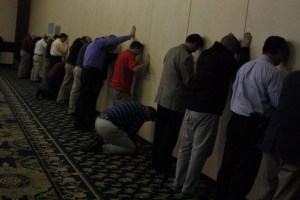
Pray-ers lined "wailing walls" inside the Springfield Crowne Plaza during the "lament" phase of the Concert of Prayer.

Pray-ers lined “wailing walls” inside the Springfield Crowne Plaza during the “lament” phase of the Isaiah 6 prayer cycle.

NEWS | Eric Reed and Meredith Flynn

Messengers to the 108th Annual Meeting of the Illinois Baptist State Association Nov. 5-6 pled for spiritual awakening and revival, highlighted in a Concert of Prayer based on Isaiah 6.

Vocal quintet Veritas led in worship during the service, and attenders were led to pray through a four-phase cycle: lament, repent, intercede, and commit.

“I believe we need to cry out to God for spiritual awakening and for revival in our churches,” said IBSA Executive Director Nate Adams as he opened the Concert of Prayer. He asked attenders to lament the decline of our culture.

Adams invited the people to move to the walls of the room and use them as a sort of “wailing wall,” not unlike the famous one in Jerusalem where Jews pray. Soon a chorus of voices and some sniffles filled the space.

“I’ve never been to the Wailing Wall, but knowing the purpose of the wailing wall and what it represents just kind of got me,” said Rick Dorsey, pastor of Beacon Hill Missionary Baptist Church in Chicago Heights.

Veritas, a group started in part by "Truth" founder Roger Breland, led in worship during the Concert of Prayer.

Veritas, a group started in part by “Truth” founder Roger Breland, led in worship during the Concert of Prayer.

“It hit me in the gut. And just made me lament that we are still struggling to reach a lost world and not doing everything that He needs us to do, that we need to do in order to reach this lost world.”

After a season of personal repentance, attenders formed small groups and began interceding for lost people they know personally.

“‘Spiritually refreshing’ is the only way I can describe the wonderful Concert of Prayer we experienced Wednesday night,” Adams said later. “Dozens and dozens of folks came to me afterward and told me how very much they needed it. In fact, many described it as the best thing they’ve ever experienced at an Annual Meeting.”

The messages of preachers at the Pastors’ Conference, which precedes the Annual Meeting, and the IBSA President’s message resonated with the prayers:

“The world is at its darkest, it’s a mess—in America, and sure enough in Illinois,” declared Marvin Parker, pastor of Broadview Missionary Baptist Church. “Darkness is covering our state, with same-sex marriage and more. It’s messing with the fabric of the family.”

“If we’re going to push back the darkness in Illinois and in our nation, we’re going to have to get desperate,” IBSA President Odis Weaver said. “If we’re going to push back the darkness, we have to ask the question, How desperate is my church for spiritual awakening? How hungry are our hearts?” And in phrase repeated by others several times, Weaver said, “We will either hunger for God’s righteousness out of desperation or…out of devastation.”

Church planting urgency
With prayer permeating the Annual Meeting and the Pastors’ Conference that preceded it, messengers also voted on officers for the coming year, welcomed new churches affiliating with IBSA, and heard reports from IBSA entities.

In his report, IBSA Executive Director Nate Adams shared encouraging news about the ministry of Illinois Baptist churches, including four new campus ministries begun this year, 260 congregations now registered as Acts 1:8 churches, and 140 pastors and leaders engaged in leadership development processes.

Adams also pointed out areas in need of growth. Through August of this year, IBSA has helped start 16 new churches, down from 24 last year, he reported. “We are not satisfied with that level of church planting in Illinois, and it will not allow us to significantly impact the desperate need of the lost of Illinois for relevant new Baptist churches that can deliver the Gospel in their context,” he said.

Citing the need for more church planters and more church planting sponsor churches, Adams urged, “Together, we must ask the Lord of the harvest to send out workers into his harvest field, particularly in the area of the church planting in Illinois.”

Messengers approved six resolutions brought by the IBSA Resolutions and Christian Life Committee: affirming the Bible’s authority; encouraging prayer for elected officials; repenting of sinful choices related to media consumption; including younger leaders in denominational life; encouraging prayer for the Palestinian Church; and affirming the resolution on transgender identity approved by messengers to the national Southern Baptist Convention in June 2014.

An additional resolution on Common Core education standards was referred back to the committee for further study and revision.

Amendments postponed
Leading up to the Annual Meeting, the IBSA Constitution Committee was prepared to ask messengers to suspend the rules of the IBSA Constitution—bypassing the usual two-year process

needed for revision—so that the IBSA Constitution could allow for the Baptist Children’s Home and Family Services to have its own bylaws, in compliance with Illinois not-for-profit law.

“Upon further examination, however,” Adams told the Illinois Baptist, “the Committee came to believe that it would not be proper parliamentary procedure to apply the ‘suspending of the rules’ action that Robert’s Rules of Order allows to the Constitution itself.

“Rather than go against the IBSA Constitution’s requirement for two readings at separate meetings, then, they decided that approval of separate Children’s Home bylaws and revision of their articles of incorporation at the IBSA Annual Meeting would allow for legal compliance, and that a first reading of the proposed revisions to the IBSA Constitution would be sufficient.”

Messengers at the Annual Meeting unanimously approved the new bylaws and articles of incorporation for BCHFS. “If the IBSA Constitution is amended at the second reading next year, all the necessary documents will have been revised,” Adams said.

Budgets from IBSA, Baptist Children’s Home and Family Services and Baptist Foundation of Illinois were approved during the business session. IBSA’s Cooperative Program goal for 2015 is $6.4 million, 43.25% of which goes to national and international SBC missions causes, while 56.75% stays in the state to support Illinois missions and ministry.

The association’s four current officers were each re-elected by acclamation: Weaver, pastor of Friendship Baptist Church, Plainfield, as president; Kevin Carrothers, pastor of Rochester First Baptist Church, as vice president; Melissa Carruthers, member of Lincoln Avenue Baptist Church, Jacksonville, as recording secretary; and Patty Hulskotter, member of Living Faith Baptist Church, Sherman, as assistant recording secretary.

At the start of the Wednesday evening session, messengers welcomed seven new churches affiliating with the association. IBSA’s Credentials Committee also recommended during its report that the association disaffiliate with seven churches that have been non-cooperating for eight or nine years.

Through the annual Ministers’ Relief Offering, taken during the Annual Meeting for pastors facing unexpected transitions, attenders gave $1,651.

The 2015 IBSA Annual Meeting and Pastors’ Conference is scheduled for November 10-12 at First Baptist Church, Marion.

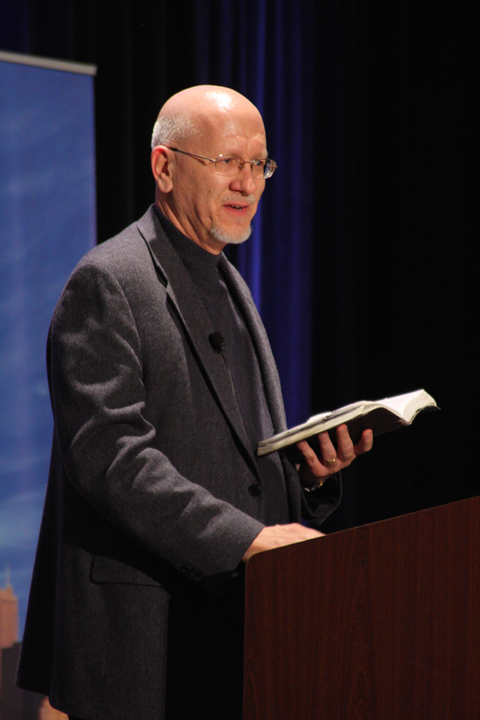
If we're going to push back spiritual lostness in Illinois, IBSA President Odis Weaver said this afternoon, we're going to have to get desperate for spiritual awakening.

If we’re going to push back spiritual lostness in Illinois, IBSA President Odis Weaver said this afternoon, we’re going to have to get desperate for spiritual awakening.

And why it matters to Baptists now

HEARTLAND | Eric Reed

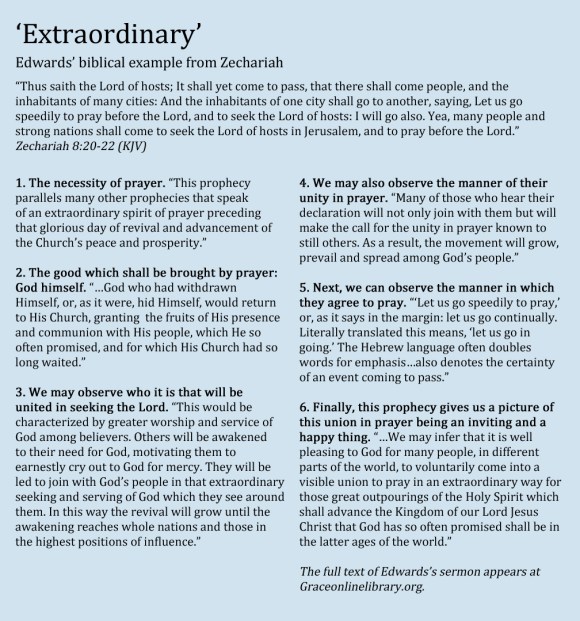
After his election as president of the Southern Baptist Convention, Arkansas pastor Ronnie Floyd has called Southern Baptists to prayer, but not just any prayer—extraordinary prayer. The phrase is not original to Floyd, as he stated from the start. It’s almost 300 years old.

Credit Jonathan Edwards, the Puritan preacher with poor eyesight who often read from a manuscript his most famous sermon, “Sinners in the Hands of an Angry God.”

Floyd adopted the term “extraordinary prayer” from a book by Edwards called “An Humble Attempt to Promote Explicit Agreement and Visible Union of God’s People, in Extraordinary

Prayer, for the Revival of Religion and the Advancement of Christ’s Kingdom on Earth, Pursuant to Scripture Promises and Prophecies Concerning the Last Time.” (Titling was not their strong suit in the 18th century.)

But what did he mean by extraordinary prayer?

The 2014 IBSA Annual Meeting theme is Mission Illinois: A Concert of Prayer. For more information, go to IBSA.org/ibsa2014.

Mission Illinois: A Concert of Prayer is the theme of the 2014 Annual Meeting of the Illinois Baptist State Association. For more information, go to IBSA.org/ibsa2014.

From Zechariah, Edwards drew a picture of prayer that would result first in revival of the church, then awakening and regeneration of lost people. “God’s people will be given a spirit of prayer,” Edwards wrote, “inspiring them to come together and pray in an extraordinary manner, that He would help his Church, show mercy to mankind in general, pour out his Spirit, revive His work, and advance His kingdom in the world as He promised.

“Moreover, such prayer would gradually spread and increase more and more, ushering in a revival of religion.”

Edwards offered an example he had witnessed personally. In 1744, a group of ministers in Scotland called on believers to engage in prayer. “They desired a true revival in all parts of Christendom, and to see nations delivered from their great and many calamities, and to bless them with the unspeakable benefits of the Kingdom of our glorious Redeemer, and to fill the whole earth with His glory.”

The group pledged to pray every Saturday evening, Sunday morning, and all day on the first Tuesday of each quarter—for two years.

During that time, many churches were renewed. In one town alone, 30 groups of young people formed and committed themselves to prayer for revival. Buoyed by the results, the ministers sent 500 letters to pastors in New England urging their own two-year commitment.

Edwards noted: “Those ministers in Boston said of this proposal: ‘The motion seems to come from above, and to be wonderfully spreading in Scotland, England, Wales, Ireland and North America.’”

And they extended the two-year pledge to seven years of prayer.

Edwards, who with George Whitefield and others, was at the heart of the First Great Awakening, cited prayer as vital to the movement of God’s spirit in the colonies.

Extraordinary prayer sidebar


HEARTLAND | Nate Adams

I was sitting relaxed in our local movie theater, enjoying a bag of popcorn. Our kids were settled in next to their mom and me, excited to see “Jonah,” the first feature-length, animated movie by VeggieTales.

Nate_Adams_callout_Oct20Of course Jonah (played by Archibald Asparagus in this case) is the story of the reluctant prophet who did not want to deliver the message of God’s impending judgment and the need for repentance to the people of Nineveh. To set up the telling of the Old Testament story, a conversation takes place between “Junior” (Asparagus) and some amusing characters known as “the Pirates Who Don’t Do Anything,” about the importance of compassion.

“Compassion is when you see that someone needs help, and you want to help them,” the pirate captain tells Junior. He then goes on to tell about the time they took Jonah on a voyage.

In the middle of this delightful cartoon movie, however, there was a serious “aha” moment for me. The pirates begin by talking with Junior about the compassion that Jonah lacked, and then they move on to talking about mercy, which God wanted to give to the people of Nineveh. “Mercy is when you give someone a second chance, even when they don’t deserve it,” the pirate explains.

A little confused, Junior asks whether the story is about compassion or about mercy. The pirate’s profound answer still penetrates my heart: “You can’t have mercy without compassion.”

I realized in that animated moment that the reason I don’t show mercy more often is that I don’t really have compassion. The reason I don’t share Christ more often is that I don’t really care about the lost people I see. And the reason I don’t really experience revival in my own heart is that I don’t really want to admit my own sin.

In other words, there is a deep place in me where truly transformational things take place. Not only do I rarely allow the Holy Spirit to go there, I rarely go there myself, or even admit that it exists. It’s the place where my self still rules my life. It’s the place where, deep down, regardless of my words or reputation, I know what I want. Maybe I do the right thing out of duty sometimes, even most of the time. But I do it without the right motive, without it being from the heart of Jesus in me.

That’s the place I need to go for revival. It’s the place where I can expose the deepest part of me to the deepest reach of God’s transforming power. It’s where, perhaps reluctantly, even fearfully, I can admit my own motives and desires, and with trembling hands give them up to God for His Lordship and control, whatever the cost.

I have often heard it said that, for each of us, revival must begin in “me,” that I should draw a circle around myself and ask God to bring revival there before I can expect Him to bring it anywhere else. I guess that silly, profound movie just helped me see where the bull’s eye of that circle must be.

In just a few days, hundreds of us from churches all over the state will gather in Springfield for the 2014 IBSA Annual Meeting. Whether you are able to attend or not, would you join me, both in your prayers for revival among our churches, and also in drawing that circle around “me” that asks God to begin revival there?

Near the close of the VeggieTales movie, Junior notes that Jonah still seems to lack compassion, and asks the pirates what Jonah really learned. The pirate replies, “The question is not what did Jonah learn, but what did you learn?” May we each learn to expose to God that deep place in our hearts where revival can truly begin.

Nate Adams is executive director of the Illinois Baptist State Association.

Revival in churches and spiritual awakening needed in Illinois

NEWS | Eric Reed

ConcertofPrayeropenartweb_edited-2“It is good for us to draw nigh unto God in prayer,” Charles Spurgeon urged his contemporaries 150 years ago. “Our minds are grieved to see so little attention given to united prayer by many churches.”

His words sound familiar today.

“I believe we need to cry out to God for spiritual awakening in our state, and for revival in our churches,” said Nate Adams, executive director of the Illinois Baptist State Association, calling on messengers to the IBSA Annual Meeting to come prepared for a “Concert of Prayer.”

“I believe many pastors and church leaders across Illinois are working tirelessly every week, with Great Commission hearts and toward Kingdom purposes. I know our IBSA staff are,” Adams said. “Yet our impact is not keeping pace with the increasing lostness of Illinois.

“So at the Wednesday evening session of this year’s Annual Meeting, we are choosing to focus less on what we have been doing, and more on asking God to do what only He can.”

The call for prayer for revival and spiritual awakening in Illinois, in development over a period of months, appears to be part of a larger work God is doing among Southern Baptists. Seemingly independent of each other, special prayer meetings have arisen in several neighboring states.

And SBC President Ronnie Floyd called pastors together for prayer on several occasions prior to his election. “No great movement of God ever occurs without first being preceded by the extraordinary prayer of God’s people,” Floyd said.

“I really believe that the real key to the future of our entire nation and the church of Jesus Christ in America and beyond is if the United States, the church of the United States has a major spiritual awakening.”

The state of our state

The entire Annual Meeting will be permeated by prayer, leading to a special Concert of Prayer on Wednesday evening. Following the pattern in Isaiah 6:1-8, messengers will be guided through a cycle of prayer:

  • Lament
  • Repent
  • Intercede
  • Commit

“We don’t lament anymore,” Adams observed. It’s not characteristic of evangelical culture to identify our sins and wail over them as the Jews do, or to pound our chest as the Orthodox do. Given the grievous sins of our culture and our nation today, a period of lament will require that we identify them, then think about them for a while before rushing to repentance.

The Isaiah cycle leads pray-ers to repent of their own sins and the sins of the nation, as Isaiah did when confessing the “unclean lips” of himself and his people.

A season of intercession for the lost will bring the needs of Illinois before God and His people, and ultimately, the need for God’s people to commit afresh to renewal of their service and seeking the salvation of lost people.

The musical group Veritas will help guide the phases in the Concert of Prayer, with seasons of worship at the beginning and end.

“Frankly, it’s uncomfortable for me personally to devote the core of our IBSA Annual Meeting to worship and prayer time where we simply gather and ask God to move in our hearts,” Adams said. “I’m a planner and a doer, and our Wednesday night sessions are usually well programmed. But this year our primary program is prayer. May the Lord honor our desire to hear specially from Him.”

For a complete preview of the IBSA Annual Meeting and Pastors’ Conference, go to www.IBSA.org.ibsa2014.

Fred_Luter_revivalCOMMENTARY | Eric Reed

I’ve never been prouder – of Fred Luter or of the Southern Baptist Convention – than when, on the second day of the annual meeting in Baltimore, they suspended the agenda and spent most of an hour in prayer.

Will this be Bro. Fred’s lasting contribution to the SBC, I thought to myself, that he was willing to lay aside the fixed orders of business, to call us all to our knees, and to take our deep needs to the Lord?

Two years earlier, I sat on a bench in the cavernous lobby of the New Orleans Convention Center talking with a pastor-friend of mine. He’s African American. I seemed more excited by Luter’s election that day than he did. I posed a question about the new president’s lasting impact.

“We’ll have to wait and see,” was his response. “Will this be a one-time thing, or has the Convention really changed? Is there room for me in leadership?”

That has been the response of several people I’ve asked since then, even Luter himself. Many people, especially African American pastors, said they wanted to see what happened after Luter’s term. Would he really be able to increase the ethnic diversity on SBC boards and in leadership? Would there be a lasting place at the table for black, Hispanic, and Asian leaders?

Under Luter’s direction, the committees responsible for manning those boards have attempted to broaden representation. In fact, messengers at the Phoenix convention in 2011 had ordered the start of such a concentrated effort even before Luter’s election as the SBC’s first African American president.

It was good to see several African American pastors on the platform in 2014: Southern Seminary Professor Kevin Smith spoke for the Resolutions Committee. Chicago’s very own Marvin Parker of Broadview Missionary Baptist Church served with the Committee on Order of Business and Michael Allen of Uptown Baptist Church was elected “back-up preacher” for the 2015 annual meeting.

But it took a messenger from the floor to confirm what those watching the live video stream had noticed. There was not a lot cultural diversity on the worship platform. The messenger moved that the music teams next year be more diverse, because, he noted, while the choirs and bands were almost all white, the Convention isn’t anymore – and heaven won’t be either.

I saw a similar message in the official photograph of the incoming SBC officers: five middle-aged white guys in dark suits. Except for one goatee, that photograph could have been snapped in 1974.

Or 1954.

We missed an opportunity to extend Bro. Fred’s impact. Korean-American pastor Daniel Kim ran for president, and his showing as a late-entry against winner Ronnie Floyd was respectable. But both first and second vice-presidents ran unopposed. Why? Because no one else stepped up.

Fred Luter’s lasting impact may not be that he radically altered the composition of committees or platform personnel. Instead, he demonstrated the door is open and there’s room at the table. And he was willing to take the risk.

As a pastor in New Orleans, Luter suffered jeers for his embrace of the historically white denomination. And before he agreed to run for SBC president in 2012, one advisor warned, “Look at the racial make-up of the Convention, Fred. You might lose.”

But he won. In a big way. Unopposed. Twice. To cheers and tears and shouts of joy from a whole lot of people glad that a new day had arrived for Southern Baptists.

Successor Floyd called him “the most beloved president” in recent SBC history. Luter traveled widely and preached in churches of all sizes and ethnicities. He embodied the new spirit of the SBC, and he did it with characteristic joy and grace. For all that, he is deservedly and deeply appreciated.

But, for me, Fred Luter’s lasting impact is that he was willing to step up.

Eric Reed is editor of the Illinois Baptist.

The_BriefingTHE BRIEFING | Meredith Flynn

Ronnie Floyd, elected president of the Southern Baptist Convention last week in Baltimore, is calling on Baptists to rally in Columbus, Ohio, next summer to pray together for spiritual awakening.

“As I work with our Order of Business Committee as well as other leaders, I will respectfully request that we dedicate as much time as possible in next year’s convention to pray extraordinarily for the next Great Awakening,” Floyd wrote in a June 16 column for Baptist Press. “I want to call you to Columbus to what could be one of the most significant prayer gatherings in our history.

Floyd, pastor of Cross Church in northwest Arkansas, said in Baltimore that America’s greatest need is a great awakening. Prior to the convention, he organized two national gatherings for Baptist pastors to pray together.

“Our convention has bemoaned our decline in baptisms, membership, attendance and giving far too long,” Floyd wrote. “Now is the time for us to take aggressive action by calling out to God together in prayer.

“At the same time, we must take the needed strategic actions to change our trajectory as a convention of churches. While we face these critical times, we know God is doing some amazing things right now through Southern Baptists. As we celebrate those to the glory of God in Columbus, we will also call out to God in urgent desperation.”

Read Floyd’s column at BPNews.net, and click here to read more of the Illinois Baptist’s coverage from Baltimore.

Stanley explains tweets during SBC meeting
Georgia pastor Andy Stanley sparked a long online conversation when he tweeted during the Southern Baptist Convention’s annual meeting, according to a Christian Post report. The Baltimore meeting focused heavily on revival and spiritual awakening. Stanley, pastor of North Point Community Church in Alpharetta, was not at the meeting but tweeted on the topic several times, including, “Instead of praying for revival leaders of the SBC should go spend three weeks with @perrynoble Why pray for one when you can go watch one.”

Stanley was referring to Pastor Perry Noble of New Spring Church in South Carolina. He told The Christian Post that in the tweet and others during the meeting, he was referring to revival in the local church, rather than in a great awakening sense. “I can understand the confusion and I definitely contributed to it,” said Stanley, who still exhorted the local church to take actions that can lead to spiritual awakening.

“I love the local church. And I’ll admit I get a bit stirred up when I hear church leaders talk about the need to reach more people while refusing to make the changes necessary to actually get the job done.” Read more at ChristianPost.com.

Millenials tell Barna: Top 5 things to do before 30
Barna’s recent study of Millenials – “20 and Something” – delves into what the generation believes about life and work. Including the five things they most want to accomplish before they turn 30: gain financial independence (59%), finish their education (52%), start a career (51%), find out who they really are (40%), and follow their dreams (31%). Read more at Barna.org.

Be fruitful, says Pope
After celebrating Mass with 15 married couples at the Vatican, Pope Francis warned against childlessness. “It might be better – more comfortable – to have a dog, two cats, and the love goes to the two cats and the dog,” he said, according to a report by Religion News Service. “Then, in the end this marriage comes to old age in solitude, with the bitterness of loneliness.”

The pope’s remarks came on the heels of a report that Italy’s birth rate fell to a record low in 2013. The U.S. birth rate hit a record low in 2012, but about 4,700 more babies were born in 2013, according to the Centers for Disease Control and Prevention.

List locates world’s most persecuted countries
Christians face the worst persecution in North Korea and Somalia, according to the 2014 World Watch List. For 12 years, North Korea has topped the list released by non-profit organization Open Doors. Syria, Iraq, Afghanistan, Saudi Arabia, Pakistan, Iran and Yemen also are in this year’s top 10, along with the Maldives, a chain of islands off the coast of India.

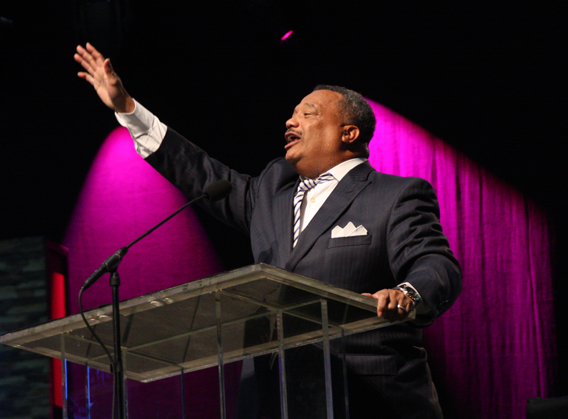
Luter preached on revival that begins with prayer. "If there is any hope for spiritual renewal in America, that renewal must start in our churches, and it must start with the people in our churches, Christians, believers, and the body of Christ."

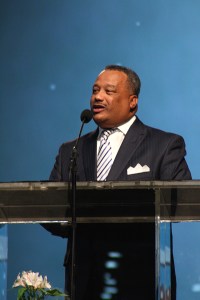
“If there is any hope for spiritual renewal in America, that renewal must start in our churches, and it must start with the people in our churches, Christians, believers, and the body of Christ,” said outgoing SBC President Fred Luter.

NEWS | Meredith Flynn

At a time when many churches are struggling to reach people with the Gospel and Christianity is increasingly strange to the culture, Baptists meeting in Baltimore were called to repent earnestly, pray fervently, and long deeply for the power and presence of God.

They discussed denominational decline, religious liberty and sexual brokenness, but the 2014 Annual Meeting likely will be remembered for the rumblings of revival that seemed to ripple under every message and conversation.

It was theme of this year’s meeting – revival that starts with prayer. And it’s our greatest need, said new SBC President Ronnie Floyd.

Start with us
“Brothers and sisters, we are losing a generation,” Fred Luter warned Baptists during the Tuesday evening revival service. He referenced recently released numbers from the Annual Church Profile report, showing several areas of decline.

“For another year, our baptism numbers are down. For another year, our attendance is down. For another year, our youth numbers are down.” We can’t ignore the reports any longer, he said, calling Southern Baptists to repentance and remorse that the Bible promises will lead to revival (see story below for more on Luter’s message).

Some say the reason churches baptize fewer people is because we don’t have effective evangelism strategies, said Gary Frost, North American Mission Board VP for the Midwest. But, “The problem of declining baptisms is not a failure of strategy, it’s a failure of quality,” he said. “There’s a lack of quality in the lives of the people of God.”

Frost was one of three speakers to present 10-minute theme interpretations on prayer, restoration and revival.

If we’re going to see a transformational movement of God’s Spirit, he said, God’s people must hunger and thirst for God’s holiness. Frost used a sports analogy: If you want to win a basketball championship, for example, you need great players.

“I believe there’s a failure of spiritual athleticism in the body of Christ. There are those who have failed to be disciplined through whom God can move and do the work that he has called the church to do.”

Or, most of us are caught up in ritual and expectations, rather than expecting and praying for God’s powerful presence. Francis Chan emotionally addressed the SBC Pastors’ Conference just prior to the Convention. The author of “Crazy Love” told Baptists he sees a lot of ritual and faithfulness over the years, “but I’m concerned that there’s not this desperate cry for God.”

While Chan urged the convention toward a passion for God’s presence, SBC Executive Committee Frank Page asked them to pray their hearts would be broken for lost people.

I’m not asking you to manufacture tears, he said during a 45-minute prayer meeting in the middle of the business session. But pray that some time in the next year “our hearts will be so sensitized as a people to lostness, that we will feel it so deeply, there will be tears.” There were, even as Southern Baptists prayed in small groups around the convention hall.

O God, help us as a convention to be spiritually renewed,” Page prayed, “and in that spiritual renewal, to have a renewed passion for the lost.”

Broken people, broken culture
Convention debate or controversy generally arises from resolutions and motions presented during the business session. But messengers in Baltimore adopted all nine resolutions brought by the committee with very little conversation, and the motions process was similarly quiet. Baptists did, however, talk about the issues at other meetings between sessions.

At the 9Marks gathering Tuesday night, moderator Mark Dever, pastor of Capitol Hill Baptist Church and 9Marks founder, asked Southern Seminary president Al Mohler to explain why the SBC didn’t take action on a motion to discipline a California congregation that recently voted to become a “third way” church that neither affirms nor condemns same-sex lifestyles.

“…You can’t dis-fellowship someone who’s not in fellowship with you,” Mohler told the meeting of mostly younger Baptists. Although New Heart Community Church in La Mirada refers to itself as a Southern Baptist church, Mohler said, they haven’t sent messengers to the Convention and, to his knowledge, there’s no financial connection between the church and the SBC. (In a Religion News Service report, California Southern Baptist Convention Executive Director Fermin Whittaker said the church has given $80 per month to the Cooperative Program.)

It’s also unclear whether New Heart is a congregation or a mission church. They are listed as a member of the Los Angeles Southern Baptist Association, which Mohler said does have responsibility to take action, even if the SBC does not.

Baptists discussed another issue related to sexuality in the form of an adopted resolution on transgender identity. The measure resolves that the SBC affirms “gender identity is determined by biological sex and not by one’s self-perception.” It prescribes extending “love and compassion to those whose sexual self-understanding is shaped by a distressing conflict between their biological sex and their gender identity,” while opposing “cultural efforts to validate claims to transgender identity.”

The resolution was well-timed and needed, Russell Moore told media at a press conference in Baltimore. “The cultural mindset is that gender is something that is constructed by the individual,” said the president of the Ethics and Religious Liberty Commission. “So it’s disconnected from how the person is created.

“And that’s one of the reasons why I think this resolution…was so wise, because it spoke to what the Bible teaches about what gender means in the first place, about how God’s design is good, and then talked about the fact that we’re living in a world that is fallen, in which there is a great deal of confusion in what it means to address that.”

Moore’s report to the Convention focused on religious liberty and included two groups of special guests. Members of the Green family, who own Hobby Lobby, accepted the John Leland Award for Religious Liberty. The Supreme Court currently is considering whether Hobby Lobby has to provide abortion-inducing drugs in its employee health care plans.

Naghmeh Abedini, wife of imprisoned pastor Saeed Abedini, accepted the Richard Land Award for Distinguished Service on her husband’s behalf. Messengers knelt at their seats to pray for a release for Abedini, held captive in Iran since 2012. Adedini was arrested for sharing his Christian faith, and has refused to stop witnessing, even inside the Iranian prison.

“The Gospel came to use in letters being written out by apostles from jail cells,” Moore said during his report. “The Gospel came to us through the centuries from people who were constantly under threat to their liberty to preach.”

And it is powerful to transcend and transform the culture, and revive a denomination.

“We serve at the pleasure of a Messiah who has appointed us, everyone in this room, to be born and then to be born again in a time and in a place when sometimes even the most basic principles of Christianity are going to sound increasingly strange and freakish and sometimes even subversive to the culture around us,” Moore said.

“That should not drive us to fists clenched in anger. That should not drive us to hands wringing in fear. That should drive us to hands lifted in prayer.”

Fred_Luter_preach_2Baltimore | Southern Baptist Convention President Fred Luter brought messengers to their feet preaching Tuesday night from Psalm 80:18-19, calling on Southern Baptists to repent and call on God for revival.

“It’s a challenging time in the life of America, because just like Israel in Psalm 80, America has sinned against God,” shared Luter. “America is rapidly turning into a pagan nation. We’ve lowered our morals. We’ve lowered our standards.”

Luter said evidence of America’s depravity is seen in how the nation regards openly homosexual athletes as heroes rather than celebrating truly heroic people — like soldiers, EMTs, policemen and IMB missionaries. He boldly declared the celebration of homosexuality is just one of many manifestations of sin in America.

“I’m convinced if things are going to change in our nation there must be a spiritual revival in our nation there must be a spiritual awakening in America … There must be a spiritual revival that starts in the church. It must start with the people of God, it must start with prayer,” he said.

There is still hope. “We have a great and glorious opportunity to turn around America if we accept the challenge of the Great Commission,” he declared.

For God to send renewal and revival to our churches in America we must do three things, said Luter:

1. There must be repentance. We must ask God’s forgiveness for not making evangelism a priority.

“We have the answer,” Luter said. “We must share the Gospel of our savior Jesus Christ. Only the Gospel can transform lives…We’ve forgotten how much power there is in the Gospel to transform lives.”

“You and I were changed when we heard the Gospel of the Good News of Jesus Christ…That same Gospel can change the lives of the men, women, boys, and girls in our cities.”

He urged Southern Baptists to “stand flat-footed and preach the Word of God…Not any gimmicks, not any games…just give them the Gospel of Jesus Christ.”

2. There must be remorse. We must tell everyone, it doesn’t matter who they are or what they look like, Luter said.

“If they are not coming to us we must go to them,” he challenged. “That’s what Jesus meant when He gave us the Great Commission…If you are born again. If you are cleansed by the blood of the Lamb, then you are qualified.”

His voice growing louder he cried, “Please forgive us for not sharing the Great Commission…O God we repent! O God we are remorseful!”

3. There will be revival. “If we repent, if we show remorse, there will be revival,” Luter said, just as God promised in Psalm 80.

“Brother and sisters of the SBC, we can longer ignore these reports [of declining baptisms]… Brothers and sisters, we are losing a generation. We can no longer be at ease while people around us are dying and going to hell!”

Luter shared his “heart’s desire these last two years [as SBC President] has been that God will bring revival and renew us.”

Messengers stood on their feet and shouted choruses of “Amen” as Luter proclaimed, “I’m going to tell it all around Jesus saves! Jesus saves!

“In the name of Jesus we have the victory. In the name of Jesus — Satan you have to flee! Southern Baptists who can stand before us when we call on that great Name? That Name is Jesus!”

He asked messengers to cry out, “Lord send the revival! Lord send the revival! Lord send the revival!”

Then, he told them, “Now, point to yourself and say, ‘Let it begin with me! Let it begin with me! Let it begin with me!’”

The messengers responded standing and shouting, “Let it begin with me,” as Luter finished his last message as President of the Southern Baptist Convention.

By Lisa Sergent, director of communications for the Illinois Baptist State Association

The next great awakening

Meredith Flynn —  January 21, 2014

Great_Awakening_blogWhat is our role in America’s needed revival?

NEWS | Eric Reed

If renewal is a work of the Spirit, is there anything we can do beyond waiting for God to act in His providential timing?

Nearly 400 pastors and leaders who met in Atlanta this month certainly hope so.

“God is up to something special in America,” said Arkansas pastor Ronnie Floyd, organizer of the two-day prayer gathering and another similar meeting last fall in Dallas.

“We had a fabulous response to our Dallas prayer gathering,” Floyd said before the Atlanta meeting. “We did not have any plans to do another gathering, but wanted only what God wanted…. After listening, prayer and discussion, we determined that God wanted us to open it up to all Southern Baptist senior pastors and God-called ministers.”

Twice as many pastors attended the Atlanta gathering. The prayer meetings raise a question: What can believers do to bring spiritual awakening to a nation lulled to disinterest by its tolerance of sin?

“We are the revival generation,” Floyd posted on his blog after the Atlanta meeting.

“We must reach this world for Jesus Christ. The hour is critical. The time is short. This is why we need to practice extraordinary prayer.”

Or, as one pastor asserted at the Dallas gathering, “God, I’m not going to let go of You until You burst from the heavens and come down.”

What woke Great-Grandpa

“Generally, the people of God were going about life and ministry with a business-as-usual attitude,” Phil Miglioratti, IBSA’s prayer consultant and leader of the National Pastors’ Prayer Network says of the periods just before the Great Awakenings.

“They were either satisfied with the current situation of cultural decline or lacking in faith for the church to have an impact on the country.”

But God moved back then.

What historians generally call the First Great Awakening started in the 1730s when the stern preaching of Jonathan Edwards and George Whitefield, in a ritualistic period of churchmanship, stirred in their hearers a desire for a more personal faith.

Another wave started in the early 1800s and set the stage for sweeping revivalism across the U.S. both before and after the Civil War. That awakening moved from New England, across what was then the upper Midwest, and after the war down into Kentucky and Tennessee.

“In both the First and Second awakenings, the church needed a revival of prayer,” Miglioratti said. “The Holy Spirit responded with a rhythm of praying in the First awakening, at first with individuals, then congregations, and then regional prayer movements. In the Second, it was an outside-the-box movement of noon-time prayer meetings that spread west from New York City across the country.”

The pattern Miglioratti identified started with individual repentance, but often spread quickly. It began with prayer and proclamation of the word. And the awakenings came ahead of times of national testing: the American Revolution, the Civil War.

God was preparing his people.

In recent years, the pattern of awakenings has included spontaneous prayer meetings on college campuses, where run-of-the-mill chapel services turned into days-long sessions of personal confession. Wheaton College experienced such a revival in 1995, at the same time campus revivals broke out in Texas, with students praying non-stop for several days. But there is a difference between protracted personal chest-beating and intercession on behalf of a wayward nation pleading for the salvation of millions of lost souls.

“For some time, God has been burdening my heart about prayer and spiritual awakening,” Frank Page wrote when he called the denomination to prayer in 2013. “I talked about this a great deal when I was president of the Southern Baptist Convention (2006-08)…. That deep sense of need for revival in our land has only gotten stronger over these past six years,” said Page, now president of the SBC Executive Committee.

“If we do not have God’s reviving hand upon us, we will move into a precipitous decline from which we will never recover,” Page said.

Beyond personal confession and pleading for the nation, some theologians say believers can’t just sit back and hope God moves. Action is required, specifically, bringing the body of Christ together in unity.

“I was recently involved in a prayer gathering, entreating the Lord for spiritual awakening and revival in our nation,” said Roger Oldham, executive editor of SBC Life, published by the denomination’s executive committee. “As we prayed, person after person lamented the apparent lack of love for the brethren within Christian circles… We don’t stand our ground in defending one another, especially when a fellow believer takes a strong stand on a crucial issue.”

Oldham is not alone in that opinion. Leaders in several denominations have called on evangelicals to come together to pray for revival – and to take stands on issues vital to America’s spiritual renewal.

So, the pattern emerges: prayer for renewal begins with the individual believer, then moves to the church as prayer for revival, and ultimately becomes prayer for national awakening.

“‘Start with me, Lord’ must be our personal call for real conviction and cleansing,” said Miglioratti, “and we do not need to wait for a leader to schedule a Solemn Assembly to pray that prayer. Then pray for your congregation to be called into times of honest reflection and Holy Spirit-sourced repentance, with witnessing and evangelization as the fruit of an authentic restoration of Christ as Head of the Church.”

Or, as one pastor in Dallas prayed: “Lord, I don’t want to do [ministry] if You don’t come down in power….Lord, it’s one thing to read about it; we want to experience revival.”