Archives For November 30, 1999

Where_Was_God_posterTHE BRIEFING | Meredith Flynn

Film documents storm recovery
One year after a tornado killed 24 people in Moore, Oklahoma, survivors are sharing their stories in a new documentary film. “Where was God? Stories of Hope After the Storm” was produced and promoted in partnership with several churches and faith-based groups, including the Baptist General Convention of Oklahoma.

“We want to remind people that God is always near, no matter what,” said pastor and executive producer Steven Earp. “There is not a single thing that we could ever go through that our heavenly Father does not understand, and there is not a single dark place that He has not already walked.” Read more at BPNews.net.

Sudanese woman won’t recant, faces death sentence
A Sudanese doctor was sentenced to death after she refused to reject her Christian faith. Meriam Yahia Ibrahim, 27, was convicted of apostasy April 30 and given 15 days to recant. “I am a Christian, and I have never been a Muslim,” she told the judge, according to Morning Star News. Ibrahim, who is due to give birth soon, is married to Daniel Wani, a South Sudanese Christian who also is a U.S. citizen.

Her sentence, set to be carried out two year’s after her child’s birth, is representative of “increasing Islamization” of Sudan sparked by the secession of South Sudan in 2011, Christianity Today reported. Read more at ChristianityToday.com.

Americans inflate church attendance
It’s easier to be honest online, at least about church attendance. A new study by the Public Religion Research Institute found Americans inflate their levels of religious participation, especially when answering questions about it over the phone. For example, 36% of Americans who took PRRI’s telephone survey said they attend services weekly or more, compared to 31% who answered an identical question on a self-administered online survey.

Among white evangelical Protestants, 9% answering over the phone said they seldom or never attend services, while 17% reported the same on the online survey. PRRI reports young adults, Catholics and white mainline Protestants are most likely to over-report their church attendance. Read more at publicreligion.org.

‘Gay Christian’ publisher out of National Religious Broadcasters
WaterBrook Multnomah resigned this month from the National Religious Broadcasters (NRB) network over a controversial book published by an affiliated imprint, Convergent Books. “God and the Gay Christian: The Biblical Case in Support of Same-Sex Relationships” by Matthew Vines theorizes that Scripture doesn’t condemn monogamous same-sex relationships.

Though WaterBrook Multnomah and Convergent are separate entities with the same leader, employees of both companies are reported to have worked on the book. According to a Christianity Today report, NRB President Jerry Johnson wrote in a letter to his board, “This issue comes down to NRB members producing unbiblical material, regardless of the label under which they do it.”

Baptist history gets hip-hop treatment
“Now this is a story all about how the Baptists became what they are now…” Rapping seminary study Ashley Unzicker took the outline from one of her classes and set it to the “Fresh Prince of Bel-Air” theme song, creating a 5-minute ode to Baptist history that starts with religious persecution in England, and concludes with the election of Fred Luter as the SBC’s first African American president. Now, that’s fresh. Watch the video on YouTube.

Sonja Conrad was baptized during a spring crusade at First Baptist Church, O'Fallon, Ill.

Sonja Conrad was baptized during a spring crusade at First Baptist Church, O’Fallon, Ill.

THE BRIEFING | Meredith Flynn

A task force appointed to study declining baptisms in the Southern Baptist Convention released its report May 12, detailing five problems they believe have contributed to the recent downward trend. The task force, appointed last year by the North American Mission Board and comprised mostly of pastors, also suggested five solutions focused on prayer, evangelism and discipleship.

When it was published in June 2013, the Annual Church Profile (ACP) report showing the previous year’s facts and figures sounded several alarm bells: 25% of Southern Baptist churches reported zero baptisms. And 60% of churches baptized no one in the 12-17 age bracket.

“We have a spiritual problem,” the task force acknowledged in its report. “Many of our SBC pastors and churches are not effectively engaged in sharing the gospel and yet continue business as usual. We need a sense of brokenness and repentance over the spiritual climate of our churches and our nation.”

Churches also need to get back to celebrating baptisms, the group said. “Many of our churches have chosen to celebrate other things as a measure of their success rather than new believers following Christ in baptism. We have drifted into a loss of expectation.”

To address the decline, the task force suggested five focus areas for pastors that correlate to five problem areas (spiritual, leadership, discipleship, next generation, and celebration):

1. Pray for spiritual awakening.

2. Model personal evangelism and provide pathways. (NAMB has introduced a new evangelism tool called “3 Circles: Life Conversation Guide.)

3. Create a disciple-making culture.

4. Serve the next generation.

5. Celebrate evangelism and baptism.

“…We encourage our fellow SBC pastors to join us in owning this problem,” the task force said. “Together, we can seize this opportunity to lead our churches and be part of the solution.”

For more on the task force’s report, evangelism tools, and a new video challenge, go to www.namb.net/baptismtaskforce.

Boko Haram offer to release kidnapped girls may be ploy, Nigerian Southern Baptist says
Terrorist group Boko Haram released a video Monday offering to release about 100 of the Christian girls they’ve kidnapped, in exchange for the release of Boko Haram prisoners in Nigeria. But the offer could be a tactic to buy time to strategize, Adeniyi Ojutiku told Baptist Press. Ojutiku is a Southern Baptist and co-founder of Lift Up Now, a Christian-based grassroots organization addressing political, economic and social challenges in his homeland Nigeria.

“They have wiped out families. They have killed generations of people, even infants,” Ojutiku said of Boko Haram. “They have maimed people for life. They have killed hundreds and thousands of people. And then to conceive that you would negotiate with such very, very despicable … people who commit such heinous crimes, it is unthinkable to me.

“These people must be prosecuted,” he said. “There cannot be sustainable peace without justice.” Read the full story at BPNews.net.

Arkansas becomes first southern state to issue marriage licenses to same-sex couples
County clerks in Arkansas were thrown into a state of confusion by Judge Chris Piazza’s decision to overturn the state’s ban on same-sex marriage on Friday, May 8. By Monday, clerks in some counties were issuing marriage licenses to same-sex couples, while others had decided not to. Attorney General Dustin McDaniel filed paperwork to temporarily extend the ban Monday, the Associated Press reported, but clerks can continue to issue marriage licenses to same-sex couples until the state’s Supreme Court processes documents from both sides on Tuesday.

Translators work to get Bible into dangerous territory
Ten million landmines may still be buried in Angola, left over from a 27-year civil war that ended in 2002. But Wycliffe Associates, known for their efforts to translate the Bible into every language, is working to take God’s Word to the southern African nation, The Christian Post reports. “These people have been ravaged by brutality and poverty,” said Bruce Smith, president and CEO of Wycliffe Associates. “They live in daily danger of stumbling onto hidden land mines. But worst of all, many have never even heard a word of scripture in their own language.” Read more about Wycliffe’s Angola project at ChristianPost.com.

HGTV stops production on show starring Christian brothers
A reality show in the works about two house-flipping brothers was shelved after the group Right Wing Watch posted about David and Jason Benham’s beliefs about marriage, homosexuality and abortion. “Flip it Forward” would have followed the Benham brothers as they helped six families renovate homes, reports ChristianityToday.com. “We promised we would give Jesus glory whether in victory or defeat,” David Benham said after the show’s cancelation. “Sure seems like we’ve been defeated lately. But you know what? God is bigger than all of this.”


Jared Moore

Jared Moore

Update (May 20): Bennie Smith, a deacon from New Salem Baptist Church in Hustonville, Ky., will nominate Jared Moore for president at the SBC Annual Meeting in Baltimore.

NEWS | Kentucky pastor Jared Moore announced this week he will allow himself to be nominated for president of the Southern Baptist Convention at the denomination’s June meeting in Baltimore. Moore, pastor of New Salem Baptist Church in Hustonville, Ky., currently is the SBC’s second vice president.

In a post on his blog and SBC Voices, Moore listed four reasons he’s willing to serve: He wants to serve Southern Baptists, represent rural Southern Baptists, promote unity in the SBC, and promote the Cooperative Program.

“I was saved in a rural Southern Baptist church, and I’ve primarily served rural Southern Baptists ever since,” Moore wrote. “Where I live now, the nearest gas station is 7 miles away. My church is a small church made up of about 60 people. They’re a loving, caring, godly group of people…I want to represent Southern Baptists like the ones I serve on a daily basis who may not have the opportunity to attend the convention or serve at the convention level.”

I want to represent Southern Baptists like the ones I serve on a daily basis who may not have the opportunity to attend the convention or serve at the convention level. – See more at: http://sbcvoices.com/why-i-am-allowing-myself-to-be-nominated-for-sbc-president/#sthash.M2hwtrUG.dpuf

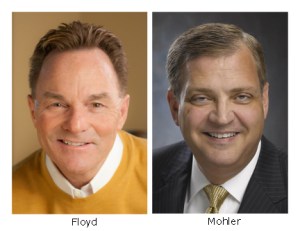
Moore joins Ronnie Floyd, pastor of Cross Church in northwest Arkansas, in the election to succeed current SBC President Fred Luter. Fellow Kentucky pastor Paul Sanchez will nominate Moore, and Albert Mohler, president of The Southern Baptist Theological Seminary, will nominate Floyd.

I was saved in a rural Southern Baptist Church, and I’ve primarily served rural Southern Baptists ever since. Where I live now, the nearest gas station is 7 miles away. My church is a small church made up of about 60 people. They’re a loving, caring, godly group of people. – See more at: http://sbcvoices.com/why-i-am-allowing-myself-to-be-nominated-for-sbc-president/#sthash.M2hwtrUG.dpuf

I was saved in a rural Southern Baptist Church, and I’ve primarily served rural Southern Baptists ever since. Where I live now, the nearest gas station is 7 miles away. My church is a small church made up of about 60 people. They’re a loving, caring, godly group of people. – See more at: http://sbcvoices.com/why-i-am-allowing-myself-to-be-nominated-for-sbc-president/#sthash.M2hwtrUG.dpuf

The_BriefingTHE BRIEFING | Half of all Illinois residents said they’d move out of state if they could, putting the Land of Lincoln at the top of a Gallup survey of all 50 states. But it’s a dubious honor: On average, only 33% of residents in all states would like to move, compared to 50% in Illinois.

19% of Illinois residents said they are extremely, very or somewhat likely to move in the next year, compared to about 14% across all 50 states.

Gallup linked their most recent poll to similar studies that measure how negative residents are about their state’s taxes, and how much they distrust their government. Illinois topped the latter list too – only 28% of residents said they had a great deal or fair amount of trust in their state government. As for taxes, 71% of Illinoisans said they were too high, placing the state fourth on a list topped by New York, New Jersey and Connecticut.

One piece of good news amid the bad: A study from the University of Colorado-Boulder named Chicago the country’s funniest city, largely because of its improv scene. Judging from the Gallup numbers, it may be a good time to learn to laugh at ourselves, too. Read more at Gallup.com.

Supreme Court rules in favor of town meeting prayers
The U.S. Supreme Court on Monday ruled that prayers before town meetings in Greece, N.Y., can continue. The Second Circuit Court of Appeals in New York City had ruled the prayers “had the effect of affiliating the town with Christianity,” but the Supreme Court’s 5-4 decision overturned that ruling. “This is a victory for all of those who believe in the freedom of speech, including religious speech, as a prized part of our God-given religious liberty,” said Russell Moore, president of the Southern Baptist Ethics and Religious Liberty Commission. Read the full story at BPNews.net.

Oklahoma school district bars pre-game prayers
The Freedom From Religion Foundation successfully lobbied an Oklahoma school district to stop pre-game prayers led by baseball coach Larry Turner and his staff. In a letter written by his attorney, Owasso School District Superintendent Clark Ogilvie said his district “will not allow any District employees to participate with any District students in any prayer or other religious activities in connection with any school-sponsored events.” Read more at ChristianPost.com.

Page appoints SBC Mental Health Advisory Council
Frank Page, president of the Southern Baptist Executive Committee, has named a 23-member advisory council to assist churches as they respond to mental health needs in their congregations. The group, chaired by Kentucky pastor Tony Rose, will address concerns brought by messengers at the 2013 SBC Annual Meeting in Houston. There, Baptists approved a motion by Arkansas pastor Ronnie Floyd to ask Southern Baptist entities “to assist our churches in the challenge of ministry to those suffering from mental health issues…” Messengers also approved a resolution on “Mental Health Concerns and the Heart of God.” Read more at BPNews.net.

Disaster Relief volunteers respond to southern storms
Southern Baptist Disaster Relief teams moved quickly into the Southeast U.S. following a spate of tornadoes and severe storms two weeks, and are still at work in several states.

“These storms were so strong that the slabs were swept clean by the wind,” said Disaster Relief director Joe Garner in Arkansas, where teams were serving the Mayflower and Vilonia areas. “There is very little chainsaw work to do. It is mainly clearing debris.”

Since April 26, destructive storms have affected 13 states, Baptist Press reports. For more Disaster Relief updates, go to BPNews.net.

COMMENTARY | Eric Reed

If there is any swordplay between the dominant camps at the Southern Baptist Convention this summer, it will likely be in the vice presidential races. Reformed leader Al Mohler announced he will reach across the aisle and nominate for the SBC presidency Arkansas pastor Ronnie Floyd, who is not known as a Calvinist. So, dueling will be consigned to lower ranks. And the first candidate has stepped forward.

Clint Pressley of North Carolina will be nominated for first vice president. What’s interesting is that it was Pressley who nominated Mississippi pastor Eric Hankins for second vice president in 2012.

Hankins is the author of a document called “A Statement of the Traditional Southern Baptist Understanding of God’s Plan of Salvation.” The document was a response to the rise of Calvinist theology in the Convention. That bubbling debate cooled only when Executive Committee President Frank Page invited Hankins, Mohler, and 17 others to join him in a study group seeking a peace between the sides and avoidance of a schism.

Hankins was not elected second vice president. He and another candidate were defeated by a surprise nominee, Iowa pastor and blogger Dave Miller. Miller’s nominator had posited him as a less divisive alternative.

Hankins exited the platform that year, but has remained active in the discussion of SBC polity and theology. Now, Pressley returns, not to nominate, but to be nominated.

That’s not at all surprising.

From a seat two rows behind them in Hebrew class, it was clear these young men were headed somewhere. Tall, sharp, and confident, in the football-player way, Hankins and Pressley went through college together as best friends. At seminary, they were a better-behaved version of Butch and Sundance. They were young men on life’s adventure as friends, role models, family men, pastors of ever-larger churches. And apparently, they were instrumental at the start of a movement to recapture “traditional” as a theological position worth holding and an identity worth upholding.

One started the race; we’ll see if the other can carry the torch on the next lap.

One more development on the traditional front: A group calling itself Connect 316 announced its first meeting to be held during the Convention. Offering their network as an alternative to “Calvinist-leaning” groups such as the Founders Ministry, 9 Marks, and Acts 29, they claim the theological tradition of Herschel Hobbs and Adrian Rogers. In other words, “traditionalists.”

A friend of mine is looking forward to the Convention in June. She wants to see if Pressley will again make an appearance in his seersucker suit. The summer staple of Southern lawyers was an old-time favorite of preachers, too. Could seersucker, and traditionalists, make a comeback in Baltimore?

Eric Reed is editor of the Illinois Baptist newspaper.

Hobby_Lobby_prayerTHE BRIEFING | Meredith Flynn

The Southern Baptist Ethics and Religious Liberty Commission is calling Christians to pray for Hobby Lobby as the U.S. Supreme Court prepares to hear oral arguments this week in the government’s case against the craft retailer and another company, Conestoga Wood Specialties Corporation.

At issue is the businesses’ refusal to cover abortion-inducing drugs for its employees, a measure required of for-profit companies by the Obama administration’s healthcare plan.

“This case will set the tone for the next hundred years of church/state jurisprudence in this country,” ERLC President Russell Moore wrote in a blog post March 23.
“One of the reasons we oppose this sort of incursion into free exercise is that we want neither to be oppressed nor to oppress others,” Moore wrote. “We do not ask the government to bless our doctrinal convictions, or to impose them on others. We simply ask the government not to set itself up as lord of our consciences.”
The ERLC has created a “Pray for Hobby Lobby” avatar for use on social media, and is asking Twitter users to post with the hashtag #PrayForHobbyLobby. Read the ERLC’s news release about the Hobby Lobby case here.
Other news:
Southern Baptist Convention First VP candidate named
North Carolina pastor Clint Pressley will be nominated for the office of first vice president at the Southern Baptist Convention’s annual meeting this June in Baltimore. Pressley pastors Charlotte’s Hickory Grove Baptist Church and currently is vice president of the SBC Pastor’s Conference.

“I love the Southern Baptist Convention,” Pressley told North Carolina’s Bibilical Recorder newspaper. “I’m thankful for the work of NAMB and IMB, and I want to keep supporting the convention. I want to see more younger guys getting excited about the work of our convention and how we do missions – whether it’s in North America or around the world.” Read the full story at BPNews.net.

Westboro pastor Fred Phelps dies
Fred Phelps, whose Kansas church made headlines for years with their incendiary protests, died March 19. LifeWay’s Ed Stetzer suggests how Christians should respond to Phelps’ death, including taking the opportunity for some self-examination.

“Let’s be careful to avoid our own self-deception,” Stetzer wrote on his blog, The Exchange. “The Phelps family, and the Westboro clan they started, are full of people that need Jesus. Let’s not get Pharisaical here – the Phelps family and the people they lead in worship of a false god are sinners, but so are we. The people who spew the hateful words of Phelps’s hateful god need the love of Jesus just like you and me. Pray for them to find peace in Jesus and love as he has loved.”

Former Haitian prisoner tells his storyA Baptist volunteer recounts his experience in a Haitian jail four years ago in this story on BPNews.net. “They were difficult and perplexing and complex days, but God ordained them,” Paul Thompson, pastor of Eastside Baptist Church in Twin Falls, Idaho, told BP. In 2010, he and nine other Baptist volunteers were detained and charged with kidnapping after trying to move children to safety in post-earthquake Haiti.

Barna: Who’s watching what at the movies
Sequels were big in 2013, according to data compiled by Barna Research, although the average American only saw 3.3 movies at the theater. The study also found 11% of people saw a movie in the last two years that made them think seriously about religion or spirituality. Read more at Barna.org.

Ronnie_Floyd_blogCOMMENTARY | Meredith Flynn

Ronnie Floyd is the first candidate to toss his hat in the ring for the next Southern Baptist Convention president. Although, in keeping with tradition, Floyd’s nominator actually did
the tossing: Southern Seminary President Al Mohler announced last month he will nominate Floyd for the convention’s top elected post at the annual meeting in Baltimore.

No one else has allowed his name to be brought forth so far. This unusual across-the-aisle nomination, and a potential single-candidate race, has several implications for Southern
Baptists:

1. The Calvinism debate doesn’t have to result in a hostile takeover for either camp. Mohler’s well-known and well-documented theological perspective is different from what is known of Floyd’s. In an open letter announcing the nomination, the seminary president and leading Reformed thinker lauded Floyd as a unifier. He specifically mentioned the theology talk that has dominated conversation over the past several years, pointing to Floyd as a leader who can move the SBC toward a common goal of reaching the world for Christ.

Mohler’s nomination of Floyd is likely the kind of unifying event SBC Executive Committee President Frank Page had in mind when he appointed an advisory committee to study how the two “sides” can work together.

2. The generation gap may be narrowing. Mohler has the ear of many young Baptists, as a seminary president and proponent of Reformed theology, whose adherents tend to skew younger. He is in the unique position of being able to steer 30-somethings toward active participation in Southern Baptist life, without being a 30-something himself. His nomination
of Floyd indicates he’s willing to guide young leaders away from a concentration on divisive issues and toward goals we can work on together.

3. With revival as the goal, Baptists are ready to rally around the Great Commission. Current SBC President Fred Luter made revival and spiritual awakening his platform during his two years of leadership, aiming to stem the decline in baptisms. “Fred Luter has led us so well as he has unified and inspired us,” Mohler wrote in his nomination letter. “Our next president needs to unify and inspire us for our next steps together.”

Floyd chaired the Great Commission Resurgence Task Force, which presented a comprehensive strategy in 2010 to push funding to areas of the country (and world) that are less churched and often more urban. More recently, he organized two prayer gatherings to guide pastors and leaders toward personal and corporate revival.

“Pastors believe the Great Commission can be fulfilled in their generation,” Floyd blogged after the prayer meeting in Atlanta. If he’s elected in June, he’ll be charged with communicating that vision to a multigenerational, theologically diverse denomination.

Meredith Flynn is managing editor of the Illinois Baptist.

Nate_Adams_blog_callout_2HEARTLAND | Nate Adams

Last month Directors of Missions and other associational leaders from around the state gathered at the IBSA Building for a time of leadership development, fellowship, and strategic thinking about how best to assist churches. Dr. Chuck Kelley, president of New Orleans Baptist Theological Seminary, was invited to speak to us on “Fostering a Positive Baptism Trend in an Association.”

To set the stage, Dr. Kelley reminded us that the number of baptisms in SBC churches overall has been on a 50-year plateau, and has now actually declined six of the past eight years. Nationwide data for 2013 is not yet available, but in 2012 baptisms declined 5.5% from 2011, to only 314,956. That’s the lowest level since 1948, when SBC churches reported only 6 million members rather than the current 16 million. In fact, to give those numbers some further context, baptisms totaled 445,725 in 1972, and 429,063 in 1959.

Here among IBSA churches, baptisms were actually up 3.1% in 2013 to 5,063, building on the previous year’s 2.6% increase. Still, 2013 is our churches’ first year above 5,000 baptisms since 2009. And in 2005, IBSA churches reported 6,499 baptisms.

While all of us were eager to hear what Dr. Kelley would suggest, none of us were really surprised when he said there are no easy answers to reversing the current baptism trend. I was personally grateful to hear him underscore that we shouldn’t seek to affix blame or pass the buck. Instead, we all need to focus passionately and sacrificially on the urgent need to reach people with the Gospel in an increasingly challenging environment.

While I don’t have space here to recap everything Dr. Kelley shared with us, I can share his alliterated outline. He said we need to Focus on Filling (of the Spirit, or revival), on Fruitfulness (intentional evangelism), on Faithfulness (a return to true discipleship), and even on Fighting (embracing the inevitable conflict that comes when change is needed, yet with Christ-like attitudes and righteousness).

All of these points hit home deeply with me, and couldn’t have come at a better time. Not only are we beginning a new year of ministry here at IBSA, and in all our churches, but we are also beginning our planning and budgeting for 2015. We can’t keep doing ministry as usual and expect a much different result.

As Dr. Kelley urged, we must persistently ask God to fill us afresh with His Spirit, and bring revival to our churches and spiritual awakening to our land. We must focus much more intentionally on fruitfulness, starting new Bible studies and Sunday School classes and evangelistic ministries, and equipping believers to courageously share the Gospel. We must more carefully embrace true discipleship, investing God’s Word deeply in those who will be faithful to live the Gospel and pay it forward into the lives of others. And yes, we must be so committed to a different level of fruitfulness that we are
even willing to engage the conflict that often seems to come with change, even in churches.

Those of us leading and serving churches today have lived most of our adult lives on the downwardly sloping plateau of this baptism trend. In many ways we have been maintaining our processes and doing church in comfortable ways, and if we simply continue our current patterns in the face of a changing culture, we will soon see the downward slope of the current trend steepen dramatically.

So as we prepare to plot one more year of baptisms on the chart of history, it is this urgency of reaching spiritually lost people with the Gospel that must compel us, and our churches. Baptisms may not be the only measure of fruitfulness, but they are a measure that we cannot be content to see in even gradual decline.

Nate Adams is executive director of the Illinois Baptist State Association.

CONVERSIONS COUNT – “We have to help our churches focus on bearing fruit, and to keep up with that as a measure of how they’re doing,” NOBTS President Chuck Kelley told associational leaders in Illinois. “Fruitlessness is becoming endemic in Southern Baptist Life.”

CONVERSIONS COUNT – “We have to help our churches focus on bearing fruit, and to keep up with that as a measure of how they’re doing,” NOBTS President Chuck Kelley told associational leaders in Illinois. “Fruitlessness is becoming endemic in Southern Baptist Life.”

The SBC’s declining numbers are real. But there are solutions, says seminary president Chuck Kelley.

NEWS | Eric Reed

Since he began studying and teaching evangelism more than 30 years ago, New Orleans Baptist Theological Seminary President Dr. Chuck Kelley, told associational leaders in Illinois in January, we’ve been quoting the same statistic: 30% of our churches are growing, and 70% of all Southern Baptist churches are plateaued or declining. “The difference today is the 70% aren’t so much ‘plateauted;’ our churches are declining. We are a convention at a crossroads.”

Kelley is one voice in a chorus of national leaders calling on Southern Baptists to end the decline in baptisms and missions giving in our churches that threatens fulfillment of our kingdom work and the future of the denomination itself.

The head of the convention’s executive committee, Dr. Frank Page, also delivered a stark address in January. “…You say, ‘What is our future?’ I do not know. I’m asked that every week by someone, and I say, ‘I cannot answer.’ If things do not change, I can tell you in 20 years we will be happy to have 27,000, not 47,000 churches,” Page said.

In a “State of the SBC” address at Midwestern Seminary, Page cited “fault lines” in the denomination, where pressure has built and the fabric of the organization is threatened. Among them are the arguments over the nature and authority of Scripture in the 1980s, and more recently the debate over Reformed theology, methods of funding missions, and democratic-based church governance.

The effect of these “fault lines” is seen in declining baptisms and a 20-year downward trend in missions funding through the Cooperative Program. “We have argued over issues that have taken away our evangelistic fervor to the point that now our baptismal rates have reached a low not seen since 1948,” Page said. “God help us.”

Southern Baptists baptized 314,956 people in 2012, the most recent tally available. That was a decline of 5.5%. The figure compares to the post-war baptismal rate, when Southern Baptists numbered 6 million, in contrast to today’s 16 million. A decade-long focus on evangelism after World War II produced the denomination’s greatest surge of conversions, peaking at 445,725 baptisms in 1972, and the steam to power the next six decades downhill from there.

Leaders are hopeful that a final tally on 2013 baptisms and Cooperative Program giving, due soon, will show a slight uptick, and perhaps end the slippery slope. And in Illinois, baptisms and giving are up for 2013.

Still, national leaders are now talking publicly and regularly about the SBC as a denomination that is plateaued and declining, mostly declining.

Page’s speech, now being viewed widely on the internet, comes on the heels of “an open letter” from LifeWay President Thom Rainer calling on members of what is still the largest Protestant denomination in the United States to recapture their zeal for evangelism.

“Where is the passion in most of our churches to reach the lost?” Rainer asked. “I thank God for our affirmation of the total truthfulness of Scripture. I thank God for orthodoxy. But I pray that it is not becoming a dead orthodoxy – an orthodoxy that has lost its first love.”

“I have no proposal,” Rainer summarized. “I have no new programs for now. I simply have a burden.”

Kelley’s proposal

The history of every church and denomination is growth, plateau, and decline, Kelley told associational leaders meeting at the Illinois Baptist State Association building January 27-28. Pointing to Methodists, Presbyterians, and other mainline

denominations, Southern Baptists for many years expressed thanks we weren’t following their decline. Now we are. “We are seeing a growing gap in the rhetoric about Southern Baptists and the reality of where we are,” he said.

And the declines are in all parts of the U.S. “We’re losing the South,” Kelley said. “You need to be aware that the South is becoming more like Illinois; large blocks of unreached people, and churches that are smaller.”

And a new generation that is not following their parents’ lead by staying in church after they reach adulthood.

Kelley likened the denomination’s downward turn to an airplane in a tailspin: beyond a certain point, the pilot can’t pull the nose upward and right the plane. “We’re nearing that point,” Kelley said.

He identified four factors in this precipitous decline, problem areas that also point to possible solutions:

Elephant 1: Awakening

“We have a power problem,” Kelley said. “We have gotten so used to working without the filling of the Spirit of God, we don’t know it’s not normal. Kelley called for church leaders to encourage prayer for spiritual awakening: “This is like stacking the firewood for God to light the fire.

“We need to have solemn assemblies, for our people to seek a move of God… If God isn’t moving, there is an issue within us,” he said, pointing to the need for repentance.

Elephant 2: Conversions

As the numbers have dropped, Southern Baptists have moved away from publically counting baptisms as a measure of our fruitfulness. While Kelley acknowledged there have been misuses of the system in the past, he said our churches must return to a focus on fruitfulness. Specifically, we need to see conversions as a measure of “what God is doing in our churches.”

“Many of our churches have the Sunday school attendance posted somewhere, and last week’s offering,” Kelley said, “but I have been in very few churches that have in a public place how many people they have baptized – and even fewer that have a public goal of how many they want to baptize.”

He offered three measures of fruitfulness: beyond conversions, churches should measure ministry to the community. “Most churches do not have a muscle set for ministry to the community,” he pointed out, but it is community ministry that opens doors for evangelism.

And churches should measure church planting, their own participation in the reproductive process that brings healthy new congregations into existence, with members fueled by the salvations of their lost family and friends.

Elephant 3: Discipleship

While the rhetoric in our high-point decades was about evangelism (“A million more in ’54!”), the real genius of the period, Kelley contends, was in our dis

ciple-making mechanisms: Sunday school and training union. These methods focused on making new believers into disciples, who then led more people to Christ.

But, he said following extensive study, “Every methodology has a shelf life, and as the methodology wore out its shelf life, we did not replace it…. Our discipleship processes have been dismantled, not intentionally, but by attrition. Our discipleship has become a patchwork that is reinvented every year. It’s a series of things, not a cohesive strategy.”

In the last 20 years, Kelley said there has been a “megashift” in SBC life from the priority of discipleship to the priority of worship. One result is under-educated people who call themselves Christian, but whose lifestyles are little different from unbelievers.

“When I grew up, we still had a sense of being a stranger is a strange land. We were counter-culture…. I’m not calling for a return to the sixties. I am saying we have to find for today what a distinctly Christian lifestyle looks like and teach our people what living distinctly Christian lives is, so that we have evangelism that will impact our society.”

One of our needed conversations is how we will lead our congregations to spiritual maturity in this new era.

Elephant 4: Fighting

Finally, Kelley pointed to a significant shift he has witnessed from the seminary campus: “Today’s seminary students are not interested in going into existing churches, because they are scared. They have seen the results and heard the horror stories of church fights,” Kelley said.

Yet, that’s where the need is, in existing churches that are plateaued or declining. “If a pastor comes to bring growth, there will be conflict. We need to have conversations about how to have conflict.”

Kelley said leaders need to help their churches process conflict in ways that bring positive change and do not harm the Body of Christ. “Not all church fights are the result of failure on the part of the pastor, or of having ungodly people in the pews. It is the result of change. Leading change creates conflict,” Kelley said.

It also turns declining churches – and denominations.

Disaster relief volunteers from the Southern Baptists of Texas Convention visited families whose homes and livelihoods were disrupted by Typhoon Haiyan. The volunteers listened to the families’ heartbreaking stories and prayed with them, then distributed badly needed food and building supplies.  BGR photo, via BP

Disaster relief volunteers from the Southern Baptists of Texas Convention visited families whose homes and livelihoods were disrupted by Typhoon Haiyan. The volunteers listened to the families’ heartbreaking stories and prayed with them, then distributed badly needed food and building supplies. BGR photo, via BP

THE BRIEFING | Posted by Meredith Flynn

Nearly three months after Typhoon Haiyan, some aid organizations have completed their work in the Philippines. But Baptists are gearing up for a long-term relief effort, led by Baptist Global Response.

“…The need is massive,” BGR Executive Director Jeff Palmer told Baptist Press. “We are initiating large-scale work with communities, local believers and volunteers and will be constantly assessing and gauging the effectiveness of our choices.

“Please continue to pray for our team members and volunteers as they help in the face of overwhelming needs. Pray that we choose the most strategic and effective places to work that truly help people physically and spiritually.”

The biggest repair needs are for water systems, homes and schools, Baptist Press reported. BGR has created a housing kit that will construct a small home on stilts for about $250. The goal is for the construction projects to breathe life into the local job market, Palmer said.

“The community has a labor force needing work, and capable, skilled men will be contracted to work alongside [a] U.S. disaster response team and local volunteer labor when available.”

Disaster Relief chapters from five state conventions – Missouri, California, Tennessee, Kansas-Nebraska, and the Southern Baptists of Texas – have adopted different areas of the Philippines. Read the full story at BPNews.net.

Other news:

Frank Page addresses denominational fault lines in ‘State of the SBC’ speech
The president of the Southern Baptist Executive Committee began a Jan. 15 speech with an analogy about earthquakes. “Fault lines happen even in organizations,” said Frank Page during a “State of the SBC” address at Midwestern Baptist Theological Seminary. “And like on the earth, where the fault lines and tectonic plates come together, pressure builds. If that pressure is not alleviated, then deep damage occurs.”

Page addressed some of the denomination’s current and past fault lines, including the debate over Reformed theology. He also spoke about the task force he appointed to study how Baptists with theological differences can work together. “Do I think that fault line is fixed forever? Hardly. But I said to them in all honesty, ‘I want us to work together so that we can at least win some people to Christ for now. Can we do that?'”

Read the full report by Midwestern’s Tim Sweetman at BPNews.net, and click here for a link to Page’s address.

Church ministers through abortion recovery class
Dr. Chris Midkiff likely didn’t know what kind of bombshell she had just dropped during a women’s leadership meeting at Bethel Baptist Church in Troy. The OB/GYN mentioned an abortion recovery Bible study she’d read about called Surrendering the Secret. Some of the women in the meeting personally understood the need for such a study. Read the story here.

One Baptist prof’s take on the Grammy’s
You’ve probably heard about the 33 couples, including some same-sex pairs, married by Queen Latifah during Sunday’s Grammy awards show. The song performed by Macklemore during the ceremony “took aim at Christians and their views on marriage,” blogged Denny Burk, an associate professor at Boyce College in Louisville, Ky. But the lyrics got one thing right, Burk said: We all come from one creator God. Read his post here.