Archives For November 30, 1999

Southern Baptist Convention

Keeping Sheep
By Nick Rynerson

Springfield | The question is a familiar one. Most pastors and church leaders have asked it at some point: Why are people leaving the church? Every denomination has felt the effects of decline, even Southern Baptists who had maintained growth overall until recently.

To find out why people are really leaving the church, Rodney Harrison set out to interview former Southern Baptist church members and get the real story. He rode his motorcycle all over the country and visited more than 500 former church members in Illinois, Minnesota, Wisconsin, South Dakota, North Dakota, Iowa, Arkansas, Missouri, Kansas, Texas, Washington, and California.

The Dean of Online Education and Director of Doctoral Studies at Midwestern Baptist Theological Seminary, Harrison explained his findings at the 2015 Midwest Leadership Summit in Springfield.

Harrison observed that not all churches are losing members, but churches in decline have some characteristics in common. Here’s his summary of what the 500 former members told him.

1. People left churches where they didn’t feel the presence of God.

What Harrison said he most often heard in his research was “I just didn’t feel the presence of God [in that church] anymore.” Former members often described their former churches as nice places, but lacking, as Harrison put it, “the manifest presence of God.” People left churches “where they don’t feel like God was showing up” more than for any other reason during his qualitative study.

“God’s manifest presence is conditional,” Harrison said. “Rampant sin hinders God’s manifest presence. Often times we invite people to a church that has ‘the flu’—it’s spiritually sick—and we wonder why people come and don’t stay.”

2. People left churches that didn’t value women.

The second most common reason cited for departures among the 500 people Harrison interviewed was disagreement over the roles of women in church life. Some reported feeling that women didn’t have the opportunity to exercise their gifts in fulfilling ways in the churches they attended.

According to him, this does not mean people left because they rejected the complementarian view of men and women. Instead, he said the former SBC church members felt women were under-valued and their contributions weren’t meaningful at the churches they had attended.

Harrison argued there is a biblical precedent for women serving in meaningful ways in the church, citing the examples of Mary the mother of Jesus, Mary Magdalene, Martha, and Lydia. His research shows, however, that in our time, the roles of women in the church deserves further study before it becomes even more divisive.

3. People left churches that focused on debatable issues.

Specifically, in Harrison’s research, disagreement over alcohol use was an issue for some who left. Harrison heard stories of people who chose to leave after they began to serve in leadership, but were asked to sign a covenant forbidding alcohol use.

Harrison recalled a story of a man that was involved at a Southern Baptist church for a while and began serving in leadership roles as a layperson. When he was asked to sign a covenant, the man had to make the difficult decision to leave the church because he was employed in the wine industry.

Churches certainly have the option to ask members to abstain from certain things, even if the Bible does not expressly forbid them. But Harrison said many ex-church members they did not feel that this issue was properly handled in their former churches. Doubts raised in one theological debate raised questions over other issues and caused growing distrust of their leaders.

4. People left churches in conflict.

When strife breaks out in a church that has nothing to do with matters of orthodoxy or faithfulness, people get burned and leave, Harrison said. Many of the churches people left did not have plans in place to deal with church discipline and conflict.

Without a process in place, conflicts often escalated and became antagonistic. Harrison found that conflict came from both the pulpit and the pews. Anecdotally, his interviewees reported that antagonistic members were rarely dealt with in a healthy manner, and pastors often felt unequipped to deal with conflicts.

5. People left uncaring churches.

Ultimately, if a church doesn’t care for its people, people don’t end up caring much for it. Ex-members interviewed told stories of feeling neglected. One of Harrison’s anecdotes told of an elderly woman who spent six months in the hospital without a single visitor from her church.

“Are we ministering to our members?” asked Harrison. “If the answer is ‘no,’ be prepared for diminishing numbers.”

St. Louis skylineCOMMENTARY from BPNews.net | Ronnie Floyd

Coming off our largest convention meeting since 2012 in New Orleans, our Southern Baptist family begins to dream and cast the vision for our next gathering in 2016 in St. Louis. More importantly than the size of our gathering in Columbus this year, our great and mighty God met with us powerfully.

Save the date: June 14-15, 2016.

Will I see you in St. Louis on June 14-15, 2016, for our Southern Baptist Convention? Please mark your calendar now for this upcoming and dynamic experience with our Southern Baptist family. Make these dates non-negotiable and decide now to be in St. Louis for our 2016 Southern Baptist Convention and bring people with you.

See the vision: Get St. Louis on your heart

Metropolitan St. Louis needs the saving message of Jesus Christ. Our nearly 2,000 Southern Baptist churches in Missouri need the encouragement of our greater Southern Baptist family.

Why should we see the vision of metro St. Louis?
-2.73 million people live in metro St. Louis
-1 out of 7 Missourians live in metro St. Louis
-50.9% of the population is unaffiliated with any religious body
-Only 17.9 percent of the population of metro St. Louis is affiliated with an evangelical church
-St. Louis is one of the North American Mission Board’s SEND focus cities. Watch this video to learn more.

Southern Baptists, how do we not go and make a difference in metro St. Louis? You see, when we speak of metro St. Louis, we are also talking about East St. Louis, Ill. Two states will be impacted by our gathering next year.

How can your church participate in Crossover St. Louis a few days ahead of our convention? They will be able to assist new church plants or help established churches. This leads up to the major Crossover event on Saturday, June 11. Then, your church members can stay and attend our convention on June 14-15. Please strongly consider this.

Stand together with us to reach the world

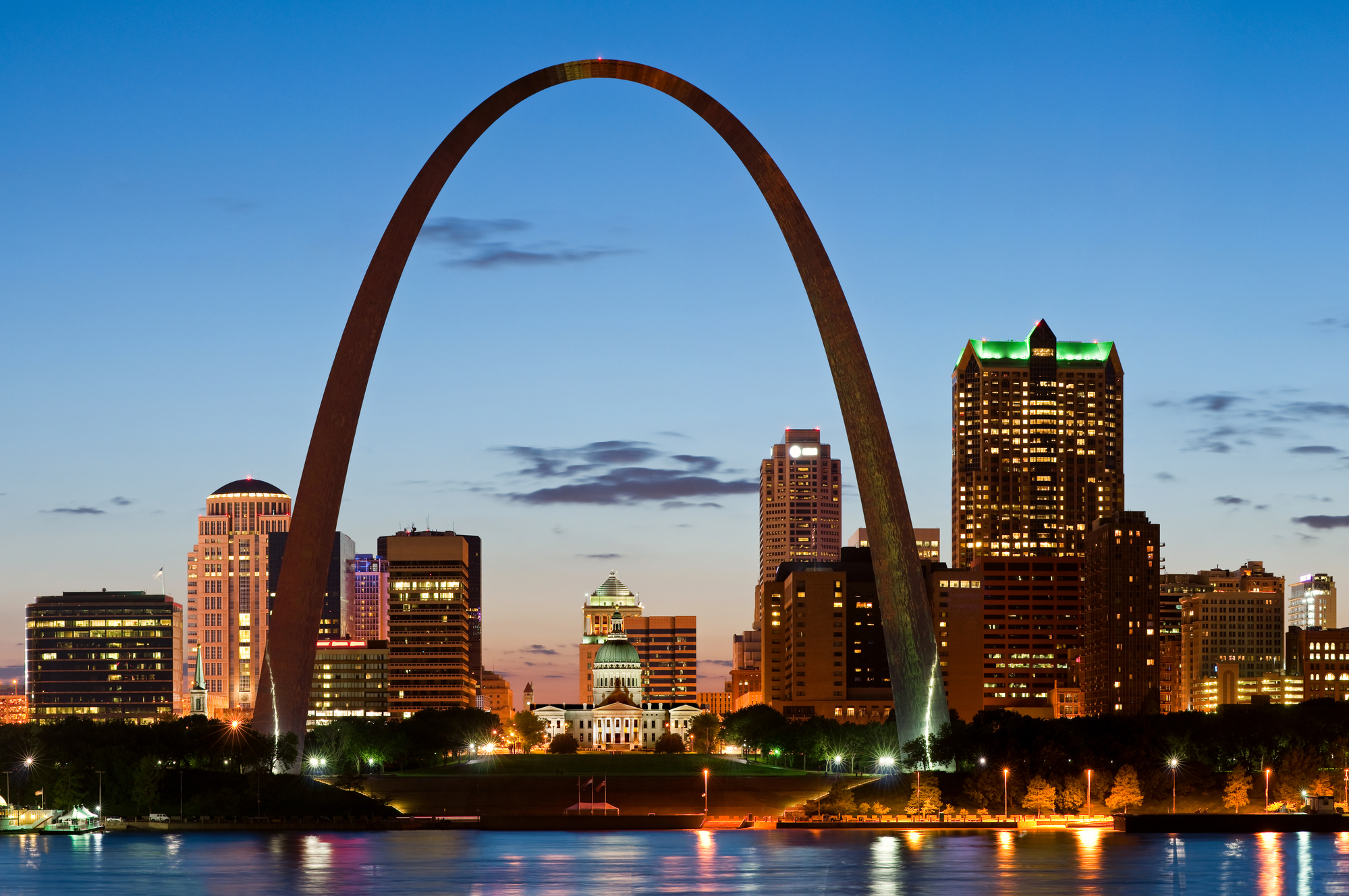
When you fly or drive into St. Louis, you will notice the Gateway Arch as you enter the city. It stands 630 feet tall and 630 feet wide. This remarkable structure has been known as America’s gateway to the West, with St. Louis the Gateway City.

In 2016, Southern Baptists need to converge on this city from all over the world and see it as our gateway to reach the world for Jesus Christ. Stand with us!

7 reasons to come to St. Louis on June 14-15, 2016
1. We need to be with our family, our Southern Baptist family.

2. We need to be inspired to believe again that God can awaken America spiritually and the world can be reached for Christ.

3. We need to hear the Word of God proclaimed, pray and worship together by the thousands, and have our spiritual lives set on fire again.

4. We need to hear the wonderful testimonies and reports about what God is doing across America and the world through our work together.

5. We need to hear how our churches’ financial investment in the Cooperative Program and mission offerings is being used to share the Gospel.

6. We need to be encouraged to know that when we are together and working together there is hope in America and this world.

7. We need to join together by the thousands as we pray for our nation at this critical time, calling out to God to revive His church and awaken America so we can reach the world for Christ.

Now is the time for Southern Baptists to lead. Let these words encourage your life today as you lead others into the future:

“An awakening can bring about the evangelization of the world in our generation” (American evangelist Billy Graham).

“The one who mobilizes the Christian church to pray will make the greatest contribution to world evangelization in history” (South African pastor Andrew Murray).

God is not finished with Southern Baptists, America or the world.

Ronnie Floyd is president of the Southern Baptist Convention. This column, reprinted from Baptist Press, first appeared at his website, www.ronniefloyd.com.

David_DockeryCOMMENTARY | David Dockery

In 1955, when Will Herbert wrote his classic volume “Protestant, Catholic, Jew,” one in 25 church-going Americans tended to change denominations over a lifetime. In 1985, one in three Americans changed denominations over a lifetime. In this current decade, it’s more than one in two, or about 60%, which means many Christians will change denominations in this century. Not only have we seen a decline in denominational loyalty in recent years, but an increase in the number of people who identify with a network, special purpose group, or parachurch group, rather than a particular denomination.

These accelerated shifts have changed the way many perceive the importance of denominations, resulting in additional changes to the denominational diversity that has developed in North America over the past 200 years. While there are significant changes to observe, we dare not miss the importance of geography as we address this topic.

As the country has migrated westward over the past hundred years, new movements and denominational offshoots have developed. Certainly geography has shifted, but the generalizations about geographical presence and denominational influence still hold. Roman Catholics continue to have great sway in New England, Lutherans are most prevalent in the upper Midwest, Baptists are a majority in the South, and Dutch Reformed are sprinkled across the heartland.

Perhaps even more important than geographical regions is the kind of city or town or place where one resides. Great differences in the understanding of denominational importance exist in metropolitan areas compared with rural towns. Suburban areas are where the majority of generic megachurches are located. Surprisingly, more than 50% of all churchgoing Americans attend less than 12% of all churches. Denominational labels mean less and less for the majority of these megachurches.

Sociologists at Boston University have tracked these changes, highlighting the differences on the east and west coasts when contrasted with areas in the middle of this country. About 30% of the people on the two coasts respond positively to the importance of denominational identity, compared with about 70% in the Midwest and the deep South. Such comparisons are even more exaggerated from rural to urban areas: 84% of people who live in rural areas persist in thinking that denominational identity is important, compared to less than half of that number in suburban and urban areas.

One more important point regarding place: The majority of churches are still found in rural areas, while most people now live in urban and suburban areas, pointing to another reason for decline in the importance of denominations for people in this century.

Furthermore, most of the mainline denominations have sadly lost their way. Some have become disconnected from their heritage, and even more so from Scripture and the great Christian tradition. Some today are not only post-denominational, but also on their way toward becoming post- Christian as their conversations focus on issues of inclusiveness and universalism, sexuality and inter-religious spirituality. Postmodern influences, shifts in population and perceptions regarding denominations, and the decline of mainline denominations have combined to bring about changes that frankly are hard to calculate.

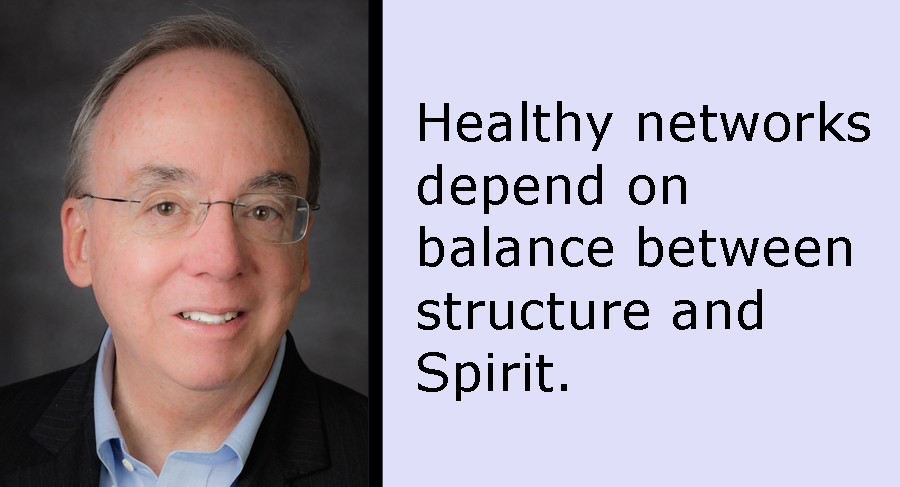
So, what does this say about the future of denominationalism? I want to say that while denominationalism is in measurable decline, denominations still matter. Certainly the kind of structure that denominations provide for churches is important. The Christian faith needs both “structure and Spirit,” to borrow words from historian Jaroslav Pelikan, in order to carry forward the Christian message.

If, however, we focus too much on structure, we wind up with unwanted bureaucracy. Should we focus too much on the Spirit, we unwittingly move toward an amorphous form of Christianity. Let us pray for balance even as we hold out hope for the future of healthy denominations to serve the cause of Christ and cooperatively advance the good news of the gospel message.

David S. Dockery, president of Trinity International University, is the editor of “Southern Baptist Identity: An Evangelical Denomination Faces the Future.”

Columbus_SBC_blogNEWS | Lisa Sergent

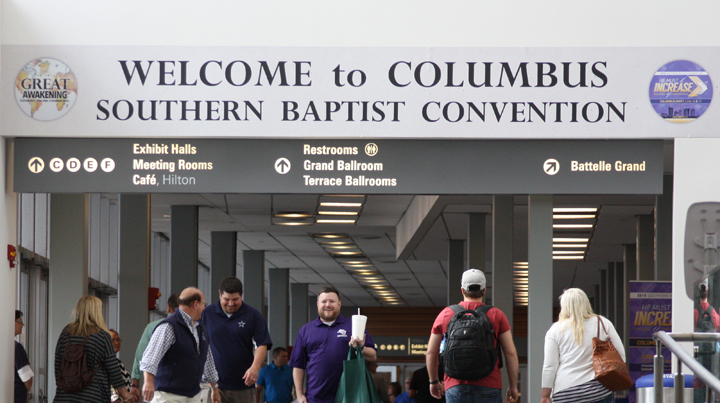
The signs up at the Greater Columbus Convention Center read, “Welcome Southern Baptist Convention,” while banners on the lampposts declared “Gay Pride Festival.” With only a day separating these gatherings, their juxtaposition—and shared subject matter—was especially noticeable.

Awaiting the U.S. Supreme Court’s ruling in Obergefell v. Hodges, the case that will likely determine whether same-sex marriage is legal in all 50 states, SBC leaders and messengers talked marriage and a host of other issues that threaten to isolate the gospel from the people who need it.

Columbus_blog“Whatever happens in the culture around us,” Russell Moore, president of the SBC’s Ethics and Religious Liberty Commission, reminded attenders at the Pastors’ Conference, “it does not take one bit more gospel to save the people protesting us than it took to save us, the people who were once protesting God.”

But there weren’t a lot of people protesting Southern Baptists in Columbus. In fact, for several years now, the controversial conversation has been inside the hall rather than parading the sidewalks outside, with messengers taking up issues—such as same-sex marriage and ministry to transgender people—that would not have been handled so candidly a decade or two ago.

“For most of this last century Southern Baptists have been comfortable in the culture in their soft cocoon,” Moore said in his convention report. “Some said that the Southern Baptist Zion was below the Mason-Dixon Line. Those days are gone, and not a moment too soon. Those days are over, thankfully.”

Southern Baptists are taking on hard issues.

Firm positions, softer hearts
“The mission of the church isn’t to un-gay people. The mission of the church is to win people to Christ,” Houston pastor Nathan Lino said at a breakfast hosted by the Council on Biblical Manhood and Womanhood. He challenged churches, asking why they try to “run off” homosexuals and transgendered people. “Do you realize that it’s a miracle they are there? It’s because of God and it’s glorious.”

Former lesbian, now pastor’s wife Rosaria Butterfield agreed that salvation comes first. “I was not converted out of homosexuality, I was converted out of unbelief and then God went to work.” She spoke as part of a panel called “The Supreme Court and Same-Sex Marriage: Preparing Our Churches for the Future.” The panel was the first of its kind staged during a convention business meeting. Some panelists reinforced a fortress mentality for churches. Others introduced a new kind of missionary to the culture. Moore observed that Butterfield is probably the “Lottie Moon of the 21st century mission field, a Presbyterian ex-lesbian sitting right here.”

SBC President Ronnie Floyd framed the field this way: “The Southern Baptist Convention has not moved, the culture has moved. We stand on the Word of God that abides forever, always has been, and will forever be.”

‘Bonhoeffer moment’
On the final day of the convention, Floyd and eight past SBC presidents held a press conference stating their commitment to biblical marriage. The statement, endorsed by Floyd and 16 living past convention presidents, served notice to the nation and to the Supreme Court that they “will not recognize same-sex ‘marriages,’ our churches will not host same-sex ceremonies, and we will not perform such ceremonies.”

The presidents also stressed the need for churches to be prepared by having clear bylaws and constitutions that say what it means to be married in their churches.

Paige Patterson, president of Southwestern Baptist Theological Seminary, urged Christian colleges, universities, and seminaries to do the same. He said he could see a time when accreditation would be withheld from Christian educational institutions that do not approve of same-sex marriage or transgenderism.

Patterson said what concerns him most are the churches “that have never thought through their bylaws and constitutions. Challenges will probably come to those small churches that are ill-prepared.”

At the same press conference, Jack Graham, pastor of Prestonwood Baptist Church in Plano, Texas, concurred: “We want to challenge pastors and church members. This is coming and it’s coming now. The trajectory is on breakneck speed…We encourage Christian leaders everywhere to make some noise and to be a voice.”

Other threats to religious liberty were also highlighted at the convention:
Former Atlanta Fire Chief Kelvin Cochran spoke at the Pastors’ Conference. Cochran was fired from his position for stating on one page of his 160-page book, “Who Told You That You Were Naked?” that homosexuality is sinful. “There are self-inflicted sufferings and the ones God allows,” Cochran said. “What I’m experiencing is a God-allowed suffering that has nothing to do with me, but that God is using in and through me.”

And Barronelle Stutzman, the Washington state florist who was sued for not providing flowers for a same-sex wedding, made an appearance during the ERLC report. She lost her case and is in danger of losing her home and business. After Moore shared her story, she came to the stage for prayer.

“This is a Bonhoeffer moment for every pastor in the United States,” Floyd warned in a sermon citing the example of pastor and Nazi-fighter Dietrich Bonhoeffer. “We will not bow down nor will we be silent. We will hold up and lift up God’s authoritative truth on marriage. While we affirm our love for all people, we cannot deviate from God’s Word.”

HEARTLAND | Nate Adams

Nate_Adams_June29I am writing this just a day after returning from the 2015 South­ern Baptist Convention in Columbus, and four days before my wife, Beth, and I celebrate our 30th wedding anniversary. So, as unromantic as it may sound, I find myself reflecting today on both the past three days with more than 5,000 other church messengers, and the past 30 years with the one woman God gave me for life.

They’re not entirely dissimilar. To both my wife and to the Southern Baptist Convention, I have made deep commitments that, by God’s grace, are standing the test of time. With both I share impor­tant beliefs and values. And with both I share purpose and direction that allow us to walk together joyfully.

That’s not to say we agree a hundred percent of the time on a hundred percent of the ques­tions or issues we face. There were times this past week in Columbus when I read or heard something and thought to myself, “Why on earth would we want to do that?” or “Don’t you see what needs to be done over here?” or “I’m not sure he’s the best person to entrust with that.”

But the truth is Beth and I have both asked those kinds of questions of one another over the past 30 years too. In fact, a few years ago when James Merritt was President of the SBC, I remember him saying that he and his wife had agreed long ago that he would make all the major decisions in their marriage, and that she could make all the minor decisions. Then he quipped, “And I’m proud to report that in 25 years of marriage we’ve never actually had a major decision.”

There’s quite a thread of truth in that silly exaggeration. When you share a deep commitment to someone over time, you simply don’t allow relatively minor disagreements to threaten either your relationship or the overall pur­pose you’ve embraced, whether it’s raising a healthy family or obeying the Great Commission. You defer to one an­other whenever possible, and you reserve strong words for truly important subjects. Then, most of the time, you move forward by consensus rather than casting ballots, or stones.

That’s why I was able to spend at least as much of my SBC time out in the hall­ways, or exhibit area, or in collaborative meetings, as I did in the voting sessions, most of which went forward smoothly and without dissent. And I noticed I was not alone. As important as the main sessions were to those attending, it was the hall­ways, restaurants, and hotels that were the settings for countless informal reunions and meetings, for prayer, for collaboration, for counseling, or simply for much needed encouragement.

There certainly are occasions during our long commitments over time when we need to gather in big meetings to confront big things. And there are times when we need to come together for celebrations and worship, or for special efforts like the Tuesday night session in Columbus when thou­sands of us gathered to pray for awakening and revival in our land.

But most of our long commitments over time are lived out between big anniversaries and annual sessions. We believe the Bible together, we serve our churches together, we send missionaries and support missions projects together, and we worship together. And so my deep commitment over time to the imperfect yet wonderful Southern Baptist Convention continues.

And as Beth and I continue to make the bed together, raise the kids together, pray together, serve churches together, and face the challenges of life together, my deep commitment over time to her continues as well, now for 30 years and counting. May the Lord bless you as He has me, with a life of deep commitments over time.

Nate Adams is executive director of the Illinois Baptist State Association.

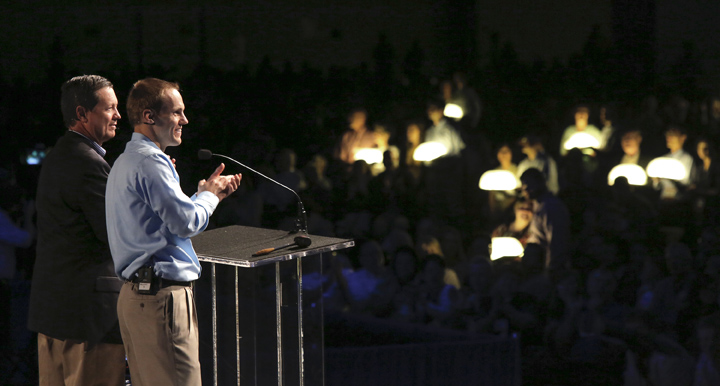
Kevin Ezell, left, president of the North American Mission Board, and David Platt, president of the International Mission Board end a joint Church and Mission Sending Celebration by recognizing missionaries with a standing ovation at the June 17 Southern Baptist Convention annual meeting at the Greater Columbus Convention Center in Columbus, Ohio. Photo by John Swain/NAMB

Kevin Ezell, left, president of the North American Mission Board, and David Platt, president of the International Mission Board end a joint Church and Mission Sending Celebration by recognizing missionaries with a standing ovation at the June 17 Southern Baptist Convention annual meeting at the Greater Columbus Convention Center in Columbus, Ohio. Photo by John Swain/NAMB

Columbus, Ohio | Meredith Flynn

A missionary “Sending Celebration” during the Southern Baptist Convention last week signaled a new, urgent day for SBC missions in North America and around the world. The vastness of lostness, said the leaders of the denomination’s mission boards, requires new thinking about getting missionaries on the field—and supporting them while they’re there.

That could mean sending out missionaries—students, retirees, and professionals— who are financially self-supported. Baptists who traditionally have focused on giving from the pew in order to support missionaries are now being called to go to the nations too.

The celebration in Columbus, Ohio, marked a shift from 20 years ago, when the commissioning might have featured flags of the world and missionaries in brightly colored international dress processing into the auditorium to “We’ve a Story to Tell the Nations.” But in Ohio, photos of the missionaries and families flashed up on large screens in the convention hall, with their home state, sending church, and a brief snapshot of the region where they’ll serve.

Across the room, the missionaries stood as their slides played, illuminated only by book-shaped lights fanned out in front of them.

The low-key, somber service hinted at the desperate spiritual need the missionaries will encounter here and abroad. In the Northeast U.S., said International Mission Board President David Platt, 82% of people don’t know Christ. In the western U.S., it’s 87%, and in Canada, 90%.

Those numbers are small compared to India, where 1 billion people are spiritually lost. Platt and Kevin Ezell, president of the North American Mission Board, focused on the role of the local church during the sending celebration, urging congregations to consider their responsibility to take the gospel to the nations.

Platt also pointed to the possibility of new strategies for supporting missionaries on the field. In 2009, he said during his report prior to the celebration, the IMB had 5,600 missionaries serving around the world. The number is 4,700 now, and headed toward 4,200, due to the Board’s inability to financially support them.

“We are evaluating all of our structures and systems to discern how we can more efficiently and effectively use the resources Southern Baptists have entrusted to us,” he said. But we’ll always be limited, he added, as long as full financially supported missionaries are the only way we think about getting the gospel to the nations.

Throughout the IMB’s history, the Board has sent about 25,000 missionaries to serve around the world. “Which is awesome, but the reality is we need 25,000 now,” Platt said.

After a year in which the IMB operated $21 million in the red, a new plan is needed to send more people to more places and people groups. And everyday Christians play a key role in that plan, Platt said, painting a picture of students and retirees and professionals forming a network of support around missionaries and church planters around the world. Regular people with regular jobs, leveraging those jobs to go overseas.

“What if God has designed the globalization of today’s marketplace to open up opportunities for the spread of his gospel?” Platt asked.

The time is now, he urged during his final challenge to the audience in Columbus. “Not one of us is guaranteed today, much less tomorrow. So, brothers and sisters, let’s make it count. Let’s make our lives and our churches and this convention of churches count.”

IBSA Executive Director Nate Adams (left) interviews former Atlanta Fire Chief Kelvin Cochran at the Southern Baptist Convention in Columbus.

IBSA Executive Director Nate Adams (left) interviews former Atlanta Fire Chief Kelvin Cochran at the 2015 Southern Baptist Convention.

Columbus, Ohio | Lisa Sergent

I’ve been reflecting on the 2015 Southern Baptist Convention, now that it and Columbus, Ohio, are in my rearview mirror.

The city and the Convention were a study in contrasts. While we were there, the city was issuing proclamations welcoming the LGBT community and celebrating the upcoming Gay Pride Week. The Convention featured panel discussions, sermons and press conferences emphasizing biblical marriage.

An article in the Columbus Dispatch newspaper celebrated that Jim Obergefell, the Cincinnati man at the center of the Supreme Court case Obergefell v. Hodges, was in Columbus to lead the gay pride parade the Saturday following the convention. Meanwhile, discussions at the Convention expressed concern that the case, which could cause the legalization of same-sex marriage in all 50 states, will lead to further encroachment on religious freedoms in the U.S.

That concern is very real.

Former Atlanta Fire Chief Kelvin Cochran spoke at the SBC Pastors’ Conference held just prior to the Convention. Cochran was fired from his position for stating on one page of his 160-page book, “Who Told You That You Were Naked?” that homosexuality is sinful.

Barronelle Stutzman, the Washington state florist who was sued for not providing flowers for a same-sex wedding, made an appearance during the Ethics and Religious Liberty Commission’s report. She lost her case and is in danger of losing her home and business. After ERLC President Russell Moore shared her story, she came to the stage for prayer.

As International Mission Board President David Platt noted at the Pastors’ Conference, “There is no question we live in a culture increasingly hostile to Christ. We cannot pick and choose what issues we will preach and which issues we will ignore.”

In his report, Moore said, “For most of this last century Southern Baptists have been comfortable in the culture in their soft cocoon…Some said that the Southern Baptist Zion was below the Mason-Dixon Line. Those days are gone and not a moment too soon; those days are over thankfully.”

Much of the time devoted to discussing issues affecting our SBC churches was made possible by a new Convention schedule and format. Much of the business took place on Tuesday afternoon, which allowed time for the Wednesday afternoon panel discussion on the Supreme Court and same-sex marriage.

One of my favorite parts of the Convention has always been the SBC Pastors’ Conference which precedes it. But this year, with SBC President Ronnie Floyd and others following God’s leading, the Convention itself was a must see and hear. The best was yet to come.

I think the same is true for the Southern Baptists and evangelicals. While I do believe our freedom of speech and right to freely practice our religion are going be infringed upon to an even greater extent, I do know God will honor those who stand firm and follow His Word. For this we shall grow closer to Him and find strength. And that is truly the best to come.

Lisa Sergent is contributing editor of the Illinois Baptist newspaper and director of communications for the Illinois Baptist State Association.

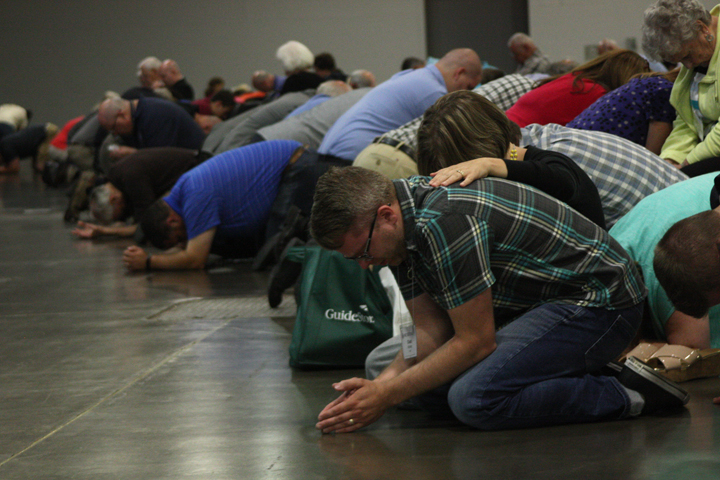
Prayer takes center stage (and all available floor space) as Marvin Parker, pastor of Broadview Missionary Baptist Church in Metro Chicago, and his wife, Inez, join with others in Columbus to pray for racial reconciliation.

Prayer takes center stage (and all available floor space) as Marvin Parker, pastor of Broadview Missionary Baptist Church in Metro Chicago, and his wife, Inez, join with others in Columbus to pray for racial reconciliation.

Columbus, Ohio | For one whole year leading up to the 2015 Southern Baptist Convention, the meeting’s main issue was made crystal clear. It wouldn’t be theological differences or other debates. Not even denominational decline or cultural change.

Prayer.

Extraordinary, unified, visible, repentant, collective prayer.

Ronnie Floyd, elected to his first term as SBC President at last year’s meeting in Baltimore, immediately issued a “Call to Columbus,” rallying Baptists to come to the Midwest to cry out to God for the next great awakening.

On a Tuesday night in Ohio, they did. Nearly 7,000 people praying on their knees, on their faces, in small groups, and in quiet solitude. (More than 8,000 people joined them online.)

“Tonight is a moment that we pray you won’t forget for the rest of your life,” Floyd said at the beginning of the National Call to Prayer. “We hope it’s a moment in this generation.”

In Baltimore last year, an early end to a morning business session resulted in an impromptu prayer gathering. But many messengers had already left the convention hall. That wasn’t the case in Columbus, where Baptists prayed together for two hours on topics including racial reconciliation, spiritual awakening, and the persecuted church.

“Awesome and humbling service and God’s presence was obvious!” former Illinois director of missions J. E. Hail posted on Facebook after the Call to Prayer. “May God answer our prayers for revival and awakening!” – even if we’ve never actually seen it before.

Las Vegas pastor Vance Pittman’s voice broke when he said he’d heard and read about revivals of the past. “But I have never experienced that kind of an awakening where I live,” he said from the platform.

“And I don’t know where you are tonight, but I am hungry to not just read about it, and not just hear about it, but to experience a fresh outpouring of the Holy Spirit of God on our nation like we have never witnessed before.”

Don’t wish for Mayberry
Throughout the 2015 meeting, leaders outlined one big reason to pray: our swiftly changing culture. Similar to the last few Conventions, the Columbus gathering included several between-session presentations on how churches can meet sweeping social change with love from a firm, biblical foundation.

Perhaps because churches are facing ever more specific issues related to sexuality and gender, the meetings in Columbus offered practical advice on how to deal with a same-sex couple that comes to faith in Christ, or a transgender teen in the youth group.

Cultural change shouldn’t cause churches to panic, leaders said again and again. Instead, Christians should cling even more closely to the saving power of the gospel, which pulled them out of their own sin.

“We can’t be, as our mission field changes around us, pining for some day in the past when everything was easier,” said Russell Moore, president of the Ethics and Religious Liberty Commission, during his message at the Pastors’ Conference. “Mayberry leads to hell just like Gomorrah does.

“The message that we have is not, ‘Let’s get back to when everybody was better behaved.’ The message that we have is, ‘You must be born again.’”

The next challenge
SBC Executive Committee President Frank Page focused on another cause to pray in his report: fewer people coming to Christ through the ministries of SBC churches.

“We need to increase our evangelism like we never have before,” Page said. “Oh God, help us to be soul winners…”
Recent numbers from the Annual Church Profile (see page 5) paint a bleak picture: SBC churches lost more than 200,000 members last year, and baptisms fell below the level they were in 1948, Page reported.

“We’ve adopted society’s lie that people won’t talk to you about Christ anymore,” he said.

To jump start evangelism, Page introduced “Great Commission Advance,” a campaign to begin this year and run through 2025—the 100th anniversary of the Cooperative Program, Southern Baptists’ chief method of supporting missions. Baptist Press reported the plan includes a 1% challenge in baptisms and in stewardship, similar to the challenge Page issued to churches in 2013 to increase giving by 1% of their undesignated offerings.

One big, redeemed family
Prior to this year’s meeting, many figured Columbus to be a hard sell for Baptists in the South and other regions. Would messengers really turn out for a Convention in a Midwestern city not known for its theme parks and family attractions? The final report on registered messengers Wednesday afternoon was 5,407, slightly above last year’s total in Baltimore.

While the focus on prayer seemed integrated into every part of the meeting, the business sessions were relatively quiet:

• All five SBC officers were elected unopposed: Ronnie Floyd, pastor of Cross Church in northwest Arkansas, president; Steve Dighton, senior pastoral advisor at Lenexa Baptist Church in Lenexa, Kansas, first vice president; Chad Keck, pastor of First Baptist Church in Kettering, Ohio; second vice president; John Yeats, executive director of the Missouri Baptist Convention, recording secretary; and Jim Wells, strategic partners team leader for the Missouri Baptist Convention, registration secretary.

• Nine resolutions were affirmed, including measures on marriage, sexual purity, and religious persecution (see page 10).

• An amendment to the SBC’s Constitution regarding qualifications for churches sending messengers to the annual meeting was approved on a required second vote. Cooperating churches may now automatically send two messengers to the Convention. Article III of the Constitution, written in 1888, previously allowed for one messenger per church, with additional messengers allowed for every $250 contributed to Convention causes.

Under the new guidelines, the amount for additional messengers is adjusted for inflation to $6,000. The maximum number of messengers per church also increased from 10 to 12, Baptist Press reported.

One particular order of business related directly to events of the past year, and a key part of the Call to Prayer Tuesday evening. Messenger Alan Cross from Alabama asked that the Executive Committee be commended for its report on racial diversity in the SBC since 1995 (the year the denomination apologized for past racism). Cross had made a motion the previous year asking for information on ethnic representation in SBC leadership. This year, the Executive Committee said much progress has been made but “more can and needs to be done.” Messengers approved Cross’ commendation.

During the National Call to Prayer, Floyd called on Baptists to repent of racism and prejudice, bringing to the stage leaders of different ethnicities to pray for racial reconciliation.

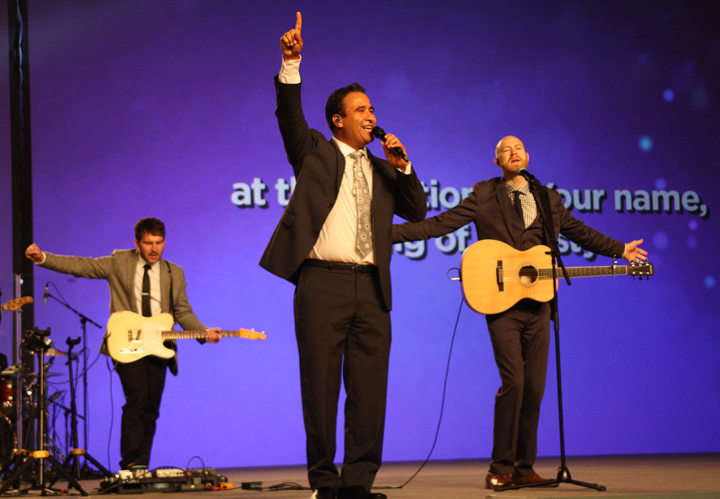
Around the convention hall, people gathered in small groups, standing shoulder-to-shoulder or hand-in-hand as they prayed for unity. The leaders then worshiped together on the stage, as the band led those in the packed auditorium to sing, “I am redeemed. You set me free.”

“Tonight in Jesus’ name, we come together as one family,” Floyd said, “and we do it because of the blood of the Lamb of God who died for the sins of the world.”

Read more of the Illinois Baptist team’s coverage from Columbus in our June 29 issue, arriving online this week.

Prayer_kneeling_blogColumbus | Southern Baptists prayed together for two hours Tuesday evening, calling on God to bring spiritual awakening and revival in churches, communities, the United States, and the world. They started with personal repentance, kneeling across the convention center as leaders from around the country led in prayers of forgiveness for prayerlessness, lack of evangelism, division, abortion, sexual depravity, negligence of “the least of these,” and more.

Pastors of different ethnicities led in prayer for racial reconciliation, and people gathered in small groups, standing shoulder-to-shoulder or hand-in-hand as they prayed for true unity. The church leaders then worshiped together on the stage, as the band led those in the packed auditorium to sing, “I am redeemed. You set me free.”

“…Tonight in Jesus’ name, we come together as one family, and we do it because of the blood of the Lamb of God who died for the sins of the world,” said SBC President Ronnie Floyd.

The evening turned toward revival, with more church leaders praying brief prayers for pastors and their wives, students, families, women, men, churches, and Southern Baptist leaders and workers.

Las Vegas pastor Vance Pittman said he had heard about revival, and read about it too. “But I have never experienced that kind of an awakening where I live,” he said, his voice breaking. “And I don’t know where you are tonight, but I am hungry to not just read about it, and not just hear about it, but to experience a fresh outpouring of the Holy Spirit of God on our nation like we have never witnessed before.”

After they prayed for spiritual awakening, Floyd led the congregation in prayer for the persecuted church. As the worship team and choir started singing, the crowd stood, many lifting their hands.

“Thou, O Lord, are a shield for me. My glory and the lifter of my head.”

Floyd_gavel

Update: 4,870 messengers are now registered at the SBC Annual Meeting in Columbus.

Columbus | Southern Baptist Convention President Ronnie Floyd gavelled in the 2015 Annual Meeting this morning, starting a day in which messengers will complete much of the business scheduled for this week’s meeting. This morning: a 50th anniversary tribute to veterans of the Vietnam War, Floyd’s president’s message, and reports from the SBC’s six seminaries.

Afternoon business includes election of officers, committee reports, introduction of new motions, and the report of the SBC Executive Committee. As of Tuesday morning, 4,482 messengers are registered here in Columbus.

Julia_Arriola

Julio Arriola (center) is the first Mexican-American to serve in the role of Convention music director, Ronnie Floyd said in introducing him this morning. Arriola is global worship pastor at Cross Church in Springdale, Arkansas.

Tuesday culminates with tonight’s Call to Prayer, streamed live on sbcannualmeeting.net and broadcast this evening on Daystar Television Network. Check back here for updates throughout the day!Choir_SBC