Archives For November 30, 1999

face-the-nation-moore

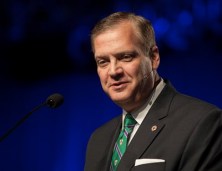
WELCOME TO MARS HILL – ERLC President Russell Moore joined a panel discussion on Face the Nation.

Russell Moore has the hardest job in the Southern Baptist Convention. He is required to speak on behalf of a people who take great pride in speaking for themselves, even (or especially) with the Almighty. It’s in our theology (priesthood of all believers). It’s in our polity (autonomy of the local congregation). It’s in our DNA (we’re preachers).

So when someone dares to speak for all of us, and says something we might disagree with, we bristle.

Some are bristling over Moore’s anti-Trump stance during the election. And, as the Wall Street Journal and NPR reported a month ago, some churches are considering withdrawing support for the Southern Baptist agency Moore heads, the Ethics and Religious Liberty Commission. Moore apologized for any ill will he caused, but has that settled the conflict?

Moore is two years into his presidency, succeeding Richard Land who served 25 years in the role. Land was brusque, but his views matched the vast majority of Southern Baptists’ on issues of religious liberty and sanctity of life, and we mostly agreed with him when he spoke for us.

But times have changed. As evidenced by Moore, a new generation is rising to SBC leadership, and they focus on different issues than their predecessors did. Moore has spoken to the church’s handling of refugees and the theology of adoption and gender issues—and politics.

Several questions arise from the murmurings about the ERLC:

Is the ERLC really out of touch with mainstream Southern Baptist opinion? Or are we finding, especially in this election cycle, that the world is more complex and even once-monolithic Southern Baptists have varying opinions on some issues—especially political issues?

Is this a squall that will subside as Moore finds a more modulated approach to his “spokesman-ship”? Or is there really a storm brewing?

Will older leaders assume the statesman role, and let younger leaders lead? Or, is there truly a divide among Southern Baptists among generational, geographical, educational, economic, or political divides that will not be bridged.

Time will tell, we suppose. But in the meantime—

We need the ERLC, and it shouldn’t be muzzled. The ERLC should still represent Southern Baptists in the public discourse on religious liberty, the church, and sanctity of life. True, some ERLC staff posted political opinions on their personal blogs and Twitter feeds during the election cycle. Their views might have been too easily mistaken for Southern Baptists’ as a whole. Only Moore should address the SBC’s core issues in the blogosphere or Twitterverse.

Stop the habitual tweeting. The tweet may be the lingua franca, but the 140-character debate hasn’t served the ERLC well lately. At times in 2016, we wondered if the ERLC really needed to express opinions on so many topics. Those who speak for Southern Baptists should not be reactionary, but instead offer considered opinions and measured words.

Finally, we should acknowledge generational differences and allow the hand-off to proceed. This is no longer the Land era. Younger Baptists may have a different perspective on some things, but, so long as their views are biblical, we must let them speak to their times—and ours.

-Eric Reed

Read more about this story, “Baptists debate politics, religious liberty, missions funding”

State Baptist paper editors met for their annual meeting Feb. 14-16 in Ontario, Calif. and heard controversial issues addressed by Southern Baptist Convention President Steve Gaines and International Mission Board President David Platt. As the meeting was taking place Prestonwood Baptist Church, pastored by former SBC President Jack Graham, announced its decision to escrow gifts previously forwarded to support the Cooperative Program while it discusses concerns about the direction of the Convention.

steve-gaines-with-editors

Steve Gaines

Gaines on Trump, ERLC, IMB
In a question-and-answer session Gaines, pastor of the Memphis-area Bellevue Baptist Church, told editors he voted for Trump as president because of his pro-life stance.

Referencing Trump’s campaign slogan, Gaines noted that the only way to really make America great again is by winning people to Jesus Christ and mentoring them and changing society through the people they influence.

Discussing the fallout following the issuance of Trump’s executive order on immigration, Gaines said, “At some point we need to understand that God is not an American and is not Republican or Democrat. Christians need to remember that we have dual citizenship, with our allegiance first to the Kingdom of God.

“It’s important to remember that to some degree we have more in common with a believer in a lost country than an unbeliever in our own country,” Gaines said.

“We certainly need to vet people coming into our nation to be sure we are safe from those who would do us harm. That’s why I have locks on my doors at night to keep my family safe.

Concerning controversy involving Ethics & Religious Liberty Commission President Russell Moore’s political comments during the election, Gaines said he hopes there would be less divisive talk coming out of the ERLC.

“I hope the kind of talk we have been hearing is not the direction in which we are going. I hope Russell will remain in his position and that we have reconciliation with a lot of people,” he said.

Regarding the amicus brief involving a New Jersey mosque which has embroiled both the ERLC and the International Mission Board in controversy, Gaines said he believes IMB President David Platt would possibly think twice before the mission board enters such a case.

“You may not agree with his theology but he has no arrogance whatsoever in his heart. I really don’t think he would have signed the document [favoring government permission for the construction of the mosque] if he knew the ramifications.

Platt’s apology
“I apologize to Southern Baptists for how distracting and divisive this has been,” Platt said when he met later with Baptist state paper editors.

“I can say with full confidence that in the days ahead, IMB will have a process in place to keep us focused on our primary mission: partnering with churches to empower limitless missionary teams for evangelizing, discipling, planting and multiplying healthy churches, and training leaders among unreached peoples and places for the glory of God.”

The apologies occurred amid ongoing discussion of an amicus curiae — Latin for “friend of the court” — brief joined by the IMB supporting the Islamic Society of Basking Ridge, N.J., (ISBR) in its religious discrimination lawsuit against a local planning board. The Ethics & Religious Liberty Commission also joined the brief.

In December, U.S. district Judge Michael Shipp ruled the Planning Board of Bernards Township, N.J., violated federal law when it required the ISBR to include more than twice as much parking in its site plan for a proposed mosque as it required for local Christian and Jewish houses of worship.

In his ruling, Shipp acknowledged the amicus brief, stating it “supports” the ISBR’s arguments that unlawful religious discrimination occurred.

Platt added, “I am grieved how the amicus brief in the recent mosque case has been so divisive and distracting. And my purpose in bringing it up here is not to debate religious liberty, but to simply say that I really do want IMB to be focused on [its] mission statement.”

Tennessee pastor Dean Haun resigned as an IMB trustee in November because he said joining the brief did not comport with IMB’s mission and could be viewed as an improper alliance with followers of a religion that denies the Gospel.

Gaines on CP, state conventions, revival
Concerning the Cooperative Program, Gaines said there is no biblical imperative for churches to tithe 10% of their receipts to CP, regardless of how good the SBC missions support program is. Churches today have a number of their own ministries for reaching their communities for Christ.

While Bellevue Baptist doesn’t give 10% through CP, Gaines his wife Donna are motivated to give a tithe because of the good work they see going on in their community as well as around the world.

Gaines urged, “State conventions need to be proactive and reach out, embrace them [young pastors and leaders], cultivate them. You know, it’s far easier to talk about someone than it is to talk to them. When you talk to them you get on their level, you empathize with them. And that’s what it’s going to take.”

Looking to the future of the nation, Gaines spoke about his desire to see revival once again sweep America. “The last time it occurred was the Jesus Movement of the early to mid-1970s. That’s when we as a denomination reported the largest number of baptisms in our history. Many missionaries and pastors and church staff members came out of that movement and changed America. It can happen again, and that is my prayer.”

Prestonwood escrows CP
Prestonwood Baptist Church’s decision to escrow gifts previously forwarded to support Southern Baptist cooperative missions and ministries was announced Feb. 16.

Mike Buster, executive pastor for the Plano, Texas, church, provided a statement to the Baptist Message explaining that the action had been taken because of “various significant positions taken by the leadership of the Ethics and Religious Liberty Commission that do not reflect the beliefs and values of many in the Southern Baptist Convention” and that it is a temporary move.

The decision impacts $1 million the 41,000-member congregation would otherwise contribute through the Cooperative Program.

But Graham subsequently explained to the Baptist Message that his congregation’s concerns are broader than just one personality.

Instead, he described an “uneasiness” among church leaders about the “disconnect between some of our denominational leaders and our churches.”

“I’m not angry at the SBC, and neither are our people,” Graham said, “and I’m not working to start a movement to fire anyone.

“This is a difficult decision for me, personally,” he added. “I love Southern Baptists, and still want to be a cooperating partner as we have been for many years.

“We’re just concerned about the direction of the Southern Baptist Convention, and feel the need to make some changes in the way we give.”

Moore told Baptist Press in a statement, “I love and respect Jack Graham and Prestonwood Baptist Church. This is a faithful church with gifted leaders and a long history of vibrant ministry working and witnessing for Christ.”

– Reporting by Baptist Press, Georgia Christian Index, and Louisiana Baptist Message

wp-adMore than 100 evangelical pastors and ministry leaders signed an open letter expressing their opposition to President Donald Trump’s executive order that restricts immigration from seven Muslim countries, suspends entrance of all refugees for 120 days, and prevents all Syrian refugees from entering the United States indefinitely. The open letter appeared as a full-page ad in the Feb. 7 issue of the Washington Post.

Two of the signatories — former Southern Baptist Convention President Bryant Wright and Southeastern Baptist Theological Seminary President Daniel Akin — told Baptist Press their signatures reflect a specific policy disagreement and not a blanket repudiation of the president’s approach to immigration.

The letter addressed to President Trump and Vice President Mike Pence, stated, “As Christian pastors and leaders, we are deeply concerned by the recently announced moratorium on refugee resettlement. Our care for the oppressed and suffering is rooted in the call of Jesus to ‘love our neighbor as we love ourselves.’ In the story of the Good Samaritan (Luke 10:25-37), Jesus makes it clear that our ‘neighbor’ includes the stranger and anyone fleeing persecution and violence, regardless of their faith or country.”

The order, suspended by a lower court, was stayed Feb. 9 by a three-judge panel of the 9th Circuit Court of Appeals. The president has vowed to continue to the fight which is expected to be taken to the Supreme Court.

The Christian relief organization, World Vision, coordinated the letter. According to a press release from the organization, an additional “500 evangelical pastors and ministry leaders representing every state in the nation” signed the letter but their names did not appear in the ad. The release also states, “World Relief is one of nine agencies nationally authorized by the U.S. State Department to resettle refugees.”

Seven other Southern Baptists, including Ed Stetzer, executive director of the Billy Graham Center for Evangelism at Wheaton College in Wheaton, Ill., were signatories. Stetzer first voiced his opposition to the order last month in an op-ed published by the Post Jan. 26.  The Ethics and Religious Liberty Commission’s Russell Moore was not a signatory to the letter, but wrote his own letter to the president expressing his concern, which appeared in Jan. 30 issue of the Post.

Other well-known signatories include Max Lucado, author and minister of preaching at Oak Hills Church in San Antonio, TX; Tim Keller, pastor at Redeemer Presbyterian Church in New York City; Eugene Cho, pastor at Quest Church in Seattle; Derwin Gray, lead pastor at Transformation Church, SC; and Bill Hybels, senior pastor at Willow Creek Community Church in South Barrington, IL.

Read the full text of the letter.

– Lisa Sergent with additional reporting by Baptist Press

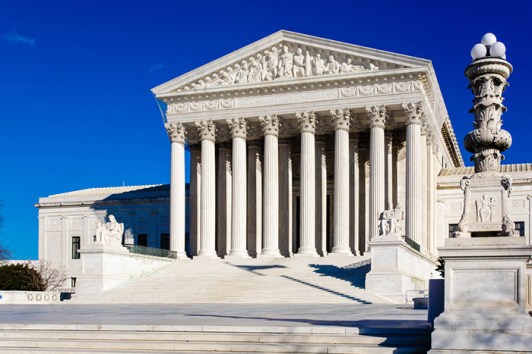
supreme-court-buildingImmediately following the election, Pew Research found 81% of white evangelicals said they for voted for Donald Trump. Many have said they did so because, with one vacancy on the U.S. Supreme Court and the potential for others, they believed Trump would choose conservative nominees who would reflect their values. In naming Neil Gorsuch to replace the late Justice Antonin Scalia, President Trump did exactly that.

Following the Gorsuch announcement, Southern Baptist culture watcher Ed Stetzer recalled that Pew poll and wrote on his blog at Christianity Today, “Evangelical Trump voters made a choice and many of them saw today, with the nomination of Neil Gorsuch, that their choice was validated. They voted for the sanctity of life and for religious liberty.” Stetzer is the former head LifeWay Research who now leads the Billy Graham Center at Wheaton College.

Gorsuch, a 49-year-old Episcopalian from Denver, Colorado, appointed by President George W. Bush to the U.S. Court of Appeals for the Tenth Circuit in 2006. His mother, Anne Gorsuch Burford, was appointed by President Ronald Reagan as the first woman to head the Environmental Protection Agency.

Gorsuch is a proponent of originalism. According to the Washington Post court reporter, Robert Barnes, this means “judges should attempt to interpret the words of the Constitution as they were understood at the time they were written — and a textualist who considers only the words of the law being reviewed, not legislators’ intent or the consequences of the decision.”

In a Jan. 27 interview with CBN, Trump said, “I think evangelicals, Christians will love my pick. And will be represented very fairly.” Gorsuch was the judge who had sided with Christian employers and religious organizations in the Burwell vs. Hobby Lobby and the Little Sisters of the Poor Supreme Court cases. Suits were filed because the Affordable Care Act had imposed rules requiring them to violate their religious beliefs and provide abortion causing contraceptives to employees.

After the announcement, Southern Seminary President Albert Mohler expressed thanks for Trump and supporting the nomination: “Judge Gorsuch is committed to textualism and will uphold the Constitution of the United States. His academic credentials are impeccable and his experience as a clerk for two Supreme Court justices and his own distinguished tenure as an appeals court judge qualify him for this nomination without question.”

Russell Moore, President of the SBC’S Ethics and Religious Liberty Commission (ERLC) released a similar statement, calling Gorsuch, “an exceptional choice for Supreme Court justice. He is a brilliant and articulate defender of Constitutional originalism in the mold of the man he will replace: Justice Antonin Scalia.…I heartily support President Trump’s excellent appointment.”

The Gorsuch nomination follows several others of interest to evangelicals. Former SBC president Ronnie Floyd, who attended the National Prayer Breakfast in Washington Feb. 2., pointed out other Trump nominees whom he called “followers of Christ”: Education Secretary nominee Betsy Devos, Sonny Perdue for agriculture secretary, Rick Perry for Energy Department head, Tom Price to head Health and Human Services, Scott Pruitt to lead the Environmental Protection Agency, and Jeff Sessions as Attorney General.

–with info from Pew Research, ChristianityToday.com, and the Washington Post

Editor’s note: This post has been updated to include a blog post/podcast from Albert Mohler.

Four  prominent Southern Baptists are taking public—and differing—positions on President Trump’s executive order that restricts immigration from seven Muslim countries, suspends entrance of all refugees for 120 days, and prevents all Syrian refugees from entering the United States indefinitely.  Commentary from both Russell Moore and Ed Stetzer was published in the Washington Post, while Ronnie Floyd and Albert Mohler are speaking out on their blogs.

61222russell_moore

Russell Moore

Russell Moore, the president of the SBC’s Ethics and Religious Liberty Commission, has begun commenting on actions by the new administration, after a relatively quiet December. He wrote a letter to President Trump, Vice President Pence, Speaker Ryan, and Majority Leader McConnell responding to the president’s order on refugees that the Post has exclusively on its opinion page.  In the Jan. 30 letter, Moore references the Resolution on Refugee Ministry passed by messengers to the 2016 Southern Baptist Convention in St. Louis. “’Scripture calls for and expects God’s people to minister to the sojourner.’ Southern Baptist churches throughout the United States lead the way in carrying out this calling,” Moore wrote.

Moore also expressed concern for the safety of Southern Baptists who, “are among the many Americans living in majority-Muslim countries to carry out the biblical call to love their neighbors.” He also called on the president to reaffirm his administration’s “commitment to religious freedom” and “adjust the Executive Order as necessary.”

Ed_Stetzer_PC

Ed Stetzer

Ed Stetzer, the former Executive Director of LifeWay Research who now serves as the Billy Graham Distinguished Chair at Wheaton College in Wheaton, IL, had his own op-ed published by the Post Jan. 26, “Evangelicals, we cannot let alternative facts drive U.S. refugee policy.” Stetzer agreed with the president on a need for a greater focus on national security however, he said, “I’m concerned that the president is operating on generated fear rather than facts. We need a better way.”

Stetzer’s better way is to “reject false facts,” “recapture a vision of what it means that all are made in God’s image,” and to “fight for those without a voice.”

Ronnie_Floyd_press

Ronnie Floyd

Ronnie Floyd, pastor of Cross Church and immediate past president of the Southern Baptist Convention, published, “Navigating through the refugee issue from a biblical perspective,” to his blog, RonnieFloyd.com. In his post Floyd declared, “If we do not look at it biblically, we enter into dialogue without authority and clarity.” He advised: Love the refugee, fix the immigration system, and pray diligently.

He too referenced the 2016 Resolution on Refugee Ministry, “…one line in this resolution that realized the biblical responsibility of government: ‘RESOLVED, That we call on the governing authorities to implement the strictest security measures possible in the refugee screening and selection process, guarding against anyone intent on doing harm…’”

Floyd, who served on Trump’s religious advisory board during the election, wrote, “This line was included in the resolution because as followers of Christ, we must understand the tension that occurs because our government has a responsibility it is mandated to fulfill.”

He concluded by asking Christians to stress balance in their reactions to what is taking place. “Believing and operating with biblical balance, we know the Church must realize biblically that the government’s duty is to protect its citizens. Simultaneously, we must affirm the responsibility of the Church to minister to refugees who are brought inside the borders of America.”

albert-mohler2

Albert Moher

Albert Mohler, president of Southern Seminary, devoted the January 30 edition of The Briefing to the controversy. He sought to clarify misconceptions many have concerning the executive order by pointing out the seven countries on the identified in the order are known terrorist threats. He noted several other countries have much larger Muslim populations and do not appear on the list.

“The entire system of laws in this country concerning our borders and entry into the country is a part of the government’s responsibility to keep the nation secure,” Mohler said.

Mohler compared previous immigrants who came not just to live in America but to be American, to the teachings of classical Islam. “It is not just what is often called radical Islam, it is classical Islam, it is the Islam believed by the vast majority of Muslims around the world that requires that every Muslim seek to bring every nation under the law of the Quran, under Sharia law.”

He cautioned, “The significant issue to observe here is that even though some who are coming in terms of these waves of Muslim immigration intend to join these communities and these cultures, the reality is that the majority of these immigrants and Muslims have not been assimilated into the cultures. To put it in terms of the American experiment, we have to be very careful that we do not reshape America by creating a population that does not intend, even though they are resident in this country, to be a part of the American project.” He pointed to the situation in Europe as an example of this reshaping.

61222word_cloud

We live by God’s surprises,” said Helmut Thielicke. The German pastor was speaking in times more trying than ours, but in the darkest days of WW2, he could see the hand of God at work—and was amazed by it.

Dare we say the same of the year just past?

We were surprised by events we witnessed. In their unfolding, we sought the reassurance of God’s sovereignty. Here are some noteworthy moments for Baptists in Illinois—some heavy, some light—and what they may say about the year before us.

– The Editors

Standing on the promises

61222trump_pence

Donald Trump (left), Mike Pence (right)

A third of Americans (34%) think Donald Trump will be a “good” or “very good” president, while 23% say “average” and 36% expect a “poor” performance. The survey by CBS News was conducted the second week of December, after Trump began announcing cabinet appointments.

The ratings fall along party lines: 70% of Republicans expect a good presidency, while 60% of Democrats predict poor results. That means evangelicals, who mostly supported Trump, have high expectations—but for what?

Religion reporter Sarah Pulliam Bailey, on her Washington Post blog, points to a half-dozen areas where Trump’s campaign promises intersect with evangelical interests. Some are the expected areas involving religious liberty. The nomination of Supreme Court justices who will uphold pro-life legislation topped the list. Trump also said he would defund Planned Parenthood, sign a bill that forbids abortions after 20 weeks, and make the Hyde Amendment permanent. It prohibits use of federal funds for most abortions. And Trump has expressed support for a group of nuns who have battled provisions in the Obama Affordable Care Act that mandate contraception as part of an organization’s health care plan. Southern Baptists have supported their lawsuit.

Trump promised to repeal the 1954 Johnson Amendment to the U.S. tax code, which prevents pastors from endorsing or opposing political candidates, or else lose their church’s tax exempt status. And he has taken a position on education funding that allows families to choose private, charter, or home schooling, with a promise to set aside $20 billion for vouchers in his first budget.

The U.S. will be a “true friend to Israel,” Trump said, a position common among evangelicals favoring Israeli interests over others in the Middle East and urging movement of the U.S. embassy to Jerusalem.

Many Southern Baptists would support these actions, if they came to pass. For SBC leaders who have been in contact with the future administration, the Trump presidency represents a new way of thinking about the White House. Since Ronald Reagan’s presidency, Southern Baptists in general have viewed Republican administrations as allies in the causes of pro-life, families and marriage, and religious liberty. They have, at the least, been sympathetic to evangelical causes, and even co-laborers in the faith. (Remember the stories of George and Laura Bush singing hymns at the White House piano with Attorney General John Ashcroft and Secretary of State Condoleezza Rice on the keyboard?) Democratic presidents, on the other hand, have often been at odds with evangelicals’ causes, even if they claimed to be Baptists, as in the case of Bill Clinton.

Donald Trump represents a third way of relating to the White House: a president who made promises to evangelicals and drew their support at the polls, but who shares no apparent faith commitment with the born-again community. (There are no stories of Trump walking on the beach with Billy Graham and committing his life to Christ. And the tycoon-turned-president has said he sees no need to ask for forgiveness for his sins.)

The evangelicals closest to Trump, including incoming vice president Mike Pence, take on the role of Joseph in Egypt—keeping the interests of God’s people before pharaoh, hoping to keep his ear and hold him to his promises.

High hopes for high court

Some voters who cast their ballots for Donald Trump said they did so because of concern for the U.S. Supreme Court. The February death of Justice Antonin Scalia left a vacancy, and three of the Justices—Ruth Bader Ginsburg, 83, Anthony M. Kennedy, 80, Stephen G. Breyer, 78—may be looking toward retirement in the next few years.

Focus on the Family founder Dr. James Dobson supported Trump. He told Christianity Today, “The next president will nominate perhaps three or more justices whose judicial philosophy will shape our country for generations to come.”

A LifeWay Research survey found 23% of evangelical pastors were most concerned about the candidates’ likely Supreme Court nominees. And 36% of Trump-supporting pastors cited the high court as a major factor in their choice.

Trump released a list of his potential Supreme Court nominees—20 judges and one senator, Mike Lee of Utah. Each met two criteria: they are pro-life and support the Second Amendment. The list was vetted and reviewed by the Federalist Society, which is comprised of conservative and libertarian lawyers, and the conservative Heritage Foundation.

Commentator Denny Burk told Baptist Press the list “does not alleviate the concerns that many of us have about his candidacy.” Because Trump didn’t promise to pick someone from the list, Burk said, “The list means nothing….And we are again being asked to trust the judgment of a man who changes his positions daily…” Burk is professor of biblical studies at Boyce College, the undergraduate school of Southern Seminary.

Reince Priebus, future White House Chief of Staff, told radio host Hugh Hewitt on December 14 that the President-Elect will likely name Scalia’s replacement near the January 20 inauguration.

Priebus said Trump may choose a younger nominee. “Well, I tend to believe younger is better, too, but I can tell you what the president (elect) believes is that the most qualified, best person to serve on the Supreme Court is what’s most important….Certainly longevity’s a factor, but it’s just a factor. Competence and having the best possible person nominated is what’s most important.”

Tension between leaders, pews

61222russell_moore

Russell Moore

The 2016 presidential campaign and election exposed deeper divides than many knew existed in the U.S.­­—and within evangelicalism. White evangelical voters overwhelmingly supported Trump, even while some of their leaders voiced their opposition.

As Wheaton College’s Ed Stetzer said after the election, “The evangelical leadership is out of touch with the evangelical rank-and-file,” during a Christianity Today podcast.
Tension over the election appears to be at least part of a rift between some Baptists and the SBC’s public policy entity, the Ethics and Religious Liberty Commission.

In November, Louisiana Baptists voted to ask their convention’s executive board to study recent actions of the ERLC.

Will Hall, editor of the state’s Baptist Message newspaper, noted that the motion did not elaborate on the issues of concern, “but ERLC President Russell Moore has come under fire nationally from Southern Baptist laymen and leaders for a number of controversial actions and statements, including…his aggressive attacks on Southern Baptists who supported Donald Trump.”

Moore, who has led the ERLC since 2013, wrote an opinion piece for The New York Times in May in which he said the election “has cast light on the darkness of pent-up nativism and bigotry all over the country.” His article caught the attention of Trump, who tweeted that Moore was a “truly a terrible representative of evangelicals.”

The op-ed also sparked a fervent debate on the SBC Voices blog, where Baptists posted a variety of opinions on Moore, from “he did what we pay him to do,” to “it is difficult for me to imagine Russell Moore functioning as ERLC President if Trump wins in November.”

The questions about Moore and the ERLC are just one example of the impact the 2016 election could have on religious organizations and denominations, and on the nature of Christian leadership. The tension leaders face, Ed Stetzer said, is between recognizing the responsibility to speak prophetically, and realizing they represent a constituency who largely feel very differently than they do.

For Christian leaders, their influence in the next four years may well depend on how well they strike the balance.

The BriefingMuhammad Ali heard Gospel from Graham, Rogers
Billy Graham, Adrian Rogers, and Dan Dumas are among the Christians who have told of Gospel conversations with the late  boxing champion Muhammad Ali. Concern over Ali’s religious beliefs once led his father to take the boxer to visit evangelist Billy Graham. Rogers, a former Southern Baptist Convention president, told in at least three sermons between 1986 and 1994 of sharing the Gospel with Ali.

Moore: Trump ‘lost’ soul’ who must repent
Southern Baptist leader Russell Moore has not been shy about mixing it up with Donald Trump, and now Moore is at it again, telling an interviewer that the presumptive Republican presidential nominee is a “lost person” who needs to find Jesus. Moore has for months blasted what he sees as Trump’s boorish behavior and character flaws.

How the transgender directive could affect Christian education
In response to President Barack Obama’s order that public schools allow students to use the restrooms and changing facilities that correspond to their gender identities, Christian Schools International (CSI) and Association of Christian Schools international (ACSI) issued gender policy guidelines to their members. The transgender directive will most immediately affect Christian schools participating in state sports competitions as public schools adopt new transgender policies or other policies related to LGBT students.

Baylor story shows how religious schools struggle with sex assault
Reports that Baylor University fired Ken Starr due to his handling of a sex assault scandal rocketed around political circles, but the allegations were equally big for a different reason: Baylor is the world’s largest Baptist university. The reports about Starr were explosive among many evangelicals because they tap into a couple of the most basic contemporary debates at religious schools: What is the impact of the honor codes many religious schools have around sexual behavior? Is there a conflict between being a religious school and trying to be a major athletic powerhouse?

Evangelicals feel alienated, anxious
Religious conservatives could once count on their neighbors to at least share their view of marriage. Those days are gone. Now, many evangelicals say liberals want to seal their cultural victory by silencing the church.  The Associated Press reports evangelicals see evidence of the threat in every new uproar over someone asserting a right to refuse recognition of same-sex marriages — whether it be a baker, a government clerk, or the leaders of religious charities, and schools.

Sources: Baptist Press, Religion News, WORLD Magazine, Washington Post,  Napa Valley Register

And what the trends mean for your church

An Illinois Baptist team report

"Imagine if you could spend 10 focused minutes each Sunday morning in extraordinary prayer on two major needs locally, in your church, in America, or across the world.” SBC President Ronnie Floyd’s “Call to Prayer” that began at the Annual Meeting in Baltimore now turns to Sunday mornings, starting with one worship service in January.

SBC President Ronnie Floyd’s “Call to Prayer” that began at the Annual Meeting in Baltimore now turns to Sunday mornings, starting with one worship service in January.

1. Churches respond to “Call to Prayer”
“It is past time for us to prioritize prayer personally and in the church,” SBC President Ronnie Floyd wrote on his blog in early December. “For far too long, we have seen what we can do; it is time for us to see what God can do. This can only happen when we pray.”

Floyd’s continued call to prayer—leading to the June 2015 SBC Annual Meeting in Columbus, Ohio—began about two years ago with a series of meetings for pastors and church leaders. Floyd began quoting famed Puritan preacher Jonathan Edwards who called believers to “extraordinary prayer” for revival in America.

“God’s people will be given a spirit of prayer,” Edwards wrote in 1746, “inspiring them to come together and pray in an extraordinary manner, that He would help his Church, show mercy to mankind in general, pour out his Spirit, revive His work, and advance His kingdom in the world as He promised.”

Today’s growing urgency in prayer coincided with planning for the 2014 IBSA Annual Meeting in November. “We will either hunger for God’s righteousness out of desperation or…out of devastation,” IBSA President Odis Weaver told messengers. The November meeting peaked in a Concert of Prayer for Spiritual Awakening in Illinois and across the U.S.

“I believe we need to cry out to God for spiritual awakening, and for revival in our churches,” said IBSA Executive Director Nate Adams. He led more than 400 pastors and church leaders through a prayer cycle lamenting the lost condition of people in Illinois, repenting of apathy and ineffectiveness, interceding for spiritual awakening, and commiting to pursuit of revival in our churches.

Afterward, many pastors said they would lead similar prayer events when they returned home.

Now Floyd is asking churches to dedicate an entire Sunday morning service to prayer in January: “Just imagine if 100 churches, 500 churches, or several thousand Southern Baptist churches would turn a Sunday morning into insuring that Jesus’ House would be a genuine house of prayer for all the nations.
Just imagine what could happen if, from this point forward, you could spend 10 focused minutes each Sunday morning in extraordinary prayer on two major needs locally, in your church, in America, or across the world.”

Jonathan Edwards imagined the outcome. He called it the “revival of religion.” We would call it “advancement of the Gospel”—the salvation of lost souls, renewal of our churches, and restoration of moral sensibility to the nation.

In your church: SBC churches will likely give prayer a higher profile in 2015, but what are we praying for? How will we sustain prayer in our congregations as more than a once-in-a-while emphasis? Consider a Concert of Prayer in January. As Floyd wrote, “If we do not plan to pray, we will not pray!

2. Evangelicals cope with minority status
Say goodbye to Mayberry. The culture is shifting. What was once called good is now called evil, and vice versa, just as Isaiah said of his own times. The majority opinion in the U.S. approves of same-sex marriage, and many other sexual matters—once outside the norm—are being accepted by society at large. But, while the morals and mores are changing, Southern Baptists are not.

We still stand on the Word.

“One of the biggest challenges for conservative Christians is moving beyond a Bible Belt mentality, or a moral majority mentality,” said Russell Moore, president of the SBC’s Ethics and Religious Liberty Commission, “and seeing ourselves instead as in many cases a prophetic minority speaking to a larger culture about things that matter.”

Moore called on pastors and church leaders to “prepare people for what the future holds, when Christian beliefs about marriage and sexuality aren’t part of the cultural consensus but are seen to be strange and freakish and even subversive.”

“The Bible Belt is collapsing,” Moore has concluded.

The main evidence of that in Illinois is same-sex marriage which became legal June 1. Churches, at one point concerned they would be forced to perform
gay weddings, instead began addressing their bylaws as means of protection.

Another response by evangelicals is to make the church a place of refuge, said John Stonestreet, commentator for Breakpoint Ministries. “People who are enslaved to porn and suffer different forms of brokenness need to be able to come to the church and find answers. The church needs to offer hope and solutions. We need to say, ‘Here’s an option. Here’s the hope; here’s the gospel; here’s the truth; here’s Jesus; and here’s the cross.’”

Moore concurs. “We must have a voice that speaks to the conscience, a voice that is splattered with blood. We are ministers…not of condemnation, the devil can do that, we are ministers of reconciliation, which means that we will speak hard words…truthful words to address the conscience, even when that costs us everything.”

In your church: Church leaders are ministering from a new vantage point, but with the same apologetic. The challenge will be to confront cultural ills in a way that is biblically faithful and yet winsome. The message hasn’t changed, but some in our society today need to hear the truth truly spoken in love.

At a meeting in Asia, young missionaries surround new IMB President David Platt to pray for him as he seeks to mobilize churches. Photo by Hugh Johnson/IMB

At a meeting in Asia, young missionaries surround new IMB President David Platt to pray for him as he seeks to mobilize churches. Photo by Hugh Johnson/IMB

3. Young leaders urge peers to “re-engage”
The evidence has been building for a few years now: young Baptists are back. Or on their way back, at least.

They’re more visible at the Southern Baptist Convention’s annual meetings, and, in 2014, at two meetings on the gospel and marriage hosted by the Ethics and Religious Liberty Commission. They’re also beginning to look remarkably similar in age to the leaders of several of the denomination’s entities. At the ERLC’s October national conference, 125 young leaders had dinner with President Russell Moore and the heads of the SBC’s two missions agencies, Kevin Ezell and David Platt. At four years, Ezell is the longest-tenured at his post; Moore took the ERLC reins in 2013, and Platt was elected in August.

“There’s never been a better time in my lifetime to re-engage as a Southern Baptist than right now,” Ezell, president of the North American Mission Board, said at the meeting. “I really believe that God is up to something very special in the Southern Baptist Convention.”

Many young Baptists likely would cite the election of Platt, 36, as one of the highlights of 2014. Midwestern Seminary President Jason Allen, himself 38, blogged that when he announced Platt’s election during a September chapel service, students (and faculty and staff) broke into applause for the missiologist and author of bestseller “Radical.”

More than 1,000 miles away in Richmond, Va., young missionary appointees gathered around Platt shortly after his election to congratulate him and tell him how “Radical” and his messages on reaching the nations had helped lead them to the international mission field.

After Platt’s election, some Baptist leaders expressed concern that his Birmingham congregation, The Church at Brook Hills, gave a lower amount through traditional Cooperative Program channels, instead sending a large portion of their gifts directly to the SBC Executive Committee and International Mission Board.

But even with those concerns, established leaders affirmed Platt’s ability to mobilize young people to share the gospel to the ends of the earth. Southwestern Seminary President Paige Patterson noted it in a blog post published shortly after Platt’s election, calling for “thanksgiving to God for the presence of a young leader who has obviously garnered the hearts of the younger generation and who will have the opportunity to lead them to a commitment to the world mission enterprise.”

One blogger put it a little more plainly, noting Platt may be just the right voice to deliver tough love to would-be male missionaries outnumbered by female “Journeymen” appointed through the IMB.

“Lend your voice to addressing the issue of young males wimping out of Journeyman service,” William Thornton wrote at SBC Voices. “These guys think you walk on water, Mr. Radical. Give ‘em both barrels on this and see what happens.”

In your church: Look for increased excitement from your own young leaders now that the authors and speakers they’ve followed for several years are in prominent positions. Be prepared for them to want to go to the hard places for ministry and missions. “That’s where we hear young couples saying they want to go, that they want to be radically obedient to what God has called us to do for the nations,” said IMB trustee chairman David Uth. “The passion is there.”

4. Growing persecution: From “the Nun” to “resurrection people”
Before Ebola dominated headlines, another one-word threat struck fear in the hearts of many around the world—and even here. The war of terror and persecution waged by ISIS, or the Islamic State of Iraq and Syria, was the story of the year earlier in 2014.

ISIS chased religious minorities high into the mountains of Iraq. They filmed beheadings and broadcast them as warnings to the rest of the world. And they stirred many in the Western world to stand with the persecuted church. The Arabic letter “Nun” was used on social media pages to symbolize solidarity with those persecuted for their faith in “the Nazarene,” or Jesus.

It’s not just a problem in the Middle East. In Nigeria, 1,505 Christians were killed for their faith in the first seven months of 2014, according to non-profit Jubilee Campaign. North Korea again topped Open Doors’ list of most persecuted countries, highlighted by the imprisonment of American Kenneth Bae, who was finally released in November. Others, including Pastor Saeed Abedini in Iran, remain in prison.

Closer to home, Christians felt a different kind of persecution. Businesses and non-profits faced government fines for not providing abortion-causing contraceptives. The mayor of Houston, Texas, subpoenaed the sermons of pastors who were against the city’s pro-LGBT ordinance.

Christian leaders here urged believers to remember who they belong to. “The answer to the decline of religious freedom and the change in the moral climate is not found in waging incessant cultural wars, filled with rage at our changing culture,” said LifeWay Research President Ed Stetzer. “Simply put, you can’t hate a people and reach a people at the same time.”

Instead, he urged Christians, “Let’s live like the resurrection people, adorning the gospel with lives of grace. Even in our passion to defend freedoms increasingly at risk, let’s remind ourselves this generation is desperately in need of the love of Christ, lived and shared.”

In your church: Be prepared to think globally about persecution. How can your church go beyond your normal prayer times to intercede for those under threat for their faith?

Be alert to what government bodies are doing. Speak out when religious liberties are threatened. The IRS prohibits churches from supporting candidates, but not from speaking on issues related to faith.

SBC’s Frank Page speaks frequently about the future of the Cooperative Program, painting a hopeful picture despite years of declining offerings. Photo by Morris Abernathy

SBC’s Frank Page speaks frequently about the future of the Cooperative Program, painting a hopeful picture despite years of declining offerings. Photo by Morris Abernathy

5. Cooperative missions for a new generation

Most Baptists agreed the Cooperative Program, the denomination’s chief method of funding missions and ministry, is the best way for churches together to pursue the Great Commission. But how to fix the CP, plateaued and trending slightly downward for years, is up for debate. The election of David Platt as IMB president revealed how his church and other large churches have bypassed their state conventions, even though CP gifts for national and international missions are supposed to be routed first through the state level.

“I have heard some people say, ‘The big problem is that the younger generation simply isn’t educated about CP,’” blogged pastor J.D. Greear after Platt’s election. “That may be true for a small percentage of people, but the bigger problem is probably that they are educated about it. The more they find out about CP giving, the less they are motivated to give.”

Meanwhile, blogger Bart Barber spoke up for the reliability of the system itself, calling those who disagree with the way CP funds are allocated to greater involvement in SBC life. “…Within the Cooperative Program approach you can pursue any ministry, reallocate any budget, or adopt any methodology that you can convince enough of your fellow churches and fellow pastors to adopt,” Barber posted at SBC Voices.

“Bring on the changes! Make your proposals! Go to the floor of the SBC Annual Meeting! Attend your state convention meeting! Advocate tirelessly and fearlessly for the improvements you’d like to see. Whatever they are and however much adaptation they would require, I’m betting that almost none of it would actually require any changes at all in the Cooperative Program.”

SBC Executive Committee CEO Frank Page continued his campaign for increased giving through the Cooperative Program, touring the nation (including Chicago) to talk with younger pastors and leaders. “I’ll drop the Cooperative Program if you can show me something else that long-term is effective and engages every church concurrently and consistently in an Acts 1:8 strategy,” Page has said on several occasions. “Show it to me, and I’ll support it….But I
haven’t found it yet.”

In your church: More conversation about CP in the national SBC could mean it’s time for a refresher course in your local church. A class for young or new Baptists is an opportunity to teach about why Baptists give cooperatively. One big reason: CP helps missionaries focus on their mission field, instead of fundraising. Another reason: CP helps the local church have a balanced missions strategy, supporting work on all their Acts 1:8 mission fields.

-With reporting from Baptist Press

Read all of the December 22 Illinois Baptist at http://ibonline.IBSA.org.

The_BriefingTHE BRIEFING | A new survey shows 21% of same-sex couples in Illinois have opted to wed since it became legal in the state June 1, but a second survey asks how long those marriages will last. And two more new polls cast doubt on the percentage of homosexuals in the U.S.

Equality Illinois, a group that advocates for lesbian, gay, bisexual and transgender issues in Illinois, surveyed the state’s 102 counties and found at least 3,274 marriage licenses have been issued to same-sex couples and 1,694 civil unions have been converted to marriages. According to the most recent U.S. Census, 23,409 same-sex couples reside in Illinois. Using this data, 21.2% of same-sex couples in the state have married or plan to marry.

The group stated the exact number of licenses issued or civil union conversions is difficult to determine because not all of the state’s county clerks recorded whether licenses were issued to same-sex couples, while others recorded conversions together with licenses, not separately.

Nine counties reported no licenses issued to same-sex couples or civil union conversions and five counties did not respond to the survey.

What might the future hold for these couples? The National Review’s online blog, The Corner, reported this month in a new Scandinavian study of civil unions (more heavily equated to marriage than in the U.S.) over the nearly two decades that they have been legal in that region of the world. The study reported male couples were 35% more likely to divorce than heterosexual couples, and female couples were over 200% more likely to divorce. It also found, whether or not the couples had children made little difference in the divorce rate.

Gay, more or less

In related news, the Centers for Disease Control and Prevention reported July 15 that less than 3% of the U.S. population identify themselves as gay, lesbian or bisexual. It’s the first time the government has measured American’s sexual orientation through the National Health Interview Survey.

According to the 2013 survey just out, 1.6% of adults self-identify as gay or lesbian, and 0.7% consider themselves bisexual.

And these findings conflict with a new Pew Research Center survey that says there are more homosexuals in the United States than previously reported. The figure cited for years was 10%, based mostly on the Kinsey Report of 1948. Critics called Kinsey’s methods flawed, and said the number was more like 4% to 8%.

Pew used two survey methods, allowing for indirect responses. While the “direct report” method shows 11% of U.S. adults “do not consider themselves heterosexual,” the “veiled report” showed considerably higher numbers: 19% of U.S. adults said they “do not consider themselves heterosexual.” That’s 15% of men and 22% of women.

Using the “veiled method,” Pew also found that 27% of U.S. adults admitted having a sexual experience with someone of the same sex.

Overall, the public perception of the number of homosexuals in the U.S. has grown as same-sex marriage has dominated the news. A 2013 Gallup poll that found Americans believe 25% of the population is gay, lesbian or transgendered.

-Reported by Lisa Sergent for the Illinois Baptist

Other stories:

SBC leaders tour Texas border shelters
Southern Baptist Convention President Ronnie Floyd and ethicist Russell Moore will today visit two border facilities tending to the needs of children detained after attempting to cross into the U.S. The Department of Homeland Security reports 57,000 such kids have been detained in the last nine months. The children “need immediate attention that elevates their health and safety above all,” Floyd wrote for Baptist Press last week. “From my point of view, the children must become our number one priority.” Read more at BPNews.net

Research guages ‘religious temperatures’
Americans view Jews, Catholics and evangelical Christians warmly, according to a new study from Pew Research that measures perceptions about different religious groups. Respondents ranked groups on a “feeling thermometer” of 0 to 100. The “warm” groups all received average rankings in the low 60s, while atheists (41) and Muslims (40) received the lowest numbers. Read more at PewForum.org.

Baptist school gets partial win in court
A California Superior Court ruled in July that a Southern Baptist university had the right to expel a transgender student for violating its code of conduct. Domaine Javier, a former California Baptist University nursing student who identifies as a female, sued the school for gender discrimination after being expelled for claiming to be female on his application.

Judge Gloria Connor Trask ruled the school didn’t violate the state’s Unruh Civil Rights Act because its on-campus activities do not constitute a “business enterprise.” But Trask did award attorney’s fees and $4,000 in damages to Javier because he was excluded from off-campus enterprises open to the public. Read more at BPNews.net.

Movies to explore Tolkien/Lewis friendship
Christianity Today reports on two upcoming movies that will look at the relationship between beloved Christian authors C.S. Lewis and J.R.R. Tolkien. The films “Tolkien and Lewis” and “Jack and Tollers” are expected in 2015, and another movie about Tolkien’s life also is in the works.


Pre-ruling panel discussion explores impact of Hobby Lobby case and threats to religious freedom

NEWS | Meredith Flynn

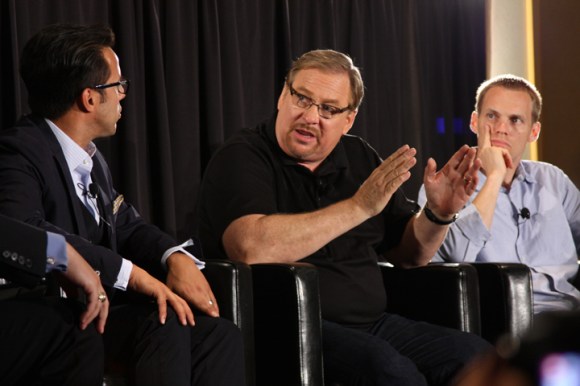
Pastors Rick Warren and David Platt (center and right) joined a panel discussion in June on Hobby Lobby and religious liberty. The panel was sponsored by the Ethics and Religious Liberty Commission during the Southern Baptist Convention in Baltimore.

Pastors Rick Warren and David Platt (center and right) joined a panel discussion in June on Hobby Lobby and religious liberty. The panel was sponsored by the Ethics and Religious Liberty Commission during the Southern Baptist Convention in Baltimore.

After the Supreme Court’s June 30 ruling in favor of Hobby Lobby, many Christians celebrated the decision that opens the door for “closely held” companies to refuse to cover abortion-inducing drugs in their employee health care plans.

“A great day for Religious Liberty!” tweeted Southern Baptist Convention President Ronnie Floyd, with the hashtag #hobbylobby.

“This is as close as a Southern Baptist gets to dancing in the streets with joy,” wrote Russell Moore, president of the SBC’s Ethics and Religious Liberty Commission. Moore presented an award to the Green family, who owns Hobby Lobby stores, during the SBC Annual Meeting in June. The Greens filed suit against the Department of Health and Human Services two years ago over what has become known as the abortion-contraceptive mandate in the Affordable Care Act.

“… We simply cannot abandon our religious beliefs to comply with this mandate,” CEO David Green said then.

The Hobby Lobby case has brought new visibility to religious liberty issues. But Texas pastor Robert Jeffress told Fox News “the victory will be short lived.”

“…People of faith are going to increasingly come into conflict with governmental mandates that violate their personal faith,” said Jeffress, the pastor of First Baptist Church, Dallas, according to a report by The Christian Post.

Imperiled religious liberty was the focus of a panel discussion in Baltimore during the Southern Baptist Convention last month. Religious freedom is a critical issue for churches, panelists said, but it’s still flying under the radar for most of them.

Moore and the ERLC hosted the conversation that include pastors Rick Warren and David Platt, and Samuel Rodriguez, president of the National Hispanic Christian Leaders Conference. The panel focused on the Hobby Lobby Supreme Court case but also veered into other questions concerning religious freedom.

The panelists’ main point was clear: All church members must be aware of issues that threaten religious liberty, standing firmly in a Gospel that compels Christians to stand up for their religious freedoms, and for that of others.

Before the Court ruled in favor of Hobby Lobby, Moore said the verdict would be one of the most significant decisions affecting religious liberty in years. The case and several others, like the Washington florist who was sued when she declined to provide flowers for a same-sex wedding, have raised awareness about religious freedom and threats to it.

But religious liberty isn’t just tied to current events or cases. It has ancient roots.

“Before religious liberty is a political issue or a social issue, religious liberty is a Gospel issue,” Moore said during the panel discussion. People come to Christ when the Word of God addresses their conscience, he explained. An uncoerced conscience.

“We don’t believe that the Gospel goes forward by majority vote,” he said. “We believe that the Gospel goes forward by the new birth, and so we need freedom in order to do that.”

Refusing to fight for religious liberty now, Moore added, will be highly detrimental to future generations. “If we shrug this off, what we’re doing is consigning future generations, and we’re consigning people’s consciences, to a tyranny that we are going to be held accountable for.”

There are also ramifications for Christians living and working in contemporary society. Platt, pastor of The Church at Brook Hills in Birmingham, Ala., said during the panel discussion he felt convicted about how many of his church members are aware of how their freedoms could be threatened.

People in churches “need to know it’s coming,” Platt said. “It’s going to affect every person in every profession in the church. This is not just for certain groups.”

Costly faith

One lesson from the Hobby Lobby case, Moore said, is that threats can simmer under the surface for a long time before they bubble up. “Many people assume that religious liberty violations come with shock and awe, with tanks coming in. And religious liberty violations typically happen this way, with a bureaucrat’s pen…By the time the issue gets to you, you have not even seen how it has already advanced.”

Perhaps because so many flagrant violations of religious liberty happen in other countries, the issue can seem like what Moore termed “other people’s problems.” That’s why it’s key to champion freedom not just for Americans, or Christians, the panelists said. “If it’s them today, it’s us tomorrow,” Warren said of other religious groups facing threats to their freedom.

Concerning religious liberty in America, the panelists talked about voting as one area that can breed complacency. If you preach sanctity of life and biblical marriage and religious liberty on Sunday, Rodriguez said, but then vote in a way that runs counter to those things on Tuesday, isn’t that hypocrisy? “Our vote must be a reflection of my Christian worldview belief.”

One other cause for a lack of concern, Platt said, is a lack of urgency. Many church members aren’t taking risks for the Gospel, he said. Faith doesn’t cost anything for many of us. But, he said, “When you believe in a resurrected king, you speak about him all the time, and whatever he says you do, no matter what it costs you in the culture.”