Archives For November 30, 1999

When God calls, you go

Meredith Flynn —  February 16, 2015

HEARTLAND | “I think for most people when God really calls you out in faith to something deep, you know in your soul it’s going to cost you everything,” says church planter Nathan Brown.

“But when God calls you on his mission, you go because you love him.”

Brown came to Illinois from California to plant Real Church Chicago. Hear more about the challenging call to start a new work in the city in this video clip:

One Baptist leader says Scripture’s case for cooperation is the most compelling reason to work together.

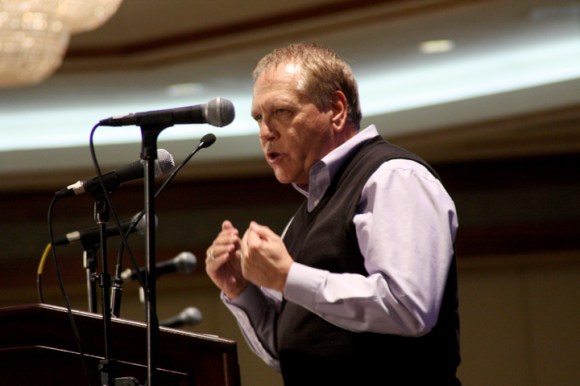
Micah_Fries_blog“My entire life growing up, what I heard about the Cooperative Program was, ‘give to it because it works,’” said Micah Fries (left), vice president of LifeWay Research.

Indeed, historical evidence supports it—CP does work. Southern Baptists’ main method of supporting missions and ministry here and around the world, will turn 100 in 10 years, and has helped mobilize one of the largest missionary forces in the world.

Last year, Baptists gave more than $186 million through the CP Allocation Budget to send and support church planters in rural America and the country’s largest cities, and to get the gospel to places and people around the world that have never heard it. At a meeting of the SBC Executive Committee last year, CEO Frank Page called CP the best way to “concurrently, consistently and, yes, completely fulfill Acts 1:8 as a church body. Through that, you’re involved in missions and ministries all over the world, all the time.”

But the average percentage churches give through CP has fallen over the years, from 10.7% in 1982, to less than 5.5% the last few years.

In this climate of decline when it comes to cooperative engagement, there is a better, more compelling reason to work together than to do so “because it works,” Fries said during a breakout session at the recent Midwest Leadership Summit in Springfield, Ill. He argued for a theological foundation, rather than pragmatic justification.

“…I want to plead with you to go back to your churches and plead with your churches, go back to your associations and your state conventions and plead with them to be faithful at partnership mission, but not because it works. But because the Bible tells me so.”

A better rationale
Our need for a biblical foundation for cooperation, Fries said, starts with characteristics we have that are specifically human, and specifically American. In our consumer-driven culture, most people shop for churches like they shop for blue jeans. Where can I get the best product for the lowest cost? If the personal price is too high, they’ll look elsewhere.

That consumerism, along with pride, independence, and the valuing of perception over reality, runs counter to the ideas of community and cooperative engagement.

“…When you and I call for community in the context of the local church, and cooperation or collaboration between local churches, we need to understand that what we’re calling for is a radically counter-cultural identity,” Fries said. “It strips away the core of who we are, and calls us to be like Jesus.

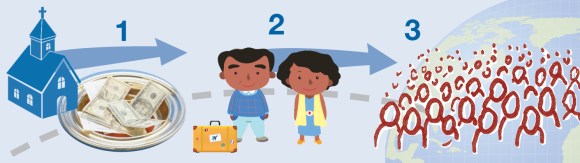
CP charts are complicated, Fries said, even for those who have long understood the system. “Stop making it so confusing for people.” “That’s what the Cooperative Program does," Fries said.

CP charts are complicated, Fries said, even for those who have long understood the system. “Stop making it so confusing for people. You put money in the plate, money goes to a missionary, missionary tells people about Jesus. That’s what the Cooperative Program does.”


“This is challenging. This is why it’s not enough to say, ‘We need to give to the Cooperative Program because it works.’ Because ‘it works’ is not a compelling enough reason to deny the core of who we are.

“Because it makes us to be like Jesus, because it helps to advance the gospel, because it helps to glorify God; those are compelling reasons to engage in counter-cultural activity.”

Younger Baptists are looking for more than pragmatic justification too, Fries said. The generation raised after the Conservative Resurgence spends more time thinking about what the Bible actually says, than arguing its truth. “So, you’re not going to compel them with pragmatic arguments, it’s going to have to a biblical rich, theologically rooted argument.”

Toward gospel advance
“Without a doubt, the high calling and common cause that unites diverse Baptist churches in cooperation is the Great Commission of Jesus to make disciples of all the world’s peoples,” IBSA Executive Director Nate Adams wrote for Resource magazine last year. “Wherever else Baptists may disagree, we are agreed on the priority of advancing the gospel, both across the street and around the world.”

CP also helps involve different kinds of churches in that mission, Page noted during the Midwest Leadership Summit. The SBC is a convention of small churches, including many ethnic congregations. “The Cooperative Program levels the playing field so everyone has opportunity to bring worshipers to God.”

Ultimately, biblical cooperation leads to an advanced gospel, which is “the compelling apologetic for collaborative mission,” Fries said. Choosing for the gospel to go forward through believers wasn’t the most pragmatic choice for God to make, he said; rather, he designed it that way because it brings him glory and brings us joy.

Read more from the Feb. 2 issue of the Illinois Baptist, online at http://ibonline.IBSA.org.

The Chicago vortex

nateadamsibsa —  January 12, 2015

HEARTLAND | Nate Adams

It’s January, and another “polar vortex” appears to be descending upon our heartland homes. Just a few days ago the temperature outside was flirting with 50 degrees. But then yesterday was barely above freezing, and as I write now it’s 16 degrees, heading for a low of 6 tonight, with wind chill temperatures that will require those dreadful minus signs in front of them.

Nate_Adams_Jan12So instead I’m choosing to think about next summer, and I encourage you to do so too. Now, in the dead of winter, is a perfect time to start planning a summer missions experience.

Your church may already have a plan for sending one or more groups on mission trips outside your own community this year. Many churches in Illinois have adopted an Acts 1:8 strategy, and are seeking to send mission groups to serve nearby in their local association, as well as elsewhere in Illinois, North America and internationally. These are modern day equivalents of the “Jerusalem, Judea, Samaria, and the Ends of the Earth” mission fields that Jesus spoke of in His last words on earth.

If your church doesn’t yet have a mission trip planned for this summer, and especially if you have teenagers in your church, let me suggest one option where most of the planning has already been done for you. It’s called ChicaGO 2015, and it will be hosted July 26-31 on the campus of Judson University in Elgin. You can find more detailed information on the IBSA website, or by calling or
e-mailing Rachel Carter (217-391-3101 or RachelCarter@IBSA.org). Even if you only have two or three who can go, they will be quickly welcomed into the larger group.

During ChicaGO 2015, your group will be housed on the Judson campus there in Elgin, but during the days you will explore one or more of Chicago’s 77 neighborhoods or diverse suburbs. Morning training sessions and evening worship experiences will allow you to meet some of the dynamic church planting missionaries that are seeking to advance the gospel in our nation’s third largest mission field. And during the day you will work right alongside them, and alongside other students and adults from Illinois churches that share your heart for advancing the gospel there.

Wherever you live in Illinois, ChicaGO 2015 is relatively nearby, and affordable. Planning and preparations for the week, such as meals and work projects, will have been done by IBSA before you get there. Participants can be both students and adults, and the environment is one that’s safe, and yet that will open your group’s eyes to the vast and diverse lostness that is Chicago.

You see, Chicago itself is a vortex, and not just in the winter. A vortex is defined either as a “whirling mass,” or simply as “something overwhelming.” That’s why, when the frigid air from the Arctic Circle whirls its way down into Illinois, we feel the overwhelming
brutality of its icy grip. But there is also a whirling mass of people in Chicago that are in the icy grip of lostness. Many have never heard the true gospel in a way they can understand, or from people that care enough to meet them where they are.

That’s why now, this winter, right in the middle of our polar vortex, is an ideal time to plan a summer mission trip. Perhaps you will join our church planters and me in the Chicago vortex next July. Or perhaps your church has identified a different vortex of lostness or two to enter. Last year more than 26,000 Illinois Baptists did. It warms my heart just to think about it.

Nate Adams is executive director of the Illinois Baptist State Association.

And what the trends mean for your church

An Illinois Baptist team report

"Imagine if you could spend 10 focused minutes each Sunday morning in extraordinary prayer on two major needs locally, in your church, in America, or across the world.” SBC President Ronnie Floyd’s “Call to Prayer” that began at the Annual Meeting in Baltimore now turns to Sunday mornings, starting with one worship service in January.

SBC President Ronnie Floyd’s “Call to Prayer” that began at the Annual Meeting in Baltimore now turns to Sunday mornings, starting with one worship service in January.

1. Churches respond to “Call to Prayer”
“It is past time for us to prioritize prayer personally and in the church,” SBC President Ronnie Floyd wrote on his blog in early December. “For far too long, we have seen what we can do; it is time for us to see what God can do. This can only happen when we pray.”

Floyd’s continued call to prayer—leading to the June 2015 SBC Annual Meeting in Columbus, Ohio—began about two years ago with a series of meetings for pastors and church leaders. Floyd began quoting famed Puritan preacher Jonathan Edwards who called believers to “extraordinary prayer” for revival in America.

“God’s people will be given a spirit of prayer,” Edwards wrote in 1746, “inspiring them to come together and pray in an extraordinary manner, that He would help his Church, show mercy to mankind in general, pour out his Spirit, revive His work, and advance His kingdom in the world as He promised.”

Today’s growing urgency in prayer coincided with planning for the 2014 IBSA Annual Meeting in November. “We will either hunger for God’s righteousness out of desperation or…out of devastation,” IBSA President Odis Weaver told messengers. The November meeting peaked in a Concert of Prayer for Spiritual Awakening in Illinois and across the U.S.

“I believe we need to cry out to God for spiritual awakening, and for revival in our churches,” said IBSA Executive Director Nate Adams. He led more than 400 pastors and church leaders through a prayer cycle lamenting the lost condition of people in Illinois, repenting of apathy and ineffectiveness, interceding for spiritual awakening, and commiting to pursuit of revival in our churches.

Afterward, many pastors said they would lead similar prayer events when they returned home.

Now Floyd is asking churches to dedicate an entire Sunday morning service to prayer in January: “Just imagine if 100 churches, 500 churches, or several thousand Southern Baptist churches would turn a Sunday morning into insuring that Jesus’ House would be a genuine house of prayer for all the nations.
Just imagine what could happen if, from this point forward, you could spend 10 focused minutes each Sunday morning in extraordinary prayer on two major needs locally, in your church, in America, or across the world.”

Jonathan Edwards imagined the outcome. He called it the “revival of religion.” We would call it “advancement of the Gospel”—the salvation of lost souls, renewal of our churches, and restoration of moral sensibility to the nation.

In your church: SBC churches will likely give prayer a higher profile in 2015, but what are we praying for? How will we sustain prayer in our congregations as more than a once-in-a-while emphasis? Consider a Concert of Prayer in January. As Floyd wrote, “If we do not plan to pray, we will not pray!

2. Evangelicals cope with minority status
Say goodbye to Mayberry. The culture is shifting. What was once called good is now called evil, and vice versa, just as Isaiah said of his own times. The majority opinion in the U.S. approves of same-sex marriage, and many other sexual matters—once outside the norm—are being accepted by society at large. But, while the morals and mores are changing, Southern Baptists are not.

We still stand on the Word.

“One of the biggest challenges for conservative Christians is moving beyond a Bible Belt mentality, or a moral majority mentality,” said Russell Moore, president of the SBC’s Ethics and Religious Liberty Commission, “and seeing ourselves instead as in many cases a prophetic minority speaking to a larger culture about things that matter.”

Moore called on pastors and church leaders to “prepare people for what the future holds, when Christian beliefs about marriage and sexuality aren’t part of the cultural consensus but are seen to be strange and freakish and even subversive.”

“The Bible Belt is collapsing,” Moore has concluded.

The main evidence of that in Illinois is same-sex marriage which became legal June 1. Churches, at one point concerned they would be forced to perform
gay weddings, instead began addressing their bylaws as means of protection.

Another response by evangelicals is to make the church a place of refuge, said John Stonestreet, commentator for Breakpoint Ministries. “People who are enslaved to porn and suffer different forms of brokenness need to be able to come to the church and find answers. The church needs to offer hope and solutions. We need to say, ‘Here’s an option. Here’s the hope; here’s the gospel; here’s the truth; here’s Jesus; and here’s the cross.’”

Moore concurs. “We must have a voice that speaks to the conscience, a voice that is splattered with blood. We are ministers…not of condemnation, the devil can do that, we are ministers of reconciliation, which means that we will speak hard words…truthful words to address the conscience, even when that costs us everything.”

In your church: Church leaders are ministering from a new vantage point, but with the same apologetic. The challenge will be to confront cultural ills in a way that is biblically faithful and yet winsome. The message hasn’t changed, but some in our society today need to hear the truth truly spoken in love.

At a meeting in Asia, young missionaries surround new IMB President David Platt to pray for him as he seeks to mobilize churches. Photo by Hugh Johnson/IMB

At a meeting in Asia, young missionaries surround new IMB President David Platt to pray for him as he seeks to mobilize churches. Photo by Hugh Johnson/IMB

3. Young leaders urge peers to “re-engage”
The evidence has been building for a few years now: young Baptists are back. Or on their way back, at least.

They’re more visible at the Southern Baptist Convention’s annual meetings, and, in 2014, at two meetings on the gospel and marriage hosted by the Ethics and Religious Liberty Commission. They’re also beginning to look remarkably similar in age to the leaders of several of the denomination’s entities. At the ERLC’s October national conference, 125 young leaders had dinner with President Russell Moore and the heads of the SBC’s two missions agencies, Kevin Ezell and David Platt. At four years, Ezell is the longest-tenured at his post; Moore took the ERLC reins in 2013, and Platt was elected in August.

“There’s never been a better time in my lifetime to re-engage as a Southern Baptist than right now,” Ezell, president of the North American Mission Board, said at the meeting. “I really believe that God is up to something very special in the Southern Baptist Convention.”

Many young Baptists likely would cite the election of Platt, 36, as one of the highlights of 2014. Midwestern Seminary President Jason Allen, himself 38, blogged that when he announced Platt’s election during a September chapel service, students (and faculty and staff) broke into applause for the missiologist and author of bestseller “Radical.”

More than 1,000 miles away in Richmond, Va., young missionary appointees gathered around Platt shortly after his election to congratulate him and tell him how “Radical” and his messages on reaching the nations had helped lead them to the international mission field.

After Platt’s election, some Baptist leaders expressed concern that his Birmingham congregation, The Church at Brook Hills, gave a lower amount through traditional Cooperative Program channels, instead sending a large portion of their gifts directly to the SBC Executive Committee and International Mission Board.

But even with those concerns, established leaders affirmed Platt’s ability to mobilize young people to share the gospel to the ends of the earth. Southwestern Seminary President Paige Patterson noted it in a blog post published shortly after Platt’s election, calling for “thanksgiving to God for the presence of a young leader who has obviously garnered the hearts of the younger generation and who will have the opportunity to lead them to a commitment to the world mission enterprise.”

One blogger put it a little more plainly, noting Platt may be just the right voice to deliver tough love to would-be male missionaries outnumbered by female “Journeymen” appointed through the IMB.

“Lend your voice to addressing the issue of young males wimping out of Journeyman service,” William Thornton wrote at SBC Voices. “These guys think you walk on water, Mr. Radical. Give ‘em both barrels on this and see what happens.”

In your church: Look for increased excitement from your own young leaders now that the authors and speakers they’ve followed for several years are in prominent positions. Be prepared for them to want to go to the hard places for ministry and missions. “That’s where we hear young couples saying they want to go, that they want to be radically obedient to what God has called us to do for the nations,” said IMB trustee chairman David Uth. “The passion is there.”

4. Growing persecution: From “the Nun” to “resurrection people”
Before Ebola dominated headlines, another one-word threat struck fear in the hearts of many around the world—and even here. The war of terror and persecution waged by ISIS, or the Islamic State of Iraq and Syria, was the story of the year earlier in 2014.

ISIS chased religious minorities high into the mountains of Iraq. They filmed beheadings and broadcast them as warnings to the rest of the world. And they stirred many in the Western world to stand with the persecuted church. The Arabic letter “Nun” was used on social media pages to symbolize solidarity with those persecuted for their faith in “the Nazarene,” or Jesus.

It’s not just a problem in the Middle East. In Nigeria, 1,505 Christians were killed for their faith in the first seven months of 2014, according to non-profit Jubilee Campaign. North Korea again topped Open Doors’ list of most persecuted countries, highlighted by the imprisonment of American Kenneth Bae, who was finally released in November. Others, including Pastor Saeed Abedini in Iran, remain in prison.

Closer to home, Christians felt a different kind of persecution. Businesses and non-profits faced government fines for not providing abortion-causing contraceptives. The mayor of Houston, Texas, subpoenaed the sermons of pastors who were against the city’s pro-LGBT ordinance.

Christian leaders here urged believers to remember who they belong to. “The answer to the decline of religious freedom and the change in the moral climate is not found in waging incessant cultural wars, filled with rage at our changing culture,” said LifeWay Research President Ed Stetzer. “Simply put, you can’t hate a people and reach a people at the same time.”

Instead, he urged Christians, “Let’s live like the resurrection people, adorning the gospel with lives of grace. Even in our passion to defend freedoms increasingly at risk, let’s remind ourselves this generation is desperately in need of the love of Christ, lived and shared.”

In your church: Be prepared to think globally about persecution. How can your church go beyond your normal prayer times to intercede for those under threat for their faith?

Be alert to what government bodies are doing. Speak out when religious liberties are threatened. The IRS prohibits churches from supporting candidates, but not from speaking on issues related to faith.

SBC’s Frank Page speaks frequently about the future of the Cooperative Program, painting a hopeful picture despite years of declining offerings. Photo by Morris Abernathy

SBC’s Frank Page speaks frequently about the future of the Cooperative Program, painting a hopeful picture despite years of declining offerings. Photo by Morris Abernathy

5. Cooperative missions for a new generation

Most Baptists agreed the Cooperative Program, the denomination’s chief method of funding missions and ministry, is the best way for churches together to pursue the Great Commission. But how to fix the CP, plateaued and trending slightly downward for years, is up for debate. The election of David Platt as IMB president revealed how his church and other large churches have bypassed their state conventions, even though CP gifts for national and international missions are supposed to be routed first through the state level.

“I have heard some people say, ‘The big problem is that the younger generation simply isn’t educated about CP,’” blogged pastor J.D. Greear after Platt’s election. “That may be true for a small percentage of people, but the bigger problem is probably that they are educated about it. The more they find out about CP giving, the less they are motivated to give.”

Meanwhile, blogger Bart Barber spoke up for the reliability of the system itself, calling those who disagree with the way CP funds are allocated to greater involvement in SBC life. “…Within the Cooperative Program approach you can pursue any ministry, reallocate any budget, or adopt any methodology that you can convince enough of your fellow churches and fellow pastors to adopt,” Barber posted at SBC Voices.

“Bring on the changes! Make your proposals! Go to the floor of the SBC Annual Meeting! Attend your state convention meeting! Advocate tirelessly and fearlessly for the improvements you’d like to see. Whatever they are and however much adaptation they would require, I’m betting that almost none of it would actually require any changes at all in the Cooperative Program.”

SBC Executive Committee CEO Frank Page continued his campaign for increased giving through the Cooperative Program, touring the nation (including Chicago) to talk with younger pastors and leaders. “I’ll drop the Cooperative Program if you can show me something else that long-term is effective and engages every church concurrently and consistently in an Acts 1:8 strategy,” Page has said on several occasions. “Show it to me, and I’ll support it….But I
haven’t found it yet.”

In your church: More conversation about CP in the national SBC could mean it’s time for a refresher course in your local church. A class for young or new Baptists is an opportunity to teach about why Baptists give cooperatively. One big reason: CP helps missionaries focus on their mission field, instead of fundraising. Another reason: CP helps the local church have a balanced missions strategy, supporting work on all their Acts 1:8 mission fields.

-With reporting from Baptist Press

Read all of the December 22 Illinois Baptist at http://ibonline.IBSA.org.

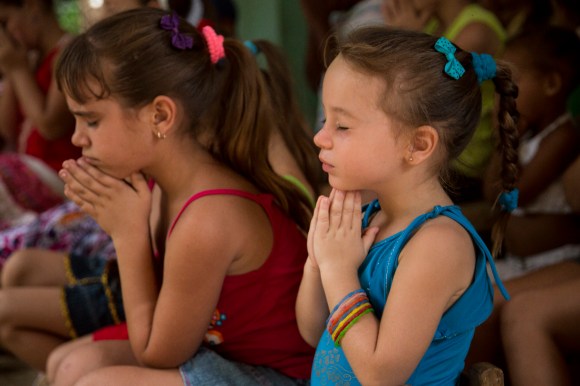
Cuban children learn to pray during a weekly meeting held in the home of two ladies with a passion to evangelize children. In 2010, the religious affiliation of Cuba was estimated by the Pew Forum to be 59.2 percent Christian (mostly Roman Catholic), 23.0 percent unaffiliated, 17.4 percent folk religion and the remaining 0.4 percent other religions. Wilson Hunter/IMB

Cuban children learn to pray during a weekly meeting held in the home of two ladies with a passion to evangelize children. In 2010, the religious affiliation of Cuba was estimated by the Pew Forum to be 59.2% Christian (mostly Roman Catholic), 23% unaffiliated, 17.4% folk religion, and the remaining 0.4% other religions. Wilson Hunter/IMB Photo from BPNews.net


NEWS |
President Obama’s announcement Dec. 17 that the U.S. will renew its relationship with Cuba had pundits talking about the political and economic implications. Meanwhile, many Christian leaders focused on what the decision could mean for Cuban believers.

Phil Nelson has traveled to Cuba 11 times since 2003, speaking about the gospel with college students and on one occasion, a university president.

“Everybody we met with, we talked with about the gospel,” said Nelson, pastor of Lakeland Baptist Church in Carbondale. The Cuban Christians he has worked with are “passionate about the gospel, unashamed about anything. They had a boldness that we just don’t know anything about here in the United States.”

Still, there is the specter of oppression, said Kevin Carrothers, who traveled with Nelson to Cuba in 2006. He remembers noticing from Cuban people and visitors to the country that no one wanted to draw attention to themselves. The stereotype most people apply to the Caribbean – bright clothing, a festive, celebrative atmosphere – didn’t hold water in Cuba, said the pastor of Rochester First Baptist Church.

Their mission team saw people come to Christ, though, including one woman who stopped them by the side of the road to ask for a drink of water. Nelson talked with her about the living water that Jesus offers; right there on the road, Carrothers said, she accepted Christ.

After Obama’s announcement, leaders weighed in on whether the decision would help or hurt people in the country. “This change is not going to help the Cuban people [under] a communist government in power for more than 50 years,” said Óscar J. Fernández, a Tennessee minister who holds political asylum from Cuba. “I will applaud if Cuba makes any concessions, but they are not [likely to do so],” he told Baptist Press.

But David R. Lema, whose family left Cuba for Spain when he was 7, said “any normalization of political ties between Cuba and the U.S., regardless of political implications or results, should prove beneficial for Christian work.”

“Travel for Americans going to Cuba would flow smoother and with less inconvenience—anyone that has gone to Cuba knows what I am talking about here,” Lema, director of New Orleans Baptist Theological Seminary’s Center for the Americas in Miami, told BP. “Churches and individuals will have more freedom to help the churches directly without having to worry about U.S. embargo violations.”

Carrothers said he didn’t know whether more mission teams will begin traveling to the Caribbean country. “What I do know, and what I think the reality is, is that where the church has been oppressed, and the church has been persecuted, the gospel has flourished.

“And that certainly was the case in Cuba, the gospel was flourishing in the midst of oppression.”

By Meredith Flynn, with additional reporting by Baptist Press

HEARTLAND | Nate Adams

Recently Chicagoland church planter Dave Andreson was addressing a group of mostly college students on the subject of how to pray for your community. I was there primarily because our son Noah was hosting the meeting at his church, Calvary Baptist in Elgin.

Nate_Adams_blog_callout_Dec1Most of the students were from Judson University there in Elgin, where IBSA is developing a church planting partnership. Dave spoke pointedly to them. “If you’re not currently praying for your community, let me tell you why that probably is,” he said. “It’s because you haven’t really taken ownership of this community. You think of your community as the place that you’re from, or where your family lives. You figure you’re just here for a few years, going to school, so why bother? In the meantime, many of the people you will meet here desperately need to know Jesus Christ.”

I winced with conviction at the truth of Dave’s observation, and not just for college students. Sadly, I’ve known people who seem to have the mindset that their situation is temporary, and as a result they seem to be just biding their time spiritually.

“Oh we just came here for Bill’s job, but we’ll be going back home eventually,” they sometimes say. And yet when asked how long they’ve lived there, the answer is often twenty or thirty years.

Or, “When our kids are older and life slows down some, we may have more time to do missions or help with outreach.” Especially in today’s ever-changing and mobile society, we cannot wait until our situations are more “permanent” to take ownership of our communities. That day may never come.

Dave went on to speak of the passion that Jesus had for a city, and for a crowd, and for a man named Zacchaeus. He urged us to be like Jesus and see our city, and our crowds, and the God-created individuals around us with spiritual eyes. And he invited us to pray with him for Avondale, the Chicago neighborhood that he has now made his home, and where he is seeking to plant a new church. Avondale is a community of only two square miles, yet 40,000 people live there. It has no Baptist church, and little if any evangelical witness.

Dave challenged us all that night to take ownership of our communities, wherever we find ourselves, and to do it now. We can’t wait for more permanent or ideal circumstances. People need prayer, and relationship, and the Gospel message.

His challenge reminded me of a time that our family ate at a fast food restaurant, when our boys were still little. Though the employees were working hard, the dinner rush had overwhelmed them and more than half of the tables were a mess while the trashcans overflowed. So as we left, I asked our boys to help me clear the rest of the tables in the restaurant, in addition to our own. “But Dad, we don’t work here!” one of them cried. And yet because I asked them to, they helped me take responsibility for other people’s messes, there in our temporary community.

As we enter another Christmas season and begin reflecting on the birth of Christ, let us remember that Jesus willingly entered our world and made it His home. He “became flesh and dwelt among us.” He saw us in our sorry state, and paid the price to clean up the mess of our sin that he didn’t make.

So let’s enter in and spiritually invest in our own communities, even now. Let’s take ownership of where we live, even if it doesn’t feel permanent, or even if it’s in a difficult place like the Avondale neighborhood of Chicago. Our community, wherever it is, is our mission field. Home is here, and the time is now.

Nate Adams is executive director of the Illinois Baptist State Association.

COMMENTARY | Josh Monda

This week marks the one-year anniversary of the EF-4 tornado that devastated parts of Washington, Ill. Brookport, New Minden, Diamond, Coal City and Pekin were among the other Illinois communities affected by powerful storms on Nov. 17, 2013.

This week marks the one-year anniversary of the EF-4 tornado that devastated parts of Washington, Ill. Brookport, New Minden, Diamond, Coal City and Pekin were among the other Illinois communities affected by powerful storms on Nov. 17, 2013.

Humanitarian effort void of the gospel of Jesus Christ does nothing to change one’s eternal destiny. Moments after making this statement during a sermon, a tornado would rip through our town, passing a quarter mile from our church.

The day of the tornado was not without trouble, even before the storm came through Washington. A month before, my father-in-law had been diagnosed with esophageal cancer. The day before the tornado, my 14-year-old daughter laid on my living room floor near death, and that evening was in the hospital.

Taking a full load in seminary, and trying to balance all that was going on in my life, I gathered our two young sons that Sunday morning and got them ready for church. The rest, as they say, is history. An EF-4 tornado hit our town as my congregation took shelter in the church basement.

It would have been easy then (and now) to focus on all that changed that day, or how everything after November 17 would be different than before. Indeed, a lot is different, even a year after the storm. Members of my church, deacons in my church, lost their homes. One of our deacons moved away, and for a small church, this is difficult.

Change has touched my family too. My daughter eventually recovered from the infection that put her in the hospital, but my father-in-law passed away before the tornado.

Not every change has been negative: After the storm, people seem more in tune to the needs of others, and thoughts about possessions have changed.

But my focus, and our church’s focus, is on something that will never change: the gospel of Jesus Christ. It was not by mistake that I would make the statement about humanitarian effort and the gospel moments before the tornado hit. Our focus has to be on the gospel.

When people are hurting, our focus must be the gospel.

When people are suffering, our focus must be the gospel.

When people know not where to turn, our focus is the gospel.

A tornado can change our circumstances, it can even change where we live. But a tornado will not transfer someone from the Kingdom of Darkness into the Kingdom of Light; only the gospel does this.

As a people, as a church, we can allow a tornado to either drive us to what truly makes a difference, or distract us from it. May our focus be on what makes a difference; may our focus be on the gospel of Jesus Christ.

Josh Monda is pastor of First Baptist Church in Washington.

Larry Thompson, pastor of First Baptist Church in Ft. Lauderdale, Fla., is preaching at the IBSA Pastors' Conference on the "seismic" spiritual shift described in Acts 10. Follow the Pastors' Conference at Facebook.com/IllinoisBaptist.

Larry Thompson, pastor of First Baptist Church in Ft. Lauderdale, Fla., is preaching at the IBSA Pastors’ Conference on the “seismic spiritual shift” described in Acts 10. Follow the Pastors’ Conference at Facebook.com/IllinoisBaptist.

God wants his people to trust in him and arise, said Pastor Marvin Parker, referencing the theme of the 2014 IBSA Pastor's Conference. "Get up, get out, get going."

God wants his people to trust in him and arise, said Pastor Marvin Parker, referencing the theme of the 2014 IBSA Pastor’s Conference. “Get up, get out, get going.”

HEARTLAND | Meredith Flynn

In two out of three Southern Baptist congregations, fewer than 100 people gather for worship on Sunday morning. Megachurches may get more attention, but small churches are the backbone of the SBC, Frank Page has said.

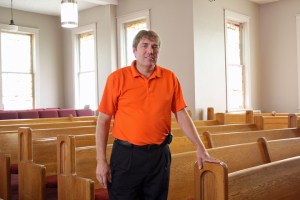
Illinois pastor Cliff Woodman is part of a new advisory council on small and bivocational churches.

Illinois pastor Cliff Woodman is part of a new advisory council on small and bivocational churches.

Still, small church pastors often feel overlooked and marginalized, left out and under-resourced. A new advisory council assembled by Page, president of the SBC Executive Committee, exists to communicate the unique needs of these categories of churches with denominational leaders.

“I will not allow the Southern Baptist Convention to forget who we are,” said Page during the first meeting of the Bivocational and Small Church Advisory Council. “Part of my goal in this is to elevate the role of the small church pastor and the bivocational pastor, period. And that’s going to happen.”

Illinois pastor Cliff Woodman is part of the 21-member council, which will work over the next three years to develop a report on the statistics that define Southern Baptist churches. The group, one of several Page has brought together in his first four years as Executive Committee president, represents a large majority of Southern Baptist churches.

“Some would say 35,000 of our 46,000 churches, maybe more than that, are in the two categories of small church or bivocational,” Page said at the Sept. 11-12 meeting in Atlanta. For the council’s purposes, he defined a small church as one with 125 people or fewer in Sunday school attendance. The group also looked at research on the percentages of SBC churches by worship attendance. According to 2013 data, 68% of Southern Baptist churches have 100 or fewer people in worship, compared to 78% of IBSA churches and missions.

Woodman, now pastor of Emmanuel Baptist Church in Carlinville, spent more than 25 years as a bivocational pastor at Harmony Baptist Church in
Medora. He told the Illinois Baptist small church and bivocational pastors (most who also work a second job) often feel out-of-the-loop. Sunday school curriculum may feel tailored to larger churches with more people and more classroom space, for example, and large church pastors often are the ones invited to speak at meetings or conferences.

But non-megachurches can be effective churches. Woodman, whose Carlinville church reported an average worship attendance of 145 in their 2013 Annual Church Profile, is leading Emmanuel to look closely at what makes a congregation healthy. He referenced LifeWay President Thom Rainer’s 2013 book “I Am A Church Member,” which outlines members’ responsibilities to their congregation.

“If a church member’s not supposed to look at ‘what’s in it for me,’ then maybe churches ought to stop looking at ‘what’s in it for me,’” Woodman said. The better question is, “What can I do for the bigger body?”

Major shift toward bivocational
Page has used a “fault lines” analogy to describes areas of SBC life where there are rifts between different groups. One of those fault lines, he said in the Atlanta meeting, is related to church methodology, or how churches do church. The discussion centered on bivocational ministry, a strategy Page called “the wave of the future.” It’s also the wave of the past.

Southern Baptist churches have long relied on bivocational pastors to lead churches. Decades ago, many pastors were farmers; today, they also drive school buses, deliver the mail, and run small businesses.

“I’m convinced that in the 21st Century, the best stewardship model is bivocational,” Page said. “We’ve got a lot of students coming out of seminary now who have no intention of being full support.” In other words, they’re prepared to work more than one job to make ends meet.

That news was encouraging to Woodman. There was a day, he said, when “the underlying current was that the bivocational guy wasn’t good enough to have a full-time church.” Page shared with the group that some Christian universities are now training students to be pastors along with learning another vocation.

While there will always be churches that want their pastor to be full-time, Woodman said, bivocational ministry is imperative if Southern Baptists want to extend the reach of churches into more communities. “And we’re going to have to do a better job at it,” he said, and at preparing future leaders for it. Because bivocational pastoring is “a different game.”

Quit the comparison game
Small church pastor Job Dalomba posed a pointed question in an April blog post: “We have to ask ourselves an honest question: Do we want to see the glory of God shining from larger churches or do we just want their numbers, resources and notoriety to be our numbers, resources and notoriety?”

The SBC Voices post by Dalomba, pastor of a new, small church in Southaven, Mississippi, called for small church pastors to stop comparing themselves to men who lead larger congregations, and to pray for those big churches too.

It’s a strategy the congregation at Emmanuel has utilized this year. A church’s prayer requests are a good measure of its health, Pastor Woodman said. “Throw them up on the wall, and see what your prayer requests do. And when you get done, you begin to think about what does that tell you your view of God is.

“And in essence, you’ll find in most churches that he’s healer, a physician; he’s an employment agency; he’s Triple A. But what’s lacking is that he’s a savior.”

Woodman’s congregation was already praying by name for people who don’t know Christ when he arrived as pastor last year. To that focus, they’ve added regular prayer for sister churches in Macoupin Baptist Association. The prayers are scripted, with a focus on reaching people who don’t know Christ. Woodman is hopeful the strategy will help build a spirit of teamwork between his church and others in the community, he told SBC Life earlier this year.

“When we started praying for our sister churches, that helped us be healthier. If we as pastors and churches would take the same attitude, then we’d stop looking at what others were doing for us, and we’d start doing for others.”

With reporting by Baptist Press and SBC Life. Meredith Flynn is managing editor of the Illinois Baptist newspaper, online at http://ibonline.IBSA.org.