Archives For November 30, 1999

Cultivate spiritual health

ib2newseditor —  February 9, 2017

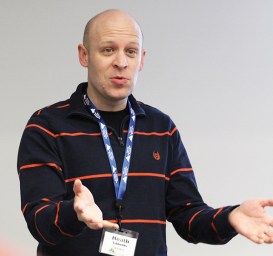
tibbettsTimes of ministry burnout are coming, Heath Tibbetts told leaders gathered in Springfield for the Illinois Leadership Summit. So are areas of weakness. But there is a way to prepare for those inevitable difficulties, said the pastor of First Baptist Church in Machesney Park.

“Spiritual build-up prepares us for burnout and blind spots that we know are on the horizon,” Tibbetts said during his breakout session on the spiritual health of a leader.

One warning sign that spiritual build-up may be lacking, Tibbetts said, is reacting poorly to challenges. There was a time, he said, when his church didn’t plan for occasional obstacles, like losing a Sunday school teacher or facing a bill they couldn’t afford to pay. Leaders can fail to prepare in the same way, if they allow their current plans and level of knowledge to be enough.

“Visionless ministry punches the clock.”

So, how can a leader make sure his or her spiritual health is strong? Tibbetts suggested several ideas, including coaching from other leaders. He recently starting a mentoring relationship with a pastor in another part of the country, which started when Tibbetts read a magazine article about how the other church was utilizing facility space and e-mailed the pastor a question.

There’s also a need for trusted friends who can ask questions like, “How’s your relationship with your wife?” Tibbetts added.

Building oneself up spiritually also comes from time with God himself, he reminded his audience. “Personal devotion is one of the easiest things to let slip in your life.” As a pastor, if sermon preparation is the only study he does, Tibbetts said, and if he isn’t spending devotion time in other parts of Scripture, not only will the sermon be lacking, but he’ll also be missing a valuable build-up opportunity.

When ministry burnout does come, Tibbetts said, there are ways to confront it. Unplug, and “say no a lot.” Leaders need to remember their vision for ministry, even apart from what they are currently doing. “Visionless ministry punches the clock,” Tibbetts said, asking leaders to identify, What defines you separately from your ministry?

And keep building up. Tibbetts said a man in his church recently waited two months to call him for a counseling appointment, because he knew his pastor would ask about his spiritual life, and he wanted to make sure he was reading his Bible. If you’re confronting burnout, Tibbetts said, schedule more times of prayer.

– MDF

Growing leaders

ib2newseditor —  February 7, 2017

The church’s ministry potential depends on it

2-6-17-growth-potential

While serving as associate pastor of Pawleys Island Baptist Church in South Carolina, Mac Lake said he could feel the church’s ministry efforts crumbling down around him.

“At one point I had 88 people reporting to me,” said Lake, who is now senior director of church planting development for the North American Mission Board’s SEND network. He was this year’s keynote speaker at the Illinois Leadership Summit.

“Of course I was exhausted so I went on vacation and worked on a plan to start developing leaders. The best way to make ministry successful is to make your team successful. Shifting my mindset saved my life, saved my ministry, and probably saved my marriage.”

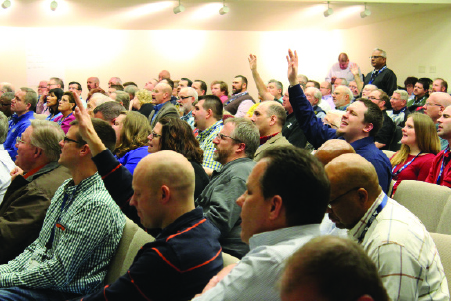
More than 230 pastors, staff, and leaders from churches across Illinois heard practical strategies as Lake spoke on the importance of leading self, leading others, leading leaders, and leading an organization during the two-day event held January 24-25.

“This opened my eyes to the difference being intentional in your leadership strategy will make,” said Garry Hostetler, pastor of First Baptist Church Bogota in Newton. “I enjoyed getting together with other pastors and leaders and getting real help that I can put into practice right away.”

“In my ministry, I discovered if we were going to grow a congregation, I had to grow as a leader. It is important for leaders to realize their leadership lid and to grow past it.”

“When we’re spiritually disciplined we’re often more vocationally effective,” Sarah Bond urged those attending one of 28 breakout sessions. The professor at SIU-Carbondale challenged church leaders to “become the change-maker God intends you to be.”

She—and the other trainers and equippers—found a ready audience.

“When I was pastoring it was alarming to discover that my leadership was one of the obstacles to the growth of the church,” said Mark Emerson, IBSA’s associate executive director of the Church Resources Team. Emerson’s pastoral experience helped him in planning the Summit. “In my ministry, I discovered if we were going to grow a congregation, I had to grow as a leader. It is important for leaders to realize their leadership lid and to grow past it.”

For attenders at the Summit, much of the experience was about discoveries about themselves.

“When we do this kind of leadership development, pastors begin to get excited about their own growth and the growth of leaders in their church,” Emerson said. “I believe every pastor believes leadership development is important, yet it tends to get lost amid the plethora of other ministry tasks.”

Doers vs. developers

2-6-17-mac-lake

Mac Lake

Lake opened the conference with a story about the small town where he grew up, and the small church where he grew as a leader. Handley, West Virginia, peaked at 633 residents in 1980.

“I don’t think we ever broke 70 (attenders) at Handley Baptist Church,” he said, calling his home church not small, but “normative.” It was the same size as most Southern Baptist churches. Yet, it was in this environment that Lake discovered he could be a leader. “That church taught me how to love like Jesus and how to live like Jesus…. The opportunity the normative-size church gave me to serve like Jesus and develop my leadership skills started there as a kid.”

Lake said leadership development is vital for all disciples of Christ no matter where they are in their Christian walk. He shared the story of his three “conversions” in his personal growth. Lake said:

(1) He went from “lost to found” when he was saved at 9 years old at that small church in West Virginia, then
(2) he went from “being a ministry doer to a ministry leader” when he was in seminary at 27, and finally
(3) a few years later as an associate pastor, he went from “leader to developer of leaders.”

“One of the biggest challenges for leaders who move to this level of leadership is continuing to act like a leader rather than a leader of leaders,” Lake said, offering a comparison between disciples and disciple-leaders. At first glance, discipleship training and leadership development might seem similar. While they go hand in hand, there are important distinctions. For example:

• Discipleship focuses on intimacy with God while leadership development focuses on influence with others.
• Discipleship is learning to live like Jesus while leadership development is learning to lead like Jesus.
• In discipleship, a person is learning to lead himself, while leadership development teaches how to lead others.
• Finally, discipleship works on the character of the person while leadership development works on his or her competency.

“While some people make the jump from disciple to leader in our churches, many aren’t prepared to do it,” Lake said. “Nobody taught them before they got thrown in. So you have all these people in the swimming pool of leadership and they are splashing and hollering—nearly drowning—because they don’t know how to swim. Their leadership, the church’s ministries, and even their personal relationship with God will grow to a whole new level once they are developing as leaders.”

“It’s like asking a lost person to reach someone for the Lord. They’ve never had that conversion so they don’t have the knowledge and realization they need.”

Without a consistent and intentional leadership development plan, many of the great “doers” of the church or ministry will struggle in leadership positions. “It’s like asking a lost person to reach someone for the Lord,” Lake said. “They’ve never had that conversion so they don’t have the knowledge and realization they need.”

Leaders often find themselves focusing more on the work than on the workers, and that has a limiting effect on the growth of ministry. “One of your primary responsibilities as a leader is stewarding the gifts and strengths of those in your charge,” Lake advised. Most churches structure for ministry function, rather than for leader development, he warned.

2-6-17-ils-attenders

A glimpse of the future
Developing the next generation of leaders presents many challenges in this culture of never-ending distractions and instant gratification, but Lake is optimistic about the future of the church.

“Millennials in general place an extremely high value on relationships and authentic faith-sharing,” he said. “A pastor willing to mentor this group must be vulnerable. They need to see we’re all co-learners because, in reality, we are. A 50-year-old pastor is no longer in the world he knew. He’s living in their world.”

He said all leaders must understand the dangers of social media and the challenge to stay focused and turn off distractions. At the same time, leaders must see how social networking can be beneficial for the work of God and utilize its potential for kingdom growth. “With technology and all that it entails, mentors have to embrace this world and ask for help navigating this new culture to stay relevant,” Lake said.

“With technology and all that it entails, mentors have to embrace this world and ask for help navigating this new culture to stay relevant.”

Though Lake has taught leadership to pastors and church planters across the country, this was one of the few statewide conferences he’s been invited to where the main purpose was to teach leaders how to lead with excellence.

“Illinois Baptists see the need to build a culture of leadership development,” Lake said. “Too many visions die because the leader never trained others to do what he did. The Great Commission is a vision big enough for others to give their lives to. We have to think in terms of ‘generations.’”

We used to tell leaders to “replace themselves” by training others to come after you. “Don’t replace yourself, reproduce yourself” with leaders to work alongside you, he concluded.

Lake said he prays that together leaders will create the culture in their churches that will produce the best harvest. “I applaud the Illinois Baptists for feeding their pastors and helping with the challenge of leadership issues,” he said. “This is important and these are things you don’t necessarily learn in seminary.”

– Reported by Kayla Rinker, Lisa Sergent, Meredith Flynn, and Eric Reed

Who’s at the table?

ib2newseditor —  August 18, 2016

Office chairLooking around the table at a leadership meeting, I noted who was there. More important, I realized who wasn’t.

This was the first meeting under the church’s new leadership structure. Most of the people had served in leadership capacities and most of them had served together at one time or another. But they had not all served together at the same time.

So we brought them together.

The need in this congregation was enhanced communication among ministry planners. The church’s various ministries had a history of bumping heads. There was confusion over use of rooms and recruiting workers. There was often a sense that no one really knew what was going on. And it was evident that the ministry teams held differing views on their own purposes, and different interpretations of the vision of the church.

Surely a regular meeting of the leaders would help to fix this. But it didn’t.

Not all the leaders were there. One man who said he hated meetings chose not to attend, so his cause had no voice in the allocation of dates and resources. Another team had three people in attendance, so the discussion felt tilted to their interests.

Sitting there, I made a few notes:

• Everyone here is a longtime member. Are there new people with fresh ideas we should bring to the table?

• Everyone is from the same generation. How can we bring other age groups to the discussion?

• Everyone is from an elected position, but not all ministries are represented. And a couple don’t need this level of input. Which are the right ministries to include so the vision is accomplished?

• Our discussion seems dominated by a few not-well-prepared people. How can we improve their preparation or dismiss them from the group?

• After this meeting, we still need buy-in from “unelected” leaders. How can we bring opinion leaders to the table?

Next time you’re at a leadership meeting, give some thought to who’s at the table.

 This article first appeared in the Fall 2016 issue of the Resource Magazine. Read it online at Resource.IBSA.org.

 – Eric Reed is editor of the Illinois Baptist

Princesses and Hot Dogs

A lesson in leadership from a bold five-year-old.

A few days ago I saw a brief news story about a dance class for five- and six-year-olds, where the instructor had invited the little girls to wear costumes at their next rehearsal. She dubbed it “Princess Day,” knowing how many of her tiny dancers would enjoy dancing as princesses, and also how many of them already had princess costumes.

What helped the story go viral and hit the headlines, however, was the photo of seven little girls in princess costumes standing with one very unique little girl, dressed in a hot dog costume. Five-year-old Ainsley chose to come to Princess Day not with a tiara on her head, but with a stripe of mustard down her front. One of the many captions and tweets that circulated with the photo simply read, “In a world of princesses, dare to be a hot dog.”

“In a world of princesses, dare to be a hot dog.”

There are so many things that encourage me about this story. First, there is the individuality, confidence, and boldness of the little girl. Many times I have found myself wanting, even needing, to be the hot dog in a group of princesses. I had a minority opinion, or a different point of view, or simply knew that the direction of the group was not right. It’s just easier to conform than to stand alone.

Then there was the dad who encouraged little Ainsley. He later tweeted, “No parent is ready to learn that their daughter is trending…Best part is it was all her idea!” The courage and confidence to be different, and the empowerment to act on that difference, often comes from those closest to us.

But for me, the most encouraging character in this little real-life drama was dance teacher Sarah, who was suddenly placed in the position of leading a group with a non-conformist. Sarah could have taken offense at the little girl who didn’t follow instructions or apparently respect her position as teacher. She could have sent her home, or embarrassed her in front of the class, or not included her in the dance or the picture.

Instead, this good-natured teacher embraced the little hot dog’s uniqueness, accepted both her and her costume into the group, and proudly took the picture that ended up making her class famous.

In doing so, Sarah challenged me as a leader. And I think she should challenge all of us who lead as pastors, Sunday school teachers, and ministry leaders. As hard as it is to be the hot dog in a group of princesses, it may be even harder to effectively lead a group of presumed princesses when a hot dog shows up.

That hot dog may be the deacon with an outreach idea that would take a church outside its comfort zone. It may be the sincere new believer in a Sunday school class who asks questions that don’t have tidy or pat answers. It may be the church member who presses an uncomfortable budget issue in a business meeting, when it would be easier to just vote yes and go home.

A confident, secure leader embraces multiple points of view and even minority opinions as ways to potentially make the final decision or outcome even better. An insecure leader wants only quick, compliant agreement.

After the picture became famous, teacher Sarah revealed that Ainsley was actually wearing a princess costume underneath her hot dog costume. Ainsley explained that she was still a princess on the inside. I found that to be an extra encouragement. When we’re patient and accepting of hot dogs, even on Princess Days, we often find that deep down they want to dance too. And God may even use them, or you or me, to make the dance more famous.

Nate Adams is executive director of the Illinois Baptist State Association. Respond at IllinoisBaptist@IBSA.org.

Grappling with leadership

Lisa Misner —  February 15, 2016

A better grip

It may be hardest part of ministry, but the local church’s future depends on leaders who understand who—and how—they lead.

Michael Kanai came to the Illinois Leadership Summit excited about recent happenings at his church. “We had a retreat and we made many plans and casted our vision,” the pastor of Orchard Valley Baptist Church in Aurora said. “Now,” he continued, “we need to implement and execute the plans.”

For many pastors and church leaders, that’s the hard part: turning plans into action and leading the congregation to achieve the goals. A stumble or two at this stage can stall the work and cause the people to wonder about the abilities of the leader.

But, don’t be mistaken, this article is not about goals and action plans. It’s about what happens in the heart of the leader who realizes he can’t do the ministry alone. He needs a team, and more important, he needs a team of leaders.

“We are at a point where we are needing to lead leaders,” Kanai said. “It’s really helpful learning the difference between leading followers and leading leaders. The ‘collective’ we just attended just told us there is a steep step between those two types of leadership—it’s a pivotal shift in the way you lead.”

Halfway through the Summit, Kanai was clearly “getting it.”

Setting the (grappling) hook

For two days in January, pastors, staff, and church leaders convened at the Springfield facilities of the Illinois Baptist State Association. Last year at the same time, almost 1,300 leaders from 10 Baptist state conventions across 13 states gathered for the Midwest Leadership Summit at the nearby Crowne Plaza.

Previously called the North Central States Rally, the triennial event schooled ministry leaders in programming and skills to help grow their churches and fulfill their callings in their Upper Midwest mission fields. But this meeting was different: First, it was an Illinois-only event. With the two-year break between conferences, IBSA sought to build on the momentum from the 2015 event by bringing Illinoisans together to address the leadership issues we face here. And second, this event was not so much about skills, but about the heart and character of the leader.

“When most pastors think about leadership in ministry, they view it as administrative duties, supervisory oversight, or managing some new project,” said associate executive director Pat Pajak. “Until a pastor discovers the necessity of leading himself, especially in the areas of spiritual disciplines and character development, he will never be able to lead followers, lead leaders, or lead an organization in the way God intended.”

That’s why this Summit was different.

“IBSA frequently offers ministry skill training, but we made it clear from the outset that the Summit would focus on one’s personal growth as a leader,” said executive director Nate Adams. “That shift appears to have both met a felt need, and also created an itch among leaders that IBSA hopes to help scratch in the days ahead.”

ILS16 Bumgarner_Tuesday

Bob Bumgarner

The centerpiece for the event was the new leadership development process that the IBSA team has been crafting for more than a year. The main speaker for the event was Bob Bumgarner, a leadership expert who has contributed to the creative process. He was joined by four Illinois pastors in the main sessions (called “collectives”), and by 28 other pastors and ministry leaders in breakout sessions (called “intensives”).

“I think we would all agree that leadership development is forefront and needed in Southern Baptist life,” Bumgarner said. “And I also think we all would agree that it’s not as easy as it sounds.” Bumgarner (pictured above) headed leadership development for the Florida Baptist Convention and currently serves as executive pastor of Chets Creek Baptist Church in Jacksonville, Florida, a large, multi-campus congregation.

Bumgarner sought to dispel the myth that all leadership is alike no matter the group or setting; and that leadership is innate and there’s nothing that can be done to improve it.

Not true.

IBSA’s four-part plan

Leading self is about growing your capacity to be on Jesus’ mission as a person of influence.

“The hardest person I ever lead is me,” Bumgarner said, as he began to unpack the four phases in IBSA’s leadership process. “We have to understand that before we can lead others well, we have to learn to lead ourselves.”

Bumgarner pointed to the iceberg as a good illustration of the issues in self-leadership. Most of it is under the surface. That’s why character is so important. “You can get so successful that your character can’t support (your ministry)….If you want to be a better self-leader, figure out how you can hunger for God’s wisdom.”

He recommended spending five hours per week developing character and 50-60 hours developing ministry.

“Ministry is a place where you can be completely busy or completely lazy, and people won’t know,” said Heath Tibbetts, pastor of First Baptist Church of Machesney Park. He brought some personal applications for pastors. “I’ve realized strong self-leading means that even if no one else is looking, the Holy Spirit is keeping me accountable.”

Table_fellowship

Eric Trout, Ashby Tillery, and Mark Mohler, all from Marion, were among Summit attenders who watched the large-group collective session in the room adjacent to IBSA’s auditorium.


Leading followers
is about leading individual contributors, people who are not leading others, often serving as a ministry head or teacher in small groups or classes.

There are official followers, such as deacons or committee members, but there are also unofficial followers, the people who like or respect the leader, who have bought into the vision and want to be part of making it happen.

Bumgarner said at this stage, the objective is to identify your followers, inspire them by giving them a leader worth following, initiate followers by casting vision, and invest in their personal development. Make a goal, he advised: “By the end of next year, I want to have invested this amount of time into this number of people.”

“Our church grew when I stopped trying to lead big and started trying to lead through small groups,” said Mark Mohler, pastor of Second Baptist Church of Marion. He described bringing his congregation into a new vision for the church that found its most vital point of connection at the level of Sunday school classes.

Leading leaders is directed toward those who lead others. It requires a different skill set to keep those people who have leadership abilities of their own on your team.

Here is the pivotal point in the four phases of leadership. Adams described an image of stairs. In this case, not all the stairs are of equal height. Some have a short rise, others have a tall rise. The step between leading followers and leading leaders is the biggest jump for most people. And as Kanai described his own discovery at the Summit, it’s the most critical.

A leader who can only lead followers is limited by his own capacity; but a leader who can lead those who lead multiplies his capacity. But leading leaders is challenging and it’s risky. Other leaders have their own ideas, and they may set their own agendas.

“It can be one of the scariest moments of our life,” Bumgarner said, “nurturing your baby and then handing the baby to another person to raise….Regardless of the pain sharing a ministry can cause, something bigger and better can happen as a result.”

At this stage, empowerment of additional leaders must be balanced with clear, ongoing vision-casting: “85% of your success in leading leaders is wrapped up in common purpose and clear communication,” Bumgarner advised. “Do enough (communication) so that downstream from that work, we can see the fruit we’re looking for.”

Leading organizations is about leading leaders who lead other leaders. It’s about having a vision for the whole ministry and communicating that effectively to the whole organization.

In church life, this leader is usually the senior pastor, but not every pastor is actually leading at this level. He may be leading followers, or even leaders, but not effectively guiding the work of the whole ministry.

“Leading organizations requires working on the ministry versus in the ministry,” Bumgarner said. Many listeners in the room seemed to connect with this comment. He described a season when his ministry was consumed by the work of ministry rather than giving adequate attention to the purpose of the ministry, its vision and goals.

Leadership at this level requires strategic planning about how to do the ministry. “Your church needs you to facilitate the things that need to be done in order to share the gospel. If you find time to get the top 20% done, the other 80% will be done right.”

Bumgarner concluded, “The point of organizational functionality is to keep the main thing the main thing.”

– Coverage of the Illinois Leadership Summit by Meredith Flynn, Kris Kell, Kayla Rinker, Lisa Sergent, and Eric Reed

ILS16 Bumgarner_Tuesday

Bob Bumgarner

The two-day Illinois Leadership Summit kicked off January 26 with nearly 250 leaders from around the state filling the IBSA Building in Springfield.

Keynote speaker Bob Bumgarner led participants through the first two phases of IBSA’s four-phase leadership development process: leading self, leading followers, leading leaders, and leading the organization. Bumgarner, a leadership expert, is executive pastor of Chets Creek Baptist Church in Jacksonville, Florida.

He shared that character is the focus of leadership development. “Leading myself is a growing self-awareness of who I am, what my strengths are and where I am headed coupled with the character, commitment, and competence required to get there.”

More simply, he said, “We have to understand that before we can lead others well, we have to learn to lead ourselves.”

Bumgarner shared, “When we develop our heart we are accepting our assignment. The goal for personal responsibility is accepting responsibility for our actions when we lead… We don’t do that because it’s our job, we do that because it’s our calling.”

Stressing the importance of good leadership, Bumgarner noted, “Our impact on the people we lead either makes them better or worse.”

The job of the leader is to help the people your leading see and shape the future. “These are people who said I will trust and follow you,” he said. “What do you really want to accomplish? Until you tell them what you want to accomplish, they don’t know how to contribute.”

The Illinois Leadership Summit is part of IBSA’s ongoing leadership development plan. The conference features 27 speakers in 32 breakout sessions, including some Illinois pastors sharing experiences from their churches.

The Summit continues January 27. For coverage of the event, like us on Facebook and follow us on Twitter. #ILS16

The State of the Mission

Lisa Misner —  January 25, 2016

Nate Adams State of the MissionI’m writing this the day after watching President Obama’s final State of the Union Address. After almost an hour of evidence and persuasion, the President neared the end of his address by declaring, “And that’s why I stand here, as confident as I have ever been, that the state of our Union is strong.”

A few minutes later, South Carolina Governor Nikki Haley delivered the Republican response, acknowledging that President Obama “spoke eloquently about grand things,” and that “he is at his best when he does that.” Then she quickly added, “Unfortunately, the President’s record has often fallen short of his soaring words.” She went on to describe what she called a weak economy, a crushing national debt, an ineffective healthcare plan, chaotic unrest in many cities, and “the most dangerous terrorist threat our nation has seen since September 11th.”

And so viewers were left to wonder which facts to believe, which leader to trust, and which picture of America is most accurate.

I understand the dilemma, though. Here at IBSA, we are at the time of year when we cumulate and analyze data from almost a thousand churches’ Annual Church Profiles (ACPs).

Looking at some measurements, the state of our mission here in Illinois appears strong, at least compared to the previous year. The number of new church plants rebounded from 7 in 2014 to 22 in 2015. Cooperative Program missions giving was up 1.5% in 2015, and Mission Illinois Offering giving was up more than 10%. Mission trip participation remained strong at just under 24,000 volunteers.

But other measurements might produce a different picture. Baptisms reported by IBSA churches in 2015 are down from 2013 for the second straight year, and overall worship attendance and Bible study participation were flat to down as well.

My primary concern is that, in total, our churches’ statewide, cumulative impact on lostness in Illinois is not growing, at least not numerically.

President Obama quipped near the beginning of his address that he would try to be brief, because he knew there were several in Congress who were anxious to get back to Iowa (to campaign for the 2016 Presidential election). His joke underscored the reality that, whatever you may think about the current state of things, the more important issue is where we go from here.

To advance our mission here in Illinois, I would challenge us toward two primary imperatives—evangelism and leadership development.

I wrote recently about five actions in churches that, statistically speaking, most often result in people coming to faith in Christ. They are an evangelistic prayer strategy, Vacation Bible School, witness training, outreach events, and starting intentional new groups. If your church could use some help in these areas, our IBSA staff would love to assist.

I would also challenge us all to develop leaders more intentionally in our churches. At this month’s Illinois Leadership Summit, more than 200 church leaders are gathering at the IBSA Building in Springfield to explore what it means to “lead self, lead followers, lead leaders, and lead organizations” more effectively. Even if you miss the Summit, our IBSA staff will welcome the opportunity to help you and your church leaders with an intentional leadership development process.

In many ways, the state of our churches’ mission here in Illinois is still strong. But to keep it that way, and to advance the gospel into the lostness of Illinois, we must recommit to the important work of evangelism and leadership development.

Nate Adams is executive director of the Illinois Baptist State Association. Respond at IllinoisBaptist@IBSA.org.


Learning how to learn

Lisa Misner —  January 7, 2016

LeadershipIf you have been in a leadership role for very long, you have experienced organizational insanity! It can be described as doing what you have always done, the way you have always done it and expecting different results. We chuckle when we hear that because we know how easily it can happen.
It would be nice if annually articulating a clear vision based on the Great Commission, creating a strategy based on the five functions of the church, and then providing training for our staffs and volunteers were all it took to be effective in ministry. Unfortunately, it is not. In addition to these important leadership activities, we must help the churches we lead become learning organizations to prevent drifting off mission.

A church that is a learning organization will stay responsive to its ministry environment. It will learn better ways to meet the needs of its community and create new on-ramps for the gospel.

We see the principle of being a learning organization in Acts 6:1-7. When the early church had success in reaching Greek people with gospel, the need for reorganization and new staffing to meet the growing ministry needs became evident. These believers learned what needed realignment by looking at the ineffectiveness of their food distribution system and were able to transform their ministry structure, resulting in greater disciple-making capacity.

We live in a time when there is a lot of talk about church revitalization and church planting. I am for both. Let me suggest that when churches need revitalization, often it is because they have quit learning. They no longer know how to make adjustments to their mission efforts because they are not learning from their field efforts. They might not even think that it is necessary to learn from their results in the field. I contend that after we have done our theological homework, the next source for vital organizational learning is the mission field we are trying to reach.

Here are three ways churches can stop the insanity and become learning organizations.

1. Establish a supportive learning environment. Create opportunities for staff or volunteers to express their thoughts about the work they are currently doing without fear of being belittled. Help people become aware of opposing ideas that are present. Help them move beyond fixing problems to creating novel solutions. I have found asking these four questions about how things are going is a helpful place to start:

  • What is right about our methods and results?
  • What is confusing about our methods and results?
  • What is missing from our methods and results?
  • What is wrong about our methods and results?

2. Create helpful learning processes and practices. In order for an organization to learn, helpful facts and information must be gathered, processed, interpreted, shared and acted on. Probably the best known example of this approach is the U.S. Army’s After Action Review. It is a systematic debriefing after every mission:

  • What did we set out to do?
  • What actually happened?
  • Why did it happen?
  • What will we do next time?

3. Model learning at the senior leadership level. Senior leaders who model learning:

  • Invite input from peers and subordinates in critical discussions.
  • Ask probing questions.
  • Listen attentively.
  • Encourage multiple viewpoints.
  • Provide time, resources and venues for reflecting and improving past performance and for identifying challenges.

Remember, you will lead the organization that you allow or the one that you create.

Bob Bumgarner is executive pastor at Chets Creek Church in Jacksonville, Fla. He will be the featured speaker at the Illinois Leadership Summit, January 26-27, 2016. Reprinted by permission from the Florida Baptist Witness.


Leadership Summit 2016 logoAbout 250 leaders from IBSA churches will gather in Springfield January 26-27 for the Illinois Leadership Summit. As a follow-up to the Midwest Leadership Summit last January, which brings together leaders from 10 state conventions every three years, this Illinois-focused conference is expected to build on the momentum of the large regional event.

“I believe this is the first of its kind training that we have designed specifically for individual leaders,” said Mark Emerson, associate executive director of IBSA’s Church Resources team. “IBSA often holds training that focuses on church positions or ministry skills, but this training is unique in that it focuses on the individual leader.”

The Illinois Leadership Summit is part of IBSA’s ongoing leadership development plan. The conference will feature 27 speakers in 32 breakout sessions, including some Illinois pastors who will share experiences from their churches. Among the speakers are Heath Tibbetts of First Baptist Church of Machesney Park, Michael Nave of Cornerstone Church in Marion, Sammy Simmons of Immanuel Baptist Church of Benton, Adron Robinson of Hillcrest Baptist Church in Country Club Hills (metro Chicago), and Doug Munton of FBC O’Fallon. (The full list is here.)

Keynote speaker for the event is Bob Bumgarner, executive pastor of Chets Creek Baptist Church in Jacksonville, Florida. He is a leadership expert who formerly served with the Florida Baptist Convention.

Bumgarner will teach IBSA’s four-phase leadership development process: leading self, leading followers, leading leaders, and leading the organization.

“This training is important for pastors because it is common in the ministry to reach a leadership lid,” Emerson said.

“Some of us are dealing with barriers to growth in our church that are out of our control—buildings, parking, location. But growing as leaders is something that all of us can do this year. If we grow as leaders, the church also grows.”

Seating is limited. Register online at IBSA.org/summit.


NEWS | Eric Reed

Admittedly, the numbers are not great. But the tally of the 2014 Annual Church Profiles filed by IBSA churches shows the need in Illinois is growing, and the recent call to prayer for spiritual awakening is on target.

“The job is getting harder, the climb is getting steeper, the leaders are getting fewer—but the challenge is no less important,” said IBSA Executive Director Nate Adams prior to the report presented to the IBSA Board in its March meeting. In fact, the challenge grows, as does Illinois Baptists’ responsibility in our large and significant mission field.

The 2014 ACPs, completed by 95% of IBSA churches, showed declines in several areas including worship attendance (-10.5%), baptisms (-11%) and Sunday school/Bible study participation (-1.5%).

Adams expressed concern about the declines, especially in baptisms, which had increased in recent years. “The actual decline is about 3.4%” when comparing churches that reported in both 2014 and 2013. Several churches that reported baptisms in 2013 were “non-cooperating” in 2014, therefore their tallies were not included in the ACP tally.

Despite wintry weather, the IBSA Board met March 3 in Springfield, where Sandy Barnard (below) was honored for 30 years at IBSA.

Despite wintry weather, the IBSA Board met March 3
in Springfield, where Sandy Barnard (below) was honored for 30 years at IBSA.

Sandy_Barnard_0316

While total missions giving through the Cooperative Program was down slightly year-to-year, from $6.34 million to $6.1 million, the average percentage of undesignated offerings given by Illinois churches held steady from 2013 to 2014 at 6.8%. The national average was 5.5% in 2013, up from 5.4% the year before and marking the first upward tick in over 30 years.

The Board approved a plan to draft the 2016 IBSA budget based on projected CP giving of $6.4 million, and to hold the Illinois/national SBC split on Cooperative Program offerings at 56.75/43.25%. Gifts above the hoped-for goal will be shared evenly by IBSA and the national SBC at 50/50.

Four goals for 2016 were recommended by the board’s strategic planning committee and approved. They will guide planning for IBSA’s work next
year, with a focus on the development of leaders who grow healthy, evangelistic, reproducing congregations. Some goals may seem beyond our capability, said committee chairman Larry Wells, “but God can do it all through his people who pray and who work diligently for the kingdom.”

Adams explained the new focus on leadership development in his report to the Board, citing attendance of more than 300 Illinois church leaders at the January 20-22 Midwest Leadership Summit in Springfield as evidence of interest in, and hunger for, training and coaching. “I think we have such a long way to go in true, deep leadership development,” Adams said. “We’ve come a long way, but we have much more to do.”

Adams pointed to deployment of eight part-time zone consultants across the state and the work of the new Church Resources Team creating new conferencing opportunities and learning cohorts as ways IBSA is focusing on growing effective church leaders.

Board members braved a winter storm to attend the March 3 meeting, with some traveling icy roads in Central Illinois to handle state association business. That raised the question whether such meetings can be joined by telephone or over the internet. With 27 members present, a quorum was easily reached, so the meeting proceeded. A similar question about long-distance electronic participation in board and committee meetings was raised at the IBSA Annual Meeting in November. Board chairman Chip Faulkner reported the issue is presently under consideration.

The Board welcomed seven new members: Steve Hardin of Roland Manor Church in Washington, Curt Lipe of Faith Church in Galesburg, Scott Nichols of Crossroads Church in Carol Stream, Jay Simala of New Song Church in Zion, Sammy Simmons of Immanuel Church in Benton, and Daniel Wilson of Grace Church in Granite City.

For 30 years of service to Illinois Baptists, Executive Administrative Assistant Sandy Barnard was honored with a standing ovation, a gift, flowers, and cake. (Later, she was seen cleaning up after the party.)

Cathy Waters was recognized for 10 years’ service. She was recently promoted to the position of Ministry Coordinator for the Church Resources Team, organizing large events and conferences.

Eric Reed is editor of the Illinois Baptist newspaper and IBSA’s associate executive director for the Church Communications Team.