Archives For November 30, 1999

Personal belief, salvation, spiritual disciplines, formation

The BriefingInterVarsity backs #BlackLivesMatter at Urbana 15
InterVarsity Christian Fellowship (InterVarsity) devoted an evening at its Urbana missions conference to the group Black Lives Matter and called on the 16,000 students present to support the movement. InterVarsity’s support for the group caused controversy in part because of the  speaker’s anti-police rhetoric and comments which were seen as critical of the pro-life movement. InterVarsity has since issued a clarification.


Scalia: Presidents Honoring God Is Constitutional
Supreme Court Justice Antonin Scalia said the U.S. Constitution doesn’t prohibit presidents from honoring God or the government from placing religion above secularism, though added that one denomination cannot be favored over another. Scalia, told the audience at Archbishop Rummel High School in New Orleans that there is no reason to believe the Constitution dictates state neutrality between religion and its absence.


Catholic school ordered to hire gay employees
A Massachusetts state court ruled in mid-December that a Catholic school may not deny employment to a homosexual. Fontbonne Academy offered Matthew Barrett a job as a food service director in 2013. But when Barrett filled out a new employee form and listed his “husband” as an emergency contact, school administrators rescinded the offer, citing Catholic belief that marriage is between a man and woman.


NC pastor disarms man during service
A man carrying a semi-automatic assault rifle walked into the New Year Year’s Eve service at Heal the Land Outreach Ministries in Fayetteville, NC. “I asked him, ‘Can I help you?'” Bishop Larry Wright shared. “He said, ‘Can you pray for me?'” Wright disarmed the man and began to pray.


Billy Graham makes ‘Most Admired’ list for 59th time
Gallup released it list of most admired people in 2015 with Billy Graham rounding out the top ten. It is the 59th year Graham has been named to the top ten list.  According to Gallup, “Graham has been among the top 10 most admired men every year since 1955 except for 1962, in addition to 1976 when Gallup did not ask the question.”

Sources: Baptist Press, Billy Graham Evangelical Association, Christian Post, Christianity Today, Gallup, NBC News, and Religious News Service.

Editor’s note: After an often tearful year, the Christian’s counterattack is hope.  The enemy may use the events of last year to strike chords of fear, but in reporting them, we offer notes of hope for 2016. God is in control of this world, and whatever happens, this history being made before our eyes will turn people toward him. He is our hope.
This is our certainty as we anticipate the new year, our hope.

Torch-squareBy Lisa Sergent | When did we become the enemy?

In just a handful of years, we have come to understand what it means to be in the minority and to have our rights challenged. The Supreme Court ruling legalizing same-sex marriage in all 50 states may serve as the line in the sand. Crossing that line happened quickly—not that Christians have moved, but the culture moved sharply to the left, putting followers of Christ on the defensive. Over half of all Americans approved of same-sex marriage, and the divide is even greater among younger people.

And so it was that in 2015 religious liberty really became an issue. Same-sex marriage may have been the flashpoint, but now the First Amendment rights of believers, pastors, and churches are on everyone’s minds. As never before, churches are asking legal, constitutional questions: Are we still protected? If so, how long will it last?

The growing divide between Christians and majority public opinion has led to increased concerns about religious freedom. In 2012, Barna Research found 33% of Americans believed “religious freedom in the U.S. has grown worse in the past 10 years.” In just three years that number grew to 41%. Among evangelicals that number is 77%, up from 60% in 2012.

Complicated response: A 17th-century Baptist stance that the government should stay out of all religious issues is a more tenable position in the 21st century than the “God and country” approach of the Moral Majority years, when evangelicals’ morals were in the majority. Today, Baptist leaders are having to advocate from a different posture.

When Kentucky court clerk Kim Davis was arrested in September for refusing to issue marriage licenses to same-sex couples, not all Christians agreed with her refusal based on her faith.

Fellow Kentuckian Al Mohler, president of Southern Seminary, framed the larger issue: “What this story reveals beyond the headlines is that the moral revolution on marriage and human sexuality will leave nothing as it was before… A legion of Christians struggle to be faithful in their own situations, responsibilities, and callings, and our churches will struggle to find a new relationship with an increasingly hostile government and society.”

The BriefingPercentage of Christians in US remains high
About 75% of Americans still identify as Christians, after a 5% drop since 2008, according to a new Gallup poll, which also shows that the number of those having no formal religious identification has increased by 5%, amounting to 20%.


Abortions in Illinois fall by 28%
The Illinois Department of Public Health released its data from 2014 showing that the abortion rate for minors fell by nearly 28% from the year prior, representing over 500 lives. The Mauck & Baker Law Firm in Chicago attributes those numbers to the state’s newly-enacted parental notification law.


Chicago area funeral home to serve alcohol
Last week, the village board in Wheeling, IL approved the creation of a new liquor license allowing Kolssak Funeral Home to serve alcohol during funerals and wakes. “Right now we’re pioneering, we’re out there looking far out, thinking these things could change the life celebrations at a funeral home,” David Kolssak said. “The spirit of this is not to do nothing but help people at a time of need.”


Iranian pastor Fathi freed from prison
Iranian pastor Farshid Fathi has been freed after five years imprisonment in Tehran because of charges linked to his Christian faith, Middle East Concern announced Dec. 22, estimating nearly 100 Christians remain imprisoned there.


Illinois is the biggest loser
New data released by the U.S. Census bureau showed that in terms of domestic migration — people moving about within the United States — Illinois saw roughly 105,200 more people leave than arrive. Even when offset by a gain of more than 37,600 by way of international migration, Illinois still ended up about 67,500 in the negative column.

Sources: Baptist Press, Christian Post, Daily Herald, Illinois Policy, Illinois Review

Editor’s note: After an often tearful year, the Christian’s counterattack is hope.  The enemy may use the events of last year to strike chords of fear, but in reporting them, we offer notes of hope for 2016. God is in control of this world, and whatever happens, this history being made before our eyes will turn people toward him. He is our hope.
This is our certainty as we anticipate the new year, our hope.

Unrest and reconciliationBy Lisa Sergent | Chicago joined the list that started with Baltimore and Ferguson, Missouri as protestors against police shootings of young African American men took the streets, often chanting “black lives matter.” In contrast to other troubled settings, recent marches in Chicago were mostly peaceful, despite the volatile subject matter.

Race-related protests spread to college campuses such as the University of Missouri in Columbia, which led to the resignations of both the president and chancellor. Even the sense of safety a church provides was shattered one June evening, when a white shooter shot and killed nine people of color while they met for prayer at Emanuel African Methodist Episcopal Church in Charleston, S.C.

In response, religious leaders continue to the call for racial reconciliation. But the church’s role is unclear. Some are counting on the church to bring peace, others say the church is fanning the conflict.

According to Barna Research, 84% of Americans agree with the statement: “There is a lot of anger and hostility between different ethnic and racial groups in America today.”

Surprisingly, Barna’s polling revealed a significant minority believe “churches add fuel to the fire of racial animus; more than one-third say ‘Christian churches are part of the problem when it comes to racism’ (38%).” The percent is even higher among the Millennial generation (ages 18 to 31) where 46% believe Christian churches add to the problem of racism.

Despite those numbers, the same research found 73% of Americans believe, “Christian churches play an important role in racial reconciliation.” That view is as common among whites (75%) as it is among blacks (77%), although Hispanics are a bit more skeptical with 67% believing churches can play a role.

A role for the church: SBC leaders have held and participated in summits and ministries aimed at reducing racial tensions throughout 2015. SBC President Ronnie Floyd declared “racism and prejudice is a sin against God” at June convention in Columbus, Ohio. At the same meeting, Floyd led messengers in a prayer for racial reconciliation within the convention’s churches and across the nation.

Even more hopeful is LifeWay President Thom Rainer who forecasts fewer segregated churches in 2016. On his blog, Rainer stated, “For most of American history, 11 a.m. on Sunday was the most segregated hour of the week. That is changing. A church that is not racially and ethnically diverse will soon become the exception instead of the norm.”

cultureBy Nick Rynerson

“Unless the gospel is made explicit,” says Matt Chandler in his book “The Explicit Gospel,” “people will believe that Jesus’s message is that he has come to condemn the world, not to save it.”

Much has been made lately of this idea, that the gospel must be consistently made the explicit focus of our ministry, teaching, preaching, writing, thinking, and living. At first it sounds good; who wouldn’t want to center their life on the gospel explicitly preached? Declaring, believing, and enjoying God’s grace given to us through the sacrificial death and resurrection of Jesus Christ is the penultimate privilege of the Christian.

But what does this mean for Christian bakers, musicians, filmmakers, writers, and insurance salesmen? Does this mean we need to weave gospel presentations into everything we do and avoid things that don’t fit in with our understanding of the gospel?

According to the Bible, maybe not.

While Jesus said that the whole Bible testified about him (John 5:39), in the first 39 books of the Bible, there is basically no explicit mention of Jesus. But that certainly doesn’t mean the gospel wasn’t present in the Old Testament. After his resurrection, Jesus on the road to Emmaus applied the explicit gospel to the less obvious gospel message of the Old Testament: “Beginning with Moses and all the Prophets, he interpreted to them in all the Scriptures the things concerning himself” (Luke 24:27).

One of the wonderful things about the gospel is that it is a story. It’s the story of man’s rejection of God and God’s redemption of the creatures that rejected Him through the blood of the sinless son of God. And in this story there are themes that any good gospel presentation will communicate: rebellion, love, grace, redemption, and unmerited favor.

When we see the world through these “gospel-colored glasses,” we begin to see those themes in unexpected places. Understanding the explicit gospel helps us see the implicit gospel. By having a level of explicit “gospel fluency,” as Pastor Jeff Vanderstelt puts it, we aren’t provoked to put gospel demands on earthly things. Instead, we begin to see echoes of the explicit gospel in those same earthly things.

The apostle Paul, maybe the most “gospel fluent” person to ever walk the earth, modeled this for us in Acts 17. Here, Paul preaches the explicit gospel in Athens and then, incredibly, cites Greek pagan poetry as examples of the love and graciousness of God! This means that Paul must have read these poems and thought, “Wow! The themes of the gospel are so strong, I bet I could use these to actually preach the gospel!”

He saw the implicit gospel because he knew the explicit gospel.

This means we are free to see the good gospel themes in the “secular” world. Whether it’s a movie, song, book, or TV show, if we are familiar enough with the themes of the gospel we can pick out those gospel themes when they show up in culture. The Christian appreciation of culture is possible when we are convinced that God’s world, even in its fallen state, echoes God’s word (i.e., the gospel).

Seeing the world through gospel-colored glasses also allows us to not have to tell the whole story every time. This is why good fiction written by Christians can be so powerful. Flannery O’Connor, C.S. Lewis, J.R.R. Tolkien, and Marilyn Robinson can bring me to tears not because they present an elaborate gospel presentation, but because they use well-crafted stories to imply gospel truth. It’s truth that circumvents propositional logic and hits the heart.

Art, music, and stories have a funny way of doing that. They speak to something deeper than our logical mind, as if when we read a good story or listen to a good song, something deep within us is stimulated and our hearts “burn within us” (Luke 24:27). So yes! Preach the explicit gospel, and put on your “gospel-colored glasses” to be on the lookout for the implicit gospel too. We need both. As Martin Luther reminds us, “God writes the Gospel not in the Bible alone, but also on trees, and in the flowers and clouds and stars.”

Nick Rynerson is a staff writer for Christ and Pop Culture and works for Crossway Books publishing house in Wheaton.

Heavenly peace

Lisa Misner —  December 24, 2015

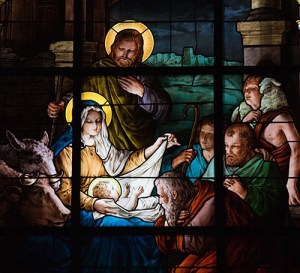
Nativity SceneFour months ago, my husband and I got the best gift we’ve ever received: Our daughter, Lucy, was born August 5, launching us on an amazing, sleep-deprived journey as parents.

When we held her for the first time, we saw her with new-parent eyes—she was squinty, puffy, wrinkled, splotchy perfection. I’d guess we got about 90 seconds of peace before the thought popped in my mind that has dominated the last four months: Oh, there are so many ways we can mess this up.

New and prospective parents, resist the temptation to Google. Because once you go down that road, there’s no coming back. Paci or no paci? Swaddle or free sleep? Is the fresh air good for her, or full of germs too mighty for her tiny immune system? If she fails at tummy time, is it because she’s nervous about performing well in front of me? (Believe it or not, this is a thing, even at four months. Google it.)

Those 21st century concerns are embarrassing to say the least when I think about what another, historical mom must have worried about in the days after her son was born. This stable is so dirty, Mary must have thought. There are so many goats.

And later, Who are these people from the east who have come to see him? Can I trust they have his best interest in mind?

And, ultimately, I know why he’s here. Can I really stand to watch him fulfill God’s purpose for his life? Can I really let him die?

How many ways can I mess this up? she must have wondered.

The worries of motherhood, which can spiral pretty quickly into downright terror, could have made Mary cling tightly to the gift she’d been given, and the heavy responsibility she must have felt. After experiencing four months of parenting-induced anxiety, I know that had I been Jesus’ mother, I would have kept him in the house and away from germs for as long as possible. Probably still in his swaddling clothes.

But instead, after submitting herself to what had to have been a numbing proclamation (Luke 1:38), Mary watched everything happening to her son and her family and treasured them all in her heart, meditating on them (Luke 2:19).

Instead of worry, she embraced the heavenly stillness and peace of knowing that while her human weakness and propensity to make mistakes lurked around every corner, God was in control.

He still is.

– MDF


The_Briefing_ChristmasNew data reveals Christmas churchgoing trends
In a recent poll, LifeWay Research found among those who don’t attend church at Christmastime, a majority (57%) say they would likely attend if someone they knew invited them. Americans living in the South (66%) and Midwest (64%) are more likely to attend church at Christmastime than those in the Northeast (57%) and West (53%).


3 surprising news items that spiked online Bible searches in 2015

When news broke in 2015, many searched beyond the pages of a newspaper to the pages of Scripture for information about current events, according to an analysis of online Bible searches at BibleGateway.com.


Angel Tree to ask volunteers to sign a statement of faith

Prison Fellowship’s Angel Tree program will require its coordinators to affirm its statement of faith beginning Jan. 1, 2016. The organization’s statement of faith does put it at odds with liberal churches that do not share its stand on issues of life, marriage, and the inerrancy of scripture.


SBC pastor prays with Caitlyn Jenner in Texas mega church

Transgender activist Caitlyn Jenner, formerly known as Olympic gold medalist Bruce Jenner, prayed with Pastor Ed Young Sr. at a Christmas pageant at Houston’s Second Baptist Church. Jenner attended the church of Young Sr., who opposed the Houston Equal Rights Ordinance, or HERO, for the reality series “I Am Cait.”


Democrats criticize Trump, other Republicans on Islam

In the final Democratic presidential debate of the year, all three candidates said the U.S. government should partner with Muslims in the fight against terrorism and accused Republicans of demonizing adherents of the world’s second largest religion.

Sources: BPnews.net, Christian Post, Facts and Trends, LifeWay Research, Outreach Magazine, World Magazine

The BriefingPrayer shaming after San Bernardino attack
Victims of the Dec. 2 terrorist attack in San Bernardino called for prayer in text messages during the attack. Presidential candidates and members of the public tweeted their “thoughts and prayers” were with the victims, but others in the media, government and public disagreed leading to a social media debate over “prayer shaming.”


‘God isn’t fixing this’ story draws Christian response
Southern Baptist leaders are decrying the headline “God isn’t fixing this” that dominated the Dec. 3 cover of the New York Daily News. Images of tweets from Republican leaders surrounded the headline, displaying sympathetic “thoughts and prayers” for the people affected by a Dec. 2 mass shooting.


Falwell’s concealed-permit comments enter gun debate
Jerry Falwell Jr. sparked debate after revealing he carries a concealed weapon and urges students (age 21 and up) to do the same at Liberty University, where he is president. In the Dec. 4 convocation, Falwell referenced “Muslims” and the terrorist attack that left 14 people dead in San Bernardino, Calif.


Ireland revokes protections for religious freedom in education
Last week, the Dáil (lower house of the Irish legislature) voted unanimously to repeal Section 37 of the Employment Equality Act. Section 37 granted specific exemptions for “religious, educational or medical institutions” when it came to gay rights, allowing them “to maintain the religious ethos of the institution.” According to one LGBT rights leader, the repeal “will allow LGBT people to be themselves, get married and have a family without a threat to their job if they work in a religious run institution.”


Megachurches seeing drop in weekly attendance, study finds
A new study that focuses on trends and shifts among megachurches in the United States has found that although more Americans than ever are attending megachurches, megachurch worshipers are attending church less frequently.

Sources: Baptist Press, Breitbart, Christian Post, Christianity Today

Up to the challenge

Lisa Misner —  December 3, 2015

My substitute teaching career was short-lived, and carried me through a brief time between ministry opportunities. One particular day found me stepping in for an 8th grade biology teacher who had left a worksheet for her class to complete.

As the kids worked on the assignment, two boys called me over for help. I began to explain the process for solving the problem when one of the boys interrupted me.

“Our regular teacher usually just tells us the answer.” My response: “Well, your regular teacher isn’t here.”

But it’s often easier to tell instead of teach, isn’t it? Even in church, it’s so much easier to answer for the unresponsive Sunday school class. But how can we ever help people grow if we fail to challenge them?

We must help our members move beyond simply looking for a spiritual authority to provide the right answers. (This kind of thinking leads to Christians arguing against abortion or same-sex marriage with statements that begin, “My pastor told me…”)

We must move from telling to teaching, asking ourselves: Which is happening more regularly in my church?

This realization came to me as I spoke to a senior adult in my church soon after my arrival. During his recuperation from surgery, I encouraged him to stay faithful in reading the Bible. A few weeks later when I called to check in, he said, “I’m finishing 2 Corinthians.”

Since he and I had spoken, he had taken my challenge to read the book of John, and then he just kept on going. Several weeks later, he was back in church and finishing the book of Revelation. When I asked him about his Bible reading, he said it wasn’t that he had never been told to read his Bible. He said this was the first time he had a place to start.

This situation caused me to realize that I had been blaming the laity for far too long. It was time to point the finger at myself as a leader and ask, “Am I telling them what to do, or teaching them?”

In response, our church began two men’s accountability groups within the last year. The purpose of these groups is to make effective disciples. We challenge these men to be devotionally serious in prayer and reading the Bible. We encourage one another to apply the Bible to our lives and memorize Scripture. But the only way we can evaluate the results is from the lives of these men themselves.

One of our regular attenders from the start has been up and down in his application of God’s Word. I constantly taught him how to be more diligent in his effort to grow from his readings. The month it was his turn to teach the group from his Bible readings, his work situation changed and created a tighter financial situation.

As he worked to apply God’s Word, he read in 1 Timothy 6:7-10 to be encouraged in the sufficient provision God was supplying for his family. He didn’t learn this from the counsel of his pastor, but the counsel of God’s Word. And it gave him peace.

Mark is also in my group and recently told me that he often read the Bible before, but only recently has been more diligent in applying it to his life. And while he says memorization is something he never would have done, at times he is memorizing additional verses that are meaningful to him. Again, these are things he had been told to do before, but never taught to do.

So whether you’re a pastor preaching in the service or a Sunday school teacher moving through the curriculum, I challenge all of us to consider whether we are telling or teaching. Are people being equipped with answers, or with the tools to find those answers for themselves and to grow as confident disciples?

I truly believe those are the only kind of disciples that can build our churches to be stronger and win lost souls to the Lord Jesus Christ.

Heath Tibbetts is pastor of First Baptist Church, Machesney Park.


Five to thrive

Lisa Misner —  November 30, 2015

IBSA Annual MeetingSpiritual results aren’t always easy to measure. And they certainly can’t be humanly manufactured. But one metric that can be at least an indicator of God’s Spirit at work, and of thriving spiritual health in churches, is baptisms. Healthy churches should consistently see new believers born into the Kingdom of God and united into church fellowship.

For the past several years, IBSA churches have reported right around 5,000 baptisms per year. But when the 2014 Annual Church Profiles from IBSA churches were compiled earlier this year, the total had dropped to just over 4,500.

There were a few extenuating circumstances in 2014, and I hope the total will be back up this year. But this stable-to-declining baptism rate has led our staff at IBSA to ask, “Is there anything we should do differently?”

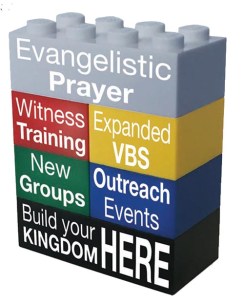
Those discussions led us to some research. And we discovered that, while only the Holy Spirit can convict people of their need for Christ, churches that consistently baptize new believers are often engaging in one or more of the following five, seed-sowing commitments.

Vacation Bible School. 43% of Americans come to Christ before age 13, and 64% before age 18. An evangelistic VBS is still one of the most effective ways to reach children, and their families, with the gospel.

Witness Training. While most born-again adults believe they have a responsibility to share their faith with others, only 52% have done so within the past year, and 31% say they “never” evangelize. Churches that are seeing people come to faith in Christ equip their members with a variety of strategies and tools for sharing their faith story. And they create an atmosphere of encouragement, accountability, and celebration within the church that makes it “normal” to talk about how and with whom members are sharing their faith each week.

Outreach Events. Some Christians are confrontational evangelists like Peter and Paul. But many are natural “bringers” like Andrew. Churches that baptize new believers regularly have worship services that are accessible and truly inviting to guests each week. But they also provide multiple outreach events throughout the year such as block parties, concerts, fall festivals, or even service projects. These give their members natural opportunities to invite friends and family to meet other Christians and feel welcome at church.

New Groups. Whether it’s a new Sunday school class, new home groups, or new ministries such as mother’s day out or men’s service group, new groups can give a church multiple settings in which personal, evangelistic relationships can grow. Each new group can be a new bridge across which the gospel may flow, and across which new believers can enter the Kingdom of God.

Evangelistic Prayer. According to the Billy Graham Evangelistic Association, more than 95% of those who accept Jesus as savior report that they were regularly prayed for by someone else for a significant amount of time prior to their salvation. An intentional, evangelistic prayer strategy may be the single most important commitment a church can make toward seeing people come to Christ. It is prayer that sensitizes the church’s heart toward specific lost people. And it is prayer that invites the Holy Spirit to be at work in their lives.

At the IBSA Annual Meeting this month, messengers were challenged to consider and commit to these five evangelistic actions. 146 of them did. During the coming year, our IBSA staff will be working in a focused way with these churches. If your church would like to be part of a regional cohort to focus on these areas, please contact us. We believe that churches that embrace these evangelistic commitments will thrive. And that just happens to rhyme with five.

Nate Adams is executive director of the Illinois Baptist State Association. Respond to his column at IllinoisBaptist@IBSA.org.