Archives For November 30, 1999

Personal belief, salvation, spiritual disciplines, formation

Eric_Reed_blog_calloutCOMMENTARY | Eric Reed

We need to learn how to talk with young people.

I must have entered some stage of fogey-dom if I feel the need to make this topic a course of personal study. But I do. We all do.

The millennial generation is making important adult life decisions now: marriage, family, and faith. So many of them have eschewed the church, but they are the generation who will turn the tide and secure the future of our denomination, if it is to happen.

But how will we bring them into the kingdom, and into the church? More specifically, how will we bring them into Southern Baptist life?

Some fresh insight on this comes from an unexpected source, a Catholic professor who studies and teaches about contemporary religions. Patricia O’Connell Killen was a conference speaker at the February meeting of Baptist newspaper editors. Many of her observations of the American religious landscape were good summations of things we’ve already heard:

  • 1 in 5 U.S. adults claims “none” as their religious preference, with people under age 30 leading the exodus.
  • Fewer than 50% of U.S. adults claim to be Protestant, making Protestantism the minority religion for the first time in our national history.
  • The resulting “open” religious environment means people are very willing to experience without the pressures of cultural and family expectations; the choices are up to individuals as never before.

But when the professor spoke of the students in her classroom, most around age 20, I heard something I think we all need to hear. Here’s my interpolation:

Today’s young adults aren’t all looking for churches that are always adapting to the latest cultural trend. They don’t want a lot of the so-called “relevance” their parents sought. They want something in their faith and in their experience of church that is solid, unchanging, immutable.

Why? Things that change too much are untrustworthy, her students have said, and they want something they can trust. (One of Dr. Killen’s observations is especially pointed: “What is tradition for children who have negotiated three-to-five sets of parents since the age of two?”)

The professor contends that this emerging generation struggles to make decisions. The millennials had more options than any generation before them. (Which of 100 channels do you want to watch on TV, baby? Which video game do you want to play? What do you want to wear today, princess? Which toy do you want in your Happy Meal?)

The parents let the kids make the choices. And the kids – by chat, text, and tweet –consulted their friends. An entire generation with nothing but options was always testing the winds to see how their crowd was leaning.

That produced a lot of indecisive people who are always changing and, ironically, are suspicious of change.

The application to church life is counter-intuitive to me. I thought a generation of choice-addicts would want churches that offer lots of choices. But the professor says, not so. The church or denomination that is always changing for the sake of relevance doesn’t meet their needs, but instead feeds their deepest fears: There’s nothing I can really hold on to.

We who have preached against “tradition” in previous generations will bless a future generation if we point out the value of some biblically sound traditions. For Southern Baptists to have meaningful conversations with young people today, we must focus on the unchanging aspects of our theology and missiology: We are people of the Book, we preach salvation in Jesus Christ and there is salvation in no other, and everyone needs the opportunity to hear that Gospel.

This is not an excuse for our churches to get stuck in the old ways. Methods may change, because methods wear out and need to be replaced. And styles may change to fit communication needs and technologies. But worship is more than singing nothing but ditties written last Thursday, discipleship grows in relationships that endure for years, and faith is based on the unchanging God, “…the same yesterday, today and forever” (Hebrews 13:8).

In today’s conversations, our starting point may not be what’s new, but what’s not.

Eric Reed is editor of the Illinois Baptist, online at http://ibonline.IBSA.org.

The_BriefingTHE BRIEFING | Meredith Flynn

Christian leaders are engaged in debate over an Arizona bill that would allow businesses to deny services to same-sex couples for religious reasons.

As the bill awaits signature by Gov. Jan Brewer, writers Kirsten Powers and Jonathan Merritt have written an article for The Daily Beast taking issue with the bill and with Christians who say they should be allowed to refuse services – such as wedding photography or cake baking – because they adhere to a biblical definition of marriage.

Powers and Merritt said the logic behind the Arizona bill only works if Christian photographers or bakers or florists examine every wedding they provide services for to make sure that it meets biblical qualifications. They also called into question advice given by Russell Moore, president of the Southern Baptist Ethics and Religious Liberty Commission, to a Christian photographer who didn’t want to affirm a same-sex wedding by agreeing to film the ceremony.

In a post on his website, Moore responded to Powers and Merritt: “…The question at hand was one of pastoral counsel. How should a Christian think about his own decision about whether to use his creative gifts in a way that might, he believes, celebrate something he believes will result in eternal harm to others.

“…It’s of no harm to anyone else if Kirsten Powers and Jonathan Merritt (both of whom I love) think me to be a hypocrite. It’s fine for the Daily Beast to ridicule the sexual ethic of the historic Christian church, represented confessionally across the divide of Catholicism, Protestantism, and Orthodoxy. It’s quite another thing for the state to coerce persons through fines and penalties and licenses to use their creative gifts to support weddings they believe to be sinful.”

Read Moore’s full response at RussellMoore.com.

Other news:

Shoring up hope in the Philippines
A team of six Illinois volunteers spent a week on Gibitngil Island in the Philippines this month, helping repair a school damaged during Typhoon Haiyan. Read about their trip here.

Parents jailed for son’s death
A Philadelphia couple was sentenced to at least three years in prison after their son died from a treatable condition, Christianity Today online reports. Herbert and Catherine Schaible, who believe in faith healing, had already lost their son, Kent, to bacterial pneumonia in 2009. His younger brother, Brandon, died last year with the same ailment. “You’ve killed two of your children,” Judge Benjamin Lerner told the Schaibles. “…Not God. Not your church. Not religious devotion. You.” Read the full story at ChristianityToday.com.

Barna: Americans link violent behavior with violent entertainment
Recent research says 57% of all adults (and 69% of practicing Christians) believe violent action is connected to playing violent videogames, according to Barna. The percentages are slightly lower for movies (51% and 67%) and song lyrics (47% and 61%). Read more at Barna.org.

Worship and hockey: ‘Only in Canada’
The Olympic gold medal hockey game was broadcast on a Sunday morning in Canada. But that didn’t stop one church in Nova Scotia from cheering on the home team, The Christian Post reported. Bedford United Church streamed the game, a 3-0 victory for Canada, in its sanctuary, causing one Twitter user to post: “That’s an ‘only in Canada’ moment!” Read the full story at ChristianPost.com.

Tuesday_BriefingTHE BRIEFING | Meredith Flynn

Nearly 400 Southern Baptist pastors met in Atlanta last week to pray for revival and spiritual awakening, doubling the attendance of a similar meeting last fall. Ronnie Floyd, an Arkansas pastor who organized the meetings, reflected on the most recent gathering on his blog by posting five reasons pastors pray:

1. They’re burdened for a great move of God.2. They’re aware they’re limited, and their churches are in need.
3. Pastors are concerned beyond words for our nation.
4. They believe the Great Commission (Jesus’ words in Matthew 28:18-20) can be fulfilled in their generation.
5. Pastors know we need to work together now more than ever before.

The pastors’ prayer meetings raise a question: What is the role of Christians in America’s next great awakening? Read the full story from the Illinois Baptist here.

Phone app calls people to pray for women considering abortion
What if there was a way to direct a woman considering abortion to a crisis pregnancy center, and simultaneously rally a national network of partners to pray for her? Online for Life, a nonprofit business, has developed online marketing techniques to connect abortion-minded women to CPCs, and an app to mobilize intercessors to pray for them. Read the story, first reported by the Southern Baptist TEXAN, in the January 20 issue of the Illinois Baptist (page 6).

Hannah_Gay‘God cured that baby,’ HIV specialist says. ‘I just happened to be standing close by.’
Hannah Gay, who describes herself as “the shiest pediatrician in America” has been in the spotlight for months after achieving a functional cure of a child with HIV. The continued lack of any replication of the virus indicates the first documented case of HIV remission in a child, The New England Journal of Medicine reported in October. Read the full story at BPNews.net.

Poll: Most pastors want diversity, but most churches aren’t diverse
“Having a racially diverse church remains more dream than reality for most Protestant pastors,” reports LifeWay Research about a study released just before the anniversary of Martin Luther King’s birthday. While 85% of senior pastors of Protestant churches say every church should strive for racial diversity, only 13% have more than one predominant racial or ethnic group in their congregation. Read more at LifeWayResearch.com.

The (church) dating game
A new game show will test the matchmaking prowess of church members competing to set up a single member of their congregation. “It Takes a Church,” set to premiere on GSN this year, will be hosted by singer Natalie Grant. “There are a growing number of singles in the church who do not want to be single,” Grant told The Christian Post. The show will visit a new church each week, and the winning “cupid” gets a donation made to the church in their name. The best part: GSN says the unmarried church members will be “unsuspecting” until camera crews arrive. Read more at ChristianPost.com.

The 2012 nativity scene at the Illinois Capitol.

The 2012 nativity scene at the Illinois Capitol.

THE BRIEFING | Meredith Flynn

The nativity scene in the Illinois Capitol’s rotunda will be unveiled today, likely near a “winter solstice” sign placed there over the weekend by the Freedom from Religion Foundation.

The sign reads: “At this season of THE WINTER SOLSTICE may reason prevail. There are no gods, no devils, no angels, no heaven or hell. There is only our natural world. Religion is but myth and superstition that hardens hearts and enslaves minds.”

Atheist blogger Hemant Mehta said “viewpoint equality” is the key issue in the dueling displays. “If Christian groups are allowed to put displays up in the Capitol building, then atheist groups can as well…” he wrote about the sign.

The nativity scene, now in its sixth year, is privately funded and organized by the Springfield Nativity Scene Committee. Thomas More Society, a law firm that specializes in religious liberty matters, calls the scene “classic free speech” in a release on its website.

“The SNSC’s primary goal is to celebrate the birth of Jesus Christ as our Lord and Savior.  But its secondary mission is to proclaim and demonstrate to the public and to the media alike (statewide and nationwide) that such private expressions of religious belief in the public squares of our nation are not merely tolerated but fully deserving of robust legal protection.”

Read more at thomasmoresociety.org and christianpost.com.

Other news:

Tornado relief efforts continue
Disaster Relief chainsaw teams currently are serving in Washington, Ill., and surrounding areas, but are expected to complete their work by the end of this week, said Illinois Disaster Relief coordinator Rex Alexander. Since the outbreak of tornadoes Nov. 17, volunteers have helped with clean-up, provided childcare, and met emotional and spiritual needs as chaplains. A feeding team served for nearly two weeks in Peoria, preparing meals for storm responders and victims. Click here to donate to Illinois Disaster Relief.

Supreme Court to consider Hobby Lobby case
Baptist Press reports the U.S. Supreme Court will consider next year whether business owners can exercise religious freedom by objecting to the abortion/contraceptive mandate in President Obama’s healthcare reform package. The mandate requires employers to cover abortion-inducing drugs in their employee health care plans.

Craft retailer Hobby Lobby and its sister corporation Mardel found favor in an appeals court, but Mennonite-owned Pennsylvania business Conestoga Wood Specialties was ruled against in a similar case. The Supreme Court consolidated the cases and will hear oral arguments next year, with a decision expected by he court’s summer adjournment, according to Baptist Press.

“This legal challenge has always remained about one thing and one thing only: the right of our family businesses to live out our sincere and deeply held religious convictions as guaranteed by the law and the Constitution,” Hobby Lobby founder David Green said in a written release. “Business owners should not have to choose between violating their faith and violating the law.”

Read the full story at BPNews.net.

Americans weigh in on end-of-life issues
A new poll by Pew Research found 66% of Americans say there are circumstances where a patient should be allowed to die, but a growing number of people believe medical staff should do everything possible to save the life of a patient in all circumstances.

Religious beliefs play a role in what people think about the issues, Pew found. 42% of white evangelical Protestants and black Protestants say a person has a moral right to suicide if he or she is in a great deal of pain with no hope of improvement, compared to 62% of all adults surveyed.

Read more about the survey at PewForum.org, and check out Religion News Service’s analysis by Cathy Lynn Grossman here.

Week of Prayer for International Missions is Dec. 1-8Go to IMB.org for daily prayer guides, missionary stories, and creative ways to mark the Lottie Moon Christmas Offering in your church.

Baptists and other clergy alert lawmakers to objections again

THE BRIEFING | Meredith Flynn

As Illinois lawmakers enter into the final week of their fall veto session, they haven’t yet tackled the most talked-about item on their agenda: marriage. But optimism from the sponsor of SB 10, the bill that would legalize same-sex marriage in Illinois, has advocates on both sides of the issue poised for a possible conclusion this week to several long months of debate.

Rep. Greg Harris (D-Chicago) told the Associated Press in late October, “I’m feeling good. Things are moving in the right direction.” Harris faced doubts from same-sex marriage supporters when he failed to call the bill for a vote on the House floor on the last day of session in May. After a relatively quiet summer, advocates for same-sex marriage and traditional marriage rallied at the Capitol on separate days as legislators returned for veto session.

In the first few days of veto session, pundits said legislators were showing a lack of urgency about marriage, based on their political prospects in the upcoming primary season. But Harris told the Illinois Observer last week, “I think my colleagues should be prepared next week to make history on marriage equality.”

Church leaders with different opinions on the issue weighed in amid the new buzz surrounding SB 10. A group of more than 300 clergy members and religious leaders sent a letter to House representatives encouraging them to approve the bill, noting that marriage equality is “morally just.” On the other side of the debate, African American religious leaders who support traditional marriage said candidates who vote yes on SB 10 won’t fair well with voters.

“I think that they will feel the crunch,” said Larry Trotter, pastor of Sweet Holy Spirit Baptist Church and a vocal advocate of traditional marriage throughout the debate in Illinois. “I think that they cannot take for granted that they can come to the church; and get the church’s sanction, and votes, and signatures; and then go to Springfield, and don’t speak what the people want them to speak. And so now, if that’s how we have to be heard, we will be heard,” Trotter told CBS Chicago.

Nate Adams, executive director of the Illinois Baptist State Association, sent a letter urging representatives to defeat legislation like SB 10 that seeks to redefine marriage. “This legislation is actually discriminatory in that it declares Illinoisans who support traditional marriage to be bigoted and prejudicial,” Adams wrote. “Rather than promoting tolerance it risks legalizing intolerance.”

Adams’ letter also included the text of a resolution Illinois Baptists will consider at their annual meeting next week. The “Resolution on the Preservation of Biblical Marriage and Affirmation of Religious Liberty of Illinois Churches and Faith-based Organizations” is available online here. Messengers will vote on it and other resolutions when they meet in Springfield Nov. 13-14.

Other news:

Supreme Court considers legislative prayer case
The U.S. Supreme Court will hear arguments Nov. 6 on “Town of Greece vs. Galloway,” a case out of New York that questions the constitutionality of prayer before civic meetings. President Obama’s administration issued earlier this year a “friend of the court” brief that sides with Greece and their policy of prayer before town board meetings. Read Pew’s thorough explanation of the case here.

Obama advisor publishes ‘President’s Devotional’
Joshua DuBois, former executive director of the White House Office of Faith-based and Neighborhood Partnerships, is sharing daily devotional readings he wrote for the President in a new book. From the Amazon.com description: “Every day, DuBois provided President Obama with a morning devotional weaving together scripture, song, prayer, and reflections, motivated by the spirit of God and infused with joyful flair. The President’s Devotional contains the best of these devotionals, daily spiritual guidance that offer peace, comfort, and inspiration throughout the entire year.”

And The Christian Post has a story about one group questioning whether DuBois writing the devotionals was a violation of separation of church and state.

Journalist shares unlikely conversion story
Fox News commentator Kirsten Powers says, “Just seven years ago, if someone had told me that I’d be writing for Christianity Today magazine about how I came to believe in God, I would have laughed out loud.” But Powers does just that on CT’s website, detailing her conversion to a faith she “held in particular contempt.” Her encouraging, thoughtful testimony is online here.

Tunes for your Tuesday
Need some nostalgia in your life? Check out Relevant.com’s list of “10 CCM songs of the ’90s that still hold up.” The list has selections from almost every genre contemporary Christian music offered back then, and also includes links to YouTube videos. Read it here.

THE BRIEFING | Meredith Flynn

The North American Mission Board has coordinated a clean-up effort in the Northeast for almost one full year, since the super storm swept through New Jersey and New York. Watch the video below for how Southern Baptist volunteers have helped in the region, and click here for more information about how to help, including Christmas and Spring Break opportunities for college students.

Mohler bridges divide at BYU
Christians and Mormons “inhabit separate and irreconcilable theological worlds,” Al Mohler told an audience at Brigham Young University. But the Southern Seminary president added the two groups should work together to address threats to religious liberty, Baptist Press reports.

“I do not mean to exaggerate, but we are living in the shadow of a great moral revolution that we commonly believe will have grave and devastating human consequences,” Mohler said in his lecture, part of the Mormon university’s “Faith, Family and Society” series. Christians and Mormons must together “push back against this age as hard as it is pressing against us,” Mohler said. “We had better press hard, for this age is pressing ever harder against us.” Read the full story at BPNews.net.

Life is complicated, most say
Two-thirds of all adults say life is getting more complicated, and 71% of evangelicals agree. The findings by Barna may indicate evangelicals and Catholics – 71% of whom also agreed – are recognizing “a growing disparity between the rhythms and values of their faith and the demands of a rapidly changing culture,” the researchers analyzed. Read more about Barna’s “three trends redefining the information age” here.

Conference examines C.S. Lewis’ popularity in America
Author C.S. Lewis was more celebrated here than in his own country, say the organizers of a one-day conference at Wheaton College. To mark the 50th anniversary of Lewis’ death, the college is hosting “C.S. Lewis and American Culture,” a one-day seminar featuring speakers on a variety of Lewis-related topics. For more information about the conference, click here. And ChristianityToday.com recently published a really interesting profile of Lewis’ wife marriage to Joy Davidman. Read it here.

HEARTLAND | What an amazing promise God makes to His people who are in exile! In Jeremiah 29, He lays out a plan to rescue them, even though they’ve turned away from Him again and again. His instructions and comfort to them are so specific – look at Jeremiah 29:10-14:

For this is what the Lord says: “When 70 years for Babylon are complete, I will attend to you and will confirm My promise concerning you to restore you to this place. For I know the plans I have for you” – this is the Lord’s declaration – “plans for your welfare, not for disaster, to give you a future and a hope. You will call to Me and come and pray to Me, and I will listen to you.You will seek Me and find Me when you search for Me with all your heart. I will be found by you” – this is the Lord’s declaration – “and I will restore your fortunesand gather you from all the nations and places where I banished you” – this is the Lord’s declaration. “I will restore you to the place I deported you from.”

“Oh How I Need You” by All Sons & Daughters says, “Lord, I find You in the seeking. Lord, I find You in the doubt.” God’s people in exile must have experienced intense doubt. But they found Him in the seeking, and even better, He sought them out for the express purpose of comforting them in exile.

Check out All Sons & Daughters “Oh How I Need You.”

CELEBRATION YEAR – (From left) Georgia Griffin, Goebel Patton, and Maxine Ferrari, all members of Second Baptist in West Frankfort, turned 100 in 2013.

CELEBRATION YEAR – (From left) Georgia Griffin, Goebel Patton, and Maxine Ferrari, all members of Second Baptist in West Frankfort, turned 100 in 2013.

HEARTLAND | Meredith Flynn

Goebel Patton will turn 100 years old this week. But he’s not the only one in his community, or even his church, to celebrate that milestone this year. Maxine Ferrari and Georgia Griffin, fellow members of Second Baptist in West Frankfort, already celebrated their 100th birthdays in 2013.

The unique situation – three centenarians in one church – attracted the attention of a local newspaper and has given their church cause to celebrate. Together, they represent 238 years of church membership at Second Baptist.

Patton joined the church in 1926 as a 13-year-old. “Back in that day, the only social activities were at church,” he says. Drawn to Second Baptist for the fellowship with other young people his age, he has stayed for 87 years, and still serves as chairman of the finance and properties committees. He also started a men’s prayer group in 1991, and reports they’ve met every single Tuesday morning since then.

Having Patton, Ferrari and Griffin as part of the church “ties us to our history,” says Pastor Brett Beasley. The 100-year-olds help younger people understand the church’s history, and give a perspective of what church life was like and how it’s changed.

Their faithfulness is also a source of encouragement, Beasley says. Two years ago, Ferrari arrived at church on a messy wintry morning when only about half of the church’s regular attenders were there. Beasley remembers good-naturedly teasing his congregation: “Maxine made it today, so really nobody’s got an excuse.”

Each of the centenarians has already received a birthday party this year, but Second Baptist is hoping to celebrate the three of them together some time in the future.

Happy Birthday indeed.

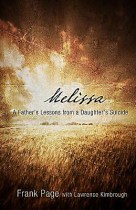
Frank Page, president of the SBC Executive Committee, wrote a book about his daughter, Melissa, his grief after her suicide, and how church leaders can help people living with the deep pain of mental illness.

Frank Page, president of the SBC Executive Committee, wrote a book about his daughter, Melissa, his grief after her suicide, and how church leaders can help people living with the deep pain of mental illness.

THE BRIEFING | Meredith Flynn

Editor’s note: This article is excerpted from the September 30 issue of the Illinois Baptist. The first part of the article headlined The Briefing last Tuesday, but this section takes a closer look at how the church, and specifically church leaders, can minister to individuals and families struggling with mental illness and suicide.

At the Southern Baptist Convention this summer in Houston, mental health and the church was a much-discussed topic, with messengers approving a resolution to “oppose all stigmatization and prejudice against those who are suffering from mental health concerns.” The resolution also called on churches to “look for and create opportunities to love and minister to, and develop methods and resources to care for, those who struggle with mental health concerns and their families.”

When it comes to mental health, “the church has had a tendency to say we’re going to leave that up to the professionals,” said Pastor Hal Trovillion, pastor of First Baptist, Manteno, Ill., and a former youth and family counselor. The problem is that for the most part, those professionals don’t take God into account.

Melissa_book_coverThe church has an opportunity to engage in the critical ministry of offering spiritual help to those in deep pain.

Jesus’ ministry did just that, Pastor James Shannon says. His church, People’s Community Church in Glen Ellyn, has sponsored several support groups (grief, divorce, substance abuse, etc.) and plans to do more in the future. An experienced and degreed counselor, Shannon is dedicated to helping hurting people find wholeness. His mission is to help people transition from “walking wounded” to “wounded healers” so that they can minister effectively to others.

“The point where a person is hurt the most is the point where God can equip them to do ministry, and I think that’s so vital for people to understand.”

The potential for those who have struggled with mental illness to be used in ministry to others with similar stories is encouraging, but the need to alleviate pain is often more pressing. What can churches do now to help people who are depressed and possibly contemplating suicide, and their families?

Frank Page has clear advice for pastors who likely are ministering or will minister to people in deep pain. Teach good theology, help people learn how to control their thoughts, and steer clear of trite advice, he counsels in his book “Melissa: A Father’s Lessons from a Daughter’s Suicide.”

“Stay quick with Scripture but sparing with human philosophy,” writes Page, whose oldest daughter took her own life almost four years ago. Currently serving as president of the Southern Baptist Executive Committee, Page was a pastor for many years and he and his wife, Dayle, raised their three daughters in the church. In the book, which includes a letter at the end of each chapter to those contemplating suicide, he says, “We were not a family whose daughter kills herself.”

Page is using his national platform to help Christian leaders understand the complexity of suicide and mental health issues. First, “be a learner,” he writes. “No one on this side of eternity can fully understand or articulate the complex nature and theological mysteries surrounding the horrible act of suicide nor of the loss of rational thought that typically leads up to it.

“Grow your observations, increase your insights, but don’t place pressure on yourself to grasp it all or to promise the absolute answer to every question.”

At the same time, Page writes, pastors should make themselves more knowledgeable about mental illness. “The church many times has been woefully inadequate in reaching out to persons who either experience mental illness themselves or are dealing with it in their families. …And when we as pastors, not in dismissiveness perhaps but at least in ignorance, give them ‘snap out of it’ advice (or something in that family of faulty counsel), we do more harm than good.

“More than ever – if you intend to serve your congregation well – you need a working knowledge of what causes mental illness and depression and how to assist its sufferers with the best kind of loving assistance.”

Read Religion News Service’s interview with Frank Page here, or watch his interview with LifeWay’s Ed Stetzer.

Senate chaplain likens government shutdown to ‘madness’
In a prayer in the U.S. Senate chamber last week, Senate Chaplain Barry Black asked God to “save us from the madness” of the ongoing government shutdown. Black, a Seventh-day Adventist minister who has served as chaplain of the Senate since 2003, also used words from Psalm 51 in his prayer. “We acknowledge our transgressions, our shortcomings, our smugness, our selfishness, and our pride,” he said. “Create in us clean hearts, oh God, and renew a right spirit within us. Deliver us from the hypocrisy of attempting to sound reasonable while being unreasonable.”

The Washington Post’s On Faith blog ran an article yesterday about the role pride is playing in the federal government’s shutdown. Read it here.

Leaders, scholars remember Chuck Smith“His impact can be seen in every church service that has electric guitar-driven worship, hip casually-dressed pastors, and 40-minute sermons consisting of verse-by-verse Bible expositions peppered with pop-culture references and counterculture slang,” sociologist Brad Christerson said of California pastor Chuck Smith, who died last week. Read Christianity Today’s story on Smith, who helped a generation of “Jesus People” find their faith.

Mississippi church apologizes for racial discrimination
First Baptist Church of Oxford, Miss., decided it’s never too late to right a wrong. This summer, the church nullified a 1968 decision to deny African Americans use of its building facilities and resources. The policy hadn’t been enacted for many years at the church, but it also had never been officially overturned. Pastor Eric Hankins and deacons wrote a resolution to repeal the earlier decision and apologize for it, and Hankins preached on corporate repentance. Read the full story at BPNews.net.

Chris Davis seeks godliness above stats
The Baltimore Orioles missed this year’s playoffs, but first baseman Chris Davis celebrated several individual achievements, winning 2013’s homerun and RBI crowns. “I just want to be known as a godly man,” he said in story on BPNews.net. “That’s more important than any legacy on the field or numbers you leave behind. Read Joshua Cooley’s profile of Davis here.

pull quote_Kinder13HEARTLAND | Justin Kinder

On January 29, 2007, at about 10:30 at night, our daughter, Melody Anne Kinder, was born into this world. She is truly a miracle and a precious gift from God. Melody changed our lives completely and from the very start, as her parents, we wanted to raise her right. We wanted her to know right from wrong and to be equipped to handle all of the moral and ethical situations she will eventually face as she grows up in this world.

It didn’t take long for these teachable moments to arrive on the scene. Melody is now six years old and we have taught her why it is wrong to lie, cheat, steal, covet, and to throw temper tantrums, just to name a few. We have taught her to tell the truth always, to be loving to all people, and most of all to love God and to put Him first. We have modeled our faith in God in front of her all of her life.

Everything that we have taught her about right and wrong and about God has come straight from the Bible. It is our moral compass in this dark and sinful world that we live in.

When you boil things down and really look at life closely, you will see that there are essentially two opposing worldviews that exist in our culture – one sees God as creator, sustainer, and as the sovereign ruler of everything and the other leaves God entirely out of the picture. The first view is obviously the Christian worldview that we as Christians embrace and the second is what this sinful world embraces.

When you leave God out of the picture, life loses its meaning. Morals are defined by what feels right, feels good, and by what the majority says is okay to do.  But just because it feels good and the majority of people say that a particular sin is okay, doesn’t make it okay. We can’t trust ourselves to know what is right and wrong because our sinful hearts will only lead us astray.

I guess it should come as no surprise then the moral decline and failure that we see in our culture. When you leave God out of the picture, the downward spiral of sin and the pushing of the envelope in what is viewed as acceptable in our society only gets worse.  A prime example of this happened very recently. Miley Cyrus, who for the longest time was known as the good girl, Hannah Montana, recently performed a provocative dance routine on MTV. Our culture responded in two ways: You either were appalled by her dance or you thought it was a great performance.

There is clearly a moral dichotomy at work here.

As a parent of a young girl, my heart goes out to Miley Cyrus and also to all the girls who look up to her. I want them to understand that what she did on that stage was wrong, and not because I said so, but because God and His Word said so. Miley Cyrus is missing that moral compass in her life – Jesus Christ – and I pray that someday she will find Him.  As for my own daughter, I will continue to pray for her and continue to teach her God’s values and precepts that are found in His Word.

The Psalmist said in Psalm 119:11, “I have stored up your word in my heart that I might not sin against you.” (ESV)  And in Psalm 119:105 it says, “Your word is a lamp to my feet and a light to my path.” I want my daughter to hide God’s Word in her heart so that when she is older and sees the world pushing the envelope of sin even further, she will know how to stand for God and for what is right.