Archives For November 30, 1999

The BriefingMuhammad Ali heard Gospel from Graham, Rogers
Billy Graham, Adrian Rogers, and Dan Dumas are among the Christians who have told of Gospel conversations with the late  boxing champion Muhammad Ali. Concern over Ali’s religious beliefs once led his father to take the boxer to visit evangelist Billy Graham. Rogers, a former Southern Baptist Convention president, told in at least three sermons between 1986 and 1994 of sharing the Gospel with Ali.

Moore: Trump ‘lost’ soul’ who must repent
Southern Baptist leader Russell Moore has not been shy about mixing it up with Donald Trump, and now Moore is at it again, telling an interviewer that the presumptive Republican presidential nominee is a “lost person” who needs to find Jesus. Moore has for months blasted what he sees as Trump’s boorish behavior and character flaws.

How the transgender directive could affect Christian education
In response to President Barack Obama’s order that public schools allow students to use the restrooms and changing facilities that correspond to their gender identities, Christian Schools International (CSI) and Association of Christian Schools international (ACSI) issued gender policy guidelines to their members. The transgender directive will most immediately affect Christian schools participating in state sports competitions as public schools adopt new transgender policies or other policies related to LGBT students.

Baylor story shows how religious schools struggle with sex assault
Reports that Baylor University fired Ken Starr due to his handling of a sex assault scandal rocketed around political circles, but the allegations were equally big for a different reason: Baylor is the world’s largest Baptist university. The reports about Starr were explosive among many evangelicals because they tap into a couple of the most basic contemporary debates at religious schools: What is the impact of the honor codes many religious schools have around sexual behavior? Is there a conflict between being a religious school and trying to be a major athletic powerhouse?

Evangelicals feel alienated, anxious
Religious conservatives could once count on their neighbors to at least share their view of marriage. Those days are gone. Now, many evangelicals say liberals want to seal their cultural victory by silencing the church.  The Associated Press reports evangelicals see evidence of the threat in every new uproar over someone asserting a right to refuse recognition of same-sex marriages — whether it be a baker, a government clerk, or the leaders of religious charities, and schools.

Sources: Baptist Press, Religion News, WORLD Magazine, Washington Post,  Napa Valley Register

The BriefingTrump: ‘Moore Is Truly a Terrible Representative of Evangelicals’
Presumptive Republican presidential nominee Donald Trump lashed out at ERLC President Russell Moore with a tweet May 9. The tweet comes after Moore told “Face the Nation”that “the Donald Trump phenomenon” is an “embrace of the very kind of moral and cultural decadence that conservatives have been saying for a long time is the problem.” He also noted some conservatives “now are not willing to say anything when we have this sort of reality television moral sewage coming through all over our culture.”

Evangelicals feel abandoned by GOP
Some conservatives whose voting decisions are guided by their Christian faith find themselves dismayed and adrift now that Trump has wrested control of the Republican Party. Even progressive Christians — evangelicals and Catholics, among others — who don’t necessarily vote Republican are alarmed that Trump is attracting many voters who call themselves religious.

Justice Dept., NC sue over bathroom law
The Justice Department and North Carolina filed dueling lawsuits May 9 over the state’s controversial “bathroom” law, with the Obama administration answering an early-morning lawsuit filed by Republican Gov. Pat McCrory with legal action of its own.

51 Illinois families sue over transgender bathroom policy
A group of 51 families whose children attend a Palatine, IL high school filed a federal lawsuit attempting to reverse a policy that allows a transgender student to use girls’ bathrooms, locker rooms, and other sex-specific facilities. They are challenging a policy at District 211 that was mandated by the U.S. Department of Education to accommodate the transgender student, who was born male but identifies as a female.

111 Methodist clergy come out as LGBT
Dozens of United Methodist clergy members came out as lesbian, gay or bisexual on May 9, defying their church’s ban on “self-avowed practicing homosexuals” serving in ministry and essentially daring their supervisors to discipline them.

Bono wants Christian music to get honest
When U2 musician Bono reads Psalms he sees the full range of human emotions: anger, irritation, sadness, bliss. Bono, who has become more outspoken about his Christian faith in recent years, is advocating Christian music return to the raw and honest emotion of the Psalms.

Sources: Christian Post, Baptist Press, Washington Post, Fox News, Daily Signal, CNN, Huffington Post

The BriefingBans on travel to Miss., N.C., called ‘ridiculous’
At least nine U.S. cities and five states have banned non-essential travel by government employees to North Carolina, Mississippi or both, claiming religious liberty bills adopted there discriminate against homosexual and transgendered persons. Pastors and other Christian leaders call the bans “ridiculous.”

Women share abortion stories with the Supreme Court
Twenty-five years ago, two women found themselves in the same position: freshmen in college, pregnant and scared of derailing all they had worked toward. Both women walked into a Dallas abortion clinic. It’s what happened when they walked out, and in the weeks and decades that followed, that places them on opposite ends of the most significant abortion case to be heard by the Supreme Court in a quarter of a century. These and other women are sharing their abortion stories through friend-of-the-court briefs in the case of Whole Woman’s Health v. Hellerstedt.

Colleges welcome diversity, except evangelical Christians
San Diego State University recently withdrew official on-campus recognition from an evangelical sorority and an evangelical fraternity, stripping them of the privileges that all other on-campus student organizations possess. The problem according to the university was that these Christian student organizations were engaging in discrimination because they restricted their members to Christians in agreement with their statements of faith.

The footnote that could split the Catholic church
Some believe a footnote in Pope Francis’ new exhortation on marriage and the family, Amoris Laetitia could cause fractures in the Catholic church. There is an ongoing debate in the church about admitting remarried couples to the Eucharist. The footnote could further inflame that debate. Francis wrote, “In certain cases, this can include the help of the sacraments. Hence, ‘I want to remind priests that the confessional must not be a torture chamber, but rather an encounter with the Lord’s mercy’.”

Bible makes list of books most challenged
On the latest list of books most objected to at public schools and libraries, one title has been targeted nationwide, at times for the sex and violence it contains, but mostly for the legal issues it raises. The Bible.

Sources: Baptist Press, Washington Post, World Magazine, Gospel Coalition, Fox News

Disliking their options, some evangelicals consider withdrawing from presidential politics this time around.

USA symbols mapWith eight months to go until the presidential election, a World magazine survey finds 8 in 10 evangelical leaders say they would vote for an outside third-party candidate as president over Democrat Hillary Clinton or Republican Donald Trump.

Meanwhile, Trump has been victorious in several southern states where voters identified heavily as evangelical, sparking a debate over the meaning of the word “evangelical.”

This tension has not been unnoticed by the media. A recent Yahoo Politics article declared, “Donald Trump’s candidacy has sparked a civil war inside American Christianity.” In an essay for the New York Times, Russell Moore, head of the Southern Baptist Ethics and Religious Liberty Commission, asked, “Have evangelicals who support Trump lost their values?” In the article he decries Trump’s past behaviors and urges Christians to vote according to biblical moral values.

World’s March survey of 103 evangelical leaders and influencers showed more than 50% said they would, on principle, “vote for a third-party candidate who had no chance to win.” The survey also found 76% would vote for Sen. Ted Cruz as president if he secured the Republican nomination. In the eight prior surveys, their choice had been Sen. Marco Rubio who has since ended his campaign.

The debate continues over the disconnect between evangelical leaders and some people in the pews. D. C. Innes, King’s College professor and World magazine contributor, told the Deseret News evangelicals support Trump because they believe they’ve lost the culture wars. “Evangelicals, for example, became politically engaged to preserve their way of life and they don’t feel they’ve gotten their support’s worth from politicians. Abortion, gay marriage—they’ve lost on every front,” said Innes. “The support for Trump is an act of desperation: Protect us. We’re not free to be Christians anymore, so you’ve got my vote.”

Turning to Trump, who is decidely not evangelical, is one option. At the other end of the spectrum is The Benedict Option. In 500 AD, after the fall of the Roman empire, Benedict moved to the city of Rome to continue his education. Disgusted by the decadence there, he left the city and withdrew from society. Benedict became a monk and started several monasteries, leading to the Catholic order that bears his name.

Rod Dreher, writing for the American Conservative, calls this “a communal withdrawal from the mainstream, for the sake of sheltering one’s faith and family from corrosive modernity and cultivating a more traditional way of life.”

A less severe option calls on Christians not to withdraw, but to focus on their churches as “counter-cultural communities of disciples who covenant to walk together for the sake of worship, catechesis, witness, and service.”

Nathan Finn of Union University says this movement (called the Paleo-Baptist Option because it draws from Baptist history) is necessary because “all Christians need to learn from each other, sharpen one another, and spur each other on to love and good deeds. We need each other as our respective traditions seek to follow Christ and bear witness to his kingship in a culture that is increasingly hostile to all forms of orthodox, full-throated, publicly engaged Christianity.”

Of course, considering either outright withdrawal from politics or shoring up “the Christian resistance against what the empire represents,” possibly by way of supporting a third-party run, is all conjecture at this point. With Super Tuesday behind us, and until both parties choose their nominees for the general election, believing evangelicals can only watch and pray for better options.

The BriefingIllinois judge orders Christian B&B to host same-sex wedding
An Illinois administrative judge has given the owners of a bed and breakfast one year to provide their facility to a gay couple “for an event celebrating their civil union.” The order, part of a decision handed down March 22 in a discrimination case filed by the two men, also includes an $80,000 fine.

Religious liberty focus of new study
A growing number of Americans believe religious liberty is on the decline and that the nation’s Christians face growing intolerance, according to a survey by LifeWay Research. Two-thirds (63%) say Christians face increasing intolerance, up from half (50%) in 2013. Those surveyed also noted American Christians complain too much.

Feds threaten NC aid over transgender law
The Obama administration is considering whether North Carolina’s new law on gay and transgender rights makes the state ineligible for billions of dollars in federal aid for schools, highways and housing. Cutting off federal money would put major new pressure on North Carolina to repeal the law, which prohibits transgender people from using public bathrooms that do not match the sexes on their birth certificates.

Abortion pill guidelines eased
The Food and Drug Administration has updated its guidelines concerning the abortion drug mifepristone, allowing women to take it later in pregnancy and with reduced medical supervision. The New York Times called the update “an unequivocal victory for abortion rights advocates.”

Evangelicals love baseball
Religion, it turns out, is a better predictor of who is a baseball fan than age or where one lives. A poll last year by CBS found that while there is a gender gap (but evangelical women are among baseball’s biggest fans), there are also religious differences. The “nones” are less likely to be fans; Catholics and evangelicals are more likely to root, root, root for the home team.

Sources: WORLD Magazine, Facts & Trends, New York Times, Baptist Press, Religion News Service

The BriefingNY Times asks: What does it mean to be evangelical?
Donald Trump’s popularity with evangelicals has led some church leaders to break with the term. The New York Times Opinion Page asked four evangelical writers to share what it mean to be an evangelical today.

Gary Smalley passes away
Best-selling author and world-renowned marriage and relationship expert Gary Smalley has died at age 75. Smalley passed away March 6 after a lengthy illness, his family announced on Facebook March 7.

Christianity Today apologizes for ‘son-in-law’ job posting
The flagship evangelical magazine Christianity Today has tweeted an apology after publishing a job listing for a son-in-law that raised some eyebrows on social media. The ad, which ran in the March edition, was bought by an unnamed Chicagoland church elder who is based in Wheaton, Ill., the magazine’s longtime home.

Millennials increasingly view the church negatively
Since 2010, millennials’ view of churches and other religious organizations as having a positive effect on the country has fallen 18 percentage points, according to Pew Research. In 2015, 55% of young adults believed churches have a positive impact on the country compared with 73% five years ago.

Florist who refused gay wedding gets appeal
The highest court in Washington state has agreed to hear the appeal of florist Barronelle Stutzman found guilty of violating state laws and the constitutional rights of a gay couple when she refused to arrange flowers for their wedding, citing religious beliefs.

Bible translators split over Trinity description
Wycliffe Associates (WA) is leaving Wycliffe Global Alliance (WGA), a partnership of more than 100 Bible translation agencies around the globe. WA cited several reasons for its decision, starting with controversy over the language used to describe Jesus. In some Bible translations, the language of Jesus’ relationship to God the Father (e.g. “Son of God”) is softened to stem confusion and anger from Muslims.

Sources: BPnews.net, Christianity Today, Facts and Trends, Focus on the Family, Religion News Service, New York Times

I Voted!With the nation’s first few presidential primaries and caucuses out of the way, pundits are scratching their heads and wondering why evangelical voters aren’t behaving as predicted. Among the three candidates most popular with evangelical voters, Donald Trump, a Presbyterian with a less than pious past, continues to best his two closest rivals – Ted Cruz, a Southern Baptist, and Marco Rubio, a Catholic who attends a Baptist church.

Now, many are starting to ask: “Who are these evangelical voters?” “Who are they really supporting, and why?” Some analysts say not all the people pollsters are calling “evangelicals” really qualify for that label. That may be the reason it appears the evangelical voting bloc is split. It may also be the reason Trump is claiming the support of evangelicals despite the outcry among some devout leaders that his lifestyle and apparent values clash with their own evangelical beliefs.

A survey by LifeWay Research and the National Association of Evangelicals (NAE) determined last fall that evangelicals (as most Southern Baptists would describe them) hold four common beliefs: the Bible is their highest authority, it is very important to share Christ with non-Christians, Christ’s death on the cross is the only sacrifice that can remove sin, and only those who accept Christ as their savior will receive eternal salvation

The survey surprisingly found just 41% of self-identified evangelicals hold all four beliefs, and 21% of those who rejected the evangelical label actually agree with all four. Other polls and studies have found many define evangelical in much broader terms, or as LifeWay’s Trevin Wax stated on The Gospel Coalition’s website, “’Evangelical’ sometimes means ‘cultural Christianity.’”

Later in that same article, Wax also blamed a lack of discipleship as a factor in evangelical voting writing, “A 30-minute sermon once a week or a brief morning prayer are not nearly as formative as the hours and hours a congregant may spend watching cable news, or listening to talk radio, or frequenting conspiratorial websites, or sharing articles that fan the flames of fear and anger.”

The National Review also weighed in after Trump’s win in South Carolina, the fifth most religious state according to Pew Survey. Writer JD Vance cited lack of church attendance by self-identified evangelicals as a factor in the second and third place finishes of Marco Rubio and Ted Cruz. “While approximately 80 percent of the country identifies as Christian, only about one in five regularly attend church services,” Vance wrote.

Based on this, he believes Cruz, who has most actively sought the evangelical vote, may be depending “on a group of religious voters who increasingly spurn church services and, consequently, traditional social conservatives like him.”

There is still much to be said. Next week is Super Tuesday, when Bible Belt states will have their say. While Illinois voters won’t go to the polls until March 15.

Perhaps Rubio, may have had the best insight when speaking after learning of this second place finish in South Carolina. “If it is God’s will that we should win this election, then history will say that on this night in South Carolina we took the first step forward in the beginning of a New American Century.” Truly, the outcome of the 2016 presidential election does hinge on God’s will.

Where evangelicals stand now

Lisa Misner —  February 11, 2016

candidates

After Iowa and N.H., will faith-based voters coalesce?

No one really expected New Hampshire’s first-in-the-nation primary to serve as a predictor of evangelical voting patterns, since only 9% of the state’s voters call themselves “evangelical.” But after strong support from the Christian right in Iowa, Texas Senator Ted Cruz’ dropped to third place in the Republican presidential race raising questions whether Cruz regain his footing among Christians.

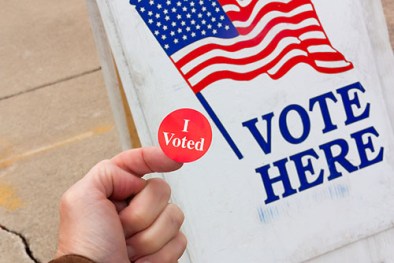
I Voted ButtonAccording to a Washington Post article from the morning after the New Hampshire primary, Cruz, and perhaps other evangelical-friendly candidates, need not worry. While Gallup polling found New Hampshire to be the least religious state in the country, upcoming Super Tuesday states in the heavily evangelical South are predicted to tip the balance.

Before Illinois votes on March 15, the question of the “evangelical bloc” may have been decided. On Super Tuesday March 1, six of the 11 states holding primaries have large numbers of evangelical voters. Before that is the February 20 South Carolina primary, and more primaries take place March 5, 8, and 15 in heavily Christian or evangelical states including Kansas, Louisiana, Kentucky, Mississippi, Missouri and North Carolina.

As these primaries approach, are evangelical voters pitching their lot with frontrunner Donald Trump, sticking with other frontrunners Ted Cruz and Marco Rubio, or have they found a new candidate in Ohio governor John Kasich, who finished second in New Hampshire? Kasich has written about his faith in a book called Every Other Monday, describing his 20-year participation in a men’s Bible study group.

Florida senator Marco Rubio, who evangelicals helped to a third-place finish in the Iowa caucuses, stumbled in the New Hampshire primary and finished fifth behind former Florida governor Jeb Bush.

Faith isn’t the only apparent gap in this election cycle. Analysts point to an education gap in supporters of Trump and the other Republican candidates. Among people with only high school degrees, Trump leads Cruz 46 % to 13%; while among people with higher degrees, the gap closes to only 13 points.

In a poll of Protestant pastors conducted in January, LifeWay Christian Research found considerable disparity in the support for Trump. Only 5% of self-identified Republican pastors support the real estate mogul.

“One of the most surprising findings of our survey was the poor showing of Donald Trump (among pastors)”, said Ed Stetzer, executive director of LifeWay Research. “When it comes to Mr. Trump, there seems to be a huge gap between the pulpit and the pew.”

As of the time of that survey, four-in-ten Republicans and three-in-ten Democrats were still undecided about which candidate they would support. LifeWay found that older pastors (those over 64) are more likely to be undecided (54%) than those 18 to 44 (44%). Older pastors were more likely to favor Trump (8% percent), while Cruz performed well with pastors 45 to 54 (21%).

Among U.S. pastors of all denominations, LifeWay found 54% identified as Republican while 46% were Democrats.

Democrats are not making much appeal on the basis of overt faith-based values. Religion News Services describes frontrunner Hillary Clinton as a “social-justice-focused Methodist,” and Senator Bernie Sanders as culturally Jewish and “unabashedly irreligious.” Clinton’s thumping by Sanders in New Hampshire is likely to be balanced by support from a more diverse electorate elsewhere, including Black Protestants in the South.

“Simply put, it’s a bizarre election season,” Stetzer said.

– IB Staff with additional reporting from Baptist Press and RNS

The_BriefingHere’s where America’s Christian refugees come from
As the refugee debate continues, the United States has resettled 338,441 Christian refugees from more than a dozen denominations since 2003, according to the latest data from the Refugee Processing Center. Most Baptist refugees (23,247) hail from Myanmar (5,980) and Ukraine (5,937). Moldova is third, with 4,043.


ISIS releases 10 Assyrian Christian hostages; over 150 remain captured
The Islamic State terror group released 10 Assyrian Christian hostages Nov. 24 in the Tel Temir town in Hasakah province, northeastern Syria, but over 150 remain captured and threatened with death. The Assyrians are part of a large group, originally numbering 230, who were kidnapped by the Islamic militants from villages in the Khabur river valley back in February.


The most (and least) evangelical states
A recent Pew Research has found most people in every state of the union identify as Christian, religious affiliation swings wildly depending on the region. Mainline Protestants cluster around the upper Midwest. Evangelicals are the largest religious affiliation throughout the South, but only one state –Tennessee – has a clear evangelical majority of the population.


LifeWay completes sale of downtown Nashville campus
LifeWay has completed the sale of its 14.5-acre campus in downtown Nashville. “Although this momentous event is cause for thanksgiving, it is also bittersweet,” Thom S. Rainer, president of LifeWay Christian Resources, wrote in an email to the Southern Baptist entity’s trustees and employees Nov. 24 after the sale was announced.


Hit video game encourages players to put others first
Fallout 4 is the biggest video game release of the year selling more than 12 million units and earning more than $750 million in its first 24 hours of release. According to WORLD Magazine, the post-apocalyptic game features a relational morality system which “requires players to think about the impact their actions have on those closest to them, giving them an incentive to be good.”

Sources: Baptist Press, Christian Post, Christianity Today, Facts and Trends, WORLD Magazine

And what the trends mean for your church

An Illinois Baptist team report

"Imagine if you could spend 10 focused minutes each Sunday morning in extraordinary prayer on two major needs locally, in your church, in America, or across the world.” SBC President Ronnie Floyd’s “Call to Prayer” that began at the Annual Meeting in Baltimore now turns to Sunday mornings, starting with one worship service in January.

SBC President Ronnie Floyd’s “Call to Prayer” that began at the Annual Meeting in Baltimore now turns to Sunday mornings, starting with one worship service in January.

1. Churches respond to “Call to Prayer”
“It is past time for us to prioritize prayer personally and in the church,” SBC President Ronnie Floyd wrote on his blog in early December. “For far too long, we have seen what we can do; it is time for us to see what God can do. This can only happen when we pray.”

Floyd’s continued call to prayer—leading to the June 2015 SBC Annual Meeting in Columbus, Ohio—began about two years ago with a series of meetings for pastors and church leaders. Floyd began quoting famed Puritan preacher Jonathan Edwards who called believers to “extraordinary prayer” for revival in America.

“God’s people will be given a spirit of prayer,” Edwards wrote in 1746, “inspiring them to come together and pray in an extraordinary manner, that He would help his Church, show mercy to mankind in general, pour out his Spirit, revive His work, and advance His kingdom in the world as He promised.”

Today’s growing urgency in prayer coincided with planning for the 2014 IBSA Annual Meeting in November. “We will either hunger for God’s righteousness out of desperation or…out of devastation,” IBSA President Odis Weaver told messengers. The November meeting peaked in a Concert of Prayer for Spiritual Awakening in Illinois and across the U.S.

“I believe we need to cry out to God for spiritual awakening, and for revival in our churches,” said IBSA Executive Director Nate Adams. He led more than 400 pastors and church leaders through a prayer cycle lamenting the lost condition of people in Illinois, repenting of apathy and ineffectiveness, interceding for spiritual awakening, and commiting to pursuit of revival in our churches.

Afterward, many pastors said they would lead similar prayer events when they returned home.

Now Floyd is asking churches to dedicate an entire Sunday morning service to prayer in January: “Just imagine if 100 churches, 500 churches, or several thousand Southern Baptist churches would turn a Sunday morning into insuring that Jesus’ House would be a genuine house of prayer for all the nations.
Just imagine what could happen if, from this point forward, you could spend 10 focused minutes each Sunday morning in extraordinary prayer on two major needs locally, in your church, in America, or across the world.”

Jonathan Edwards imagined the outcome. He called it the “revival of religion.” We would call it “advancement of the Gospel”—the salvation of lost souls, renewal of our churches, and restoration of moral sensibility to the nation.

In your church: SBC churches will likely give prayer a higher profile in 2015, but what are we praying for? How will we sustain prayer in our congregations as more than a once-in-a-while emphasis? Consider a Concert of Prayer in January. As Floyd wrote, “If we do not plan to pray, we will not pray!

2. Evangelicals cope with minority status
Say goodbye to Mayberry. The culture is shifting. What was once called good is now called evil, and vice versa, just as Isaiah said of his own times. The majority opinion in the U.S. approves of same-sex marriage, and many other sexual matters—once outside the norm—are being accepted by society at large. But, while the morals and mores are changing, Southern Baptists are not.

We still stand on the Word.

“One of the biggest challenges for conservative Christians is moving beyond a Bible Belt mentality, or a moral majority mentality,” said Russell Moore, president of the SBC’s Ethics and Religious Liberty Commission, “and seeing ourselves instead as in many cases a prophetic minority speaking to a larger culture about things that matter.”

Moore called on pastors and church leaders to “prepare people for what the future holds, when Christian beliefs about marriage and sexuality aren’t part of the cultural consensus but are seen to be strange and freakish and even subversive.”

“The Bible Belt is collapsing,” Moore has concluded.

The main evidence of that in Illinois is same-sex marriage which became legal June 1. Churches, at one point concerned they would be forced to perform
gay weddings, instead began addressing their bylaws as means of protection.

Another response by evangelicals is to make the church a place of refuge, said John Stonestreet, commentator for Breakpoint Ministries. “People who are enslaved to porn and suffer different forms of brokenness need to be able to come to the church and find answers. The church needs to offer hope and solutions. We need to say, ‘Here’s an option. Here’s the hope; here’s the gospel; here’s the truth; here’s Jesus; and here’s the cross.’”

Moore concurs. “We must have a voice that speaks to the conscience, a voice that is splattered with blood. We are ministers…not of condemnation, the devil can do that, we are ministers of reconciliation, which means that we will speak hard words…truthful words to address the conscience, even when that costs us everything.”

In your church: Church leaders are ministering from a new vantage point, but with the same apologetic. The challenge will be to confront cultural ills in a way that is biblically faithful and yet winsome. The message hasn’t changed, but some in our society today need to hear the truth truly spoken in love.

At a meeting in Asia, young missionaries surround new IMB President David Platt to pray for him as he seeks to mobilize churches. Photo by Hugh Johnson/IMB

At a meeting in Asia, young missionaries surround new IMB President David Platt to pray for him as he seeks to mobilize churches. Photo by Hugh Johnson/IMB

3. Young leaders urge peers to “re-engage”
The evidence has been building for a few years now: young Baptists are back. Or on their way back, at least.

They’re more visible at the Southern Baptist Convention’s annual meetings, and, in 2014, at two meetings on the gospel and marriage hosted by the Ethics and Religious Liberty Commission. They’re also beginning to look remarkably similar in age to the leaders of several of the denomination’s entities. At the ERLC’s October national conference, 125 young leaders had dinner with President Russell Moore and the heads of the SBC’s two missions agencies, Kevin Ezell and David Platt. At four years, Ezell is the longest-tenured at his post; Moore took the ERLC reins in 2013, and Platt was elected in August.

“There’s never been a better time in my lifetime to re-engage as a Southern Baptist than right now,” Ezell, president of the North American Mission Board, said at the meeting. “I really believe that God is up to something very special in the Southern Baptist Convention.”

Many young Baptists likely would cite the election of Platt, 36, as one of the highlights of 2014. Midwestern Seminary President Jason Allen, himself 38, blogged that when he announced Platt’s election during a September chapel service, students (and faculty and staff) broke into applause for the missiologist and author of bestseller “Radical.”

More than 1,000 miles away in Richmond, Va., young missionary appointees gathered around Platt shortly after his election to congratulate him and tell him how “Radical” and his messages on reaching the nations had helped lead them to the international mission field.

After Platt’s election, some Baptist leaders expressed concern that his Birmingham congregation, The Church at Brook Hills, gave a lower amount through traditional Cooperative Program channels, instead sending a large portion of their gifts directly to the SBC Executive Committee and International Mission Board.

But even with those concerns, established leaders affirmed Platt’s ability to mobilize young people to share the gospel to the ends of the earth. Southwestern Seminary President Paige Patterson noted it in a blog post published shortly after Platt’s election, calling for “thanksgiving to God for the presence of a young leader who has obviously garnered the hearts of the younger generation and who will have the opportunity to lead them to a commitment to the world mission enterprise.”

One blogger put it a little more plainly, noting Platt may be just the right voice to deliver tough love to would-be male missionaries outnumbered by female “Journeymen” appointed through the IMB.

“Lend your voice to addressing the issue of young males wimping out of Journeyman service,” William Thornton wrote at SBC Voices. “These guys think you walk on water, Mr. Radical. Give ‘em both barrels on this and see what happens.”

In your church: Look for increased excitement from your own young leaders now that the authors and speakers they’ve followed for several years are in prominent positions. Be prepared for them to want to go to the hard places for ministry and missions. “That’s where we hear young couples saying they want to go, that they want to be radically obedient to what God has called us to do for the nations,” said IMB trustee chairman David Uth. “The passion is there.”

4. Growing persecution: From “the Nun” to “resurrection people”
Before Ebola dominated headlines, another one-word threat struck fear in the hearts of many around the world—and even here. The war of terror and persecution waged by ISIS, or the Islamic State of Iraq and Syria, was the story of the year earlier in 2014.

ISIS chased religious minorities high into the mountains of Iraq. They filmed beheadings and broadcast them as warnings to the rest of the world. And they stirred many in the Western world to stand with the persecuted church. The Arabic letter “Nun” was used on social media pages to symbolize solidarity with those persecuted for their faith in “the Nazarene,” or Jesus.

It’s not just a problem in the Middle East. In Nigeria, 1,505 Christians were killed for their faith in the first seven months of 2014, according to non-profit Jubilee Campaign. North Korea again topped Open Doors’ list of most persecuted countries, highlighted by the imprisonment of American Kenneth Bae, who was finally released in November. Others, including Pastor Saeed Abedini in Iran, remain in prison.

Closer to home, Christians felt a different kind of persecution. Businesses and non-profits faced government fines for not providing abortion-causing contraceptives. The mayor of Houston, Texas, subpoenaed the sermons of pastors who were against the city’s pro-LGBT ordinance.

Christian leaders here urged believers to remember who they belong to. “The answer to the decline of religious freedom and the change in the moral climate is not found in waging incessant cultural wars, filled with rage at our changing culture,” said LifeWay Research President Ed Stetzer. “Simply put, you can’t hate a people and reach a people at the same time.”

Instead, he urged Christians, “Let’s live like the resurrection people, adorning the gospel with lives of grace. Even in our passion to defend freedoms increasingly at risk, let’s remind ourselves this generation is desperately in need of the love of Christ, lived and shared.”

In your church: Be prepared to think globally about persecution. How can your church go beyond your normal prayer times to intercede for those under threat for their faith?

Be alert to what government bodies are doing. Speak out when religious liberties are threatened. The IRS prohibits churches from supporting candidates, but not from speaking on issues related to faith.

SBC’s Frank Page speaks frequently about the future of the Cooperative Program, painting a hopeful picture despite years of declining offerings. Photo by Morris Abernathy

SBC’s Frank Page speaks frequently about the future of the Cooperative Program, painting a hopeful picture despite years of declining offerings. Photo by Morris Abernathy

5. Cooperative missions for a new generation

Most Baptists agreed the Cooperative Program, the denomination’s chief method of funding missions and ministry, is the best way for churches together to pursue the Great Commission. But how to fix the CP, plateaued and trending slightly downward for years, is up for debate. The election of David Platt as IMB president revealed how his church and other large churches have bypassed their state conventions, even though CP gifts for national and international missions are supposed to be routed first through the state level.

“I have heard some people say, ‘The big problem is that the younger generation simply isn’t educated about CP,’” blogged pastor J.D. Greear after Platt’s election. “That may be true for a small percentage of people, but the bigger problem is probably that they are educated about it. The more they find out about CP giving, the less they are motivated to give.”

Meanwhile, blogger Bart Barber spoke up for the reliability of the system itself, calling those who disagree with the way CP funds are allocated to greater involvement in SBC life. “…Within the Cooperative Program approach you can pursue any ministry, reallocate any budget, or adopt any methodology that you can convince enough of your fellow churches and fellow pastors to adopt,” Barber posted at SBC Voices.

“Bring on the changes! Make your proposals! Go to the floor of the SBC Annual Meeting! Attend your state convention meeting! Advocate tirelessly and fearlessly for the improvements you’d like to see. Whatever they are and however much adaptation they would require, I’m betting that almost none of it would actually require any changes at all in the Cooperative Program.”

SBC Executive Committee CEO Frank Page continued his campaign for increased giving through the Cooperative Program, touring the nation (including Chicago) to talk with younger pastors and leaders. “I’ll drop the Cooperative Program if you can show me something else that long-term is effective and engages every church concurrently and consistently in an Acts 1:8 strategy,” Page has said on several occasions. “Show it to me, and I’ll support it….But I
haven’t found it yet.”

In your church: More conversation about CP in the national SBC could mean it’s time for a refresher course in your local church. A class for young or new Baptists is an opportunity to teach about why Baptists give cooperatively. One big reason: CP helps missionaries focus on their mission field, instead of fundraising. Another reason: CP helps the local church have a balanced missions strategy, supporting work on all their Acts 1:8 mission fields.

-With reporting from Baptist Press

Read all of the December 22 Illinois Baptist at http://ibonline.IBSA.org.