Archives For November 30, 1999

The BriefingSB 912 raises religious liberty concerns for Illinois clergy
A bill working its way through the Illinois Senate that proposes mandatory training for clergy to recognize signs of child abuse is causing concern among religious liberty advocates. An amendment added to SB 912 Abused Child-Reporter Training, which specifically targets clergy is the cause for concern.

Moore, ERLC trustees issue ‘Seeking Unity’ statement
An extended statement, “Seeking Unity in the Southern Baptist Convention,” has been issued by Russell Moore and the executive committee of the Ethics & Religious Liberty Commission. Moore, in a 1,691-word portion of the March 20 statement, clarified criticism he had leveled at Christians who supported Donald Trump for president in the November 2016 election.

Divide over Gorsuch on display
The Senate Judiciary Committee began the latest hearings in what has been an often stridently contentious process for the last three decades with a day of opening statements — first from the 20 members of the panel, then from the nominee. Sixty national and state pro-life organizations weighed in on Gorsuch, urging senators in a letter to confirm him. The pro-life leaders cited his “keen understanding and respect” for religious freedom.

Coming solar eclipse: Act of God?
On Monday, Aug. 21, in the middle of the day, the sky will go dark. The temperature will suddenly get several degrees colder. The total solar eclipse that will cross America— an event that last happened 99 years ago — will be an important moment for scientific observers and a massive nationwide spectator event. It will also, for many people of faith, be evidence of God’s majesty — and even, to a few, a harbinger of the coming end of the world.

Christians respond to “Benedict Option”
More than a dozen Christian thinkers recently shared their thoughts on Rod Dreher’s “Benedict Option.” The Benedict Option is essentially responding to western cultural change by pulling away from the culture building up the local church, creating counter-cultural schools based on the classical tradition, rebuilding family life, thickening communal bonds, and developing survival strategies for doctors, teachers, and others on the front lines of persecution.

Sources: Ilga.gov, Baptist Press (2), Washington Post, Breakpoint

Steve GainesIt seems a fair question, especially following the loquacious and public presidency of Ronnie Floyd. Steve Gaines, by comparison, is almost invisible. This is not a criticism of Gaines, that he would have a different style as Southern Baptist Convention president. That is to be expected. Each president makes his own way and leads from his own strengths. But Gaines’s style, working in a less public way that his immediate predecessors, leaves us wondering: What is Steve Gaines doing?

And we find ourselves hoping that he’s focusing on issues that we just haven’t heard about yet.

Floyd wrote. Floyd spoke. A lot. Almost every week Floyd published on his blog and in Baptist Press his thoughts on righting the denomination and meeting the culture conflict head on. He quickly assumed a statesman position for his two years in office, urging support for missions and the Cooperative Program. We in the local Baptist news media came to rely on his thoughtful, well-reasoned analysis of current events.

Gaines, on the other hand, has spoken for publication rarely. He offered a few comments in the election season and after the January inauguration, mostly encouraging Southern Baptists to pray for the Trump Administration. And in February he addressed Baptist newspaper editors and state convention executive directors in Los Angeles. Gaines spoke on Trump’s election, appointments, and early actions as president. And he urged prayer for revival in America. Gaines has themed the 2017 SBC Annual Meeting “Pray: For Such a Time as This,” following Floyd and his predecessor, Fred Luter, in bringing Southern Baptists to our knees for spiritual awakening.

But it’s his comment on the complaints about the Ethics and Religious Liberty Commission and its president Russell Moore that, we hope, gives a glimpse at Gaines’s work behind the curtain.

“I hope the kind of talk we have been hearing is not the direction in which we are going. I hope Russell will remain in his position and that we have reconciliation with a lot of people,” Gaines said in Los Angeles. His comment came almost simultaneously with the announcement by Dallas-area pastor Jack Graham that his megachurch, Prestonwood Baptist, would be holding in escrow its $1-million offering through the Cooperative Program. Graham expressed concerns about the direction of the SBC and the ERLC, in particular, after an election cycle marked by anti-Trump tweets, Moore’s ongoing concern for refugees, and the “friend of the court” support of a freedom of religion case, in which both the ERLC and the International Mission Board (IMB) opposed onerous government regulations placed on a New Jersey mosque.

Southern Baptists do not need another era of suspicion, doubt, and sometime demagoguery. Our mission cause is too important to withhold funding over ancillary anxieties. The reconciliation that Gaines spoke about requires behind-the-scenes diplomacy and skillful mediation. That’s what we might hope Gaines is doing, even if we never hear about it publicly.

-Eric Reed is editor of the Illinois Baptist

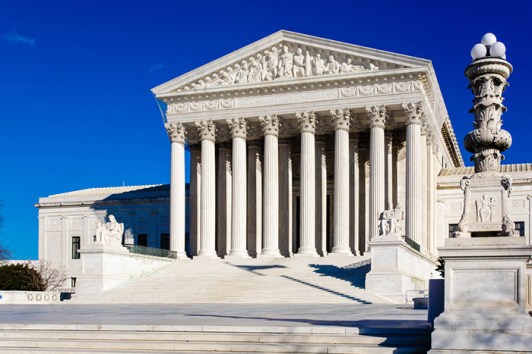
supreme-court-buildingImmediately following the election, Pew Research found 81% of white evangelicals said they for voted for Donald Trump. Many have said they did so because, with one vacancy on the U.S. Supreme Court and the potential for others, they believed Trump would choose conservative nominees who would reflect their values. In naming Neil Gorsuch to replace the late Justice Antonin Scalia, President Trump did exactly that.

Following the Gorsuch announcement, Southern Baptist culture watcher Ed Stetzer recalled that Pew poll and wrote on his blog at Christianity Today, “Evangelical Trump voters made a choice and many of them saw today, with the nomination of Neil Gorsuch, that their choice was validated. They voted for the sanctity of life and for religious liberty.” Stetzer is the former head LifeWay Research who now leads the Billy Graham Center at Wheaton College.

Gorsuch, a 49-year-old Episcopalian from Denver, Colorado, appointed by President George W. Bush to the U.S. Court of Appeals for the Tenth Circuit in 2006. His mother, Anne Gorsuch Burford, was appointed by President Ronald Reagan as the first woman to head the Environmental Protection Agency.

Gorsuch is a proponent of originalism. According to the Washington Post court reporter, Robert Barnes, this means “judges should attempt to interpret the words of the Constitution as they were understood at the time they were written — and a textualist who considers only the words of the law being reviewed, not legislators’ intent or the consequences of the decision.”

In a Jan. 27 interview with CBN, Trump said, “I think evangelicals, Christians will love my pick. And will be represented very fairly.” Gorsuch was the judge who had sided with Christian employers and religious organizations in the Burwell vs. Hobby Lobby and the Little Sisters of the Poor Supreme Court cases. Suits were filed because the Affordable Care Act had imposed rules requiring them to violate their religious beliefs and provide abortion causing contraceptives to employees.

After the announcement, Southern Seminary President Albert Mohler expressed thanks for Trump and supporting the nomination: “Judge Gorsuch is committed to textualism and will uphold the Constitution of the United States. His academic credentials are impeccable and his experience as a clerk for two Supreme Court justices and his own distinguished tenure as an appeals court judge qualify him for this nomination without question.”

Russell Moore, President of the SBC’S Ethics and Religious Liberty Commission (ERLC) released a similar statement, calling Gorsuch, “an exceptional choice for Supreme Court justice. He is a brilliant and articulate defender of Constitutional originalism in the mold of the man he will replace: Justice Antonin Scalia.…I heartily support President Trump’s excellent appointment.”

The Gorsuch nomination follows several others of interest to evangelicals. Former SBC president Ronnie Floyd, who attended the National Prayer Breakfast in Washington Feb. 2., pointed out other Trump nominees whom he called “followers of Christ”: Education Secretary nominee Betsy Devos, Sonny Perdue for agriculture secretary, Rick Perry for Energy Department head, Tom Price to head Health and Human Services, Scott Pruitt to lead the Environmental Protection Agency, and Jeff Sessions as Attorney General.

–with info from Pew Research, ChristianityToday.com, and the Washington Post

The BriefingTrump relying on God now more than ever
President Trump told the Christian Broadcasting Network becoming President of the United States has made him rely on God more than ever. “I would say that the office is so powerful that you need God even more,” Trump told The Brody File. “There’s almost not a decision that you make when you’re sitting in this position that isn’t a really life-altering position. So, God comes in even more so.”

Trump to announce Supreme Court pick Jan. 31
Setting up a high-stakes legal and political battle, President Trump said Monday he will announce his Supreme Court choice in a prime-time address Tuesday night, two days earlier than initially scheduled. He did not disclose the identity of his nominee, but told reporters that his pick is “unbelievably highly respected” and people will be “very impressed” by the selection.

ERLC deploys online effort for PPFA defunding
The ERLC announced an online advertising campaign to rally support for the congressional drive to cut federal dollars for Planned Parenthood, the country’s No. 1 abortion provider. The effort is the first of its kind by the ERLC and includes a digital petition that makes it possible for the commission to deliver the list of signers to congressional leaders.

Tornado damages William Carey University
An EF3 tornado that ripped through southern Mississippi Jan. 21 in the wee hours of the morning damaged nearly all the 30 buildings on William Carey University’s Hattiesburg campus and left seven students injured. William Carey is affiliated with the Mississippi Baptist Convention and has campuses in Hattiesburg and Biloxi.

Super Bowl won’t stop church services
For churches that have Sunday night activities, most pastors say it’s still “game on” despite the big game next weekend. According to a new study from LifeWay Research, 68% of Protestant pastors say their church typically has some activity on Sunday night. And among those pastors, almost 6 in 10 (59%) say they will continue as normal on the night of the Super Bowl.

 Sources: CBN, USA Today, Baptist Press, Facts & Trends, Baptist Press (2)

Editor’s note: This post has been updated to include a blog post/podcast from Albert Mohler.

Four  prominent Southern Baptists are taking public—and differing—positions on President Trump’s executive order that restricts immigration from seven Muslim countries, suspends entrance of all refugees for 120 days, and prevents all Syrian refugees from entering the United States indefinitely.  Commentary from both Russell Moore and Ed Stetzer was published in the Washington Post, while Ronnie Floyd and Albert Mohler are speaking out on their blogs.

61222russell_moore

Russell Moore

Russell Moore, the president of the SBC’s Ethics and Religious Liberty Commission, has begun commenting on actions by the new administration, after a relatively quiet December. He wrote a letter to President Trump, Vice President Pence, Speaker Ryan, and Majority Leader McConnell responding to the president’s order on refugees that the Post has exclusively on its opinion page.  In the Jan. 30 letter, Moore references the Resolution on Refugee Ministry passed by messengers to the 2016 Southern Baptist Convention in St. Louis. “’Scripture calls for and expects God’s people to minister to the sojourner.’ Southern Baptist churches throughout the United States lead the way in carrying out this calling,” Moore wrote.

Moore also expressed concern for the safety of Southern Baptists who, “are among the many Americans living in majority-Muslim countries to carry out the biblical call to love their neighbors.” He also called on the president to reaffirm his administration’s “commitment to religious freedom” and “adjust the Executive Order as necessary.”

Ed_Stetzer_PC

Ed Stetzer

Ed Stetzer, the former Executive Director of LifeWay Research who now serves as the Billy Graham Distinguished Chair at Wheaton College in Wheaton, IL, had his own op-ed published by the Post Jan. 26, “Evangelicals, we cannot let alternative facts drive U.S. refugee policy.” Stetzer agreed with the president on a need for a greater focus on national security however, he said, “I’m concerned that the president is operating on generated fear rather than facts. We need a better way.”

Stetzer’s better way is to “reject false facts,” “recapture a vision of what it means that all are made in God’s image,” and to “fight for those without a voice.”

Ronnie_Floyd_press

Ronnie Floyd

Ronnie Floyd, pastor of Cross Church and immediate past president of the Southern Baptist Convention, published, “Navigating through the refugee issue from a biblical perspective,” to his blog, RonnieFloyd.com. In his post Floyd declared, “If we do not look at it biblically, we enter into dialogue without authority and clarity.” He advised: Love the refugee, fix the immigration system, and pray diligently.

He too referenced the 2016 Resolution on Refugee Ministry, “…one line in this resolution that realized the biblical responsibility of government: ‘RESOLVED, That we call on the governing authorities to implement the strictest security measures possible in the refugee screening and selection process, guarding against anyone intent on doing harm…’”

Floyd, who served on Trump’s religious advisory board during the election, wrote, “This line was included in the resolution because as followers of Christ, we must understand the tension that occurs because our government has a responsibility it is mandated to fulfill.”

He concluded by asking Christians to stress balance in their reactions to what is taking place. “Believing and operating with biblical balance, we know the Church must realize biblically that the government’s duty is to protect its citizens. Simultaneously, we must affirm the responsibility of the Church to minister to refugees who are brought inside the borders of America.”

albert-mohler2

Albert Moher

Albert Mohler, president of Southern Seminary, devoted the January 30 edition of The Briefing to the controversy. He sought to clarify misconceptions many have concerning the executive order by pointing out the seven countries on the identified in the order are known terrorist threats. He noted several other countries have much larger Muslim populations and do not appear on the list.

“The entire system of laws in this country concerning our borders and entry into the country is a part of the government’s responsibility to keep the nation secure,” Mohler said.

Mohler compared previous immigrants who came not just to live in America but to be American, to the teachings of classical Islam. “It is not just what is often called radical Islam, it is classical Islam, it is the Islam believed by the vast majority of Muslims around the world that requires that every Muslim seek to bring every nation under the law of the Quran, under Sharia law.”

He cautioned, “The significant issue to observe here is that even though some who are coming in terms of these waves of Muslim immigration intend to join these communities and these cultures, the reality is that the majority of these immigrants and Muslims have not been assimilated into the cultures. To put it in terms of the American experiment, we have to be very careful that we do not reshape America by creating a population that does not intend, even though they are resident in this country, to be a part of the American project.” He pointed to the situation in Europe as an example of this reshaping.

61222word_cloud

We live by God’s surprises,” said Helmut Thielicke. The German pastor was speaking in times more trying than ours, but in the darkest days of WW2, he could see the hand of God at work—and was amazed by it.

Dare we say the same of the year just past?

We were surprised by events we witnessed. In their unfolding, we sought the reassurance of God’s sovereignty. Here are some noteworthy moments for Baptists in Illinois—some heavy, some light—and what they may say about the year before us.

– The Editors

Standing on the promises

61222trump_pence

Donald Trump (left), Mike Pence (right)

A third of Americans (34%) think Donald Trump will be a “good” or “very good” president, while 23% say “average” and 36% expect a “poor” performance. The survey by CBS News was conducted the second week of December, after Trump began announcing cabinet appointments.

The ratings fall along party lines: 70% of Republicans expect a good presidency, while 60% of Democrats predict poor results. That means evangelicals, who mostly supported Trump, have high expectations—but for what?

Religion reporter Sarah Pulliam Bailey, on her Washington Post blog, points to a half-dozen areas where Trump’s campaign promises intersect with evangelical interests. Some are the expected areas involving religious liberty. The nomination of Supreme Court justices who will uphold pro-life legislation topped the list. Trump also said he would defund Planned Parenthood, sign a bill that forbids abortions after 20 weeks, and make the Hyde Amendment permanent. It prohibits use of federal funds for most abortions. And Trump has expressed support for a group of nuns who have battled provisions in the Obama Affordable Care Act that mandate contraception as part of an organization’s health care plan. Southern Baptists have supported their lawsuit.

Trump promised to repeal the 1954 Johnson Amendment to the U.S. tax code, which prevents pastors from endorsing or opposing political candidates, or else lose their church’s tax exempt status. And he has taken a position on education funding that allows families to choose private, charter, or home schooling, with a promise to set aside $20 billion for vouchers in his first budget.

The U.S. will be a “true friend to Israel,” Trump said, a position common among evangelicals favoring Israeli interests over others in the Middle East and urging movement of the U.S. embassy to Jerusalem.

Many Southern Baptists would support these actions, if they came to pass. For SBC leaders who have been in contact with the future administration, the Trump presidency represents a new way of thinking about the White House. Since Ronald Reagan’s presidency, Southern Baptists in general have viewed Republican administrations as allies in the causes of pro-life, families and marriage, and religious liberty. They have, at the least, been sympathetic to evangelical causes, and even co-laborers in the faith. (Remember the stories of George and Laura Bush singing hymns at the White House piano with Attorney General John Ashcroft and Secretary of State Condoleezza Rice on the keyboard?) Democratic presidents, on the other hand, have often been at odds with evangelicals’ causes, even if they claimed to be Baptists, as in the case of Bill Clinton.

Donald Trump represents a third way of relating to the White House: a president who made promises to evangelicals and drew their support at the polls, but who shares no apparent faith commitment with the born-again community. (There are no stories of Trump walking on the beach with Billy Graham and committing his life to Christ. And the tycoon-turned-president has said he sees no need to ask for forgiveness for his sins.)

The evangelicals closest to Trump, including incoming vice president Mike Pence, take on the role of Joseph in Egypt—keeping the interests of God’s people before pharaoh, hoping to keep his ear and hold him to his promises.

High hopes for high court

Some voters who cast their ballots for Donald Trump said they did so because of concern for the U.S. Supreme Court. The February death of Justice Antonin Scalia left a vacancy, and three of the Justices—Ruth Bader Ginsburg, 83, Anthony M. Kennedy, 80, Stephen G. Breyer, 78—may be looking toward retirement in the next few years.

Focus on the Family founder Dr. James Dobson supported Trump. He told Christianity Today, “The next president will nominate perhaps three or more justices whose judicial philosophy will shape our country for generations to come.”

A LifeWay Research survey found 23% of evangelical pastors were most concerned about the candidates’ likely Supreme Court nominees. And 36% of Trump-supporting pastors cited the high court as a major factor in their choice.

Trump released a list of his potential Supreme Court nominees—20 judges and one senator, Mike Lee of Utah. Each met two criteria: they are pro-life and support the Second Amendment. The list was vetted and reviewed by the Federalist Society, which is comprised of conservative and libertarian lawyers, and the conservative Heritage Foundation.

Commentator Denny Burk told Baptist Press the list “does not alleviate the concerns that many of us have about his candidacy.” Because Trump didn’t promise to pick someone from the list, Burk said, “The list means nothing….And we are again being asked to trust the judgment of a man who changes his positions daily…” Burk is professor of biblical studies at Boyce College, the undergraduate school of Southern Seminary.

Reince Priebus, future White House Chief of Staff, told radio host Hugh Hewitt on December 14 that the President-Elect will likely name Scalia’s replacement near the January 20 inauguration.

Priebus said Trump may choose a younger nominee. “Well, I tend to believe younger is better, too, but I can tell you what the president (elect) believes is that the most qualified, best person to serve on the Supreme Court is what’s most important….Certainly longevity’s a factor, but it’s just a factor. Competence and having the best possible person nominated is what’s most important.”

Tension between leaders, pews

61222russell_moore

Russell Moore

The 2016 presidential campaign and election exposed deeper divides than many knew existed in the U.S.­­—and within evangelicalism. White evangelical voters overwhelmingly supported Trump, even while some of their leaders voiced their opposition.

As Wheaton College’s Ed Stetzer said after the election, “The evangelical leadership is out of touch with the evangelical rank-and-file,” during a Christianity Today podcast.
Tension over the election appears to be at least part of a rift between some Baptists and the SBC’s public policy entity, the Ethics and Religious Liberty Commission.

In November, Louisiana Baptists voted to ask their convention’s executive board to study recent actions of the ERLC.

Will Hall, editor of the state’s Baptist Message newspaper, noted that the motion did not elaborate on the issues of concern, “but ERLC President Russell Moore has come under fire nationally from Southern Baptist laymen and leaders for a number of controversial actions and statements, including…his aggressive attacks on Southern Baptists who supported Donald Trump.”

Moore, who has led the ERLC since 2013, wrote an opinion piece for The New York Times in May in which he said the election “has cast light on the darkness of pent-up nativism and bigotry all over the country.” His article caught the attention of Trump, who tweeted that Moore was a “truly a terrible representative of evangelicals.”

The op-ed also sparked a fervent debate on the SBC Voices blog, where Baptists posted a variety of opinions on Moore, from “he did what we pay him to do,” to “it is difficult for me to imagine Russell Moore functioning as ERLC President if Trump wins in November.”

The questions about Moore and the ERLC are just one example of the impact the 2016 election could have on religious organizations and denominations, and on the nature of Christian leadership. The tension leaders face, Ed Stetzer said, is between recognizing the responsibility to speak prophetically, and realizing they represent a constituency who largely feel very differently than they do.

For Christian leaders, their influence in the next four years may well depend on how well they strike the balance.

Editor’s note: This is part 2 of the Illinois Baptist’s coverage of a recent summit hosted by the Ethics and Religious Liberty Commission on racial reconciliation and the gospel. Read part 1 here.

Layout 1

Read the April 6 edition of the Illinois Baptist at http://ibonline.IBSA.org.

NEWS | If Southern Baptists are to be serious about Jesus’ Great Commission to make disciples of all peoples, said historian Matt Hall, they need to honestly think through where they’ve come from. Hall, Southern Seminary’s vice president for academic services, spoke in a video message about the SBC’s history with slavery, racism, and segregation during a March summit hosted by the Ethics and Religious Liberty Commission on racial reconciliation and the gospel. (The Convention was formed over a divide between Baptists in the North and those in the South who wanted to continue owning slaves.)

Hall also led one of the summit’s panel discussions, joined onstage by Moore, Philadelphia pastor K. Marshall Williams, SBC Executive Committee President Frank Page, and past SBC President Fred Luter.

Understanding the SBC’s past ought to inform how we address racial issues now, Moore said. The divide over slavery “really was a justification for evil and for wickedness,” he said.

“Which, to me, ought to cause us not so much to look back and say, ‘Weren’t they evil and weren’t they wrong?’ as much as it ought to cause us to look back and to say, ‘Look at these people who knew their Bibles, and who were preaching their Bibles, and who were trying to gather up money for world missions, and yet were not able to see this glaring and wicked sin and unrighteousness and injustice that they were part of.’

“That ought to not give us a sense of our superiority to them; it ought to give us a sense of humility to say, ‘If these people who knew their Bibles like this, could get this that wrong on an issue that is so basic to what Scripture is teaching, then we need the mercy and the power of God.’”

IBSA African American Church Planting Strategist Ed Jones has faced the obstacle of the SBC’s history, he said. Some African Americans have told him, “I don’t necessarily want to be part of the Southern Baptist Convention because of its past,” he told the Illinois Baptist during the summit. The Nashville meeting was an opportunity to tackle those issues head-on and bring things into the open.

Luter said the Convention’s history resulted in one question asked by every person who interviewed him in the months before his election: Why would a black man want to be president of the SBC? Frankly, he didn’t know much about the Convention’s history when he went from street preacher to pastoring New Orleans’ Franklin Avenue Baptist Church almost 30 years ago. A couple of years into his pastorate, several of his older church members suggested Franklin Avenue leave the SBC.

“…There’s nothing we can do about our past,” was Luter’s response. “But there’s a whole lot we can do about our future.”

Luter was on the SBC Resolutions Committee that in 1995 proposed a resolution adopted by Convention messengers apologizing “to all African-Americans for condoning and/or perpetuating individual and systemic racism in our lifetime,” and repenting “of racism of which we have been guilty, whether consciously or unconsciously.”

The applause and tears that accompanied his election as SBC president made June 19, 2012, “one of the greatest hours in the life of the Southern Baptist Convention,” Luter said as people in the Nashville auditorium clapped too. “My only concern is that hopefully it’s not the last time.”

“That’s where the real test is,” said Moore. “We’ve got the pictures of the presidents of the Southern Baptist Convention over there. Let’s come back in 20 years and if Fred Luter is an island in a sea of middle-aged white guys, that’s means that we have not been where we need to be.”

Can we keep the ‘beast feast’?
H.B. Charles was in the middle of a potential church merger when he was asked that question about a long-held tradition. Charles’ largely African-American church, Shiloh Metropolitan Baptist in Jacksonville, Fla., was considering combining with largely Anglo church across town. One member of that congregation was most concerned with whether Charles as pastor would let them keep their annual wild game dinner and evangelistic outreach, known as the “beast feast.”

“He looked at me and said, ‘Pastor, I know you’ll agree with me, that if one redneck comes to Jesus, it’s worth it all.’ And in that moment,” Charles said, “I just had a feeling everything was going to be all right.”

The summit’s lightest and most practical moments came when practitioners like Charles explained what racial reconciliation looks like in a church setting. Josh Smith, pastor of MacArthur Boulevard Baptist Church in Irving, Tex., experienced a similar would-be culture clash when a woman at his increasingly diverse church brought a tambourine to play during worship, and during his sermon.

Smith and his team decided the next day they would allow the tambourine playing during the worship, but not during the message. He explained their thoughts to the woman, who’s still at the church six years later. “It was a lot of those hard conversations,” Smith said of the church’s transition to be more diverse, “and I just felt like it was not as much from the pulpit as interpersonal conversations.”

Sometimes, unity is a matter to preach about, as Adron Robinson found when he became pastor of Hillcrest Baptist Church in Country Club Hills. Robinson, who attended the ERLC summit, said his first sermon series was on forgiveness, because the church had recently experienced a difficult time in its history when he arrived almost six years ago.

Hillcrest’s community is largely African American, Robinson said, and his church currently reflects their neighborhood. But during the summit, he said he was wrestling with one of the conversations happening onstage: Is it best for churches to reflect their communities, even if those communities are predominantly one ethnicity?

“I’m good with the fact that our church reflects our community, but I’m also wondering, Is that enough? Does a church need to look more like heaven?

“There’s some ease…some accomplishment in the fact that we look like our community, but I also think that there’s more for us to do, that the church needs to be more multi-cultural, more multi-ethnic,” Robinson said. He also sees a need for more unity between churches.

“We’re cordial and we speak, but there’s not really true fellowship,” Robinson said of some African-American and Anglo Southern Baptist congregations. “So, that’s been an issue, and I think it’s an issue on both sides. [I don’t think] that I’ve done everything that I can do to encourage that either.

“This conference has helped me see the need for communication, for us to sit down, share a meal, and actually build a better relationship, so that we can be the family that God has called us to be.”

COMMENTARY | Meredith Flynn

PrintOne of the major stories out of last year’s Leadership Summit hosted by the Ethics and Religious Liberty Commission was the negative reaction on social media. In fact, the “Reporter’s Notebook” column space in the following issues of the Illinois Baptist was devoted to “angry birds” who spoke out on Twitter about the speaker line-up, the subject matter, and the opinions expressed.
It seemed like almost everything that was said (or tweeted or blogged) at last year’s meeting made somebody mad.

This year, not so much. Yes, there was some chatter, according to tweets after the event, about Baptists having an agenda for tackling this year’s topic, racial reconciliation. At least one poster noted the Southern Baptist Convention should be honest about its past in regards to slavery and racial division. (One whole panel discussion and pieces of other messages were devoted to the topic.)

But most of the Twitter feedback was positive. Maybe it was because much of it came from inside the summit. Racial reconciliation may not have drawn the same large online audience as last year’s topic: sexuality. Or, there’s this possibility: At its core, the summit was a meeting about a problem that every Christian can identify with, and one for which even those outside the church see the need for a solution.

Divisions exist around racial identity, and in recent days, they have been especially ugly, violent, frightening and real.

Leaders at the summit seemed to view racism as a common enemy. And, for Christians, as sin. There are some things you don’t do anymore once you have a relationship with Christ, said recent Southern Baptist Convention President Fred Luter.

“Don’t tell me you’re saved and still lying like a rug. Don’t tell me you’re saved and still cussing like a sailor. Don’t tell me you’re saved and still mean as a pit bull. Don’t tell me you’re saved and still don’t like someone because of the color of their skin.”

From the podium in Nashville, summit speakers talked about racial division as a universal problem, and a universal responsibility. Thabiti Anyabwile compared having skewed ideas about racial identity to walking into a cafeteria and seeing one table of diners that look like you, and one that doesn’t. You immediately think the table that looks like you has something in common with you, and is therefore safe for you.

“The mind is a relentless stereotyper,” Anyabwile said. No matter who you are. At the ERLC Summit, speakers and attenders were unified by that knowledge, and in the belief that the gospel is the only thing that has the power to reconcile people to God and to one another.

And the angry birds, for the most part, stayed away.

Meredith Flynn is managing editor for the Illinois Baptist newspaper.

Editor’s note: This is part 1 of the Illinois Baptist’s coverage of a recent summit hosted by the Ethics and Religious Liberty Commission on racial reconciliation and the gospel. Read part 2 next week here at ib2news.org.

NEWS | Meredith Flynn

Weeks of riots in Ferguson, Missouri, following the police shooting of a young black man, Michael Brown. More protests in major cities after the death of another African American, Eric Garner, during an arrest. And with the shooting death of 12-year-old Tamir Rice in Cleveland, the culmination of a summer of racial unrest in America. And it was only the beginning.

Chants of “Hands up, don’t shoot” in the streets gave way to “Black lives matter,” and in personal conversations, the question has become “Why now?” and “I thought we had made so much progress on race relations in the U.S.”

A sad and challenging summer, followed by a new round of unrest in Ferguson after a condemning report from the U.S. Department of Justice, leaves many thinking, “Apparently not.”

And the church wonders, What can we do? And in some corners Christians have asked, What does the gospel require us to do?

“How do we as people formed by Christ start to have those conversations out in the world?” said Ethics and Religious Liberty Commission President Russell Moore at a March summit in Nashville. “It starts if we’re in the same body, gathered around the same table, praying with one another, praying for another, serving one another, being led by one another, and then we will stand up for and speak up for one another.”

The state of race relations in America, from Ferguson to New York, and coast to coast, is demanding fresh thinking and producing new preaching on race in all kinds of churches—including here in Illinois.

More than 500 current and future church leaders gathered at LifeWay Christian Resources last month to address racial reconciliation and the gospel. The second-annual Leadership Summit hosted by the Ethics and Religious Liberty Commission brought together nearly 40 speakers who presented on a wide range of topics: multi-ethnic ministry, Islam, the SBC’s history on racial issues, pop culture, and more.

In each message and panel, the summit’s key theme was clear: Racial reconciliation is a gospel issue. The gospel reconciles people to God and to one another, but sin is still at work in the world, causing tension, division, strife and violence.

The solution, leaders said at the summit, is for the church to preach and live out the gospel on matters of race. To examine itself for any lingering race-related sin of pride, and to work together to fight the common enemy of racism.

“We’ve got a long way to go,” Moore said in his opening address. “Our sin keeps wanting us to divide up. But to the faithful, Jesus promises, ‘You will be called overcomers.’ And we shall overcome.”

Summit attenders gathered in the aisles and at the altar to pray together at the start of a March meeting on racial reconciliation and the gospel.

Summit attenders gathered in the aisles and at the altar to pray
together at the start of a March meeting on racial reconciliation and the gospel.


Learning how to see each other
“All creatures of our God and King; lift up your voice and with us sing…”

The first hymn led by band Norton Hall and worship leader Jimmy McNeal took on extra significance as the words reverberated around the auditorium. All creatures, lifting up their voices, together. African American, Anglo, Hispanic; male and female; young and old. At the summit, mostly young.

The picture painted in “All Creatures of Our God and King” isn’t possible when people are left to their own devices, summit speakers said. The gospel is central to racial reconciliation. In perhaps one of the few times the Good News has been compared to mayonnaise, Dallas pastor Tony Evans said it acts as an “emulsifier,” like the eggs that helps combine the ingredients in his favorite sandwich condiment.

“Grabbing a black Christian and a white Christian, a red Christian and a yellow Christian, a Baptist and a Methodist, Pentecostal,” Evans preached as the crowd clapped and agreed with Amen’s. “He’s able to pull them together when you understand that the gospel can change an environment, and can do anything.”

Thabiti_Anyabwile_blogThe mission of reconciliation can be seen in the Bible from the very beginning, said Washington, D.C., pastor Thabiti Anyabwile (right). Preaching from the book of Genesis, he urged his listeners to consider how they look at people different from themselves, in light of the fact that everyone is made in the image of God.

“Every person we have ever looked at, smiled at, greeted, encouraged, insulted, slandered, touched, is a person bearing the marks of divine likeness, the ‘imago dei.’ So, racial reconciliation must begin with our learning the habit of seeing each other as together made in the image of God, and therefore possessing inestimable, unfathomable dignity and worth and preciousness.”

But seeing other people is such a commonplace occurrence, Anyabwile continued, and then there’s the problem of sin. That’s why true reconciliation requires a constant renewing of the mind. How a Christian treats people of different ethnicities is such a key part of living out one’s faith that it ought to be a category of discipleship, the pastor said.

“That [racism has] moved so rapidly to be a despised thing is wonderful,” he said. “But along the way, I think many Christians have been so afraid of the label, so afraid of the discussion, and so afraid of the implications, that they don’t even want to have the conversation.”

Working out the reconciliation that Christ has achieved for us is one of the most underdeveloped areas in Christian discipleship in the U.S., he said. A believer can live his whole life without someone sitting down with them to explore their identity in Christ.

And so, Anyabwile said, “We’re weak when the Fergusons erupt around us, we’re weak when we watch Eric Garner choke to death on a city sidewalk. We feel incompetent when we see a Tamir Rice shot in Cleveland.

“We don’t know quite what to say or what to do, when the (Department of Justice) reports come out, whether it’s telling us that ‘hands up don’t shoot’ isn’t true, or whether it’s telling us that, man, this police department is shot through with racist practice….It immobilizes us, because we’re not discipled, because we don’t have this as a category in what it means to mature as a Christian, as a follower of Christ.”

THE BRIEFING | Meredith Flynn

Pastor Larry Trotter has done four funerals in recent months for victims of gun violence. In his neighborhood on Chicago’s south side, the streets can be very dangerous, especially after this summer, which saw a dramatic increase in the city’s homicide rate.

That’s why Trotter and his congregation from Sweet Holy Spirit Church took to the streets September 30, marching through their neighborhood chanting, “Stop the violence,” and “Save our children.” Almost 200 people participated in the anti-violence rally and march.

“I know that this won’t stop everything, but I want people to grab the passion,” Trotter said, according to Associated Press reports. “If we all join together, we can make an impact.”

According to Chicago police, almost 400 people have been killed this year, and the homicide rate is up 31 percent over last year. Since the extremely violent 1990s, crime has decreased in Chicago, but the recent rise in violence shows there’s much room for improvement.

“The city has gone wild. It’s no longer just gang killing, it’s random killing,” Trotter said. “We have to try and channel that energy and put it in another direction.”

Or march it in another direction. And hopefully it will benefit the generation currently growing up in an environment that can be very frightening. Brandy Lewis was one of the participants in Sweet Holy Spirit’s march. As a mother and someone who works with youth everyday, Lewis told the Chicago Tribune the community has a responsibility to its youngest members to end the violence.

“We’re out here trying to bring attention to our neighborhood that we have to do something to keep our kids alive.”

And prayer plays a key role, Trotter said according to the Tribune. “The message is ‘Stop the violence,’ but the spiritual message is that we’re praying for the … violence to cease.”

-With information from Associated Press, Christian Post, and Chicago Tribune

Other news from Baptist Press:

Allen elected president of Midwestern Seminary
In a 29-2 vote, Jason K. Allen was elected by Midwestern Baptist Theological Seminary trustees as the school’s fifth president. The vote took place October 15 during the trustees’ bi-annual meeting in Kansas City, Mo. Allen, 35, comes to Midwestern from Louisville, Ky., where he served as vice president for institutional advancement at Southern Baptist Theological Seminary and as executive director of the Southern Seminary Foundation. He had concurrently served as senior pastor of Carlisle Avenue Baptist Church in Louisville. Read more at BPNews.net.

A win for pro-life pharmacists
An Illinois appeals court has granted a victory to pro-life pharmacists who object to providing drugs that can cause abortions. Pharmacy owners Luke Vander Bleek and Glenn Kosirog challenged a 2005 rule mandating pharmacists fill all prescriptions, including those for Plan B and other “morning-after” pills. In September, the Illinois Fourth District Court upheld a lower court injunction that blocked the state from enforcing the rule.

ERLC pres. search goes online
The SBC’s Ethics and Religious Liberty Commission has launched a website to aid in identifying a new president for the agency following the October 2013 retirment of Richard Land. At erlc.com/presidentialsearch, potential candidates can view a list of attributes ERLC trustees are seeking, and a prayer guide for the committee’s work. The site also is the only way by which interest in the ERLC presidency can be communicated to the trustee search committee, who will accept curriculum vitae from prospective candidates through Oct. 31. Read more.

Missionary kid shares childhood through children’s book
Valerie Elliot Shephard, the only child of missionaries Jim and Elisabeth Elliot, has written a children’s book about her early life in the Ecuadorian jungle where her mother told a tribe about Jesus after they had killed her father. Shephard was only 10 months old when her father was killed; she and her mother remained in the jungle several years until many in the tribe accepted Christ and abandoned their savage ways. The October release of “Pilipinto’s Happiness: The Jungle Childhood of Valerie Elliot” coincides with the 85th anniversary of Jim Elliot’s birth. Pilipinto, meaning “butterfly,” was the Indians’ nickname for the girl.