Archives For November 30, 1999

COMMENTARY | Eric Reed

In the past couple of weeks, I found myself reaching for the remote every time the news showed that video of NFL football player Ray Rice coldcocking his future wife in a hotel elevator. Seeing him drag her, unconscious, into the hallway and dumping her body on the floor is too much to take. For some of us, domestic violence hits too close to home.

A 2010 survey by the Centers for Disease Control showed 24% of women and 14% of men have been “hit with a fist or something hard, beaten, slammed against something at some point in their lifetime” by a partner. And yet, new LifeWay Research shows 4 out of 10 pastors never preach or teach about it, and only 2 in 10 raise the topic annually.

Country Church InteriorThat means in two-thirds of our churches, attenders might hear domestic violence, which affects one-fourth of households, referenced in a sermon or large group meeting once a year, if at all.

Spousal abuse still isn’t a subject for public conversation—even from the pulpit.

In my years of hearing and reading sermons, I’ve encountered only one on domestic violence. The preacher was a quiet man, unmarried, and he gave no indication what prompted him to tackle the subject. He chose as his text the account of Jephthah’s daughter in Judges 11.

So many more familiar verses would have supported his argument and from a more positive angle: Man, God made womankind to be your perfect complement (Genesis 2:18). Love your wife as Christ loves the Church; love her as you love your own body (Ephesians 5:25, 28). And as simply as this: love your neighbor as yourself (Matthew 22:39, Mark 12:31).

But instead the preacher trudged faithfully through the gruesome report of a rash vow that ended, by most interpretations, in the slaughter of an innocent woman. This wasn’t violence of a husband against wife, but the horrific act of father against daughter was just as unthinkable. And the preacher’s willingness to tell the bloody story made domestic violence very real, even within the sanctuary.

The preacher applied Jephthah’s brutality to parents who abuse their children and husbands who beat their wives. He even spoke of domestic partners and live-in relationships where it appeared degradation perversely motivated staying together, even when no law required it and no church encouraged it.

Knowing his congregation, that was a brave move. In his neighborhood there along the streetcar line, brutish Stanley Kowalski was still a common character. TMZ attests he still is.

Not many pastors tackle the subject as bravely. Even pastors who preach on domestic violence once in a while are more likely to think violence in the home troubles their community (72% said it did) more than their church (only 25% said so). Lifeway Research says half of senior pastors (52%) say they don’t have enough training to deal with the issue. Many say nothing.

I remember my mother wearing sunglasses in church of necessity, and rehearsing an excuse that she ran into a door should anyone question her. No one did. Even as she directed the choir and led the singing behind shades, the cause of her bruises was never raised.

But what the church historically hasn’t done, perhaps TMZ and the NFL will force us preachers to do: bring what happens in angry, broken households into the light and hold it up against the Word of God.

Because for too many of us, domestic violence hits close to home.

Eric Reed is editor of the Illinois Baptist.

–Statistics from BP.net and LifeWay Research

THE BRIEFING | Meredith Flynn

Nearly two-thirds of Protestant senior pastors rarely or never speak to their congregations about mental illness, according to an extensive new study by LifeWay Research. But the majority of people who have a family member suffering from mental illness, or who are suffering themselves, want their church to talk openly about the topic so it won’t be so taboo.

“Our research found people who suffer from mental illness often turn to pastors for help,” said Ed Stetzer, executive director of LifeWay Research. “But pastors need more guidance and preparation for dealing with mental health crises. They often don’t have a plan to help individuals or families affected by mental illness, and miss opportunities to be the church.”

According to the study, 68% of pastors said the church maintains a list of mental health resources for members, but only 28% of families said they were aware of those resources in the church.

The “Study of Acute Mental Illness and Christian Faith” also surveyed pastors about their own struggles with mental illness. Of those surveyed, 23% said they had experienced some kind of mental illness themselves, and 12% have received a diagnosis for a mental health condition, according to a report by LifeWay’s Bob Smietana.

Religious groups ask SCOTUS to settle marriage issue
The Southern Baptist Ethics and Religious Liberty Commission joined several other religious groups earlier this month in asking the Supreme Court to settle the same-sex marriage issue. “Legal uncertainty is especially burdensome for religious organizations and religious believers increasingly confronted with thorny questions,” the friend-of-the-court brief stated in part.

To help answer some of those questions for Illinois pastors and church leaders, the Illinois Baptist State Association will host the “Elevate Marriage” conference October 16 from 10 a.m. to 2 p.m. at the IBSA Building in Springfield. Featured speakers include Kevin Smith, The Southern Baptist Theological Seminary; Andrew Walker, Ethics and Religious Liberty Commission; and Jill Finley, Bethel Baptist Church, Troy, Ill. Lunch is included, and registration is required; go to http://www.IBSA.org/Marriage.

Winter coming soon for religious minorities in Iraq
As cold weather draws nearer in northern Iraq, the situation for refugees fleeing ISIS grows more desperate, reports Baptist Global Response. “Shelter is lacking or inadequate,” said Abraham Shepherd, who directs work in the Middle East for BGR. “People are living in their cars, under doorsteps, in the open fields—with mainly tarps covering them. People know winter will come quickly on them, and they need to be ready—if ever you can be ready in those conditions.” Click here for more on how BGR is assisting refugees in the Middle East.

Abedini to pray for husband outside White House
Naghmeh Abedini, the wife of a pastor imprisoned in Iran, will pray outside the White House this week as part of a multi-site prayer vigil for her husband and other persecuted Christians. Saeed Abedini, an American citizen, was arrested in Iran in 2012. This week marks the second anniversary of his imprisonment.

Rapper Lecrae thankful for ‘voice into culture’
Christian rapper Lecrae appeared on “The Tonight Show” Sept. 18, sitting in with house band The Roots and rapping bits from his new (and Billboard #1) album between segments. “It’s a lot to take in,” he posted on his social media pages after the show. “I am so grateful for the support. I know I represent something much bigger than me. Thank you! I thank God for a voice into culture. I pray I use it wisely.” Read more at ChristianityToday.com.

COMMENTARY | Chip Faulkner

As a missionary with the Southern Baptist International Mission Board, I served among people groups in which genuine Christ-followers made up a very low percentage of the population, and where governments were not supportive of evangelical churches or the public proclamation of the gospel. The level of persecution, while not extremely severe, was certainly more intense than what the majority of evangelical churches in America are facing.

Still, it doesn’t take much of a spiritual barometer to sense the cultural storm building here towards those who preach and apply Scriptural standards.

Callout_Aug14_edited-1At a recent meeting of pastors and Christian leaders in our area, we discussed how many politicians and governing bodies in our nation and state are taking a strong stance against Christian values—such as biblical marriage. The pastors and ministry leaders did not express fear or panic at the awareness of growing persecution, but there was concern that we must be better prepared to respond correctly to mounting attack.  

After that meeting, I came back to the office and began making notes that turned into a Bible study on persecution. Authentic followers of Christ Jesus that “desire to live a godly life” will be persecuted for their faith (2 Tim. 3:12). Since the New Testament was written to believers and local churches in a sensual society similar to that of modern America, we can appreciate the relevance of the Word in an era of mounting persecution.

First, we should be prepared. Jesus forewarned of persecution by saying that his disciples would be “delivered up” by their relatives and close friends (Luke 21:12-16). So, let us “not be surprised” at the fiery trials that come our way, and we should “rejoice and be glad” to suffer for the name of Christ (1 Peter 4:12-16).  

As Christian facing inevitable persecution, we also should be prayerful. Our human nature is to desire revenge and retaliation, but Jesus commands that we “pray for those who persecute you” (Matt. 5:44-45). Remember that the weapons at our disposal are “not of the world” (2 Cor. 10:4). Trials develop spiritual maturity in intercession. Suffering for the faith increases our empathy and specifies our prayer.

It is important that we be proactive. Since persecution is new to most American believers, we need to sharpen our skills in strategically and fearlessly going on the offense with the gospel. Churches are feeling threatened by the rapidly changing culture. There will be a temptation for churches to react with a “fort” mentality and seek safety behind closed doors.

However, similar to the Christians in pagan Rome, we must take the initiative in “blessing those who persecute you” (Rom. 12:14). Just like the Father sent the Son into the world, we are sent into the world as salt and light (John 17:18; Matt. 5:13-16).

As children of God, we are to be pure. Granted, wickedness is getting darker in our society, but if we are “blameless and innocent” we have the opportunity to “shine as lights” (Phil. 2:14-15). The distinctions of our Christian worldview, values and morals certainly draw attack, yet this persecution will result in a purer church. God does his best work through clean vessels.

In seasons of persecution, it is vital that genuine believers and true churches draw closer together and be in partnership (Phil 1:6). Persecution will sadly reveal that the majority of members on church rolls are phony professors. Likewise, persecution will expose the startling number of false prophets currently serving as church leaders. When it costs everything to follow Christ, many will deny the gospel and join the ranks in assailing the saints. As church attendance wanes and income falls, it will be imperative to pool our resources and draw encouragement from one another (Phil. 1:3-6).

May we Christians also be positive. The apocalyptic literature in the Bible is there to encourage us. Read it and rejoice because God wins in the end! Jesus actually said we are considered “blessed” to be persecuted and that you will receive the “kingdom of heaven” (Matt. 5:10-11). Even if we “suffer for righteousness’ sake” we should not be fearful or troubled as we positively defend our hope with “gentleness and respect” (1 Peter 3:14-15).

Finally, we should persevere in the surpassing power of our Savior. If we remain “steadfast under trial” and “faithful unto death” we will receive the “crown of life” (James 1:12; Rev. 2:10). Echoing the testimony of Paul: “When persecuted, we endure; when slandered, we entreat” (1 Cor. 4:11-13).

The first waves of persecution are only beginning to wash across our country. Even though the price of proclaiming truth will prove enormous, may we go with our Savior “outside the camp and bear the reproach he endured” (Heb. 13:12-15).

Chip Faulkner pastors First Baptist Church, Bethalto.

Daniel_WoodmanHEARTLAND | Daniel Woodman

Editor’s note: This column first appeared on Baptist Press (BPNews.net) as part of the Southern Baptist Convention’s call to prayer.

If you attended the Southern Baptist Convention in Baltimore or watched online, you know prayer played a big role in this year’s annual meeting. Messengers spent time praying together in the convention hall, and also adopted a resolution on praying for other churches that are struggling, “so that together…we can more effectively reach our neighbors and our nation with the Gospel.”

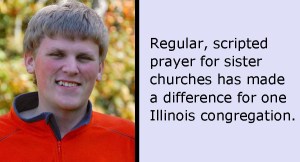
The resolution was a response to a growing number of churches taking action and praying for local sister churches. Emmanuel Baptist Church in Carlinville, Ill., is one such church.

Noticing the need for unity among local churches, Emmanuel began praying for sister churches in its local Baptist association on a weekly basis. The church prays for three churches and their pastors each week, rotating the list to pray for all 27 churches in the association multiple times each year.

Church members and leaders alike began to observe a noticeable, positive impact from this prayer focus. Taking note of the cause/effect relationship of the power of praying for local churches, Emmanuel recently expanded its regular prayer list to include two church plants outside of the association.

The church prays a specific, scripted prayer for each church and pastor each week: for “the physical and spiritual protection of the pastor so that he would deliver the message that God has given them, and to lead the people with passion to reach the lost in their community.”

This scripted prayer addresses an eternal need for each church, according to Cliff Woodman, pastor of Emmanuel Baptist Church: “I wanted it to be a specific prayer that could apply to any church. The mission of every church is to reach the lost and make disciples.”

If more Southern Baptist churches take this kind of initiative to pray for each other and unify under the banner of Christ, then communities will come together spiritually and the Kingdom of God will expand as a result, Woodman said, citing Jesus’ words from His high priestly prayer: “I in them and you in me. May they be brought to complete unity to let the world know that you sent me and have loved them even as you have loved me” (John 17:23).

Daniel Woodman is an entering freshman journalism major at the University of Missouri and a member of Emmanuel Baptist Church in Carlinville.

COMMENTARY | Josh Laxton

Last spring, my wife and I bought a used minivan. Honestly, I’m not a big fan of minivans, nor am I a fan of buying a much-older car. (I didn’t learn auto repair in seminary.) However, I am a big fan of making my wife happy.

Not long after purchasing the van, I was driving with our three small children when, suddenly, after a few mildly intense sputtering episodes, the van died. There I was, with a broken down car, stranded in the middle of the road, with no shoulder to move the vehicle to safety. As I tried to decide what to do, my 4-year-old daughter had her own breakdown. Her piercing cries of, “Daddy, Daddy!” were accompanied by heavy sobbing and huge tears. Ellie broke down because of our van’s condition.

Josh_Laxton_July31For many of us, our churches are like my minivan. Depending on the source, 80-90% of churches are in a state of plateau or decline. They were running fine, but something happened along the way, and now the church is not functioning and operating the way Jesus intended—as a God-glorifying, gospel-centered, mission-oriented, disciple-making, church-planting vehicle. Sure, the flashers, radio, horn, and air still work (worship and programs are still going, committees are still meeting). But there is a breakdown in the primary reason for the church’s existence—it’s literally not moving, not going anywhere.

The question is not whether our churches need a breakout to the next level of growth or ministry. Rather, it’s how we as leaders can get them there. To do so, like Ellie, we need to have a breakdown over the condition of the church.

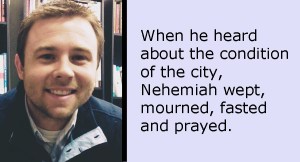
Nehemiah is an excellent example of a leader who identified the need for breakout, and in doing so, had a breakdown. Although he had never been to Jerusalem, he had great affection and concern for his homeland; therefore, when his brothers came to visit, he asked how his countrymen were faring. The news he received was bad; the people and the city were broken. The Bible says that upon hearing this, Nehemiah “wept and mourned” for days. In addition, he “continued fasting and praying before the God of heaven.”

What led to Nehemiah’s breakdown? Two key truths stand out:

First, he knew the truth about God and what God had called His people to be and do (Genesis 12:3; Exodus 19:4-6). When Nehemiah learned that the wall was in ruins and the people lived in great trouble and shame, he recognized that they were not where they were supposed to be. That has implications for our ministry today: Do we know with certainty the honest, transparent conditions of our church in relation to God’s intended reality, rather than our own presuppositions, preferences, or traditions?

Second, not only did Nehemiah know the truth about God’s intended reality for his people, he also knew the heart of God. In other words, he not only knew about God and His plan, but he also knew God. Thus, when he heard about the condition of the city and the people, he went immediately to the Father, weeping, morning, fasting, and praying.

He was broken over their condition because God was broken over their condition. As a result, the Bible tells us, Nehemiah “continued” going to the Father.

Nehemiah led in a way that reflected the heart of God and how He viewed the condition of the people. As leaders, are we leading in a way that reflects the heart of God towards the people in our churches?

Breakout in Jerusalem didn’t happen until Nehemiah broke down. The good news is that God still works in our brokenness to lead his people to breakout.

Josh Laxton is lead pastor of Western Oaks Baptist Church in Springfield. His second column on Nehemiah will appear in the August 18 issue of the Illinois Baptist, online at http://ibonline.IBSA.org.

HEARTLAND | Nate Adams

It feels like I have had more than a few challenging days of ministry recently. But today is an especially good Sunday, and I’d like to tell you about it.

I leave home very early, to drive almost 200 miles to an IBSA church where I know the pastor, but have never attended on a Sunday morning. It’s their 70th anniversary, and I have a nice plaque from IBSA to present to them. In all those regards, it’s not really an unusual Sunday.

Nate_Adams_July28What’s a little more unusual is that my wife, Beth, is traveling with me. Our youngest son Ethan is leading the worship team at our home church in Springfield, and Beth would like to be there too. But by evening we will be at the church where our middle son Noah is youth pastor, and so she has decided to come along. So it’s already an especially good Sunday.

We drive past one, two, three IBSA churches, and eventually past the one where I recall speaking three years ago when my oldest son Caleb also shared his testimony. He had just returned to the Lord after years as a prodigal. And as I realize that today my wife is with me, and that all three of our sons are worshiping and serving in an IBSA church, I realize that this is an especially good Sunday.

At the church celebrating its 70th anniversary we are greeted warmly, with appreciation for both IBSA and for our long drive that morning. I watch as an effective pastor loves his people, and they love him back. I meet a 93-year-old former church planter and pastor, who tells me he helped plant one of the first SBC churches in northern Indiana. He’s surprised I don’t recognize his former supervisor’s name, until I remind him I wasn’t born yet.

Later when I’m presenting the plaque, I tell both the 93-year-old church planter and the 70-year-old church that my wife and I are on our way, after church, to IBSA’s first “ChicaGO” student camp at Judson University. It’s a pilot church planting camp that we hope will continue to produce church planters, church plants, and eventually 70-year-old churches. And as I describe this picture of church planting across the generations – I realize that this is an especially good Sunday.

We arrive at Judson University late in the afternoon, and help greet students and chaperones from 11 different IBSA churches. Then a bus-load of IBSA All State Youth Choir students unload, and I remember they are there for a couple of days too, to join the ChicaGO mission week, and share a couple of concerts in the area.

That night the choir sings at Calvary Baptist Church in Elgin. In addition to being my mom’s and son’s church, this is also the church where Wilma and Jack Booth are members. During the concert, IBSA Worship Director Steve Hamrick reminds us that Wilma was one of the leaders that started the IBSA All State Choir 36 years ago. And as I reflect on the blessing of tomorrow’s worship leaders being equipped for churches across the generations – I realize that this is an especially good Sunday.

I will have to wait until my next column to tell you about the “week in the life of church planters” that follows this special Sunday. But let me punctuate this account by telling you that as the All State Youth Choir led us in singing “Jesus Messiah,” I found my eyes welling up with tears. God was reminding me that, though there will be challenging days, He is steadfastly building churches and growing leaders across the state and across the generations here in Illinois. And whenever I can see that as clearly as I do today, well, it’s an especially good Sunday.

Nate Adams is executive director of the Illinois Baptist State Association.

By Lisa Sergent

Two women recently visited Mindy Cobb’s Sunday school class at Uptown Baptist Church in Chicago. They told Cobb they were in a lesbian relationship and asked if they would be accepted by the class. “I told them we would welcome them and love them, but not affirm their relationship,” she recounted. They didn’t come back.

It wasn’t the class’ first experience with the issue. Several years ago, a transsexual named Jackie asked to join the class. “I said no,” Cobb said. “This wasn’t the sort of person I wanted in my class.” But Cobb agreed for Jackie to share her story and let the class make its own decision.

Similar questions are affecting churches across Illinois and the nation. How would they respond if Jackie came to Sunday school? Or if a same-sex couple like TV’s Mitch and Cam and their adopted daughter, Lily, showed up on Sunday?

Same-sex marriage is legal in 19 states including Illinois; in all of the remaining states, bans on same-sex marriage are being challenged. The majority of Americans believe gay couples should be able to get married. And conservative, Bible-adhering churches that never expected to find the issue of homosexuality on their doorsteps are instead finding it in the pews.

Bob Dylan was right. The times, they are a-changin’.

We will walk with you

In April, 24-year-old author Matthew Vines released a book that some have called a game-changer for the church. In “God and the Gay Christian,” Vines, who says he holds a high view of the authority of Scripture, attempts to prove the Bible does not condemn same-sex relationships.

The book is unique because it’s a message to the church from someone who grew up there. Vines, raised as a Presbyterian in Kansas, is asking that gay people not only be welcomed in churches but also affirmed – and he says the Bible supports his view. Vines is a voice for gay people who are looking for a place to belong in the church.

At Mosaic Church in Highland, Ill., teaching pastor Eddie Pullen preached last year on what the Bible says about homosexuality. A woman in attendance that day became angry and left. She later shared her disapproval with Pullen, telling him she was a lesbian.

Churches looking for easy answers in the conversation about homosexuality likely won’t find any. “If we accept his [Vines’] argument we can simply remove this controversy from our midst, apologize to the world and move on,” said Albert Mohler, president of The Southern Baptist Theological Seminary and author of an e-book that counters Vines’ work. “But we cannot do that without counting the cost, and that cost includes the loss of all confidence in the Bible, in the church’s ability to understand and obey the Scriptures and in the Gospel as good news to all sinners.”

At Mosaic, Pullen said God had been preparing him for the conflict with the offended woman. Two years prior, he had written a sermon that he “prayed and poured more into” than any sermon in years. His message for all who would come to the church was:

• No matter who you are, you need Jesus.

• Jesus does love you.

• You are welcome at this church.

• You may not agree with us.

• We will not single you out.

• We will walk on your journey with you.

“What Christians and even churches miss is that Christ-followers need to be known for their love,” Pullen said. “Too many Christians are afraid to reach out [to homosexuals] because they’re afraid it will be received as affirmation. That’s not true.”

He told the woman who visited Mosaic, “We don’t have to agree on everything, but we don’t have to run away [when we disagree]…We don’t want you to leave because of our disagreement.” She came back to Mosaic, and has continued to participate in church activities.

“Usually it takes someone seeing Jesus in us to convince them He’s real,” Pullen said. “If they never see Jesus in His followers, why would they want to become one?”

What Mindy’s class decided

At Uptown Baptist, Mindy Cobb’s Sunday school class heard Jackie’s story and welcomed her with open arms. They spent almost a year getting to know her as a new Christian who wanted to study the Bible. That first Sunday, Jackie told the class she had been born as a man, undergone 29 surgeries, and was now a woman.

She became a member of the class, and started bringing her friends too. Every week, she gave a testimony. “It got to the point where everybody was sitting on the edge of the chair to see what Jackie was going to say this week,” Cobb said.

Then, after about a year, a man with short hair and a suit came into the class. “I wanted to tell you I am now ready to be the man God created me to be,” said Jackie, now called Willie. He had been in Christian counseling and was ready to be his male self. It was his last Sunday in Cobb’s class; the next week, Willie began attending a men’s Sunday School class at Uptown.

“God used Jackie to show me how I put people into a box,” Cobb said. “I learned to love and accept people for who they are and to let God do the changing.” Looking back on the experience, she said, “There are no quick answers. Sometimes lives are just messy. People do need help to see things a new way.”

Lisa Sergent is director of communications for the Illinois Baptist State Association and contributing editor of the Illinois Baptist newspaper.

Young people fill the pews at Capitol Hill Baptist Church in Washington, D.C., pastored by Mark Dever.

Young people fill the pews at Capitol Hill Baptist Church in Washington, D.C., pastored by Mark Dever.


COMMENTARY | Meredith Flynn

Mark_Dever_blogA 16-page church bulletin leaves little to the imagination. At Capitol Hill Baptist Church in Washington, D.C., worship attenders know exactly what they’re getting into from the time they walk into the split-level, high-ceilinged sanctuary, less than a mile from the U.S. Capitol.

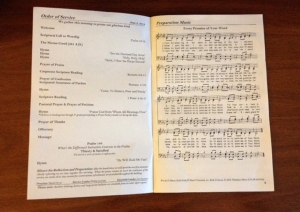
The order of service, printed neatly on the inside cover page, lists every hymn, prayer, and Scripture reading. Every song is there in entirety – not just lyrics, but actual music.

Even the Nicene Creed gets its own page, with three paragraphs of explanation about where it came from and why we recite it. (“I said this in church for 28 years,” said one visitor, “and nobody ever explained it to me.”)

Your first impression is that this church is good at welcoming new people. They remember well that not everyone who walks in the door has been here before, and maybe they’ve never been in any church before. But it’s more than that. There’s a shrewdness here (in the nicest sense of the word), and an attention to detail that may be best matched just down the street under the Capitol Dome.

Capitol Hill Baptist Church is a church for its very unique city.

Capitol_Hill_exterior_blogWhat’s most interesting is that there are Millennials here – that elusive generation that’s giving churches fits around the country. A variety of ages are represented at Capitol Hill, but the congregation skews young. A few families sat in “bulkhead” seating at the back of the sanctuary, with a little extra leg room to accommodate a fidgety toddler. The rest of us were packed into crowded pews – between 900 and 1,000 are here for worship on Sunday mornings.

Capitol Hill isn’t doing what most churches do to try to reach Millennials. Lately, the normal prescription is a relaxed dress code, coffee bar in the lobby, and maybe a violinist in the worship band. But here in Washington, what’s reaching Millennials is orderliness. And 5-minute prayers (four of them). And a 55-minute sermon based on one chapter of Psalms.

Capitol_Hill_bulletin_blog“You will be bored if you don’t open your Bible and leave it open,” Pastor Mark Dever said before his message on Psalm 143. “All I’m gonna do is talk about what’s in the Bible.”

The service lasted more than two hours, but people still stuck around to chat afterward. Some milled around the small bookstore tucked into a corner of the overflow room just off the main sanctuary. Coffee and cookies and conversation were had downstairs.

There are few surprises at Capitol Hill, besides the fact that this church on a quiet tree-lined street is ministering effectively in a difficult place, using methods that you never would have thought would work. Combined with age-old truth.

“You may have come in here as an adversary of God’s, an enemy,” Dever said at the end of his sermon. “But there’s no reason you have to leave that way.”

Meredith Flynn is managing editor of the Illinois Baptist newspaper.

Where_Was_God_posterTHE BRIEFING | Meredith Flynn

Film documents storm recovery
One year after a tornado killed 24 people in Moore, Oklahoma, survivors are sharing their stories in a new documentary film. “Where was God? Stories of Hope After the Storm” was produced and promoted in partnership with several churches and faith-based groups, including the Baptist General Convention of Oklahoma.

“We want to remind people that God is always near, no matter what,” said pastor and executive producer Steven Earp. “There is not a single thing that we could ever go through that our heavenly Father does not understand, and there is not a single dark place that He has not already walked.” Read more at BPNews.net.

Sudanese woman won’t recant, faces death sentence
A Sudanese doctor was sentenced to death after she refused to reject her Christian faith. Meriam Yahia Ibrahim, 27, was convicted of apostasy April 30 and given 15 days to recant. “I am a Christian, and I have never been a Muslim,” she told the judge, according to Morning Star News. Ibrahim, who is due to give birth soon, is married to Daniel Wani, a South Sudanese Christian who also is a U.S. citizen.

Her sentence, set to be carried out two year’s after her child’s birth, is representative of “increasing Islamization” of Sudan sparked by the secession of South Sudan in 2011, Christianity Today reported. Read more at ChristianityToday.com.

Americans inflate church attendance
It’s easier to be honest online, at least about church attendance. A new study by the Public Religion Research Institute found Americans inflate their levels of religious participation, especially when answering questions about it over the phone. For example, 36% of Americans who took PRRI’s telephone survey said they attend services weekly or more, compared to 31% who answered an identical question on a self-administered online survey.

Among white evangelical Protestants, 9% answering over the phone said they seldom or never attend services, while 17% reported the same on the online survey. PRRI reports young adults, Catholics and white mainline Protestants are most likely to over-report their church attendance. Read more at publicreligion.org.

‘Gay Christian’ publisher out of National Religious Broadcasters
WaterBrook Multnomah resigned this month from the National Religious Broadcasters (NRB) network over a controversial book published by an affiliated imprint, Convergent Books. “God and the Gay Christian: The Biblical Case in Support of Same-Sex Relationships” by Matthew Vines theorizes that Scripture doesn’t condemn monogamous same-sex relationships.

Though WaterBrook Multnomah and Convergent are separate entities with the same leader, employees of both companies are reported to have worked on the book. According to a Christianity Today report, NRB President Jerry Johnson wrote in a letter to his board, “This issue comes down to NRB members producing unbiblical material, regardless of the label under which they do it.”

Baptist history gets hip-hop treatment
“Now this is a story all about how the Baptists became what they are now…” Rapping seminary study Ashley Unzicker took the outline from one of her classes and set it to the “Fresh Prince of Bel-Air” theme song, creating a 5-minute ode to Baptist history that starts with religious persecution in England, and concludes with the election of Fred Luter as the SBC’s first African American president. Now, that’s fresh. Watch the video on YouTube.

Growing trends among second-generation and multi-site congregations

By Eric Reed
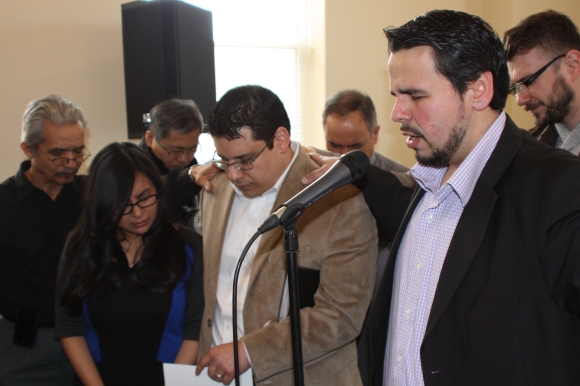
Starting Point in Chicago: Pastor Marvin del Rios of Iglesia Bautista Erie (right) prays for the new congregation his church is sponsoring, led by Pastor Jonathan de la O and his wife, Emely, surrounded by leaders from Chinese, Korean, and Romanian church plants who attended the April 6 launch service.

Starting Point in Chicago: Pastor Marvin del Rios of Iglesia Bautista Erie (right) prays for the new congregation his church is sponsoring, led by Pastor Jonathan de la O and his wife, Emely, surrounded by leaders from Chinese, Korean, and Romanian church plants who attended the April 6 launch service.


Across Illinois |
Five new churches held their “grand opening” events during the two weekends before Easter.

The congregations couldn’t be any more different: They are Hispanic, Korean, Anglo, and multicultural. They meet in the inner city, in new suburbs and older neighborhoods, and way out in the countryside.

Yet their worship services are remarkably alike: all in English, all contemporary, all enthusiastic, and mostly loud.

Collectively they show how some important ministry trends are reaching both main roads and back roads in Illinois:

➢ After decades of planting ethnic language churches, English-language ministries may be the next wave as the grown children of immigrants aren’t feeling comfortable in their parents’ churches.

➢ Starting new churches is getting more complicated and expensive and harder for planters to do solo. That is resulting in more multi-site churches and in new networks among church leaders.

➢ And in some situations, starting from scratch may prove a better strategy than re-engineering a faltering ministry.

Jonathan de la O was born in the United States, but his parents are from El Salvador. He is the product of two countries. “I wasn’t 100% Latino or 100% American, at least in the eyes of those around me,” he said. “It made it difficult to identify with a people group.”

When called to pastor a church, he asked what kind? “I didn’t know where I fit in,” he said in a video.

That tension produced a new kind of church in the Humboldt Park neighborhood: Hispanic worship in English. It’s designed to reach people like him, second-generation young adults, the children of immigrants who are often more like the kids they went to school with than their own parents.

De la O cites a statistic showing 60% of second-gen adults have markedly different culture, language, education, and income than first-gen immigrants. If they don’t find a different kind of church than mom and dad’s, he said, they are likely to drop out.

At home, and not at home

If the very different needs of younger people sound familiar, there’s good reason, said IBSA’s multicultural church planting specialist, Jay Noh. “The gap between first-gen immigrants and their U.S.-born second-gen children includes every challenge that the mainstream U.S. churches have faced, compounded by differences in languages and culture.” In his words, “The paternalistic assumptions of the first-gen won’t be accepted” by their children.

“As soon as they are able to escape the world of their parents and other people of authority, they find a place that is somewhere between their ethnic heritage and the dominant American culture,” said Van Kicklighter, who heads church planting for IBSA.

De la O hopes that place will be his new church. Starting Point Church is meeting in the newly refurbished building owned by Chicago Metro Baptist Association. Noh is assisting another second-gen church start that also shares the space, The Way Bible Church, reaching young Romanians. The Romanian congregation, and second-gen Koreans, Chinese, and international students from Moody Bible Institute, packed out the launch service to show support for De la O and the new church.
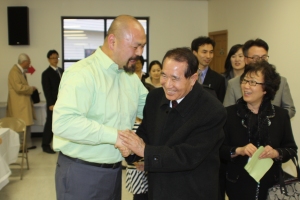
Bethel Church in Mt. Prospect: A multi-ethnic crowd feasted on an international menu following the church's first public service. Pastor John Yi (in the green shirt) shakes hands and bows to almost every guest. Yi has led a ministry to poor families in another Chicago suburb since 2008.

Bethel Church in Mt. Prospect: A multi-ethnic crowd feasted on an international menu following the church’s first public service. Pastor John Yi (in the green shirt) shakes hands
and bows to almost every guest.

Later that same day, northwest of Chicago in Mt. Prospect, a worship band rehearsed prior to the first public service of Bethel Church. On the platform was the expected array of guitar players and drummers, plus one violinist. Mostly Korean, they sang in English and the music was loud.

“Is this typical of Korean worship services?” a guest asked two teenage girls who were thumbing their phones while sitting on the back row of the borrowed sanctuary.

“No,” one girl said. “Not the Korean-language services. They are very traditional.”

“Very,” the other added, “but EM – that’s English Ministry – those services are contemporary. Not as, um, Korean,” she said, smiling.

“Not as, um, Korean” might be a good slogan for Bethel Church. Pastor John Yi has led a multicultural community ministry to poor families in Maywood, about 15 miles away. Now he is starting a new church, also multicultural, which is expected to draw several ethnic groups, but especially second-generation Asians. Like the young women on the back row.

“Our principal attention has been on unchurched English-speaking people in our surrounding neighborhoods in Mt. Prospect even though Bethel Church is made up of a largely Asian-American base,” Yi said. “Interestingly, our ethnic affinity is difficult to dismiss and thus, we have attracted a lot more Korean-speaking people than we had planned.”

The disconnect between generations becomes evident as older people filled the pews, then attempted to sing English worship songs. It’s not only the linguistic gap, there’s a musical gap that many churches have had to bridge.
Their discomfort is evident, but clearly the older people support Yi and his effort to reach their children’s generation. It’s all smiles and bows as about 300 people filled the fellowship hall after the service and shared an inaugural meal of stir-fried rice, Buffalo wings, and Italian spaghetti.

“The first generation has a growing understanding of the necessity of having a gospel ministry that’s culturally indigenous for their U.S.-born second gen,” Noh said. “This may have come about belated as a result of a decade or more of the young generation’s silent exodus from their ethnic churches.”

New networks, new sites

Grace Point in Frankfort: Pastor Emanuel Istrate greets worship attenders at his church's first service. Grace Point is a church plant of Crossroads Community Church in Carol Stream.

Grace Point in Frankfort: Pastor Emanuel Istrate (right) greets worship attenders at his church’s first service. Grace Point is a church plant of Crossroads Community Church in Carol Stream.

In the far south Chicago suburbs, another church launched this day. Meeting in a middle school amid large new houses, this church plant is a restart. “First Baptist Church of New Lennox approached us asking for help,” said Scott Nichols, pastor of Crossroads Community Church in Carol Stream, another suburb 40 miles away. “They sold their building and had been meeting in a school….Unfortunately, they were…near to closing the doors.”

Nichols and his team did what they have done twice before: they brought in leaders and vision. First they offered Saturday night services utilizing the Carol Stream staff. Then, after calling a campus pastor to lead the new work, they restarted Sunday morning worship.

On opening day, Grace Point Community Church in Frankfort welcomed about 60 people from the area. Their target is not based on ethnicity but proximity. “Our target is anyone who will hear us,” Nichols said. “We have gone door to door and mailed about 20,000 postcards to the area.”

Nichols recounts how he’s often said, “You could blindfold an ape and give him a dart. Any place on the Chicagoland map he hits is a good place to plant a church!”

The Crossroads/Grace Point plant demonstrates two trends: the trend toward shutting down a foundering church, then allowing a stronger church to restart a ministry with new vision and new DNA; and the emergence of networks among churches that produce multi-site ministries.

“I believe this is happening both out of necessity and a new valuing of multiplication and reproduction,” Kicklighter said. “Necessity, because churches and pastors are hungry for connection with others,” but also from “a passionate commitment to impact lostness and to do whatever it takes to reach people and give them a local church in which to grow as disciples.”

North by northwest

Grace Fellowship in Davis Junction: Pastor Brad Pittman's church meets in a renovated electrician’s shop at an Ogle County crossroad. Pittman (left) is leading Grace Fellowship's third campus.

Grace Fellowship in Davis Junction: Pastor Brad Pittman’s church meets in a renovated electrician’s shop at an Ogle County crossroad. Pittman (left) is leading Grace Fellowship’s third campus; the other sites are in Ashton and Amboy.

As at Crossroads, the leaders of Grace Fellowship have a broad vision. On Palm Sunday weekend, in a small metal building in north central Illinois south of Rockford, that vision is becoming reality – for the third time.

“I got my first job when I was 13,” Brad Pittman said, “tasseling corn. Anybody know what tasseling corn is?” Hands shot up across the room, along with a few chuckles. “Best job in the world,” he said, before describing his journey from corn tasseler to full-time church planter. A member at Grace Fellowship for 13 years, Pittman eventually joined the staff with pastors Jeremy Horton and Brian McWethy. From the main campus in Ashton, the trio launched Grace Fellowship in Amboy in 2012, and next in rural Davis Junction.

“This is a part of the state where Southern Baptists have had little presence,” said Kicklighter. “When Baptists moved from the south, they settled primarily in the metropolitan areas of the north to work in industry. They did not come to Illinois to buy farms…so we have few churches in these kinds of settings.”

The mainline denominations were better established here, but their churches are in steep decline. So, there is potential here.

“There are over 4 million people living in the non-urban context in Illinois,” said IBSA’s John Mattingly, who leads church planting in the northwest quadrant. “I believe God has prepared many more churches like Grace Fellowship to step out in faith and do something remarkable.”

The three pastors targeted Davis Junction (called “DJ” by the locals) because there was only one faltering mainline church there to serve more than 4,000 people. “We hung over 800 door hangers” in the week before the launch, Pittman said. “We don’t know what the Lord is going to do; we’ll have to wait and see,” he said, before describing how deeply he feels the spiritual need in the area.

“This is not the typical multi-site church plant,” Kicklighter said, “but a commitment to reproduction and, even more importantly, sending people who will impact another place with the Gospel. This is a value system commitment that says extending the reach of the Gospel and the church is at least as important as how many we gather in our own building on Sunday morning.”

More than 60 turned out for the first Saturday evening service, some from the church’s other locations, but many new visitors from DJ. After the service in the brightly rehabbed building, there are lots of hugs, as at each of the launches, and cake.

It is a birthday, after all.

After closure, new hope
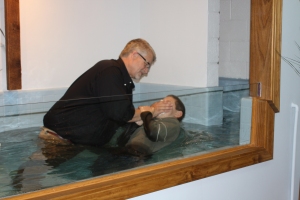
New Hope in Rock Falls: Pastor Jon Sedgwick prays with IBSA church planting leaders Van Kicklighter (left), John Mattingly (right) and Jordan Van Dyke, a future church planter in Galesburg, prior to the launch service. Later Sedgwick baptized a brother and sister.

New Hope in Rock Falls: Pastor Jon Sedgwick baptized a brother and sister at his church’s launch service.

The next morning Jon Sedgwick is all smiles as he baptizes two new believers. Sedgwick didn’t intend to plant a church in northern Illinois. “I didn’t like Illinois,” the former Missouri pastor said emphatically. Illinois was just a place to get through when traveling home to Indiana for visits with family. “But God gave us a love for Illinois!”

“We love Rock Falls!” his wife, Rhadonda, added, equally enthusiastically.

Mattingly had visited the Sedgwicks’ Missouri church describing the need for planters in the Northwest quadrant of Illinois. After Mattingly’s second appeal – “Is God calling someone here to come and help?” – the couple realized, “It was us. God was calling us. God said, ‘Why not you?’”

In 2012, they arrived and began building a new ministry at the building that once housed First Southern Baptist Church of Rock Falls. To the usual round of Bible studies and home meetings, Sedgwick added “Celebrate Recovery,” a faith-based twelve-step program originated by Rick Warren and Saddleback Community Church in California. Reaching out to people with addictions, Sedgwick found doors opening that once were closed to Baptist ministry.

At the worship service, greeters David and John freely told guests how they came to be part of New Hope Church through the recovery ministry.

Also in attendance was Jordan Van Dyke, a planter who is gathering a core group for a new church in Galesburg.
It is commonly observed that ministry in northwest Illinois is especially challenging. “It’s because of the soil,” Van Dyke said. “It’s hard. Sometimes I wish I’d been sent to southern Illinois where, when it’s Sunday, people go to church. In the northwest, it’s Sunday and church is an option. ‘Will I go to church?’ Maybe. Maybe not.”

On this day they do, because there’s new hope in Rock Falls.

Eric Reed is editor of the Illinois Baptist newspaper. In the May 26 issue of IB, we’ll continue our series on The Midwest Challenge with a focus on church revitalization. Go to http://ibonline.IBSA.org to read past issues.