Archives For November 30, 1999

Go Church Go!

ib2newseditor —  November 14, 2016

People in the form of  church.First let me say I how much I appreciate my many friends who are St. Louis Cardinals and Chicago White Sox fans, even those who seemed to suddenly become Cleveland Indians fans just prior to the 2016 World Series. I try not to be an annoying or gloating Cubs fan, though some might say that simply writing about the Cubs here makes me so.

But it’s not really the now-world-champion Cubs team or organization that I want to draw on for inspiration with these thoughts. Rather, it’s the persevering, always hopeful, and now victorious Cubs fans. Though I grew up a Cardinals fan like many in southern Illinois, five things have always drawn me to Cubs fans, and made me one of them.

Worldwide – The WGN cable network is probably most responsible for giving the Cubs a more than regional fan base. When wearing a Cubs logo, I have found other fans all around the country, and even around the world.

Wrigley – You just can’t deny the old world charm of the historic yet modernized stadium that the Cubs call their friendly confines. For true baseball fans, it’s one of the most inviting places in the world.

Waiters – As almost everyone now knows, Cubs fans had not seen a World Series championship since 1908. As the Series approached, numerous writers listed things that are more current than a Cubs championship, including the toaster and sliced bread itself. True, faithful Cubs fans are by definition those who patiently wait.

Winsome – While I’m sure we all know an abrasive Cubs fan or two, the overwhelming majority of Cubs fans I’ve known are friendly, hopeful, optimistic, and deeply loyal. Even though “lovable losers” is a label that’s practically become part of the official Cubs brand, you can’t get a rise out of a Cubs fan with that kind of insult. After all, until this year, what defense was there to that label? Cubs fans just smile, and winsomely recite their equally well-known mantra: “Wait ‘til next year.”

Winners – And finally, this year, we can add a new capital W that could only have been used in small case a few times over the past 108 years. This year, Cubs fans are winners. Their perseverance finally paid off. Next year has finally come. And in a demonstration of support and celebration that has now been labeled the largest gathering in American history, and seventh largest in world history, more than five million fans flooded the streets and parks of Chicago to relabel their lovable losers—beloved winners.

Now, how do I rationalize writing about baseball here? Well, almost any time I am moved or inspired by something in secular culture, I find it’s because I see in that event a reflection of something larger in God’s Kingdom, or God’s character, or God’s people. In this case, I think I find Cubs fans so inspiring (admittedly, some Cubs players are not) because I see in them a faint reflection of the same qualities I see in faithful Christians, and churches.

Throughout much of the world, including our own nation and state, faithful Christians are not seen as current winners. But, at least when we’re at our best, we are seen as winsome people who are patiently waiting for our victorious Lord Jesus to return. We are seeking to take our love and loyalty and gospel message worldwide. And yet we seek to make each local gathering place as inviting and friendly as the confines of Wrigley Field.

There will be a day when the five million that gathered to celebrate in Chicago will be a pale comparison to the tribes, tongues, and nations that will gather at the feet of Jesus, to worship him forever. But for now, a long-suffering group known as Cubs fans have reminded me of a more important group of people whose patient, faithful, hopeful perseverance will eventually be rewarded by victory. Go Church Go.

Nate Adams is executive director of the Illinois Baptist State Association. Respond at IllinoisBaptist@IBSA.org.

After a destructive election cycle, it’s time to ask some basic questions. 

Flag of USA painted on cracked wall. Political concept. Old text

Inwardly I chuckled when church historian Mark Noll said, “Evangelicalism is a fractious beast.” I was interviewing him for a documentary on the role Billy Graham played in the development of the evangelical movement when he founded Christianity Today magazine in 1956. As described by Noll, at the time a Wheaton College professor, evangelicals had no driving force other than their love for Jesus and desire to share him with the world.

In post-war mid-century America, the number of evangelicals, including Southern Baptists, was growing rapidly, but they were a people “about many things” as Jesus described Martha, with impact on society disproportionately weak compared to their numbers. They had no recognized think-tank to coalesce and articulate their conservative, biblical views and no central voice to bring those views to bear on culture, the courts, and behavior of the masses. No one was really paying attention to evangelicals as a political or cultural phenomenon.

We could use another Billy Graham today.

Graham remedied that by bringing top Christian thinkers together in his magazine, brought unity around a few ideals such that evangelicals over the next twenty years became a movement, and through a popular medium of the day he gave them a megaphone to broadcast their beliefs.

We could use another Billy Graham today.

Evangelicals today are fractured. The 2016 election cycle has divided us. While 4 out of 5 white evangelicals (the SBC’s predominant constituency) voted for Trump, that fact should not be read as evangelical unity. Believers who may have voted for Trump did so for a variety of reasons. Some were wholeheartedly behind the candidate; some were choosing “the lesser of two evils.” Some were motivated by religious liberty issues, or the future of the U.S. Supreme Court, or pro-life concerns.

No single issue or theology can be said to have brought together the 81% of self-identified white evangelicals who voted for Trump.

And there’s the other 19% who didn’t. And African Americans, Asians, and Hispanic believers who pollsters don’t measure as “evangelicals” and often lump in with other Protestants groups or even Catholics.

We are divided. The divides are between white and black, urban and rural, high levels of education and lesser. And in Southern Baptist life, we have seen some divide between older and younger Christians (especially Millennials), and notable differences among spokesmen for Baptist causes, and distance between leaders and pews.

What are the few things we will stand for—that will bring us together in the name of Jesus Christ?

For the first time in a generation, the Ethics and Religious Liberty Commission does not appear to have spoken for average Southern Baptists. Russell Moore and a few others were critical of Trump, especially on issues of character and behavior. On the other hand, a few leading megachurch pastors, including Robert Jeffress of First Baptist Church of Dallas, stood with Trump. Others kept mum. SBC president Steve Gaines advised not making politics a church issue, so as not to offend people who need to the hear the gospel.

In this election, there were many reasons for speaking up—or not. Thus, in their analysis of the Republican win, pundits may report evangelicals a “silent majority,” but if that is the case, this majority was bound by many motivations.

The need of the hour is for evangelicals, Southern Baptists in particular, to process this awkward election theologically—not practically, politically, or emotionally—and identify the kingdom-worthy reasons for future political involvement. What are the few things we will stand for—that will bring us together in the name of Jesus Christ?

Is it U.S. Supreme Court appointments that preserve religious liberty? Marriage, family, gender preservation?

Is it social justice and a biblical view of peace, poverty, and the sanctity of human life?

And what is the role of character and trustworthiness in supporting a candidate or, moving forward, working with a presidential administration? Which is mandatory for Christ-followers when choosing political allies: biblical political positions or biblical behavior? (It appears nearly impossible to find both in a single person these days.)

In the 1950s, Graham drew Christians together around conservative, biblical theology, and eventually brought that to bear on politics and politicians—not the other way around. At 98 (his birthday was the day before the election), does Graham even recognize the movement he codified?

Eric Reed is editor of the Illinois Baptist. 

The BriefingGenocide of Middle East Christians ignored
Nearly six months after Secretary of State John Kerry declared the murder of Christians in the Middle East a “genocide,” Westerners are doing little to stop the killings, said activists gathered for a convention on the victims’ plight. Religious freedom advocate Katrina Lantos Swett called the crisis “perhaps the great moral challenge of our time right now.”

Transgender bill applied to churches
A Massachusetts government commission is claiming churches may be subject to the state’s transgender restroom bill. At issue is a document stating, “Even a church could be seen as a place of public accommodation if it holds a secular event, such as a spaghetti supper, that is open to the general public. All persons, regardless of gender identity, shall have the right to the full and equal accommodations, advantages, facilities and privileges of any place of public accommodation.”

Kaine predicts change in Catholic view of same-sex marriage
Democratic vice presidential candidate Tim Kaine spoke about his evolution on the issue of same-sex marriage, and predicted that the Catholic Church would eventually change its views on the matter. “But I think that’s going to change, too … And I think it’s going to change because my church also teaches me about a creator in the first chapter of Genesis who surveys the entire world including mankind and said it is very good, it is very good,” he said.

ESV becomes ‘unchanging’ Word of God
The English Standard Version (ESV) received its final update this summer, 17 years after it was first authorized by Crossway, its publisher. The translation oversight committee changed just 52 words across 29 verses—out of more than 775,000 words across more than 31,000 verses—for the final “permanent text” edition. The board then voted, unanimously, to make the text “unchanged forever, in perpetuity.

Cross Point’s Pete Wilson resigns
Citing his exhaustion and personal brokenness, Pete Wilson, senior pastor of Cross Point Church in Nashville, TN, and author of Plan B, shocked his congregation when he announced his resignation from the church he founded. As the church celebrated its 14th anniversary and America remembered the terror attacks of September 11, Wilson told his congregation that he was no longer fit to lead.

Sources: Religion News, Baptist Press, NBC News, Christianity Today, Christian Post

The BriefingWhen it rains, it pours for weary south Louisiana
For the second time in five months, historic flooding has left widespread devastation and suffering through south Louisiana. As of Sunday afternoon, four people have been killed in the flooding, thousands have been displaced and thousands of homes, businesses and churches have been affected by the flooding. Louisiana Southern Baptist churches are responding amid the devastation.

Five Christian gold medalist Olympians at Rio 2016
Athletes from across the globe have gathered in search of gold at the 2016 Olympic Games, and five Christian sportspeople have managed to overcome obstacles to earn the top honor. Simone Manuel, Caeleb Dressel, Laurie Hernandez, Osea Kolinisau, and Anna Van Der Breggen are five Olympians whose Christian faith has helped them prevail when stumbling blocks could have prevented them from winning gold medals in Rio De Janeiro.

Egyptian sent home from Rio for refusing to shake Israeli’s hand
An Egyptian athlete who refused to shake his Israeli opponent’s hand after their judo bout has been reprimanded and sent home from the Rio Olympics. When Sasson extended his hand, El Shehaby backed away, shaking his head. The referee called the 34-year-old El Shehaby back to the mat and obliged to him to bow; he gave a quick nod and was loudly booed as he exited.

Russia’s ban on evangelism is now in effect
Last month, Russia’s new anti-terrorism laws restricting Christians from evangelizing outside of their churches, went into effect. The “Yarovaya package” requires missionaries to have permits, makes house churches illegal, and limits religious activity to registered church buildings, among other restrictions. Individuals who disobey could be fined up to $780, while organizations could be fined more than $15,000. Many are wondering how strictly will it be enforced.

Countries make Christian charity harder to give and receive
Nearly 20% of the world’s population could lose access to the ministry efforts of Western Christians next year. In April, China banned foreign nongovernmental organizations (NGOs) from engaging in or funding religious activities. The measure could expel Christian groups that are doing medical, developmental, or educational work in the world’s largest country by population, with 1.4 billion people.

Sources: Louisiana Baptist Message, Christian Post, Christianity Today, Christianity Today

The BriefingSanctity of life argued after gorilla killing
The protests after Cincinnati Zoo officials killed a gorilla to protect the life of a young boy reveals a modern confusion over the dignity and sanctity of human life. Al Mohler says this confusion is not only a matter concern, but one of deadly significance as some call the endangered animal’s death “worse than murder.”

Pro-abortion bill on governor’s desk
Last week, the Illinois House passed SB 1564 by a vote of 61-54 — a bill that would force doctors, nurses, and pharmacists to distribute information to help patients find morally objectionable medical services such as abortion, sterilization, and certain end-of-life care. This proposal was passed by the Illinois Senate in 2015 by a vote of 34-19. The bill now awaits Governor Bruce Rauner’s signature.

Methodists reverse abortion support
The UMC held its quadrennial General Conference (GC) and considered more than a thousand resolutions. LGBTQ activists, anti-Israel advocates, and pro-choice “reproductive rights” feminists all lobbied to liberalize the denomination. Instead, the denomination moved in the opposite direction, making substantive progress toward a biblically-founded social witness.

States sue over Obama restroom rules
Eleven states and two school districts filed a lawsuit challenging President Barack Obama’s directive demanding all federally funded schools apply a controversial interpretation of Title IX requiring schools to define a student’s sexual identity based not on biological traits, but on feelings. Declaring the federal demands are “unlawful” and “capricious and arbitrary,” the lawsuit calls for a permanent injunction preventing the administration from implementing and enforcing its rules.

Christians lead NBA teams to finals
NBA watchers called the Western Conference finals one of the most exciting playoff series ever, with two excellent teams led by two men known for their basketball prowess and outspoken Christian witness: Golden State’s Stephen Curry and Oklahoma City’s Kevin Durant. It’s Curry’s team that will now take on the Eastern Conference champion Cleveland Cavaliers.


Sources: AlbertMohler.com, Illinois Family Institute, ERLC.com, Baptist Press, WORLD Magazine

Signs of Hope

ib2newseditor —  May 5, 2016

Illinois women on a mission in South Asia see lives changed by the story many there had never heard.

Editor’s note: In April, a team of women from Illinois traveled to South Asia to share gospel stories and witness how believers there are working to push back spiritual darkness. Lindsay McDonald, a pastor’s wife from First Baptist Church in Casey, captured the trip in words and pictures.

Okay, you can start,” Mim* says, leaning towards Gail Faulkner, who sits on the chair beside her. Having practiced the “Creation to Christ” story for months now, today is Gail’s opportunity to tell the gospel story that her team traveled nearly 8,000 miles to share.

“So, I should go ahead and start the story?” Gail confirms with Mim, a believer working to reach others in her country. About 20 women are gathered, clustered together on handcrafted floor mats.

A Hindu woman offered her simple, empty home for today’s story. The room is dark and still.

The women look expectantly at the visiting Americans and their translators and ministry partners—women from this country who have converted to Christianity.

“Yes, tell them. They are thirsty,” Mim responds with urgency.

S_Asia_women_no_text

Women here talk to each other while they prepare meals, wash clothes in the village pond, and care for their children. When the women in the last village on the last day were asked about how to apply the story to their lives, they said, “If we spend less time gossiping, we will have more time to share the gospel.”

Gail, a pastor’s wife from Bethalto, Ill., joined this mission team even when this part of the world wasn’t on her radar. She says God made it clear to her that it was her time to be on the team, and cleared her path of any financial obstacles to traveling thousands of miles from home.

Joining her on the team were six other women from Illinois and three from the Carolinas. They came from a variety of life stages: young mothers, grandmothers, retirees, professionals. All prepared and trained for months to bring the message of hope Isaiah prophesied to the Israelites thousands of years earlier: a perfect sacrifice, Jesus.

The Illinois volunteers came to partner with two missionaries serving in this densely populated country, and three national believers who served as their guides and interpreters. These Christians focus primarily on evangelism to Muslim women, who they can encounter more freely because of the culture here. The nation’s oral tradition is built on conversations and storytelling. Much like the story about to begin in this dark house.

Out of darkness

Life in South Asia is hard.

“Oppression is real and hope seems distant,” says Amy Neibel, a mission team member from First Baptist Church in Carmi. In this country in South Asia, 80% of the people live on less than $2 a day, and 40% live on less than $1.

Poverty is real.

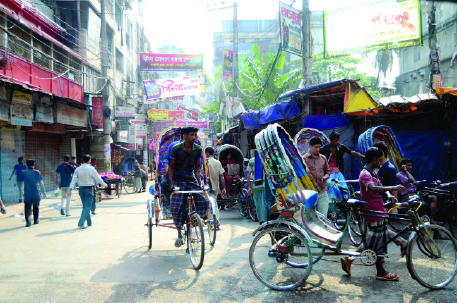
It bombards all of your senses—the smell of waste in the street, as adults and children sift through it, looking for items to recycle and sell. Cars honk in the dense traffic, and rickshaw drivers pedal passengers to and fro for a minimal wage.

Darkness is prevalent.

S_Asia_street_no_text.jpg

Sights of daily life whizzed past our van as we traveled the dusty, dirty, bumpy roads that are congested with chaos. Traffic, animals, people. Vendor after vendor sells fruit, meat and South Asian cuisine. Physically and mentally disabled adults lay on the side of the road, and beggars tap on the vehicle window looking for money.

“It is a place where you not only sense it, but also see the spiritual darkness on the faces of the people,” Amy says. The country is 98% Muslim and many haven’t heard about salvation through Jesus.Almost 16 million people hear the Muslim call to prayer fives times a day; some stop and pray and others proceed with their day.“Though you can sense the darkness, they are just like us—they are hurting,” team leader Kimberly Sowell says during a morning devotional. Sowell’s ministry, Bangladesh: For Faith and Freedom, supports job training for women and girls, offering them a way out of the hopelessness that is so prevalent.

“All of God’s people are called to be used of him but why do some not go?” Kimberly asks the team. They answer, We’re comfortable where we are. The missions call is for “other people.” There’s plenty of spiritual need at home.

Most of all, this place is hard.

“God is working here. That’s why there is persecution, if God wasn’t moving there would be no persecution,” says Mim.

Into the light

Walking is a part of the daily routine here. While out one day in the capital city and a nearby port city, Gail says, “I noticed there was no life. The faces of the women passing me were stoic. No expression. The lack of hearing the voices of children crushed my grandma’s heart. I’ve never been to an area where the noise of children playing, yelling, running and crying could not be heard.”

Stepping into the Light of Life and Light of Hope Learning Centers is a different story. Within these walls, there is life! Young smiles greet the team as they enter. They play Twister, Phase Ten, and Old Maid with the girls to teach them colors, animals, numbers, and occupations.

The ministry Sowell began in 2013 supports efforts to provide nutrition, hygiene, education and vocational training to young women. Here, they also hear the gospel, so they can find faith and freedom in Jesus Christ.

“The Light of Hope Learning Center is an amazing place full of laughter and love,” says Connie Lang, a volunteer from First Baptist of Casey, on her first international mission trip. “It is run by an amazing missionary, Susan Kirker,* who loves the girls and their mothers.

“As we built relationships with the girls, I loved hearing them recite the Bible story that was being taught to them,” Connie says. “This trip has been life-changing. I have grown closer to the Lord and have seen the power of prayer at work.

“I would love to go back again.”

While leaving the capital city headed to our next area of work on Friday, we had just started to pray for the city when we drove by a mosque. Hundreds of men were lying facedown praying to Allah. Our hearts were sick to see the lostness right before our eyes. It’s everywhere—less than 1% are believers. You can feel the spiritual darkness.

Both centers are funded by the International Mission Board, but they are run independently from one another, with different directors and school formats. Light of Life, located in the capital, has a school for at-risk girls during the day and brings in Muslim women in the afternoons for sewing lessons.

Light of Hope offers similar activities. Girls have the opportunity to sew in the mornings while earning a daily wage, and then attend school in the afternoon.

Both centers give hope to hopeless lives of the girls living in the city slums. “Yet it is even more than that,” Gail says. “The girls are offered a daily clean shower, two meals for the day, an education, sewing skills, Bible teaching and love.”

 Walking in new life

Back in the dark village house, the Hindu and Muslim women listen to the “Creation to Christ” story and then take turns repeating it, trying to commit it to memory. Since they live in an oral culture, many do not know how to read or write. Messages must be verbally transmitted in speech or song among friends and family, and then passed down through generations.

More than 30 women accepted Christ after hearing the stories the team shared. Several who believed have already set up a time to be baptized—a big step of obedience in a place where the decision to follow Christ could bring persecution.

“God showed himself mightily to the South Asians and our team,” said Niece Edwards from First Baptist, Carmi. “I was stretched as never before and learned more about God’s sustaining power.”

“Walking through this South Asian country during this season of my life, really displayed how I need to walk beside my husband with the purpose of harvest,” said team member Kathy Fullerton. “We need to be intentional with neighbors, strangers, friends, and family because the gospel can permeate cultural bounds. Jesus died for those in burkas and overalls alike.”

*Names changed.

Postmodern Martyrs

eric4ibsa —  March 16, 2015
Artwork by Kerry Jackson

Artwork by Kerry Jackson

The call to live–and die–for Christ in the age of terrorism. Are we ready?

By Eric Reed

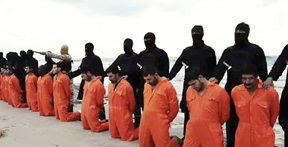
THE WORLD | The scene is chilling, even a month after it happened: 21 men in orange jumpsuits are led along a beach in Libya by masked men holding knives over their heads, then to their throats. The men in orange are captives, Egyptians working in Libya; more important, they are Christians, Coptic Christians, with up to 20 million adherents, whose branch of the faith dates to the third century AD.

The masked men in black are ISIS rebels, part of the radical faction of Islamic extremists marching across Iran, Iraq and Syria, and taking control of towns and regions ceded by Al-Qaida in the battle with American and indigenous forces over the past decade.

The men in orange are forced to kneel, ordered to recant their faith in Jesus Christ, and when they refuse, they are pushed face down into the sand and the knife blades are placed against their throats.

Mercifully, the video ends there for American television viewers, but for the men in orange there is no mercy.

They are beheaded.
Coptic_ChristiansAnd we, believers watching in disbelief, are little comforted by the great distance between us and the bloodstained beach as we come to the twin realizations that ISIS is on the move with a brutality that the world has not seen in a long time, and we have entered a new era of martyrdom.

A growing threat here?
Sixteen past presidents of the Southern Baptist Convention joined current president Ronnie Floyd in sending an open letter to President Obama, urging the U.S. to “take the necessary actions now” against the ISIS terrorists. They called ISIS “a continuing threat to world peace in a way unknown to us since the Nazis of World War II…”

The March 1 letter came two weeks after the beheading of the Egyptian Christians, and a week after the report that ISIS captured more than 200 Assyrian Christians, including women, children and elderly people. “People are frightened, people are concerned,” concurred Frank Page, SBC Executive Committee President, who said he is often asked about the threat of ISIS. Page’s signature was one of the 17 on the letter.

The concern Page cites is not only about the abominable acts by Islamic extremists abroad—killing a young, female American aid worker, burning a Jordanian pilot alive—it’s about the growing threat on our own shores as young adults, Americans included, are wooed, recruited, and radicalized via the Internet to join ISIS forces in the Middle East. And if not there, to carry out terrorist acts here.

A Somali militant group, al-Shabab, released a video in late February calling for Muslims to attack malls in Britain, Canada, and the Mall of America in Bloomington, Minn. “Hasten to heaven,” the video advised, by disrupting the safety of “disbelievers” (meaning non-Muslims) “in their own land.”

U.S. Homeland Security Secretary Jeh Johnson said such groups are “relying more and more on independent actors to become inspired” and “attack on their own.” The threats should be taken seriously.

If this seems like an exaggeration of the growing threat, one only needs to consider the Boston Marathon bombing in April 2013. On trial now is Dzhokhar Tsarnaev, charged with the attack that killed three people and injured 260.

“The defendant’s goal that day was to maim and kill as many victims as possible,” said Assistant U.S. Attorney William Weinreb during opening arguments. “He believed that he was a soldier in a holy war against Americans. He believed he had taken a step toward reaching paradise. That was his motive for committing these crimes.”

Tsarnaev, with his older brother, was said to be “self-radicalized,” not identifying with a specific terrorist group, but with extremist Islamist beliefs and the wars in Iraq and Syria.

It is those new radicals who are hardest to identify and who may pose the greatest threat in the West. What seemed distant and improbable now feels near and possible. And the threat causes Christians to ask, are we ready?

Wish we’d all been ready
Since we first saw the 1972 film “A Distant Thunder,” many evangelicals have expected their faith would bring them to this moment. Recall the Christian teenagers, converted after they were “left behind” in the rapture, are clad in white. They are led to some secret place to face their death, and the film cuts from their horrified faces to their means of execution, the gleaming blade of a guillotine.

Didn’t we all gasp at that point? Naïve believers in the 1970s hardly imagined their deaths could be worse, but the untelevised portions of the ISIS video say otherwise.

Pastor Robert Jeffress of First Baptist Church of Dallas summarized the terrorist threat in an interview with Fox News: “These Islamists will not rest until they’ve exterminated every Jew and every Christian from the face of the earth, and if you think that is hyperbole, just listen to what they said on that Libyan beach after they butchered those 21 Christians.”

And the Pew Research Center reports threats against Christians worldwide are on the rise. In fact, “…Christians are at the top of the list,” researcher Peter Henne said. “Christians were harassed in 102 countries when you look at either governments or social groups.” Pew also reports an increase in anti-Semitism. “Overall we found that Jews are harassed in 77 countries around the world when you look at both government and social harassments together….It’s also a seven-year high of the number of countries in which Jews were harassed.” Pew’s example: Europe, where Jews were harassed in 34 of the region’s 45 countries.

We do not desire to traffic in fear, but the possibility of martyrdom on our own shores is increasingly real; and it forces us to consider what we may not have given serious thought in a long time: It could be us. It could be me.

And that demands a new theology of martyrdom.

The end of symbolic martyrdom
When Jesus called his followers to take up the cross, he was issuing a call to follow him, even unto death. Many have done so. The apostles died tragically at the hands of oppressors. Scripture reports that James the son of Zebedee was executed by Herod. The deaths of others were told by early church historians and tradition:

Andrew was crucified.

Peter was crucified upside down.

James the son of Alphaeus was stoned, then clubbed to death.

Thomas was run through with spears.

And Paul, it is believed, was beheaded in Rome, to name a few.

Jesus, the Savior-Martyr, was followed willingly and courageously by many across the centuries. And in the 20th century, we have the witness of Lutheran pastor Dietrich Bonhoeffer, who was hanged in a Nazi concentration camp for standing against Hitler’s Third Reich. But somehow, his forbearance in the face of a monolithic, systemic, political evil 70 years ago seems different from what we have seen recently.

We ask, is the death of these Copts the harbinger of the ordinary-believer martyr?

Certainly we are witnessing the death of the symbolic martyr, where the faithful Christian is willing to sacrifice social approval or career advancement in the name of the gospel; where the dutiful believer picks up his cross and marches to the marketplace, willing to suffer the slings and arrows of foulmouthed and hedonistic co-workers—but keeps his life. After all, Paul told Timothy that “in the last days, perilous times will come” and those who desire to live a godly life will be persecuted (2 Timothy 3:1, 12).

Many Christians have assumed the call to suffer for Christ meant the loss of religious liberties, particularly in the West. But now, we’re talking literal martyrdom. Since the murders of 12 students at Columbine High School in 1999, including Cassie Bernall and Rachel Scott who were credited with holding fast to their faith at gunpoint, martyrdom in the postmodern era has had a new face.

Today, the Christian faith really is a matter of life and death in ISIS-held regions of the Middle East, as several missions groups report the killing of indigenous children as their Christian parents refuse to deny Jesus.

And in the rest of the world, believers are challenged to take up the cross, not only in the spiritual sense, but in very real ways, here and now. Paul’s words in Philippians, “For me to live is Christ, and to die is gain,” take on stark new meaning.

So does Romans 8: “Because of You we are being put to death all day long…” And the need to hold to the promise written by a man facing his own execution: “For I am persuaded that not even death or life…hostile powers…or any other created thing will have the power to separate us from the love of God that is in Christ Jesus our Lord!”

What to do now
In the meantime, we pray.

“We ought, indeed, to pray for the gospel to go forward, and that there might be a new Saul of Tarsus turned away from murdering to gospel witness,” wrote Russell Moore, president of the SBC’s Ethics and Religious Liberty Commission.

“At the same time, we ought to pray, with the martyrs in heaven, for justice against those who do such wickedness. Praying for the military defeat of our enemies, and that they might turn to Christ, these are not contradictory prayers because salvation doesn’t mean turning an eye away from justice.”

Additional reporting by Lisa Sergent

Look for more on this topic in the newest issue of the Illinois Baptist, online at http://ibonline.IBSA.org.

THE BRIEFING | Meredith Flynn

The Supreme Court’s decision Oct. 6 to let stand lower-court rulings on same-sex marriage combined with a subsequent appeals court ruling could mean 35 states will soon have legal same-sex marriage, Baptist Press reported.

The effort to “redefine marriage is perhaps the fastest, most effective social change in our nation’s history,” said Andrew Walker of the Ethics and Religious Liberty Commission. “The furthered erosion or deinstitutionalization of marriage that comes by redefining it will re-wire or re-circuit how we understand family arrangements.”

The_BriefingBefore the courts’ rulings, 19 states allowed same-sex marriage, including Illinois. The Supreme Court’s action legalized same-sex unions in Virginia, Indiana, Wisconsin, Oklahoma and Utah, and put Colorado, Kansas, North Carolina, South Carolina, West Virginia, and Wyoming on the same path. The Ninth Circuit Court of Appeals struck down laws marriage laws in Idaho and Nevada on Oct. 7, a decision that will likely affect Alaska, Arizona and Montana.

Walker will be part of this week’s “Elevate Marriage” conference at the Illinois Baptist State Association in Springfield, Ill. For more information and to register, go to www.IBSA.org/Marriage.

Hong Kong protestors include Christians
Some churches in Hong Kong are supporting protestors in the city this week, Christianity Today reports, and some Christians are actively objecting to the Chinese government’s control over Hong Kong’s 2017 election. CT and other media outlets explain how tensions between China’s Communist government and a growing church movement could be at the root of the protests.

Ebola survivor urges greater response
“…The reality on the ground in West Africa is worse than the worst report you’ve seen,” Dr. Kent Brantley told an audience at Abilene Christian University this month. Brantley, the missionary doctor who contracted Ebola and was successfully treated in the U.S., expressed sympathy for the family of now-deceased Ebola patient Thomas Eric Duncan, The Christian Post reported. He also urged listeners to avoid panic. “Let’s stop talking about that highly improbable thing and focus on saving people’s lives and stopping the outbreak where it is.”

YouVersion reaches 1,030 versions, 721 languages
A Bible app developed by a media-savvy Oklahoma church is now available in 1,030 versions and 721 languages. And counting. A ticker on YouVersion.com tracks key metrics like versions, languages and installs—currently at more than 156 million. The app, developed by Lifechurch.tv’s Bobby Gruenewald, reached the 1,000-version mark earlier this month, but there are still more than 1,800 languages that do not have a Bible translation in progress, according to YouVersion.

Care line offers help for pastors
A new telephone care line opened Oct. 1 for pastors dealing with crises in their personal lives, families, or congregations. 1-844-PASTOR1 is co-sponsored by the North American Mission Board (NAMB) and Focus on the Family. “Because [pastors] have always been there for others, it’s our privilege to be there for them,” said Jim Daly, president of Focus on the Family, in a NAMB article about the care line. Workers from the ministry’s Family Help Center answer the confidential calls, pray with pastors, and refer the call to a counseling team as needed. The care line, open weekdays between 8 a.m. and 10 p.m. Eastern time, offers help in English and Spanish.

“The more our lives are devoted to spreading this gospel,” said David Platt at an October meeting near St. Louis, “…do we really think that our adversary and the spiritual forces of evil in the heavenly realms are going to sit back and just watch that take place?"

“The more our lives are devoted to spreading this gospel,” said David Platt at an October meeting near St. Louis, “…do we really think that our adversary and the spiritual forces of evil in the heavenly realms are going to sit back and just watch that take place?”

NEWS | Meredith Flynn

Arnold, Mo. | Voice crackling with intensity, David Platt painted a picture of the current status of the gospel: With seven billion people in the world, even the most liberal estimates leave 4 or 5 billion who do not know Christ. And a couple billion of those have never even heard the gospel, added the recently elected president of the Southern Baptist International Mission Board.

“If that’s true in the world…then we don’t have time to play games in the church,” he told the crowd gathered at First Baptist Church in Arnold, south of St. Louis.

“We don’t have time to waste our lives on a nice, casual, comfortable, cultural version of Christianity. Because, number one, that’s not Christianity. Number two, God’s created us for something so much greater than that.”

Hundreds of people gathered Oct. 6 for the St. Louis-area stop of the Send North America Experience Tour. The two-hour service, facilitated by the North American Mission Board, was part of a multi-city effort leading up to the national Send North America Conference in August 2015.

Worshipers of all ages stood and sang before Platt came to the podium. He started his message with the bleak reality of billions of people who don’t know Christ. Then, he preached better news from the Book of Acts. Reading from the end of chapter 7 through the beginning of 8, he told the audience that it’s “ordinary people” through whom the gospel is spread.

In a part of northern India known as a spiritual graveyard, Platt said, a chicken farmer and a school superintendent attended a disciple-making training session where they were assigned to go out into the villages and ask how they could pray for the people there. The two men didn’t expect success, Platt said, but they went anyway. Near the end of their time in the village, they met a man who said he had heard about Jesus, and wanted to know more. The man went to get his family so that they could hear the good news too. Around 20 people in the village came to Christ. A few years later, there are 350 churches in villages in that part of India.

“Let’s put aside an unhealthy dependence on places and programs and realize that the gospel in ordinary people has power,” Platt said. But it’s not their own power. The extraordinary power of the Holy Spirit was at work in Acts and is still at work in Christians today, and through that it, believers proclaim the gospel, Platt said.

Many believers say they witness through their lives, by being kind. “Hopefully, that’s a given,” he said, as the audience laughed. “Nobody gets on a witness stand and smiles. They speak. They testify. And this is why the spirit is in us, that we might speak the gospel.”

Through the power of the Holy Spirit, early disciples also prayed and fasted, he continued. And they suffered.

“How will we ever show the world a proper, clear picture of Jesus if everything always goes right for us?” Platt asked. Suffering makes sense in the life of a believer.

“If our lives are on the front lines making the gospel known in our communities and cities and to the ends of the earth, we can expect to be met with the full force of hell.”

Alan and Jean Lasley sat three rows from the front of the auditorium with their pastor and his wife and another couple from First Baptist Church in Red Bud. Platt’s simple delivery was the thing he would take away from the evening, Alan said.

“Just be more intent on telling others about Jesus,” Jean said of what she had heard. A simple message for sure, and clear. As Platt concluded his message, he appealed to every ordinary disciple in the room.

“In a world and a time and a place where God has put us, in a city where God has put you, let’s say we consider our lives worth nothing to us if only we may finish this race and complete this task the Lord Jesus has given us.

“Ordinary people in this room, every single follower of Christ with extraordinary power….wherever God leads you, whether he leaves you here the rest of your life, or sends you to people who’ve never heard the gospel. Testify. Preach. Pray. Give. Even suffer, for the spread of this gospel, to the ends of the earth.”

Meredith Flynn is managing editor of the Illinois Baptist newspaper.

This image was captured from a 2012 YouTube video Saeed Abedini made before his 2013 imprisonment for his faith.

This image was captured from a 2012 YouTube video Saeed Abedini made before his 2013 imprisonment for his faith. Photo from BP

Note: This article was compiled by Baptist Press, with reporting by Morning Star News (www.MorningStarNews.org).

HEARTLAND | As pastor Saeed Abedini nears the second anniversary of imprisonment in Iran, his wife Naghmeh is organizing a Sept. 26 worldwide prayer vigil for Abedini and other Christians persecuted for their faith.

“I’m doing a prayer vigil on this day to remember Pastor Saeed and others who are imprisoned for Christ, but also as a chance to come together as the Body of Christ and see the move of God as we pray together,” she said in a video posted on the Be Heard Project’s website, an initiative of the American Center for Law and Justice. “Please join me on this special day as we come together and pray.”

As of Sept. 18, groups had signed up to host individual prayer meetings at more than 418 locations in the United States, including Southern Baptist churches, the White House, the steps of state capitols, and Christian churches of various denominations.

Abedini is serving an eight-year sentence imposed Jan. 27, 2013, on charges he threatened national security by planting house churches in Iran years earlier. Iran refuses to recognize the U.S. citizenship Abedini gained in 2010.

Abedini faces death threats in prison, avoiding exercise sessions when radical Islamists would most likely try to kill him, the U.S. Center for Law and Justice reported in August. His wife and their two children remain in Idaho.

The prayer vigil comes as at least three other Christian pastors in Iran are facing charges deemed punishable by death, Morning Star News reported. Read more at BPNews.net.

Registration information for the prayer vigil is available at http://beheardproject.com/prayer-vigil/saeed.