The Green Wave

Lisa Misner —  August 5, 2019

By Meredith Flynn

Legal pot use will be a growing challenge for Illinois churches

When Illinois lawmakers legalized recreational marijuana in June, many lauded the fulfillment of one of Gov. J.B. Pritzker’s campaign promises, and the potential for millions in tax revenue to aid the financially ailing state.

Others, like Pastor Steve Ohl, grieved the decision’s potential impact on Illinoisans. Ohl is the pastor of First Baptist Church in Greenview; he also leads an addiction support group.

“When I was into drugs and alcohol, there was a void in my heart and I was trying to fill it anyway I could,” the pastor said. Ohl urged pastors to recognize many people in their pews and communities are struggling to fill their own heart-voids, and the road to recovery will probably be harder with easier access to pot.

Illinois becomes the 11th state to legalize both recreational and medical marijuana use on January 1, 2020, so now is the time to look to states where pot is legal, for both the impact on communities and the ministry challenges for churches.

Highs and lows

West Coast examples
Pastor Dave Seaford is well-versed in marijuana culture and its effect on a community. In the Emerald Triangle of northern California, Humboldt County is a pot mecca, with a climate right for growing and the nearest police force more than an hour away. When the hippies left San Francisco’s Haight-Ashbury, Seaford said, they came here to build communes and grow their own marijuana.

The region where Seaford has ministered over the past five years was a center for illegal pot prior to California’s legalization of recreational marijuana in 2018. Today, legal business is booming, and people come to Humboldt from around the world to “trim product” and otherwise benefit from the industry.

But life in the region is hard, said Seaford, who pastors First Baptist Church in Redway. The Netflix series “Murder Mountain” chronicles life in his county, where drug users scream to themselves on the streets, and stories abound of pot workers being held in shipping containers, some never to be heard from again.

Redway used to be logging and fisheries, Seaford said, with a quiet, easy, joyful lifestyle. It had its own culture apart from the marijuana industry. “How quickly that has turned.”

Illinois is unlikely to become the next Emerald Triangle, but Seaford warned Illinois pastors to prepare now for the coming challenges, and new opportunities for life-changing work.

“This is a terrible place to live,” he said of his community. “But it’s an incredible place to do ministry.”

The heart of the matter
Derk Schulze’s time in the Emerald Triangle began in 1980, when he moved to Arcata, Ca., to attend Humboldt State University. Marijuana is a catalyst for how people in the region live, think, and worship, Schulze said. His decades in the region are evident as he explains the network of cause-and-effect scenarios that led to the culture he ministers in today.

First, old industries collapsed, pushing some small-scale farmers toward the pot business, which grew as an illegal enterprise until 1996, when California became the first state to legalize medical marijuana. Little by little, the culture shifted until acceptance of marijuana use was widespread. Once the state’s medical marijuana policies were in place, doctors in Arcata freely gave out “215 cards” (named for the statute that legalized medical marijuana) to anyone who came in with a complaint, Schulze said.

Medical professionals couldn’t keep up with monitoring the effects of the drug on patients, and officials were overwhelmed to the point of not enforcing pot possession laws if the person in question had a 215 card. They did, however, enforce federal drug trafficking laws. Jails were overcrowded, leading politicians to push for the legalization of recreational marijuana, which also promised more tax revenue.

In 2018, recreational pot became legal in California. Schulze said the arrival of the new law forced local farmers out and brought in groups looking to make a big profit. “Murder Mountain” is a sensationalized view of what has happened to his community, Schulze said, but, “It’s not a safe situation. You don’t get out of your car in certain areas.”

Marijuana is so entrenched in the culture, the pastor said, that churches can’t afford to take a temperance view on it “because the law just makes for more lawbreakers.

“The law’s not going to solve it either, because it’s a worldview heart issue,” Schulze said. “People are just as vigilant and set in their thinking about being pro-marijuana culture, as a Christian is for the kingdom.

“We have to address the heart.”
His church decided to set up their parking lot as a sanctuary for the many travelers in and to Arcata. One day, a yellow RV painted with the word “Miracle” arrived bearing a couple with a young child. The woman was pregnant with what she said God had told her were twin girls. She had a boy instead, and Schulze’s church ministered to the couple—both marijuana users at the time—and built relationships with them based on biblical truth. The couple came to Christ, and the man was later called into pastoral ministry.

The couple wouldn’t have been received at any other church in the area, Schulze said, because of the way they smelled, dressed, and talked. But his church was willing to get to the heart of the matter.

“We can proclaim the gospel and the good news, and true freedom, because that’s what a lot of people are looking to have by smoking marijuana,” Schulze said. They’re looking for deliverance, he added, from pain, anxiety, and a lack of true joy.

“We have a better salve, and that is a relationship with the Lord Jesus Christ.” Schulze encourages pastors to have conversations with proponents of marijuana, to try to uncover the underlying motive for what they do.

“We have to get to the root. We have to extract the hidden sin, the hidden issue. We have to identity that, and when we do that, the gospel speaks to that.
“Then, you get transformation. Not conformity.”

Offer real answers
Despite their challenging environment, Pastor Seaford’s church has seen numerous spiritual victories. People are trusting Christ and being baptized, some of whom were previously part of the industry. But marijuana has so permeated the culture that a lot of people don’t want to live there anymore. FBC Redway has seen more salvations and baptisms in the last five years than at any point in their history, Seaford said. But most people don’t—or can’t—stay.

The church’s most effective ministry is its partnership with a local shelter. They offer theology classes through the Eureka Rescue Mission’s discipleship program, trying to get to the spiritual need at the root of drug use. The focus is on apologetics, a specialty of Seaford’s.

Some people assume the addled brain of a drug user can’t handle deep spiritual truths, the pastor said. The opposite is true. “We need to present the truth of the gospel, and we need to do it at a level that their questions are genuinely answered,” he said. “These guys want real answers.”

Of course, detox is a real need too, which is why FBC Redway works with the rescue mission. Seaford encouraged pastors in Illinois to seek out similar partners. He also urged church leaders to prepare for ministry opportunities by shoring up their own theological training.

“I believe it’s absolutely essential that we’re prepared to give people real answers,” he said. “Many times, they’re in the situation they’re in because they had no spiritual hope to begin with.”

Bryan Hall entered the rescue mission’s residential program 14 years ago, after many years of drug use that started with pot in junior high.

He was radically saved 25 years ago, Hall said, but fell back into drugs multiple times over the years, punctuated by several arrests and stints in jail. It was an act of honesty that ultimately led to his deliverance, Hall said. Led by God to confess to a crime he had committed, he was inexplicably granted probation instead of a mandatory sentence. He started at the mission soon after, weeping on his first day in the program when a chaplain taught from the Bible.

Hall is now executive director of the Eureka Rescue Mission, a non-profit completely supported by private donations. He directs the mission’s ministry to homeless and addicted people, including partnering with Seaford to offer Scriptural truth through systematic theology classes for men and women.

The answer to reaching addicts is really easy, Hall said. “It’s got to be love.” The only way to reach somebody in drug addiction is developing a loving relationship with them.

“I think that the reasoning behind a lot of drug use, marijuana, is that people are just trying to feel good. They live on feelings, not conviction,” Hall said. Some people come to Christ and keep smoking pot, but over a period of time, he said, they set it aside. “It’s sanctification.”

The theme of the mission’s work is changed lives, and they’re seeing that happen all the time, Hall said. People are getting jobs, going to church, and loving the Lord. They’re becoming salt and light in a very challenging culture.

“It’s really amazing to see someone who just wanted to get clean and sober start to come alive in Christ because some of their questions get answered.”

Be ready to help
In Gunnison, Colo., a small college town of 6,500, legalization of recreational and medical marijuana use in 2014 has made an already pot-friendly culture even more challenging for churches. “We have a significant degree of poverty in our community, which our church feels called to alleviate,” said Pastor Tom Burggraf. “As we try to help families financially and spiritually, it is rare we find someone stuck in long-term poverty that is not also suffering from addiction to alcohol or drugs.”

Burggraf, a bivocational pastor who is also on staff at the local university, says it appears that legalization has increased use among those already on drugs. But from his involvement with young adults, Burggraf cites increased first-time drug use. “It’s another substitute-savior that is now more accessible to those searching for rescue in places where it cannot be found.

“We are investing heavily in Celebrate Recovery,” he said.

That tactic may be an answer for many more churches soon. Steve Ohl already leads a Celebrate Recovery group at Living Faith Baptist Church in Sherman. He got involved when he was a member there, before accepting the pastorate in Greenview.

Celebrate Recovery is a Christ-centered, 12-step program focused on helping people deal with “hurts, habits, and hang-ups.” The ministry started in 1991 at Saddleback Church in Lake Forest, Ca. Groups now meet in 35,000 churches around the world, but each has the same DNA: large-group worship, testimonies from people whose lives have been changed, and discussion time in smaller, gender-specific groups.

“When I was struggling, the main thing I needed was somebody to be there for me, to just listen to me and not to judge me,” Ohl said. “I knew that I was having a struggle, but I didn’t know what to do. I didn’t know how to get the help I really needed.”

Over the past four years, Ohl has seen people get that help through Celebrate Recovery. One member accepted Christ and was baptized at the church.

With legal pot coming to Illinois in less than six months, Ohl urged fellow pastors to research recovery groups and programs in their area, so they have resources to steer people toward when they need help.

“There’s going to be somebody sitting in their congregations struggling with this,” Ohl said, “and pastors need to be ready when they come to talk to them about it.”

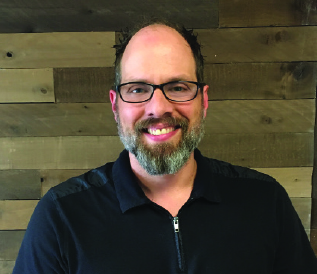
By Michael Kramer

Michael-Kramer

Michael Kramer

Three years ago, my job title was changed from adult education pastor to discipleship pastor. I was happy. Discipleship is a trendy term, but no one quite knows how to define discipleship. I realized this a couple months ago at an education conference put on by LifeWay. The presenter made the off-hand comment that discipleship seems to be the fad in evangelicalism. He had my attention.

The presenter explained that there have been several church growth models over the last 50 years, and he thinks discipleship is the current trend. Yet, he lamented, everyone has a different take on discipleship. He then produced a two-page handout offering his own definition. This made me chuckle. Why is discipleship such a tricky term?

I once watched a ministry leader draw a pie chart depicting Sunday school. He then put discipleship as one-sixth of the pie alongside community, shepherding, evangelism, teaching, and service. Discipleship had been relegated to a narrow slice. If I were discipleship, I think I would be offended.

We wrestle with discipleship because it is a relatively new term that is, at best, tenable and, at worst, divisive. First coined over 150 years ago by a well-meaning church educator, the term has come to distinguish the “two wings of the plane” which give flight to evangelicalism. These two wings are evangelism and discipleship. Sadly, this has created a division within disciple making, and we have yet to recover from the schism.

It’s not about ‘me’
Fast forward a century or so, and attempts at wordsmithing are causing confusion. You may wonder if discipleship is a biblical term. Nope, it is not. Jesus made disciples and called us to make disciples in Matthew 28:19-20, but “discipleship” is nowhere to be found in the New Testament. That’s just a little problematic when we seek to define discipleship in a consistent or biblical fashion.

Most church members will say they are involved in discipleship. After all, they participate in youth group, Bible study, women’s ministry, life group, or Sunday school. But this definition of discipleship is about personal growth or finding a niche within community. Reduced even simpler, discipleship is all about the participant. Discipleship at this level is designed to help “me” follow Jesus.

If a pastor refers to discipleship, most likely he has the spiritual maturity of church members in mind, relying generally on programs to foster maturity. Most pastors would say that the sermon, serving in the church, and going on mission trips are vital parts of the process. In some church cultures, discipleship may focus on spiritual disciplines coupled with some degree of intentional accountability. Again, the focus is on “me.”

My job title says it’s what I do, but do I?

At the leadership level, discipleship and disciple making are often used interchangeably, but the terms have dramatically different focuses or applications. While discipleship focuses on the participant, disciple making focuses on reproducing others. As leaders, we need to decide if we are calling people to invest in themselves or replicate others.

Words matter, especially when used by leaders.

So, is discipleship an evil term? No, not really, but it is unfortunate, because the term tends to not move beyond “me” and my walk with Jesus.

Discipleship places emphasis on the Great Commandment, me loving God and others, but misses the intentionality of the Great Commission, me making disciples. Ultimately discipleship is an unfortunate term because it fails to call people clearly to reproduce themselves in the lives of others.

While I doubt my title will change any time soon, as a leader who wants to communicate clearly, I have decided to call people to disciple making, which I believe carries a lot more weight. Disciple making begs the question, “Who or what am I reproducing?” I, for one, want to reproduce disciple makers.

While discipleship will continue to be a moving target, the term disciple making is biblical, offers a clearer vision, and is measured by reproducibility. Maybe we would save ourselves a lot of trouble if we focused less on the wings of the plane and more on the engine that makes the plane soar, disciple making.

Michael Kramer is discipleship pastor at Immanuel Baptist Church in Benton. He recently completed a Ph.D. in leadership at Southern Seminary.

‘I Kissed Dating Goodbye’ writer announces ‘massive shift’ away from faith
A week after announcing his separation from his wife of 20 years, author Joshua Harris posted online that he’s no longer a Christian. “By all the measurements that I have for defining a Christian, I am not a Christian,” Harris wrote on Instagram July 26. “Many people tell me that there is a different way to practice faith and I want to remain open to this, but I’m not there now.”

Harris wrote the pro-courtship book “I Kissed Dating Goodbye” in 1997, chronicling his relationship with his future wife.

Village Church sued for neglect in sexual assault case
A Southern Baptist church in Texas is facing a $1 million lawsuit that claims it hasn’t done enough to resolve sexual assault that occurred at a church camp in 2012. The suit against The Village Church says the church acted with “conscious indifference or reckless disregard” for a woman referred to as Jane Doe.

Former Village staff member Matthew Tonne was arrested in January on charges of indecency with a child and is awaiting trial, The Dallas Morning News reported.

Willow Creek struggles to move forward after Hybels
Christianity Today reports Willow Creek Community Church held a meeting in July to try to find closure more than a year after the resignation of founding pastor Bill Hybels, who stepped down in April 2018 amid allegations of sexual misconduct. The Chicago megachurch’s elder board also resigned, and the church has since seen declines in giving and attendance, according to CT.

Baptists travel to U.S. border on ‘fact-finding mission’
Marshall Ausberry and Todd Unzicker met with immigrants in Mexico and Baptist leaders on both sides of the border to find out how the SBC can minister there amid the growing crisis. Ausberry, the SBC’s first vice president, and Unzicker, an associate pastor at The Summit Church in Raleigh-Durham, will report their findings to SBC President J.D. Greear as he formulates ideas for Baptist ministry at the border.

Quiz sheds light on Americans’ religious knowledge
87% of Americans know an atheist is someone who doesn’t believe in God, but only 24% know Rosh Hashana is the Jewish New Year. And just under half think “do unto others as you would have them do unto you” is one of the Ten Commandments. Those are among the findings of Pew’s quiz of American adults on a variety of religious topics.

Sources: The Christian Post, The Dallas Morning News, Christianity Today, Baptist Press, Pew Research Center

To protect and serve

Lisa Misner —  July 29, 2019

By Nate Adams

church pews

Some churches have business meetings every month. Some have them once a year. My home church has probably the most common practice, gathering once a quarter to hear reports and consider major actions not already approved in our annual budget and ministry plan.

An extra meeting at church every three months really isn’t that much to ask. Yet when our church’s most recent business meeting rolled around, it was on a stormy summer evening when I had a hundred other things to do. Knowing of no controversies or big decisions, I found it tempting to stay home. After all, a friend of mine once jokingly referred to church business meetings as the Baptist version of purgatory.

But my wife and I have committed to participating whenever we can, not just in our church’s ministries, but in our church’s business. The motto, “To Protect and to Serve,” used by many police departments, also describes our responsibilities as devoted, mature church members. We should both serve through our church, and also protect the integrity and resources of our church.

In recent days, I have seen sad evidence of churches whose members did not guard their business well. In each case, an unscrupulous man used the role of pastor, not to guard and shepherd the flock, but to fleece it.

Church members are responsible to do both.

The pattern was generally the same each time. The churches were small and vulnerable, with few strong leaders. Often in a state of discouragement or desperation, they called men as pastors who promised a better future. Like too many churches, they also hired more with hope than with carefully researched background, references, and secondary references.

After a brief honeymoon period, these men began taking more and more control of finances, property, decision processes, and leadership selection. Anyone who questioned their authority was quickly marginalized, or accused of something, or asked to leave. Soon the small church was even smaller, left primarily with members who didn’t have the ability or the will to oppose. Then whatever finances or property the church possessed was gradually or quickly depleted, or outright taken, by the man the church had trusted to be their shepherd.

It’s often not until then that a handful of the remaining members realize what has happened to their church. They look around for church leaders to help, but most of those folks left shaking their heads when the so-called pastor began his abuses.

And it’s often then that one of the IBSA staff or I will receive a call. And yet, because each Baptist church is autonomous, members with standing in that church, operating within its approved governance and documents, are needed to challenge the abuse that is happening.

Fortunately, most churches do have a core of devoted, discerning leaders who detect this kind of abuse in its early stages, and who guard their church with spiritual courage, and with an understanding of its governance and legal protections. And when there is strong associational leadership in place, these church leaders also have a nearby and willing advocate.

These leaders know to place language, not only in the church’s bylaws but in the deed to its property, that stipulate what happens to the property if it ever ceases to be a Baptist church. They know to put appropriate financial controls and accountability in place that prevent any individual, or any small group, from having inappropriate access to funds. And they are willing to confront even the man who calls himself pastor, when he is brazenly and selfishly exploiting the church from within.

The overwhelming majority of churches I know are served by humble, loving, self-sacrificing pastors and leaders. But especially if your church is small or vulnerable, you may one day be the one called upon by your church not only to serve, but to protect.

Nate Adams is executive director of the Illinois Baptist State Association. Respond at IllinoisBaptist@IBSA.org.

By Adron Robinson

Read: Colossians 3:1-4

Ask 10 different people to define what it means to be a Christian and you will probably get 10 different answers. The name Christian is often claimed in our culture today, but the corresponding lifestyle is often absent. This disparity has left many confused on what authentic Christianity looks like.

Christianity is an external demonstration of the internal reality that by faith we have been united with Christ and hidden in him. Our position in Christ is the foundation and motivation for our daily walk in the world. That’s what the Apostle Paul wants the church at Colossae to understand; faith must have a function.

We live in a world full of doubt, disagreement, and downright evil. And the only answer to the ills of this world is the transformational power of the gospel.

Our family members, neighbors, co-workers, and friends need to see living displays of the resurrected life. We need to invite them into our homes and our dinner tables and let them see what compassion looks like, what forgiveness looks like, and what love looks like. We need to talk to them and not at them, to listen to their concerns and their struggles. We need to offer them the hope of the gospel along with a loving display of the gospel.

Many of them won’t come to church, so the church needs to go to them and display the resurrected life.

They will never stop cursing people out by their own power. They will never stop gambling away their savings by their own power. They will never stop lusting by their own power. They need the power that is greater than willpower. They need resurrection power! But if we don’t live the resurrected life, how can we expect to resurrect a dead culture?

Prayer Prompt: God, we were born in sin, yet by your grace you made us alive through faith in Christ. Now help us to live in light of the resurrection so that others may believe in you.

Adron Robinson pastors Hillcrest Baptist Church in Country Club Hills and is president of IBSA.

Report: State loses 313 people every day
Capitol news site The Center Square reported last week that Census data shows Illinois lost 114,000 people to other states between July 2017 and July 2018, for an average of 313 a day. About 40 of those move north to Wisconsin. “The state’s outmigration crisis is due to primarily working-age residents between the ages of 25 and 54 looking for work elsewhere,” the news outlet reported.

After Title X changes, Pritzker pledges to fund abortions with state money
Illinois Gov. J.B. Pritzker announced last week the state will turn down $2.4 million in federal funding because of a new policy that restricts clinics that receive the funding from making abortion referrals. Instead, the Illinois Department of Public Health will provide the funding, Pritzker tweeted July 18.

House chaplain casts out ‘spirits of darkness’
Two days after members of the U.S. House of Representatives voted to condemn as racist President Donald Trump’s tweets against four Congresswomen, Rev. Patrick Conroy prayed God would “anoint your servants here in the House with a healing balm to comfort and renew the souls of all in this assembly.” The House chaplain continued, “May your spirit of wisdom and patience descend upon all so that any spirit of darkness might have no place in our midst.”

Conroy later said what he witnessed during the contentious vote inspired his prayer, CNN reported. “It felt like there was something going on beyond just political disagreement. The energy of the House was very off.”

Baptist university urged to clarify faith statement
A committee charged with assessing theology at Southwest Baptist University in Bolivar, Mo., reported this month that the school hasn’t clearly implemented its statement of faith, Baptist Press reported. SBU President Eric Turner said his school is “currently working to clarify, boldly articulate and implement our Statement of Faith that will further align and strengthen our Baptist identity and Christian faith.”

The theology review at the university, which is affiliated with the Missouri Baptist Convention, followed the firing of a professor who had expressed concern over some faculty members’ theological views.

Americans believe hate speech has increased
A new study by Barna found 70% of U.S. adults say hate speech and hate crime has increased over the last five years, and many blame politicians and social media.

Sources: The Center Square, WLS-TV, Baptist Press, Twitter, CNN, The Christian Post, Barna

Making people welcome

Lisa Misner —  July 22, 2019

What’s it like to visit your church for the first time?

By Doug Munton

I moved several times as a boy and it wasn’t much fun. Each time I had to overcome old fears, break down unseen barriers, and make new friends. I never liked that feeling of being an outsider. I haven’t forgotten how it felt to my tender young soul. But it taught me some valuable lessons in helping to connect with guests at church.

Visiting a church can be awkward for a first-time guest. They don’t know the people, the customs or the expectations. They can feel nervous, intimidated, or ignored. They might not even yet know the message of the gospel.

Here are some tips that can make a real and lasting difference as church members purposely connect with guests:

1. Talk to people you don’t know.
This is the simplest thing that you can do for guests. If you don’t know someone, say hello. Tell them you are glad to see them. I ask almost every Sunday, “Have I met you before?” If I have met them before, I apologize for forgetting and work to get to know them better.

In connecting with guests, just speak to them. Look them in the eye and say a simple greeting. Welcome them. Care about them. A surprising number of church members never do this.

2. Be friendly to people who aren’t yet your friends.
Every church in America thinks they are friendly because they are friendly to their friends. But being friendly to your friends does not make your church friendly to guests. I love that our members have church friends with whom they can talk and laugh and visit. But I want them to choose to meet some new people. One of my dearest college friends was the very last guy I met of all the guys on my dorm hall.

3. Learn their names.
Introductions usually involve us telling each other our names. But if we aren’t careful, we quickly forget. Our small groups have come up with a simple solution for this. We are starting to wear name tags. You can’t easily ask the name of a couple in your small group who have been coming for months. It is embarrassing that you forgot. But name tags help us remember. And they are especially helpful for connecting with guests.

4. Read body language.
If someone looks confused, they probably are confused. A simple, “Can I help you find something?” is helpful. With a little practice, you can begin to understand what people are feeling and thinking from their body language.

Guests often look a bit apprehensive because they are. Learning to read this allows you to do something about this. A friendly face and kind word go a long way toward lowering that nervousness.

Some of our guests want to remain fairly anonymous. They typically appreciate a friendly greeting but don’t always want deep conversation until they know if they can trust us. You may be able to read that. Perhaps you could say, “If I can help you with anything, just let me know.”

Other guests would really like to have someone offer to sit with them. Or they might enjoy some friendly conversation. Body language is a language that communicates volumes when we begin to understand it.

5. Invite them to take the next connection steps.
It is entirely appropriate to tell a departing guest that you hope they come back. There is nothing wrong with letting them know about small groups, an upcoming special event or membership class, or classes for their children.

Welcoming a first-time guest is just the start of the assimilation process. A warm welcome goes a long way. But we want more than that for our guests. We want them to consider and trust the claims of Christ. We want them to join us on this discipleship journey. And ultimately, we want them to join us in welcoming other guests and helping them to follow the Lord as well.

Doug Munton is senior pastor of First Baptist Church in O’Fallon. He blogs at dougmunton.com.

By Eric Reed

CloudAn eight-mile trip into the countryside ended at an old barn which had been converted into a restaurant. “The food’s good here,” one of the travelers said as we set out after the Sunday service on winding rural and sometimes gravel roads.

The former feed store set in cornfields was everything Cracker Barrel would hope to be, and just what we expected. What we didn’t expect was the poster taped to the door announcing the crossroads’ first “Drag Show” with three headshots of the lead performers.

“If the Drag Show has reached this place, then times really have changed,” someone in our little church group mumbled. “I guess there’s no going back,” I thought to myself, just a half-hour after preaching on the decline of our public morality in Illinois with the recent actions of the state legislature as my chief examples: legalized marijuana, expanded gambling, and abortion with virtually no limits. And did I mention the gay-pride flag flying for the first time over the state Capitol?

But maybe I was wrong.

A new Harris Poll commissioned by the gay activist group GLAAD shows the LGBT movement is losing ground among Millennials.

That was a surprise, even to the pollsters, who called the flagging support “alarming” and said it signals “a looming social crisis in discrimination.”

The survey shows that among 18- to 34-year-olds, LGBT acceptance dropped from 63% in 2016 to 45% in 2018. As Baptist Press reported, the biggest drop from the previous year happened among young women, from 64% in 2017 to 52% in 2018. “But across all three years, the decline was especially noticeable among young males, dropping from 62% in 2016…(to) 35% in 2018.

Young people also registered a rise in discomfort in several specific scenarios: 39% said they would be “very” or “somewhat” uncomfortable learning that their child had been taught a lesson on LGBT history in school, compared with 27% in 2016. And 33% were uncomfortable with their child having an LGBT teacher, up from 25%.

While LGBT acceptance is almost steady among adults age 35 and older, declining support among Millennials may be like the “fist-sized cloud” on the horizon Elijah pointed out, the signal of change to come that, in the current climate, no one imagined possible.

– Eric Reed

Political leaders say current division isn’t as bad as what country has overcome
Christian apologist Ravi Zacharias convened leaders in government, education, media, and business in Washington for a forum aimed at bringing people together. “At the Table,” a new project from Zacharias’s ministry, launched July 10 with a panel discussion that challenged the idea that current divisions are the worst the country has ever seen.

“I’m startled many times when I hear news people pontificating about how terrible things are,” said U.S. Senate Chaplain Barry Black. “And I’m [wondering], ‘Is this an alternative universe that I’m looking at?’ Because I know what bad looks like and this is not as bad as it’s been.”

Joni shares cancer-free news
Author and speaker Joni Eareckson Tada shared a positive report after being diagnosed with breast cancer a second time last year. “For now, we have been spared of more cancer battles,” said Tada, best known for ministering in the disability community. “We humbly realize that may well change in the future; but for today, for now, we are rejoicing in those wonderful words from my medical oncologist: ‘all clear!’ Onward and upward…”

Christian bookseller changes logo to avoid cannabis confusion
Christian Book Distributors, online at ChristianBook.com, will drop the initials “CBD” from its logo, Christianity Today reports. CBD is commonly used to refer to cannabidiol, a compound found in marijuana and used increasingly to treat a variety of ailments.

The cost of closing on Sunday
Chick-Fil-A may lose more than $1 billion in annual revenue by its company-wide policy of closing on Sunday, 24/7 Wall Street reports. The chicken chain has been closed on Sundays since founder Truett Cathy opened his first restaurant in 1946. “It’s not about being closed,” Chick-Fil-A says on its website. “It’s about how we use that time.”

Baptists aid border ministry
The Catholic Church has traditionally dominated border outreach in Texas, Religion News Service reports, but Baptists and other evangelicals are stepping up their efforts to help migrants from Central America.

Christian Post (2), Ravi Zacharias International Ministries, Christianity Today, 24/7 Wall Street, Chick-Fil-A, Religion News Service

You deserve a break

Lisa Misner —  July 15, 2019

By Nate Adams

You deserve a breakSummer can be a very busy time for churches, and therefore for many devoted church leaders and members. Vacation Bible School, camps, mission trips, construction projects, and more can quickly fill the warm-weather months.

But summer also provides most of us with a few days of vacation, or at least staycation. If we’re wise, those days can be just as important as the ones we spend in ministry.
All of us need breaks in our routines and the daily patterns of our lives. We are often creatures of habit, whether those habits are daily, weekly, or monthly.

For example, when I am teaching or preaching about worship on a Sunday morning, I sometimes ask the congregation, “How many of you are sitting in about the same place that you sit every Sunday?” Usually at least three-quarters of the room raises their hands, and then looks sheepishly at their familiar, nearby neighbors.

Then I ask, “How many of you parked in about the same place that you park every Sunday morning?” Again, most hands go up, and people quickly understand my point. Routine or ritual can become very poor substitutes for true, spiritual worship.

Likewise, the weekly or monthly patterns of our work, our down time, our relationships, and even our church commitments can too easily fall into almost thoughtless repetition. That’s why we need not only nights to pull away from our days, and sabbaths to pull away from our weeks, but also vacations to pull away from the sameness of our years.
Especially if your vacation is still ahead of you this year, let me encourage you to invest at least part of that time in three key “re’s”—refresh, reflect, and refocus.

Refresh. Giving yourself time to refresh physically is important, but so are spiritual and emotional refreshment. In addition to getting extra rest on your vacation, make some time for the replenishing things that really restore your soul. Take a long walk, or go fishing, or get alone with a great book. Have a long talk with your best friend. Take a drive to a solitary place and just decompress. You know better than anyone else what refreshes you. Make it happen!

Reflect. Once you’re starting to feel refreshed, take time to do some honest soul-searching. Are you happy with the pattern into which your life has settled? How do you feel about your job, your relationships, your life goals? Is your spiritual life healthy? Are you finding ways to serve and use your gifts? Does your life feel “on track,” and if not, what would it take to get back there? If you don’t have some serious time for reflection on your vacation, you are likely to return to the same habits and patterns from which you needed a break.

Refocus. And finally, allow your refreshed spirit and thoughtful reflection to lead you to a time of intentional refocus. When you return from vacation, how can you reorder your life to prioritize what’s truly important, and pull back from the things that are distracting you from your life’s true purposes? It’s sometimes hard to see changes that are needed when you are in the midst of your life’s routines. Let your vacation time show you what needs to be refocused.

When it comes to making your vacation time meaningful, “to re, or not to re, that is the question.” Just as a bad day can look much better after a good night’s rest, and a trying week can look much better once you reach the weekend, a vacation can provide a much-needed break to refresh, reflect, and refocus. May you find that time this summer.

Nate Adams is executive director of the Illinois Baptist State Association. Respond at IllinoisBaptist@IBSA.org.