“Pioneering Spirit” is the theme of the 2018 IBSA Annual Meeting, kicking off Nov. 7 at First Baptist Church in Maryville. The meeting will highlight the four challenges put before churches at last year’s meeting: go new places, engage new people, make new sacrifices, and develop new leaders.

Visitors to the meeting will also be invited on a virtual prayer tour where they can intercede for ministries across the state, all from inside FBC Maryville. The life-size log cabin from last year’s meeting will also return, featuring visual displays about Illinois’ mission field.

Fritz Klein, a renowned Abraham Lincoln interpreter, will join IBSA Executive Director Nate Adams for the Wednesday evening session. Worship band Sixteen Cities will lead music during the meeting.

Prior to the Annual Meeting, the IBSA Pastors’ Conference will focus on “Blazing New Trails” with messages from urban church planting strategist Darryl Gaddy, St. Louis pastor Noah Oldham, and Illinois leaders Matt Crain and Ted Max. IBSA ministers’ wives will meet Wednesday morning for their annual conference, and there are also meetings planned for young leaders, church planters and sponsoring churches, and associational leaders.

For more information about the meetings, schedules, and meals, go to IBSAannualmeeting.org. And follow along here for news and updates from Maryville.

What voters value

Lisa Misner —  November 5, 2018

Evangelicals choose issues over candidates

Vote Yeah

With a day to go before the U.S. mid-term election, new research may shed light on how evangelicals will vote. The Billy Graham Center Institute at Wheaton College and LifeWay Research in Nashville, Tenn., released an extensive study in October on how evangelicals voted in 2016, and how they feel about their decisions today.

The study explored the voting habits and political motivations of three groups of Americans: evangelicals by belief, self-identified evangelicals, and those who are not evangelical by belief or self-identity. (Evangelicals by belief are those who hold to four key theological statements developed by LifeWay Research and the National Association of Evangelicals.)

Among the findings: 53% of evangelicals by belief characterized their vote in the 2016 presidential election as being for a candidate, while smaller percentages said they cast their vote against Hillary Clinton (18%) or Donald Trump (15%). That only half of evangelical voters said they voted for their candidate in 2016 led researchers to conclude that evangelicals are “more issue-oriented than candidate-focused,” Christianity Today reported.

“I see no reason that focus on issues won’t be repeated next month,” said Ed Stetzer, referencing the Nov. 6 election. The executive director of the Billy Graham Center Institute detailed the research in a press release. “In 2016, many evangelicals chose to look past a candidate as an individual to vote for a specific issue, platform, or party a candidate represented, seeing the candidates more like objects of representation than as individuals whose values and ideals fit theirs.”

According to the research, two-thirds of evangelicals by belief agree committed Christians can benefit from a political leader even if that leader’s personal life does not line up with Christian teaching.

The 2016 election
In the 2016 presidential election, 9 in 10 evangelicals agree they felt strong support for their preferred candidate, with 69% strongly agreeing. And little has changed two years later. Today, 88% agree they feel strong support for who they voted for in 2016, with 70% strongly agreeing.

Among evangelicals who voted, most did so for Donald Trump. More than half of evangelicals by belief (58%) and self-identified evangelicals (53%) cast their ballot for the Republican nominee, while 36% of evangelicals and 38% of self-identified evangelicals voted for Hillary Clinton.

African-American voters with evangelical beliefs overwhelmingly voted for Clinton (86%), while more than three-quarters of white voters with evangelical beliefs voted for Trump (77%).

Around half of younger voters with evangelical beliefs cast their ballot for Clinton—47% of those 18 to 49. A majority of voters 65 and over who have evangelical beliefs voted for Trump (72%).

The survey also measured the issues at play in the 2016 presidential election. Both evangelicals by belief and self-identified evangelicals said an ability to improve the economy was the most important reason for voting the way they did, followed by positions on health care and immigration.

Few evangelicals by belief (5%) and self-identified evangelicals (4%) said abortion was the most important issue in deciding their 2016 vote. And 7% of evangelicals by belief and 6% of self-identified evangelicals chose likely Supreme Court nominees as the most important reason.

Working across divides
Most evangelicals by belief and self-identified evangelicals say the 2016 election brought to the surface some underlying divisions among Christians. Yet, most evangelicals also believe someone in the opposing party can be a devout Christian.

When evangelicals encounter someone using biblical beliefs to justify political views that are opposite of their own, few question their political opponent’s faith. Evangelicals by belief are most likely to say they are hopeful they can find common ground biblically.

“Jesus is not coming back on a donkey or an elephant,” said Stetzer. “We have to acknowledge that people vote for different and complex reasons and that Christians can differ on politics and agree on the gospel.”

– From LifeWay Research, with reporting by Christianity Today

Most white evangelical voters plan to vote Republican in Tuesday’s midterm elections, according to research by PRRI, including many of those 18-29 years old. But the voting bloc is changing, researchers say.

“White evangelical protestants have certainly been a powerful force in American politics for a couple of generations since the ‘80s and (Ronald) Reagan, but their clout in the general population is waning over the last 10 years,” PRRI CEO Robert Jones told USA Today. “There’s been a bigger loss at the younger end of the spectrum.”

According to PRRI, white evangelicals comprise 15% of the U.S. population, down from nearly a quarter in 2008. And the median age is 56. Younger evangelicals tend to think differently about certain issues than their parents, like same-sex marriage and the environment. (The New York Times recently interviewed young evangelicals about faith in the current political climate.)

The differences in ideology could eventually show up at the ballot box, but probably not this year, University of North Carolina professor Molly Worthen told USA Today.

“The religious right, as a network of very savvy political institutions, will continue to punch above its weight politically for decades,” Worthen said. “Even as we see that secularizing trend persist, it will not likely immediately translate to a huge turnout of votes for progressive political candidates.”

Race also plays a role in how evangelicals vote, according to a recent study by LifeWay Research and Wheaton College’s Billy Graham Center. The research found 77% of white voters with evangelical beliefs voted for Donald Trump in the 2016 presidential election, while 86% of African-American voters with evangelical beliefs voted for Hillary Clinton.

Most evangelicals haven’t changed their minds since 2016, according to the research. Nine in ten said they felt strong support for their preferred candidate then, and today, 88% say they still do.

By Andrew Woodrow

YE 2018 Marion

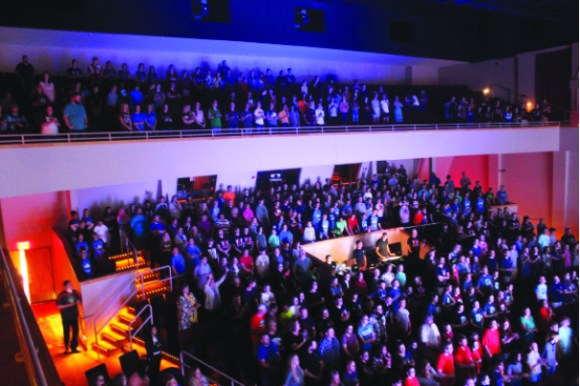
Hundreds of students and leaders gathered across Illinois in October for Youth Encounter, IBSA’s annual evangelism conference for students. In Marion (above), Decatur, and two sites in Chicagoland, almost 1,400 attenders heard from speakers and worship leaders who encouraged them to keep going in their faith, even as they face unprecedented challenges from the culture around them

For young Christians, following Jesus can be a lonely pursuit. Especially in today’s pressure cooker culture. It’s overwhelming, said student pastor Mark Davis, when young people have constant, instant access to information—and much of it beyond their years.

In that environment, discovering and developing your faith can be difficult. It’s easy to feel alone. At Youth Encounter, IBSA’s annual evangelism-focused conference for students, young believers have an opportunity to escape societal pressures for a while, and fully engage in worship with hundreds of other students like them.

They leave the conference—held this year in five locations around the state—better equipped to live out their faith and share it with the people around them.

Encouraged, emboldened
At Youth Encounter, middle school and high school students are led in worship by up-and-coming Christian artists, and inspired and challenged by some of the top student ministry speakers in the country.

But perhaps the greatest encouragement students receive from the conference is knowing they’re not alone.

“Oftentimes, the students feel that if they talk about their faith or visibly live it out, they’re going to be abandoned,” said Davis, pastor to students at Murdale Baptist Church in Carbondale. “Youth Encounter gives them a chance to see they’re not alone. And seeing there are other students in their area, not just a handful but hundreds of them, helps encourage and embolden their faith.”

For the first time this year, Youth Encounter events were scheduled in five locations across Illinois. Nearly 1,400 students and leaders attended the first four conferences, including sites in Decatur, Marion, and two in Chicagoland, and 62 people have given their lives to Christ. The final Youth Encounter conference for 2018 will be held Nov. 11 at First Baptist Church in O’Fallon.

https://player.vimeo.com/api/player.js

To students like Jade Nappier, Youth Encounter is a break “from the stress during the school year that can be hard to find at church.” Nappier, a student from First Baptist Church in Marion, also said Youth Encounter has helped her discover she’s not alone in exploring her faith, motivating her to “be the Christian I want to be.”

Selena Petrowich from Third Baptist Church in Marion has been coming to Youth Encounter ever since she can remember. Now a senior in high school, she describes how Youth Encounter helped her not feel alone in discovering her faith.

“A lot of people trying to come to Christ feel alone. I know I did. So, having more people around you that you know are exploring their own faith [makes it] definitely easier to share mine.”

Petrowich expressed how moving it is to see school acquaintances at Youth Encounter who wouldn’t otherwise show their faith. “What caught my eye was seeing so many teenagers actually open in wanting to learn about God,” she said. “That’s when you realize, ‘Okay, I can do this too.’ And for me, that was my biggest thing: realizing that not just older people can be interested in worship and in God.”

Changing world, unchanging Word
“One of the great things Youth Encounter presents to the kids is that while the culture is constantly changing, the Word is unchanging,” said Madison Presswood, minister of youth at FBC Marion. Presswood encourages his students to be less concerned with the media and warns them where their attention is kept the most is where their sphere of influence is the strongest.

There is also a need, though, to engage the culture without fear, Andrew Nippert encourages his students. “If a church wants to help their young people survive their culture they’re living in and help them prepare to engage with their culture and be gospel-relevant in their communities, you can’t be scared of the culture or of change,” said Nippert, youth and children’s minister at Third Baptist Church in Marion. “Because the one thing that should never change is God’s Word.”

Amid pressures from the world they live in, students are going to mess up, Nippert said. “But that’s why we work with them. That’s why we minister to them. Because they’re who need the Lord. We all need the Lord in our own way, and we just have to be willing to go to those that are, sometimes, the troublemakers. And give them the One who can lead them out of their troubles.”

Equipped to go out
Youth Encounter helps prepare students to take their faith into the community by exposing them to bands and speakers they can look up to, and by equipping them to live out their faith, despite cultural pressures.

“IBSA does a really good job getting solid speakers that unpack the gospel and the reality of Christ in a way that makes sense to the students’ worlds,” Nippert said. “So then, it’s a lot easier to walk back into their world with Christ at the center of what they’re doing.”
High school junior Seth Lindhorst has already been to the youth conference multiple times. He said Youth Encounter teaches students his age realistic ways to live out their faith “and still be normal.”

One of Lindhorst’s frustrations with societal pressures is the bombardment Christians receive for living a ‘boring’ life, despite attempts to be more involved and have appropriate fun outside the church. “It’s extremely difficult for a Christian my age,” said the student from Third Baptist in Marion. “So, the Christian youth in today’s culture feels pressured into doing things that really aren’t appropriate for kids our age.”

Coming to Youth Encounter, however, encourages him not to back down to the peer pressure.

“When I go back to school after Youth Encounter, I always walk with a jump in my step. It gets me pumped up,” Lindhorst said. “Youth Encounter equips you for the long run and gives guidelines you can use in your daily life. And as I’m singing songs, as I’m listening to the speaker, I’m thinking to myself, ‘How can I change my life to make Jesus’ name look better?’”

For more information about resources and opportunities for students, go to IBSA.org/students.

Pioneering-200-logo-layers-260x300The IBSA Pastors’ Conference and Annual Meeting are November 6-8 at First Baptist Church in Maryville. Find out how to make the most of your time there:

  1. Check out the exhibit hall. See how the IBSA ministry teams can assist your church. Find out what kind of services GuideStone Financial Services provides. Learn about the programs of study Baptist colleges and seminaries offer. Plus, there’s a Baptist Children’s Home and Family Services dessert reception celebrating 100 years of ministry to children and families in the exhibit hall following the Wednesday evening session. Yum!
  2. Network with old and new friends. You’re at a meeting with 100s of other pastors from cities and churches of all sizes, different backgrounds, full-time and bi-vocational, plus some just like you. Take the opportunity to talk with them about what they’ve experienced, achieved, and hope to do. Talk one child of the King to another about how to help and encourage each other.
  3. Go to the Pastors’ Conference dinner on Tuesday. Have some fried chicken, a Southern Baptist favorite, roast beef, backed rigatoni, mashed potatoes and gravy, buttered corn, salad, bread, and dessert. You’ll enjoy food, fun and fellowship Tuesday from 4:30-6 p.m. – all for just $10. Dine again at the church Wednesday evening at the IBSA Annual Meeting and eat dry-rubbed, smoked chicken, topped with cranberry barbecue sauce, pulled pork, mac and cheese, green beans, salad, bread, and dessert for just $12. Reserve tickets online until Nov. 1 at 4:30 p.m. or purchase them at the door.
  4. Welcome new sister churches. Established churches and some that have only recently constituted have gone through the credentials process and will be voted on during the meeting. There are 11 churches asking to join yours in IBSA.
  5. Tweet the Annual Meeting. Or Facebook it, but be sure to use #IBSA2018. Share what you’re learning and what inspires you. See something that you may have missed. Share your selfie with Honest Abe, Abraham Lincoln impersonator, Fritz Klein.

Learn more about the IBSA Annual Meeting.

Lincoln and HomeThe IBSA Pastors’ Conference and Annual Meeting are November 6-8 at First Baptist Church in Maryville. Here’s why you should come:
  1. Participate in democratic process. IBSA is your association. Vote on new board members, budgets, and resolutions (you can even submit one!). Elect association officers and learn how your denomination works.
  2. Be enriched. Hear IBSA President Adron Robinson preach the president’s message and Tom Hufty, senior pastor of FBC Maryville, bring the annual sermon. Be inspired by stories of churches who have embraced the Pioneering Spirit challenges and reports from ministry partners. Enjoy music by worship band Sixteen Cities, and a visit from Honest Abe himself, as portrayed by veteran Lincoln interpreter Fritz Klein. You’ll even have the opportunity to prayerwalk your way through the meeting and find new meaning in why you are there.
  3. Catch the Pioneering Spirit – 200 & Counting. As Illinois celebrates its bicentennial in 2018, we’re inspired by the fortitude of our forbearers, and we’re calling up a new generation of spiritual pioneers today. Find out how your church can join the challenge to 1) Go new places, 2) Engage new people, 3) Make new sacrifices, and 4) Develop new leaders.
  4. Invest in yourself and your church. Attend the Pastors’ Conference, listen to the speakers, and go the breakout sessions. Hear powerful messages from pastors and Bible teachers Darry Gaddy, Noah Oldham, and Matt Crain. Take notes to help you remember important points to bring back to your church and community for growing His Kingdom.
  5. Women’s Ministry. Ladies, you’re not left out. The Ministers’ Wives’ Conference and Luncheon is Wednesday morning and will feature powerful testimonies including a message from author and speaker Mary Mohler, wife of Southern Seminary President Albert Mohler. Come by the Women’s Ministry exhibit for all kinds of sweet treats and resources. Plus, the LifeWay Bookstore will be nearby.

Learn more about the IBSA Annual Meeting.

Briefing.jpeg

J.D. Greear launches podcast
SBC President J.D. Greear has launched a podcast allowing him to engage listener-submitted questions about biblical, ethical, theological, political and practical issues. “Ask Me Anything: Honest Answers, Quick Questions” debuted Oct. 22 with three episodes. Greear is the first SBC president to launch a podcast during his presidential term, LifeWay Christian Resources said.

What voters value: evangelicals choose issues over candidates
The Billy Graham Center Institute and LifeWay Research released a study on how evangelicals voted in 2016. Among the findings, 53% of evangelicals characterized their vote as being for a candidate, while smaller percentages said they cast their vote against Hillary Clinton (18%) or Donald Trump (15%). That only half of evangelical voters said they voted for their candidate in 2016 led researchers to conclude that evangelicals are “more issue-oriented than candidate-focused,” Christianity Today reported.

 Greear: ‘Lie of the enemy’ led to synagogue murder
A shooter opened fire during a baby naming ceremony at the Tree of Life Synagogue in Pittsburgh, leaving 11 people dead. The suspect shouted, “All Jews must die,” before opening fire. SBC president J.D. Greear described the crime as “a despicable lie of the enemy which we unequivocally reject.” He also tweeted: “We grieve with the city of Pittsburgh, the Jewish community, and especially the families of the victims.”

AL. Supreme Court calls for end of Roe v. Wade
Alabama’s highest court released a decision recognizing the personhood of unborn babies and includes a concurrent opinion calling for the overturning of Roe v. Wade. Justice Tom Parker denounced Roeas a “legal anomaly and logical fallacy” after the Alabama Supreme Court upheld a murder conviction for a man who killed his pregnant wife and their unborn child. Justice Parker then urged the United States Supreme Court to “overrule this increasingly isolated exception to the rights of unborn children.”

New ‘Christian Pixar’ film company to be launched
“I Can Only Imagine” film producers, Andy and Jon Erwin, are creating their own Christian film company similar to Pixar or Marvel. They said the new production company and a series of films is backed by Hollywood. Named “Kingdom,” the company is an Erwin brothers collaboration set to spread the gospel message and “serve the church,” Jon said. 

Sources: Baptist Press (2), Illinois Baptist, Christian Post (2)

In the presence of a pioneer

Lisa Misner —  October 29, 2018

Pioneering-200-logo-layers-260x300By Nate Adams

Not long ago, I was invited by the Springfield Convention and Visitors Bureau to represent IBSA at a local event, recognizing organizations that have helped attract business to the Springfield area. IBSA was among that group because, in both 2015 and 2018, we hosted the Midwest Leadership Summit at the Springfield Crowne Plaza, drawing more than a thousand pastors and leaders from thirteen Midwest states to nearby hotels and restaurants.

The recognition event was held at the Abraham Lincoln Museum, and much to our delight, one of the presenters was Abraham Lincoln himself. As each of us were called to the platform, a Lincoln statuette was handed to us by a statuesque, flesh-and-blood Lincoln!

Of course, all of us know that our now beloved sixteenth President has been gone for more than 150 years. Our very convincing “Lincoln interpreter” was an actor named Fritz Klein, who looks remarkably like the historic Lincoln, and whose full-time profession is now portraying him in settings all over the United States.

May we be willing to go new places, engage new people, make new sacrifices, and develop new leaders.

Even so, as I was called to the platform, I found myself feeling a bit in awe of the towering figure who smiled and handed me my little statue. At his insistence, we each paused and posed for a quick photo. And for a brief moment, the warm smile and rehearsed mannerisms of Mr. Klein made me feel as if it were Mr. Lincoln who was pleased with me, and with IBSA.

Shortly after that event, I invited Mr. Klein to come and join us at our IBSA Annual Meeting this November. For one thing, it’s hard to imagine celebrating the Land of Lincoln bicentennial without some nod to Mr. Lincoln. But more importantly, I hope the image and memory of Abraham Lincoln will remind us that he was one of our state’s earliest pioneers, and that we need that pioneering spirit in our churches today.

Pioneers are willing to go new places, engage new people, make new sacrifices, and develop new leaders. Lincoln and his family personified these pioneering qualities, but so did dozens, and then hundreds, and eventually thousands of Baptists, who entered our fledgling state with both the Gospel and the desire to establish new churches.

In the early 1800’s, evangelism, church planting, missions giving, and leadership development were not easy. And they’re not easy in the early 2000’s. Even today, these kinds of missionary endeavors aren’t usually attempted or accomplished by complacent settlers, but by courageous pioneers.

By the time the IBSA Annual Meeting convenes in Maryville November 7-8, we hope to celebrate 200 years of statehood by also celebrating at least 200 Baptist churches who are embracing one or more of these “pioneering spirit” challenges. (Your church can register for these at www.pioneeringspirit.org.) A little more than 180 churches have embraced one or more of these challenges already, and we are hopeful that more than 200 will do so by the end of the IBSA Annual Meeting.

I don’t expect to have the kind of impact on Illinois or history that Mr. Lincoln did. But I do want to be the kind of pioneer that continues to bring both the Gospel and new Baptist churches to the places in Illinois that don’t have them yet. Welcoming new believers into heaven is so much more important than welcoming new business into Springfield. And of course the celebration event will be hosted by Someone so much more statuesque than Mr. Lincoln.

Nate Adams is executive director of the Illinois Baptist State Association. Respond at IllinoisBaptist@IBSA.org.

Letter urges genocide designation in Myanmar
Southern Baptist Convention President J.D. Greear joined a coalition of leaders asking U.S. officials to label persecution in Myanmar “genocide.” In a letter to Secretary of State Mike Pompeo, more than 70 humanitarian and faith leaders said Myanmar’s military-led campaign against Rohingya Muslims and other religious minorities qualifies as genocide and “crimes against humanity.” The group wrote, “We urgently encourage you to take immediate action by articulating a moral, political, and policy designation respecting the dignity and safety of victimized Burmese individuals.”

> Related: Christianity Today reports Christians in Myanmar also are in danger, although their plight is less well-documented and hasn’t received much response from the global church.

Officials pledge more aid for Iraqi Christians
The Trump administration has pledged $178 million to help religious minorities in Iraq, bringing the fiscal year total to nearly $300 million in aid for Christians and others persecuted by ISIS in the country.

Five statistics on global hunger
The Southern Baptist Convention designates one Sunday each October as Global Hunger Sunday, an opportunity to pray for and give to ministries that help relieve hunger, a global problem that affects around 795 million people worldwide.

Judge dismisses sexual abuse charges against Pressler
A Texas court has dismissed charges of sexual abuse, conspiracy, and negligence against Paul Pressler, who helped lead the Southern Baptist Convention’s return to conservative theology in the 1980s and 90s. The Southern Baptist Convention also had been named in a lawsuit filed by plaintiff Gerald Duane Rollins, but Judge R.K. Sandhill’s Oct. 15 order dismissed the charges against the SBC because the statute of limitations has run out, Baptist Press reported.

Study details America’s shifting theology
While more than half of Americans believe only those who trust in Jesus alone as Savior receive eternal salvation, a new survey by LifeWay Research found, an even larger percentage believe most people are good by nature.

Sources: Christian Post, Christianity Today, Baptist Press, LifeWay Research


MeToo

It happens every day. Women and children, and sometimes men, are victims of physical, sexual, mental, and other types of abuse. Many are too afraid or embarrassed to seek help. Some won’t even admit to themselves what is happening. Others turn to pastors and church leaders for help. But pastors and church leaders don’t always feel equipped to help.

For those in ministry, there is increased confusion over which incidents to report, which government officials to report them to, and when it’s appropriate to break a church member’s confidence in the sometimes competing matters of compassion and compliance.

Southern Baptists were rocked last spring when the denomination came face-to-face with the #MeToo movement sweeping the country. Paige Patterson, then president of Southwestern Baptist Theological Seminary, received sharp criticism for remarks he had made in a sermon in 2000 about his counsel to a woman regarding domestic abuse and divorce. Patterson was also alleged to have mishandled allegations of sexual assault while serving as president of another Southern Baptist seminary.

The Patterson controversy, which ended in his firing, was followed by other, unrelated allegations of sexual abuse that had gone unreported for decades. In May, Southern Seminary President Albert Mohler wrote, “The SBC is in the midst of its own horrifying #MeToo moment.”

It’s not just the denomination that’s reeling from the movement; individual churches are wrestling with the issues of domestic abuse, sexual abuse, and sexual assault, and struggling to determine the legal requirements of reporting such violence. They’re also tasked with answering a different question: How do we deal faithfully with these issues, in light of the gospel?

Reporting abuse
A recent LifeWay Research study found two-thirds of pastors say domestic or sexual violence occurs in the lives of people in their church. But half say they don’t have sufficient training to address it. And about one-third of pastors who have heard of the #MeToo movement say it has caused more confusion about the issue for their church.

One helpful resource for IBSA churches is Illinois Baptist Children’s Home and Family

Services, led by Executive Director Denny Hydrick. BCHFS is very familiar with Illinois laws regarding reporting child abuse, and also employs counselors at its Pathways Counseling Centers around the state who work with people of all ages. The agency is equipped to help IBSA churches as they wade through the proper steps in reporting abuse and caring for the abused, no matter their age.

In recent years, sexual abuse scandals in religious communities have compelled churches and clergy members to become better equipped to report child abuse. Illinois law has a long list of mandated reporters—those people required to report suspected child abuse or neglect. Members of the clergy are on the list.

The Illinois Department of Children’s and Family Services Children’s Justice Task Force directs mandated reporters to “notify authorities of suspected child maltreatment immediately when they have ‘reasonable cause to believe’ that a child known to them in their professional or official capacity may be an abused or neglected child.” Reports may be made by calling (800) 252-2873.

Domestic violence can be a more difficult topic for church leaders, because reporting isn’t generally mandated. The Illinois Domestic Violence Act (IDVA), which is used to obtain orders of protection, discusses physical abuse as well as harassment, interference with personal liberty, intimidation of a dependent, willful deprivation, neglect, and exploitation.

The act doesn’t speak directly to churches or clergy, but it may offer some guidance in defining different types of domestic violence and outlining the responsibilities of law enforcement and healthcare providers.

What about events that took place in the past? In Illinois, when abuse involves what was then a minor, “you do have a duty to report that even though it is no longer occurring,” Hydrick said.

When dealing with children, attorney Richard Baker stressed that mandated reporters have a legal obligation to report abuse within 48 hours. But the standards for reporting change when dealing with adults. Baker, a partner at Mauck & Baker, LLC in Chicago, said, “The assumption is when you are an adult you have the where-with-all to report for yourself.” (Mauck & Baker specializes in religious liberty issues, and frequently represents churches in legal matters.)

The law doesn’t mandate that a pastor has to report a woman has been abused. Baker said pastors have to take into account the setting when a woman says she has been abused. “Was it confidential? Was it a group setting? Then, there isn’t such an expectation of privacy. The context is very important.”

The matter of “context” has become an issue, as some people have become concerned that public confession by an adult in a small group setting about being abused, for example, might require church leaders to notify authorities. Some church leaders in other states have suggested that is the case in their states, making sharing of personal information by group participants dicey. But, following Baker’s advice, don’t jump to conclusions just yet. Yes, it’s a gray area and laws are expanding. Baker noted new questions are being raised and precedents are being set. “[But] there are differences in religious and professional contexts,” he said.

When there are questions about what is mandated by statute, “I always go back and look it up,” he said. Licensed counselors and medical professionals have their own legal reporting standards, which are different from ministerial ethics.

Bring it to light
“We’ve heard stories in other denominations of ignoring these things or covering them up, but I think as Christians we need to be proactive in not covering them up,” Hydrick said. “I think we have to recognize sin and call it sin. We need to address sin in our own lives and churches.”

Baker argues for transparency. “Transparency in policy is a very wise thing. Everybody wants to deny and hide things under a rug, but that’s not good in the long run. We have to err on the side of love.”

This summer, messengers to the Southern Baptist Convention in Dallas approved a resolution “On Abuse.” Messengers to the IBSA Annual Meeting will be asked to consider a similar resolution next month.

In the SBC resolution, messengers voted to “condemn all forms of abuse and repudiate with a unified voice all abusive behavior as unquestionably sinful and under the just condemnation of our Holy God.” The resolution also called on “pastors and ministry leaders to foster safe environments in which abused persons may both recognize the reprehensible nature of their abuse and reveal such abuse to pastors and ministry leaders in safety and expectation of being believed and protected.”

In short: Baptist pastors are not priests, and the pastor’s office is not a confessional, but adult victims of abuse still have the priviledge of confidentiality about what may have happened to them. In contrast, alleged perpetraitors, especially in cases involving children, do not. That’s when “mandatory reporting” applies.

SBC President J.D. Greear recently announced the formation of a Sexual Abuse Advisory Committee (see column at left). And Baptist Press reported at last month’s Southern Baptist Executive Committee meeting that Gateway and Southwestern Baptist Theological Seminaries have begun partnerships with Ministry Safe, a sex abuse prevention organization, to add sexual abuse and harassment prevention training to their course offerings.

The Southern Baptist Convention provides a list of resources for sexual abuse prevention on their website, sbc.net. For more information about background checks, protecting children and vulnerable adults, creating a safe environment at church, and more, go to sbc.net/churchresources/sexabuseprevention.asp.

Be ready

Denny Hydrick of Illinois Baptist Children’s Home and Family Services suggests these four steps for churches in handling domestic and sexual violence:

1. Pastors should be aware of local resources before an issue arises. Is there a nearby domestic violence shelter, and if so, how does a person make a referral? Build relationships with local law enforcement professionals. Know other social service supports, like the local Child Advocacy Center or the State’s Attorney’s office, who may also employ a victim’s advocate.

2. Keep numbers on hand. These contacts are listed on Illinois’ Department of Human Services website:
• For suspicion of child abuse or neglect – (800)-25 ABUSE

• Imminent harm or danger of any person – 911

• Abuse of a person with mental illness or developmental disability – (800) 368-1463

• Domestic Violence Helpline – (877) 863-6338

• Elder abuse – (866) 800-1409

3. Keep an updated list of local mental health and social service professionals. BCHFS is always willing to assist pastors in handling concerns with children and families, Hydrick said. Contact BCHFS at (618) 382-4164.

4. Get assistance. Often in domestic violence situations, even the best intentions of providing for safety can lead to an increase in violence. Make sure you work with a person with experience handling domestic violence situations.

Hydrick cautioned, “Safety must always supersede an ethical dilemma that may be present. There are ways to assess safety, but that should be done by a trained professional.”