Archives For November 30, 1999

Our journey together

Lisa Misner —  September 13, 2018

MIO Logo 500pxBy Nate Adams

I suppose the most self-indulgent car I’ve ever owned was one we purchased just after Beth and I were married. It was a sporty little Honda Prelude, with barely any back seat and just enough trunk space for the two of us.

Then, as our family grew, we found we needed cars with bigger back seats and more trunk space. The arrival of our third son pushed us into a mini-van, and longer trips even required a cartop carrier for all the stuff that tended to go with us. Last spring, with two daughters-in-law now in our family troupe, our family vacation required the rental of something called a “people mover,” with nine seats plus cargo space.

Yes, it costs more and more and takes extra effort for a growing family to travel together. But it’s worth it. Sure, things like your destination and everyone’s comfort are important. But just as important are the relationships that grow, and the experiences you share, as you travel together.

Our journey

That’s also how I feel about our journey and mission together as churches, here in Illinois. Sure, where we are going together is important: We want to reach people with the gospel, and to develop disciples and leaders who can help our churches grow, and start new churches, and go to the mission fields of the world.

But the relationship between and among churches and leaders is important too, and somewhat unique to state and local missions. Here we are close enough, not just to do missions together, but to grow together, and sometimes hurt together, as family.

State missions isn’t only about evangelism and church planting and training leaders, though we certainly invest a lot in those priorities. It’s also helping one another through pastoral transitions, or church conflict, or legal issues. It’s doing camps together. It’s planning mission trips or experiences for multiple leaders, or kids, or students, or churches, when one church can’t do that alone.

It’s answering the phone when a church has a need, and sometimes jumping in the car to bring some help or encouragement or resources. It’s celebrating big church anniversaries together, or the long tenure of a devoted pastor. Sometimes it’s crying together at a funeral.

When churches throughout a state decide not to travel alone, but to band together, and work together, and put a state staff and ministries in place, they are doing more than giving money to send missionaries, as important as that is. They are deciding to journey together in a shared mission field, and to do life together, for better or worse, in a way that isn’t really practical in North American missions or international missions.

I would never take anything away from the challenges that our sister, southern state conventions face. But I will say that when a few hundred Southern Baptist churches that average 75 in attendance take on a northern state like Illinois, with mammoth cities like Chicago and St. Louis, and with a population that is 175 times the total worship attendance of our churches, our journey together is a little more uphill than most.

But this is our mission field. This is where we journey together. It’s not always easy or comfortable. But it’s worth it.

This week, churches across our state will receive a special offering, the Mission Illinois Offering. It helps provide what we need for the journey together. Please consider a generous gift, through your church or through the IBSA.org website, if your church isn’t receiving the offering. Every year we travel together brings new challenges. But, for the sake of the lost here, and the glory of our God, our journey together is worth it.

Nate Adams is executive director of the Illinois Baptist State Association. Respond at IllinoisBaptist@IBSA.org.

Every summer, IBSA’s two camp facilities are beehives of activity as hundreds of children and teens converge over multiple weeks. The gospel is shared, young people come to know Jesus, and many grow as disciples and leaders. It’s a life-changing experience. Lake Sallateeska celebrated 75 years as IBSA’s southern facility. And Streator Baptist Camp, serving the northern churches, has undergone a terrific renovation in the past two years.

Pray for camp managers Philip Hall and Mike Young and their staffs. And pray for the many people who encounter Christ at camp.

Learn more about the Mission Illinois Offering.

Watch “Lake Sallateeska celebrates 75 years”


By Meredith Flynn

Larry Rhodes

Larry Rhodes leads worship at during a IBSA chapel service.

In a season meant for gratitude, Jason Vinson didn’t feel much. It was Thanksgiving when years of discouragement over his church led the pastor to the point he now calls rock bottom.

“Lord, this is not what I signed up for,” he prayed back then. “Please get somebody else. Can I have a way out? Would you please do something different, because this is killing me.”

For several years, Vinson and his church had faced internal challenges as they struggled to find effective ways to minister in their community. It was a lonely time, he said, a period when he questioned what God was doing, or whether he was working at all.

Finally, in 2016, they decided they needed a new start. The church moved forward under a new name—Charis Baptist Fellowship—and with Vinson still serving as pastor. He looked for partners to help his church, and found one in Larry Rhodes, an IBSA zone consultant in the Metro East region.

“We set a date to have lunch together, and heard the story of their church—the challenges they’ve been through, and how they met those challenges through prayer and fasting and consultation within their body,” Rhodes said.

“I was so excited to hear about how God was bringing healing and new life to that fellowship.”

As a consultant in one of ten zones in Illinois, Rhodes connects resources and training with pastors, who in turn help their churches engage their communities with the gospel. In Vinson’s case, he first needed someone to listen.

The Mission Illinois Offering supports the ministry of zone consultants like Rhodes, who serves as a sounding board and resource for pastors and churches in Metro East St. Louis. Rhodes and his fellow consultants seek to serve on the front lines alongside churches that are seeking community transformation, through the power of the gospel.

“Just the fact that Larry really believed in us was incredible,” Vinson said. “He really believed that God had a good work here, that God wanted me to continue in the work here.”

Lamb Book

With help from IBSA ministry specialists, Pastor Jason Vinson (pictured above) and Charis Baptist Fellowship overcame challenges and are working to meet needs in their community of Collinsville.

The summer after their restart, Charis hosted two Bible clubs for children, using a kit provided by Rhodes through IBSA. They hosted the clubs in a local park and in a nearby trailer community with the help of visiting mission teams—partnerships Rhodes helped forge.

Charis has fostered the relationships built through the clubs in a new Sunday morning Bible study for children, and a bi-weekly family discipleship time where dads teach their children from God’s Word. Two years after God started something new in Belleville, he’s still on the move, Vinson said.

“There’s an excitement, a joy, and an expectation that God is at work in this place.”

Together in the trenches
MIO Logo 500pxRhodes makes it a point to meet with each pastor in his zone, which includes the Gateway and Metro East Baptist Associations. (Local associations are networks of Baptist churches that often cooperate for ministry efforts like mission trips.) At those meetings, he wants to hear the pastor’s story, and help connect him with resources that can help the church in its big-picture mission.

For Calvary East St. Louis, that mission is to engage young people who have moved away from the church. “Our church started primarily with the concept of getting youth involved, getting them to know Christ, and keeping them involved and active in the process,” said Pastor Bermayne Jackson.

Rhodes came alongside the young church with resources to fulfill their mission, including a Vacation Bible School (VBS) resource kit and an evangelism training resource called “3 Circles.” Calvary used both kits last summer, hosting VBS for kids and teaching “3 Circles” to their parents.

The value of their first VBS was to show the church they could do it, their pastor said, that even a small church can be very effective. “We can make an impact,” Jackson said. “We can change lives. And it doesn’t take a hundred, 200, or 300 people to do it.

“We’re a church that has 46 members on the books. Average attendance is 30 a Sunday. But we feel confident in the fact that we can go out and make changes in our community.”

“That’s why we’re here, is to serve them [churches], and resource them, and encourage them in ways that we can, to push back the lostness in our state, which is vast.”

Jackson is a bivocational pastor, spending his days working as a sales manager and his evenings and weekends at church. He’s surrounded by a great leadership team at Calvary, but acknowledges pastoring can be lonely. Friendship and encouragement from experienced leaders is a key factor in being able to stick with the mission.

“Personally, (I) get an increase energy by knowing that you have a support system there,” Jackson said of relationships he’s built with Rhodes, others from IBSA, and leaders from his local network of churches, Metro East Association. “Sometimes (Larry) is talking, and he doesn’t know how much encouragement he’s giving to me.”

Rhodes knows how difficult it is for pastors to find time to meet with him, especially when so many are working at other jobs during the week, and balancing work, family, and church responsibilities. On top of all that, they want to see their communities transformed by the gospel.

“That’s why we’re here, is to serve them, and resource them, and encourage them in ways that we can, to push back the lostness in our state, which is vast,” Rhodes said.

“It’s critically important that IBSA realize the people ‘out in the trenches,’ as I like to say, are crucial to evangelism and to discipleship in the state of Illinois. We’re fighting an uphill battle all the way, but we’re still fighting, and we should.”

Here to help
Andre Dobson has pastored churches for 44 years. Still, he said, he needs people like Larry Rhodes to come alongside him and help him be better.

“He went out of his way to stop by the church to introduce himself and inform us about things happening with IBSA,” Dobson said. Rhodes also offered friendship. “It was really out of that relationship, knowing that here was someone that I could trust…that I asked him to begin to get involved in helping us as a church be able to minister in the way that we needed to.”

“…we’re here to help them [churches]. And we’re here because of them.”

The long-time pastor of Calvary Baptist Church in Alton is mindful of the DNA he’s building for the next generation of leaders at his church. He wants to establish strong, effective, meaningful practices in areas like worship, discipleship, and evangelism.

Armed with resources, zone consultants stand ready to help churches do more effective ministry in their communities. They also serve as a sounding board for leaders, like Dobson, who are deeply invested in seeing their congregations embrace the gospel and the call to share it. Because of their visibility and partnership with churches, they often serve as the faces of IBSA, Rhodes said.

“I don’t think this face ought to represent anything,” he said self-deprecatingly, “so I call it ‘boots on the ground.’ I think it’s a tremendous way to let our churches know that we’re here. That we’re here to help them. And we’re here because of them.”

Call to prayer
Please pray for IBSA’s zone consultants and the churches they serve. Pray for stronger churches across Illinois that can build up disciples and share Christ with lost people. Pray for the Mission Illinois Offering, that many more churches will support the annual collection for state missions, which helps fund the work of Larry Rhodes and IBSA’s other missionaries and ministry staff.

Learn more about the Mission Illinois Offering.

Leading women 2

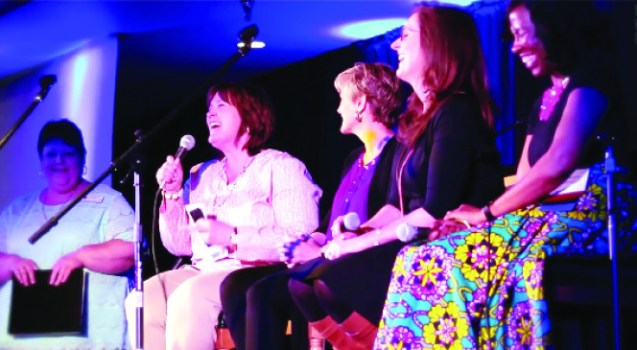
Halsey (at the mic) leads at panel discussion at the 2018 Priority Conference.

Carmen Halsey has a passion for educating and empowering godly women. As IBSA’s director of women’s ministry, she organizes leadership training cohorts, large equipping events, and mission trips in Illinois and abroad. Her desire is to help women find their God-given gifts, and to bring those gifts to build up the local church and carry the gospel to the marketplace. “We’re investing in you,” she tells women as they grow into leaders, “so you be ready to invest in others.”


Halsey (second from left in photo above) said she tends to see where “God has women versus where he doesn’t have women.” According to the U.S. Department of Labor, almost 47% of the country’s workers are women and 70% of mothers with children under the age of 18 are in the workforce.

One of those women is Andrea Cruse. “When I met her, she was already a young mother, she was already a pastor’s wife, but one of the things that intrigued me about Andrea was re-engaging the workforce, and wondering where she was going to fit,” shared Halsey.

Cruse, who is married to Adam Cruse, pastor of Living Faith Baptist Church in Sherman and has three young children, has been the recipient of Halsey’s leadership through Illinois Baptist Women (IBW).

Andrea Cruse

Cruse

“Carmen has taught me to be a leader in the marketplace and my church by just allowing me the opportunity and inviting me to participate in the cohorts that are available,” Cruse said. “I’ve just gained valuable knowledge on those foundational leadership skills that have proved significant in my own personal marketplace.”


Cruse began sharing the leadership skills she was learning with her supervisors at work, and when an opportunity for advancement came up, she was tapped for the position.

She credits Halsey and IBW, saying when she expressed doubts about accepting the new management role, her supervisor told her, “Andrea, we can teach you what you don’t know, what we need is your leadership skills.”

“And it was at that moment,” Cruse said, “I was just so thankful that IBW and Carmen were willing to invest in me and provided me with the resources to develop those skills.”

Halsey’s work is possible, in part, because of support from the Mission Illinois Offering & Week of Prayer. Collected annually in September by IBSA churches and designated exclusively for ministry in Illinois, this offering supports IBSA missionaries and staff in missions especially needed within the state. That includes Illinois Baptist Women, the group within the IBSA Church Resources Team that focuses on growing women in their roles as disciples, missions mobilizers, and leaders. Under Halsey’s guidance, that has grown to include leadership at home, church, mission field, and in the marketplace.

That’s one main theme of the annual Priority Conference Halsey organizes for Illinois women. “Priority provides a safe environment for us to come and learn together. We can ask questions. We don’t have to feel foolish; we don’t have to shy away from some hard conversations,” Halsey said.

Her conferences have approached hard topics such as assisting refugees, human trafficking, and sexuality. And leadership. “Women are influential folks, and sometimes they just need someone to tell them that.”

Growing influence
Another woman who has benefited from Halsey’s leadership is Becki McNeely. She is a member of Lakeland Baptist Church with a rich heritage.

McNeely is the wife of Brandon McNeely, Baptist Collegiate Ministries director at Southern Illinois University at Carbondale. She is also the daughter of Lakeland’s pastor Phil Nelson and the granddaughter of International Mission Board missionaries Jack and Ava Shelby. Even with that pedigree, taking on leadership roles in her church could be intimidating. Until she met Halsey.

“I felt like I was thrown into being a leader until I met Carmen,” NcNeeley said. “She poured so much into me personally through leadership cohort groups. If it had not been for Carmen, I wouldn’t have had the tools I needed to lead.

“I couldn’t put a price tag on how much I learned from her.”

Jacqueline Scott

Scott

Jacqueline Scott, a member of Dorrisville Baptist Church in Harrisburg, may be retired, but the natural born leader isn’t about to slow down. Since becoming active in Illinois Baptist Women, Scott said, “Carmen increased in me a sense of urgency to be serious about the Great Commission. The world is going so fast, we’ve got to catch up, get into the game.”


Last summer Scott joined Halsey on a mission trip at the southern tip of the state in Cairo. Scott said the experience taught her, “We need to be ready, better equipped. The Cairo mission trip was a learning curve for me.” She described how many of the people they met while going door-to-door said they practiced other religions. They “challenged” her.

Halsey noticed.

“Jacqueline just saw oppression that her eyes had never seen before,” she said. “And what I loved is that her inner leader just came out. There was a boldness, there was a confidence there that can only come from God.”

Scott agreed. “When I went to Cairo, it was good for me to be there.”

Halsey’s work includes encouraging women in missions mobilization. Her team has led mission trips to Chicago and New Orleans, Europe and South Asia, and has urged Illinois Baptist Women to engage their own neighbors and communities with the gospel.

“It does make me proud—you know, godly proud—when I see somebody succeeding,” Halsey said. And that encourages her in her work with Illinois Baptist Women all the more.

A call to prayer
Please encourage your church to pray for state missions during the Mission Illinois Offering & Week of Prayer, September 9-16. Pray especially for women’s ministry and missions across the state, and the development of leaders through Illinois Baptist Women. Pray for Carmen Halsey and all the members of the IBSA Church Resources Team as they equip churches and leaders for ministry.

Learn more about the Mission Illinois Offering.

By Andrew Woodrow

Pingree Grove prayerwalking

Pingree Grove,” Tim Bailey said, “is a small town in desperate need of a church.”
Situated in the far western suburbs of Chicago, just west of Elgin, Pingree Grove was once a small farming community with less than 200 residents. The markers were a tiny white clapboard church that would close, and a cemetery. That was in the year 2000. Now, this rapidly developing city is expected to grow to over 15,000 people by 2020. The residents live in neighborhoods sprawling across what were once cornfields, and they commute to work in the suburbs and the city.

But this burgeoning bedroom community had no church.

“During a visit to Pingree Grove, I recognized there was nothing of a spiritual nature there,” said Bailey, an IBSA church planting catalyst in northern Illinois. “But as I prayerwalked in that community, I recognized that there was something special there—something that God wanted to do.”

Bailey was praying and walking the area last summer when he had an idea. Several groups of teens from all over Illinois were coming to Chicagoland for a week in July to assist church planters. Calling on Ken Wilson, his IBSA counterpart from southern Illinois, Bailey put forth his plan.

“He said, ‘I want to plant a church in four days, and they say that we can’t do that,’” Wilson recalled. “And the last thing you want to tell a southern Illinois redneck is that you can’t do something. So, I wanted to be part of something that only God can do.”

“For the first time we decided instead of going and helping a church planter,” Bailey said of the usual summer projects teaming teens and planters in Chicagoland, “we were going to attempt to plant a church with just 11 people in four days.”

The 11 people included several teens from First Baptist Church in far south Metropolis, led by associate pastor Cliff Easter, and the students from Clarksville Baptist Church in central Illinois with their youth leader, Leslie Propst.

The group divided into groups of two and prayerwalked Pingree Grove, knocking on more than 650 doors in those four days. They prayed for the people in the community, asking the Lord to save the lost, connect them with people looking for a church, and to help develop friendships in Jesus’ name. And they invited the people to a Bible study on Thursday night.

MIO Logo 500pxAs church planting catalysts, Wilson and Bailey are part of a partnership between IBSA and the North American Mission Board. Gifts to the Mission Illinois Offering help provide support services for these church planting missionaries, allowing them to recruit and train men who will plant and pastor new churches in some of the 200 places in Illinois where IBSA has identified the need for new congregations. With Mission Illinois as both a goal and a calling, IBSA seeks to establish evangelistic, gospel-teaching churches within easy reach of every lost person in Illinois.

“The Lord granted us immense favor,” Wilson said. “We met many people interested in knowing more about a church plant possibility, and a few more who even recommitted their lives to Christ.” The superintendent of a local school gave them permission to have a meeting there. Four families attended, Bailey said, and that was the start of a church.

But we need a leader
“We were far from finished,” Wilson said, “We prayed for Pingree Grove, that God would send a church planter to lead where we began.” Little did they know, God had begun his work in Pingree Grove three years earlier.

R. T. Maldaner and his family of eight had moved to Illinois from Idaho. Maldaner was serving in a church staff position in Elgin, but he sensed the Lord leading him to plant a church. “But we really didn’t know where,” Maldaner said.

His desire for church planting was encouraged by a mentor who told him that he had the DNA of a church planter. “He told me of IBSA’s need for solid, gospel-centered men to plant solid, gospel-centered churches,” Maldaner said, “and he then connected me with a gentleman from IBSA by the name of Tim Bailey.”

In January, six months after that summer outreach, the two met at Starbucks in South Elgin. “Tim and I were sitting down drinking coffee,” Maldaner said, “talking about my desire to church plant when he asks me his final question for the interview: ‘Where do you live?’”

When Maldaner said, “Pingree Grove,” Bailey pounded the table and yelled, “Praise the Lord!”

“R.T.,” Bailey told him, “we have been walking around Pingree Grove, and driving around Pingree Grove, and praying around Pingree Grove for a year that God would send us a church planter for Pingree Grove.”

One month later, Maldaner started a gathering. Since that Sunday, 150 people have attended faithfully, Bailey said, “and we have yet to begin the major push in encouraging people to come.”

Maldaner recognizes that the “Lord has orchestrated a miraculous thing….Knowing that our church isn’t a church plant in isolation, knowing that we have IBSA and a plethora of other brothers standing alongside us and helping us is a very liberating feeling.”
The church, called City of Joy, is set to launch officially on September 9.

“It is nothing we did,” Bailey insists, “It was only because of prayer, and more prayer, and even more prayer, that God decided to open the door to this church.”

Wilson remains invigorated by the experience of prayerwalking for a church plant. “I see God wanting to do this in multiple places, even rural areas across Illinois…Because he wants to touch Illinois (even more) than we want to reach it.”

A call to prayer
Please encourage your church to pray for state missions during the Mission Illinois Offering & Week of Prayer, September 9-16. Pray especially for church planting across the state, to reach more than 8 million people here who do not know Jesus Christ as Savior. Pray for Church Planting Catalysts Tim Bailey, Ken Wilson, and other members of the IBSA Church Planting Team. And pray for R.T. Maldaner as he leads the new City of Joy Church in Pingree Grove.

‘To see the gospel carried through Baptist churches generation after generation’

Essentials MIO

MIO Logo 500pxSharing the gospel with at least 8 million people is a daunting calling, especially as the cultural opposition churches face continues to grow. But that is our calling here in Illinois. And each year in order to fulfill that calling, Illinois Baptists gather resources to fund ministries for evangelism, discipleship, and church planting.
How’s that working?

Gathered in the chapel of Broadview Missionary Baptist Church following a meeting of pastors, four IBSA leaders discussed the mission field and the future of ministry partnership through the Illinois Baptist State Association. In the discussion were:

• Nate Adams, IBSA Executive Director
• Mark Emerson, IBSA Associate Executive Director of the Church Resources Team
• Adron Robinson, pastor of Hillcrest Baptist Church in Country Club Hills, and serving his first term as IBSA President
• John Yi, IBSA Church Planting Catalyst focused on second-generation ministry in the Northeast region

How does our view of Illinois affect our churches’ commitment to partnership in state missions?

Nate Adams: I think a lot of people don’t think of Illinois as a mission field, because their community is reasonably churched and they’re reasonably happy in their church environment. But Illinois has 13 million people. At least 8 million of them don’t claim to have a personal relationship with Jesus Christ. And a lot of those who do say they are Christians have just nominal church relationships.

John Yi: And there are many people groups that don’t have a single church that serves them. In Chicago we see so much diversity—people from all over the world speaking all kinds of different languages. There are about two million immigrants in Illinois.
And there are at least a half-a-million young people who have come to Illinois to study, and a large portion of them have come from overseas. We really have a unique opportunity to reach people with the gospel—in our cities and all over the state.

Adams: Illinois is very much a mission field. In Acts 1:8 terms, where Jesus said, “You’ll be my witnesses in Jerusalem, Judea, Samaria, and the ends of the earth,” Illinois is the “Judea” part of that mission field. In this environment, Illinois Baptists are missionaries, going to places like college campuses and large cities and rural areas, bringing the gospel there as if it had not come there before. Because for a lot of people, they’ve never heard the gospel in a way that they can really understand, even here in Illinois.

Seeing the needs, some churches have noticeably raised their support for state missions. Yours is one of them, Pastor Robinson. Why?

Adron Robinson: My congregation recently increased its Mission Illinois Offering giving because we saw the work that was going forward because of last year’s offering. We were able to see the money that we invested going to reach lost people in Illinois—going to help us reach our Judea, you know. Hillcrest can’t reach the entire state, but by giving through the Mission Illinois Offering, we can help other Illinois Baptists reach other lost people in their areas. We can join in our part of fulfilling the Great Commission.

Adams: IBSA is helping churches think about the mission field that is most accessible to them. Even though it’s a wildly diverse mission field, it’s the one that’s near enough where they can go there themselves.

Illinois is a very diverse state, both ethnically and in spiritual need. And John, you serve among people who exemplify both needs.

Yi: Chicago is a landing spot for so many immigrants. And because that’s the case, we can’t stop planting churches for our first-generation folks. But as soon as they arrive, a cultural gap starts to form between the generations almost immediately. And so the challenge is two-fold—that we reach immigrants in their own language, but also reach their children with the gospel in English, which the parents are unfamiliar with, in a meaningful way that’s going to bring them to Christ.

What can our churches do together that they could never accomplish alone?

Robinson: I’m grateful for our partnership with IBSA, because it gives the local church the resources and the connections to do statewide ministry that we can never accomplish as one small local congregation. Through Disaster Relief, evangelism training, equipping of our local church body through IBSA staff, we are able to reach people all around the state.

Mark Emerson: As Pastor Robinson points out, missions is part of our work, along with evangelism and discipleship. And we help churches do this by equipping them for leadership: IBSA develops leaders.

I think back to several of the guys who were on the IBSA staff when I was a new pastor and church planter almost 30 years ago, how they took me under their wings and mentored me. Today, I’m thinking how great it would be if every Illinois Baptist pastor had that kind of connection.

Adams: I think the advantage that IBSA has, that allows us to create that kind of opportunity, is proximity to the churches. Southern Baptists have an International Mission Board helping churches go around the world, and a North American Mission Board focusing on some of the great cities in North America. But the Illinois Baptist State Association is the nearby partner. They’re the guy nearby to the church who equips the church to reach its own mission field right here in Illinois.

Emerson: As a pastor, I recall how I looked at a lot of different things in our organization and thought, “Well, our church is not growing because we have a community problem. Or an organizational problem. Or a financial problem.” What I learned is that our ministry really had a leadership problem. And if the church was going grow, I was going to have to grow.

So, we are developing leaders by providing the same kind of experience that I had through the state association—creating cohorts where leaders come together and learn to lead. We have about 40 of these groups all over the state now.

In addition to cohorts, the Church Resources Team equips 6,500 leaders from almost all of our 1,000 IBSA churches and church plants in all aspects of ministry in statewide and regional training events. And we train kids and students in missions and leadership with camps each summer and evangelism events in the fall.

Robinson: Our church has hosted youth events for the northern region. Without our IBSA connections, these things would never happen—praying together and serving faithfully, partnering together—

The key word is partnership.

Adams: I hope our young people won’t lose the vision of partnering with others who believe Baptist doctrine to send missionaries into places that no one church could send by themselves. But that working together as Baptist churches we can send reliable missionaries to places that will deliver the gospel and start New Testament churches that are relevant to that community. And I hope that’s something that will happen for generation after generation.

Emerson: That our work is handed from one generation to another.

So how do you see state missions in the future?

Adams: For me personally to see the gospel carried through Baptist churches generation after generation is a continuation of what my dad started when he was a pastor and a director of missions in Illinois. I want to see that happen in the generations of my kids and their kids—a stewardship of faithfulness, that we believe the Bible, that we believe the gospel, that we believe the mission of God is the most important thing in our lives.

By Nate Adams

MIO Logo 500pxLast Saturday I received three voicemail messages from the same number. I suspected it was a mistake or a telemarketer, because the number wasn’t familiar, and I recognized the area code as being from out of state.
Indeed, the first message sounded like an elderly lady, who simply apologized for possibly dialing the wrong number. But in the second and third messages, the same lady said that she was sorry for bothering me again, but she was trying to reach the “Illinois Baptist Convention.” She asked if I could call her back and at least let her know if she had reached the right number.

Though it was a Saturday evening, and I couldn’t imagine what this lady might need, the frequency and urgency of her messages led me to call her back. It was then that I met Miss Myra, a 95-year-old grandmother from Kentucky.

After a few minutes of conversation, I learned several things about Miss Myra. She had just moved into a new assisted living facility a month earlier. She was nearly blind due to macular degeneration. And years ago, she had served for a while on the board of the Kentucky Baptist Convention. That’s how she knew to call me.

But I learned all those things after Miss Myra told me the primary reason for her call. Her grandson Ben had recently moved to Chicago, and she was concerned that he wasn’t attending church in that new, big city. His parents had raised him in a different denomination, she said, but he hadn’t seemed to stay connected with that church. And she didn’t know anyone to call there anyway. But she knew Southern Baptists, and she knew that if she called “the state convention office,” someone there would help her find a nearby church for her grandson. And she knew that church would be Bible-believing and gospel-centered.

I probably receive 3-4 calls a year like Miss Myra’s, often from someone in the South whose family member or friend has moved to Illinois, usually the Chicago area. They frequently are afraid that Southern Baptist churches “up there” are few or non-existent, and that the city is huge, and probably dangerous.

With Ben’s address, I was able to go to our online database and quickly find several churches within a few miles of where he lived. I did need to filter the options, because some of the IBSA churches nearest him were Spanish-speaking, or Russian, or Vietnamese. After all, Chicago is an international mission field. But a large-print letter went out to Miss Myra the following Monday, with contact information for six churches and pastors, and my offer to contact them personally if she or Ben would like me to do that.

The calls and e-mails and letters I receive like that one from Miss Myra remind me why IBSA continuously plants churches, especially in population centers like Chicago. I didn’t need to find a Chinese, or Romanian, or Korean church this time. But I could have.

Miss Myra’s call also reminds me why we ask churches to collect a Mission Illinois Offering each year, and why we ask Illinois Baptist church members to give generously. That annual offering helps us plant new churches in places like Chicago, or in one of the 22 Illinois counties that still have one, or zero, Baptist churches.

At one point in our conversation, Miss Myra said to me, “You know, I’m 95 and almost blind. I can’t do much. But I can do this.” I will remember her words when I give my Mission Illinois Offering through my church this year. I hope you will too.

Nate Adams is executive director of the Illinois Baptist State Association. Respond at IllinoisBaptist@IBSA.org.

By Andrew Woodrow

Classic Outreach

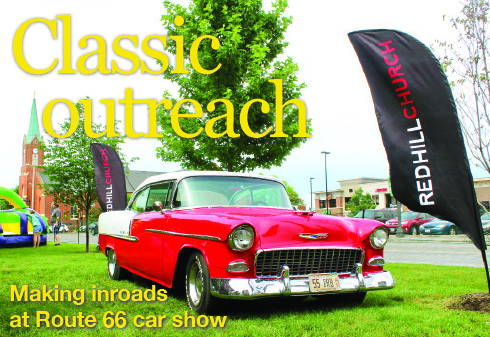
In a town proud of its Route 66 heritage, thousands gather every year to celebrate what John Steinbeck called “the Mother Road.” For more than 20 years, Edwardsville’s annual Route 66 festival at City Park has offered visitors fun, food, and classic cars. What was missing, realized church planter Rayden Hollis, was a gospel opportunity.

Hollis is the planter and lead pastor of Red Hill church in Edwardsville. The church isn’t quite three years old, and they don’t have their own building yet. But Hollis is passionate in leading his church by a missions strategy based on Jeremiah 29:7.

“Just as the Israelites, exiles in their community, were commanded to seek out the welfare of the city they were living in,” Hollis said, “it’s our philosophy that we too, as exiles, need to seek out the welfare of the city we live in and pray for it.”

That philosophy is at the core of Red Hill’s presence at their city’s summer festival—and it’s a noticeable presence. At this year’s event June 8-9, park visitors stirred the humid air with hand-held fans emblazoned with Red Hill Church. Diners at picnic tables ate under misting fans donated by the church. Dog walkers at the festival discussed their pets with dog walkers from Red Hill. Church members brought a bean bag set and played alongside park visitors.

Church Hits the ‘Mother Road’ from IL Baptist State Association on Vimeo.

And showcased just outside the church’s two tents at the festival: a 1955 Chevy Bel Air. The gleaming red and white car—made even more vibrant by the sun’s glare—attracted visitors to the Red Hill display.

To Hollis, Red Hill isn’t just about gathering for their Saturday evening worship, it’s about the church going out into the community and making the city better.

“I’ve been a part of churches where if the Lord removed that church from the community, the community wouldn’t even notice,” Hollis said. “We don’t want to be that church.

“We want to be so deeply integrated into the life of our community that if we were pulled out, it would have a devastating effect upon the regular rhythms that people engage in inside of our cities. So, we’re trying to find ways that we can step in and make an immediate impact and difference in the life of our city, just by observing what’s naturally happening in it.”

Nothing in return

Early on, Red Hill began to observe the rhythms and patterns of Edwardsville, seeking out ways to serve at city events with a focus to “breathe even more life into it,” Hollis said. “We want to be given an opportunity to show the city how much our church cares for it.”

Once Hollis learned of the success of Edwardsville’s Route 66 Festival, he knew he needed to get involved.

But at first, it wasn’t easy. Katie Grable, assistant director for the Edwardsville parks department, was uncertain about allowing a church to actively participate in the festival. “Initially I was a bit skeptical,” she told the Illinois Baptist. “Not because I was against a church partnership, but rather, I was nervous that their angle would be vocally evangelistic.”

Still, in 2015, Red Hill was granted permission to set up a photo booth tent in the far back corner of the festival. They provided props and space for festival-goers to pose for photos. “We wanted to do something that added to the festival’s success,” said Sarah Hollis, Rayden’s wife. “And through that, begin those gospel conversations with the park visitors.”

Realizing the potential to reach up to 10,000 people in one weekend, Rayden Hollis was eager to do more the next year. He asked Grable how Red Hill could best contribute to the festival, and the city’s success, from Red Hill’s own budget. His requests puzzled Grable, leading her to eventually ask Hollis what was in it for his church.

“Nobody just gives freely without wanting something in return,” Grable said. “And they were just willing to offer so much I eventually asked what Rayden wanted, and we would see what we could do to help.”

To Hollis, Grable’s question came as a surprise. “At first I didn’t know what she was talking about,” he said. “But then something really awesome happened.” Hollis was able to explain to Grable that what Red Hill was doing was meant to be a reflection of God’s love. Hollis further explained there wasn’t anything he needed but rather that the opposite was true. “I told her I had something that she desperately needed,” Hollis said. “And I got to share the gospel with her.

“Now the unfortunate news is that she didn’t receive Christ, but because of what we’re doing as a church, I got the opportunity to share with someone why we’re doing what we’re doing.”

Grable wasn’t yet ready to receive Christ, but she understood Red Hill’s genuine intent in giving. And a partnership blossomed between the Parks and Recreation department and Red Hill.

“It was through that experience that I finally realized this was just an honest willingness in wanting to help,” Grable said. “They’ve been our most frequent partner since then and are the only organization that is coming out to basically anything that we do in the city.”

Valued partners

Since their first involvement with the Route 66 Festival in 2015, Red Hill has come a long way at the event. Their photo booth tent is no longer in the far back corner of the park. It has instead been moved to the front.

“We even have a second tent where we pass out handheld fans,” said church member Casey Elmore. “And we do almost all the volunteering for the kids’ activities.”

Elmore emphasized Red Hill’s devotion to the city as a “heartbeat to serve and build relationships within our community. And through that, crack open those opportunities to share the gospel.”

The church is also fostering its relationship with the Parks and Recreation department, who has called on Red Hill to help open their newest park, and even made Hollis an administrator on their Facebook page.

The pastor thanks Illinois Baptists for giving through the Cooperative Program to help make his church’s outreach possible. 

“Events like this would never happen unless Southern Baptists of Illinois continued to give to the Cooperative Program, to the Mission Illinois Offering, and other Illinois Baptist offerings. So, to every pastor, thank you for inspiring and encouraging your church to give. And to every Illinoisan who’s given over the course of their lifetime, thank you.

“Your generous gift helps make this moment possible for us to be a gospel witness and to be the hands and feet of Jesus in this city.”

Curb appeal

Lisa Misner —  July 23, 2018

By Nate Adams

Picnic tables 2

If you haven’t visited the IBSA Building in Springfield recently, I hope you’ll find a reason to come this summer.

Perhaps you’ll join the thousands of tourists, families, and student groups who are drawn to the annual state fair, or to the perennial Abraham Lincoln sites. Or perhaps you’ll just drop by as you travel elsewhere, to say hello to your IBSA family at the corner of Stevenson and Dirksen.

If you do, I hope you’ll notice several improvements to our building’s “curb appeal.”
For one thing, the old Denny’s restaurant next door, that even I remember from my boyhood, has been demolished, and a new automated car wash is being erected in its place.

We’ve also made several improvements to our own building. The scraggly groundcover that we’ve been trying to tame since it was planted around the building in 1970 has been dug up and replaced with fresh new grass. New trees and flowers have been planted in fresh beds of mulch.

A new sidewalk leads from the front door around to a renovated patio area, which now offers picnic tables and benches. The parking lot has been freshly sealed and repainted. Inside, new customized carpet runners lead you from the doors to the elevators, and our reception area welcomes you with some new furniture.

Why the face lift? Well, it’s been about seven years since our last building renovation, and some of these things were intended and dreamed about then. Some of them are the answers to problems, such as the water main rupture outside our building last year. But most of the updates are simply intended to make our building more inviting, whether to IBSA pastors and church members, or to the building tenants who help pay our utilities, or even to the occasional vagrant who needs a cold drink or a bathroom.

1st floor lobby

If curb appeal is important at the IBSA Building, then it’s even more important for each local church. And summer is a great time to take stock and ask what kinds of repairs, improvements, or updates could make our houses of worship more inviting.

We tend to be blinded by familiarity and overlook the needs of our church buildings, just as we do in our own homes sometimes. But I guarantee that first-time visitors notice the wear and tear, the needed repairs, and the musty smells that we too readily take for granted.

I recently visited a small country church in central Illinois on its 150th anniversary. Unlike many churches that age, the original building had never been moved, or burned, or rebuilt. We worshiped in the same auditorium as the church’s founders.

But that didn’t mean the property had been neglected. A new foyer had been built on the outside, along with a ramp for accessibility. A new basement had been dug under the original structure. An attractive parsonage had been added next to the church building. And the grounds were beautifully landscaped, and freshly mowed and trimmed.

Everything about that country church said to me “come on in,” and “what’s inside is worthwhile.” That’s what curb appeal should be all about in all our churches. And that’s why it’s worth our time this summer.

Nate Adams is executive director of the Illinois Baptist State Association. Respond at IllinoisBaptist@IBSA.org.

Crucial moment

Lisa Misner —  July 16, 2018

Key issues at stake in Kavanaugh nomination

Supreme Court Building.

The announcement of Brett Kavanaugh as President Donald Trump’s nominee for the U.S. Supreme Court cheered many Christians and conservatives July 9, including a coalition of evangelical leaders who released a statement in support of the 53-year-old federal appeals court judge.

“Judge Kavanaugh is an outstanding choice for the Supreme Court,” tweeted Ethics and Religious Liberty Commission President Russell Moore. “He has a strong record, and the Senate should confirm him without delay.”

Moore was one of 40 leaders who signed the statement calling for Kavanaugh’s quick confirmation. The nomination was met with criticism from many on the left, including several Democratic Senators who signaled they’ll fight his confirmation. Appointing Kavanaugh will require a simple majority in the U.S. Senate; Republicans currently hold a 51-49 majority.

The nomination came two weeks after Associate Justice Anthony Kennedy announced his retirement. Kavanaugh, who served as an aide to President George W. Bush, is viewed as more conservative than Kennedy, who often served as a swing vote on the Court. He authored the opinion in the Obergefell vs. Hodges in 2015, which legalized same-sex marriage in the U.S.

Kennedy also agreed with the Court’s opinion in a 1992 ruling, Planned Parenthood v. Casey, which reaffirmed Roe v. Wade. The landmark 1973 decision to lift state restrictions on abortion figured prominently into discussion about Kavanaugh’s nomination. While the judge testified in 2006 that he would follow Roe “faithfully and fully” as the “binding precedent of the court,” he declined to give his personal opinion of the ruling.

During his presidential campaign, Trump pledged to nominate conservative justices who could overturn Roe, a promise his supporters still see as a possibility—one made even more likely by a second conservative appointment to the Supreme Court.
“I think eventually a conservative court will either overturn Roe v. Wade or at least greatly diminish its importance and its power,” Dallas pastor Robert Jeffress told Fox News before the nomination announcement.

Kavanaugh’s D.C. court decided last year that an undocumented minor could have an abortion, an opinion from which he dissented by stating that she shouldn’t be able to receive an abortion “on demand.” The stance was seen by some pro-life advocates as not strong enough.

Also pressing for evangelicals is Kavanaugh’s record on religious liberty, particularly in light of several high-profile cases heard by the Court during their most recent session. Christianity Today called Kavanaugh “another religious liberty defender,” referencing Associate Justice Neil Gorsuch, whose pre-appointment resume included supporting Hobby Lobby’s right to be exempt from providing contraceptives in employee insurance plans.

While on the D.C. Appeals Court in 2015, Kavanaugh, a Roman Catholic, dissented from the court’s opinion not to rehear a challenge to the mandate, this one from the non-profit Priests for Life. He also issued an opinion in 2010 supporting the constitutionality of prayer at the presidential inauguration, and the words “so help me God” in the presidential oath.

During the session that ended June 27, justices ruled on Masterpiece Cakeshop v. Colorado, in which they found in favor of a baker penalized by a state commission for refusing to create a cake for a same-sex wedding ceremony. They also instructed the Washington Supreme Court to reconsider the case of a florist similarly penalized, in light of the Masterpiece ruling.

Russell Moore referenced those rulings and others in his statement supporting Kavanaugh. “As we saw this past term…the Supreme Court plays a vitally important role in protecting the dignity of every life and religious freedom for all Americans.
“Judge Kavanaugh is an outstanding choice for a Supreme Court justice. He will interpret the Constitution, not attempt to create laws from the bench.”

– Meredith Flynn, with reporting by Baptist Press
and Christianity Today