Archives For November 30, 1999

Many Southern Baptist churches will mark the Week of Prayer for North American Missions this week. For more information about the week of prayer or the Annie Armstrong Easter Offering, contact IBSA’s Missions team at (217) 391-3138.

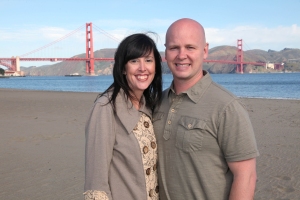
Ben Pilgreen, Epic Church, church planterDay 5 – Ben and Shauna Pilgreen
There are more affluent places in the United States than San Francisco, but not many. Living in that environment can numb people to need, but church planter Ben Pilgreen knows God is in the perspective-changing business.

Pilgreen launched Epic Church in the fine arts district of San Francisco two years ago. The church is actively engaging its Acts 1:8 mission fields, from a local women’s shelter to Uganda, where Pilgreen led Epic’s first international missions experience last summer. They’re also living out the Great Commission through 13 small groups in the city.

Pray many leaders will make long-term commitments to stay in San Francisco and help Epic Church carry out the mission starting more churches to reach lost people in the city.

Go to www.anniearmstrong.com/benpilgreen to watch “Seeing the Stories,” a video about a spiritual seeker who came to know Christ at Epic.

Many Southern Baptist churches will mark the Week of Prayer for North American Missions this week. For more information about the week of prayer or the Annie Armstrong Easter Offering, contact IBSA’s Missions team at (217) 391-3138.

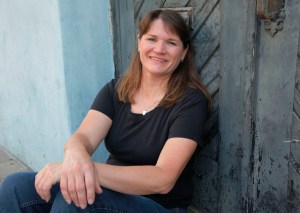
Baptist Friendship HouseKay Bennett, black shirtDay 4 – Kay Bennett
Several years ago, Melanie was homeless, pregnant, and struggling with substance abuse. A newspaper article about rebuilding efforts in New Orleans caught her eye and, desperate to rebuild her life as well, Melanie set out for the city. She was on the path to a divine appointment with missionary Kay Bennett.

“Melanie contacted me and came into our transitional housing program,” said Bennett, director of New Orleans’ Baptist Friendship House. “She got a job, got into college and is working towards her social work degree now.” At the center, Bennett helps vulnerable women and children as they transition into to new lives. She and her team also host events throughout the year designed to meet the physical, emotional and spiritual needs of their community.

Pray for encouragement for Bennett and her staff as they encounter hurting people every day.

Go to www.anniearmstrong.com/kaybennett to watch “Simply Jesus,” the story of how the Baptist Friendship House helped give a family a new future.

Many Southern Baptist churches will mark the Week of Prayer for North American Missions this week. For more information about the week of prayer or the Annie Armstrong Easter Offering, contact IBSA’s Missions team at (217) 391-3138.

NAMB WOP Missionary Peter YanesDay 3 – Peter and Irene Yanes
If anyone understands the impact church planting and evangelism can have on someone, it’s Peter Yanes. Born and raised in the islands of the Philippines, Yanes was in high school when a friend invited him to a Bible study hosted by a church plant. “That’s where I came to know Jesus Christ in a personal way,” he said. “Since then, there’s been no turning back.”

Yanes has a heart for church planting, which makes him the perfect fit for his role as a mobilization missionary for the Baptist Convention of Pennsylvania/South Jersey. Based in Philadelphia, Yanes identifies and support planters and partners as they start and grow new churches, and works specifically to catalyze ethnic church planters to reach the growing number of people groups in the area.

Pray for more established churches to partner with ethnic church planters, reaching all nations for Christ.

Go to www.anniearmstrong.com/peteryanes to watch “Returning a Favor,” a video about a new Filipino church in Pottstown, Pennsylvania.

Many Southern Baptist churches will mark the Week of Prayer for North American Missions this week. For more information about the week of prayer or the Annie Armstrong Easter Offering, contact IBSA’s Missions team at (217) 391-3138.

12-21LornaBiusDay 2: Lorna Bius
As a child, Lorna Bius watched her dad deliver groceries to a family in need. “I realize now that was the first time I saw LoveLoud in action,” said Bius, who now works with churches in the western U.S. seeking to serve their communities through acts of service.

LoveLoud is the North American Mission Board’s emphasis on community ministries like food pantries, after-school programs, and outreaches in apartment complexes. In Denver and other parts of the West, Bius is working to discover what churches are doing that’s working, and how to replicate it in other neighborhoods.

Pray God will provide key people who can help develop LoveLoud ministries in the most effective places, and that churches and ministries will be motivated to reach out to their communities like never before.

Go to www.anniearmstrong.com/lornabius to watch “The Castaways,” a video about a LoveLoud ministry to families in Reno, Nevada.

HEARTLAND | Meredith Flynn

Don_RutledgePhotojournalist Don Rutledge, who chronicled Southern Baptist missions efforts for 30 years, died Feb. 19 at the age of 82. Many who knew and worked with him have written beautiful eulogies about his life, and his commitment to tell people’s true stories is evident in his pictures, of a poverty-stricken couple in Mississippi, Alaskan Eskimos in the Arctic Circle, inmates in a Filipino prison, and many more. (See a gallery of Rutledge’s work at IMB.org).

I never met Mr. Rutledge, but I’ve heard about his work many times. His name was one that often popped up in conversation, as I got more interested in photography and how pictures could communicate spiritual needs. When I read Erich Bridges’ column about his life, I was amazed at the things he accomplished – as a Southern Baptist! Here was someone who did so many of the things photographers dream about: he shot for top magazines (like Life and Look), served as a staff photographer for Black Star photo agency, and, with with pictures, helped tell the story of the Civil Rights struggle in the United States.

Rutledge_Heartland

In Soviet-era Siberia, 30 new Christians walk resolutely down a hill to be baptized in a river. “I have decided to follow Jesus, no turning back” were more than words for them. Photo by Don Rutledge for the International Mission Board


And then, Bridges writes, “At the height of his potential as a globe-trotting photographer, Rutledge left Black Star in 1966 to shoot pictures for the then-Home Mission Board in Atlanta.” He worked there until 1980, when he joined the Foreign Mission Board (now International Mission Board). There, Rutledge played a key role in establishing The Commission magazine as a top publication, especially in its use of photography. Bridges writes, “His images helped millions to understand, pray for and participate in missions.”

Rutledge saw his ministry clearly. In his own words, from Bridges’ article: “I love photojournalism and enjoy using it as a worldwide Christian ministry,” he once wrote. “It forces me to see, to look beyond what the average person observes, to search where few people care even to look, to glance over and beyond my backyard fence. … It gives my ‘seeing’ a newness and a freshness as I work to communicate the Christian messages I want to convey. It helps me translate the national and international ministries into human terms by telling the story through people rather than through statistics.”

-With information from IMB.org

pull quote_RAHTJEN_feb25HEARTLAND | Jim Rahtjen

As a pastor, it was one of those moments I lived for. This particular Saturday was a work day at the church. Members were busy cleaning, fixing, and generally spiffing up the building. Laura, an older woman who had attended our church for a while, had never come to understand fully and embrace the Good News of Jesus. She asked if I would explain to her again the message of salvation. We went to my office and I gave her a pamphlet I had written for the purpose of communicating the Gospel. We began to talk through the pamphlet together.

Laura was engaged in the conversation, and very intent on understanding who God is and what Jesus had done for her at the cross. I explained the necessity of Jesus’ death for her on the cross, that He paid the penalty for Laura’s sins, and that three days later He rose from the dead, proving that He is who He said He was. As I explained each point, she pored over the pamphlet, asking questions to make sure she understood.

As I began to explain the importance of believing what Jesus had done for her, I read a phrase that I had read many times over the years. “It is important to believe that Jesus died, was buried, rose again, and is alive today.”

Laura grabbed my arm and said, “Say that again.”

I repeated, “It’s important to believe that Jesus died for you and was buried—“

“No,” Laura said, still grasping my arm, “the other thing you just said, say it again.”

Confident I knew what she wanted to hear again, I said, with emphasis, “Jesus rose again!”

Squeezing my arm tighter, she said, “no, the other thing!”

Surprised, I thought, “What other thing?” I looked again at the phrase I had just read to her. I slowly read the whole thing, “It is important to believe that Jesus died… was buried… rose again… and is alive today.”

“That’s it!” She shouted. “He’s alive today? Are you serious? Is He really alive today?”

Amazed at her revelation, I said, “That’s what you wanted to hear again? That He’s alive today?”

Suddenly, like flipping a switch, I saw the lights of understanding illuminate her mind, “He’s alive today?”

“Yes!” I said, “He’s alive today!”

“I had no idea,” she said. “That changes everything! That affects my whole life. My husband needs to hear this! I’m certain he doesn’t know it.”

Then, hearing someone in the hallway, she rushed to the door. “Kristel!” she said, pulling the door open. “Did you know that Jesus is alive today?”

“Well, of course,” the teenager replied.

Seeing another girl down the hall, Laura called out, “Loree, did you know that Jesus is alive?”

“Uh, yeah.”

She ran up to the girls’ mother. “Sue,” Laura said breathlessly, “Did you know that Jesus is alive?”

Sue, sensing that Laura finally understood, said, “Yes! Oh, Laura, He is alive! Isn’t that wonderful?”

The two of them grabbed hands and jumped up and down with excitement. Laura kept saying, “He’s alive! He’s alive today! And everything is different!”

I stood there in wonder, thanking God for the miracle that just transpired. And I realized again how important it is to communicate the resurrection and its impact on our daily lives. I almost missed the moment, but Laura persisted, insisting that I “say it again.”

When she realized that Jesus is still alive, the resurrection became real to her. A truth that is at once simple and profound, the resurrection makes our faith real and alive – like Jesus. And yet, we run the risk of missing that life-altering truth, and its joy, when it becomes so familiar.

Ever since my encounter with Laura, I seek to make clear the truth of the resurrection when I share the good news of Jesus with others. The resurrection sets Christianity apart from all other religions. With Laura I say, “Because Jesus is alive today, everything is different!”

Jim Rahtjen is a pastor living in Glen Ellyn.

Woulda, coulda, shoulda

Meredith Flynn —  February 18, 2013

pull quote_BRIDGESEditor’s note: This full version of this post by Erich Bridges first appeared on worldviewconversation.blogspot.com.

HEARTLAND | Regret is a painful thing. We look back on the foolish things we have done and the good things we have left undone. We lament wasted years, wrong attitudes, hurts inflicted on others, missed opportunities.

Bronnie Ware, an Australian nurse, spent years caring for patients in their last days. She identified the most common regrets they expressed about their lives in an article, and later a book, titled “The Top Five Regrets of the Dying.” They are:

1. “I wish I’d had the courage to live a life true to myself, not the life others expected of me.”

2. “I wish I hadn’t worked so hard.”

3. “I wish I’d had the courage to express my feelings.”

4. “I wish I had stayed in touch with my friends.”

5. “I wish that I had let myself be happier.”

I’ll add a few more regrets that I have experienced. Perhaps you have some, too:

I wish I had spent more time glorifying God and less time cursing the darkness.

The world stinks. People are evil. Terrible things happen all the time. This is not exactly news. Constantly bemoaning it is a waste of time. Praising the Lord, His greatness, His grace and mercy and His salvation is time better spent — both now and in preparation for eternity in His presence. It’s also a better way to eliminate darkness. Jesus said, “And I, if I am lifted up from the earth, will draw all men to Myself” (John 12:32, NASB).

I wish I had spent more time serving God and people and less time serving myself.

God created you and me to love Him, not to squander our brief time on earth loving ourselves only. The Westminster Shorter Catechism of 1647 is a far better guide in this regard than all the pop psychologists and phony priests of self-worship: “Man’s chief end is to glorify God, and to enjoy him forever.”

 I wish I had told a lot more people about Jesus — and helped other believers to do so.

If Jesus meant the words He uttered in Matthew 28:19-20, when He told His followers to make disciples among all nations (peoples), this is our agenda. Nothing else comes higher on the priority list. And we have more resources to do it on a truly global scale than any previous generation of believers.

What are your regrets? If you’re still alive and alert enough to read this, you can change the habits and patterns that caused them.

“People grow a lot when they are faced with their own mortality,” Ware says of her experiences with the dying. “I learned never to underestimate someone’s capacity for growth. Some changes were phenomenal.”

We are all dying. Some of us have a few days left; some of us have many years. Make every day count.

Erich Bridges is a global correspondent for Southern Baptist International Mission Board, IMB.org.

pull quote_BLACKABYHEARTLAND | Meredith Flynn

Richard Blackaby is the author of numerous books and a former pastor and seminary president. He also has spent his entire life in a ministry family; his father, Henry Blackaby, co-wrote Experiencing God and has a long-time ministry to pastors and leaders, which Richard now leads as president of Blackaby Ministries International.

On a recent visit to Springfield, Ill., he spoke with the Illinois Baptist about the discipline of prayer.

Illinois Baptist: During your teaching sessions here in Springfield, you talked about how easy it is to fall into shallow praying. Is prayer hard work?

Richard Blackaby: Yeah, I think it is. It must be, because so many Christians struggle with it. I mean, it’s not really hard to do, but it is a discipline because you’re talking to someone that’s invisible. You don’t hear His voice, and you’re busy, and you start thinking of all the other stuff you should be doing.

IB: Sure.

RB: It’s not hard, anybody can pray, yet rarely have I every talked to a Christian who said they felt like their prayer life was what it should be. Rarely have I talked to a pastor who felt that; I don’t know if I’ve ever talked to a pastor who said, “Yeah, I wouldn’t change a thing in my prayer life.” And I wouldn’t say that about mine.

But I think the problem in part with prayer is that it’s something we keep trying to teach, instead of model. I could teach you until I’m blue in the face about why you should pray. I could give you all kinds of acronyms and books to read. But at the end of the day, if I just every day met with you and just prayed, and just had a glorious time talking to God, you’d probably want to pray that way too eventually, whether I was there or not.

IB: In your own life, what has helped you go deeper in that discipline?

RB: My dad always talked about unhurried time with God, and he said you have to carve out enough time that it’s unhurried. That when you start to pray, you don’t even have to look at your watch to be worried that your next appointment is coming up. You know you’ve got enough time to just relax with God. So for [my dad] for years, that meant he got up at 4:00 in the morning.

IB: What else?

RB: The other thing that was kind of interesting for me – I kind of go in and out where I try this – I would write my prayers down. Not my prayer requests, like write Bill’s name down [and] pray he gets a job, but actually writing out in sentence form what I was asking God to do….It was amazing what that did, because when you pray, you can pray out loud, but a lot of times you’re just praying silently. Your mind is thinking these thoughts and you’re saying these things, but it just seemed to be more… I’d get my hands on it better when it was written out.

For more from Blackaby, go to ibonline.ibsa.org to read the February 11 issue of the Illinois Baptist.

SPE_034HEARTLAND | Nate Adams

Recently our neighbors invited us to a Super Bowl Party at their home. This isn’t the first year they have invited us, but it is the first time we said yes. I have to admit, though, that there were several reasons I wanted to say no.

First, of course it was on a Sunday. The afternoon game time meant I could easily get home from the church where I was speaking. But Sunday afternoon is usually a time when I can relax a little, have some personal time, and maybe even take a nap. I kind of wanted the option of falling asleep in front of the game, rather than socializing through it.

Second, the people that were inviting us aren’t very much like us, and we both knew that. Before offering the invitation, our neighbor asked, “Do you mind being around people who are drinking?” The invitation itself then came with assurances that there would be soft drinks available as well. I guess we’re known as “the Baptists on the block,” and most of our neighbors know I’m in full-time ministry.

Third, I wasn’t sure exactly what kind of position we might find ourselves in at this party. Who else would be there? Would we even find we had much in common to talk about? Would others wonder why we were there, especially after not coming in previous years, and would they be watching us for ways we might not fit in?

Finally, I wondered what kinds of other commitments might be asked of us as a result of this party. Did they need new workers for the neighborhood workday or workday? Would we now be asked to buy more wrapping paper or Girl Scout cookies from their kids?

I know, all those suspicions and phobias don’t sound very trusting, or even mature, do they? And yet as I reflected on all the reasons I wanted to tell our neighbors no once again, I realized that many of those same thoughts probably run through the mind of anyone who is invited to church by his or her neighbor.

When we invite our neighbors to church, we may feel like we are inviting them to a wonderful place where we have the richest worship experiences and deepest friendships of our lives. But in their minds we may be asking them to take a big slice of their most personal time and spend it with people they suspect are not very much like them, and who may press them for changes they’re not ready to make.

So instead of saying no to the Super Bowl party this year, we said yes. It wasn’t just because we empathized with how hard it is to invite someone to something. It was because our neighbor taught us something about the art of a sincere invitation.

First, she has gradually but consistently built a closer and more trusting relationship with us. I now believe she wouldn’t intentionally put us in an awkward or compromising position. She obviously knows we’re different than many of those who will be at the party, but she respects our values and looks for ways to accommodate them. She seems interested in us personally, and not with whether we will conform to others. And she has persistently and warmly invited us, even when we’ve always said no. Her invitation came from her heart.

There was one more thing. In saying yes this time, we also knew there would be at least three couples present for whom we’ve been praying, and looking for opportunities to share Christ. In fact one of those couples is our host. And in an ironic way, God has used the very neighbors for whom we’ve been praying to show us the art, and the heart, of a good invitation.

HEARTLAND (From Baptist Press) | Murders had become too frequent in the south St. Louis neighborhood where August Gate church meets.

Neighbors were fed up – including a few August Gate members who were leading a small group in the church’s Tower Grove East neighborhood. When they called to ask the three-year-old Southern Baptist church plant for help, August Gate community pastor Todd Genteman urged the young adults to get involved.

“You’re the Gospel Community in the neighborhood,” Genteman said, referencing the name by which the small group is known. “You should do something.”

So they did. The Gospel Community group organized a pancake breakfast at the church, bringing in community leaders, business leaders and residents to start a conversation about change. Organizers thought 10 to 20 people might show up, but more than 100 did.

The outreach echoed what the church plant’s lead pastor, Noah Oldham, has been teaching to the church which draws its name, figuratively meaning “harvest the city,” from the 10th chapter of the Gospel of Luke. For August Gate members, Gospel Community groups play a critical role in living out the teaching that every member is a missionary. These neighborhood-based small groups commit to learning the Bible, being a family and living on mission together.

“We want the vast majority of our congregation to be living on mission,” said Oldham, who also serves as the North American Mission Board city coordinator for Send North America: St. Louis. “God calls us to be missionaries in particular places.”

Click on the video below for more about August Gate, or go to BPNews.net for the full story.

<p><a href=”http://vimeo.com/57384208″>Noah Oldham: Empty on the Inside</a> from <a href=”http://vimeo.com/namb”>North American Mission Board</a> on <a href=”http://vimeo.com”>Vimeo</a&gt;.</p>